
Tag: Core Ultra 7

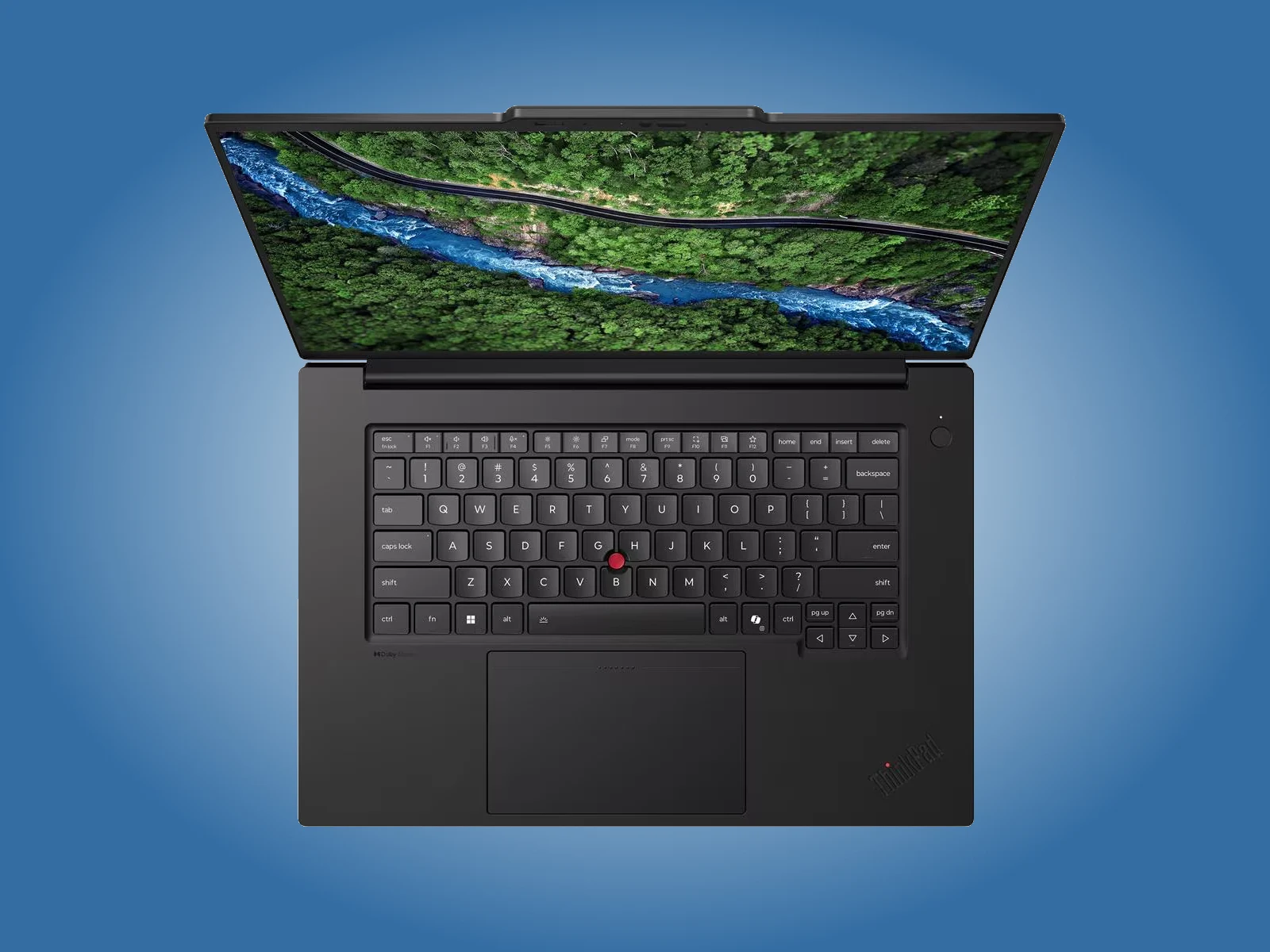
  • Lenovo ThinkPad 16-inch: 64GB LPCAMM2 RAM, 1500-nit OLED

    Lenovo ThinkPad 16-inch: 64GB LPCAMM2 RAM, 1500-nit OLED

    Key Takeaway

    – New ThinkPad P1 Gen 9 now on sale in East/Southeast Asia
    – Currently available with Core Ultra H-series CPUs and RTX Pro 2000 GPU only
    – Starts at ~$5,561 in Hong Kong, Malaysia, and Singapore
    – Configurable with up to 64GB LPCAMM2 RAM and 2TB storage


    Lenovo refreshes ThinkPad P1 lineup

    As June draws to a close, Lenovo has decided to update its ThinkPad P1 range with a new release. To recap, the ThinkPad P1 Gen 8 arrived in September 2025 during IFA 2025 in Berlin. Reviewed by ourselves in December, the ThinkPad P1 Gen 8 impressed us with its LPCAMM2 RAM, Thunderbolt 5 compatibility, and its lightweight build despite being a 16-inch laptop (curr. $4,199 on Amazon).

    New Gen 9 now selling in Asia

    Nonetheless, Lenovo unveiled the ThinkPad P1 Gen 9 in March. Three months later, and the company has now started selling its latest 16-inch mobile workstation across East Asia and Southeast Asia. A global launch should follow shortly though, on the basis of the laptop’s initial announcement and inclusion on Lenovo’s PSREF website.

    In the meantime, Lenovo is not yet offering the ThinkPad P1 Gen 9 with the Core Ultra X9 processors or all of the Nvidia RTX Pro discrete GPUs mentioned in March. Instead, the laptop can currently be configured with the Core Ultra 7 356H, Core Ultra 7 366H vPro and the Core Ultra 9 386H vPro. As it stands, only the RTX Pro 2000 Blackwell (8 GB) laptop GPU is available. Even then, Lenovo does not allow a discrete GPU to be configured with the ThinkPad P1 Gen 9’s entry-level processor option.

    Configuration choices and display options

    No other processor-related configuration restrictions exist, though. As a result, the ThinkPad P1 Gen 9 can be paired with the Core Ultra 7 356H and 32 GB or 64 GB of LPCAMM2 RAM and 1 TB or 2 TB of M.2 2280 storage. On top of that, Lenovo sells the laptop with a choice of the following display panels:

    • 16-inch IPS, 1920×1200, 300 nits, 100% sRGB
    • 16-inch IPS, 1920×1200, 500 nits, 100% sRGB, low power
    • 16-inch OLED, 3840×2400, 400 nits, 100% DCI-P3, touch

    Pricing and availability details

    The ThinkPad P1 Gen 9 starts at HKD 38,310, MYR 21,142 and SGD 7,182 (~$5,561) in Hong Kong, Malaysia and Singapore, respectively. All configurations ship with a 90 Wh battery that supports 140 W USB Type-C charging. Also, all models feature a Bluetooth 5.4 and Wi-Fi compatible modem. Please see Lenovo’s website and our launch article for more details.

  • Core Ultra 7 355 Benchmarks Fall Short of Core Ultra X7

    Core Ultra 7 355 Benchmarks Fall Short of Core Ultra X7

    Key Takeaways

    1. The 2026 Dell XPS 14 offers two processor options: Core Ultra 7 and Core Ultra X7, with significant performance differences.
    2. The Core Ultra 7 355 is 30 to 50 percent slower than the Core Ultra X7 358H during multi-threaded tasks.
    3. Despite being a newer model, the Core Ultra 7 355 has similar power draw to the Core Ultra X7 and previous generation processors.
    4. The performance gap between the two processors does not result in a proportional reduction in power consumption.
    5. The Core Ultra 7 355’s performance-per-watt is noticeably lower compared to the Core Ultra X7 358H.


    The 2026 Dell XPS 14 is now available for purchase, allowing buyers to select between the Core Ultra 7 or the Core Ultra X7 Panther Lake processors. We recently had the opportunity to examine both models, and it’s important to note that the lower-priced Core Ultra 7 configuration presents a significant performance gap that potential customers should consider.

    Performance Discrepancies

    According to our comparison charts, the new U-series Core Ultra 7 355 in the XPS 14 is about 30 to 50 percent slower than the Core Ultra X7 358H during multi-threaded tasks. The more significant performance drop is especially evident in the first minute of CPU stress tests, where the Core Ultra X7 can take advantage of its higher Turbo Boost capabilities compared to the U-series model. Even after factoring in any throttling, the 30 percent difference is still quite substantial.

    Processor Comparison

    When we look at overall performance, the Core Ultra 7 355 is more comparable to the previous generation Lunar Lake Core Ultra 7 258V, but it shows slightly lower NPU TOPS performance. Many might think that the Core Ultra 7 355 would operate with a lower power draw than the Core Ultra X7 or the Core Ultra 7 258V since Panther Lake-U is slower and more recent than Panther Lake-H. Sadly, this assumption doesn’t hold true. For instance, when using CineBench R23 xT on an external monitor, the Core Ultra 7 XPS 14 requires nearly the same power as the Core Ultra X7 XPS 14 and the Lenovo ThinkPad T14 Gen 6 once Turbo Boost speeds have leveled off.

    Power Draw Insights

    This means that the 30 percent performance gap does not translate into a 30 percent reduction in power consumption, leading to a noticeable decrease in performance-per-watt when comparing the Core Ultra 7 355 and Core Ultra X7 358H.