Tag: Very Large Telescope

  • Mysterious Object Reduces Brightness of Distant Star, Say Astronomers

    Mysterious Object Reduces Brightness of Distant Star, Say Astronomers

    Key Takeaways

    1. ASASSN-24fw is a star twice the size of our Sun, located 3,200 light years away, experiencing a significant brightness drop over 200 days.
    2. The cause of the dimming is unclear, but theories suggest it may involve a brown dwarf with large rings or a Jupiter-sized exoplanet.
    3. ASASSN-24fw is surrounded by debris from ancient collisions involving exoplanets.
    4. Future research will utilize the Very Large Telescope to determine the star’s age and composition.
    5. Further dimming of ASASSN-24fw’s brightness is expected in about 42 or 43 years, with findings to be published in the ‘Monthly Notices of the Royal Astronomical Society.’


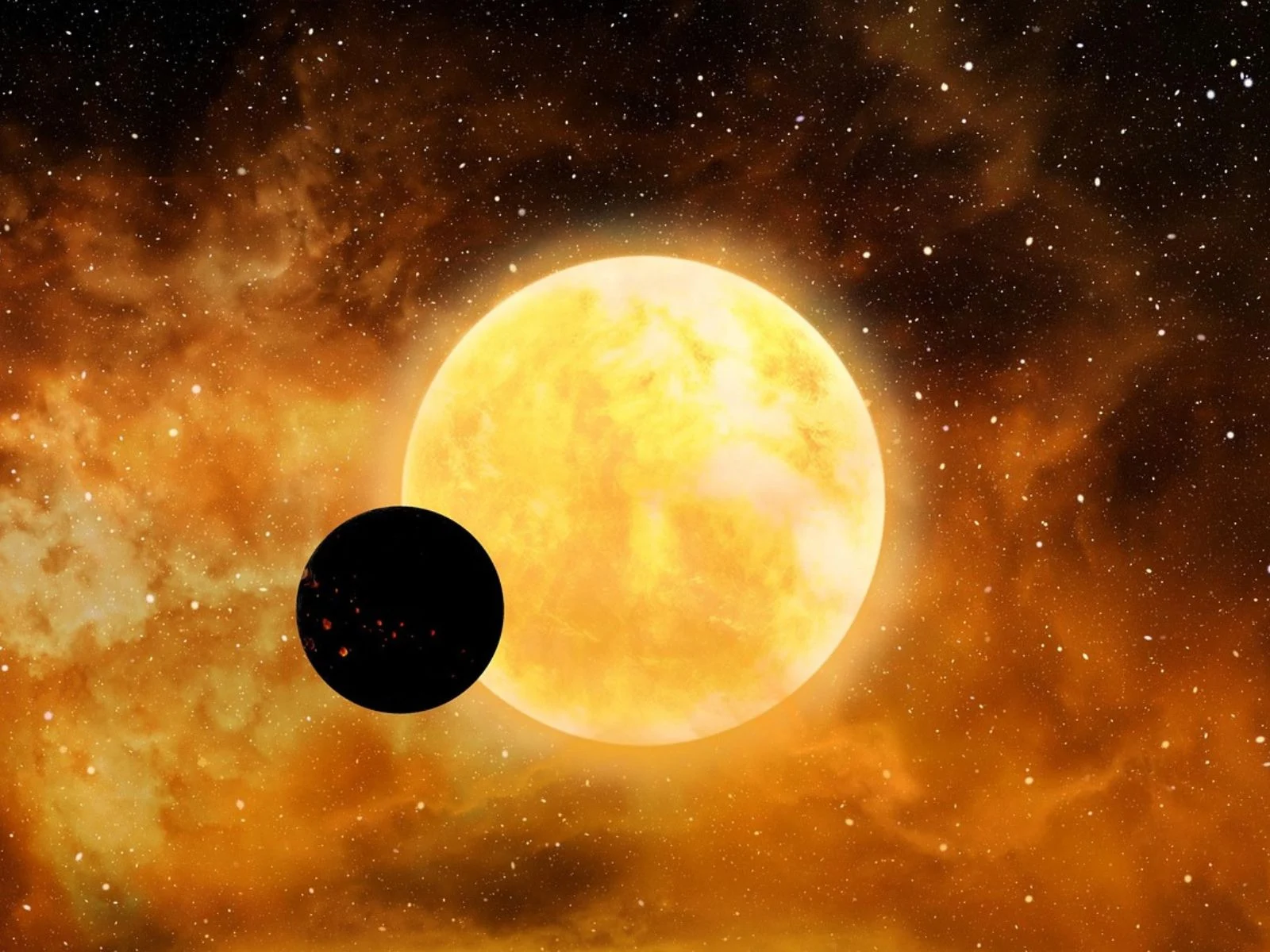
    ASASSN-24fw is a star that measures twice the size of our Sun, situated 3,200 light years away from our planet. For many years, scientists believed this star was a stable entity, but its brightness has dropped over a span of 200 days, marking one of the longest declines ever observed. The specific cause of this dimming remains unclear, though several theories have emerged.

    New Theories on Brightness Decline

    Recent research suggests that this dimming could be linked to a brown dwarf encircled by massive, saucer-shaped rings that stretch more than 26 million kilometers. A brown dwarf is classified as a substellar object with a mass ranging from 13 to 75 times that of Jupiter, often seen as a star that didn’t fully form.

    Possible Influences on ASASSN-24fw

    In addition to the brown dwarf theory, astronomers also propose that a Jupiter-sized exoplanet might be behind this brightness drop. While the source of this celestial object is still not clearly defined, it is known that ASASSN-24fw is enveloped by debris made up of gas and dust, remnants from ancient collisions involving exoplanets.

    Future Research Plans

    As a result, further investigations will take place using the Very Large Telescope to uncover the star’s precise age and its makeup. This research could provide answers to many outstanding questions, especially since a future dimming of its brightness is anticipated in about 42 or 43 years.

    Source:
    Link


  • Scientists Discover Surprising Truth About Star’s Explosion Risk

    Scientists Discover Surprising Truth About Star’s Explosion Risk

    Key Takeaways

    1. Behemoth, one of the largest known stars, is located 163,000 light-years from Earth and was thought to be on the verge of an explosion due to a decline in brightness.
    2. Recent observations confirmed that the star is surrounded by gas and dust, indicating it is not about to explode soon.
    3. Research from Keele University revealed the presence of titanium oxide in Behemoth’s atmosphere, confirming it as a red giant rather than a yellow hypergiant.
    4. A nearby small blue star may be affecting Behemoth’s brightness by drawing particles, explaining the observed circumstellar disk.
    5. Ongoing studies by Keele University aim to uncover more about Behemoth, emphasizing the importance of careful observation in astronomical research.


    The universe is still filled with wonders, and many of the estimates made by astronomers are occasionally incorrect. A prime example is Behemoth, one of the biggest stars known, situated 163,000 light-years away from our planet. Recently, astronomers have noticed a decline in its brightness, leading them to believe an explosion was imminent.

    A Mistaken Expectation

    Although witnessing such an event would have been spectacular, particularly because this star is 1,500 times the size of the Sun, it seems this was a misunderstanding. Indeed, an image captured in 2024 by the Very Large Telescope in Chile indicated the presence of gas and dust surrounding it, but its explosion is not anticipated in the near future.

    New Discoveries

    Researchers from Keele University in the UK utilized the spectroscope of the Southern African Large Telescope, revealing that titanium oxide exists in its atmosphere. This suggests that Behemoth remains a red giant and is not a yellow hypergiant, which would usually signal an upcoming supernova.

    To account for the changes in its brightness, scientists propose that a small blue star is in close proximity. The gravitational influence of this nearby star may be drawing certain particles, which helps to explain the circumstellar disk observed around WOH G64. Thus, further research could unveil more about this star, and patience will be essential before we can witness a supernova in the sky.

    The Journey Continues

    Keele University’s ongoing investigations may hold the key to unlocking some of the secrets surrounding Behemoth. As we continue to explore the cosmos, it’s important to remember that not all phenomena are as they seem. The excitement of discovery often comes with the necessity of careful observation and time.

    Source:
    Link


  • Unique White Dwarf Discovered Ejecting Matter in Mysterious Way

    Unique White Dwarf Discovered Ejecting Matter in Mysterious Way

    Key Takeaways

    1. RXJ0528+2838 is an unusual white dwarf located 730 light-years away, known for emitting jets of matter.
    2. It exists in a binary system with a star similar to our Sun, but lacks a typical accretion disk.
    3. The white dwarf’s jets have been active for 1,000 years, defying common expectations of white dwarf behavior.
    4. Astronomers are surprised by the discovery, noting it is an unexpected phenomenon without prior observations.
    5. The magnetic field of the white dwarf may be responsible for the jets, but the energy source remains a mystery.


    Some celestial objects can sometimes bring unexpected findings for astronomers. Such is the case with this white dwarf, which continues to give off jets of matter. Moreover, its characteristics seem quite different from those of typical white dwarfs.

    An Unusual White Dwarf

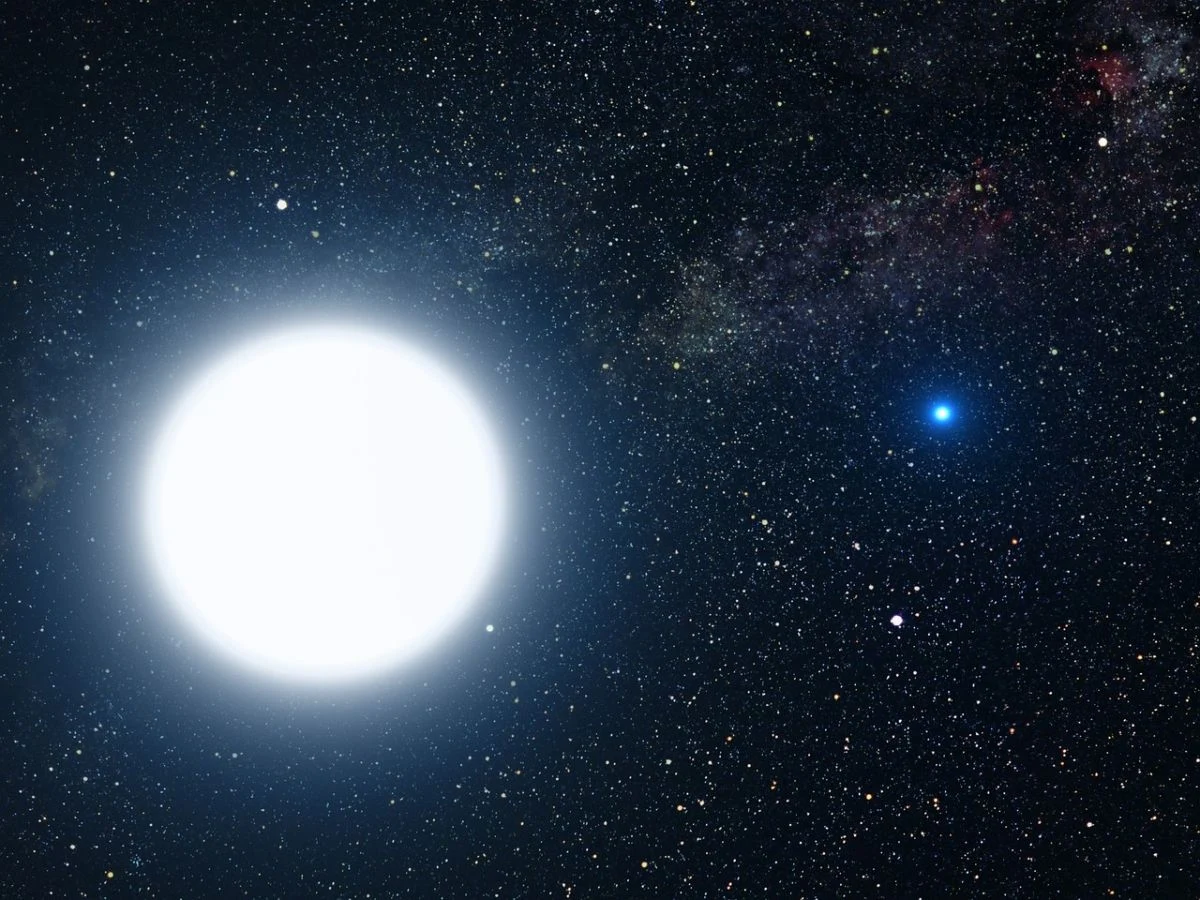
    RXJ0528+2838 is a white dwarf situated around 730 light-years away from our solar system. It exists in a binary system with a star that is similar to our Sun and is responsible for these mysterious jets of matter.

    The Enigma of Accretion Disks

    White dwarfs are generally known for their strong gravitational force, which allows them to pull material from their companion star. This process leads to the formation of an accretion disk, which then produces powerful jets. However, this particular white dwarf hasn’t shown any signs of an accretion disk. Simone Scaring, an associate professor at Durham University in the UK, shares:

    “We discovered something that has never been observed before and, even more importantly, completely unexpected. The astonishment that a seemingly quiet, discless system could create such a stunning nebula was one of those rare ‘wow’ instances.”

    Theories and Mysteries

    Despite the lack of definitive conclusions, astronomers have put forth several theories. Observations made by the Muse (Multi Unit Spectroscopic Explorer) on the Very Large Telescope hint that the magnetic field of this white dwarf might be the cause behind these jets of matter. However, the mystery persists, as these jets have been active for 1,000 years, and the source of this energy remains unknown.

    Source:
    Link


  • Astronomers Capture First Moments of Supernova Shock Wave

    Astronomers Capture First Moments of Supernova Shock Wave

    Key Takeaways

    1. Supernova 2024ggi erupted on April 10, 2024, in the galaxy NGC 3621, located 22 million light-years from Earth.
    2. The supernova had a mass between 12 to 15 times that of the sun and transformed into a neutron star post-explosion.
    3. Researchers used spectropolarimetry with the Very Large Telescope (VLT) to study the supernova’s explosion.
    4. The explosion exhibited a flattened shape and maintained symmetry despite interacting with circumstellar material.
    5. This discovery is significant for understanding cosmic events and may lead to further insights in the coming months.


    Many astronomical events take place in the vastness of space, often catching scientists off guard. One such instance is the observation of the initial moments of a supernova shock wave.

    The Supernova 2024ggi

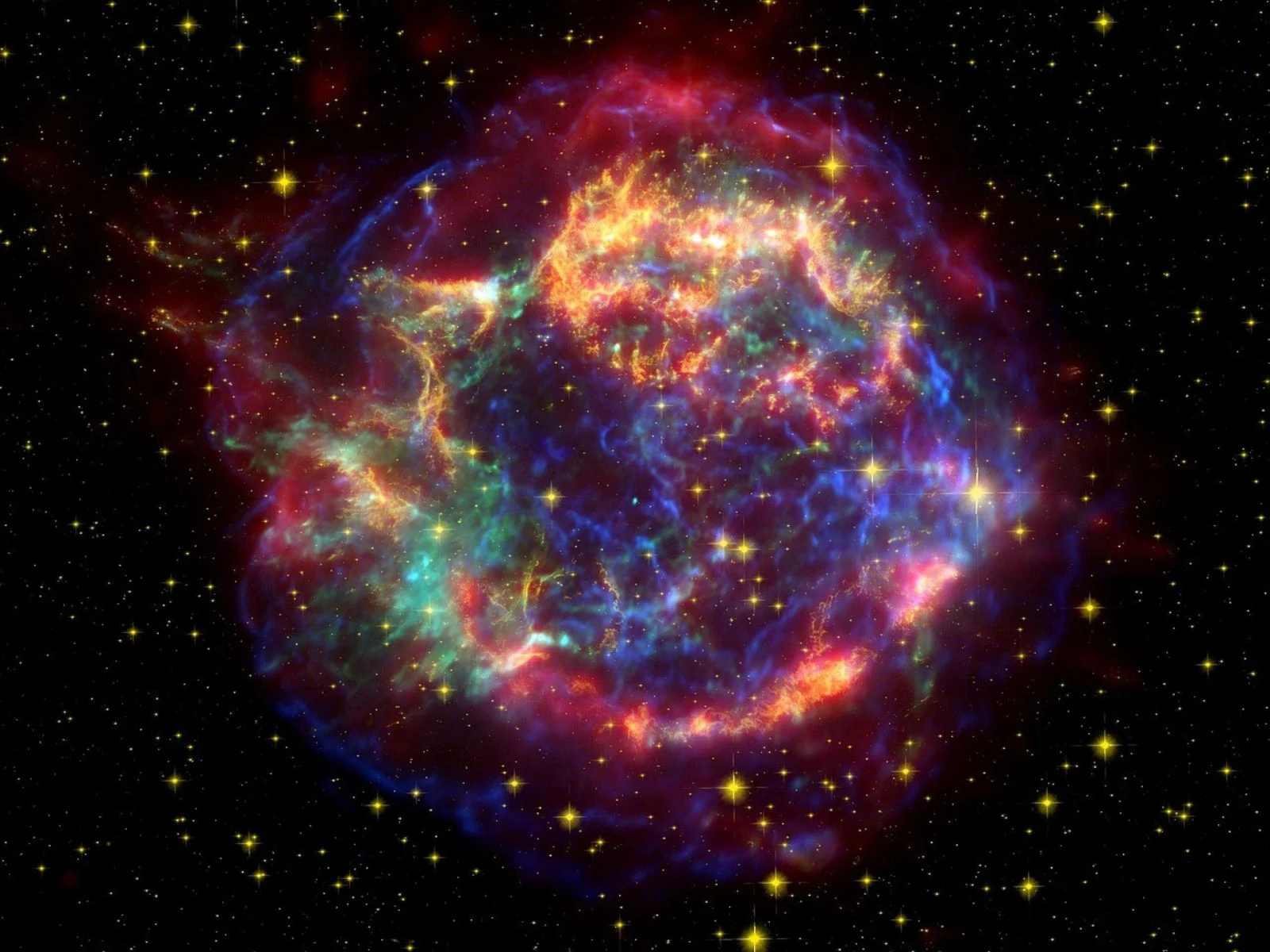
    To delve into this phenomenon, we focus on supernova 2024ggi, which is situated in the spiral galaxy NGC 3621, approximately 22 million light-years away from our planet. When it erupted on April 10, 2024, astronomer Yi Yang from Tsinghua University in Beijing sought time for observations using the Very Large Telescope (VLT) located in Chile.

    Astronomical Findings

    As per Yang, this supernova had a mass ranging from 12 to 15 times that of the sun. Essentially, it was a red supergiant, about 500 times larger than our own sun, which transformed into a neutron star following the explosion.

    Using the FORS2 spectrograph of the Very Large Telescope, researchers employed a technique called spectropolarimetry to study this explosion. As Lifan Wang describes it:

    “Spectropolarimetry provides insights into the geometry of the explosion that other observation methods can’t reveal due to their minimal angular scales.”

    Shape and Implications

    The findings indicated that the explosion had a flattened shape and expanded symmetrically. Surprisingly, it maintained this form even after interacting with a ring of circumstellar material.

    This discovery, being a first of its kind, could enhance our understanding of the universe and the events occurring within it. Furthermore, there are possibilities for new discoveries in the upcoming months, which may lead to additional insights.

    Source:
    Link


  • Upcoming Supernova: A Celestial Event You Can See Soon

    Upcoming Supernova: A Celestial Event You Can See Soon

    Key Takeaways

    1. V Sagittae is a binary star system over 10,000 light-years away, exhibiting unstable activity and brightness.
    2. The system consists of a massive star and a white dwarf that orbits every twelve hours, leading to intense thermonuclear reactions.
    3. Researchers identified a large gas ring around the stars, indicating the white dwarf cannot absorb all the material from its companion star.
    4. Scientists predict a potential supernova explosion that could be visible even during the day due to the buildup of material and possible collision.
    5. The timing and intensity of the supernova event are uncertain, with other cosmic phenomena possibly affecting the timeline.


    The universe is full of unexpected wonders, like this interstellar object currently in our solar system, which brings up lots of questions. Before long, a supernova might be seen in the sky, even during the day.

    V Sagittae’s Unusual Behavior

    For over a hundred years, scientists have been watching V Sagittae, a binary star system situated more than 10,000 light-years away from our planet. This system shows very unstable activity and brightness. It consists of a gigantic star and a white dwarf, both in an orbit that takes just twelve hours to complete.

    The Cause of Potential Explosion

    This setup leads to intense thermonuclear reactions, as the white dwarf pulls in material from its companion star. Using the Very Large Telescope, researchers have identified a large gas ring surrounding the two stars, which highlights that the white dwarf cannot absorb all the material from the other star.

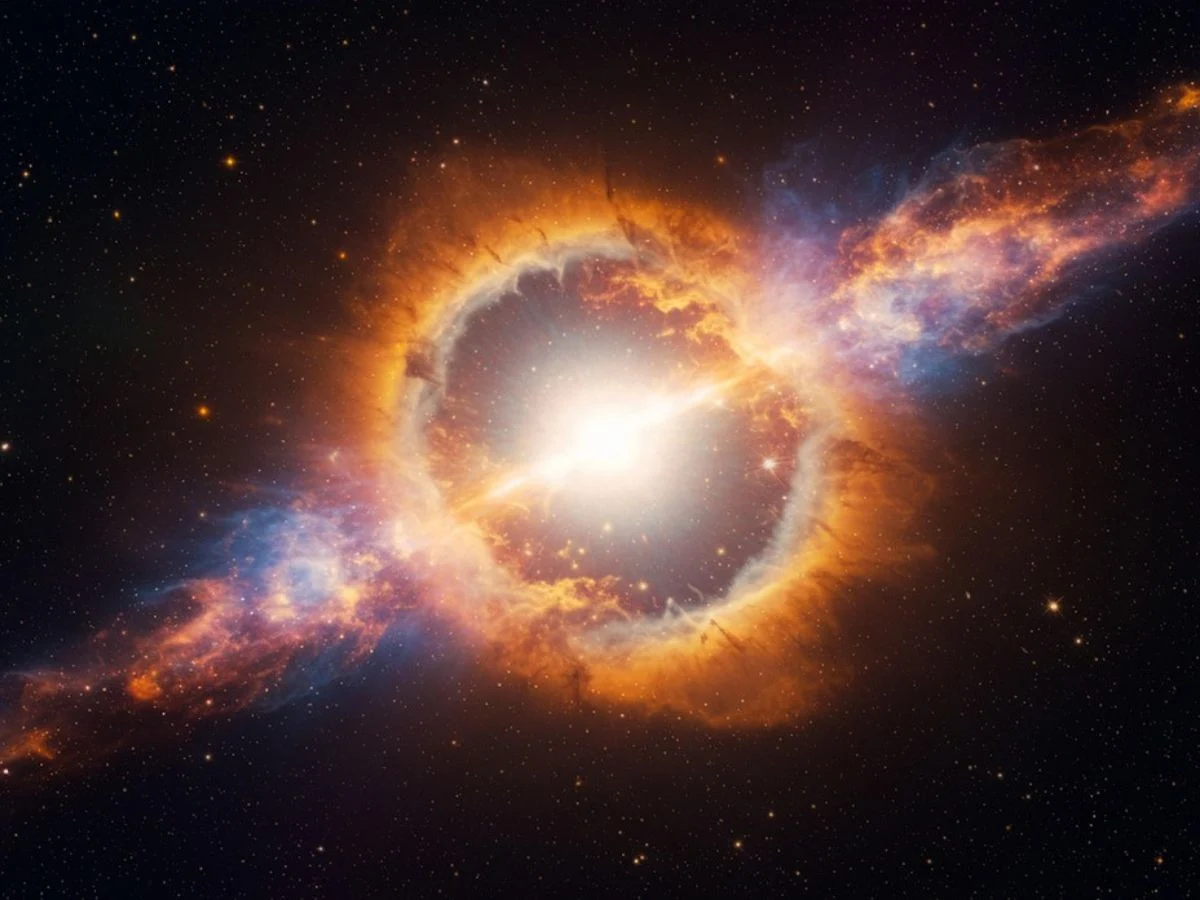
    Given this intense situation, scientists think that the buildup of this material might soon result in a significant explosion known as a supernova, which will be visible without any special equipment. Moreover, they anticipate that the two stars might collide, resulting in a supernova that could even be seen during daylight hours.

    Uncertain Timing and Intensity

    Determining when this spectacular event will happen and how strong it will be is challenging. There are also other cosmic phenomena that could occur before this event, potentially changing the timeline.

    Source:
    Link


  • Astronomers Discover Rare Star That Exploded Twice for First Time

    Astronomers Discover Rare Star That Exploded Twice for First Time

    Key Takeaways

    1. Supernovas are massive explosions of stars, with two main types: Type Ia and Type II.
    2. Type Ia supernovas occur in binary systems when a white dwarf pulls material from a companion star and reaches the Chandrasekhar limit.
    3. Type II supernovas happen when a star’s core collapses after exhausting its fuel reserves.
    4. A unique Type Ia supernova, named SNR 0509-67.5, was discovered 160,000 light-years away and exploded about three centuries ago.
    5. This supernova exploded before reaching the Chandrasekhar limit, challenging current scientific models and prompting further research into supernovas.


    From the Big Bang until now, the universe has seen many significant transformations. One of the most notable is the phenomenon of supernovas, which are massive explosions of stars. Recently, astronomers have made a groundbreaking find: they identified a star that has exploded not once, but twice.

    Types of Supernovas

    To grasp this discovery, it’s crucial to recognize that there are two main categories of supernovas, which are classified based on the stars’ properties and the causes of their explosions. The first type, known as Type Ia supernovas, occurs in binary systems where a white dwarf pulls material from a companion star until it hits the Chandrasekhar limit, approximately 1.4 times the Sun’s mass. Once this threshold is crossed, instability leads to a massive explosion.

    The second kind, Type II supernovas, happens when the core of a star can no longer bear its gravity, resulting in a rapid collapse followed by an enormous blast. Typically, this event takes place once the star has depleted all its fuel reserves.

    A Unique Discovery

    This remarkable discovery involves a Type Ia supernova located 160,000 light-years from Earth, identified using the Very Large Telescope. The supernova, named SNR 0509-67.5, is believed to have exploded around three centuries ago in the Dorado constellation within the Large Magellanic Cloud.

    Delving deeper, researchers who published their findings in Nature Astronomy explain that the initial explosion was triggered by helium buildup around the white dwarf, generating a shock wave around the star. Subsequently, the entire star experienced a powerful detonation at its core.

    New Insights for Astronomers

    Interestingly, current scientific models do not predict that a star like a Type Ia supernova could explode before reaching the Chandrasekhar limit. Yet, in this particular case, the explosion occurred significantly before this limit was achieved, stirring great interest among astronomers worldwide who focus on this area of research. Consequently, SNR 0509-67.5 may become a crucial topic for further investigation, especially for enhancing our understanding of supernovas and their impacts on the universe.

    Source:
    Link