Category: Computers

  • HP launches 14-inch laptop with 64GB RAM, cellular, 120Hz OLED display worldwide

    HP launches 14-inch laptop with 64GB RAM, cellular, 120Hz OLED display worldwide

    Key Takeaway

    – HP launched the EliteBook X G2a with Ryzen AI 400 series CPUs, starting at $3,105 (64-bit Windows 11 Pro included) and configurable up to high-end specs, including 64 GB RAM and 1 TB SSD.
    – The same model is available in UK, Eurozone, and US with analogous configurations and prices, staggered by region; notable top-spec options include Ryzen AI 9 HX PRO 470, 64 GB RAM, 1 TB PCIe Gen 5 storage, and an OLED 1200p display.
    – The EliteBook X G2a offers add-ons such as a haptic trackpad, NFC, and optional 5G connectivity, with regional variations in display options (OLED in some markets) and a notable price disparity compared to the older X G1a.


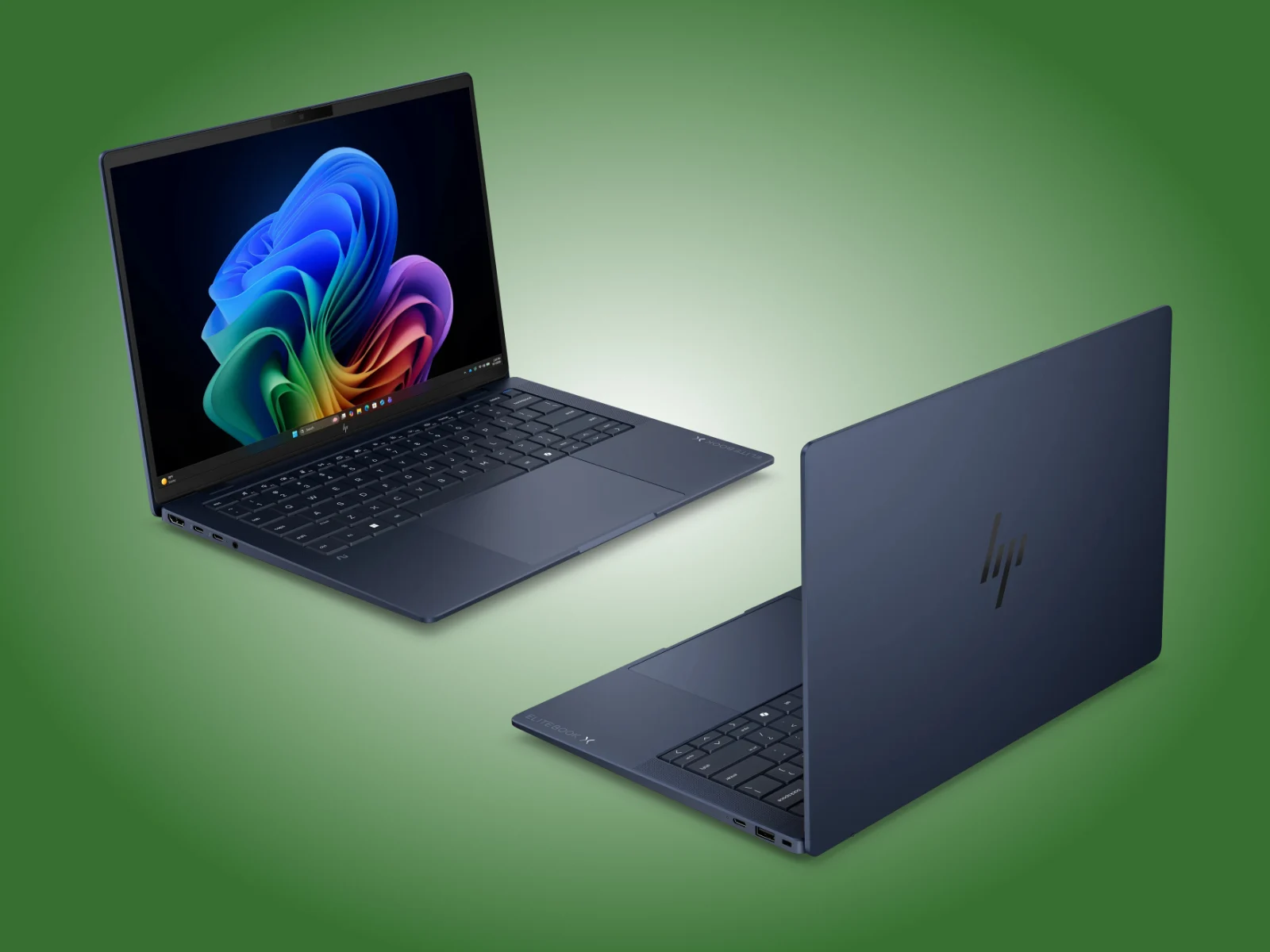
    HP has quietly started selling one of its latest 14-inch laptops powered by AMD Ryzen AI 400 processors. Announced during CES 2026 in January, the EliteBook X G2a was joined by the Snapdragon X2-based EliteBook X G2q, too. Incidentally, the latter has now gone on sale globally as well, full details of which we have covered separately.

    Pricing and availability

    By default, the Elitebook X G2a starts at $3,105 with the Ryzen AI 5 435, 16 GB of RAM and 512 GB of PCIe Gen 4 storage. This pricing includes a Windows 11 Pro licence though, which can be swapped with FreeDOS for a $250 saving. Nonetheless, the EliteBook X G2a is significantly more expensive than the EliteBook X G1a that we reviewed in early 2025 (curr. $1,199 on Amazon).

    Regional pricing

    By contrast, the same configuration costs £1,535 in the UK. Configurations range up to £3,323 with a Ryzen AI 9 HX PRO 470, 64 GB of RAM, a 1 TB SSD and a 1800p (2.8K) Tandem OLED display featuring a 120 Hz refresh rate. Meanwhile, HP lists the EliteBook X G2a in the Eurozone with the same processor for €4,119 but 32 GB of RAM, a 1 TB SSD and a 1200p IPS display.

    US options

    The company offers similar configurations in the US, too. At the time of writing, the EliteBook X G2a can be purchased there with the Ryzen AI 9 PRO HX 470, 64 GB of RAM, 1 TB of PCIe Gen 5 storage and the same OLED display as in the UK. A haptic trackpad, NFC and 5G cellular connectivity can be added too, but for a total price of $6,975 at the time of writing. Please see HP’s website for more details.


  • Lenovo 16″ Laptop with 32GB RAM and Intel Panther Lake

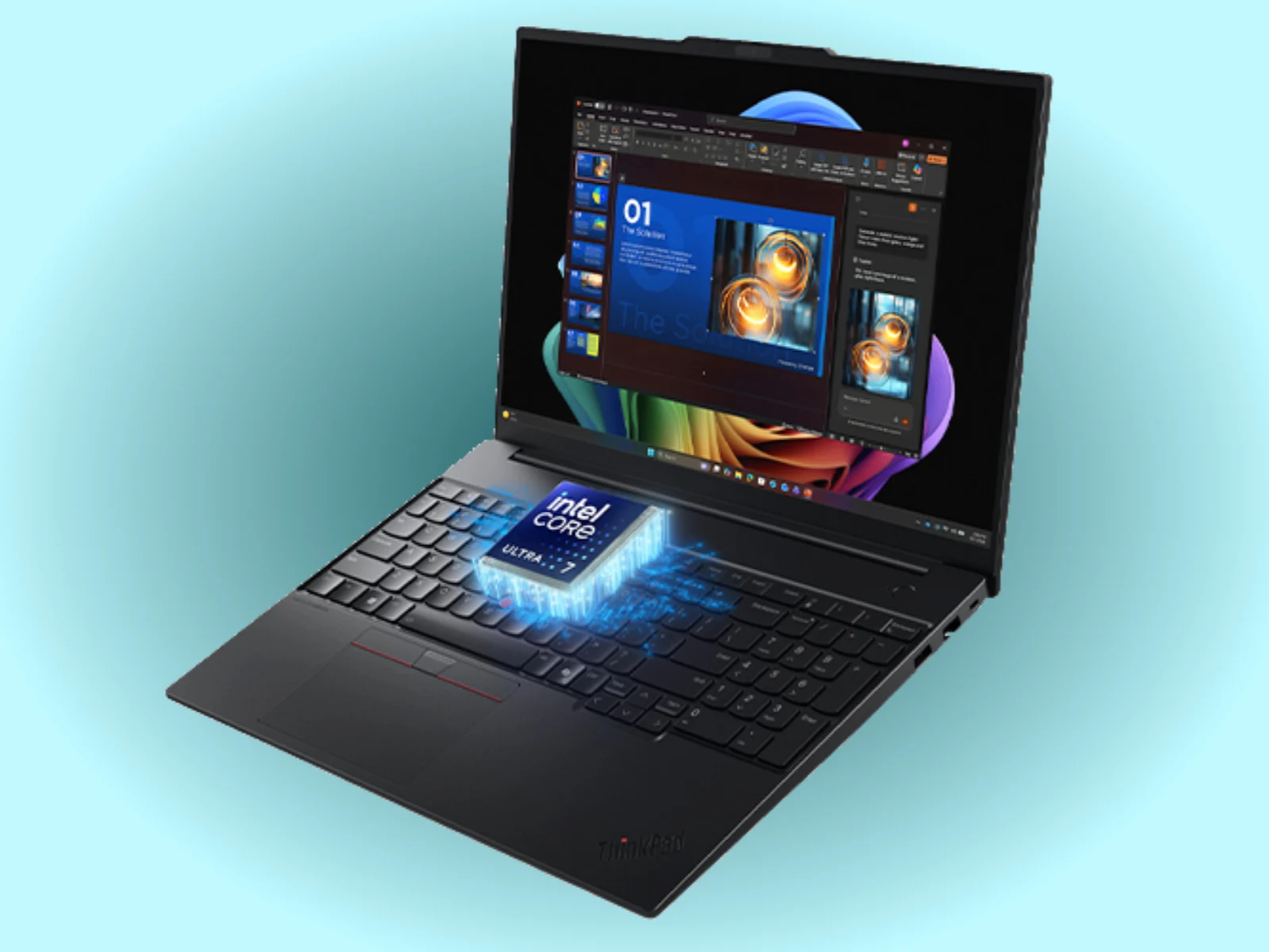
    Lenovo 16″ Laptop with 32GB RAM and Intel Panther Lake

    Key Takeaway

    – ThinkPad E16 Gen 4 shifts to Intel Panther Lake and offers Core Ultra 5–7 configurations, with RAM up to 64 GB and PCIe 4.0 storage options.
    – Choices between Wi‑Fi 6E or Wi‑Fi 7, and battery options of 48 Wh or 64 Wh (64 Wh model rated for over 32 hours in official tests).
    – Display options include default 1200p/60 Hz (45% NTSC) or higher-end 1600p/120 Hz with 100% sRGB and 400 nits brightness; up to 64 GB RAM in some regions.


    Lenovo ThinkPad E16 Gen 4 Update and Context

    Lenovo has finally released its new ThinkPad E16 generation in some capacity. To recap, the company has just updated the ThinkPad E16 Gen 3 with Lunar Lake processors. Running alongside existing Arrow Lake options (curr. $1,299 on Amazon), these Lunar Lake models serve as cheaper options in Lenovo’s 16-inch ThinkPad portfolio.

    Gen 4 Variants and Core Ultra Configurations

    Now, it has complemented the ThinkPad E16 Gen 3 with Gen 4 variants. This time, Lenovo has switched to Intel’s newer Panther Lake platform, albeit without powerful Core Ultra X variants. Instead, the ThinkPad E16 Gen 4 starts with a Core Ultra 5 325 and can be configured through to the Core Ultra 7 356H as needed.

    RAM, Storage, Connectivity, and Battery Options

    Additionally, Lenovo offers its new 16-inch ThinkPad with 16 GB or 32 GB of DDR5-5600 RAM and 256 GB, 512 GB or 1 TB of PCIe 4.0 storage via an M.2 2242 drive. Moreover, the laptop comes with a choice between Wi-Fi 6E or Wi-Fi 7 connectivity and 48 Wh or 64 Wh batteries, the latter of which is rated to last over 32 hours in official battery life tests.

    Display Options and Color Gamut

    By default, the ThinkPad E16 Gen 4 comes with a 1200p IPS display that peaks at 60 Hz and 45% NTSC, colour space coverage. Alternatively, Lenovo offers up to a 1600p and 120 Hz IPS panel with 100% sRGB colour space coverage and 400 nits peak brightness at its disposal.

    Pricing and Market Reach

    Currently, pricing starts at HKD 12,074, AUD 1,862, MYR 5,745 and SGD 2,525 (~$1,976) in Hong Kong, Australia, Malaysia and Singapore, respectively. For reference, Lenovo charges at least SGD 4,092 (~$3,203) for the ThinkPad P16s i Gen 5 in Singapore. Eventually, the ThinkPad E16 Gen 4 should reach more markets with up to 64 GB of RAM. Unfortunately, it remains to be seen when that will be the case.


  • MSI Pro Max 27 QD-OLED Monitor with DarkArmor Scratch-Resistant【65 characters】

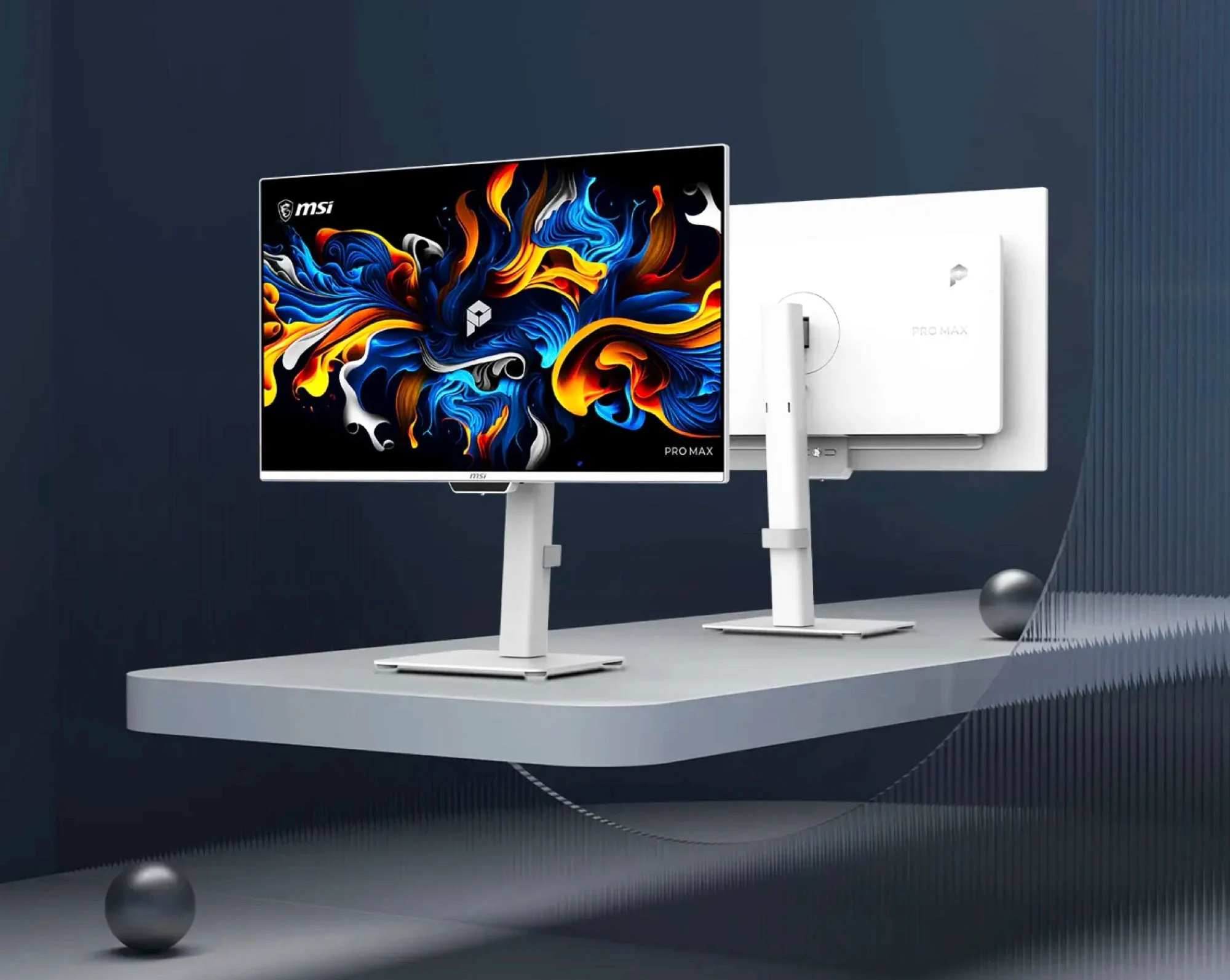
    MSI Pro Max 27 QD-OLED Monitor with DarkArmor Scratch-Resistant【65 characters】

    Key Takeaway

    – High-end professional OLED with 26.5″ QD OLED, 3840×2160, 120 Hz, and 1,000 nits peak HDR brightness, targeting both Windows and macOS workflows.
    – Strong color and brightness tooling via MSI M-Mate app and extensive color coverage (≈99% DCI-P3, ≈97.5% Adobe RGB) with DarkArmor coating for improved blacks in bright environments.
    – Versatile connectivity and power delivery: two USB-C ports (one up to 98 W, one up to 15 W), plus two HDMI 2.1 and DisplayPort 1.4a; built-in 2.5W×2 speakers; height-adjustable stand.


    Overview

    Most OLED monitors in recent years have been aimed specifically at gaming enthusiasts, with a few exceptions such as the Asus ProArt OLED ($1,699 on Amazon). With the Pro Max 271UPXW12G, MSI now offers another monitor for professional users, which should work perfectly not only with Windows, but also with macOS. On the one hand, the MSI M-Mate app makes setting color profiles and brightness more convenient. And on the other hand, the monitor is equipped with a USB-C port that can charge MacBooks with up to 98 watts. A second USB-C port supplies up to 15 watts of power, which is enough to charge an Apple iPad, for example. Alternatively, two HDMI 2.1 and one DisplayPort 1.4a are also available. MSI installs 2 x 2.5 watt stereo speakers and includes a height-adjustable stand.

    Display and Color Performance

    The highlight of the equipment is the 26.5-inch QD OLED panel, which offers a resolution of 3,840 x 2,160 pixels, a frame rate of 120 Hz and a peak HDR brightness of 1,000 nits. According to MSI, 99% of the DCI-P3 color space can be displayed and 97.5% of Adobe RGB. A coating that MSI calls “DarkArmor” is said to make black appear 40 percent darker in daylight, as less ambient light is reflected, while the display is 2.5 times more scratch-resistant as a result.

    Release Details

    MSI has not yet confirmed when or at what price the MSI Pro Max 271UPXW12G monitor will be launched. Further information can be found on the official product page.


    Sources

  • AlmaLinux 10.2 & 9.8 Update: New Compilers and Security Enhancements

    AlmaLinux 10.2 & 9.8 Update: New Compilers and Security Enhancements

    Key Takeaway

    – AlmaLinux 9.8 “Olive Jaguar” and 10.2 “Lavender Lion” are released side-by-side with simultaneous release goals for 2026, featuring updated kernels and broader hardware support.
    – 9.8 brings new compiler toolsets, updated module streams, improved security, ALESCo-approved kernel backport, and multi-architecture ISO support (ARM64, IBM Z, IBM PowerPC, x86_64).
    – 10.2 adds parallel Intel/AMD builds with matching EPEL coverage, legacy 32-bit (i686) support, updated compiler toolchains, new language/database packages, and improved security for containerized workloads.


    The AlmaLinux OS Foundation is releasing a side-by-side package drop, presenting the “Olive Jaguar” stable release 9.8 with the 5.14.0-687.5.3.el9_8 kernel and AlmaLinux 10.2, nicknamed “Lavender Lion” powered by the 6.12.0-211.7.3.el10_2 kernel. Previously, the second release tended to trail the first by about a week, so moving to a concurrent release is one of the foundation’s 2026 goals. Anyone curious about the 2026 aims should read this blog post.

    New features in Olive Jaguar

    AlmaLinux 9.8 “Olive Jaguar” ships with fresh compiler toolsets, refreshed module streams, and tightened security. A number of packages receive updated versions along with various tweaks and fixes, including an ALESCo-approved kernel backport ahead of upstream. The ISO images target ARM64, IBM Z, IBM PowerPC, and 64-bit Intel/AMD platforms. The full release notes are accessible on the linked page.

    Lavender Lion and its parallel build

    Even though it supports the same architectures, AlmaLinux 10.2 “Lavender Lion” also comes with a parallel Intel/AMD build that matches EPEL coverage for older hardware. The key highlights include updated compiler toolsets, new language and database packages, and improved security. Thanks to i686 userspace packages now in a stable stage, AlmaLinux 10.2 enables legacy 32-bit software and CI pipelines, as well as containerized workloads. The full release notes can be found here.

    Cloud, container, and live images

    In addition to the above, it should be noted that a variety of cloud, container, and live images are available for both releases (see the Source link for details). This ensures versatile deployment options across environments while maintaining compatibility and ongoing updates.

    Sources
  • Leica 44 MP Full-Frame Camera Coming Soon

    Leica 44 MP Full-Frame Camera Coming Soon

    Key Takeaway

    – Leica SL3-P is rumored for June 2026 release with a €5,900 price and a 44 MP full-frame sensor, positioned between the SL3-S (24 MP, €5,190) and SL3 (60 MP, €6,990).
    – The camera is reportedly based on the Panasonic Lumix S1RII architecture, not on the SL3-S or SL3, with Leica-like menu/RAW adaptations but a premium price.
    – Expected tradeoffs: higher resolution and faster autofocus than SL3-S, but worse video performance; operating concept said to resemble Panasonic cameras more than typical Leica bodies.


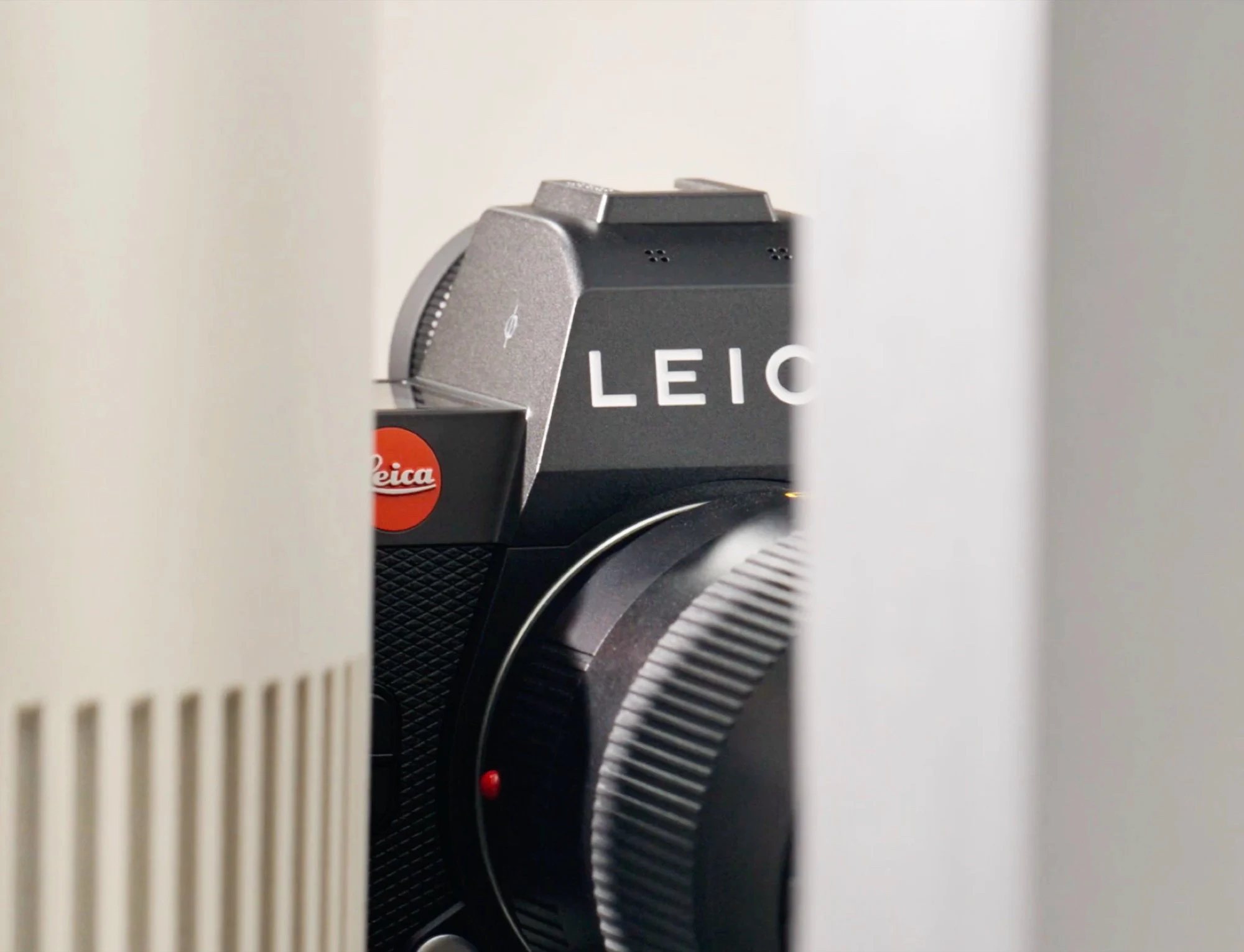
    Rumors swirling since March about Leica’s next big release, the SL3-P, have now found some firmer footing as LeicaRumors reports fresh details. The anticipated launch window points to June 2026, with a suggested retail price hovering around €5,900 and a 44-megapixel full-frame sensor aboard. The revelation frames the camera as a midpoint in the SL3 lineup, straddling performance and price in intriguing ways.

    New specs emerge

    The leaked specs place the SL3-P squarely between the SL3-S and the SL3. The SL3-S offers 24 MP for €5,190, while the SL3 sports a beefier 60 MP sensor for €6,990. Yet insiders claim the SL3-P isn’t simply a rehash of either model. Instead, it purportedly borrows its core from the Panasonic Lumix S1RII, which debuted in February 2025 and currently sells for around $2,997 in the U.S. market. This mix suggests Leica is pursuing a unique cross-brand approach with this release.

    Branding and design choices

    Historically, Leica has tweaked menus, controls, and RAW files in DNG format to fit its own ecosystem, even when underlying hardware originates elsewhere—seen in the D-Lux 8’s basis on the Panasonic LX100 II. For the SL3-P, buyers might still encounter Leica’s signature look in UI and processing, but the hardware performance could align closely with its Panasonic counterpart, raising questions about premium pricing for essentially similar image quality.

    In terms of target audience, the information from LeicaRumors hints that the SL3-P will edge ahead in resolution and autofocus speed relative to the SL3-S, while potentially sacrificing some video capabilities. This positioning suggests a camera aimed more at stills shooters, with an operating concept that leans toward Panasonic-like ergonomics rather than a pure Leica experience. If accurate, the pricing premium over the S1RII will be a hot topic for early buyers and analysts alike.

    Market positioning

    The overall strategy appears to be a blend of premium branding and pragmatic hardware sourcing. If the SL3-P uses the Lumix S1RII’s sensor and processing backbone, Leica would be leveraging established tech while charging a higher price due to its name and post-processing pipeline. The expected June 2026 launch supports a staggered rollout that could test consumer appetite for a Leica-branded camera built on another brand’s core tech.


    Sources

  • Pay for Ryzen 7, Get Less Than Ryzen 5 in AMD Marketing Spin

    Pay for Ryzen 7, Get Less Than Ryzen 5 in AMD Marketing Spin

    Key Takeaway

    – Ryzen AI 7 345 laptops are priced higher than Ryzen AI 5 340 counterparts, despite the 7 model being slower in core configuration and overall performance.
    – The 345’s core count is effectively two large Zen 5 cores plus an underclocked Zen 5c core, with a 200 MHz lower boost clock, reducing CPU performance versus the 5 340.
    – AMD has halved the L3 cache and removed two PCIe 4.0 lanes (out of 16), contributing to the performance disadvantage.
    – The Radeon 840M GPU remains the same in both chips but with only four compute units, making it unsuitable for most gaming.
    – Overall, the Ryzen AI 7 345 offers less performance than expected in its tier, while being more expensive.


    The initial preorders for the new AMD Ryzen AI 7 345 equipped laptops have begun in Europe, and a quick glance at the price comparison site Geizhals confirms this. The most affordable notebook with this processor is listed at €999, indicating that systems sporting Ryzen AI 7 345 are notably pricier than those built around Ryzen AI 5 340, such as the HP OmniBook 3 which can be found around $590 on certain retailers.

    Pricing contrasts and expectations

    Interestingly, consumers may assume the 7-series would outpace the 5-series, yet the Ryzen AI 7 345 actually trails the Ryzen AI 5 340 in overall performance. The core reason given is that the newest Ryzen design name is a bit deceptive, since the chip features only two full Zen 5 cores rather than three, and those two cores run at a boost clock that sits about 200 MHz lower. An extra Zen 5c core exists, but it operates at even lower frequencies, which could translate to slightly reduced CPU performance relative to the Ryzen AI 5 340.

    Hardware specifics and gaming implications

    On the memory and I/O front, AMD has trimmed the L3 cache by half when compared with the Ryzen AI 5 340, and two PCIe 4.0 lanes have been removed from the mix. The Radeon 840M GPU design remains the same on both chips, yet with only four compute units, it tends to be too slow for many modern games. When looking at the Ryzen AI 7 350 as a reference point, the newest Ryzen AI 7 appears considerably slower than what one might expect from a top-tier member of this family.

    In sum, the price-to-performance relationship for the Ryzen AI 7 345 seems misaligned at present, with higher costs not clearly rewarded by stronger performance in typical workloads. Prospective buyers might weigh these dynamics carefully, especially if gaming or heavy multitasking is a primary concern, and compare closely against Ryzen AI 5 340 options before committing to a purchase.

  • HP launches gaming laptop with 64GB RAM and Intel Panther Lake

    HP launches gaming laptop with 64GB RAM and Intel Panther Lake

    Key Takeaway

    – HP’s Intel-based Omen 16 now offers Core Ultra 7 356H or Core Ultra 9 386H options, but the anticipated Core Ultra 9 275HX is absent from configurators.
    – GPU options include GeForce RTX 5060 (8 GB) or RTX 5070 (8 GB); RAM up to 64 GB and storage up to 2 TB PCIe Gen 4 SSD.
    – Configurability includes Wi‑Fi 6/7, 1-zone or 4-zone RGB keyboard, and three display choices (one OLED); batteries 70 Wh or 83 Wh.
    – Starting price is $2,099 in the US; availability outside the US not yet confirmed.


    Intro and pricing note

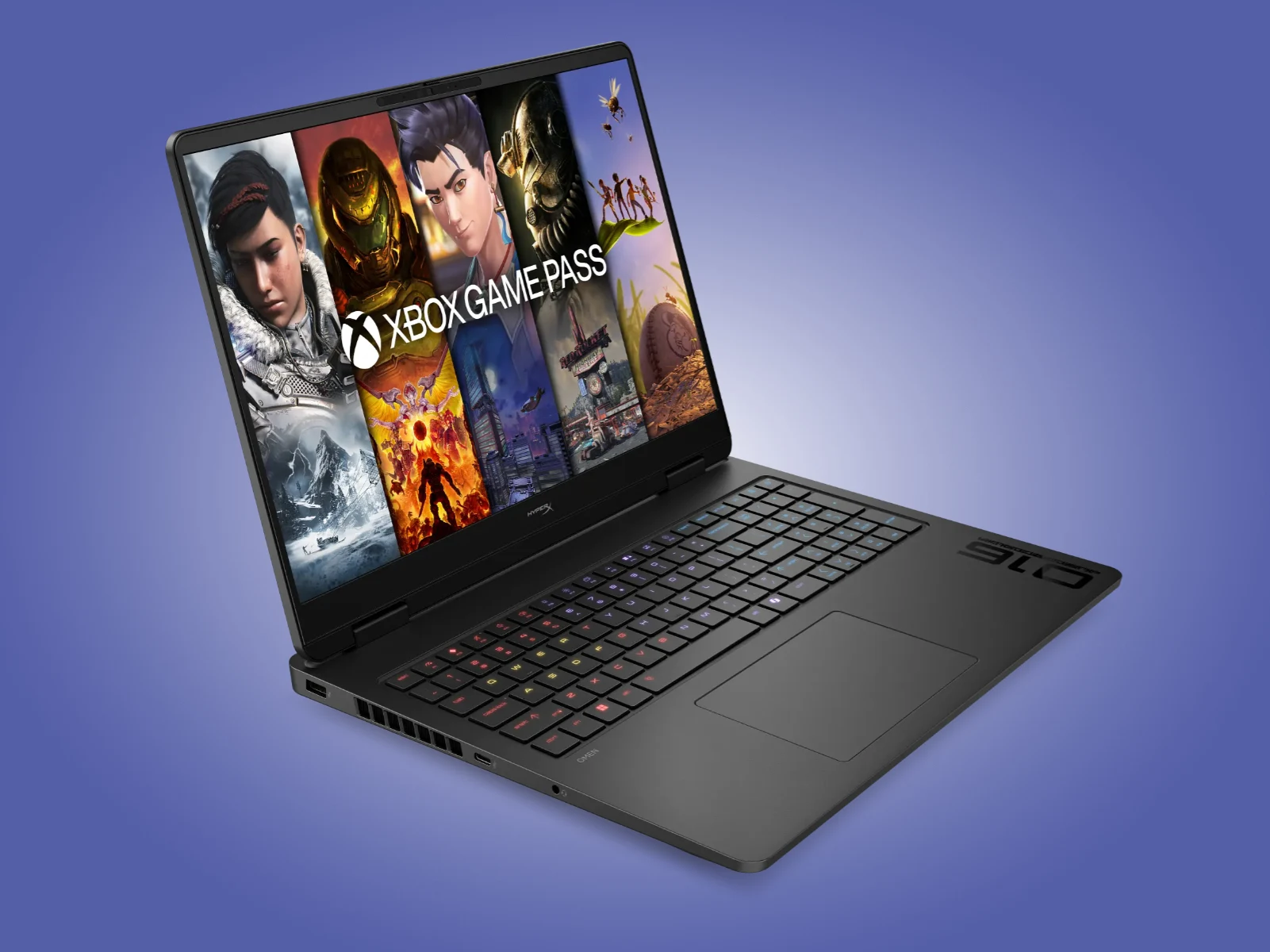
    The latest Intel-powered HyperX Omen 16 is now available to purchase in some capacity. For context, HP revealed new Omen 16 gaming laptops less than three months after we reviewed the company’s 2025 model with AMD Zen 4 processors (curr. $1,299 on Amazon). The article implies a price and options, and we must copy those details here even though links are removed and sources unused. The text mentions pricing starts at $2,099 in the US, a figure we preserve for accuracy here without sourcing.

    Processor lineup described

    At first, HP claimed it would be selling Intel models with up to a Core Ultra 9 386H and Core Ultra 9 275HX from Panther Lake and Arrow Lake-HX families. But by May, the Core Ultra 9 275HX vanished from HP’s configurator. Instead the options shown are Core Ultra 7 356H and Core Ultra 9 386H, with a divergence from the promised top end. The paragraph notes a 7% gap in benchmark separation, and that both CPUs are 16-core beasts with 4 P-cores, 8 E-cores and 4 LP-E cores, yet performance expectations were not fully realized.

    GPU, RAM, and storage choices

    Separating the specs, the new Intel-based Omen 16 can be paired with Nvidia GeForce RTX 5060 (8 GB) or GeForce RTX 5070 (8 GB) laptop GPUs. The 16-inch chassis supports 16 GB, 32 GB or 64 GB of memory and culminates in up to a 2 TB PCIe Gen 4 SSD. Batteries listed include 70 Wh and 83 Wh options, designed to align with the AMD-based counterpart as per the notes. The detailing here sticks to the stated configurations and avoids extraneous commentary.

    Connectivity and keyboards

    On top of that, the new Intel-based Omen 16 can be purchased with Wi-Fi 6 or Wi-Fi 7 connectivity and a 1-zone or 4-zone backlit keyboard. There are three display options to choose from too; only one of these is OLED, though. The paragraph keeps the practical choices intact while preserving the original nuance of feature variety and the limited OLED option.

    Conclusion and availability

    Pricing starts at $2,099 in the US. HP has not confirmed how much the new Intel-based Omen 16 will cost elsewhere. With a mixed lineup of core counts and graphics, buyers can expect a flexible machine, though some promised higher-end CPUs may not be offered in the final configuration. This summation sticks to the presented figures and avoids external sourcing or links as requested.


    Sources

  • AMD Radeon RX 9070 GRE Ready for US Market Ahead of Computex

    AMD Radeon RX 9070 GRE Ready for US Market Ahead of Computex

    Key Takeaway

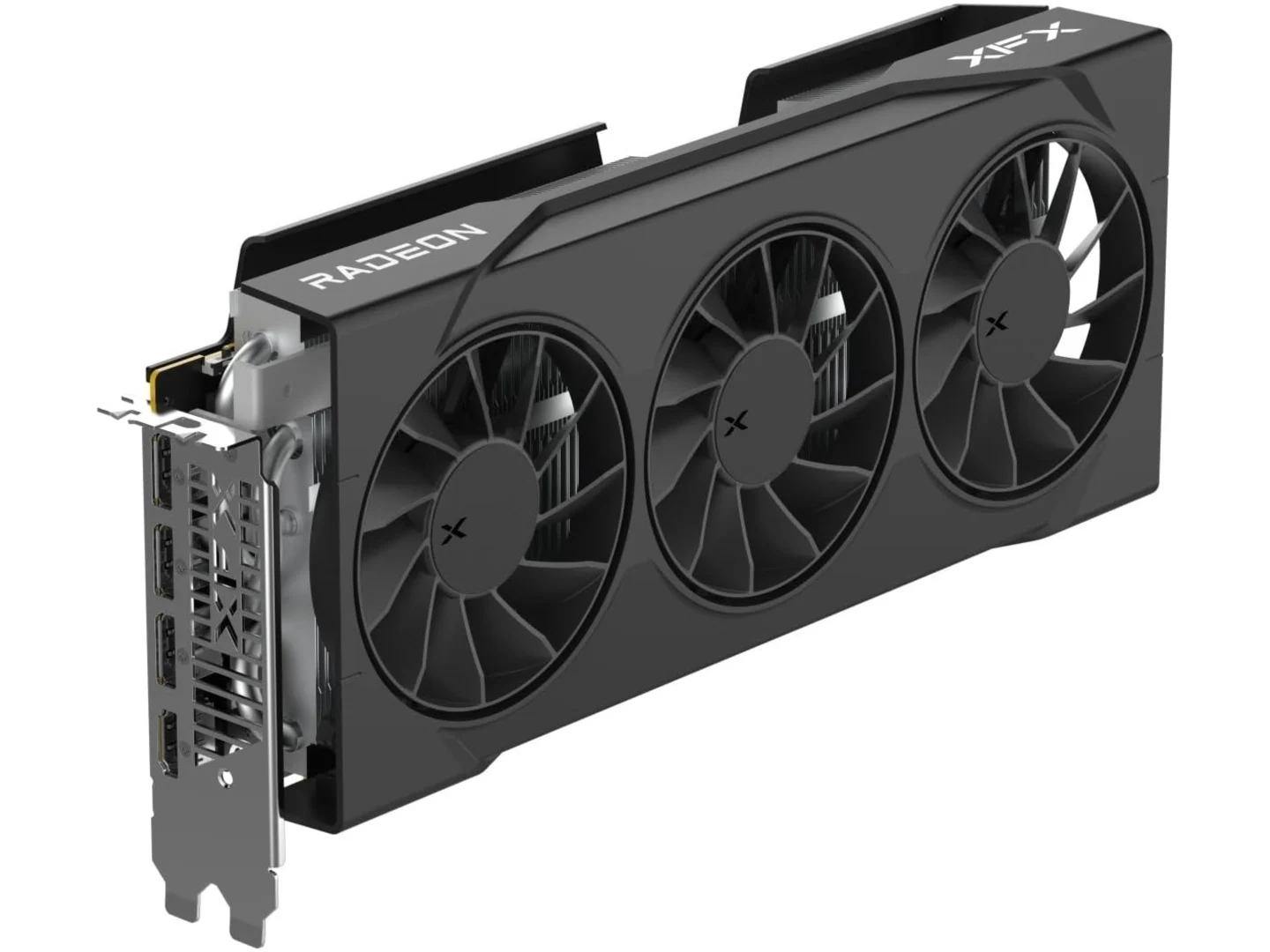
    – The Radeon RX 9070 GRE is expected to launch globally ahead of Computex 2026, with multiple board partners (e.g., XFX Swift, Sapphire Pulse) listing variants pre-launch.
    – The card features 12 GB GDDR6 VRAM, 48 Compute Units (3,072 SP), 48 MB Infinity Cache, up to 2,790 MHz boost, and 220W TDP.
    – Pricing is not confirmed, but the GRE is positioned between RX 9060 XT (~$420–$450) and RX 9070 (~$620–$650), with a speculative middle price around ~$550.


    Radeon RX 9070 GRE News Circulates Ahead of Computex 2026

    It’s been over a year since the Radeon RX 9070 GRE launched in China, and now whispers of a US release are resurfacing. The latest chatter suggests that the card has appeared on Amazon ahead of Computex 2026, hinting that a global rollout could be on the horizon. The buzz is driven by listings noticed by tech community sources, though the pages have since been taken down or altered in various ways.

    Early Listings Point to XFX Swift Variant

    What surfaced were indications of an XFX Swift variant of the AMD Radeon RX 9070 GRE, described as a toned-down version of the RX 9070. Although the pages were removed, screenshots captured by outlets like Wccftech show a Sapphire Pulse AMD Radeon RX 9070 GRE Gaming OC GPU listing as well. These sightings, while not accompanied by explicit pricing, strongly imply that multiple board partners are preparing cards ahead of Computex 2026, scheduled for June 2. The mixed signals from different listings contribute to the sense of anticipation around a wider availability.

    Positioning and Expected Price Range

    The RX 9070 GRE is positioned as the first RX 9070 card to sport 12 GB of VRAM and sits between the RX 9060 XT and the RX 9070 in terms of market placement. The RX 9060 XT typically carries a price around $420 to $450, while the RX 9070 has price points near $620 to $650. Observers expect the 9070 GRE to land in the middle, with a rough estimate near $550. Historical context notes that the Asus model launched in China for about 4,199 RMB, roughly $450 at the time, though current pricing has shifted somewhat upwards since that release window.

    Specifications Highlight

    According to AMD’s disclosed specs, the RX 9070 GRE features 48 Compute Units or 3,072 Stream Processors, backed by 12 GB of 18 Gbps GDDR6 VRAM. It also includes 48 MB of Infinity Cache, a boost clock that can reach up to 2,790 MHz, and a power footprint of 220W TDP. This configuration positions the GRE as a mid-to-high-end offering within the RX 9070 lineup, balancing memory capacity, processing power, and energy efficiency for demanding workloads.

    Community Observations and Market Timing

    Tech enthusiasts on X and various tech news aggregators have been tracking the online presence of the RX 9070 GRE, noting that the visibility around Computex 2026 could coincide with broad retailer listings. While direct price tags remained elusive in the cited listings, the pattern of partnerships and pre-event leaks typically signals a strategic push to capture consumer interest before the show’s opening. The timing aligns with a broader trend of vendors teasing higher-tier GPUs ahead of major industry showcases.

    Sources
  • Raspberry Pi Zero 3 W: Affordable, Un-Zero-Like Price Today

    Raspberry Pi Zero 3 W: Affordable, Un-Zero-Like Price Today

    Key Takeaway

    – Zero 3 W is considered feasible but unlikely to follow the historic rapid cadence; price and RAM constraints are delaying the release.
    – A potential Zero 3 W may require a dual-sided board to fit DRAM and a more modern SoC, increasing complexity and cost.
    – Ongoing LPDDR4/LPDDR4X price pressures are the main reason for postponingZero announcements, aiming for a more reasonable price point.


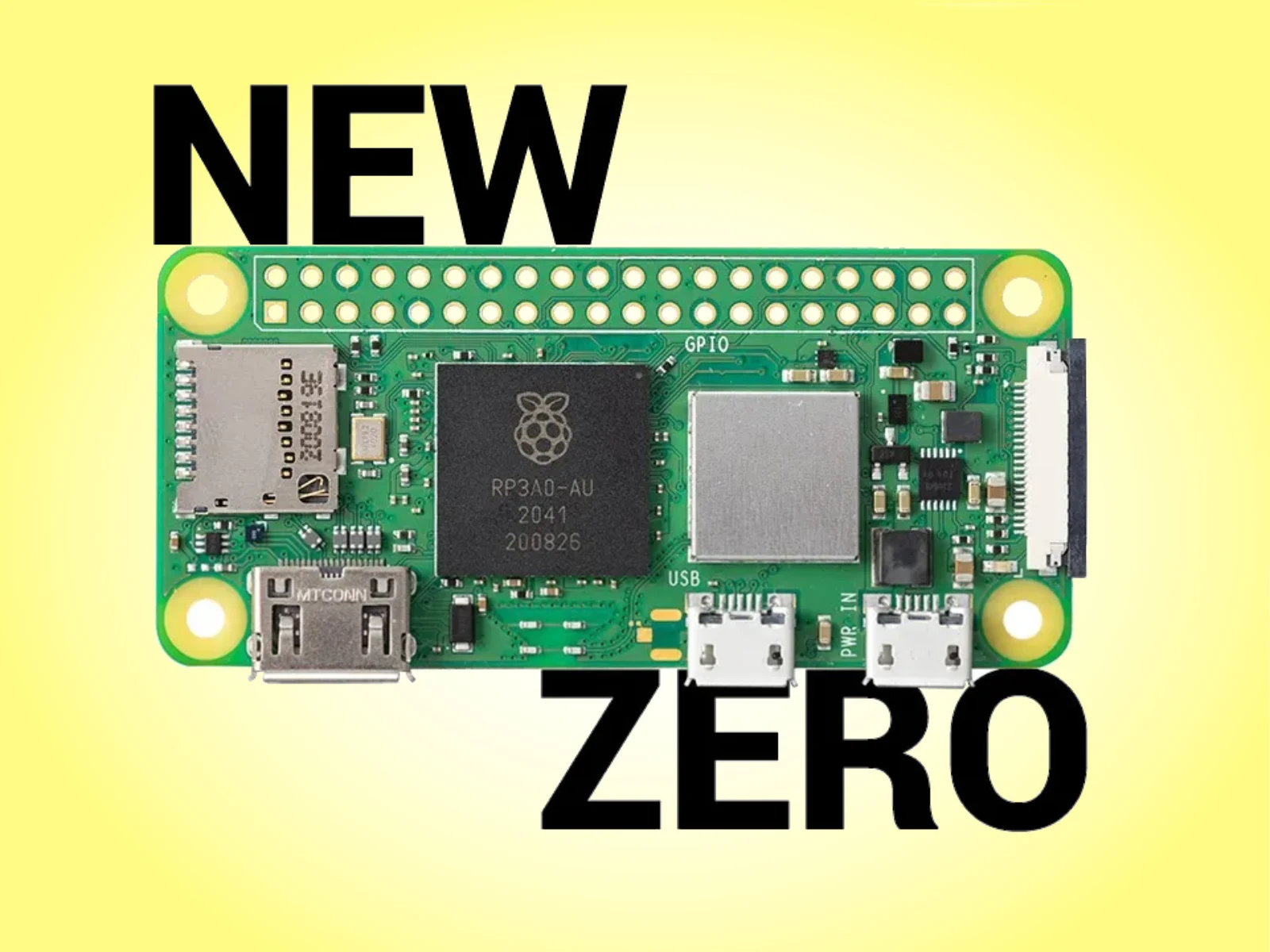
    The Raspberry Pi Zero 2 W is almost half a decade old. Presented in late 2021, the Zero 2 W was originally priced at $15. Additionally, Raspberry Pi complemented its tiny single-board computer (SBC) with a Zero 2 WH variant for those who needed a pre-soldered GPIO header (curr. $36.99 on Amazon).

    Industry Update

    Now, Raspberry Pi CEO Eben Upton has offered early hints about the prospect of it launching a long-awaited Zero 3 W. For context, the company released the original Pi Zero in 2015 at a mere $5. In a Reddit AMA, Upton has indicated that the Zero W series will not follow this release cadence for its third-generation release.

    Feasibility and Hardware Considerations

    Currently, Upton considers a Zero 3 W ‘quite feasible’. However, it stresses that the next Zero-branded SBC may need to adopt a dual-sided SBC to accommodate DRAM and ‘one of the more modern SoCs’. Unfortunately, ongoing LPDDR4 and LPDDR4X price pressures mean that a Zero 3 W would launch with a ‘rather un-Zero-like price point’ today.

    Market Strategy

    As a result, Upton and Raspberry Pi appear to have postponed any new Pi Zero announcements until it can stockpile LPDDR4 and LPDDR4X RAM at more reasonable prices. For reference, Raspberry Pi has also commented on the state of the Raspberry Pi 6, too. Please see our corresponding article for more details about the company’s other anticipated SBC.

    Sources
  • Europe Mini PC with Intel Panther Lake and Arc B390 silent

    Europe Mini PC with Intel Panther Lake and Arc B390 silent

    Key Takeaway

    – Upgraded to Intel Core Ultra X7 358H with integrated Arc B390 iGPU for significantly better CPU and gaming performance while remaining fanless.
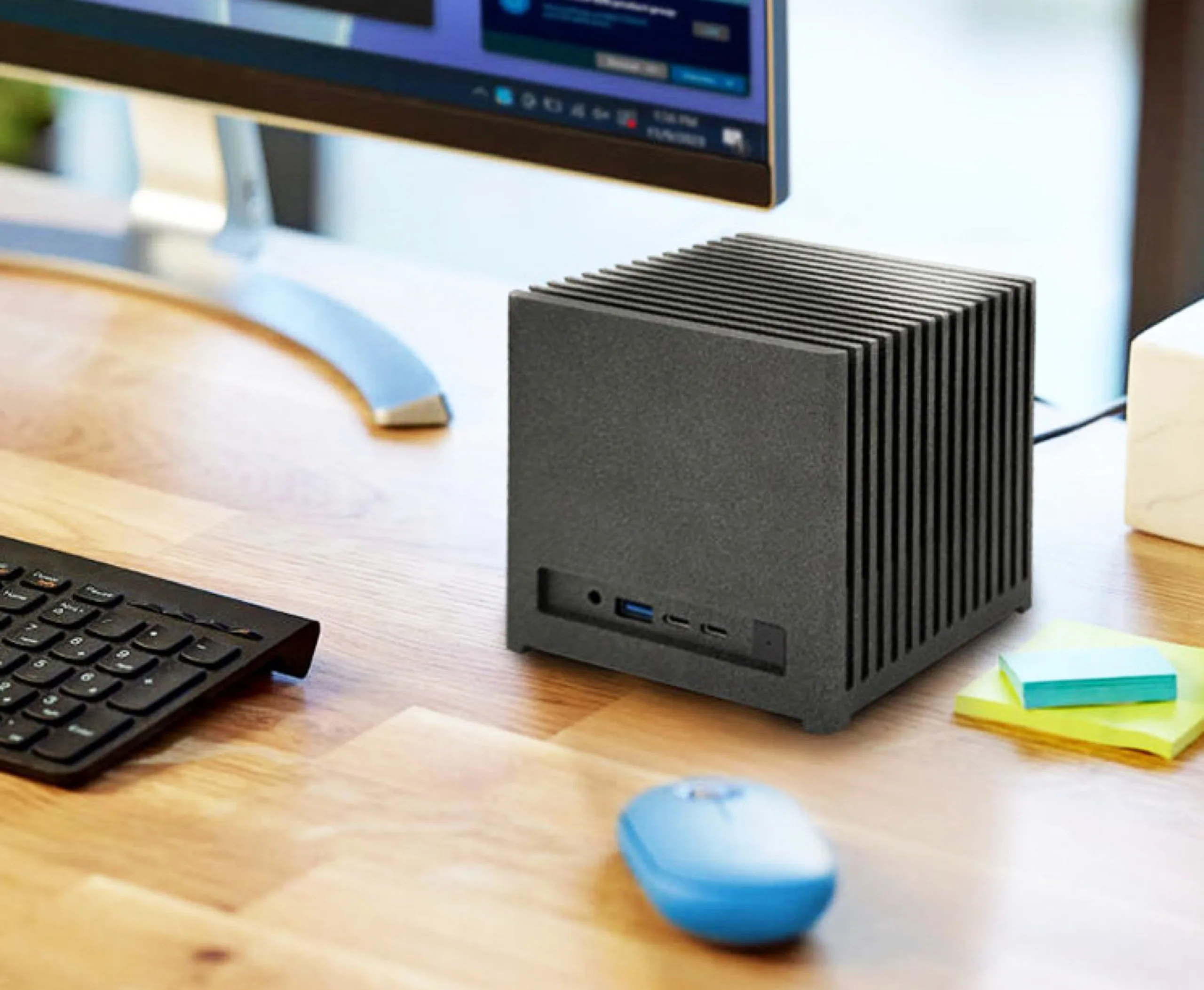
    – Aluminum cube chassis with circumferential cooling fins doubles as a heat sink for silent operation; dimensions: 12 cm edge length.
    – Dual M.2 slots and versatile I/O: 2 USB-A, 2 Ethernet, 2 HDMI 2.1 on rear; front USB-A and 2 USB-C (one with Thunderbolt 4) for expandability.
    – Target price €1,850 (config: 16 GB RAM, 1 TB SSD), positioning as a premium fanless mini PC with strong gaming potential at 1080p.


    Kubb updates its popular mini PC by moving to Intel Panther Lake, promising beefier core performance and stronger graphics thanks to the integrated Arc iGPU.

    New processor and graphics boost

    The Kubb Fanless replaces the Intel Core Ultra 5 225H with the Intel Core Ultra X7 358H, aiming for notably higher CPU power. The built-in Intel Arc B390 iGPU is also said to enhance gaming performance, allowing smoother experiences in lightweight titles at 1080p with mid settings.

    Gaming and pricing

    Intel’s top integrated graphics in this setup are advertised to handle games like Anno 117: Pax Romana, Forza Horizon 6, and The Outer Worlds 2 at 1080p on medium details. The price is listed at €1,850, placing it above several laptops with comparable CPUs, yet the vendor emphasizes silent operation as a key selling point by cooling the chip passively.

    To achieve silent cooling, the case is built from aluminum to act as a large heat sink, with circumferential cooling fins increasing surface area for more efficient thermal management. The compact square form keeps the dimensions small, while still housing two M.2 SSD slots. Back I/O includes two USB-A ports, two Ethernet connectors, and two HDMI 2.1 outputs; the front adds another USB-A and two USB-C ports, one of which supports Thunderbolt 4.

    Availability and configuration

    The Kubb Fanless with Intel Panther Lake is now on sale through Kubb’s online store. A configuration featuring the Intel Core Ultra X7 358H, 16 GB RAM, and 1 TB SSD is priced at €1,850 (about $2,150) not including shipping, continuing the brand’s emphasis on noiseless operation.

    • Two M.2 SSD slots for drives
    • Thunderbolt 4-capable USB-C on the front
    • Passive cooling via a large aluminum chassis

    The compact cube measures roughly 12 cm per side, balancing performance, cooling, and space efficiency in a fanless design.

    Overall, Kubb retains its focus on silent operation and compact size while upgrading to Panther Lake, appealing to buyers seeking a quiet, space-saving mini PC with reasonable gaming capability at 1080p. The €1,850 price tag reflects the premium for passive cooling and improved CPU/GPU performance in a small form factor.


    Sources