Category: Computers

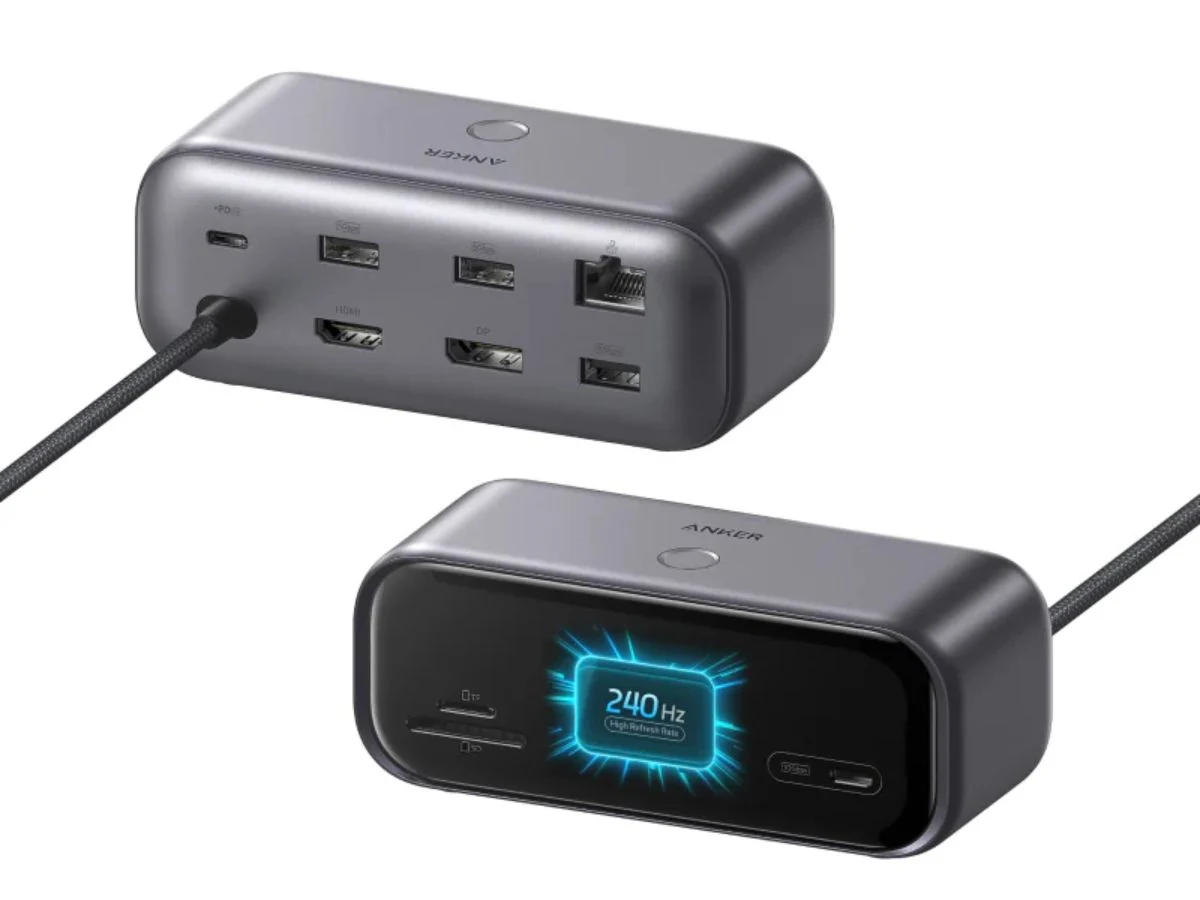
  • Anker 10-in-1 Nano USB-C Hub with 240Hz Display Released

    Anker 10-in-1 Nano USB-C Hub with 240Hz Display Released

    Key Takeaway

    – 10-in-1 hub with 240Hz display, HDMI 2.1 and DP 1.4 for up to 4K@144Hz, and remote charging status via app
    – Front: USB-C 7.5W 10 Gbps, SD/microSD slots (up to 104MB/s)
    – Rear: 100W PD USB-C, three USB-A ports (one 10 Gbps, two 5 Gbps), Gigabit Ethernet, integrated 100W power cable; compact 130x56x50 mm, 300 g


    Overview

    The Anker Nano USB-C Hub (10-in-1, 240Hz, Display) has been unveiled in Japan. Also referred to with model number A210C, this desktop accessory has a larger display with a 240Hz refresh rate, showing charging information. Plus, users can remotely view the charging status in the Anker smartphone app.

    Front-Panel Features

    Anker’s upcoming Nano USB-C Hub (10-in-1, 240Hz, Display) has several outputs set into the display on its front. The first is a USB-C port, delivering up to 7.5W power and a data transfer rate of 10 Gbps. The other two are SD and microSD card slots, each offering speeds of up to 104MB/s.

    Rear Connectivity

    At the rear of the new Anker Nano USB-C Hub is another USB-C port, supporting up to 100W PD charging. There are also three 7.5W USB-A ports, one with a 10 Gbps data transfer rate, and two with a 5 Gbps data transfer rate. Users can connect displays with an up to 4K@144Hz resolution using the HDMI 2.1 port and the DisplayPort 1.4. Finally, there is a Gigabit Ethernet port, and the accessory is powered at up to 100W via an integrated USB-C power cable. The desktop charger measures 130 x 56 x 50 mm (~5.1 x 2.2 x 2.0 inches) and weighs 300 g (~10.6 oz).

    Release Details

    Anker will release its new Nano USB-C Hub (10-in-1, 240Hz, Display) in Japan in Fall 2026. It will be sold in two colorways – dark gray and silver – at the brand’s online store for ¥16,990 (~$107). Whether or when this model could be released in other countries remains to be seen.

    Sources
  • HP launches 16-inch laptop worldwide with 32GB RAM and 1100-nit OLED display

    HP launches 16-inch laptop worldwide with 32GB RAM and 1100-nit OLED display

    Key Takeaway

    – The new OmniBook X Flip 16 uses Panther Lake-based CPUs (Intel Core Ultra 5/7/9 or AMD Ryzen AI variants) with 16–32 GB RAM options and PCIe Gen 4/5 SSDs depending on platform.
    – All models include a 70 Wh battery, Wi‑Fi 7, and optional up to a 1800p OLED display (120 Hz, 100% DCI-P3, 500 nits SDR/1100 nits HDR).
    – Price range starts at $1,499 (US) up to $2,709 (Intel top config); European pricing varies (UK €1,299–€2,299; Eurozone €1,798–€2,099 depending on config).


    OmniBook X Flip 16: A Quick Intro

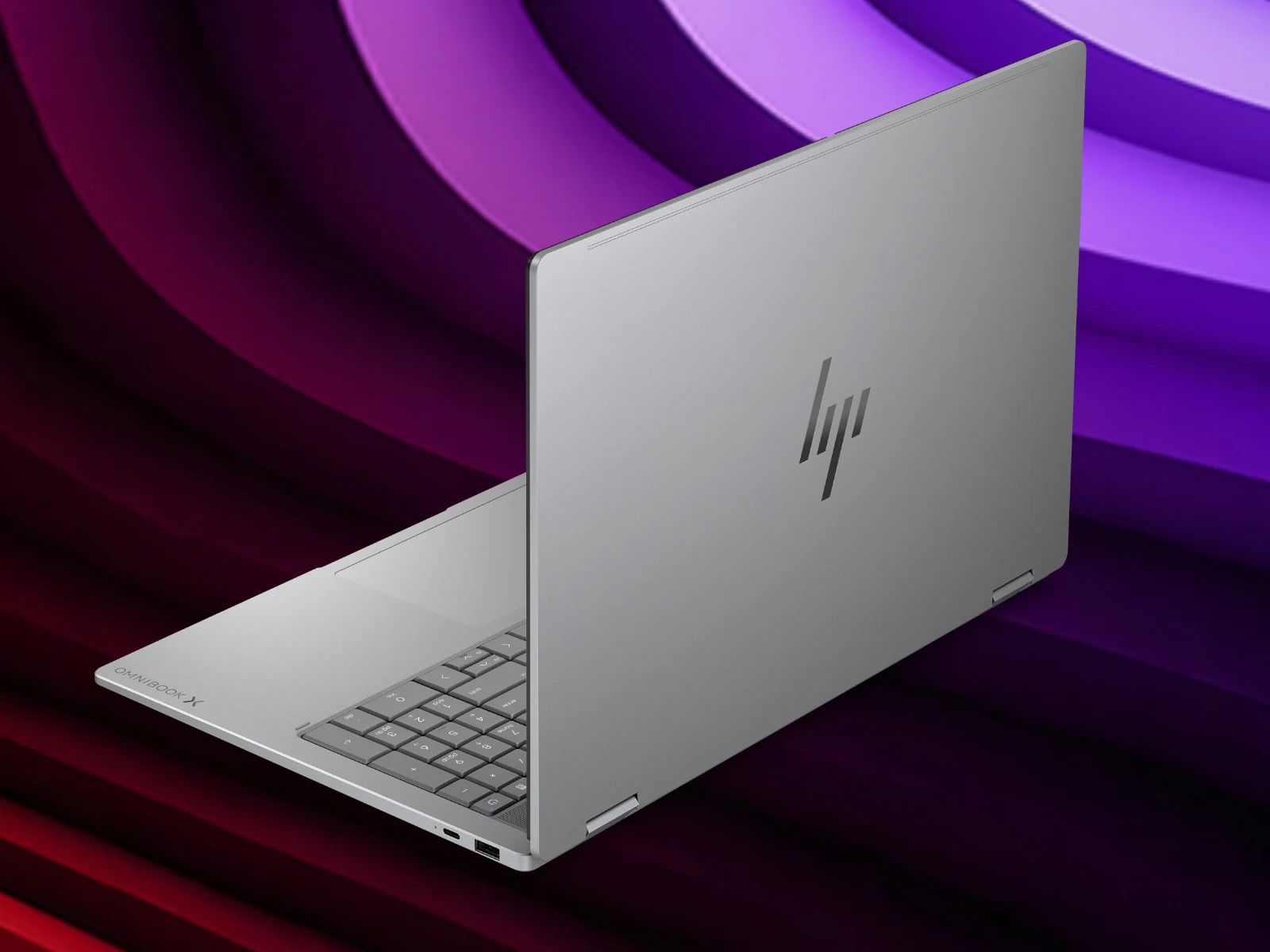
    Almost five months have passed since HP presented a successor to the OmniBook X Flip 16 we reviewed in July 2025 (curr. $749 on Amazon). To recap, that model leveraged Intel’s Panther Lake platform. By contrast, this year’s successor moves the OmniBook X Flip 16 range onto newer Panther Lake-based alternatives. The description keeps it sharp, yet the pace of updates remains brisk, and readers must note pricing as it shifts with configurations and regional availability.

    Processors and RAM Options

    Specifically, the new 16-inch convertible can be configured with the Core Ultra 5 325, Core Ultra 7 355 and the Core Ultra 9 386H, which are joined by 16 GB, 24 GB or 32 GB of RAM. The same is true for new AMD variants, which combine these RAM configurations with the Ryzen AI 5 430, Ryzen AI 5 435, Ryzen AI 7 445, Ryzen AI 7 450 or the Ryzen AI 9 465. Different markets may see nuanced availability, but core choices spotlight a balance between power and memory capacity that enthusiasts will weigh against price points.

    Finishes and Storage

    For some reason, HP reserves Eclipse Grey and Meteor Silver finishes for its Intel and AMD variants, respectively. All versions can be purchased in an Atmospheric Blue finish, though. Also, while the OmniBook X Flip 16 can be optioned with 512 GB, 1 TB and 2 TB of storage, HP includes PCIe Gen 4 SSDs in AMD models and faster PCIe Gen 5 alternatives in Intel models. The mix of finishes and storage tiers is presented with a pragmatic approach, yet the choices might feel uneven across markets and lineups.

    Battery, Display, and Connectivity

    Meanwhile, all versions ship with a 70 Wh battery and Wi-Fi 7 connectivity. Moreover, HP offers up to a 1800p (2.8K) OLED display with AMD or Intel processors. For reference, this display delivers a 120 Hz refresh rate, 100% DCI-P3 colour space coverage and 500 nits SDR/1,100 nits HDR brightness. The combination aims to satisfy both workhorse usability and media-erudite viewing preferences, though real-world brightness can vary with content and thermal limits.

    Pricing Across Regions

    Pricing starts at $1,499 in the US but can rise to $2,579 for AMD models and to $2,709 for their Intel counterparts. Meanwhile, the OmniBook X Flip 16 has reached the UK for £1,299 with a Core Ultra 7 355, 16 GB of RAM and 1 TB of storage. The same SKU sells for €1,699 in the Eurozone too, where pricing stretches to €2,299 for the same top configuration sold in the US. Currently, AMD models start at €1,798 in the Eurozone and rise to €2,099 with a Ryzen AI 9 465, 32 GB RAM, 1 TB SSD and a 1800p display.


  • Raspberry Pi 6 Launch Plans Delayed Again in 2024 Update

    Raspberry Pi 6 Launch Plans Delayed Again in 2024 Update

    Key Takeaway

    – The Raspberry Pi 6 is not arriving soon; expected around early 2028 or later, with five-year cadence per platform history.
    – Pi 5 will remain the flagship for a longer period, with the Pi 6 delivering quantitative rather than qualitative changes.
    – Pi 6 is expected to keep the same form factor and core functionality as the Pi 5.


    Raspberry Pi has finally commented on upgrade plans for its popular single-board computer ecosystem. For context, the company released the Raspberry Pi 5 in September 2023. Just over a year later, it repackaged that SBC inside the Raspberry Pi 500 (curr. $159 on Amazon) before introducing a mechanical keyboard alternative in September 2025.

    Pi roadmap and timing

    With all that in mind, it would seem high time for Raspberry Pi to pivot to the Raspberry Pi 6. However, the company has now clarified that the Raspberry Pi 6 is not arriving anytime soon. In a Reddit AMA, the official Raspberry Pi Reddit account explained the following:

    Cadence and launch window

    If you look at the historical cadence of major platform releases, it’s roughly every 4-4.5 years. So not before early 2028 on that basis.

    Platform strategy and expectations

    The company added that the Raspberry Pi ‘really does have legs as platform’, though. Hence, Raspberry Pi suggests that the Pi 5 could be ‘sticking around as the flagship for a little longer’. With that being said, it expects to be shipping Raspberry Pi 6 units in five years’ time.

    Moreover, the Pi 6 is said to retain the same overall form factor and functionality as its predecessor. Raspberry Pi stresses that its next SBC will deliver ‘quantitative changes’ rather than qualitative improvements. Please see the company’s Reddit AMA for more details.

  • HP launches 14-inch laptop with 32GB RAM and 120Hz OLED display globally

    HP launches 14-inch laptop with 32GB RAM and 120Hz OLED display globally

    Key Takeaway

    – OmniBook X Flip 14 now globally available with a 14-inch display, featuring both AMD Ryzen AI 400 and Intel Panther Lake options, plus legacy Ryzen AI 300 and Intel Lunar Lake configurations still on sale.
    – Price dynamics show Ryzen AI 400 models cheaper than Panther Lake due to a $250 cut; both typically start around $1,399 in the US with similar 1200p/60 Hz displays, 16 GB RAM, and 512 GB SSD.
    – Config options include up to 32 GB RAM, Ryzen AI 9 465 or Core Ultra 9 386H, with Core Ultra 9 386H leading in CPU performance but Radeon 880M outperforming Panther Lake iGPU in GPU workloads; OLED 2.8K option available with 120 Hz and up to 1,100 nits HDR brightness.


    HP Begins Global Sale of OmniBook X Flip with 14-Inch Screen

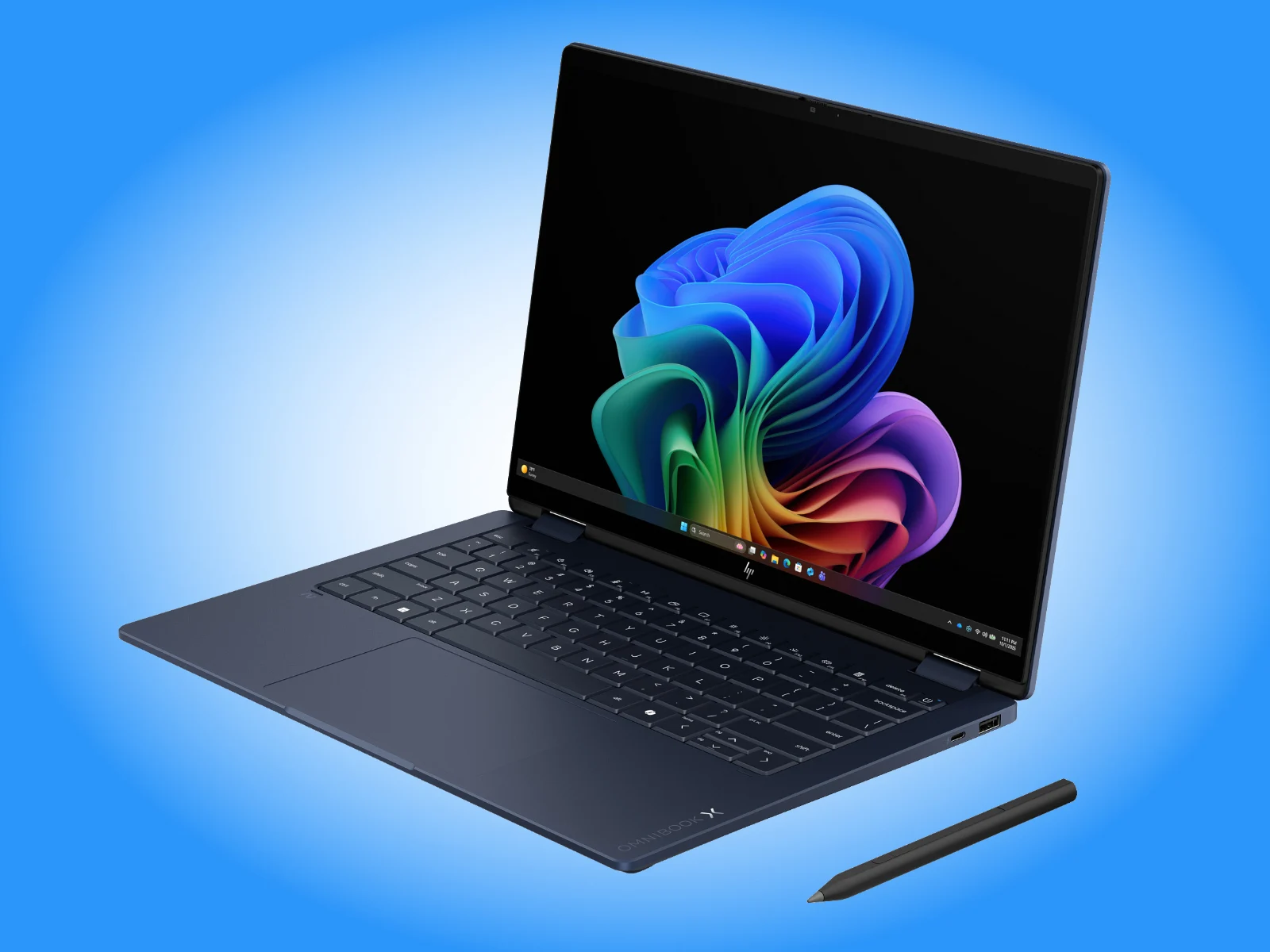
    HP has finally started selling its OmniBook X Flip globally with a 14-inch display. To recap, the company unveiled AMD Ryzen AI 400 and Intel Panther Lake models almost five months ago during CES 2026 in Las Vegas. For reference, the company continues to sell the OmniBook X Flip 14 with older AMD Ryzen AI 300 and Intel Lunar Lake processors (curr. $794.99 on Amazon).

    Pricing and Model Variants

    Currently, AMD Ryzen AI 400 models are cheaper than the Intel Panther Lake counterparts thanks to a $250 price drop. However, the pair typically start at $1,399 in the US with the same 1200p and 60 Hz IPS display that peaks at 400 nits. All starting configurations feature 16 GB of RAM and a 512 GB PCIe Gen 4 SSD, too.

    Spec Options and Benchmarks

    Alternatively, the OmniBook X Flip 14 can be configured with up to 32 GB of RAM and the Ryzen AI 9 465 or Core Ultra 9 386H. According to our benchmarks, the Core Ultra 9 386H enjoys a healthy lead over the Ryzen AI 9 465. The reverse is true in GPU workloads though, where the Radeon 880M is significantly faster than Intel’s 4-core Xe3 Panther Lake iGPU.

    Display and Storage Choices

    Setting that aside, the OmniBook X Flip 14 can also be configured with an 1800p (2.8K) OLED display, combining a 120 Hz refresh rate with 500 nits SDR and 1,100 nits HDR peak brightness. Moreover, HP offers its new 14-inch convertible with up to 2 TB of storage. Only Intel models can be configured with PCIe Gen 5 SSDs, though. Likewise, while AMD models contain a 59 Wh battery, Intel alternatives can be configured with 59 Wh or 70 Wh batteries.

    European Pricing and Availability

    By contrast, pricing starts at £1,299 for a Core Ultra 7 355 model with 16 GB of RAM, 1 TB of storage and a 1200p/60 Hz OLED display. Currently, HP Germany is selling its new 14-inch convertible with the same memory configuration, an identical display and the Core Ultra 5 325 or Core Ultra 7 355 for €1,399 and €1,798, respectively.


  • Samsung Galaxy S26 and Other Models to Get More Expensive Soon in Europe

    Samsung Galaxy S26 and Other Models to Get More Expensive Soon in Europe

    Key Takeaway

    – DRAM and memory cost increases are driving up smartphone prices, especially for flagship models.
    – Samsung plans price hikes of €100–€200, with larger increases for models with more memory.
    – Independent operations within Samsung (electronics vs. semiconductor) mean the mobile division bears higher memory costs, unlike Apple which may not raise prices.


    DRAM crisis hits pricing and devices

    The DRAM crisis is not only making RAM and SSDs more expensive for end users, smartphone and laptop manufacturers are also currently paying significantly more for the memory required to produce these devices. The situation affects pricing strategies and could ripple through to consumers in various regions, with memory costs influencing final tag prices across different product lines.

    Samsung may raise prices on several smartphones

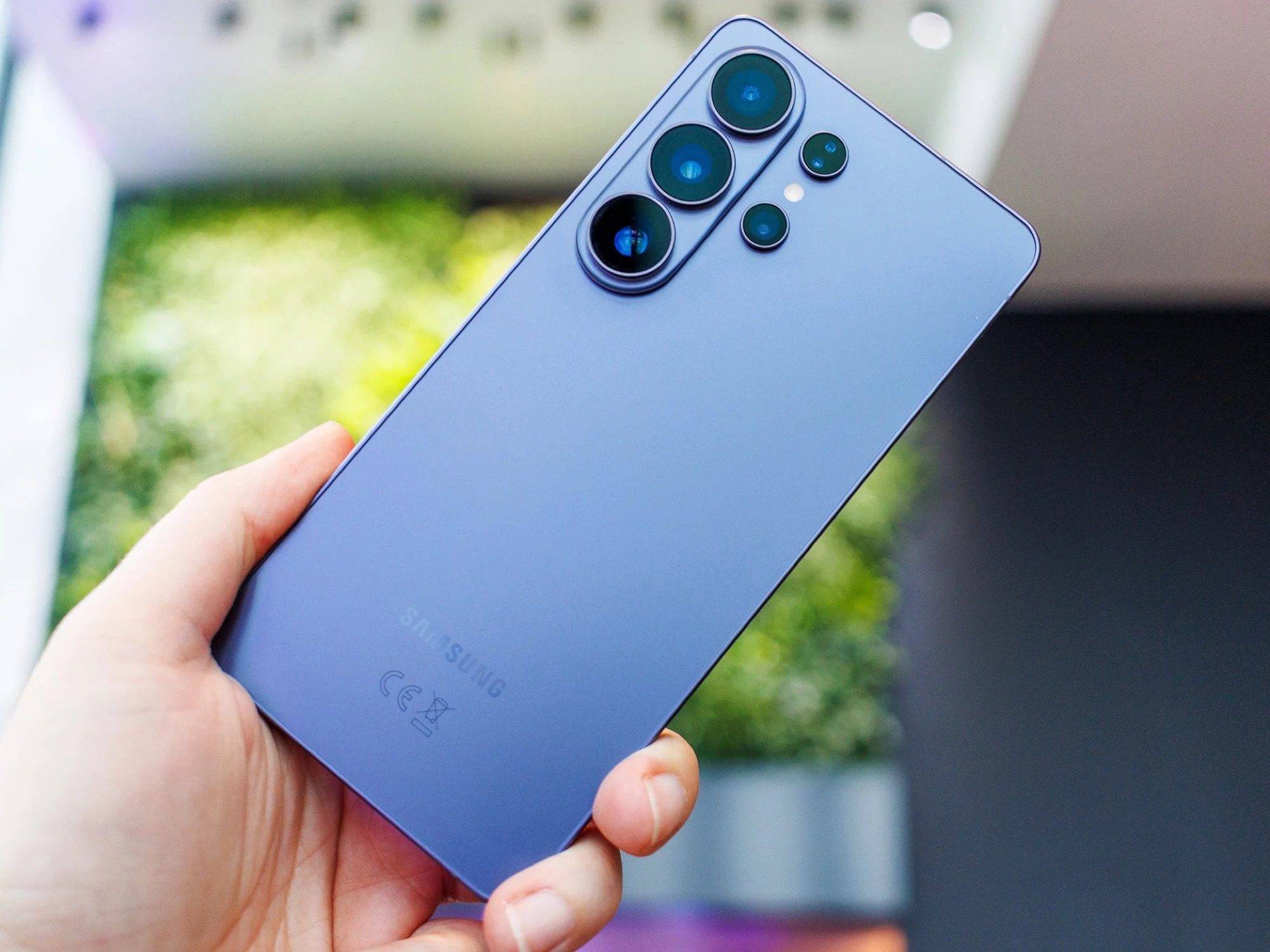
    According to the latest information from TechManiacs Samsung is now to take action and increase the prices of several smartphones by €100 to €200. The size of the price increase for each model will depend on how much memory the smartphone has – more memory leads to a more drastic price increase. The following smartphones will be more expensive from the beginning of June, at least in Greece, but probably also in other regions:

    Impact primarily on flagship models

    For the time being at least, this price increase is therefore mainly limited to expensive flagship smartphones. This is probably not least due to the fact that the latest models in the Galaxy A series have already been launched on the market at significantly higher prices – the Samsung Galaxy A57, for example, already costs €529 with just 128 GB of storage. The trend suggests a broader shift in pricing strategies as memory costs rise across the board.

    Indirect effects on pricing dynamics

    Although Samsung produces DRAM and flash memory itself, Samsung Electronics and Samsung Semiconductor work independently of each other, meaning that Samsung’s smartphone division still has to pay higher memory prices. The fact that Samsung passes these higher costs on to customers instead of settling for smaller profit margins could give the Apple iPhone 18 Pro an advantage, as Apple is unlikely to increase prices. Such moves reflect the broader tension between supply costs and consumer pricing in a volatile memory market.

    Sources
  • NEC Lavie Nextreme 13.3″ ultralight laptop Core Ultra 7 258V launched

    NEC Lavie Nextreme 13.3″ ultralight laptop Core Ultra 7 258V launched

    Key Takeaway

    – Ultra-light, carbon-fiber 13.3″ business laptop at 994 g with 74 Wh user-replaceable battery for 20+ hour runtimes.
    – High-performance AI readiness: Intel Core Ultra 7 258V with 47 TOPS NPU and up to 32 GB RAM / 1 TB storage.
    – Rich connectivity: Wi-Fi 7, Bluetooth 5.4, dual USB-C (PD/DP), USB-A, HDMI, Ethernet, microSD; 1,920×1,200 touchscreen and Full HD webcam.
    – Durable design: Toray carbon fiber body with scratch- and fingerprint-resistant coating; compact 299 × 214 × 17.9 mm form factor.
    – Availability and price: NEC Lavie Nextreme in Japan at ¥308,400 (~$1,935), with about one-week delivery.


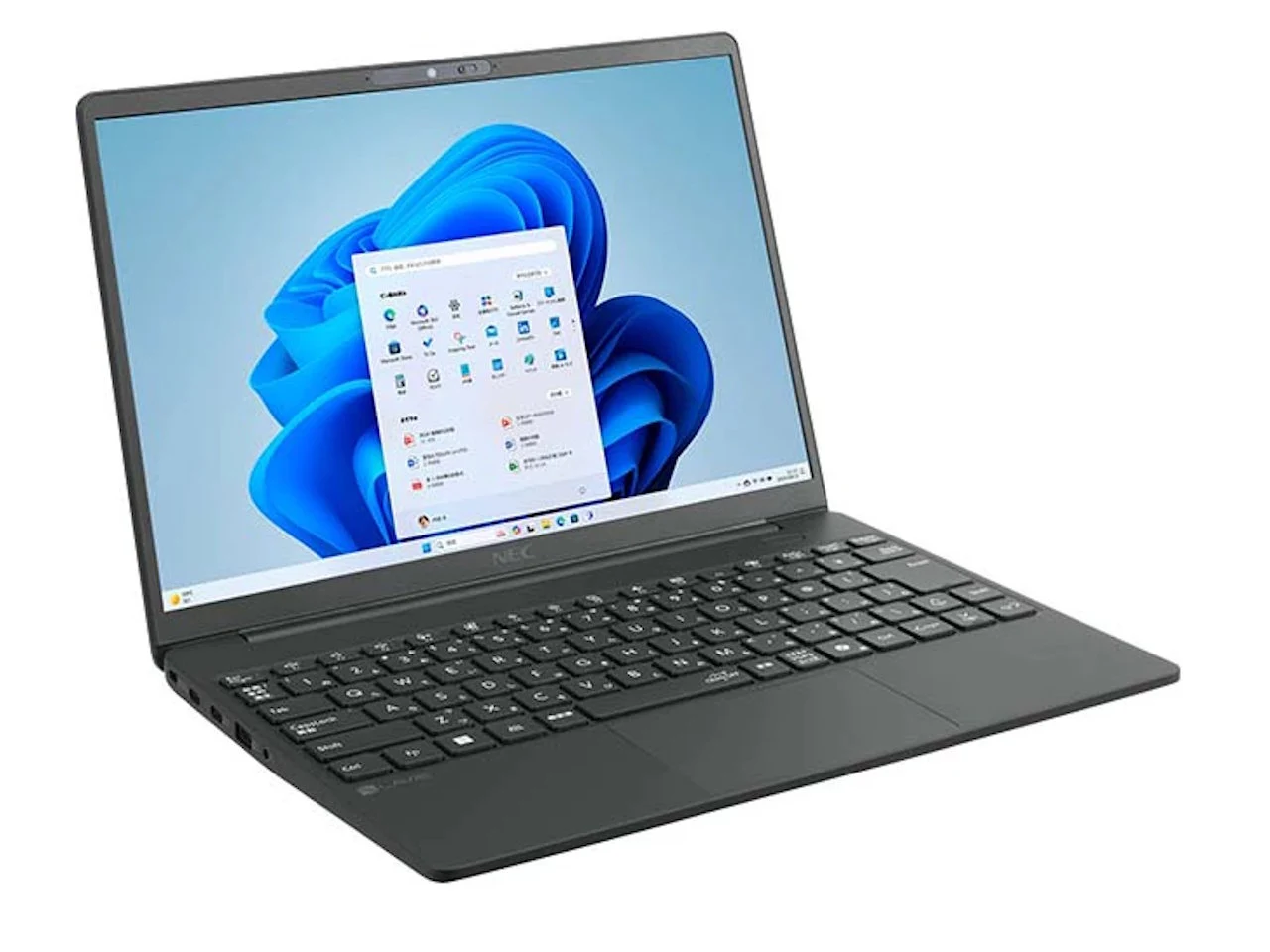
    NEC has unveiled its latest 13.3-inch Lavie Nextreme model designed for all-day use by business people and weighing only 994 grams (2.19 lbs.) thanks to a carbon fiber body. The NEC Lavie Nextreme can be ordered from NEC for 308,400 yen (~$1,935), with delivery in about a week to customers in Japan.

    Battery and Performance

    A 74 Wh user-replaceable battery provides 20+ hour runtimes (JEITA Measurement Method Ver.3.0 for video playback), while an Intel Core Ultra 7 258V CPU helps accelerate Copilot+ AI workflows thanks to a 47 TOPS NPU. The laptop is fitted with 32 GB of LPDDR5X RAM and up to 1 TB of storage to handle the higher RAM demands of AI apps.

    Display and Connectivity

    The Nextreme is fitted with a 1,920×1,200 IPS touchscreen display that is designed to provide wide viewing angles with high color accuracy and a Full HD webcam. It also comes with a wide range of ports, including two USB 3.2 Gen2 Type-C ports (PD, DP), two USB 3.2 Gen2 Type-A ports, one HDMI port, and one Ethernet jack. Sound is output through dual 2W speakers or the headphone/microphone jack. Storage can be added using the microSD card slot. It also has Wi-Fi 7 and Bluetooth 5.4 wireless connectivity.

    Build and Design

    The Lavie is made of Toray carbon fiber with a scratch- and fingerprint resistant coating. It measures just 299 x 214 x 17.9 mm (11.8 x 8.4 x 0.7 in.) for easy carrying to business meetings.

    Market Availability

    Readers outside Japan looking for a similar business notebook, albeit at a slightly heavier weight, might consider the 13.8-inch Microsoft Surface Laptop for Business sold here on Amazon and highlighted in Notebookcheck Reviews on YouTube.

    Sources
  • Severe USB flaw found in acclaimed smartphone

    Severe USB flaw found in acclaimed smartphone

    Key Takeaway

    – USB 2.0 port with no image output limits external display/VR usage and reduces versatility.
    – Absence of USB-C video output means external monitors or VR glasses can’t be wired; wireless options (Miracast) depend on monitor compatibility.
    – USB 3.0/3.1 capabilities. Not present; some competitors (e.g., Pixel 10a) show higher-speed ports exist at similar prices.
    – This looks like a deliberate compromise favoring battery/charging or price tier, impacting professional/creative use cases.
    – Overall: strong everyday performance and battery, but a clear weakness for external display/VR integration.


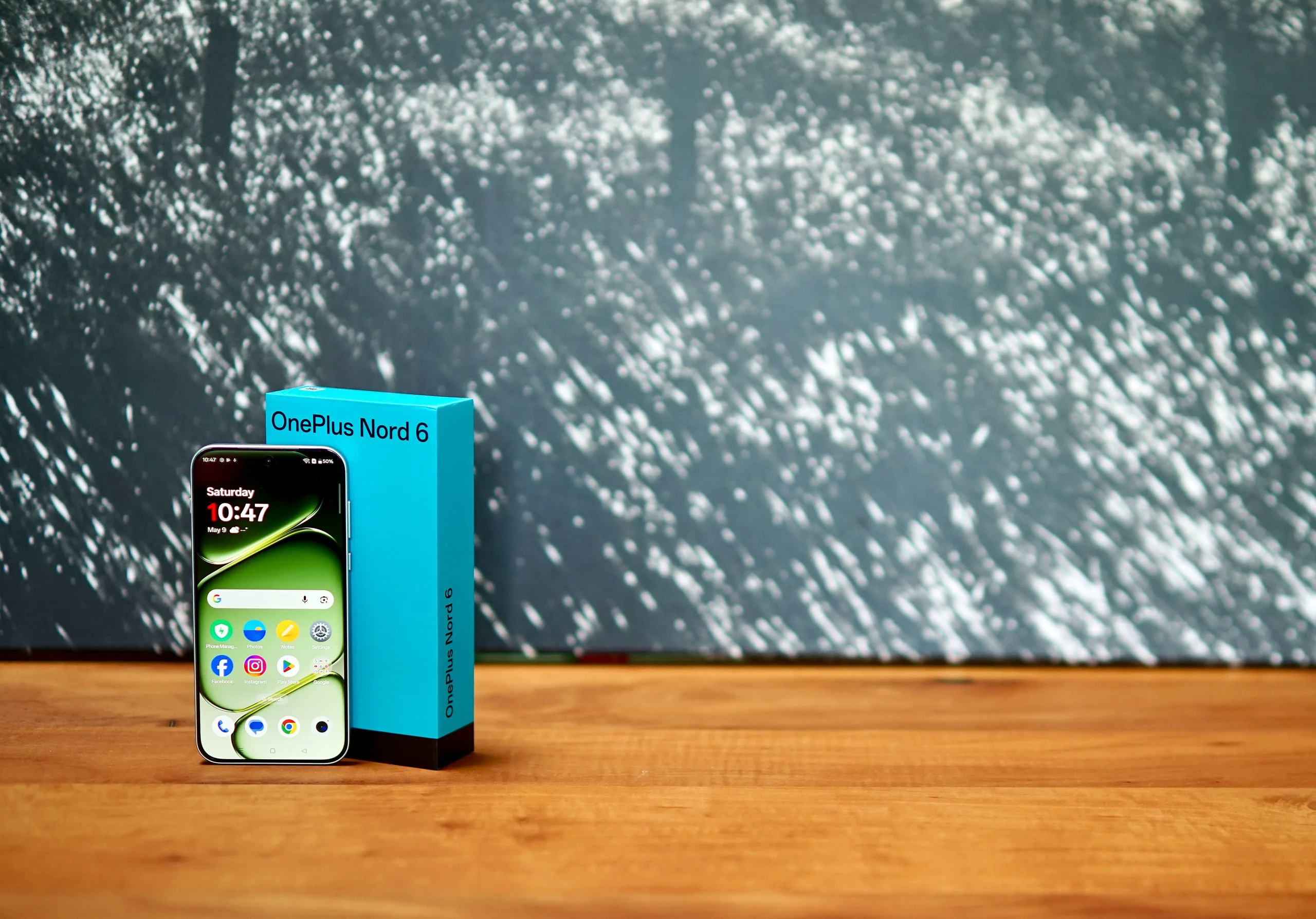
    The OnePlus Nord 6 has a notable shortcoming in its built-in USB 2.0 port which does not support image output, a flaw that curtails the device’s overall versatility in practical use. This point is repeatedly seen as a major weakness that affects how the phone can be used with external displays or accessories for professional tasks. The tone here is matter-of-fact, emphasizing the limitation and its impact on usability.

    USB 2.0 Limitation and Everyday Data Transfer

    In everyday scenarios, the Nord 6’s USB 2.0 port provides data transfer rates that are adequate for common tasks, yet the slower speeds become a bottleneck when larger files or more demanding workloads are involved. Despite this, there could be a perceived balance between price and performance, where users might still find the device acceptable for regular use. The writing adopts a practical and measured style, noting both adequacy and limitations.

    No Video Output via USB-C

    There is also no support for video output via USB-C, which means that connecting an external monitor or VR goggles to display content on a larger screen is not possible through a simple cable. Even though the Nord 6 sits at a mid-range price point, this missing feature is significant for professionals and creatives who rely on external displays for workflows, presentations, or immersive experiences. The paragraph maintains a descriptive, clinical tone while stressing the consequence on productivity.

    Impact on Professional Use

    This limitation is particularly problematic for users who want the smartphone to serve as a central hub for their digital environment. The device’s role in presentations or collaborative environments is hindered since wireless options like Miracast require compatible hardware, and adapters or other devices add complexity. The style here is analytical, highlighting real-world implications and alternatives in a concise, direct manner.

    Presentation and Gaming Considerations

    For professionals who frequently present to external monitors, wireless Miracast is the only option, assuming the display supports it, which introduces an additional constraint. Gamers aiming to connect to VR goggles will also find the lack of USB-C video output a hindrance, limiting future-proofing and versatility for immersive experiences. The narrative adopts a cautionary, user-centric perspective, outlining practical constraints.

    Despite the lack of a USB 3.0 port—a feature uncommon at this price point—the Google Pixel 10a demonstrates that faster connections are possible within mid-range budgets. The Nord 6, by contrast, is more constrained, whereas some competing models with more capable USB ports can offer smoother integration with external displays or VR devices. The voice here is comparative and illustrative, underscoring market expectations and alternatives.

    Strategic Reasoning and Future Prospects

    OnePlus’s choice to omit this function appears to be a strategic compromise in favor of other capabilities, such as a larger battery or faster charging, or perhaps to maintain exclusivity by reserving certain features for higher-priced variants. This interpretation places the decision within a product positioning framework, suggesting trade-offs that balance battery life, charging speed, and premium features. The tone is speculative but grounded in observed patterns of product strategy.

    Weaknesses and User Trade-offs

    The USB 2.0 port without image output remains a clear weakness for the Nord 6, limiting the device’s appeal to users who want to drive external displays or VR gear. This element is presented as a decisive disadvantage, particularly for those who value connectivity flexibility. However, readers are reminded that users prioritizing battery life and performance might still see value in the overall package, accepting the compromise. The writing conveys a balanced assessment with caveats for varying user needs.

    Whether future iterations will address this limitation remains to be seen, as manufacturers often refine ports and interactivity in response to consumer feedback and competitive pressure. The concluding sentiment emphasizes anticipation and evolving expectations within smartphone ecosystems, keeping the focus on potential improvements while acknowledging current constraints.

    Sources
    • NVIDIA 007 First Light GeForce RTX 5080 Giveaway

      NVIDIA 007 First Light GeForce RTX 5080 Giveaway

      Key Takeaway

      – Nvidia is promoting 007 First Light with a giveaway for a GeForce RTX 5080 (Founders Edition) as a launch celebration.
      – To enter: comment #007FirstLightRTX on the linked X post or via Nvidia’s official Instagram post.
      – Prize details: only one RTX 5080 unit, global-sounding terms with no posted official T&Cs yet.


      Overview

      First Light on PS5 might not be perfect, but it does translate to PC with a decent performance, though some folks argue it needed a bit more time in the oven. Yet, Nvidia wants to celebrate the launch and is giving away a GeForce RTX 5080 to mark the moment. The official system requirements claim you can push everything to the max at 4K with this GPU.

      How to enter

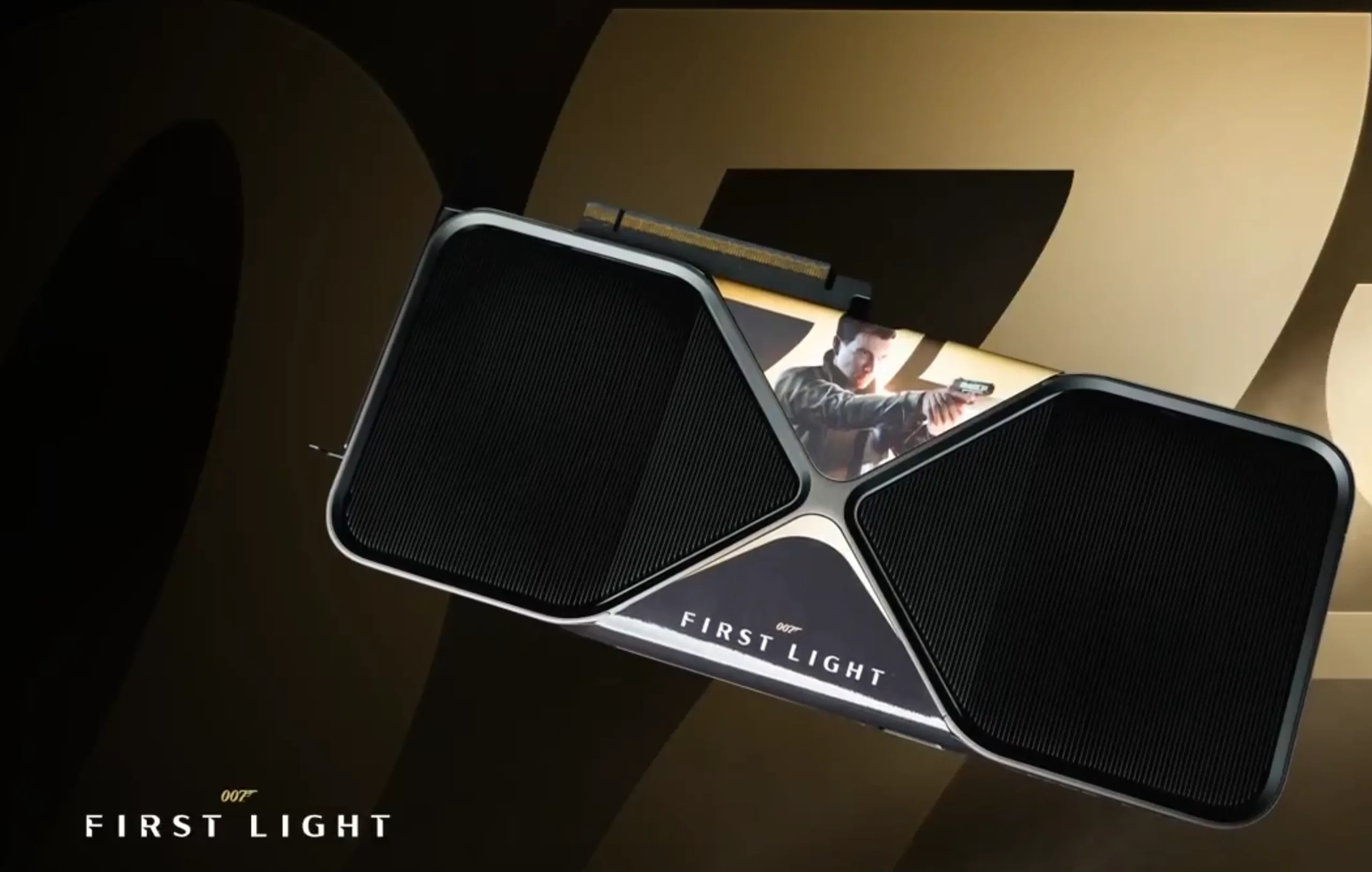
      To join the giveaway, just drop a comment with #007FirstLightRTX on the linked X post. If X is too toxic for you, you can also enter via Nvidia’s official Instagram account in the same way. The prize is a GeForce RTX 5080 Founders Edition with a custom shroud, and it appears to be a single unit up for grabs. If you missed a shot at a similar RTX 5090, this is your chance to jump back in.

      Terms and conditions

      As of now, Nvidia has not published any terms and conditions, so it’s unclear which regions apply. At the moment, a reasonable assumption is that it is global unless stated otherwise. The entry barrier is described as virtually non-existent, so attempting a join is low risk.

      • The winner is a single RTX 5080 Founders Edition with a distinct shroud.
      • Global eligibility is presumed in the absence of stated restrictions.
      • Entries are submitted via social posts on X or Instagram.

      Notes

      Nvidia GeForce has posted across X and Instagram to promote the giveaway, but no source links or image details are provided here, and there are no buy links or mentions of notebookcheck in this summary.

      Sources
    • Elecom announces Ist Plus trackball mice with 5-ball rollers

      Elecom announces Ist Plus trackball mice with 5-ball rollers

      Key Takeaway

      – Ist Plus trackball mice offer 5-ball rollers (M-IT10MRS) or standard linear rollers (M-IT11MRSBK), with user-replaceable 36 mm trackball and rollers.
      – 5-button programmable design with silent switches and adjustable 100–4,000 DPI; rollers can be swapped for 5-ball or linear options (via M-TU03SS or M-BS10).
      – Dual-mode compatibility: USB-A, Windows/macOS/ChromeOS; Bluetooth with Windows/macOS/iOS/iPadOS/ChromeOS/Android; optional 2.4 GHz via Elecom Bridge E receiver for enterprise use with BLE 4 security.


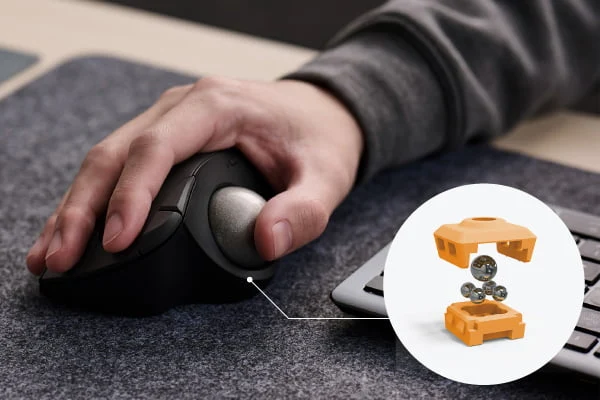
      Elecom has announced the Ist Plus trackball mice series in Japan, with the M-IT10MRS models using newly-developed 5-ball rollers for reduced friction and the M-IT11MRSBK models using regular linear rollers.

      The 5-button programmable mice come with silent switches and an adjustable 100 to 4,000 DPI tracking resolution. The 36 mm (1.4 in.) trackball and rollers are user-replaceable, and all models can have their rollers swapped out for either the 5-ball rollers (M-TU03SS) or linear rollers (M-BS10). Here, pricing details are preserved as specified, acknowledging yen to dollar approximations where given in the original, and noting the option to change rollers for different feel and precision. Some readers may appreciate the emphasis on customization and the practical aspects of upgrading components over time.

      The Elecom Ist Plus trackball mice are compatible with Windows, macOS, or ChromeOS computers when using a USB-A connection, and Windows, macOS, iOS, iPadOS, ChromeOS, and Android devices when using a Bluetooth connection. This paragraph underscores cross-platform versatility and how the device plugs in or connects wirelessly, which is a frequent concern for buyers juggling multiple ecosystems and devices in daily work or study settings.

      The dual-mode mice pair with up to three devices at once over wireless Bluetooth connections. They can also pair over 2.4 GHz connections when using the optional Elecom Bridge E USB receiver (M-ER10GY). The receiver is designed for corporate environments where secrecy is critical and comes with Bluetooth LE Security Level 4 leveraging data encryption to prevent data theft. Details about compatibility, security features, and the optional receiver are included to help institutional buyers assess risk and convenience in shared workspaces.

      The former has an MSRP of 8,380 yen (~$55) and the latter has an MSRP of 10,980 yen (~$70). Both are available for pre-order in black or white from May 26, 2026 at 12:00 p.m. JST until June 14 at 11:59 p.m. JST, with shipments beginning late June. Prices and availability are carried over with the original figures and timeframes, offering customers a chance to lock in configurations and color choices ahead of release and shipping windows.


    • HP launches 16-inch gaming laptop with Nvidia graphics and 64GB RAM

      HP launches 16-inch gaming laptop with Nvidia graphics and 64GB RAM

      Key Takeaway

      – Intel SKUs start at $2,679 (Core Ultra 7 270HX Plus, RTX 5070 Ti, 16 GB RAM, 512 GB Gen 5, 460 W GaN charger, 83 Wh battery) and can go up to $4,469 (Core Ultra 9 290HX Plus, RTX 5090, 64 GB RAM, 2 TB Gen 5, 240 Hz OLED).
      – Only Intel variants are available in Ceramic White ($10 surcharge).
      – AMD SKUs start at $2,899 (Ryzen AI 7 450, RTX 5070 Ti, 16 GB RAM, 512 GB Gen 4, 240 Hz IPS) and max out at $4,569.99 (Ryzen AI 9 HX 475, RTX 5080, 48 GB RAM, 2 TB Gen 5, 240 Hz OLED).
      – HP expects to begin shipping new Omen Max 16 laptops in June.


      Intel models start at $2,679 with a Core Ultra 7 270HX Plus processor

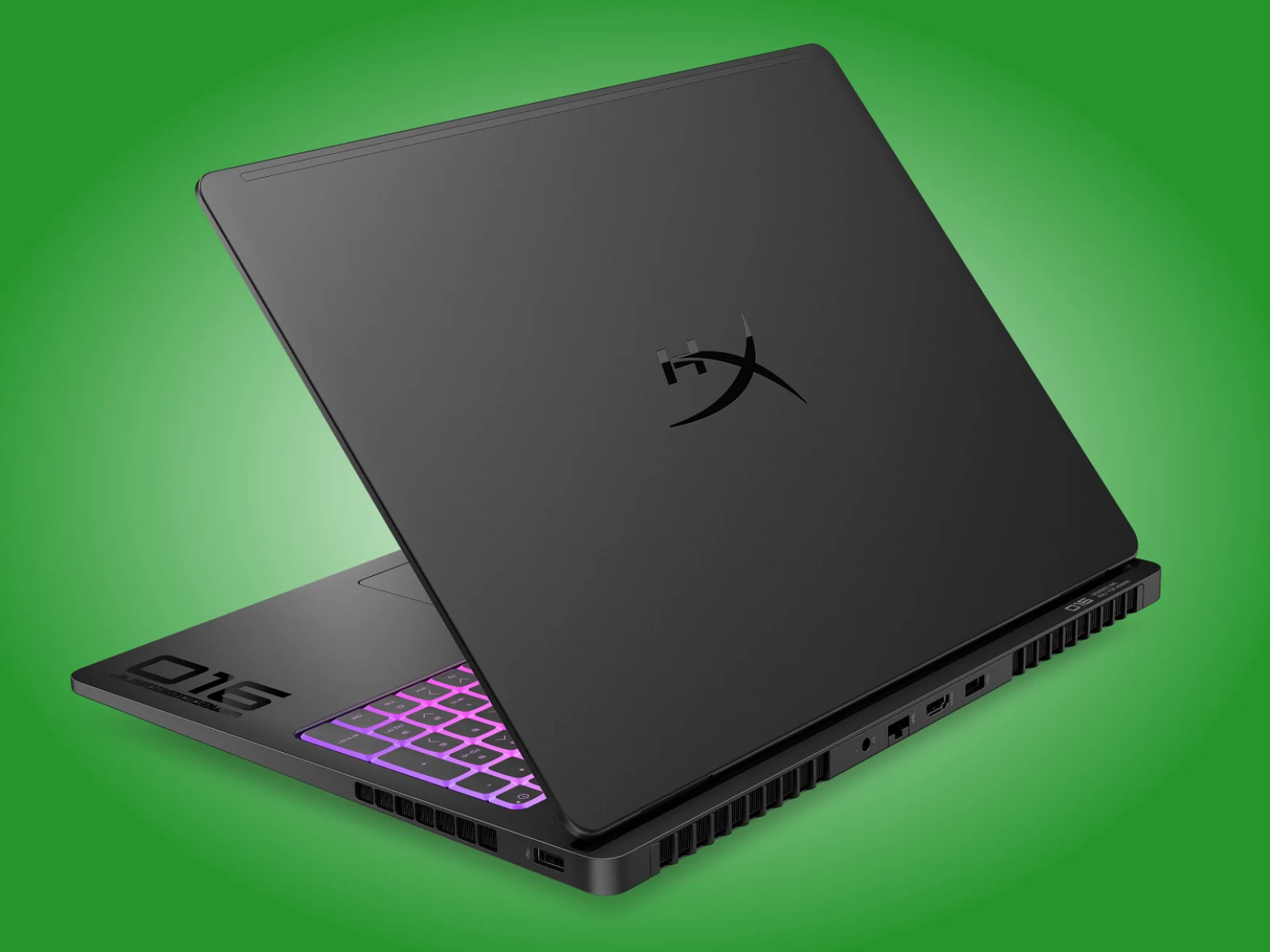
      On the one hand, Intel models start at $2,679 with a Core Ultra 7 270HX Plus processor, a GeForce RTX 5070 Ti GPU and a 240 Hz IPS display for $3,699. This SKU also contains 16 GB of RAM and 512 GB of PCIe Gen 5 storage too, as well as a 460 W GaN power adapter and an 83 Wh battery. The paragraph reads like an opening shot in a catalog, but the facts stay the same with the tech specs intact and the price tag clearly listed, including the GaN adapter and the sizable battery. The language here shifts slightly as it introduces the baseline configuration and its features, though it remains informative and exact, making the reader aware of what to expect from the entry option.

      Alternatively, Intel models can be configured up to the Core Ultra 9 290HX Plus, RTX 5090, 64 GB of RAM, 2 TB of PCIe Gen 5 storage and a 240 Hz OLED display. However, this variant currently runs to $4,469. Only Intel variants can be purchased in a Ceramic White finish too, for which HP levies a $10 surcharge. This sentence stacks higher-end choices and a minor cosmetic surcharge, keeping the reader informed about the most premium build in the Intel line, including the OLED display and large RAM/storage specs, while noting the extra color option and its price impact.

      AMD SKUs start at $2,899 with a Ryzen AI 7 450

      On the other hand, AMD SKUs start at $2,899 with a Ryzen AI 7 450, an RTX 5070 Ti, a 240 Hz IPS display, 16 GB of RAM and a 512 GB PCIe Gen 4 SSD. This paragraph keeps the price and the core features aligned with the baseline AMD configuration, mentioning the slightly older Gen 4 storage and the same display refresh rate, while highlighting the RAM and GPU combination that parallels the Intel entry but with different platform choices. The tone remains straightforward, ensuring the reader can compare options side by side without confusion.

      AMD tier details and price ceiling

      More expensive than their Intel counterparts, AMD models also top out at $4,569.99 despite containing inferior hardware. Specifically, AMD models can be configured with up to a Ryzen AI 9 HX 475 and RTX 5080 with 48 GB of RAM, 2 TB of PCIe Gen 5 storage and a 240 Hz OLED. The final sentence in this block emphasizes the paradox of price versus performance within the AMD lineup, noting that higher price does not always equate to stronger hardware, and it lists the top end options, including the OLED panel, large RAM, and Gen 5 storage to anchor the full spec spectrum.

      Shipping and finish notes

      HP hopes to begin shipping new Omen Max 16 laptops in June. Please see the company’s website for more details. The closing statement gives a shipping timeframe and directs readers to look up official pages for comprehensive updates, while preserving the context of the models discussed and their availability window, keeping the reader oriented toward where official confirmations live.


      Sources