Tag: Core Ultra 9 386H

  • Asus 16″ Gaming Laptop: 160W GPU, 64GB RAM

    Asus 16″ Gaming Laptop: 160W GPU, 64GB RAM

    Key Takeaway

    – New 2026 ROG Zephyrus G16 adds a GeForce RTX 5080 option alongside the existing RTX 5070 Ti SKU.
    – RTX 5080 runs at up to 160W (10W-20W higher TDP than the 5070 Ti).
    – RTX 5080 offers 16% better gaming performance, with a larger advantage in VRAM-heavy games (16 GB vs. 12 GB).
    – New SKU includes 64 GB of RAM but costs $4,799—29% more than the 5070 Ti model.


    Quiet Update for ROG Zephyrus G16

    Asus have quietly updated there latest ROG Zephyrus G16 with a new SKU in the US. Previously, the company sold the laptop exclusively with a GeForce RTX 5070 Ti GPU and 32 GB of RAM. While featuring a boosted TGP to 140 W, this variant would likely trail its GeForce RTX 5090-backed predecessor that we reviewed in mid-2025 (curr. $4,599 on Amazon). It seems they have made an adjustment to there lineup.

    A New Graphics Card Option

    Now, Asus has rectified this discrepancy somewhat by adding a GeForce RTX 5080 option for the ROG Zephyrus G16 (2026). Paired with the same Core Ultra 9 386H processor as its GeForce RTX 5070 Ti counterpart, the GeForce RTX 5080 benefits from an even higher TDP, too. Specifically, Asus allows the GeForce RTX 5080 to run at 10 W higher in Turbo Mode, which increases to 20 W upon switching to Manual Mode.

    Power and Performance Boost

    As a result, the new ROG Zephyrus G16 can provide up to 160 W to the GeForce RTX 5080, of which 25 W is assigned to Nvidia’s Dynamic Boost technology. According to our benchmarks, jumping from the GeForce RTX 5070 Ti to the GeForce RTX 5080 should yield a 16% performance improvement when gaming. This gap could extend in more VRAM-intensive games though, with the GeForce RTX 5080 featuring a third more VRAM than the GeForce RTX 5070 Ti at 16 GB and 12 GB apiece.

    Price and Configuration Details

    Unfortunately, Asus currently charges 29% more for the privilege thanks to a $4,799 MSRP. In part, this $1,100 price gap can be attributed to Asus including 64 GB of RAM, too. Please see our video below for more details about how last year’s ROG Zephyrus G16 shaped up against its smaller 14-inch counterpart. Asus have provided these specs for the new model.

    • SKU: ROG Zephyrus G16 (2026) with GeForce RTX 5080
    • GPU: GeForce RTX 5080 with up to 160 W TDP (25 W Dynamic Boost)
    • Processor: Core Ultra 9 386H
    • RAM: 64 GB
    • VRAM: 16 GB GDDR7
    • MSRP: $4,799


    Sources

  • Lenovo Yoga Pro 7i 15 Costs Over $2600: New Normal?

    Key Takeaway

    – The Lenovo Yoga Pro 7i 15 Aura Edition is experiencing price increases due to the ongoing memory and SSD crisis.
    – The review configuration (Core Ultra 9 386H, RTX 5060, 32GB RAM) is discounted to $2,619 but remains very expensive.
    – The Yoga Pro 7i has no direct competitor with its unique 15.3-inch display, but is comparable in features to the larger Yoga Pro 9i.
    – A better value alternative exists, such as the Lenovo Legion 5i, which offers a faster CPU and GPU (RTX 5070) for under $1,600.
    – Despite its premium features (OLED 165Hz panel, great sound, keyboard), the high price makes it hard to recommend.


    Pricing and Configuration Changes

    After prices for memory and SSDs are rising since last year, new laptop models for 2026 are now getting more expensive as well. Lenovo’s new multimedia laptop Yoga Pro 7i 15 Aura Edition is also affected by this, even though our review SKU with the GeForce RTX 5060 and 32 GB RAM is currently already discontinued at Lenovo’s US shop and at $2619, it is actually a bit cheaper than the slower RTX 5050 model. This is still a steep price, so is it really just a result of the memory crisis or is the Yoga simply too expensive?

    Unique Positioning in the Lineup

    Looking at Lenovo’s lineup, the Yoga Pro 7i is not the flagship series, which would be the Yoga Pro 9 (available with 14-inch or 16-inch screens). The Yoga Pro 7i with its 15.3-inch display is rather unique and there is no direct competitor either, because other manufacturers only offer 14- or 16-inch models in this performance class right now. In terms of features and options, however, there is not much difference between the Yoga Pro 7i 15 and the Yoga Pro 9i 16, for example, because they are pretty much comparable in every respect (including features like Advanced Optimus, the excellent sound system or the excellent keyboard). This is also the case for the great OLED panel with 165 Hz, which does not have any issues with a grainy image on brighter contents despite the touchscreen.

    Value Proposition and Alternatives

    As mentioned before, Lenovo US currently offers a discount on our review configuration with the Core Ultra 9 386H (Panther Lake), Nvidia’s GeForce RTX 5060 as well as 32 GB RAM. This is still a lot of money for this amount of performance and we are still having a hard time recommending it when you can still bet devices like the Lenovo Legion 5i with a faster HX-CPU from Intel, a similar 165 Hz OLED panel and the even faster GeForce RTX 5070 for less than $1600 right now on Amazon, for example. For more information about the new Yoga Pro 7i 15 Aura Edition, please see our comprehensive review.

    Sources
    • MSI Cubi AI+ 3MG: 60% Faster, But Could Be Better

      Key Takeaway

      – Core Ultra 9 386H is over 60% faster in multi-thread performance than last-gen Lunar Lake.
      – Power consumption only increases by ~8% for a significant performance-per-watt gain.
      – Turbo boost lasts only ~20 seconds before throttling due to the small form factor.
      – The same CPU runs 20-25% faster in larger laptops like the Razer Blade 16.
      – The new Cubi NUC is a major improvement but doesn’t fully utilize the CPU’s potential.


      MSI’s New 2026 Cubi NUC: A Panther Lake Powerhouse in a Tiny Box

      The latest 2026 Cubi NUC from MSI ships with an H-series Panther Lake CPU to replace the Lunar Lake CPU on last year’s model. Panther Lake can run substantially faster than last generation Lunar Lake options as the same CPU in the 2026 Cubi NUC can also be found on gaming laptops like the Razer Blade 16. On the MSI mini PC, however, some compromises have been made for the smaller form factor.

      Raw Performance vs. Last Year: A Massive Leap Forward

      As shown by the comparison graphs below, the Core Ultra 9 386H CPU in the Cubi NUC AI+ 3MG is over 60 percent faster than the Core Ultra 7 258V in the Cubi NUC AI+ 2MG in terms of raw multi-thread performance. Power consumption would be just a few watts more as well and so the significant performance advantage requires just a small 8 percent uptick in power requirements for superior performance-per-watt.

      • CPU: Intel Core Ultra 9 386H (Panther Lake, 6P+8E+2LPE, up to 5.0 GHz)
      • Graphics: Intel Arc integrated (up to 8 Xe cores)
      • Memory: Dual-channel DDR5-6400 (soldered, up to 64 GB)
      • Storage: 1x M.2 2280 PCIe 4.0 x4, 1x M.2 2230
      • Ports: 2x Thunderbolt 4 (USB-C), 2x USB-A 3.2 Gen2, 1x HDMI 2.1, 1x DisplayPort 1.4, 1x 2.5GbE LAN, 3.5mm audio jack
      • Dimensions: 0.88 x 4.6 x 4.4 inches (22.4 x 117 x 112 mm)
      • Base Power: 35W (configurable up to 65W)
      • Pricing: Starting at $879 (barebone), $1,149 (16GB/512GB config)

      Thermal Throttling: The Small Form Factor’s Achilles’ Heel

      The issue arises when comparing the new MSI mini PC to laptops sporting the same Core Ultra 9 386H CPU. The Razer Blade 16, for example, runs 20 to 25 percent faster than the MSI due to its much larger form factor and more capable cooling solution. Meanwhile, the same CPU in the MSI can only sustain Turbo Boost clock rates for about 20 seconds before needing to throttle as exemplified below by the initial spikes in CineBench R15 xT scores and power consumption when running Prime95.

      Performance Ceiling: What Could Have Been

      The 2026 Cubi NUC AI+ 3MG is indubitably a huge improvement over its predecessor, but it could have been even faster given what the Core Ultra 9 386H is capable of on other machines. While the mini PC delivers exceptional single-threaded speed and outpaces any previous Lunar Lake competitor by a wide margain, its sustained multithreaded performance is hamstrung by the chassis’s thermal constraints. For bursty workloads or everyday productivity, the Cubi NUC is a dream; for extended rendering or encoding tasks, you’ll see performance drop off after the first few seconds.

      Owners should also note that the soldered memory means no upgrades later, so choose your configuration wisely from the start. The fan noise under load is moderate but noticable, hovering around 35 dB at head height. Overall, this is a impressive step forward for the Cubi line, but enthusiatsts waiting for a true desktop-class experience in a NUC might still be left wanting a little more ceiling.

      Sources
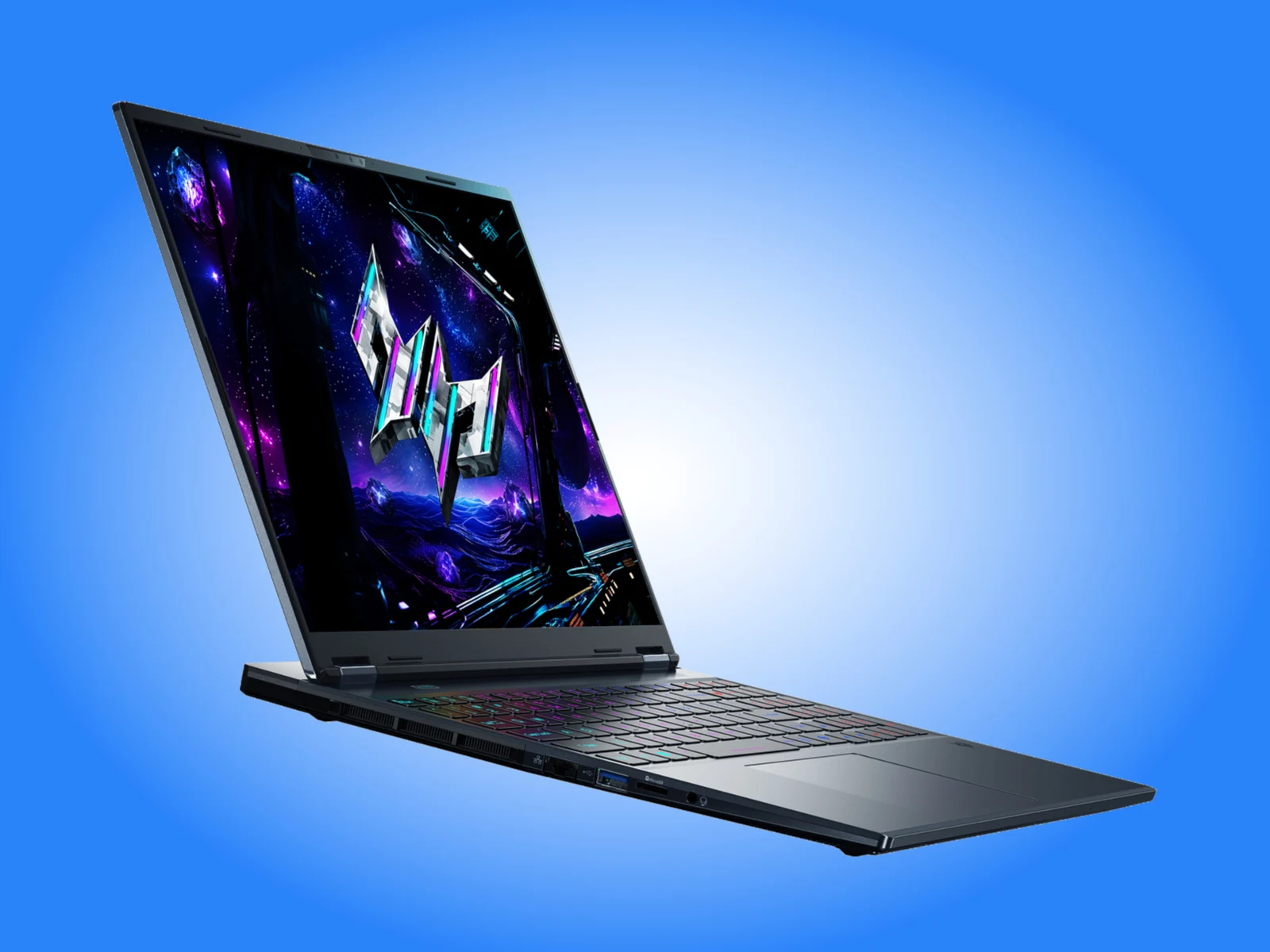
      • Acer 16″ Gaming Laptop 165Hz OLED, 2x Longer Battery Life

        Acer 16″ Gaming Laptop 165Hz OLED, 2x Longer Battery Life

        Key Takeaway

        – Acer now sells Panther Lake (Core Ultra 9 386H) versions of the Predator Helios Neo 16S.
        – Panther Lake models cost significantly more but offer weaker CPU performance than Arrow Lake HX counterparts.
        – At the same price (€2,799), the Panther Lake variant includes a slower GPU (RTX 5060 vs. RTX 5070 Ti) and less storage (1 TB vs. 2 TB).
        – Panther Lake laptops are claimed to deliver over twice the battery life (up to 15 hours) from the same 76 Wh battery.
        – Availability is currently limited to Acer France, but wider global release is expected soon.


        Helios Neo 16S Gets a Confusing Update

        The Predator Helios Neo 16S has had something of a topsy-turvy ride in the last few months. To recap, Acer unveiled Intel Panther Lake-powered versions in January during CES 2026. Then in March, the company presented alternatives featuring Intel’s Arrow Lake-HX Plus generation.

        A Overview of New Configurations

        In the intervening period, we reviewed the Helios Neo 16S with the Core Ultra 9 275HX and the GeForce RTX 5070 Ti (curr. $1,929 on Amazon). Now, Acer has started selling Panther Lake-powered alternatives with the Core Ultra 9 386H. For the time being, we can only find listings on Acer’s French website; the laptop is listed as being out of stock in the UK. However, we would expect Panther Lake versions to reach other parts of the world soon.

        Pricing and Specification Comparison

        In the meantime, Acer France indicates that these Panther Lake versions will cost significantly more than their Arrow Lake HX counterparts. At the time of writing, the Predator Helios Neo 16S retails for €2,799 with a GeForce RTX 5070 Ti, 32 GB of RAM, a 2 TB SSD and a 240 Hz IPS display. By contrast, Acer charges the same amount for a Panther Lake variant with the slower GeForce RTX 5060, half as much storage and a 165 Hz OLED.

        Meanwhile, the Predator Helios Neo 16S costs €2,899 with the Core Ultra 9 386H, 32 GB of RAM, 1 TB of storage, a 165 Hz OLED display and the GeForce RTX 5070 with 8 GB of RAM running at up to 115 W. According to our benchmarks, these Panther Lake variants also fail to match the CPU performance of their Arrow Lake HX counterparts.

        Battery Life and Efficiency Claims

        They should run far more efficiently though, which Acer’s official battery life estimates reinforce. Specifically, the company claims its new Panther Lake-based gaming laptop lasts over twice as long from the same 76 Wh battery. Whether the PHN16S-I51 variant achieves up to 15 hours of battery life under light use remains to be seen, though.


        Sources

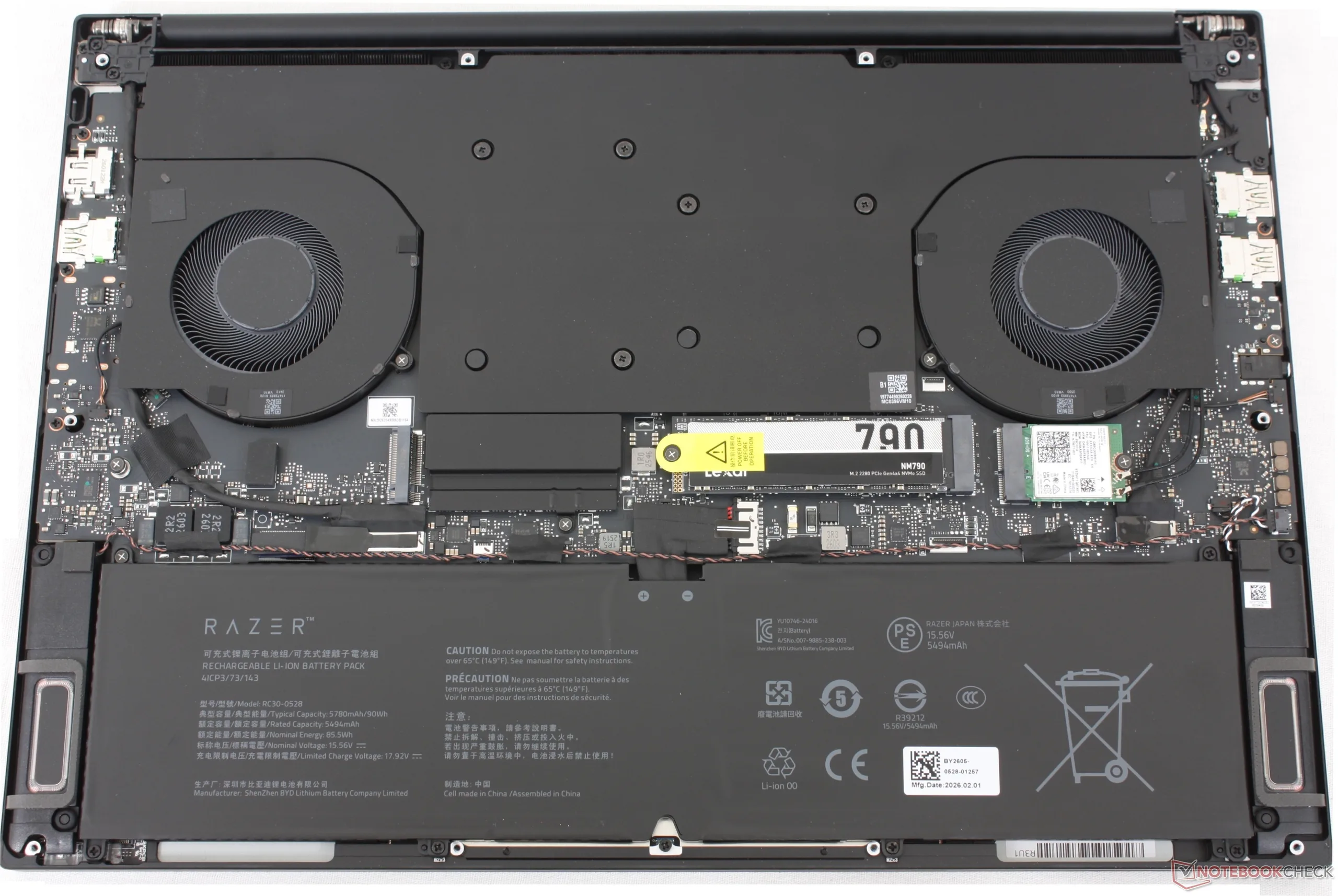
      • 2026 Razer Blade 16 Swaps AMD for Intel, Gets Great Results

        2026 Razer Blade 16 Swaps AMD for Intel, Gets Great Results

        Key Takeaway

        – 2026 Blade 16 switches from AMD Ryzen AI 9 HX 370 to Intel Core Ultra 9 386H
        – Intel model gains Thunderbolt 4/5 support, faster 9600 MHz RAM
        – Brighter OLED panel (DisplayHDR1000) and higher max TGP (165W vs 160W)
        – Longer battery life and improved gaming performance
        – AMD model slightly faster in multi-threaded workloads


        The new 2026 Blade 16 is now shipping to sucessed last year’s 2025 Blade 16. The model carries the same external shape but with an Intel Panther Lake Core Ultra 9 386H CPU across the board to replace the AMD Ryzen AI 9 HX 370.

        Advantages of Switching to Intel

        Switching to Intel has some immediate benifits. Primarily, the USB-C ports on the Blade 16 now support Thunderbolt 4 and Thunderbolt 5 where the same ports on the AMD-based Blade 16 SKUs are USB4 only. Secondly, onboard memory speeds are faster at 9600 MHz up from 8000 MHz on the 2025 Blade 16.

        Enhanced Display and Battery Life

        Other benifits with the Intel-based Blade 16 include longer battery life, a much brighter OLED panel (from DisplayHDR500 to DisplayHDR1000) and a slight bump to the maximum TGP boost from 160 W to 165 W. Both changes improve the gaming experience by small but persistent margins.

        Performance Trade-offs

        Switching to Intel isnt all roses, however. As shown by the benchmark comparisons below, the Ryzen AI 9 HX 370 can slightly outperform the Core Ultra 9 386H when it comes to traditional multi-threaded workloads. The Intel Blade 16 is nonethless the faster machine for gaming as our review shows.

        Sources
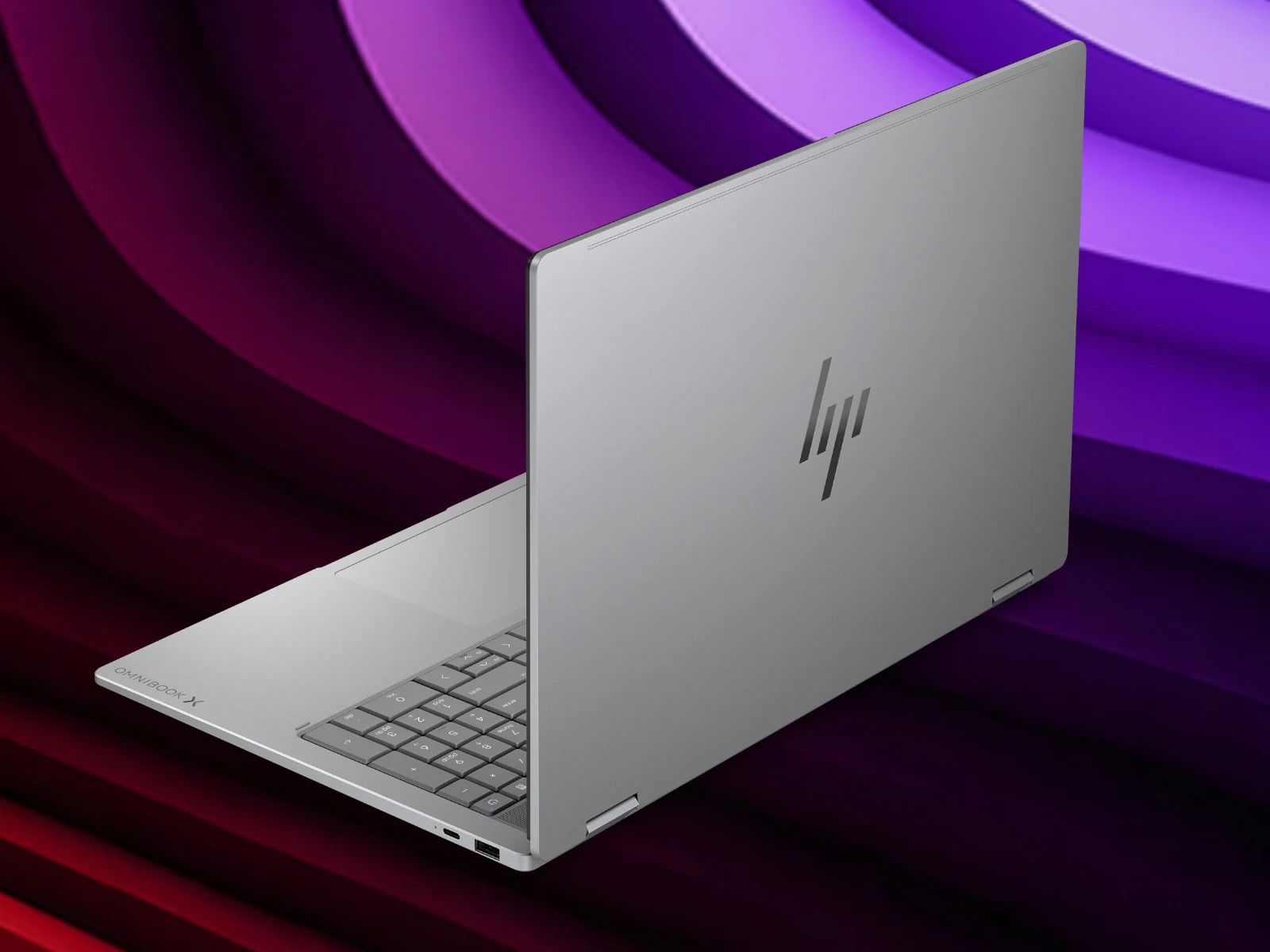
        • HP launches 16-inch laptop worldwide with 32GB RAM and 1100-nit OLED display

          HP launches 16-inch laptop worldwide with 32GB RAM and 1100-nit OLED display

          Key Takeaway

          – The new OmniBook X Flip 16 uses Panther Lake-based CPUs (Intel Core Ultra 5/7/9 or AMD Ryzen AI variants) with 16–32 GB RAM options and PCIe Gen 4/5 SSDs depending on platform.
          – All models include a 70 Wh battery, Wi‑Fi 7, and optional up to a 1800p OLED display (120 Hz, 100% DCI-P3, 500 nits SDR/1100 nits HDR).
          – Price range starts at $1,499 (US) up to $2,709 (Intel top config); European pricing varies (UK €1,299–€2,299; Eurozone €1,798–€2,099 depending on config).


          OmniBook X Flip 16: A Quick Intro

          Almost five months have passed since HP presented a successor to the OmniBook X Flip 16 we reviewed in July 2025 (curr. $749 on Amazon). To recap, that model leveraged Intel’s Panther Lake platform. By contrast, this year’s successor moves the OmniBook X Flip 16 range onto newer Panther Lake-based alternatives. The description keeps it sharp, yet the pace of updates remains brisk, and readers must note pricing as it shifts with configurations and regional availability.

          Processors and RAM Options

          Specifically, the new 16-inch convertible can be configured with the Core Ultra 5 325, Core Ultra 7 355 and the Core Ultra 9 386H, which are joined by 16 GB, 24 GB or 32 GB of RAM. The same is true for new AMD variants, which combine these RAM configurations with the Ryzen AI 5 430, Ryzen AI 5 435, Ryzen AI 7 445, Ryzen AI 7 450 or the Ryzen AI 9 465. Different markets may see nuanced availability, but core choices spotlight a balance between power and memory capacity that enthusiasts will weigh against price points.

          Finishes and Storage

          For some reason, HP reserves Eclipse Grey and Meteor Silver finishes for its Intel and AMD variants, respectively. All versions can be purchased in an Atmospheric Blue finish, though. Also, while the OmniBook X Flip 16 can be optioned with 512 GB, 1 TB and 2 TB of storage, HP includes PCIe Gen 4 SSDs in AMD models and faster PCIe Gen 5 alternatives in Intel models. The mix of finishes and storage tiers is presented with a pragmatic approach, yet the choices might feel uneven across markets and lineups.

          Battery, Display, and Connectivity

          Meanwhile, all versions ship with a 70 Wh battery and Wi-Fi 7 connectivity. Moreover, HP offers up to a 1800p (2.8K) OLED display with AMD or Intel processors. For reference, this display delivers a 120 Hz refresh rate, 100% DCI-P3 colour space coverage and 500 nits SDR/1,100 nits HDR brightness. The combination aims to satisfy both workhorse usability and media-erudite viewing preferences, though real-world brightness can vary with content and thermal limits.

          Pricing Across Regions

          Pricing starts at $1,499 in the US but can rise to $2,579 for AMD models and to $2,709 for their Intel counterparts. Meanwhile, the OmniBook X Flip 16 has reached the UK for £1,299 with a Core Ultra 7 355, 16 GB of RAM and 1 TB of storage. The same SKU sells for €1,699 in the Eurozone too, where pricing stretches to €2,299 for the same top configuration sold in the US. Currently, AMD models start at €1,798 in the Eurozone and rise to €2,099 with a Ryzen AI 9 465, 32 GB RAM, 1 TB SSD and a 1800p display.


        • Razer Blade 16 2026 Costs More, Slower Gaming vs 2025 Model

          Razer Blade 16 2026 Costs More, Slower Gaming vs 2025 Model

          Key Takeaway

          – The Blade 16 2026 shows only modest or negative performance gains over the 2025 model, despite higher CPU and GPU power-rated specs.
          – CPU and gaming performance, especially in multi-core workloads and many titles at 1600p, lags behind the 2025 Blade 16; some tasks like Blender/Houdini see 8–13% slower results.
          – Power/thermals vary by profile: Custom shows higher temps/power than 2025, but Performance lowers power use and cools better; overall gaming cooling is still competitive.
          – Battery life is excellent, with about 17h 20m web browsing (roughly 70% longer than the previous model), though idle power issues were noted in testing.
          – Price increases without clear, consistent performance benefits raise questions about the value of upgrading from the 2025 Blade 16.


          Razer unveiled the latest version of the Blade 16 gaming laptop at GDC back in March. The Razer Blade 16 2026 retains the thin metal chassis of the 2025 version, packs the latest Intel Core Ultra 9 386H CPU, has a brighter 240 Hz OLED panel, and bumps the wattage of the RTX 5090 laptop GPU. However, all of this has come at a notable price increase.

          Mixed signals from Hardware Canucks

          The Hardware Canucks’ testing shows the Blade 16 2026 may disappoint many Razer fans, as the Blade 16 2026 doesn’t look like a real upgrade compared to the 2025 Razer Blade 16, which did pretty well in their review. The outlet’s main complaints focus on the Core Ultra 9 386H CPU, the gaming performance, and the higher cost. They claim the 2026 model offers slower CPU performance in multi-core workloads than the 2025 Blade 16, which used the AMD Ryzen AI 9 HX 370. In Blender and Houdini, they note an 8% to 13% performance regression for the 2026 model.

          Where editing and gaming diverge

          In video editing, the Blade 16 2026 beats the 2025 version in Resolve but trails in Premiere Pro. So, whether you consider upgrading depends on the apps you rely on most. Gaming, however, appears to be a letdown for the 2026 variant. Even with a bit more power to the RTX 5090, the new Blade 16 2026 is reportedly slower than the 2025 model in most tested titles at 1600p.

          The CPU temperatures tell a curious story. The Blade 16 2026 seems to run hotter and louder than the 2025 model in both “Custom” and “Balanced” profiles. This is notable because the “Custom” profile on the new Blade 16 caps power at 69 W versus 75 W for the 2025 model. The “Performance” profile, on the other hand, shows the 2026 sipping less power at 57 W vs 74 W and staying cooler at 75 C vs 79 C, without any fan noise changes.

          Battery life and final take

          Surprisingly, the Blade 16 2026 runs cooler and quieter during gaming than the 2025 Blade 16. Since gaming workloads skew toward the GPU, the cooling system might be adequate, but the CPU might still need tweaks. While idle power consumption had some bugs during testing, the Blade 16 2026 delivered strong battery life, lasting 17 hours and 20 minutes in a web browsing test—about a 70% improvement over the previous model.

          All in all, the new Blade 16 does have some wins, but Hardware Canucks’ review raises significant questions about real enhancements, or lack thereof, with the Blade 16 2026. The bigger question is why buyers should pay more for hardware that doesn’t clearly boost performance.

          • Pricing and specs are highlighted as a key factor in the assessment, with the 2026 model bringing higher costs.
          • The review notes mixed results across productivity and creativity workloads, not just gaming.
          • Battery life improvements are cited as a strong point, though not enough to justify all the upgrades for some users.

          Buyers are advised to weigh the potential gains in display and power against the increased price and mixed performance gains. For those who care most about gaming frames, the 2025 Blade 16 might still be the better value if you’re constrained by cost and want reliable performance at high settings.


          Sources

        • Dell 16-inch Laptop with 120Hz OLED and Intel Panther Lake

          Dell 16-inch Laptop with 120Hz OLED and Intel Panther Lake

          Key Takeaway

          – North America offers four display configurations (including a cheaper 1200p IPS and an 1800p OLED), while Europe currently uses only a 1600p IPS panel.
          – In Europe, only Core Ultra 5 322 and Core Ultra 7 355 are available today; Core Ultra 5 336H, Core Ultra 7 356H, and Core Ultra X7 358H are planned (X7 358H includes Arc B390).
          – The Core Ultra X7 358H variant brings Intel Arc B390 graphics to the lineup.
          – Price points vary by region: US baseline starts at $1,319 (Core Ultra 5 322, 16 GB RAM, 512 GB, 1200p); UK £1,199 and Eurozone €1,349 for similar 1600p config; fully configured US option is $2,119 (32 GB RAM, Core Ultra 9 386H, 1800p OLED); X7 358H pricing not yet disclosed.

          Currently, Dell limits the Dell 16S to the Core Ultra 5 322, Core Ultra 7 355 and the Core Ultra 9 386H in North America. Meanwhile, Europe has only received Core Ultra 5 322 and Core Ultra 7 355 configurations at the time of publication. Dell states that Core Ultra 5 336H, Core Ultra 7 356H and Core Ultra X7 358H versions are coming too, although only the latter brings Intel’s Arc B390 graphics to the table.

          Regional model overview

          Also, only a 1600p IPS panel is available in Europe, which peaks at 500 nits with 100% sRGB colour space coverage and a 48-120 Hz variable refresh rate. By contrast, four display options have made their way to North America, including a cheaper 1200p IPS panel that peaks at 400 nits with 45% NTS C oclour space coverage and a 48-60 Hz refresh rate. Alternatively, an 1800p (2.8K) OLED panel can be configured too, which jumps to 100% DCI-P3 colour space coverage and a 48-120 Hz refresh rate, but with 400 nits peak brightness.

          Display options by region

          Dell charges at least $1,319 for its new 16-inch laptop in the US with the Core Ultra 5 322, 16 GB of RAM, 512 GB of storage and a 1200p IPS display. In comparison, a similar configuration with a 1600p IPS display retails for £1,199 in the UK and €1,349 in the Eurozone.

          Initial pricing snapshot

          For reference, the Dell 16S costs $2,119 in its fully configured state with 32 GB of RAM, a Core Ultra 9 386H processor and an 1800p OLED display. Dell has not confirmed pricing for Core Ultra X7 358H variants, though.


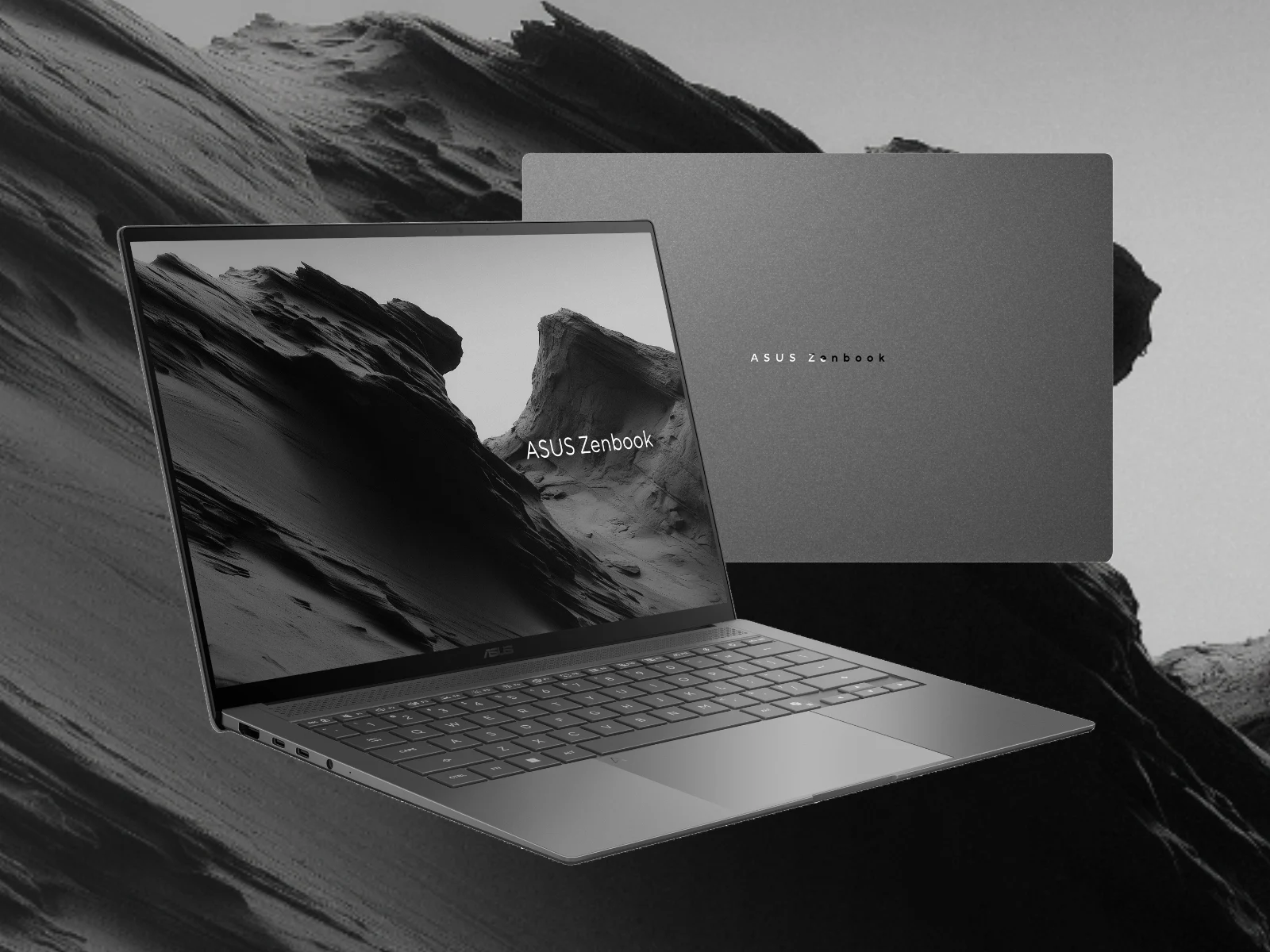
        • Asus Unveils New 14-Inch Laptop Ahead of Global Launch

          Asus Unveils New 14-Inch Laptop Ahead of Global Launch

          Key Takeaways

          1. Asus will offer the Zenbook S14 in the UK with the Core Ultra 9 386H, aligning with Canadian models instead of the more powerful Core Ultra X versions.
          2. The new 14-inch laptop is priced at £1,599 (approximately $1,799) and features 32 GB of RAM and 1 TB of storage.
          3. The Zenbook S14 has a 2.8K OLED display with a 120 Hz refresh rate and a peak brightness of 1,100 nits in HDR mode.
          4. Battery capacity has increased from 72 Wh to 77 Wh, suggesting improved battery life for the new model.
          5. The switch to the Core Ultra 9 386H may result in lower graphics performance compared to previous models equipped with Arc 140V.


          Initially, Asus suggested that the Core Ultra X Series would have 3 versions available in Europe to align with US models. However, it appears that the UK will instead align with Canadian models, offering the less powerful non-X versions. Specifically, both Asus and Currys have listed the new Zenbook S14 equipped with the Core Ultra 9 386H, instead of the more robust Core Ultra X7 368H or Core Ultra X9 388H.

          Pricing Details

          At the moment, both retailers have set the price for the new 14-inch laptop at £1,599, which is approximately $1,799 when excluding the 20% VAT applied in the UK. This configuration comes with 32 GB of RAM and 1 TB of storage, but it is only offered in a grey color. The laptop boasts a 2.8K OLED display with a refresh rate of 120 Hz, reaching a peak brightness of 500 nits in SDR mode and 1,100 nits in specific areas when HDR is enabled.

          Battery Improvements

          The battery capacity has increased by 6.9%, moving from 72 Wh to 77 Wh across generations. Consequently, the battery life should continue to be one of the Zenbook S14’s strong points. However, the choice of the Core Ultra 9 386H in place of the X variants might lead to lower graphics performance compared to its Arc 140V-based predecessors.

          Currys UK has been involved in the promotion of this new model, showing their commitment to providing the latest tech to consumers.

          Source:
          Link