Tag: Arrow Lake

  • MSI Raider 16 Max HX: Intel Arrow Lake Remains a Powerhouse

    Key Takeaway

    – Arrow Lake Core Ultra 9 290HX Plus outperforms Ryzen 9 9955HX3D and previous Intel CPUs by a few percentage points.
    – Power consumption is significantly higher, reaching up to 276W under load vs. 93W for a comparable Panther Lake system.
    – Performance-per-watt is poor, with 2x to 3x higher power draw for roughly 2x the performance.
    – The Core Ultra 9 290HX Plus is essentially an overclocked Core Ultra 9 285HX with identical cores and cache.


    A New Champion in Raw Performance

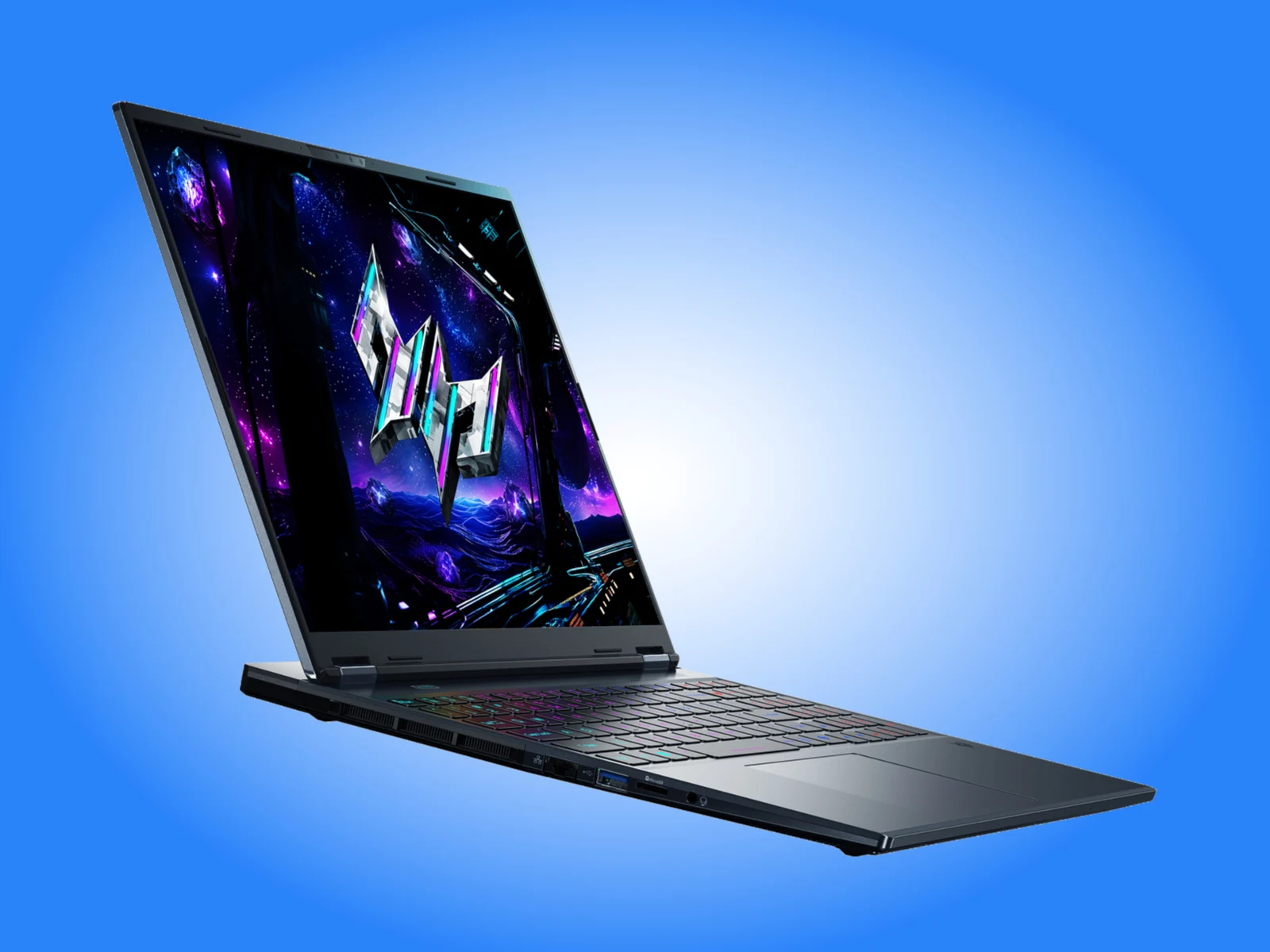
    Panther Lake may be Intel’s newest lineup of CPUs, but there’s still a lot of life left for the last generation Arrow Lake platform. The MSI Raider 16 Max HX is now shipping complete with the Arrow Lake Core Ultra 9 290HX Plus CPU instead of Panther Lake or AMD Zen 5 and the performance results are quite impressive. This chip realy packs a punch for those who need maximum compute grunt, even if it uses a older architecture.

    Benchmark Results and Comparisons

    As shown by the comparison graphs below, the Core Ultra 9 290HX Plus edges out the competing Ryzen 9 9955HX3D by just a few percentage points to be the new top dog in our raw performance charts. It ever-so-slightly outperforms both the Core Ultra 9 285HX in the much more expensive Titan 18 HX AI as well and the Dell Alienware 16X Aurora which ships with similar Arrow Lake processor options. This is a impressive showing for a chip that is not even the newest generation from Intel.

    Power Draw: The Main Trade-Off

    The main drawback as one might expect is the higher power requirement. Running Prime95 on the Raider 16 HX would consume as much as 276 W compared to only 93 W on the Razer Blade 16 with the slower but more efficient Panther Lake Core Ultra 9 386H. Thus, while the CPU may be 2x faster, expect consumption to be 2x to 3x greater as well for generally poorer performance-per-watt. After all, the Core Ultra 9 290HX Plus is arguably just an overclocked Core Ultra 9 285HX with an identical number of cores and cache sizes between them. You get the speed, but you pay for it in battery life and heat.
    Sources
    • Acer 16″ Gaming Laptop 165Hz OLED, 2x Longer Battery Life

      Acer 16″ Gaming Laptop 165Hz OLED, 2x Longer Battery Life

      Key Takeaway

      – Acer now sells Panther Lake (Core Ultra 9 386H) versions of the Predator Helios Neo 16S.
      – Panther Lake models cost significantly more but offer weaker CPU performance than Arrow Lake HX counterparts.
      – At the same price (€2,799), the Panther Lake variant includes a slower GPU (RTX 5060 vs. RTX 5070 Ti) and less storage (1 TB vs. 2 TB).
      – Panther Lake laptops are claimed to deliver over twice the battery life (up to 15 hours) from the same 76 Wh battery.
      – Availability is currently limited to Acer France, but wider global release is expected soon.


      Helios Neo 16S Gets a Confusing Update

      The Predator Helios Neo 16S has had something of a topsy-turvy ride in the last few months. To recap, Acer unveiled Intel Panther Lake-powered versions in January during CES 2026. Then in March, the company presented alternatives featuring Intel’s Arrow Lake-HX Plus generation.

      A Overview of New Configurations

      In the intervening period, we reviewed the Helios Neo 16S with the Core Ultra 9 275HX and the GeForce RTX 5070 Ti (curr. $1,929 on Amazon). Now, Acer has started selling Panther Lake-powered alternatives with the Core Ultra 9 386H. For the time being, we can only find listings on Acer’s French website; the laptop is listed as being out of stock in the UK. However, we would expect Panther Lake versions to reach other parts of the world soon.

      Pricing and Specification Comparison

      In the meantime, Acer France indicates that these Panther Lake versions will cost significantly more than their Arrow Lake HX counterparts. At the time of writing, the Predator Helios Neo 16S retails for €2,799 with a GeForce RTX 5070 Ti, 32 GB of RAM, a 2 TB SSD and a 240 Hz IPS display. By contrast, Acer charges the same amount for a Panther Lake variant with the slower GeForce RTX 5060, half as much storage and a 165 Hz OLED.

      Meanwhile, the Predator Helios Neo 16S costs €2,899 with the Core Ultra 9 386H, 32 GB of RAM, 1 TB of storage, a 165 Hz OLED display and the GeForce RTX 5070 with 8 GB of RAM running at up to 115 W. According to our benchmarks, these Panther Lake variants also fail to match the CPU performance of their Arrow Lake HX counterparts.

      Battery Life and Efficiency Claims

      They should run far more efficiently though, which Acer’s official battery life estimates reinforce. Specifically, the company claims its new Panther Lake-based gaming laptop lasts over twice as long from the same 76 Wh battery. Whether the PHN16S-I51 variant achieves up to 15 hours of battery life under light use remains to be seen, though.


      Sources

    • Jim Keller’s Royal Core: Intel’s Unified Cores for Future CPUs

      Jim Keller’s Royal Core: Intel’s Unified Cores for Future CPUs

      Key Takeaways

      1. Intel has shut down Jim Keller’s Royal Core initiative and abandoned associated CPU architectures like Beast Lake and Beast Lake Next.
      2. Evidence suggests Intel is developing “Unified Cores,” which can function as both P-cores and E-cores depending on task requirements.
      3. Unified Cores align with the concept of Rentable Units, allowing for performance-driven processing and efficient multi-core handling.
      4. Intel may be simplifying core designs by foregoing Hyperthreading in upcoming architectures like Arrow Lake and Nova Lake.
      5. Future Intel architectures, potentially including Razer Lake in 2028, may incorporate technologies from the Royal Core project, including Unified Cores.


      We learned back in 2024 that Intel had shut down Jim Keller’s Royal Core initiative and decided against releasing any CPU architecture that would incorporate all the technologies from Royal Core. Because of this, it appears Intel has also abandoned the Beast Lake and Beast Lake Next CPU architectures that were associated with Royal Core. However, there is new evidence suggesting that Intel might be working on “Unified Cores,” which is a significant technology from the Royal Core project.

      Job Posting Hints at Development

      Recently, a user named Olrak29_ on X shared a screenshot of a job ad on LinkedIn that explicitly referenced Intel’s “Unified Core team.” This indicates that Intel is indeed making strides in developing the Unified Core, touted as one of the major advancements from the Royal Core project.

      What is a Unified Core?

      A Unified Core is designed, as the name implies, to function as both a powerful P-core and a smaller E-core depending on the requirements of the task. The idea is that instead of having distinct core designs within a CPU, the Unified Core can shift to a performance-driven P-core for maximizing single-thread capabilities and transform into an E-core when necessary. This aligns directly with the concept of a Rentable Unit, which was also a key aspect of the Royal Core initiative.

      Intel’s Strategy Moving Forward

      Previous leaks have suggested that Intel chose to forego Hyperthreading in both the Arrow Lake and Nova Lake CPU architectures to simplify the core design and pave the way for Rentable Units. As per Moore’s Law Is Dead, Beast Lake was intended to feature 4x threads per Rentable Unit. This implies that a single Unified Core P-core could generate four smaller cores to handle multi-core tasks. This aligns with information shared by RedGamingTech about the Unified Core design from the Royal Core project.

      So, where do we stand now?

      Given that Intel is actively pursuing the development of a Unified Core, it’s also reasonable to think that other technologies from the Royal Core project, such as Rentable Units and 4-way Hyperthreading, are under development in some capacity. Therefore, Intel may introduce some of these technologies in forthcoming CPU architectures. Nova Lake is expected to maintain the existing P, E, and LP E-core design seen in current architectures like Panther Lake.

      In conclusion, it seems that Intel is preparing to roll out Royal Core technologies in architectures that follow Nova Lake. For example, Intel’s Razer Lake could potentially showcase Unified Cores in 2028.

      Source:
      Link


    • Intel Acknowledges Arrow Lake Issues, Optimistic About Nova Lake SKUs

      Intel Acknowledges Arrow Lake Issues, Optimistic About Nova Lake SKUs

      Key Takeaways

      1. Intel has faced leadership changes and significant layoffs due to poor performance in recent years.
      2. The Meteor Lake processors showed only slight performance gains over Raptor Lake, with Arrow Lake expected to have similar results.
      3. Intel’s CFO admitted the company has struggled in the high-performance desktop market, particularly with Arrow Lake.
      4. Nova Lake is the upcoming generation of desktop CPUs, expected to offer improved performance and a wider range of SKUs for the high-end market.
      5. Intel remains optimistic about Nova Lake’s potential to enhance competitiveness, with a planned release next year.


      Intel has been undergoing significant changes with new leadership and considerable layoffs due to its poor performance in recent years. The Meteor Lake processors released in 2023 provided only slight performance gains compared to Raptor Lake, and the upcoming Arrow Lake, set for 2024, appears to follow suit. The company has acknowledged its shortcomings, particularly with Arrow Lake, but remains optimistic about its upcoming generation of desktop CPUs.

      Acknowledgment of Shortcomings

      In a report from Wccftech referencing a Deutsche Bank 2025 Technology Conference call, Intel’s CFO David Zinsner confessed that the company has struggled in the desktop market with Arrow Lake, failing to compete effectively. He stated:

      “As you know, we kind of fumbled the football on the desktop side, particularly high performance desktop side. So we’re as you kind of look at share on a dollar basis versus a unit basis, we don’t perform as well and it’s mostly because of this high end desktop business that we didn’t have a good offering this year.”

      Future Plans with Nova Lake

      Zinsner then mentioned Nova Lake, the forthcoming generation of desktop CPUs, indicating that it would offer a more comprehensive range of SKUs targeting the high-end desktop segment. The company is hopeful that Nova Lake will enhance its competitive stance in the market next year.

      Nova Lake is expected to deliver significant performance enhancements over both Arrow Lake and Arrow Lake Refresh. These CPUs are likely to incorporate the new Coyote Cove P-cores and Arctic Wolf E-cores. It remains uncertain whether they will utilize TSMC’s 2nm or Intel’s 18A-P manufacturing process. The processors will adopt the Core Ultra 400 naming scheme, with the top-tier model rumored to feature 52 cores—16 P-cores, 32 E-cores, and 4 LP island E-cores with a 150 W TDP. Additionally, some models may include 3D V-cache, similar to AMD’s X3D series.

      Optimism for the Future

      In summary, Intel’s Nova Lake series is poised to be a more substantial upgrade compared to the previous couple of generations. The CPUs seem to be on schedule for release next year, although a specific launch date has not yet been announced.

      Source:
      Link


    • Why Intel’s Arrow Lake Processor Is Bad for Lenovo ThinkPad T14s

      Why Intel’s Arrow Lake Processor Is Bad for Lenovo ThinkPad T14s

      Key Takeaways

      1. Lenovo is the leading manufacturer of convertible laptops, with a variety of models for everyday users and businesses, including the new ThinkPad T14s 2-in-1.

      2. The ThinkPad T14s 2-in-1 features Intel’s Arrow Lake processors, which allows for onboard memory up to 64 GB, but performance improvements are minimal.

      3. Arrow Lake CPUs show inferior single-core performance and graphics capabilities compared to Lunar Lake processors, despite some slight improvements in multi-core performance.

      4. The test model with Core Ultra 7 255U has limited performance due to its two cores and one of the slowest integrated graphics processors available.

      5. The decision to use Arrow Lake in the T14s 2-in-1 is questioned, as the Lunar Lake version of the standard T14s received positive reviews and could have improved the convertible model.


      Lenovo stands out as the top maker of convertibles. They have a wide range of models available for both everyday users and corporate clients, with the ThinkPad T14s 2-in-1 being the newest high-end addition to their business series. While the standard ThinkPad T14s Gen6 comes with Intel’s Lunar Lake processors (or AMD Strix Point or Qualcomm Snapdragon), Lenovo has opted to use Intel’s Arrow Lake for this convertible version.

      Arrow Lake Features

      One benefit of Arrow Lake is that it allows the combination of CPUs with standard SO-DIMM memory, yet Lenovo chose to implement onboard memory instead. You can get up to 64 GB, which is double the capacity of what Lunar Lake offers, but we don’t believe this will matter for most business professionals. The performance of the Arrow Lake CPU is also rather lacking. While the multi-core performance shows a slight improvement, the maximum power consumption is greater. However, both single-core performance and notably the graphics capabilities are inferior. Additionally, the Arrow Lake processor does not hold the Copilot+ certification.

      Review Insights

      Our test model came with the Core Ultra 7 255U, which only has two performance cores and is equipped with the Intel Graphics iGPU—currently one of the slowest integrated graphics processors available. There are H-series CPU options with faster iGPUs, but overall cooling efficiency is quite poor, and the processor’s thermal design power (TDP) has dropped to merely 24 Watts under continuous workloads.

      In summary, it’s difficult to grasp why Lenovo made this choice. The Lunar Lake version of the standard ThinkPad T14s made a strong impression, and we are convinced it would have enhanced the T14s 2-in-1 as well. For more details, including extensive benchmarks and measurements, please refer to our review of the new ThinkPad T14s 2-in-1.


    • ThinkPad E14 G7: 14-inch Office Laptop with 2 SSD & RAM Slots

      ThinkPad E14 G7: 14-inch Office Laptop with 2 SSD & RAM Slots

      Key Takeaways

      1. Maintenance choices for consumer laptops are mainly limited to SSD upgrades due to soldered RAM on motherboards.
      2. The new Lenovo ThinkPad E14 G7 features SO-DIMM slots, allowing RAM upgrades up to 128GB with Arrow Lake processors.
      3. The E14 G7 includes an extra M.2 2280 slot for secondary SSD, enhancing storage options.
      4. Upcoming models with Lunar Lake processors will not support RAM upgrades or additional SSD slots due to integrated memory.
      5. Battery capacity and cooling performance are expected to remain unchanged in the Lunar Lake variant.


      When discussing consumer laptops, it’s generally understood that maintenance choices are mostly restricted to the SSD. This is because the memory is frequently soldered directly onto the motherboard or integrated into the processor, as seen with Intel’s recent Lunar Lake processors. This pattern has also extended to business laptops in the past few years, providing some benefits since SO-DIMM modules take up less room on the motherboard. Lenovo’s ThinkPad line has models that feature either 8GB or 16GB of soldered RAM along with an additional SO-DIMM slot for memory upgrades.

      A Shift in Trend

      The new ThinkPad E14 G7, which is one of Lenovo’s more budget-friendly office options, has turned this trend upside down. Specifically, the Intel setup with the latest Arrow Lake processors comes with SO-DIMM slots. This advancement allows the RAM to be increased to as much as 128GB in certain configurations. Additionally, the E14 G7 is well-provided for in terms of SSD capacity. Besides the shorter M.2 2242 slot filled by the default SSD, there’s another complete M.2 2280 slot available for a secondary solid-state drive.

      Variants and Limitations

      Nonetheless, this feature isn’t available across all versions of the ThinkPad E14 G7. In a few weeks, another model utilizing Lunar Lake processors will be released alongside the Arrow Lake version we reviewed. As the memory is integrated into the processor, the upgrade option will be lost. Moreover, that variant will not feature an extra SSD slot, as it comes with just a single M.2 2280 slot. The battery capacity also won’t be increased, and we don’t anticipate any notable enhancements in cooling performance due to the lower power limits of the Lunar Lake CPUs, meaning there may be a lot of unutilized space. We expect to evaluate that version in a few weeks.


    • EVO-T1: GMKtec Unveils Price for New Gaming Mini PC

      EVO-T1: GMKtec Unveils Price for New Gaming Mini PC

      Key Takeaways

      1. GMKtec’s EVO-T1 gaming mini PC, featuring the Intel Core Ultra 9 and 64 GB RAM, will launch in China on July 14, 2025, priced at CNY 5,699 (approximately $793).

      2. A global release date is not confirmed, but promotional content suggests the EVO-T1 may be available worldwide in July.

      3. The EVO-T1 is powered by the Intel Core Ultra 9 285H CPU and includes Arc 140T integrated graphics, performing well against AMD Radeon 890M.

      4. The mini PC includes an OCuLink port for connecting an external GPU and has multiple ports, including Type-C ports labeled for Thunderbolt, though the version is not specified.

      5. The EVO-T1 features two M.2 slots for storage expansion, but GMKtec has not revealed the maximum capacity for these slots.


      GMKtec has disclosed the pricing in China for its latest gaming mini PC, the EVO-T1. This system, featuring the Core Ultra 9, is equipped with 64 GB of RAM and 1 TB of storage. It is set to launch in China on July 14, 2025, with a special price of CNY 5,699, which is approximately $793.

      Availability Insights

      While there is no announcement regarding the global release of this mini PC, GMKtec has already established a promotional page on its international site. Earlier hints suggest that the EVO-T1 could become available worldwide sometime in July.

      Specifications Overview

      For anyone who hasn’t seen our previous reports, the GMK EVO-T1 is powered by the Intel Core Ultra 9 285H. This is a top-tier CPU within the Arrow Lake series, and it comes with the Arc 140T integrated graphics. Our evaluations indicate that the iGPU performs competitively against the AMD Radeon 890M, particularly when it comes to performance per watt.

      The EVO-T1 also includes an OCuLink port (with the GMKtec AD-GP1 priced at $469.98 on Amazon), allowing users to connect an external GPU to the mini PC. Additionally, it comes with these ports:

      It’s important to mention that the Type-C ports feature the Thunderbolt label, but GMK has yet to clarify whether they support Thunderbolt 5 or 4. The company has also indicated that the EVO-T1 is fitted with two M.2 slots for expanding storage, though they haven’t specified the maximum capacity available.

      Final Thoughts

      GMKtec shared this information on Weibo, translated from Chinese, giving potential buyers a look into what to expect with the EVO-T1.

      Source:
      Link


    • Intel Launches IPO Program to Enhance Arrow Lake CPU Sales

      Intel Launches IPO Program to Enhance Arrow Lake CPU Sales

      Key Takeaways

      1. Intel has launched the IPO (Intel Performance Optimizations) initiative in China to improve the performance of its Arrow Lake processors.

      2. The IPO program is being implemented in pre-assembled systems from Chinese companies, aiming for better performance without compromising stability or warranty.

      3. IPO optimizes CPU settings such as core clock rates and RAM speeds, achieving notable performance boosts, like a 10% increase in FPS for gaming.

      4. The initiative follows underwhelming performance from Arrow Lake processors, with Intel working on firmware updates to address these issues.

      5. There are plans for potential global rollout of similar optimization features, which could enhance Arrow Lake systems against competitors like AMD’s Ryzen 9000 series.


      Intel has subtly introduced a new performance boost initiative known as IPO (Intel Performance Optimizations) in China, aiming to enhance the performance of its lagging Arrow Lake processors.

      Program Deployment

      Details shared by hardware insider UNIKO’s Hardware on X (previously known as Twitter) indicate that the IPO initiative is being implemented in pre-assembled systems from Chinese companies like Maxsun. The IPO’s aim is to strike a balance between using components at their default speeds and manual overclocking, thus delivering improved performance while maintaining stability and warranty protections.

      How IPO Works

      The IPO framework functions by utilizing optimized profiles that adjust various CPU settings, which include P-cores, E-cores, ring-bus frequencies, NGU and D2D interconnections, plus power limits (PL1 and PL2), along with RAM speeds and timings. For instance, in a case from Maxsun, this technology achieved a 200 MHz boost in core clock rates and increased RAM speeds from DDR5-8000 to DDR5-8400. This change reportedly led to a 10% enhancement in FPS during gaming sessions.

      Future Prospects

      The rollout of IPO profiles follows the disappointing launch performance of Arrow Lake, where some chips underperformed compared to their earlier versions in certain situations. Intel has been striving to correct these issues through firmware and microcode updates since December, although testing has revealed inconsistent outcomes from these updates.

      Global Implications

      There are speculations that Intel may introduce similar “opt-in” BIOS settings for Arrow Lake processors worldwide in the future, suggesting that the current IPO program could be a test run for a larger feature set. If this initiative proves successful and widely embraced, it could enhance the appeal of Arrow Lake systems—particularly pre-built ones—against competitors like AMD’s Ryzen 9000 series.

      At this time, the IPO initiative is limited to the Chinese market. Vendors like Maxsun are marketing PCs that come with this optimization, with warranty services reportedly managed by the retailer. Information about global launch plans is still limited as Intel works to improve Arrow Lake’s performance further.

      Source:
      Link

    • Intel Nova Lake CPUs: Up to 16 P-Cores & 32 E-Cores Rumored

      Intel Nova Lake CPUs: Up to 16 P-Cores & 32 E-Cores Rumored

      The new Arrow Lake Core Ultra 200 desktop CPUs have yet to persuade gamers to upgrade from the older i9-14900K models. The latest architecture fails to show any meaningful performance improvements, despite several months of software updates. It appears Arrow Lake is merely setting the stage for future innovations, particularly Nova Lake, which is anticipated in 2026.

      Speculation on Nova Lake’s Architecture

      Intel has not revealed any specifications for Nova Lake in their recent quarterly earnings report. However, co-CEO Michelle Johnston Holthaus let slip that “Nova Lake will actually have die both inside and outside for that process. So you’ll actually see compute tiles inside and outside.” This revelation sparked a flurry of speculation on Reddit about potential core counts for the upcoming generation of chips.

      Core Configurations and Variants

      According to a now-deleted post by Exist50 on Reddit, the premium Nova Lake desktop CPUs might include up to 2×8 Coyote Cove P-cores and 2×16 Arctic Wolf E-cores, aligning with the concept of dual compute tiles mentioned by Intel’s co-CEO. Additionally, Exist50 mentioned that there will be high-performance mobile Nova Lake variants with configurations of 8P + 16E cores, as well as mid-range desktop and mobile options featuring just 4P + 8E cores. There will also be ultra-low-voltage (ULV) versions that only have 4 P-cores without any E-cores.

      Future iGPU Tile and Production Nodes

      The specifics of the iGPU tile for Nova Lake remain ambiguous. However, it is confirmed that these chips will be manufactured using Intel’s 18A nodes, similar to the Panther Lake mobile processors set to launch in late 2025.

      Source:
      Link

    • Core Ultra 5 225H vs Ryzen AI 9 365: Geekbench 6 Results Leaked

      Core Ultra 5 225H vs Ryzen AI 9 365: Geekbench 6 Results Leaked

      With the recent introduction of the desktop Arrow Lake CPUs, Intel is now set to reveal its mobile Arrow Lake-H CPUs. This lineup is said to include five different SKUs, starting with the Core Ultra 5 225H at the lower end and the Core Ultra 9 285H at the high end. After the Core Ultra 9 285H was spotted on Geekbench, the entry-level Core Ultra 5 225H has also surfaced on Geekbench 6.

      Geekbench Scores and Sample Status

      It’s worth noting that while the Geekbench 6 results are legitimate, the Core Ultra 5 225H has not yet been officially released, suggesting that what we are seeing could be a non-retail sample.

      The Core Ultra 5 225H scored 2,592 in single-core and 12,550 in multi-core benchmarks on Geekbench 6. The processor appears to operate at a base clock of 1.7 GHz and a boost clock nearing 4.88 GHz. Although there are slight variances, these clock speeds align with the expected base and boost frequencies for the Core Ultra 5 225H.

      Performance Comparisons

      According to the Geekbench 6 scores, the Core Ultra 5 225H is approximately 15.3% faster in multi-core tasks and 4% slower in single-core performance compared to the Core Ultra 7 258V. This outcome is anticipated since the Lunar Lake chip has a TDP of 17 W, while the Core Ultra 5 225H is expected to have a TDP of 28 W.

      A more fitting comparison is with the Core Ultra 5 125H, as the Meteor Lake chip occupies a similar position and also has a 28 W base TDP. In this case, the Core Ultra 5 225H seems to outperform by 10% in multi-core benchmarks and 14% in single-core tests.

      Rivalry with Strix Point and Potential

      Lastly, the Strix Point Ryzen AI 9 365, which has a base TDP of 28 W, shows an 8% and 7% lead in single-core and multi-core Geekbench 6 scores, respectively. It will be intriguing to see whether the retail versions of the Core Ultra 5 225H can close this performance gap.

      While the leaked Geekbench 6 performance of the Core Ultra 5 225H isn’t groundbreaking compared to the newest mobile CPUs, the reported specifications indicate it’s an entry-level SKU aimed at lightweight laptops rather than a powerhouse.

      Specifications Overview

      In terms of specs, the Core Ultra 5 225H is said to feature 4 Lion Cove P-cores, 8 Skymont E-cores, and 2 Crestmont LP E-cores. The Lion Cove P-cores are anticipated to have a base/boost clock speed of 1.6/5.0 GHz, while the Crestmont E-cores might run slower at 1.3/4.3 GHz. Furthermore, the chip could include 28 MB of L3 cache.

      On the iGPU front, the Core Ultra 5 225H is rumored to be equipped with an “Alchemist+” Xe-LPG+ Arc 130T iGPU featuring 7 Xe cores. It remains uncertain what level of performance this new iGPU will achieve.

      Source: Link


      Core Ultra 5 225H vs Ryzen AI 9 365: Geekbench 6 Results Leaked