Tag: Intel vs AMD

  • 2026 Razer Blade 16 Swaps AMD for Intel, Gets Great Results

    2026 Razer Blade 16 Swaps AMD for Intel, Gets Great Results

    Key Takeaway

    – 2026 Blade 16 switches from AMD Ryzen AI 9 HX 370 to Intel Core Ultra 9 386H
    – Intel model gains Thunderbolt 4/5 support, faster 9600 MHz RAM
    – Brighter OLED panel (DisplayHDR1000) and higher max TGP (165W vs 160W)
    – Longer battery life and improved gaming performance
    – AMD model slightly faster in multi-threaded workloads


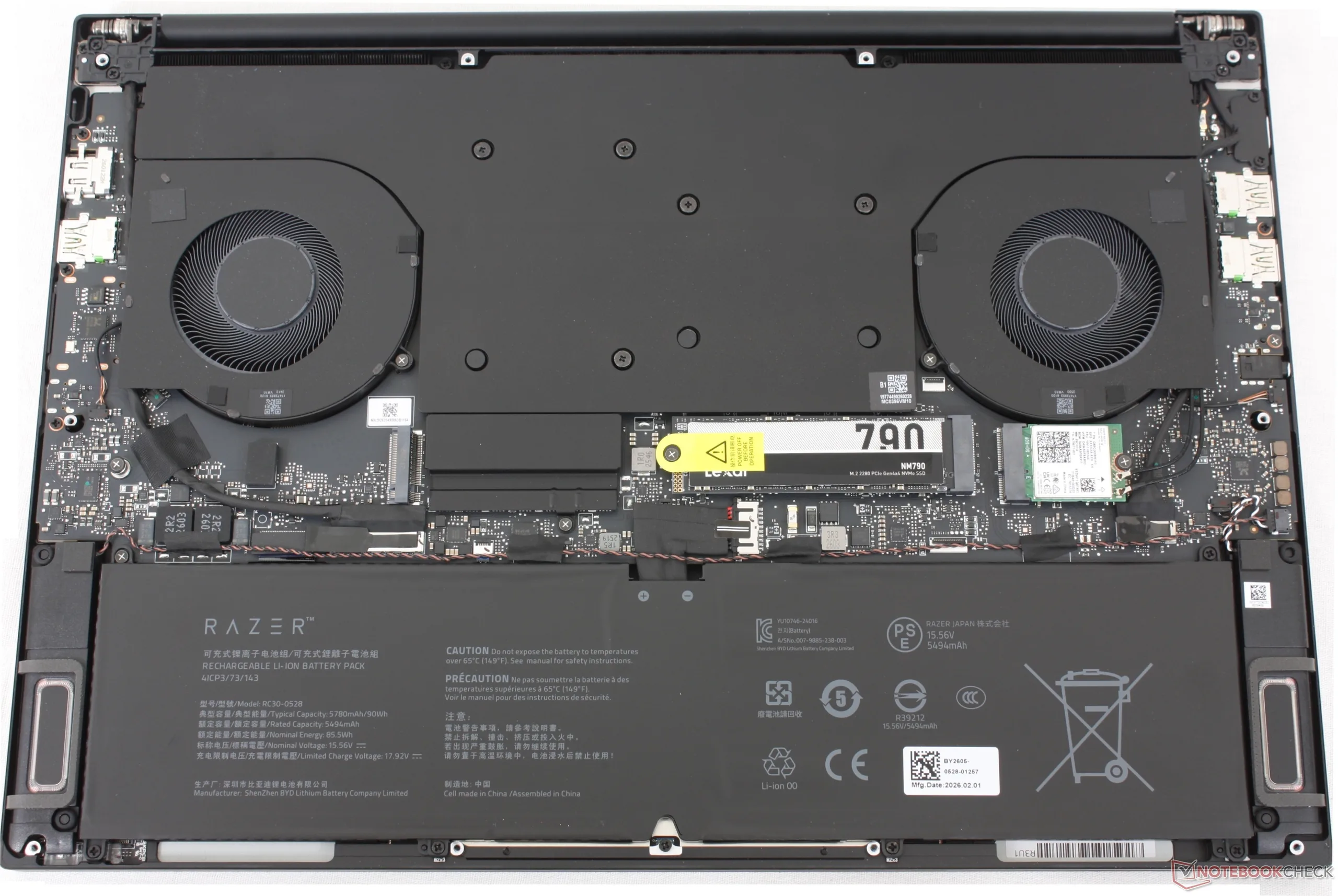
    The new 2026 Blade 16 is now shipping to sucessed last year’s 2025 Blade 16. The model carries the same external shape but with an Intel Panther Lake Core Ultra 9 386H CPU across the board to replace the AMD Ryzen AI 9 HX 370.

    Advantages of Switching to Intel

    Switching to Intel has some immediate benifits. Primarily, the USB-C ports on the Blade 16 now support Thunderbolt 4 and Thunderbolt 5 where the same ports on the AMD-based Blade 16 SKUs are USB4 only. Secondly, onboard memory speeds are faster at 9600 MHz up from 8000 MHz on the 2025 Blade 16.

    Enhanced Display and Battery Life

    Other benifits with the Intel-based Blade 16 include longer battery life, a much brighter OLED panel (from DisplayHDR500 to DisplayHDR1000) and a slight bump to the maximum TGP boost from 160 W to 165 W. Both changes improve the gaming experience by small but persistent margins.

    Performance Trade-offs

    Switching to Intel isnt all roses, however. As shown by the benchmark comparisons below, the Ryzen AI 9 HX 370 can slightly outperform the Core Ultra 9 386H when it comes to traditional multi-threaded workloads. The Intel Blade 16 is nonethless the faster machine for gaming as our review shows.

    Sources
    • Lenovo Unveils Lightweight ThinkPad with AMD Zen 5 and Intel Panther Lake

      Lenovo Unveils Lightweight ThinkPad with AMD Zen 5 and Intel Panther Lake

      Key Takeaway

      – Both AMD and Intel variants offer up to 16–32 GB LPDDR5X RAM and up to 1 TB storage; AMD supports PCIe Gen 5.0 SSDs, while Intel models are limited to PCIe Gen 4.0.
      – CPU options range from Core Ultra 5 325 / Ryzen AI 5 Pro 440 up to Core Ultra 7 356H / Ryzen AI 7 Pro 450, with no weight increase (starting at 930 g).
      – Displays are 1200p, 60 Hz, 400-nit IPS across all variants; configurations include optional cellular and 41 Wh or 54.7 Wh batteries.


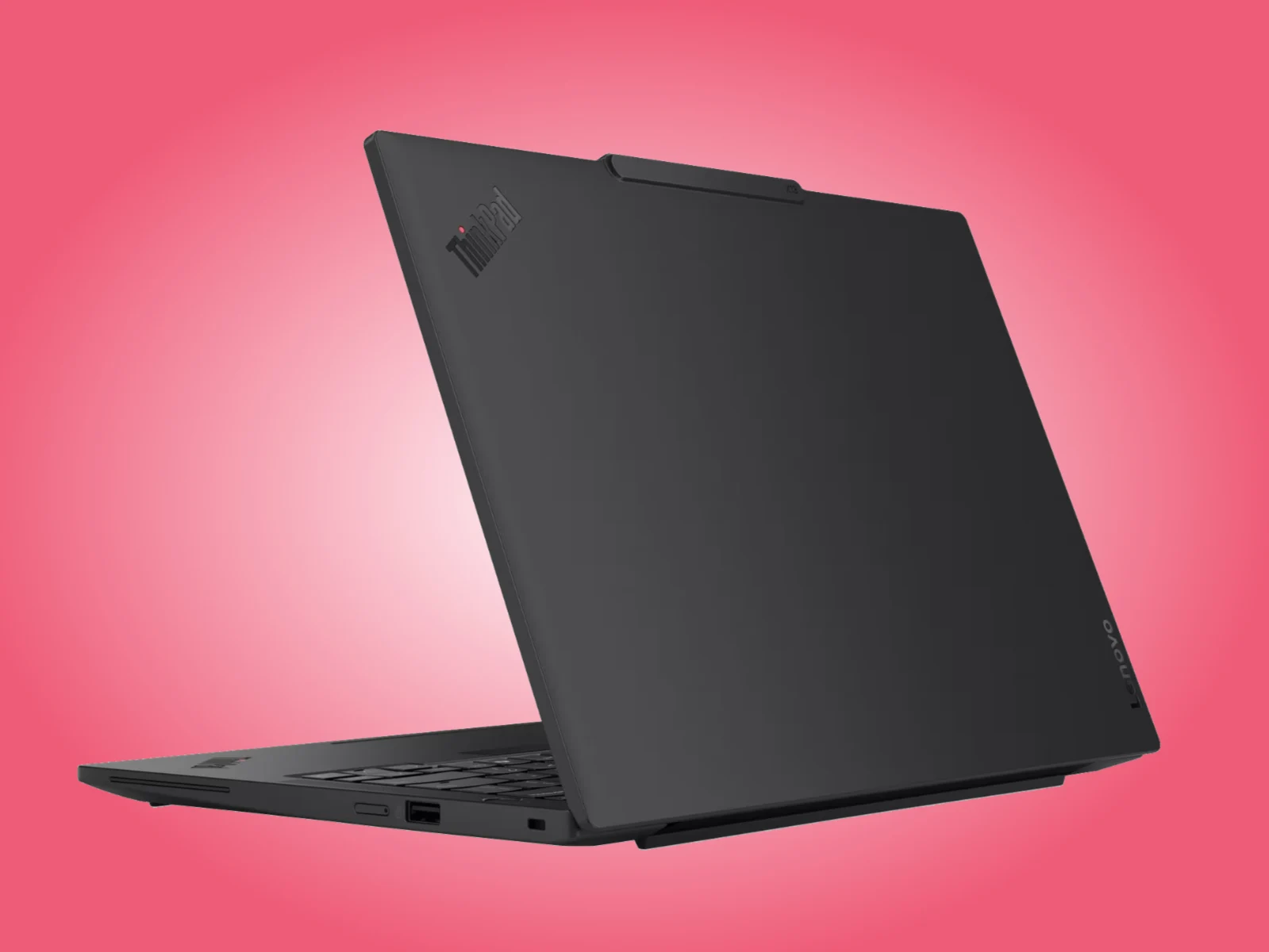
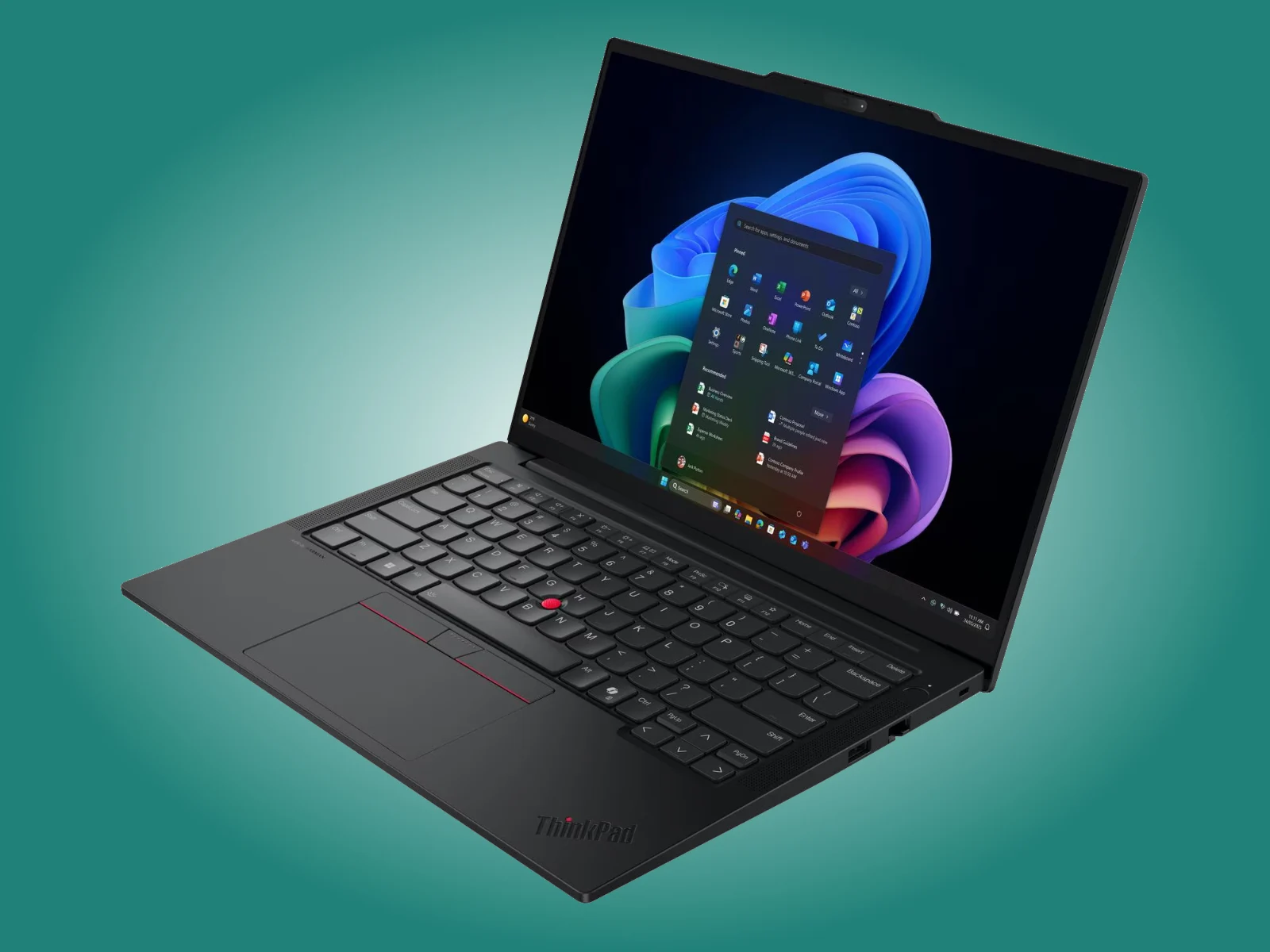
      Hardly any time has passed since Lenovo launched the ThinkPad X13 Gen 7. Replacing Gen 6 models that we reviewed in December (curr. $1,256 on Amazon), the ThinkPad X13 Gen 7 adds more powerful processors while retaining its predecessor’s 930 g starting weight.

      The opening sentence sets the stage with a brief market update, and I’ll keep the cadence varied. This paragraph reads in a casual, report-like tone that tries to balance promotional details with specs. It mentions that the Gen 7 replaces Gen 6, notes the current price on Amazon, and highlights the weight retention. The style shifts slightly from formal to conversational, maintaining a critical eye on an incremental upgrade without overhyping it.

      Now, Lenovo is selling AMD and Intel variants across East Asia, Southeast Asia and Australia. Specifically, the ThinkPad X13 Gen 7 starts with a Core Ultra 5 325 and a Ryzen AI 5 Pro 440 from Intel’s Panther Lake and AMD’s Gorgon Point families. However, both variants can be configured with more powerful options like the Core Ultra 7 356H and the Ryzen AI 7 Pro 450.

      The second paragraph changes tone to a more technical listing, describing the processor options in a compact way. It includes both AMD and Intel variants and mentions specific codenames Panther Lake and Gorgon Point. It also notes upgradable tiers (Core Ultra 7 356H and Ryzen AI 7 Pro 450), with a brisk catalog-like cadence that preserves the factual style while still sounding a bit informal.

      Moreover, Lenovo equips the ThinkPad X13 Gen 7 with 16 GB or 32 GB of LPDDR5X-8533 RAM and up to 1 TB of storage regardless of whether you opt for AMD or Intel processors. Only AMD models can be configured with PCIe Gen 5.0 SSDs, though. In comparison, Intel models make do with slower PCIe 4.0 SSDs. Setting that aside, all variants ship with 1200p, 60 Hz and 400-nit IPS displays and the choice of adding cellular connectivity plus a 41 Wh or 54.7 Wh battery.

      In this paragraph the style smooths into a more evaluative, spec-dense voice. It enumerates RAM options (16 or 32 GB LPDDR5X-8533), storage capacity up to 1 TB, and a key caveat: AMD models can use PCIe Gen 5.0 SSDs while Intel models are limited to PCIe 4.0. It concludes with the common display spec (1200p, 60 Hz, 400-nit IPS) and the optional cellular plus two battery sizes (41 Wh or 54.7 Wh). The writing keeps a pragmatic, almost checklist-like flow to maintain clarity while threading through multiple specs.

      The ThinkPad X13 Gen 7 retails for AUD 2,429, HKD 15,330, MYR 6,664 and SGD 2,400 with Intel processors in Australia, Hong Kong, Malaysia and Singapore, respectively. By contrast, Lenovo has priced AMD versions at AUD 2,220, HKD 15,341 and SGD 3,322, respectively. The ThinkPad X13 Gen 7 should reach the US later this year, starting at $1,500.

      The third paragraph adopts a market-entry style with a regional price breakdown, noting Australian, Hong Kong, Malaysia, and Singapore pricing for Intel vs AMD configurations. It contrasts AMD pricing and hints at a US release later in the year with a starting price around $1,500. The tone remains informative, with a pragmatic emphasis on regional variation and anticipated availability in the United States.

       

    • Lenovo Unveils New 14-Inch ThinkPad Worldwide Launch Soon

      Lenovo Unveils New 14-Inch ThinkPad Worldwide Launch Soon

      Key Takeaway

      – ThinkPad E14 Gen 8 now available with Intel processors in several regions (Australia, Hong Kong, Malaysia, Singapore) and listed in Europe and the US as “coming soon.”
      – Offers a range of processors (Core Ultra 5/7) with up to 32 GB DDR5 RAM, 1 TB M.2 storage, and battery options up to 64 Wh.
      – Display options include up to 2.8K (1800p) at 120 Hz with 500-nit brightness and 100% sRGB, all IPS.


      ThinkPad E14 Gen 8 Launch Details and Availability

      Yesterday, we reported that Lenovo had launched the ThinkPad E14 Gen 8 globally with AMD Zen 5 processors. Currently, Lenovo is not selling this version of its new budget 14-inch ThinkPad directly. In the meantime, Intel-powered alternatives have started popping up on some of its regional websites.

      Regional Availability and Listings

      For instance, the ThinkPad E14 Gen 8 with Intel processors is now officially available in Australia, Hong Kong, Malaysia and Singapore. Also, retailers have started listing the same laptop in Europe and the US. However, the ThinkPad E14 Gen 8 is earmarked as ‘coming soon’ on Lenovo’s European and North American websites.

      Specifications and Configurations

      The ThinkPad E14 Gen 8 surpasses the Gen 7 models that we reviewed in November (curr. $1,299 on Amazon) with a choice between Core Ultra 5 322, Core Ultra 5 325, Core Ultra 5 336H, Core Ultra 7 355 and Core Ultra 7 356H processors. Additionally, the new laptop can be configured with up to 32 GB of DDR5-5600 RAM, 1 TB of M.2 2242 storage and a 48 Wh or 64 Wh battery.

      Display Options

      Moreover, Lenovo offers the laptop with up to a 1800p (2.8K), 120 Hz and 500-nit display that covers 100% sRGB colour space coverage. All display options are IPS-based, though. The ThinkPad E14 Gen 8 starts at AUD 1,817, HKD 10,880, MYR 5,469 and SGD 2,104 in Australia, Hong Kong, Malaysia and Singapore, respectively. Meanwhile, retailers have listed the laptop for €1,639 in the Eurozone and $2,320 in the US, albeit with differing specifications.


    • AMD’s Radeon 890M Laptops Narrow Gap with Intel in Graphics Race

      AMD’s Radeon 890M Laptops Narrow Gap with Intel in Graphics Race

      Key Takeaways

      1. AMD has a strong advantage over Intel since the Radeon 680M’s release in 2022, outperforming Intel’s Iris Xe 96 EUs by 30 to 50 percent.
      2. Intel’s new Arc 8 graphics reduced the performance gap with AMD but was limited to Core H-series laptops, which are less common.
      3. Intel’s latest integrated graphics, the Arc 130V, 140V, and 140T, do not require Core H-series laptops, making them more accessible.
      4. The new Intel models show a performance improvement of 10 to 15 percent over the previous Arc 8, making them competitive with AMD.
      5. Despite improvements, AMD’s Radeon 890M still outperforms the Arc 140V in most games by about 10 percent, with larger gaps in specific titles.


      AMD has maintained a strong advantage over Intel since the introduction of the Radeon 680M in 2022. At that point, Intel’s top integrated option, the Iris Xe 96 EUs, fell short, lagging behind the Radeon 680M by 30 to 50 percent. The gap widened slightly in favor of AMD with the release of the Radeon 780M.

      Intel’s New Strategy

      When Intel debuted the successor to the Iris Xe 96 EUs, named Arc 8, it successfully reduced the performance divide with AMD. However, the downside was that Arc 8 was limited to the more powerful Core H-series laptops, which are not as prevalent as their Core U-series and Ryzen U-series counterparts.

      Latest Intel Graphics

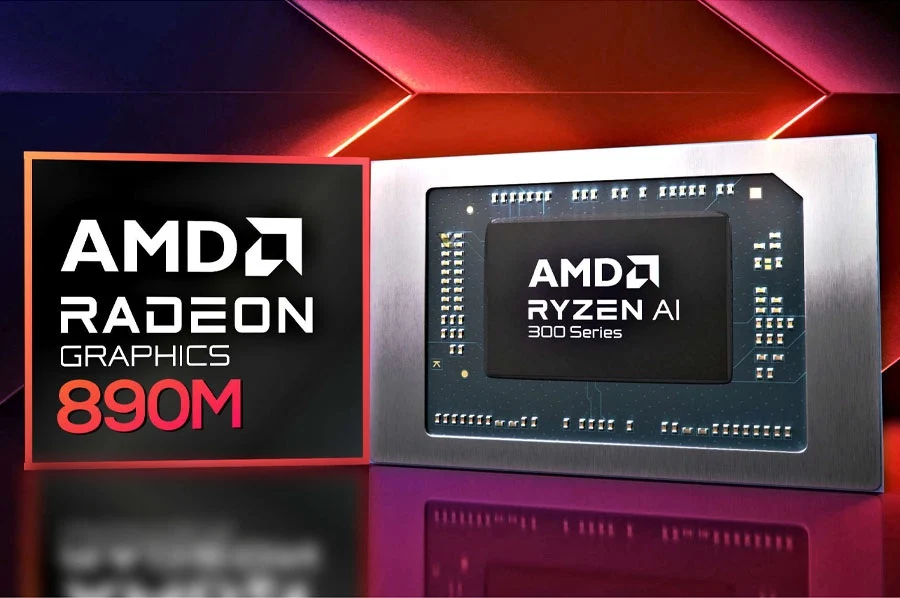
      The most recent integrated graphics lineup from Intel features the Arc 130V, 140V, and 140T. The V-series addresses the previous issue by eliminating the need for a Core H-series laptop to access Intel’s latest iGPU. Moreover, these new models provide a performance boost of about 10 to 15 percent over the Arc 8, as noted in 3DMark benchmarks. This improvement in both raw performance and performance-per-watt has made Intel’s integrated solutions competitive against AMD’s top offerings—a notable change after many years.

      Despite these advancements, the power-hungry Radeon 890M still surpasses the average Arc 140V in most games by approximately 10 percent. In specific titles, such as Tiny Tina’s Wonderlands, the difference can reach 20 percent, while games like Cyberpunk 2077 often result in a close match between both GPUs before factoring in any upscaling technologies. Nonetheless, Intel’s current progress appears promising if they can maintain their momentum in future generations.

    • New HP Envy x360 Laptops Revealed with Latest Intel & AMD CPUs

      New HP Envy x360 Laptops Revealed with Latest Intel & AMD CPUs

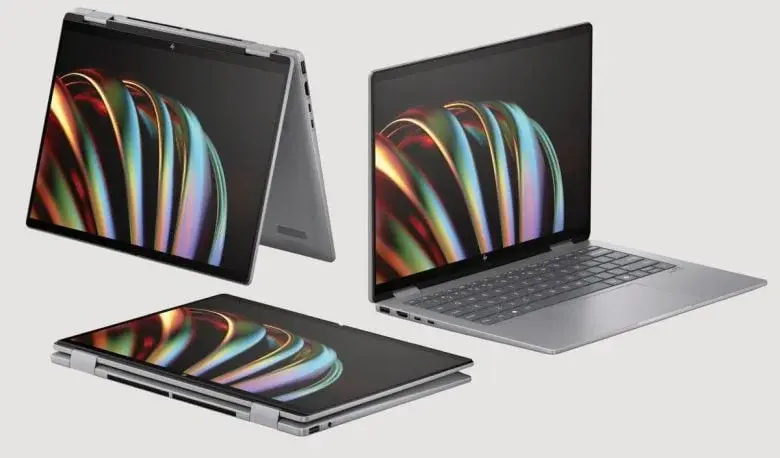
      HP has unveiled its latest Envy x360 14-inch laptop models, featuring a blend of new Intel and AMD processors.

      HP Envy X360 Specifications:

      The Envy x360 lineup offers a diverse range of options, including two AMD-powered models and two Intel-powered models. On the AMD side, users can opt for the Ryzen 5 8640HS and Ryzen 7 8840HS models, boasting higher TDP and additional cores. In contrast, Intel's offerings, such as the Core Ultra 5 125U and Core Ultra 7 155U, may not be as powerful but come equipped with a Thunderbolt 4 port—a feature absent in AMD's lineup.

      Display and Performance:

      AMD models come with Radeon 700M integrated graphics, potentially surpassing Intel's Meteor Lake chips in performance. Both variants sport a 14-inch touchscreen display, with the Intel version supporting up to 2880 x 1800 pixels on an OLED panel and the AMD variant featuring a 1920 x 1200 IPS display, focusing on optimizing battery life.

      Configuration and Connectivity:

      Customers have the flexibility to configure their laptops with up to 32GB of LPDDR5-6400 RAM and 2TB of storage, complemented by a 5MP IR webcam. Connectivity features are consistent across both models, offering 2x USB-A 3.2 Gen 2 ports (one with charging capability), HDMI 2.1 video output, and an audio jack. Intel variants include an additional USB-C 3.2 Gen 2 port alongside the Thunderbolt 4 port, while AMD models feature two USB-C 3.2 Gen 2 ports.

      Connectivity Options and Battery Life:

      Both Intel and AMD versions provide options for Wi-Fi 7 + BT 5.4 and Wi-Fi 6E + BT 5.3. With a 59 Wh battery and support for 65W USB-C charging, these laptops weigh only 3.1 lbs (1.4 kg) and have a slim 0.7-inch (1.7 cm) profile.

      Pricing and Availability:

      The Envy x360 models are priced starting at $960 for the Intel variants and a slightly more affordable $950 for the AMD models. Consumers can expect these laptops to hit the shelves in March 2024.

      Prices start at $960 for Intel and a slightly more affordable $950 for AMD. Both models hit the shelves in March 2024.