Tag: AMD Ryzen AI

  • Lenovo ThinkPad L16 launches with AMD, up to 64GB RAM

    Lenovo ThinkPad L16 launches with AMD, up to 64GB RAM

    Key Takeaway

    – Lenovo ThinkPad L16 Gen 3 launched internationally with AMD Ryzen AI (Zen 5) processors.
    – Offers Ryzen AI 5/7 and Pro variants, with up to 64GB DDR5 RAM and 1TB storage.
    – Display limited to 1200p 60Hz IPS with 45% NTSC color coverage.
    – Pricing ranges from £1,320 (UK) to €1,399+ (Eurozone); not yet available in North America.
    – Expected US starting price of $1,440, with higher configurations likely exceeding $2,500.


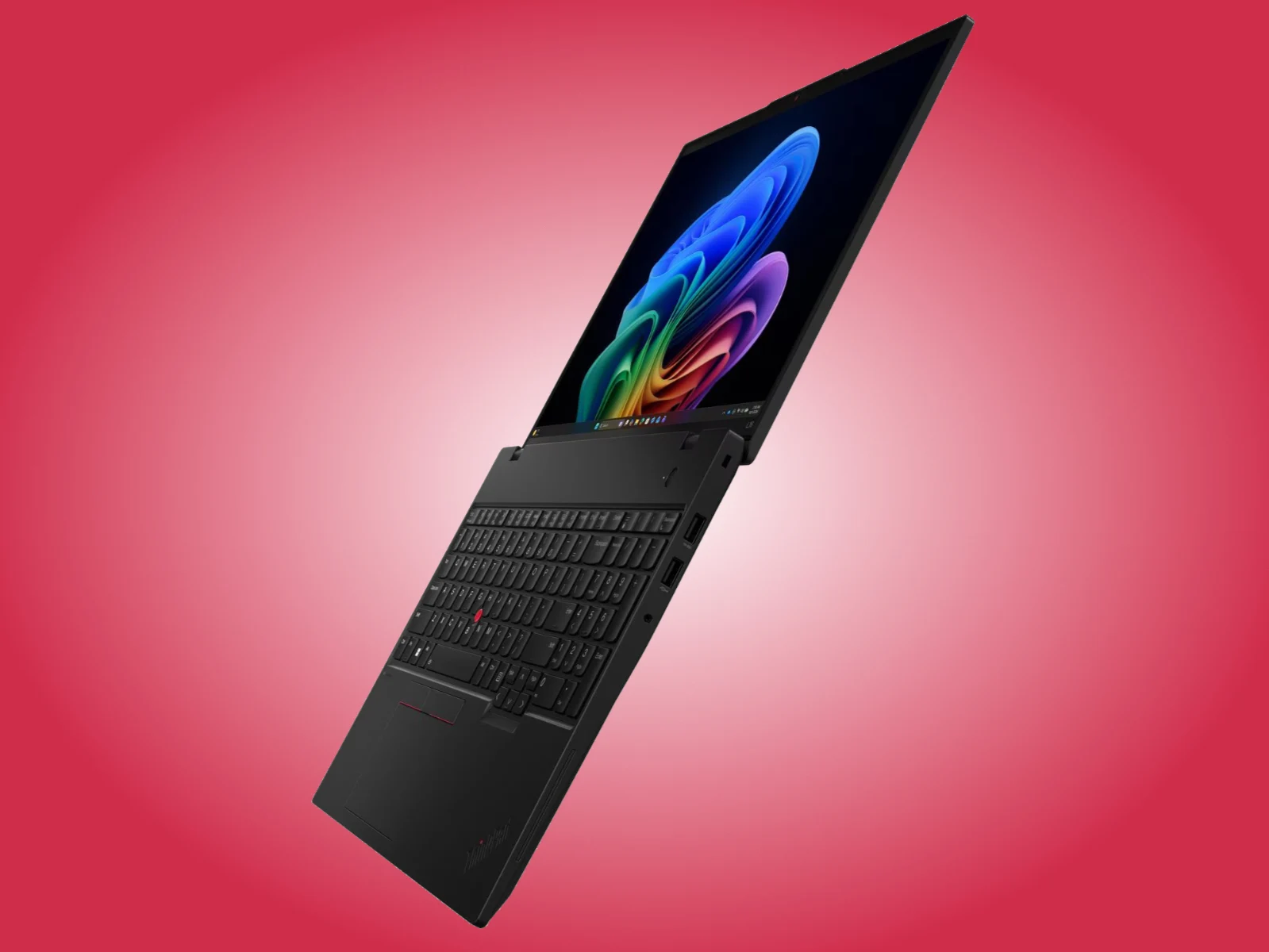
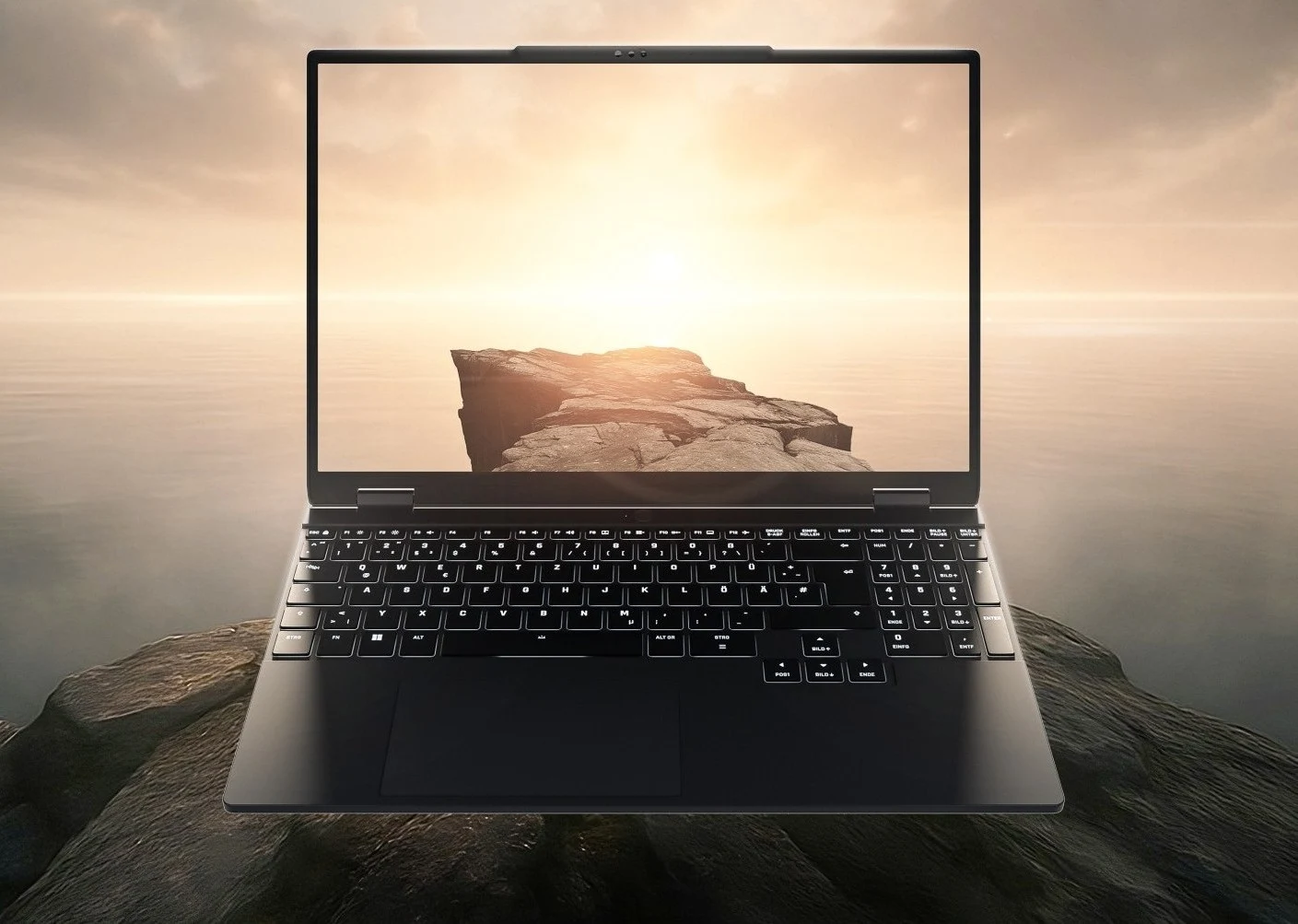
    Lenovo have now released the ThinkPad L16 Gen 3 interntionally featuring AMD processors. To recap, the company launched its ThinkPad L16 Gen 2 successor in April. However, it waited a month befor detailing its new budget-oriented globally.

    New Processor Options and Memory Details

    Now, the ThinkPad L16 Gen 3 is available to purchase in Australia, East Asia, Southeast Asia, the UK and the Eurozone. Currently, the 16-inch laptop starts with the Ryzen AI 5 430, a Zen 5 APU that should surpass Hawk Point processors found in the ThinkPad L16 Gen 2 we reviewed in February 2026 (curr. $909 on Amazon).

    Specifications and Upgrades

    Alternatively, the ThinkPad L16 Gen 3 can be configured with the Ryzen AI 5 Pro 435, Ryzen AI 7 445, or the Ryzen AI 7 Pro 450 and 16 GB, 32 GB or 64 GB of DDR5-5600 RAM. Up to 1 TB of M.2 2280 storage and 46 Wh or 57 Wh battery options are available too. Unfortunatly, only 1200p and 60 Hz IPS panels can be configured with 400 nits peak brightness and 45% NTSC colour space coverage.

    Pricing Across Regions

    Pricing starts at £1,320 in the UK but rises to £2,869 in the laptops top configuration. Likewise, the ThinkPad L16 Gen 3 retails for €1,399-€1,550 in the Eurozone, plus AUD 1,949, HKD 9,178 and SGD 1,746 in Australia, Hong Kong and Singapore, respectively.

    North America Availibility

    At the time of writing, Lenovo is not selling the ThinkPad L16 Gen 3 in North America. Previously, the company claimed the laptop would start at $1,440 in the US. Based on pricing elsewhere, the ThinkPad L16 Gen 3 will easily cost over $2,500 for some of its more powerful configuragions, though.


  • HP launches 16-inch gaming laptop with Nvidia graphics and 64GB RAM

    HP launches 16-inch gaming laptop with Nvidia graphics and 64GB RAM

    Key Takeaway

    – Intel SKUs start at $2,679 (Core Ultra 7 270HX Plus, RTX 5070 Ti, 16 GB RAM, 512 GB Gen 5, 460 W GaN charger, 83 Wh battery) and can go up to $4,469 (Core Ultra 9 290HX Plus, RTX 5090, 64 GB RAM, 2 TB Gen 5, 240 Hz OLED).
    – Only Intel variants are available in Ceramic White ($10 surcharge).
    – AMD SKUs start at $2,899 (Ryzen AI 7 450, RTX 5070 Ti, 16 GB RAM, 512 GB Gen 4, 240 Hz IPS) and max out at $4,569.99 (Ryzen AI 9 HX 475, RTX 5080, 48 GB RAM, 2 TB Gen 5, 240 Hz OLED).
    – HP expects to begin shipping new Omen Max 16 laptops in June.


    Intel models start at $2,679 with a Core Ultra 7 270HX Plus processor

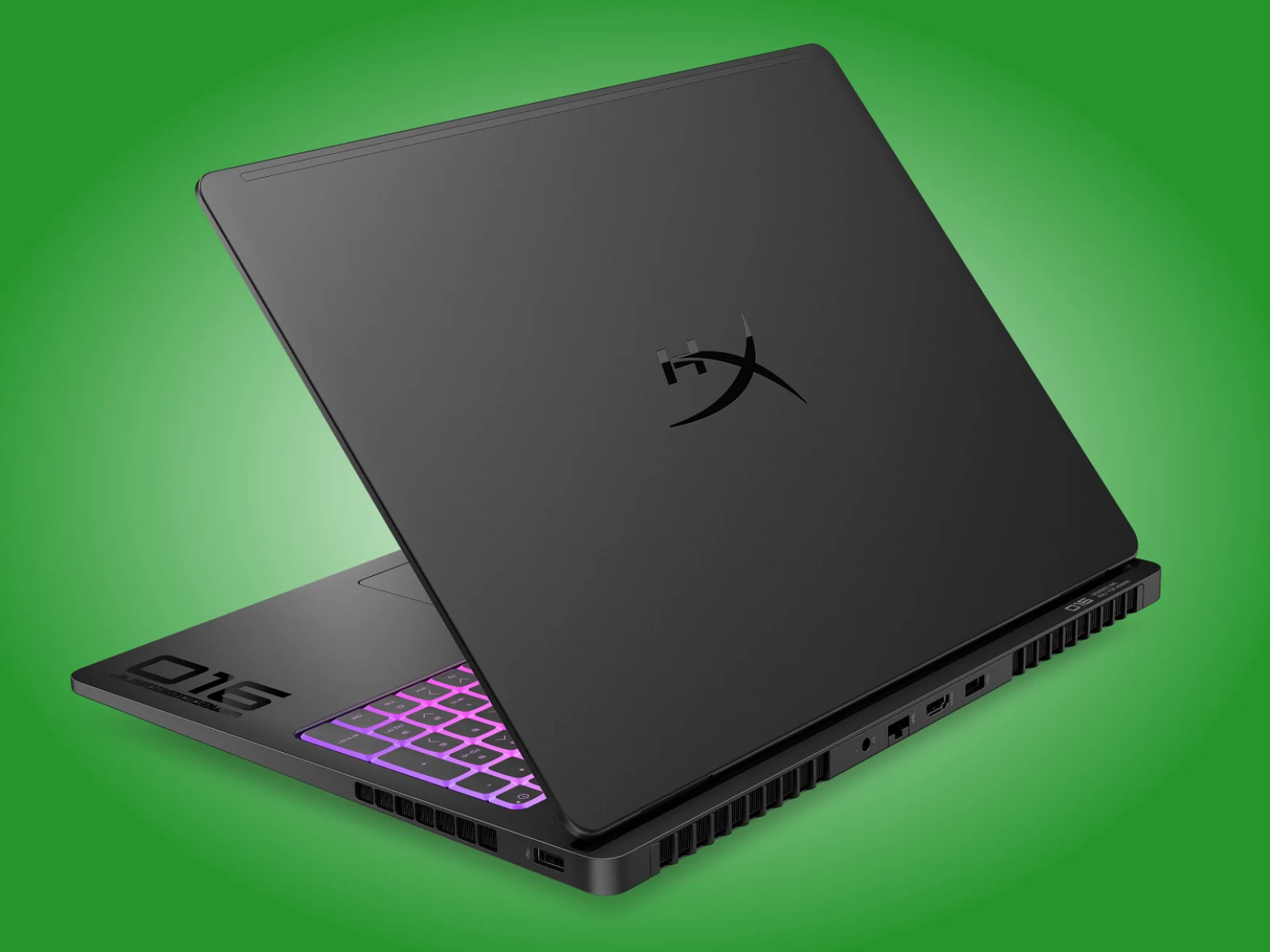
    On the one hand, Intel models start at $2,679 with a Core Ultra 7 270HX Plus processor, a GeForce RTX 5070 Ti GPU and a 240 Hz IPS display for $3,699. This SKU also contains 16 GB of RAM and 512 GB of PCIe Gen 5 storage too, as well as a 460 W GaN power adapter and an 83 Wh battery. The paragraph reads like an opening shot in a catalog, but the facts stay the same with the tech specs intact and the price tag clearly listed, including the GaN adapter and the sizable battery. The language here shifts slightly as it introduces the baseline configuration and its features, though it remains informative and exact, making the reader aware of what to expect from the entry option.

    Alternatively, Intel models can be configured up to the Core Ultra 9 290HX Plus, RTX 5090, 64 GB of RAM, 2 TB of PCIe Gen 5 storage and a 240 Hz OLED display. However, this variant currently runs to $4,469. Only Intel variants can be purchased in a Ceramic White finish too, for which HP levies a $10 surcharge. This sentence stacks higher-end choices and a minor cosmetic surcharge, keeping the reader informed about the most premium build in the Intel line, including the OLED display and large RAM/storage specs, while noting the extra color option and its price impact.

    AMD SKUs start at $2,899 with a Ryzen AI 7 450

    On the other hand, AMD SKUs start at $2,899 with a Ryzen AI 7 450, an RTX 5070 Ti, a 240 Hz IPS display, 16 GB of RAM and a 512 GB PCIe Gen 4 SSD. This paragraph keeps the price and the core features aligned with the baseline AMD configuration, mentioning the slightly older Gen 4 storage and the same display refresh rate, while highlighting the RAM and GPU combination that parallels the Intel entry but with different platform choices. The tone remains straightforward, ensuring the reader can compare options side by side without confusion.

    AMD tier details and price ceiling

    More expensive than their Intel counterparts, AMD models also top out at $4,569.99 despite containing inferior hardware. Specifically, AMD models can be configured with up to a Ryzen AI 9 HX 475 and RTX 5080 with 48 GB of RAM, 2 TB of PCIe Gen 5 storage and a 240 Hz OLED. The final sentence in this block emphasizes the paradox of price versus performance within the AMD lineup, noting that higher price does not always equate to stronger hardware, and it lists the top end options, including the OLED panel, large RAM, and Gen 5 storage to anchor the full spec spectrum.

    Shipping and finish notes

    HP hopes to begin shipping new Omen Max 16 laptops in June. Please see the company’s website for more details. The closing statement gives a shipping timeframe and directs readers to look up official pages for comprehensive updates, while preserving the context of the models discussed and their availability window, keeping the reader oriented toward where official confirmations live.


    Sources

  • Asus PN55 Mini PC: 12-Core AMD APU and 64GB RAM Launched

    Asus PN55 Mini PC: 12-Core AMD APU and 64GB RAM Launched

    Key Takeaways

    1. The Asus ExpertCenter PN55 mini PC features the AMD Ryzen AI 9 HX 470 APU, offering strong multithreaded performance, similar to the Ryzen AI 9 HX 370.
    2. Multiple budget-friendly APU options are available, including Ryzen AI 9 465, Ryzen AI 7 series, and Ryzen AI 5 series, each with varying integrated graphics capabilities.
    3. The Radeon 890M integrated GPU provides good performance for light gaming and less demanding tasks, though it lags behind the top-tier Arc B390 iGPU.
    4. The mini PC supports up to 64 GB of RAM and offers up to 4 TB of storage, all within a compact size of 5.12 x 5.12 x 1.34 inches and weighing 0.6 kg.
    5. Additional features include a mono speaker, Kensington lock, VESA mounting support, and a MIL-STD-810H rating, with pricing and availability still pending.


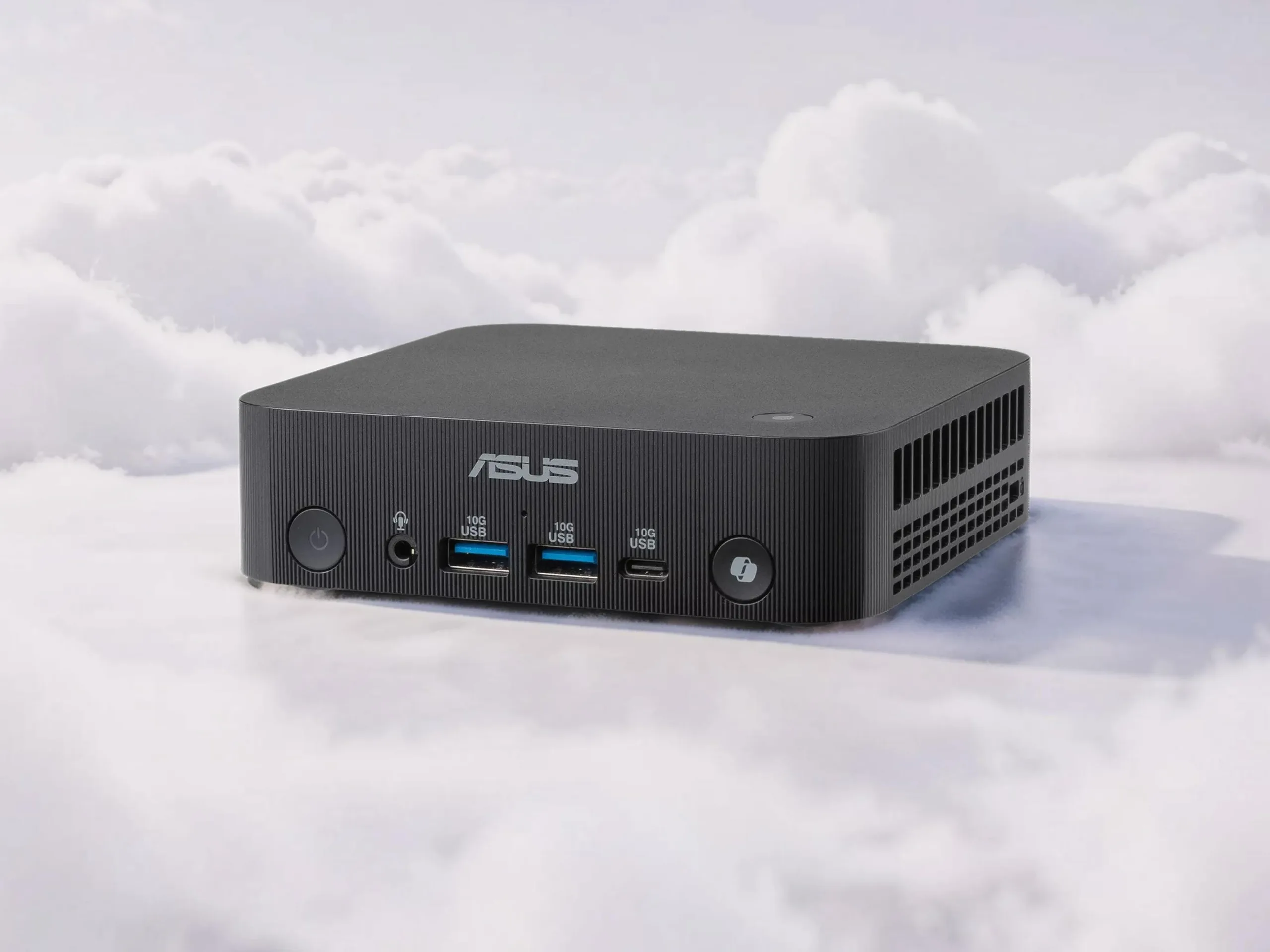
    The Asus ExpertCenter PN55 was introduced at CES this year, showcasing Ryzen AI 400 APUs that were not specified at the time. Now, the mini PC has been officially released, and its product page has provided us with a wealth of additional information.

    Performance and Specifications

    Equipped with the AMD Ryzen AI 9 HX 470 APU, the PN55 mini PC is expected to deliver notable multithreaded capabilities. When comparing it to the AMD Ryzen AI 9 HX 370, the overall performance boost may be limited, as the Gorgon Point APUs are quite similar to the Strix Point APUs regarding raw performance metrics.

    A Range of Options

    There are several other budget-friendly APU choices available, including the AMD Ryzen AI 9 465, Ryzen AI 7 Pro 450, Ryzen AI 7 450, Ryzen AI 7 445, Ryzen AI 5 Pro 440, Ryzen AI 5 435, and Ryzen AI 5 430. The top-tier APUs will come with the Radeon 890M iGPU, while the more economical models will feature Radeon 840M, 860M, or 880M iGPUs based on the specific model.

    Graphics Capabilities

    The AMD Radeon 890M is a strong performer for an integrated GPU, though it should be mentioned that Panther Lake’s top-tier Arc B390 iGPU is nearly double in speed. Nonetheless, light gaming and other less demanding tasks should run smoothly.

    The ExpertCenter PN55 mini PCs can support up to 64 GB of RAM and offer up to 4 TB of storage. Below are the details for the I/O options available:

    Measuring just 5.12 x 5.12 x 1.34 inches, this mini PC is remarkably compact and weighs approximately 0.6 kg (1.32 pounds).

    Additional Features

    Other key features of the Asus ExpertCenter PN55 mini PC includes a mono speaker, a Kensington lock, VESA mounting support, and a MIL-STD-810H rating. Pricing and availability are still not fully disclosed, but more details should come out shortly.

    Given that AMD’s Gorgon Halo products are yet to hit the market, those in need of greater computing power might want to consider the Strix Halo-powered GMKtec Evo-X2 mini PC, which is currently priced at $2,349 on Amazon.

    Source:
    Link


  • Lenovo Yoga Slim 7a: New 14-inch AMD Laptop with 1,100 nit OLED

    Lenovo Yoga Slim 7a: New 14-inch AMD Laptop with 1,100 nit OLED

    Key Takeaways

    1. Lenovo launched the Yoga Slim 7i Aura Edition with Intel’s energy-efficient Panther Lake processors and expanded the Yoga Slim 7i Ultra Aura Edition globally.
    2. The Yoga Slim 7a Gen 11 features AMD’s Ryzen AI 5 430 or Ryzen AI 7 445 processors, with options for 16 GB or 32 GB of LPDDR5X RAM.
    3. The new laptop comes with up to 2 TB of PCIe 4.0 storage, Wi-Fi 7 capability, and a 70 Wh battery.
    4. Customers can choose from three OLED display options, including a 2.8K, 120 Hz display with 1,100 nits peak brightness. Starting prices are €1,160 in the Eurozone, £1,000 in the UK, and AUD 2,379.
    5. Shipments are expected to start between March 23 and March 25 in the Eurozone and UK, with a lead time of over 8 weeks for Australia. No details on North American availability have been provided.


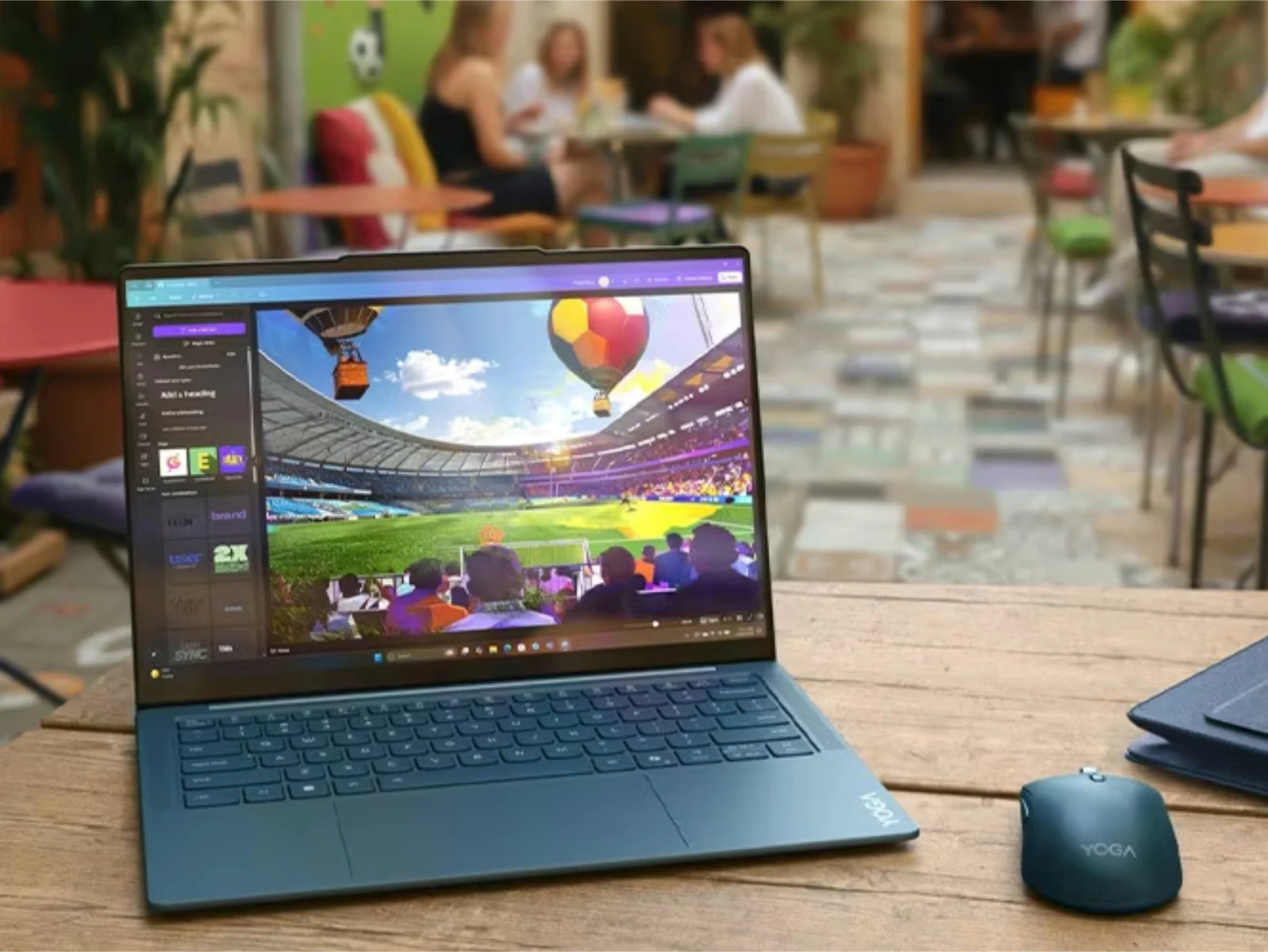
    Lenovo has unveiled the Yoga Slim 7i Aura Edition globally, featuring one of Intel’s energy-efficient Panther Lake processors. Earlier this week, the company also broadened the reach of the premium Yoga Slim 7i Ultra Aura Edition. Now, Lenovo is presenting AMD-based options under the Yoga Slim 7a Gen 11 label.

    Changes in Processor Options

    The most notable shift from Lenovo’s Intel versions is the switch to AMD’s Ryzen AI 5 430 or Ryzen AI 7 445 APUs. These Gorgon Point processors can be set up with either 16 GB or 32 GB of LPDDR5X RAM operating at a speed of 8,000 MT/s. Additionally, the Yoga Slim 7a Gen 11 comes with the option of up to 2 TB of M.2 2242 PCIe 4.0 storage, Wi-Fi 7 capability, and a robust 70 Wh battery.

    Display and Pricing Details

    Furthermore, the new laptop, which has a 14-inch size, can be customized with one of three OLED screens, including a stunning 2.8K option that boasts a 120 Hz refresh rate and peak brightness of 1,100 nits in HDR mode, similar to the Yoga Slim 7X (currently priced at $899 on Amazon). By default, Lenovo provides a 60 Hz, 1200p display with a brightness of 400 nits. Presently, the starting prices are set at €1,160 in the Eurozone, £1,000 in the UK, and AUD 2,379 depending on the default configurations chosen.

    Availability Timeline

    Lenovo anticipates that shipments will commence between March 23 and March 25 for customers in the Eurozone and the UK. In comparison, the company has indicated a lead time of over 8 weeks for deliveries in Australia. For now, Lenovo has not disclosed any information regarding pricing and availability in North America.

    Source:
    Link


  • Windows 12 Release Date in 2026: AI Features May Require CPU Upgrade

    Windows 12 Release Date in 2026: AI Features May Require CPU Upgrade

    Key Takeaways

    1. Older computers may not be able to upgrade to Windows 12, with a potential release later this year as Windows 10’s support ends in October 2026.
    2. Windows 12, codenamed Hudson Valley Next, will feature a customizable CorePC architecture for better performance across various devices.
    3. AI will play a crucial role in the new OS, with machine learning integrated for enhanced user experience and features like Gaming Copilot for Xbox users.
    4. New processors with dedicated Neural Processing Units (NPUs) may be required for optimal functionality, impacting older hardware compatibility.
    5. Subscription-based models for the operating system are rumored, with potential additional fees for enhanced Windows 365 cloud services, while a streamlined Home version may be offered as a free upgrade.


    Microsoft has been in the hot seat for not allowing certain older computers to upgrade to its newest operating system. As Windows 10’s extended support comes to an end in October 2026, there could already be a new OS available. PCWorld has hinted at a potential release date for Windows 12 later this year. Unfortunately, the reliance on AI might mean that users will need to buy new PCs or CPUs again.

    Rumors and Codenames

    The website shed light on various rumors and leaks from manufacturers that provide more details. The codename for Windows 12 has been revealed as Hudson Valley Next. This new OS will feature a more adaptable CorePC architecture that allows for highly customizable installations. The modular nature of the software is designed to optimize performance across a broad spectrum of devices, from desktops to mobile gadgets.

    Embracing AI in the Next OS

    Following Microsoft’s significant investment in Copilot, its upcoming OS seems poised to leverage advancements in AI technology fully. Rather than just being optional, machine learning is set to become an essential part of the system. Users can look forward to features that track their activity to offer suggestions and enhance search speeds. Additionally, Xbox enthusiasts should get ready for an upgraded Gaming Copilot that provides more assistance.

    The Role of New Processors

    Windows 11 already brought many AI features in a user-friendly format. However, newer processors equipped with dedicated Neural Processing Units (NPUs) help lighten the load on cloud servers and GPUs. Consequently, PCWorld thinks that CPUs like Intel’s Core Ultra and AMD’s Ryzen AI chips, which support 40 TOPS or more, will soon be essential.

    It remains uncertain if Windows 12 will accept any processors without NPUs. More likely, computers that don’t meet the new system requirements might experience some loss in functionality. With many buyers having already invested in Windows 11 PCs, Microsoft may struggle to promote early adoption. The push now appears to be centered not on security, but on making previously optional AI features mandatory.

    Subscription Models and Upgrades

    Rumors regarding subscription-based models for the operating system may not sit well with consumers. Nonetheless, reports indicate that additional fees could be linked to an enhanced Windows 365 cloud service. When Windows 12 finally launches, a streamlined Home version might be available as a free upgrade.

    Source:
    Link


  • XMG Launches EVO 15 Ultrabook with AMD Ryzen AI and Intel Core Ultra

    XMG Launches EVO 15 Ultrabook with AMD Ryzen AI and Intel Core Ultra

    Key Takeaways

    1. Processor Options: The XMG EVO 15 series offers a range of AMD Ryzen AI processors and a single Intel Core Ultra option, with pricing differences based on the platform.

    2. Cooling and Performance: The new models feature a larger chassis and enhanced cooling, allowing a maximum TDP of 90 W in “Overboost” mode for both AMD and Intel processors.

    3. Display Specifications: AMD models support a 300 Hz refresh rate with FreeSync, while Intel models are limited to 240 Hz, both featuring a 15.3-inch IPS display with 500 nits brightness.

    4. RAM and Storage: Both models support up to 128 GB DDR5 RAM, but Intel models can accept faster DDR5-6400. They also allow for up to 16 TB PCIe 4.0 SSD storage.

    5. Ports and Connectivity: Intel versions include a Thunderbolt 4 port and support for Wi-Fi 7, while AMD models have USB4 and support Wi-Fi 6E, with other ports being consistent across both versions.


    The 2025 EVO 15 ultrabook series by XMG has received an upgrade featuring the newest AMD Ryzen AI and the Krackan Point APUs, along with Intel’s latest Core Ultra 200H processors. There are some important distinctions between the AMD and Intel platforms, leading to a variation in price as well.

    Processor Options

    For the EVO 15 (E25) models, XMG presents a wider range of processors, which includes the Ryzen AI 9 HX 370, AI 9 365, AI 7 350, and the more budget-friendly Ryzen 7 H 255 from the Krackan Point line that lacks an NPU. In contrast, the EVO 15 (M25) models come with just one Intel choice, the Core Ultra 7 255H CPU.

    Cooling and Performance

    Due to a larger aluminum chassis compared to the current EVO 14 models and enhanced dual-fan cooling systems, the new EVO 15 models can maintain a maximum TDP of 90 W in “Overboost” mode for the Ryzen AI 9 HX 370 and Core Ultra 7 255H processors.

    The first notable difference between the AMD and Intel variants is found in the display specifications. Both models feature a 256 x 1600 15.3-inch IPS display with a maximum brightness of 500 nits and a 100% sRGB color range. However, the AMD versions allow for a 300 Hz refresh rate and FreeSync, while the Intel models are limited to 240 Hz due to the Adaptive Sync feature from Arc Graphics iGPUs. Both types of laptops also provide a low-power 60 Hz refresh option and come with an FHD webcam that has Windows Hello support and a physical privacy shutter.

    RAM and Storage

    A second significant difference lies in the RAM capabilities. Both platforms can accommodate up to 128 GB DDR5-5600 RAM through two SO-DIMM slots; however, the Intel models also accept CSO-DIMM modules with DDR5-6400 specifications. Additionally, both can be upgraded with as much as 16 TB of PCIe 4.0 SSD storage using two M.2 slots.

    Ports and Connectivity

    Lastly, there’s a difference in port selection and wireless capabilities. The Intel models come equipped with a Thunderbolt 4 port that includes DP 2.1 (DP 80) and an HDMI 2.0 (18 Gbps) port, while the AMD versions have a USB4 with DP 2.1 (DP40) and an HDMI 2.1 (32 Gbps). The other ports remain consistent across both versions, which include a USB-C 3.2 Gen2 with DisplayPort 1.4a and 100-watt Power Delivery, three USB-A 3.2 Gen1 ports, a 2-in-1 audio jack, a full-size SD Express card reader, and a GbE jack. The Intel models can support up to a Wi-Fi 7 card, whereas the AMD options support up to Wi-Fi 6E.

    Design and Weight

    In terms of portability, the EVO 15 models are quite slim, featuring a profile of 22 mm and weighing 1.75 kg, including the substantial 99.8 Wh battery that allows for USB-C 140 W fast charging. The keyboard is full-sized and edge-to-edge, with standard-sized arrow keys and comes with a multi-level white backlight.

    The base configuration for the XMG EVO 15 (E25) and XMG EVO 15 (M25) includes either an AMD Ryzen 7 H 255 or an Intel Core Ultra 7 255H, 16 GB (2×8) DDR5-5600 RAM, and a 500 GB SSD. The starting prices are €999 for the EVO 15 (E25) and €1,279 for the EVO 15 (M25), both inclusive of 19% VAT. There are upgrade options available for the E25 model, including AMD Ryzen AI 7 350 (€150), AMD Ryzen AI 9 365 (€275), or Ryzen AI 9 HX 370 (€440).

    With the exception of the entry-level EVO 15 (E25) with Ryzen 7 H 255, which XMG plans to ship in early October, all other configurations of this ultrabook are available for immediate order. Until September 8th, bestware.com is providing a 5% discount on all 2025 XMG EVO 15 models.

    Source:
    Link


  • Framework 16: New CPU and GPU Options for Ultimate Customization

    Framework 16: New CPU and GPU Options for Ultimate Customization

    Key Takeaways

    1. The 2023 Framework 16 features new AMD Ryzen AI 300 Strix Point and Krackan Point CPUs, enhancing performance options.
    2. Users can choose between Nvidia GeForce RTX 5070 or Radeon RX 7700S GPUs, with easy swap-out options for upgrades.
    3. The laptop includes a powerful 240 Watt USB-PD charger and supports video transmission via USB-C.
    4. Significant updates feature Wi-Fi 7, a 1080p camera, and an 85 Wh battery for improved connectivity and usability.
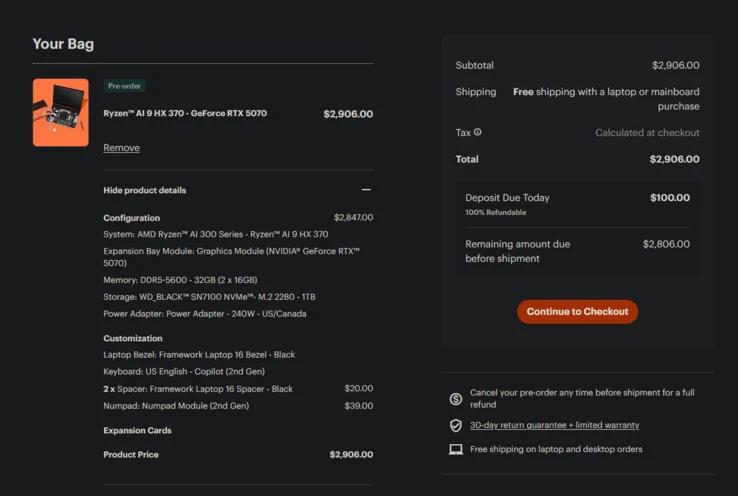
    5. Pre-orders are available with a $100 deposit, but the total cost for a fully loaded configuration is $2,806.


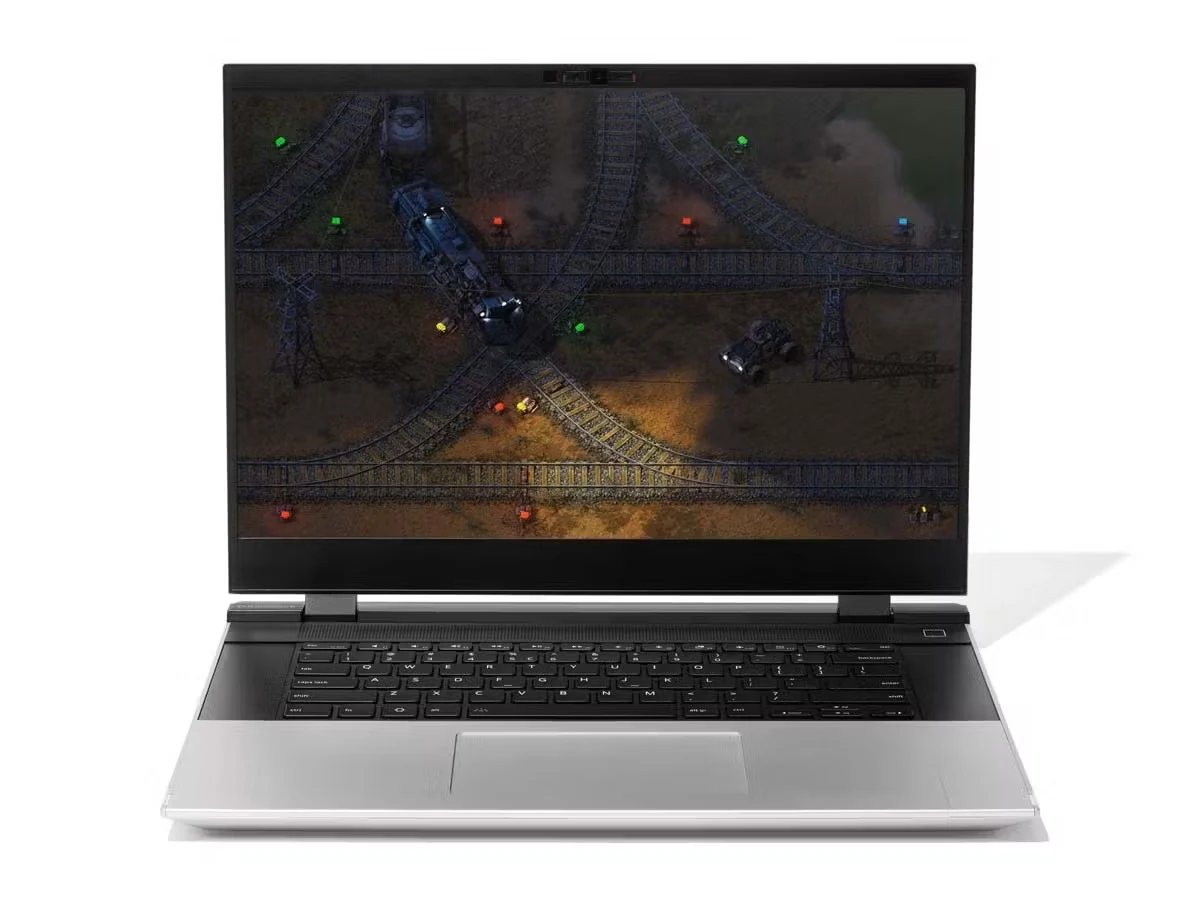
    A few days back, Framework shared a mysterious hint about ‘something big that got bigger’. Many might think it relates to a bigger laptop, but that’s not the case. Instead, the 2023 Framework 16 has received a stylish update, bringing in features that are usually seen in other laptops.

    New Processors and Graphics Options

    To start, the updated Framework 16 is powered by the new AMD Ryzen AI 300 Strix Point and Krackan Point CPUs. The top choice is the Ryzen AI 9 HX 370, while the Ryzen AI 7 350 serves as the alternative. Users can pair this with an Nvidia GeForce RTX 5070 laptop GPU, or stick with the Radeon RX 7700S that comes with the 2023 version. For those not needing a discrete GPU, there are two extra expansion slots for increased storage.

    Charger and Connectivity Features

    The new Framework 16 comes with a 240 Watt USB-PD charger, which is the highest supported by this standard. While it isn’t exactly small, it’s essential for the fully loaded version. Additionally, you can connect the laptop to a monitor via USB-C, allowing it to serve as a power source while also transmitting video. It’s not as effective as a dedicated charger, but it’s a useful option to have.

    In typical Framework style, the GPUs can be swapped out easily. However, each module must be purchased separately, and they do come with a hefty price tag. The RTX 5070 is priced at $700, while the Radeon RX 7700S costs $400. If you go for a configuration that includes a Ryzen AI 9 HX 370, RTX 5070, 32 GB RAM, and 1 TB storage, along with a 240 Watt charger and barebones I/O, you’re looking at a staggering total of $2,806, which could potentially purchase you two laptops with similar features.

    Additional Features and Pre-Order Information

    Other significant updates include Wi-Fi 7, a 1080p camera, and an 85 Wh battery. The new Framework 16 is available for pre-order on the company’s official website. Luckily, you don’t have to pay the whole price at once. For the configuration mentioned earlier, a deposit of only $100 is required.

    Source:
    Link


  • XMG Updates CORE 15/16 Gaming Laptops with Ryzen AI and RTX 5000

    Key Takeaways

    1. Premium Build Quality: XMG’s CORE series features a sleek aluminum chassis, with the 15-inch model at 21.9 mm thick and 1.95 kg, and the 16-inch model at 23 mm thick and 2.1 kg, offering a portable design for gamers.

    2. Processor and Graphics Options: The laptops come with three AMD Ryzen AI processors (up to 12-core) and two Nvidia RTX 5000 GPUs, providing flexibility for different budgets and performance needs.

    3. Memory and Storage: Maximum RAM capacity is 128 GB DDR5-5600, with two PCIe 4.0 M.2 slots supporting up to 16 TB of storage, catering to high-performance gaming and multitasking.

    4. Display Features: Both models have 2,560 × 1,600 resolution IPS displays with a 300 Hz refresh rate and 500 nits brightness, ensuring vibrant visuals and smooth gaming experiences.

    5. Pricing and Configuration: Starting prices are €1,549 for the CORE 15 and €1,579 for the CORE 16, with options to upgrade components for additional costs, making them affordable for gamers on a budget.


    The CORE series of compact gaming laptops by XMG is being updated, featuring three AMD Ryzen AI processor choices and two Nvidia RTX 5000 mobile GPU selections. The starting price is €1,549, making these newer models attractive for gamers on a budget.

    Premium Build Quality

    XMG is targeting the premium compact segment with this year’s CORE (M25) models. The 15-inch laptop has an aluminum chassis that’s relatively sleek for a gaming device, measuring just 21.9 mm thick and weighing 1.95 kg. The slightly larger 16-inch variant is a bit bulkier at 23 mm thick and weighs 2.1 kg. The overall weight includes a 99.8 Wh battery for both models, which can last around 8 hours while watching YouTube at 150 nits brightness.

    Processor and Graphics Options

    At the top of the processor list is the 12-core Ryzen AI 9 HX 370 APU, though more budget-friendly options include the 10-core Ryzen AI 9 365 and the 8-core Ryzen AI 7 350. All processors can be paired with either a GeForce RTX 5070 or RTX 5060, each capable of delivering up to 115 watts of graphics power, plus an additional 15 watts from Dynamic Boost.

    Memory and Storage

    The maximum RAM capacity is 128 GB DDR5-5600 using two SO-DIMM slots. Storage is available through two PCIe 4.0 X4 M.2 slots, supporting a maximum of 16 TB.

    The updated cooling system on the new CORE 16 models enables the CPU to operate at up to 100 W sustained, while the GPU can sustain 115 W. Together, they can run at a maximum of 160 W. The CORE 15 model has slightly lower specs, with a sustained 90 W for the CPU and 150 W for the combined CPU + GPU.

    Display Features

    Both the 15.3-inch and 16-inch IPS displays feature a native resolution of 2,560 × 1,600, a fast 300 Hz refresh rate, and a brightness of 500 nits. In terms of color coverage, the CORE 15 achieves 100% of the sRGB color space, while the CORE 16 offers complete coverage of both sRGB and DCI-P3, making it compatible with HDR.

    Gaming Features and Connectivity

    As expected from a gaming laptop, the new CORE models include a per-key RGB keyboard and a glass-like mylar touchpad. They also feature an FHD webcam with a privacy shutter.

    Connectivity is quite extensive, particularly on the CORE 15, which includes two HDMI 2.1 outputs. The CORE 16 has only one HDMI port but both models feature a DP80-compatible Mini DisplayPort 2.1, a Thunderbolt-compatible USB4 port that supports DP40-capable DisplayPort 2.1 with 140 watts Power Delivery (20 V, 7 A), as well as USB-C 3.2 Gen2 with DisplayPort 1.4 and 100 watts of Power Delivery, three USB-A 3.2 Gen1 ports, Gigabit LAN, a 2-in-1 audio jack for headsets and microphones, and a speedy full-size SD Express card reader. For internet connectivity, XMG provides options for either Wi-Fi 6E or Wi-Fi 6 cards.

    Pricing and Configuration

    The base models of the XMG CORE 15 (M25) and XMG CORE 16 (M25) come equipped with an AMD Ryzen AI 7 350, an NVIDIA GeForce RTX 5060, 16 GB DDR5-5600 RAM, a 1 TB Samsung 990 EVO Plus SSD, and a 1600p display. Starting prices are €1,549 for the CORE 15 and €1,579 for the CORE 16. Users can upgrade the specs for an additional fee: RTX 5070 (€195), AMD Ryzen AI 9 365 (€125), or AMD Ryzen AI 9 HX 370 (€290). Both laptops are currently in stock and ready to ship. Initially, bestware.com is offering a limited-time 5% discount.

    Source:
    Link



  • Dell 14 Plus 2-in-1 AMD vs Intel: Speed Comparison and Catch

    Dell 14 Plus 2-in-1 AMD vs Intel: Speed Comparison and Catch

    Key Takeaways

    1. The Dell 14 Plus 2-in-1 offers both Intel (Lunar Lake Core Ultra 5 and 9) and AMD (Zen 5 Ryzen AI 5 and 7) processor options.
    2. AMD options, especially the Ryzen AI 7 350, excel in multi-threaded performance, outperforming Intel’s top model by over 30%.
    3. Intel models provide advantages like longer battery life, better performance-per-watt, and superior integrated graphics.
    4. Intel configurations support HDMI 2.1 and Thunderbolt 4, allowing for better connectivity with external 4K monitors.
    5. AMD versions are limited to HDMI 1.4 and USB-C at 10 Gbps, making them less suitable for high-bandwidth external displays.


    The Dell 14 Plus 2-in-1 offers both Intel and AMD choices. For Intel, you can pick between the Lunar Lake Core Ultra 5 226V or the Ultra 9 288V. On the AMD side, there are options like the Zen 5 Ryzen AI 5 540 or the Ryzen AI 7 350. Although all models feature the same 1200p touchscreen and external design, there are significant differences in performance and available ports.

    Performance Insights

    If you are someone who values multi-threaded performance, it might be beneficial to lean toward the AMD options since the Ryzen AI 7 350 can outperform the Core Ultra 9 288V by over 30 percent. Nevertheless, the Intel model brings several advantages, such as a longer battery life, better performance-per-watt, and significantly quicker integrated graphics with the Arc 140V compared to the Radeon 860M.

    Connectivity Differences

    Another often-missed benefit of the Intel models is their compatibility with HDMI 2.1 and Thunderbolt 4 running at 40 Gbps. In contrast, the Dell 14 Plus 2-in-1 AMD versions are restricted to HDMI 1.4 and USB-C at 10 Gbps. If you plan to hook up external 4K monitors to your laptop, the Intel configuration is the better choice for optimal monitor connectivity.

    Source:
    Link

  • InfinityBook Pro 14: Ultrabook with 128GB DDR5 & Ryzen AI 9 HX

    InfinityBook Pro 14: Ultrabook with 128GB DDR5 & Ryzen AI 9 HX

    Key Takeaways

    1. Powerful AMD Processors: The InfinityBook Pro 14 Gen 10 features options from the latest AMD Ryzen AI series, including up to 12-core processors designed for enhanced AI performance.

    2. Lightweight and Compact Design: Measuring 12.2 x 8.7 x 0.67 inches and weighing 3.2 lbs, this ultrabook is easy to carry while maintaining strong performance.

    3. Memory and Storage Capabilities: It supports up to 128GB of DDR5 memory and two M.2 SSDs, ensuring ample storage and speed for various tasks.

    4. High-Quality Display and Connectivity: The laptop has a 14-inch IPS display with a 120Hz refresh rate, and offers multiple connectivity options, including USB Type-C ports and WiFi 6E.

    5. User-Friendly Design for Upgrades: The laptop’s design allows for easy upgrades or replacements of components like RAM and SSD, secured with screws instead of glue.


    The InfinityBook Pro 14 Gen 10 is a sleek and lightweight laptop, packing the latest AMD processors. Depending on how you configure it, you can choose from the AMD Ryzen AI 7 350, AMD Ryzen AI 9 365, or the AMD Ryzen AI 9 HX 370. The highest-end option boasts 12 cores and an NPU designed to enhance AI performance. The maker states that these APUs can consistently draw up to 65 watts. It’s worth noting that there is no dedicated graphics card, which makes sense given its compact size of 12.2 x 8.7 x 0.67 inches and a weight of 3.2 lbs. The ultrabook is powered by an 80Wh battery that is secured with screws, not glue. This design allows for easy upgrades or replacements of components like RAM, SSD, and the WiFi module without risking the warranty.

    Memory and Storage Options

    The laptop can handle up to 128GB of 5600 MHz DDR5 memory. Additionally, it supports two M.2 2280 SSDs, each linked through two PCIe 4.0 lanes. The display is a 14-inch IPS panel featuring a 120Hz refresh rate, 500 nits brightness, and full coverage of the sRGB color space. For networking, it offers WiFi 6E and Gigabit Ethernet options. The Tuxedo InfinityBook Pro 14 is also equipped with two USB Type-C ports that support video output (one USB 3.2 Gen 2 and another USB 4), along with an HDMI 2.0b port.

    Connectivity and Features

    In addition, it has an SD card reader, an audio jack, two USB 3.2 Gen 1 Type A ports, and a USB 2.0 port. There’s a 2MP camera, an IR camera for facial recognition, two speakers, and a built-in microphone. The laptop comes with Ubuntu and Tuxedo OS pre-installed, while Windows is available at an extra cost. If you prefer a custom logo in place of the Tuxedo logo, that will also incur an additional fee. The InfinityBook Pro 14 is currently available for orders in Europe, with deliveries expected to commence at the end of July. For context, the entry-level model featuring an AMD Ryzen AI 7 350, 16GB RAM, and a 500GB SSD is priced at €1,199.

    Final Thoughts

    Tuxedo’s latest offering is both powerful and versatile, catering to users who need mobility without sacrificing performance. Whether for work or play, the InfinityBook Pro 14 Gen 10 provides an impressive array of features, all packed into a compact frame. If you’re in the market for a new ultrabook, this one is definitely worth considering!

    Source:
    Link