Category: Computers

  • Minix Unveils AMD Strix Point Mini PCs with Launch Discounts

    Minix Unveils AMD Strix Point Mini PCs with Launch Discounts

    Key Takeaways

    1. The Minix ER936-AI and ER937-AI mini PCs are now on sale with limited-time discounts: ER936-AI for $789 (originally $899) and ER937-AI for $869 (originally $999).
    2. Discount codes are required for the promotional prices: “NEW110” for ER936-AI and “NEW130” for ER937-AI.
    3. Both mini PCs have a similar design and feature a robust cooling system with a vapor chamber and dual fans for stable performance.
    4. They offer easy upgrade capabilities with a quick-removal bottom panel, supporting up to 8 TB SSDs and 96 GB of DDR5 RAM.
    5. Notable features include WiFi 7, Bluetooth 5.4, a built-in fingerprint sensor for Windows Hello, and support for quad-display output.


    First revealed at Computex 2025, the Minix ER936-AI and ER937-AI are now ready for sale. They are also offering limited-time discounts for their launch, causing the Ryzen AI 9 365-powered mini PC, the ER936-AI, to decrease in price from $899 to $789.

    Discount Details

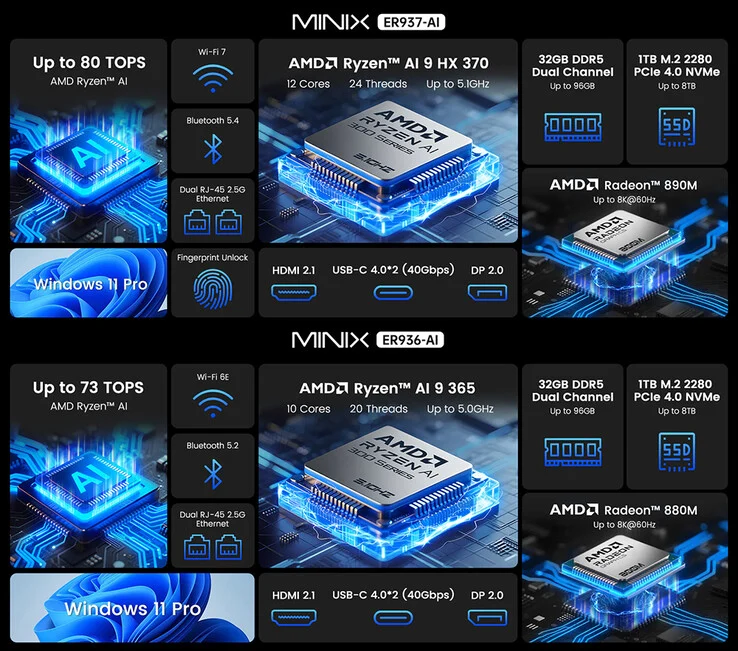
    The ER937-AI features the Ryzen AI 9 HX 370 along with the Radeon 890M. During this promotional period, its price is set at $869, which is a discount of $130 from its original price of $999. To take advantage of these offers, you must use the coupon code “NEW110” for the ER936-AI at checkout, while “NEW130” is the code for the ER937-AI.

    Design and Cooling System

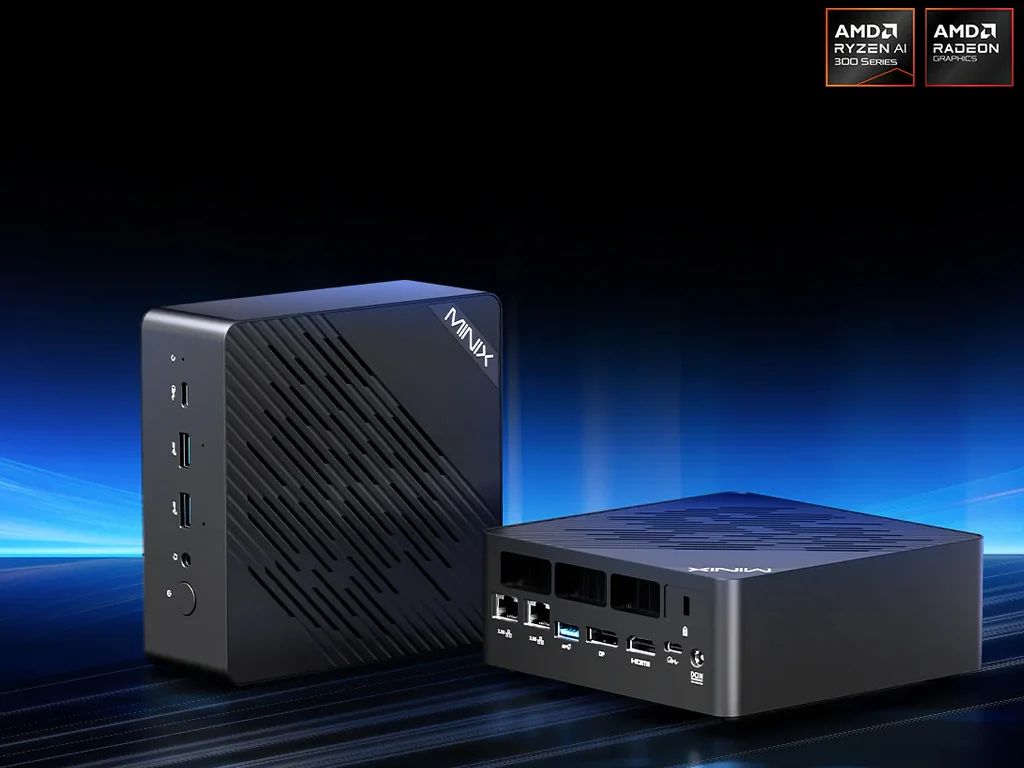
    As mentioned in our previous report, both mini PCs share a similar chassis design. The port layout of both the AMD Strix Point models is identical, which is outlined below:

    Minix emphasizes that these mini PCs come equipped with a robust cooling system. It features a vapor chamber along with dual fans, which ensures that the Strix Point APUs maintain stable performance even under heavy workloads.

    Upgrade Capabilities

    Returning to the design aspect, the mini PCs are designed with a quick-removal bottom panel, making it easy for users to upgrade their storage and memory. There is an M.2 PCIe 4.0 slot that can accommodate up to an 8 TB SSD (currently, the 4 TB WD_BLACK SN7100 is priced at $229.99 on Amazon), and these Strix Point systems can be outfitted with up to 96 GB of DDR5 RAM running at 5,600 MHz.

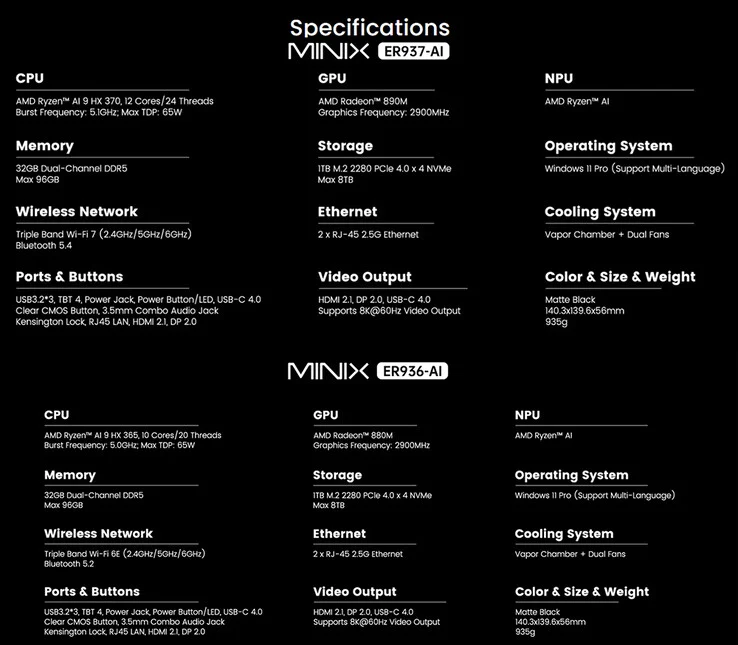
    Among the noteworthy features of the Minix ER936-AI and ER937-AI are support for WiFi 7 and Bluetooth 5.4, a built-in fingerprint sensor compatible with Windows Hello, and the ability to support quad-display output. For more details, check the attached spec sheets below regarding these two Strix Point mini PCs.
     

  • Asus Launches NUC 15 Mini-PCs with Nvidia RTX 5060 and 5070

    Asus Launches NUC 15 Mini-PCs with Nvidia RTX 5060 and 5070

    Key Takeaways

    1. Asus has launched the ROG NUC (2025) globally, priced at $2,799.
    2. The NUC 15 Performance mini-PC has been officially announced after a delay, featuring Intel Core Ultra 7 or 9 processors and NVIDIA GeForce RTX 5060 or 5070 GPUs.
    3. Key specifications include multiple DisplayPort 2.1 and HDMI 2.1 ports, several USB Type-A ports, and dual SO-DIMM and M.2 2280 slots in a compact chassis.
    4. The NUC 15 Performance is available for order in the Eurozone, starting at €1,632 (~$1,895) for the Core Ultra 7 model and up to €1,955 (~$2,271) for the Core Ultra 9 version.
    5. Both NUC 15 Performance models are barebone units, and pricing details may vary by retailer.


    Asus has finally launched the much-anticipated ROG NUC (2025) worldwide after revealing it back in January during the CES 2025 event (curr. $2,799 on Amazon). The company has also revisited the NUC 15 Performance, a mini-PC that looks quite similar but skips some of the flashy features seen in the ROG NUC (2025).

    NUC 15 Performance Announcement

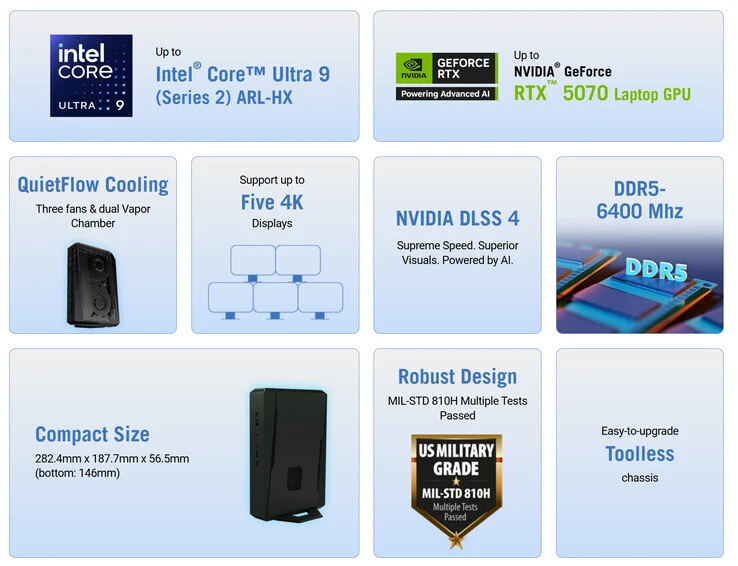
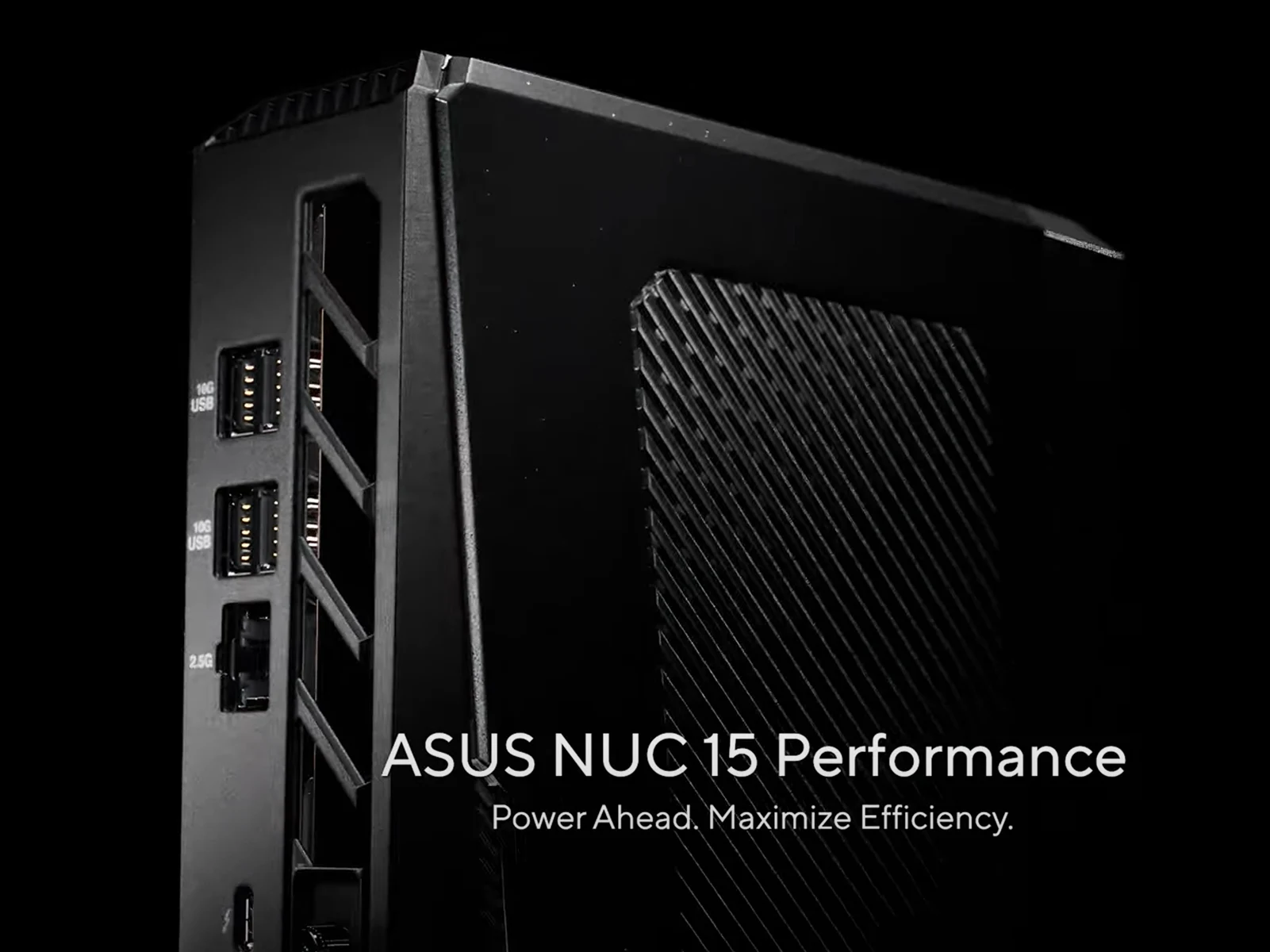
    To give a quick refresher, the NUC 15 Performance was first spotted on Asus’ global site around three months prior. For some unknown reason, it took until today for the official announcement to come through. In the time that has passed, it seems like there have been almost no changes to the device. The NUC 15 Performance still features either Intel Core Ultra 7 255HX or Core Ultra 9 275HX processors, along with NVIDIA GeForce RTX 5060 or GeForce RTX 5070 laptop GPUs.

    Specs and Features

    Asus has provided more information, stating that the NUC 15 Performance includes two DisplayPort 2.1 and HDMI 2.1 ports each. Furthermore, this mini-PC is equipped with several USB Type-A ports, consisting of two USB 2.0 ports alongside four USB 3.2 Gen2 ports. To top it all off, Asus has packed all this hardware plus dual SO-DIMM and M.2 2280 slots into a compact chassis measuring 282.4 x 189.55 x 56.6 mm and weighing 3.12 kg.

    Pricing and Availability

    Currently, the global pricing is still unclear. However, the NUC 15 Performance can be ordered in the Eurozone from retailers like Compute Universe and Cyberport. As of now, the price starts at €1,632 (~$1,895) for the Core Ultra 7 255HX model and goes up to €1,955 (~$2,271) for the Core Ultra 9 275HX version. Both options are barebone units. For additional details, it’s best to check Asus’ website.

    Source:
    Link


  • NASA Reveals Value of Glacier Losing 300,000 Gallons Per Second

    NASA Reveals Value of Glacier Losing 300,000 Gallons Per Second

    Key Takeaways

    1. Jakobshavn Glacier is the most dynamic glacier on Greenland’s ice sheet and significantly contributes freshwater to the ocean during summer.
    2. The meltwater from the glacier brings important nutrients like iron and nitrate, essential for phytoplankton growth, which is vital for the marine food chain.
    3. Nutrient levels in surface waters typically decrease in summer, making glacial meltwater crucial for sustaining phytoplankton during this time.
    4. NASA used advanced computer models to analyze Jakobshavn Glacier, finding that glacial melt can increase summer phytoplankton growth by 15% to 40%.
    5. More research is needed to understand the effects of glacial melt on phytoplankton across Greenland’s 250 similar glaciers.


    Jakobshavn Glacier, which is also referred to as Sermeq Kujalleq, stands out as the most dynamic glacier on Greenland’s ice sheet. Situated on the western coast of the island, this glacier plays a significant role in releasing large amounts of freshwater into the ocean during the summer months. The meltwater is less dense than saltwater, causing it to float and potentially bringing along important nutrients like iron and nitrate. These nutrients are crucial for phytoplankton growth, which forms the foundation of the marine food chain, providing sustenance for krill and other small creatures that larger marine animals, such as fish and whales, rely on.

    Nutrient Dynamics in Summer

    Typically, the levels of nutrients found in surface waters drop in the summer as they are mostly consumed during the spring phytoplankton bloom. Therefore, the upwelling caused by glacial meltwater becomes vital for sustaining Greenland’s phytoplankton during the summer season. However, validating this phenomenon close to Greenland’s thick ice sheet has been extremely difficult due to the coastal waters being filled with enormous icebergs, comparable to the size of city blocks.

    NASA’s Innovative Approach

    To tackle this situation, NASA employed sophisticated computer models to recreate the fjord of Jakobshavn Glacier. They used the Estimating the Circulation and Climate of the Ocean-Darwin (ECCO-Darwin) model, which leverages decades of collected data. By running this model on their powerful supercomputers, NASA discovered that glacial melt could boost summer phytoplankton growth by anywhere from 15% to 40%.

    Future Research Needs

    Despite these promising findings, there is still a considerable amount of research needed, as noted by Dustin Carroll, an oceanographer at NASA’s Jet Propulsion Laboratory in Southern California. “We’ve pieced together what occurs in one significant system, but there are over 250 similar glaciers all around Greenland,” Carroll pointed out.

    Source:
    Link


  • Beelink GTR9 Pro Mini-PC: AMD Ryzen AI Max+ 395, 128GB RAM

    Beelink GTR9 Pro Mini-PC: AMD Ryzen AI Max+ 395, 128GB RAM

    Key Takeaways

    1. Beelink has launched a budget-friendly mini-PC, the SER9 Pro, priced at $649, featuring the AMD Ryzen 7 H 255 APU.
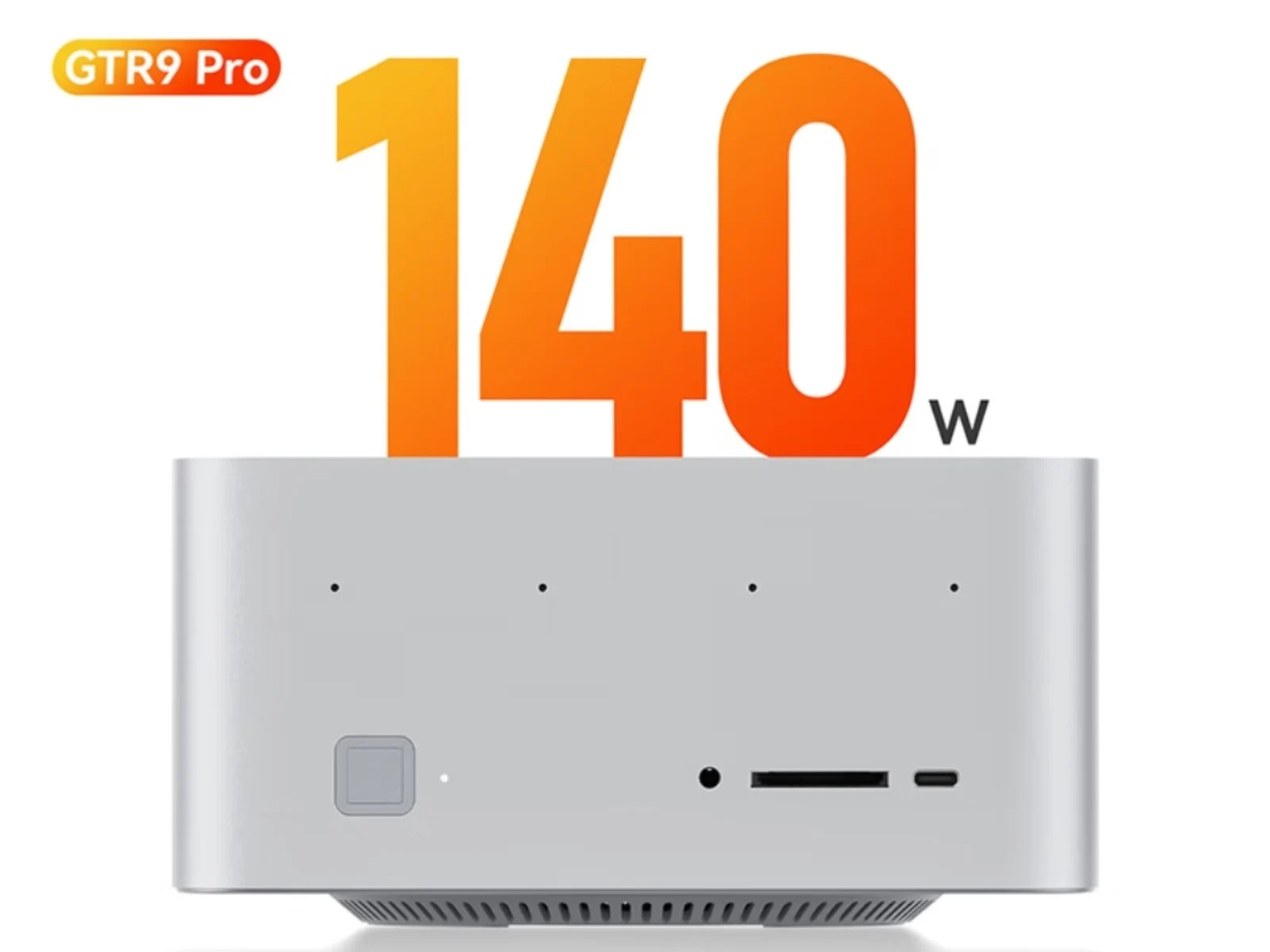
    2. The GTR9 Pro, equipped with the more powerful AMD Ryzen AI Max+ 395 APU, is available and offers robust specifications including a 140 W TDP and a built-in 230 W PSU.
    3. The GTR9 Pro features advanced cooling systems and a variety of ports, with prices reaching up to CNY 12,999 (approximately $1,809) for high-end configurations.
    4. Global availability of the GTR9 Pro has not been announced, but Beelink typically launches products internationally shortly after their release in China.
    5. The GTR9 Pro and other new products from Beelink were initially showcased in the spring, indicating a strategy of regular product updates.


    Beelink has been busy launching several mini-PCs recently, and one of their latest is a budget-friendly variant of the SER9 Pro that runs on the AMD Ryzen 7 H 255 APU, currently priced at $649 on Amazon. They are also now selling the GTR9 Pro, which made its first appearance over three months ago in the spring together with the AI Mini compact server, a device that resembles a mix of Apple’s Mac mini and Mac Studio.

    Specs of the GTR9 Pro

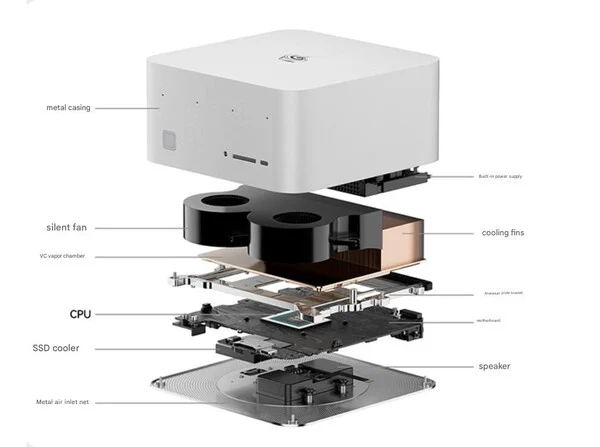
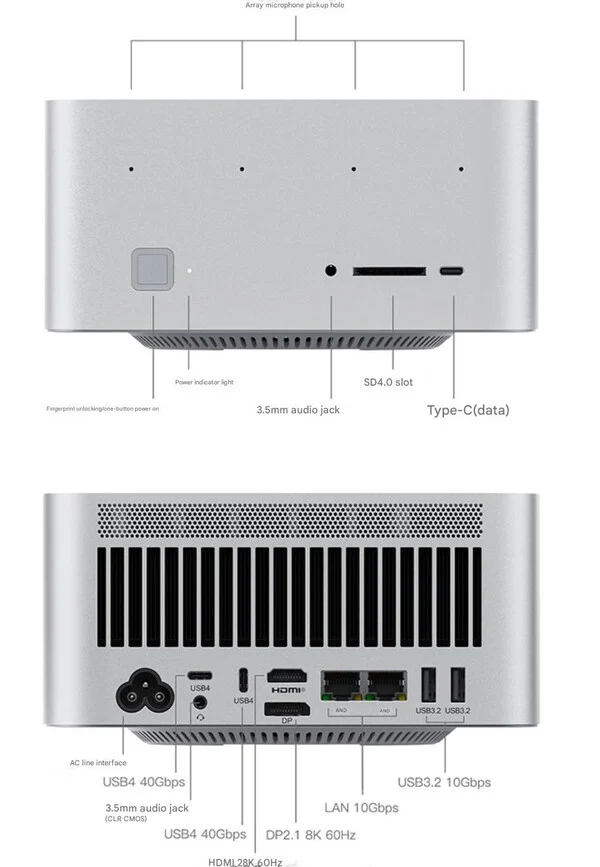
    The GTR9 Pro stands out from the SER9 Pro thanks to its inclusion of AMD’s more robust Ryzen AI Max+ 395 APU. It boasts a 140 W TDP and comes with a built-in PSU rated at 230 W. Additionally, the GTR9 Pro is equipped with a comprehensive cooling system and numerous ports. For those interested, the price can go up to CNY 12,999 (around $1,809) for configurations featuring 128 GB of RAM and 2 TB of storage, which is a bit lower than what was initially expected based on previous pricing.

    Global Availability

    As of now, Beelink hasn’t provided any information about when the GTR9 Pro will be available outside of China. Usually, the company doesn’t take long to launch new products internationally after their initial release in China. Therefore, it wouldn’t be shocking if Beelink begins to offer the GTR9 Pro worldwide before summer wraps up.

    Source:
    Link


  • Affordable Apple MacBook leaks: $599 price, mobile SoC, compact size

    Affordable Apple MacBook leaks: $599 price, mobile SoC, compact size

    Key Takeaways

    1. Apple is developing a budget-friendly MacBook priced between $599 and $699, significantly lower than the MacBook Air starting at $999.
    2. The new MacBook is expected to run on an A18 Pro chip, the same chip used in the iPhone 16 Pro models.
    3. A 12.9-inch display is anticipated for this affordable MacBook, following predictions from industry analyst Ming-Chi Kuo.
    4. Mass production of components is projected to begin in the third quarter of 2025, with a possible release in late 2025 or early 2026.
    5. The introduction of this budget MacBook may be a strategy to counteract rising prices due to inflation and provide more affordable options for consumers.


    Apple is reportedly gearing up for an interesting update to the M5 MacBook that might delight its fans. Rumors suggest that the tech giant is working on a budget-friendly MacBook to complement its standard MacBook Air and Pro models. This particular version might run on a mobile System on Chip (SoC).

    Affordable Options Coming Soon

    Digitimes has confirmed the development of this new budget MacBook and has shared several details. The new “ultra-low-cost” MacBook could be priced between $599 and $699, which is significantly lower than the starting price of $999 for the 13.6-inch MacBook Air M4 (available on Amazon).

    How Apple Is Lowering Prices

    So, how is Apple managing to offer such a lower price? It appears to be utilizing a mobile SoC.

    In line with earlier reports, Digitimes states that this affordable MacBook will be equipped with an A18 Pro chip. This is the same chip that powers the iPhone 16 Pro and iPhone 16 Pro Max. Additionally, Apple is expected to use a 12.9-inch display for this budget-friendly MacBook, aligning with Ming-Chi Kuo’s predictions made in June.

    Production Timeline and Market Strategy

    Digitimes notes that mass production of components for this new MacBook could begin in the third quarter of 2025, which might lead to a release in late 2025 or early 2026. This timeline is consistent with what Ming-Chi Kuo has stated; he also mentioned that production for the affordable MacBook could kick off around the same period.

    So, what’s driving Apple to alter its successful MacBook Air and MacBook Pro strategy? According to Digitimes’ Senior Analyst Jim Hsiao, introducing a MacBook priced at $599-$699 could be a strategy to counterbalance the rising prices of the MacBook Air due to inflation. This could imply that Apple might raise the price of the base MacBook Air M5, prompting them to create a budget option for those who can’t afford the potential $1,000 price tag of the regular MacBook Air.

    Conclusion: A Positive Shift for Consumers

    Regardless of the final outcome, it’s thrilling to hear that Apple is finally looking to reduce MacBook prices. This is an area where Apple has been lacking, as the company doesn’t currently offer a comprehensive MacBook in the $500-$700 range.

    Source:
    Link


  • Aoostar Launches Affordable Mini PC with OCuLink and Ryzen 7 Pro

    Aoostar Launches Affordable Mini PC with OCuLink and Ryzen 7 Pro

    Key Takeaways

    1. Aoostar launched the MACO mini PC in China, starting at CNY 1,999 (approximately $278).
    2. It offers two AMD Hawk Point processor options: Ryzen 7 H 255 (exclusive to China) and Ryzen 7 Pro 8845HS.
    3. Both processors feature eight Zen 4 cores and Radeon 780M integrated graphics, capable of 1080p gaming at low to medium settings.
    4. The MACO includes two DDR5 SO-DIMM RAM slots, two M.2 PCIe 4.0 slots, and various ports, including OCuLink and USB4, plus a cooling system with a VC vapor chamber.
    5. No global availability date is set yet, but Aoostar usually releases products internationally shortly after the China launch.


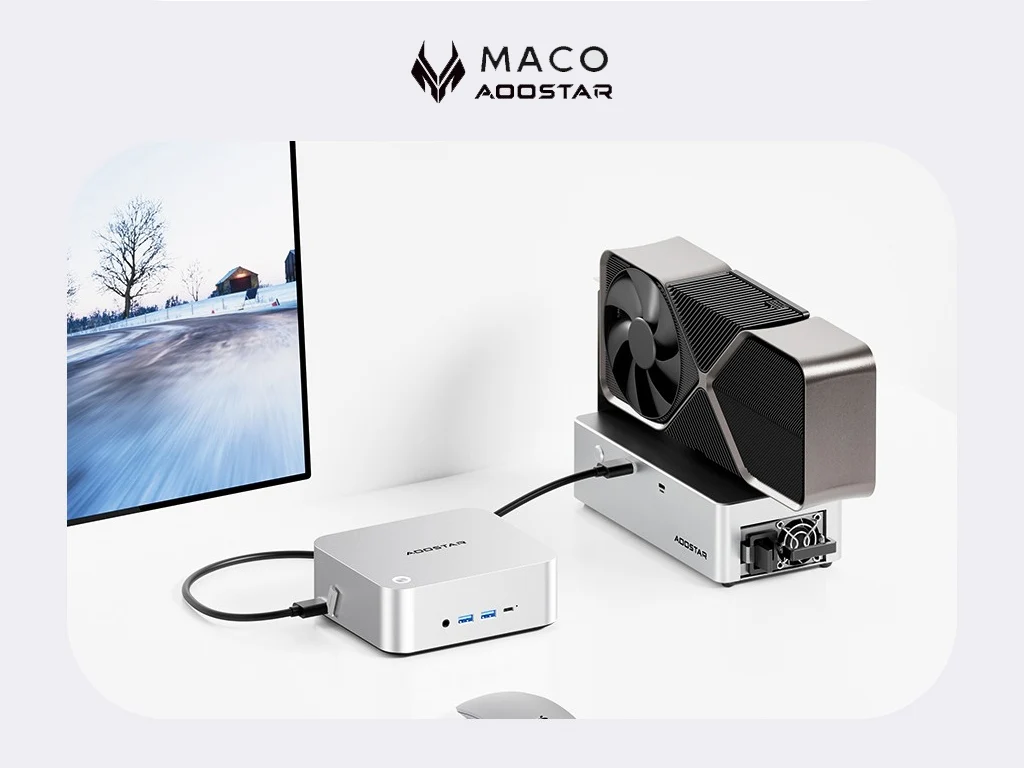
    Aoostar has just launched its MACO mini PC in China. The starting price is CNY 1,999, which is about $278. This mini PC can be configured with two options for AMD Hawk Point processors. You can choose between the Ryzen 7 H 255 or the Ryzen 7 Pro 8845HS. Notably, the Ryzen 7 H 255 is exclusive to China, while Beelink has already brought the SER9 Pro featuring the same APU to the global market.

    Powerful Performance

    Both processor options have eight Zen 4 cores along with the Radeon 780M integrated graphics. This makes the mini PC capable of running modern games at 1080p, provided the graphics settings are kept to low or medium. If you’re looking for better gaming performance, there’s an option to add an external GPU (eGPU). For this purpose, the MACO comes with one OCuLink and two USB4 ports—currently, the GMKtec AD-GP1 eGPU is priced at $469.99 on Amazon.

    Solid Specifications

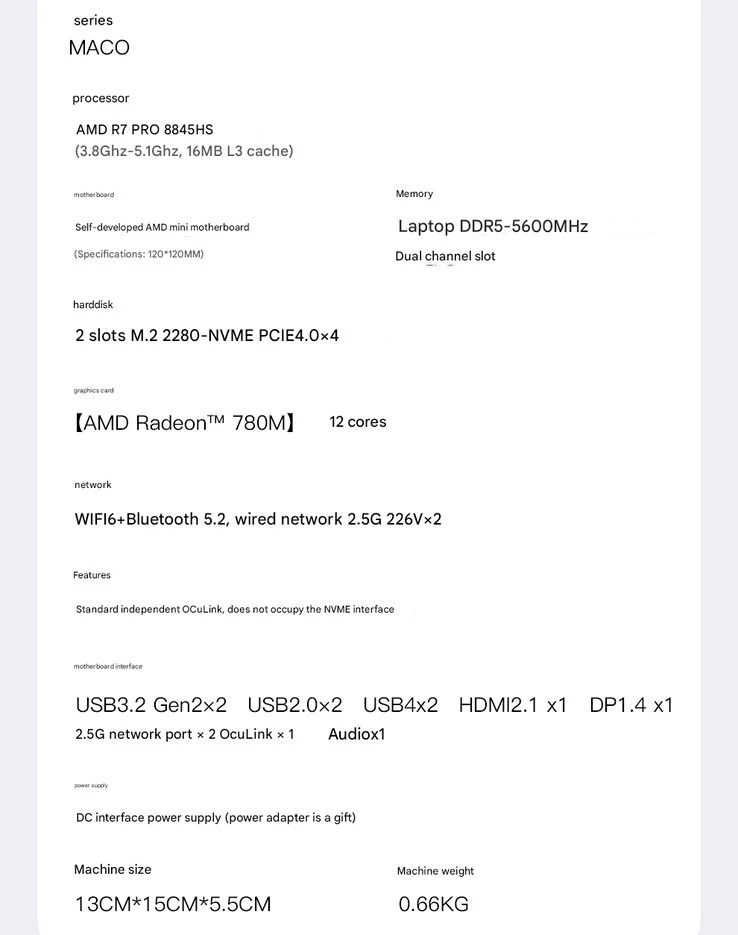
    In addition to its processing power, the Aoostar MACO features two DDR5 SO-DIMM RAM slots and two M.2 PCIe 4.0 slots for upgrading memory and storage. Besides the OCuLink and USB4 ports, the mini PC includes the following configuration of ports:

    To ensure optimal cooling during demanding tasks, Aoostar has included a VC vapor chamber alongside a quiet turbo fan. Other notable features include WiFi 6, the ability to connect up to four displays, a built-in fingerprint scanner compatible with Windows Hello, and a compact aluminum alloy design.

    Future Availability

    As of now, there is no information regarding when the Aoostar MACO will be available globally. However, the company typically releases its products to the international market soon after launching in China. For more details about this budget-friendly mini PC, take a look at the spec sheet provided below.

    Source:
    Link


  • Minisforum N5 and N5 Pro NAS: New Pricing and Storage Update

    Minisforum N5 and N5 Pro NAS: New Pricing and Storage Update

    Key Takeaways

    1. The N5 Pro NAS is now available in Japanese, EU, Global, and UK online stores, with a $30 discount using code NAS30.
    2. Both the N5 and N5 Pro NAS devices were actually launched on July 1, featuring AMD Ryzen 7 255 and Ryzen AI 9 HX 370 APUs.
    3. Minisforum has updated the specifications for both models and delayed shipment dates to September 15.
    4. The N5 now starts at $645 (before discount) with 16 GB of RAM and 128 GB of storage, removing the earlier 64 GB option.
    5. The N5 Pro has also removed the 64 GB storage option and adjusted its barebone unit price to $1,019, while other pre-configured models have varying price changes.


    Minisforum has announced that its N5 Pro network-attached storage (NAS) option is now accessible in its Japanese, EU, Global, and UK online stores. If you use the discount code NAS30, you can get a $30 reduction on the price. The N5 Pro is one of two NAS devices released by Minisforum, the other being the N5.

    Clarifying the Launch

    It seems, however, that this announcement is not quite correct regarding the launch. Both the N5 and N5 Pro have been for sale since July 1, featuring AMD Ryzen 7 255 and Ryzen AI 9 HX 370 APUs, respectively. This means that the N5 Pro is expected to offer similar performance to Minisforum’s AI X1 Pro, which we reviewed not long ago (currently priced at $999 on Amazon).

    Recent Updates

    From what we observe, Minisforum has discreetly updated the specifications for the N5 and N5 Pro while delaying shipment dates to September 15. For example, the N5 cannot be purchased as a barebones unit at the moment. As of now, the N5 starts at $645 before the NAS30 discount, and it comes with 16 GB of RAM and 128 GB of storage, instead of the earlier 64 GB option.

    Changes in Storage Options

    In a similar vein, Minisforum has removed the 64 GB storage choice for the N5 Pro, opting for 128 GB drives instead. Additionally, the pricing for the barebone unit has been adjusted to $1,019 from $1,039. Although the entry-level pre-configured model is currently out of stock, the 48 GB ECC DDR5 RAM version is now $3 cheaper at $1,308. On the other hand, the price for the 96 GB RAM option has risen from $1,583 to $1,597, and there has been no explanation given for this increase. For more information, visit Minisforum’s official website.

    Source:
    Link


  • YouTuber Creates iPadBook: M4 iPad Pro Meets MacBook Display

    YouTuber Creates iPadBook: M4 iPad Pro Meets MacBook Display

    Key Takeaways

    1. iPadBook Prototype: Shu Chan created a DIY hybrid called the “iPadBook” that uses an M4 iPad Pro as the main display for a MacBook Air by replacing its original screen.

    2. Unique Display Functionality: The iPad acts as the sole monitor for macOS, allowing users to run desktop applications and utilize touch and Apple Pencil features directly on the iPad.

    3. MagBaka System: The device features a magnetic alignment system called “MagBaka,” which uses 12 hidden magnets to securely align and hold the iPad in place with the MacBook base.

    4. Custom Crafting Process: Shu Chan repurposed parts from a damaged MacBook Air, engineered a custom docking base, and used a 3D printer for multiple prototypes to create the housing for the iPadBook.

    5. Future Improvements: Plans for the iPadBook include adding internal cable storage and experimenting with retro designs, as well as potential upgrades using more powerful chips in future versions.


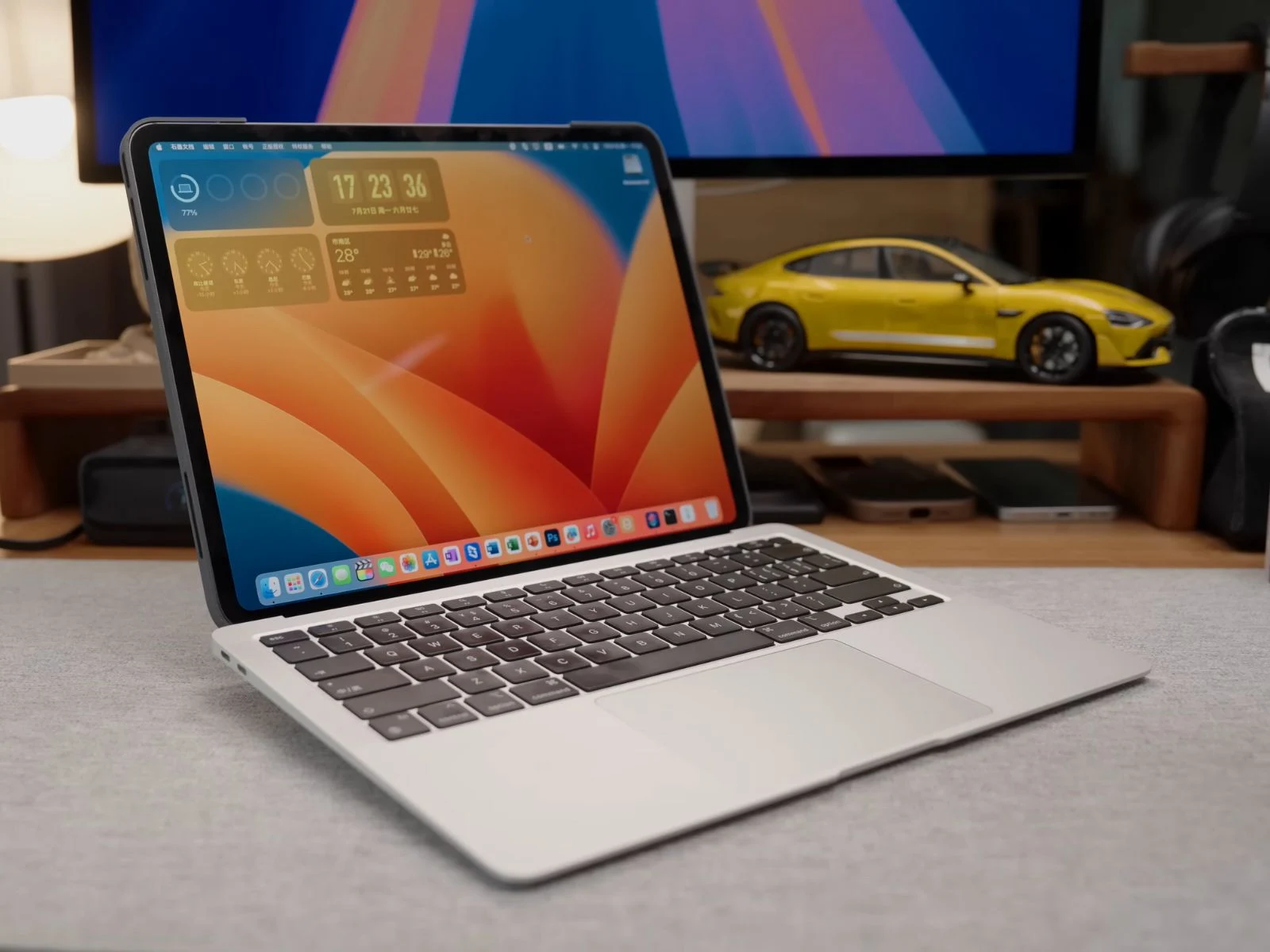
    YouTuber and hardware enthusiast Shu Chan has developed a working prototype named the “iPadBook.” This DIY hybrid transforms an M4 iPad Pro into a detachable tablet and serves as the main display for a MacBook Air.

    Simple Concept

    The concept was quite simple: remove the MacBook Air’s original screen and replace it with an M4 iPad Pro. According to the YouTuber, when the iPad is docked, it connects to the MacBook Air using a wired Sidecar setup. Normally, Sidecar either extends or mirrors the Mac’s display to the iPad, but in this case, the absence of a built-in screen in the MacBook Air allows the iPad to become the only active display for macOS.

    Unique Features

    When macOS starts up, it recognizes the iPad as its sole monitor. This allows users to run applications, interact with the desktop, and utilize touch and Apple Pencil features directly on the iPad. It can handle full desktop applications like Final Cut Pro, Photoshop, and Microsoft Office. Plus, the Apple Pencil can be used for designing or editing tasks.

    In this configuration, macOS operates on an M1 MacBook Air base, while the display component is an M4 iPad Pro that utilizes its own M4 chip when it is detached.

    Standalone Functionality

    When separated from the base, the iPad functions as a standalone tablet suitable for media consumption or gaming. Shu Chan has also crafted a custom macOS Shortcut that enables the MacBook’s keyboard and trackpad to work with the iPad, ensuring a smooth typing and navigation experience.

    Shu Chan refers to the magnetic alignment system as “MagBaka” (pronounced “Mag-bah-kah”), a whimsical name for the embedded magnets and locking design that maintains the alignment of the iPad with the MacBook base. This system incorporates 12 hidden magnets that automatically align the tablet and secure it firmly.

    Crafting Process

    To make this work, Shu Chan repurposed the hinge from a damaged MacBook Air, engineered a custom docking base, and 3D-printed several prototypes of the housing using a Bambu Lab H2D printer. The design features 12 built-in magnets to ensure the iPad stays securely in place, a raised typing angle for better comfort, and a slight lift to the MacBook Air’s base when opened to enhance cooling without the need for a fan.

    Shu Chan mentions that the build process involved over a dozen print attempts. The H2D’s sizable 350 × 320 × 325 mm build area allowed for the 13-inch iPad Pro housing to be printed in one go. The printer is capable of laser engraving and precision-cutting, and Shu Chan took advantage of these features to add custom graphics on the back cover of the iPadBook and create personalized stickers.

    Future Aspirations

    Looking ahead, Shu Chan plans to incorporate internal cable storage for a tidier wired Sidecar connection and is interested in experimenting with retro cases, like reusing an iBook G3 shell, to blend modern technology with vintage aesthetics.

    Shu Chan points out that the M4 iPad Pro’s chip is more powerful than the M1 in the MacBook Air base, and suggests that a future redesign utilizing an M4 Max MacBook Pro board could turn the iPadBook into a significantly more capable device. They credit the functionality of the Bambu Lab H2D and the MakerWorld community for assisting in making this idea a reality.

    The build video by Shu Chan on YouTube is in Mandarin Chinese, and currently, there’s no English translation available. However, even for those who don’t speak the language, it can be enjoyable to watch a dedicated modder create something impressive. Check out the video linked below.

    Source:
    Link


  • MacBook Pro Redesign with OLED & Apple M6: Release Window Revealed

    MacBook Pro Redesign with OLED & Apple M6: Release Window Revealed

    Key Takeaways

    1. Many users see no strong reason to upgrade from the Apple M1 or M1 Pro, as they provide enough performance for most needs.
    2. The anticipated 2025 MacBook Pro refresh with the Apple M5 chipset is unlikely to attract many upgrades due to minimal design changes.
    3. A significant redesign of the MacBook Pro is expected in 2026, featuring the Apple M6 SoC and an OLED display, which may appeal to some users.
    4. Delays in the redesign and updates mean that the new MacBook Pro models may not launch until late 2026 or early 2027.
    5. Users may remain content with their current MacBook Pro models for now, as major changes are still some time away.


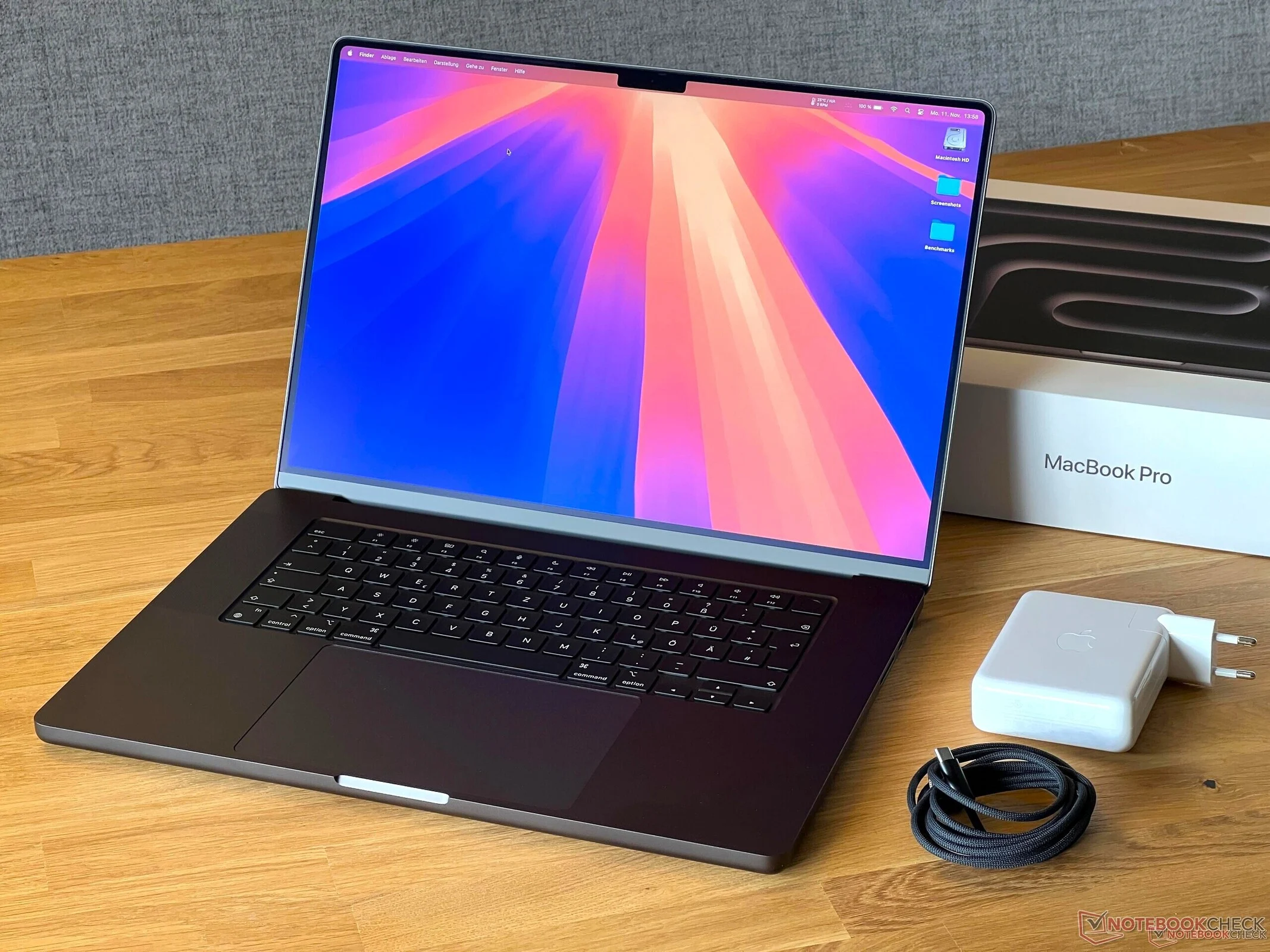
    Since the initial MacBook Pro powered by Apple silicon was released, there hasn’t been much motivation for users to switch to newer models like the Apple M2, M3, or even the most recent MacBook Pro M4, which is available for $1,299 on Amazon. Mark Gurman highlighted this in his latest “Power On” newsletter dated August 10, 2025. Although users needing high performance have seen yearly enhancements, the Apple M1 from 2020 and the Apple M1 Pro from 2021 likely deliver sufficient processing power for the majority of users.

    Upcoming Changes

    The anticipated 2025 MacBook Pro refresh featuring the Apple M5 chipset probably won’t encourage many users to upgrade, particularly since a more substantial redesign was expected to debut in 2026. This new model is rumored to bring the Apple M6 SoC, an OLED display, and a slimmer, lighter design, which might be compelling enough for several Apple enthusiasts to move up from their older machines.

    Delays and Expectations

    Nonetheless, this significant redesign may have been pushed back, as the Bloomberg analyst has recently revealed a revised schedule for the new MacBook Pro M6. Previous reports indicated that the modest upcoming MacBook Pro update with the Apple M5 and the same old design from 2021 would be postponed until early 2026. Now, the complete redesign is also projected to be delayed further. Specifically, Gurman expects a launch window between late 2026 and early 2027, which still feels quite distant. As a result, Apple fans looking to upgrade will need to hold on to their current MacBook Pro a bit longer.

    Conclusion

    In summary, while there are some anticipated upgrades on the horizon, the wait for major changes may be longer than expected, leaving many users satisfied with their existing models for the time being.

    Source:
    Link


  • Webb Discovers Evidence of Giant ‘Disappearing’ Planet Nearby

    Webb Discovers Evidence of Giant ‘Disappearing’ Planet Nearby

    Key Takeaways

    1. Alpha Centauri is a triple star system located four light-years from Earth, consisting of stars Alpha Centauri A, B, and Proxima Centauri.
    2. The Webb Space Telescope detected a potential gas giant planet orbiting Alpha Centauri A, likely similar in mass to Saturn.
    3. The planet is believed to have an elliptical orbit, varying in distance from one to two times that of Earth to the Sun.
    4. Initial detection of the planet occurred in August 2024, but subsequent searches in early 2025 were unsuccessful, possibly due to the planet’s proximity to the star at those times.
    5. Future observations, including data from the upcoming Nancy Grace Roman Space Telescope, may provide more insights into the planet’s existence and characteristics.


    Alpha Centauri is a triple star system located just four light-years from Earth, which has captured the attention of astronomers searching for exoplanets. The system consists of three stars: Alpha Centauri A and B, both resembling our Sun, and Proxima Centauri, a dim red dwarf star. Studies have confirmed that there are three planets orbiting Proxima Centauri. However, detecting planets around Alpha Centauri A and B has proven difficult due to their brightness.

    Webb’s Discovery

    Recently, the Mid-Infrared Instrument on the Webb Space Telescope has detected signs of a planet orbiting Alpha Centauri A. The image captured by Webb, along with analysis from a research team and computer simulations, indicates that this planet may be a gas giant similar in mass to Saturn. It is thought to travel in an elliptical orbit, with distances ranging from one to two times that of the Earth to the Sun.

    To identify this planet, Webb used a coronagraphic mask with its MIRI to block the light from Alpha Centauri A. Additional work by the research team helped to filter the light from Alpha Centauri B, uncovering an object that is 10,000 times dimmer than Alpha Centauri A and is believed to be a planet.

    Challenges and Future Prospects

    The first detection of this planet occurred in August 2024. However, subsequent attempts in February and April 2025 were unsuccessful in finding similar objects. “It’s like we’re dealing with a vanishing planet,” stated Aniket Sanghi, a PhD student at Caltech and co-first author of two papers detailing the research. Simulations have indicated that the planet’s closeness to the star during the observations in February and April may explain why Webb couldn’t locate it.

    Looking ahead, future observations, which may include data from the upcoming Nancy Grace Roman Space Telescope, might shed more light on this mysterious planet.

    Source:
    Link