Tag: A18 Pro

  • MacBook Neo Teardown: iFixit Rates Apple’s Most Repairable Laptop 6/10

    MacBook Neo Teardown: iFixit Rates Apple’s Most Repairable Laptop 6/10

    Key Takeaways

    1. Budget-Friendly Pricing: The MacBook Neo starts at $599, making it Apple’s most affordable laptop, appealing to casual users and students.

    2. High Repairability Score: iFixit awarded the MacBook Neo a repairability score of 6 out of 10, the best score Apple has achieved in over a decade.

    3. Easy Internal Access: The design allows for easy access to internal components, making repairs simpler, with modular USB-C ports and independently replaceable keyboards.

    4. Design Limitations: The laptop’s RAM and storage are soldered to the logic board, potentially hindering long-term competitiveness and making data recovery difficult if the board fails.

    5. Sound and Trackpad Trade-offs: The built-in speakers lack the quality of premium models, and the trackpad sacrifices advanced features for easier servicing.


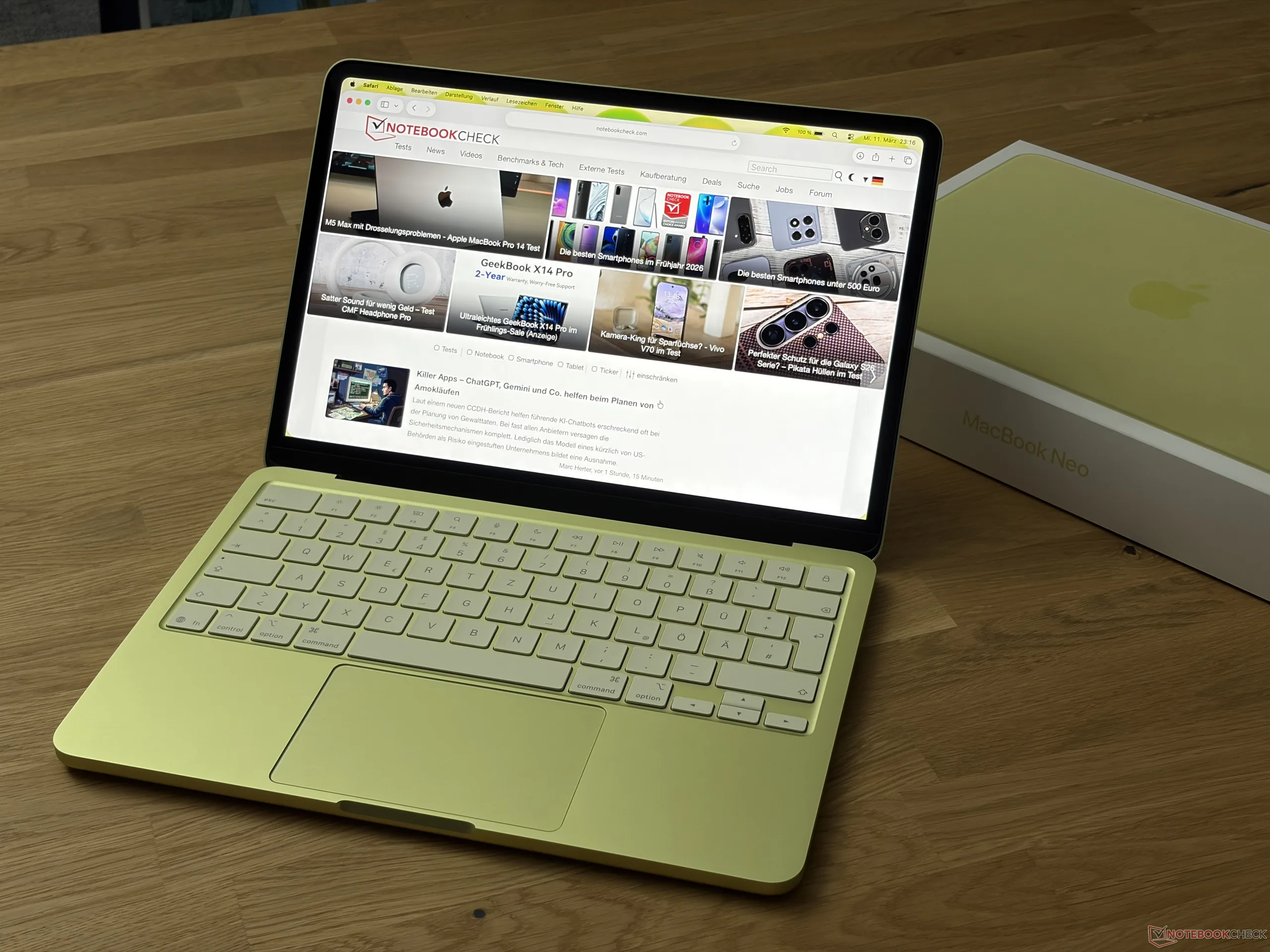
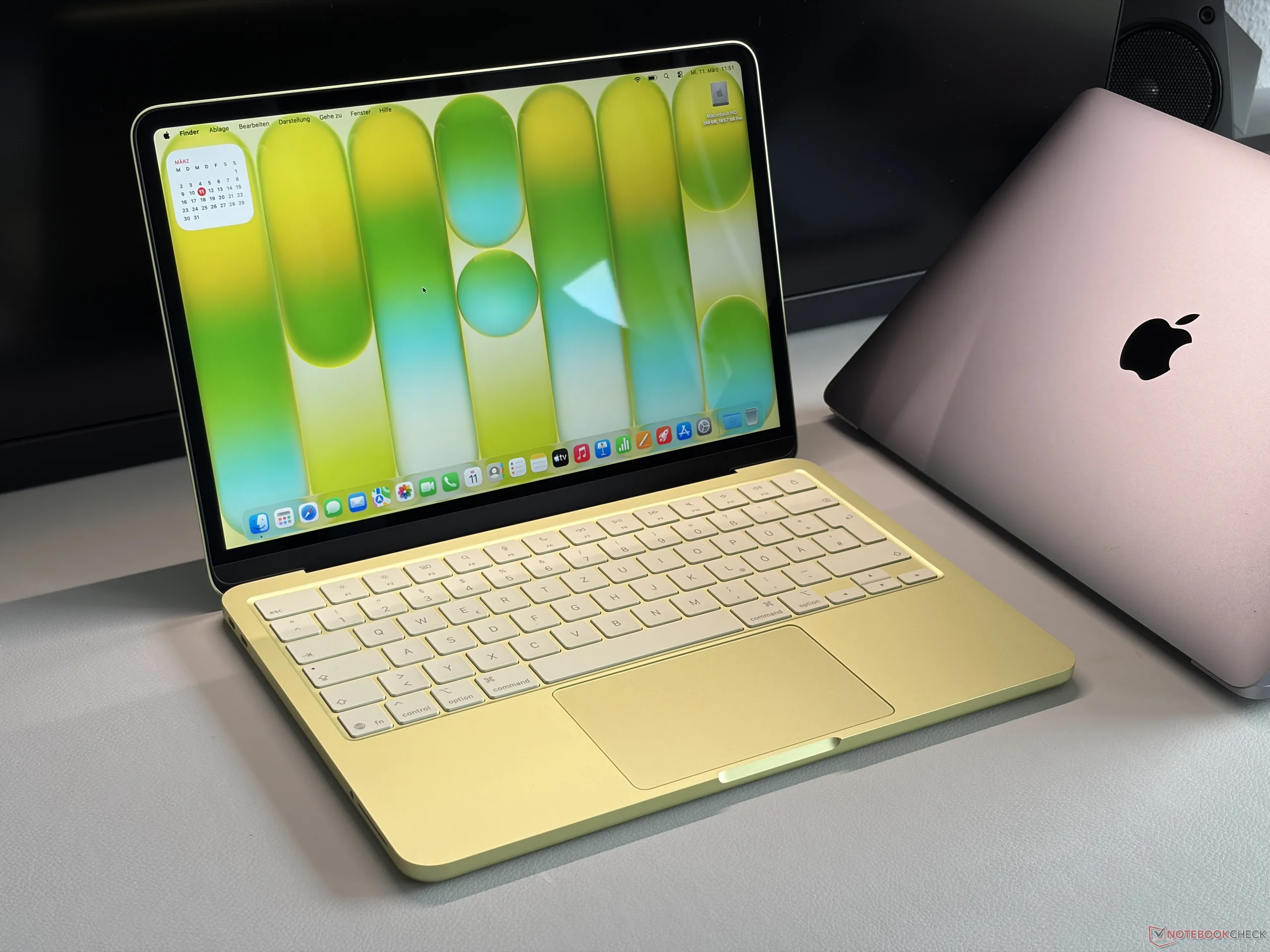
    Apple has just unveiled its most budget-friendly laptop yet, the MacBook Neo, which runs on the A18 Pro chip, the same chip featured in the iPhone 16 Pro. For the first time in 14 years, repair services are praising Apple’s latest creation, declaring the MacBook Neo to be the most repairable MacBook to date. Starting at $599, the 13-inch MacBook Neo comes with 8 GB of memory and offers storage options of either 256 GB or 512 GB, making it a strong competitor against budget laptops for casual users and students.

    Repairability Score

    iFixit recently conducted a thorough teardown of the MacBook Neo, awarding it a repairability score of 6 out of 10, which is the best score Apple has achieved in over a decade. This time, Apple has moved away from the adhesive stretch-release battery swap, opting for a 36.5-watt-hour battery secured by 18 screws, significantly reducing the risk of damaging the lithium-ion cell during repairs.

    Easy Access Inside

    Despite the improvements, Apple still employs pentalobe screws on the bottom of the device. Once these screws are removed, the bottom shell of the MacBook Neo can be unclipped easily. The advantage of this design is that all internal components are well-organized and easy to access, including the battery, speakers, USB-C ports, trackpad, and display. The USB-C ports are modular, meaning if one breaks, users only need to replace that port instead of the entire logic board.

    Removing the antenna and hinge screws allows the display to come off without any hassle. For the first time, users can replace the keyboard independently without having to swap the complete top shell.

    Downsides of the Design

    However, the MacBook Neo has some drawbacks. To replace the keyboard, users must peel off a layer of adhesive tape and take out 41 screws, which contrasts sharply with many newer laptops like the Lenovo T14 Gen 7, which allows for tool-free keyboard replacement.

    The MacBook Neo features the same A18 Pro chip as the iPhone 16 Pro, which restricts RAM to 8 GB and storage to either 256 GB or 512 GB, both soldered to the logic board. This limitation might hinder the MacBook Neo’s competitiveness against Apple’s MacBook Air and other ultrabooks in the long run. Moreover, if the logic board fails, recovering data can be extremely difficult.

    Sound Quality and Trackpad

    Another trade-off is the quality of the built-in speakers. They are easily replaceable but lack the crispness and dynamic sound found in more premium MacBooks like the new 13-inch MacBook Air M5 or the 16-inch MacBook Pro M5.

    The trackpad on the MacBook Neo also sacrifices haptic Force Touch for more basic controls, which partly simplifies servicing the device.

    Parts Replacement Made Easier

    Lastly, Apple has simplified parts replacement with the Repair Assistant tool introduced last year. Users can easily swap out display panels, trackpads, batteries, or Touch ID modules without the laptop triggering warnings or locking them out of features.

    Source:
    Link



  • Apple’s $599 MacBook Neo: Great for Gaming, But 8GB RAM Lacks

    Apple’s $599 MacBook Neo: Great for Gaming, But 8GB RAM Lacks

    Key Takeaways

    1. The MacBook Neo is priced at $599 and features the A18 Pro SoC, the same chip used in iPhone 16 Pro models, which enhances its gaming capabilities.

    2. It can run demanding games like Cyberpunk 2077 and Control at lower settings, achieving over 40 FPS at 720p and around 50 FPS at 1080p, respectively.

    3. The 8 GB RAM can limit performance, particularly with memory-intensive games and emulations, affecting the experience with titles like Elden Ring.

    4. While less demanding games, such as Minecraft, perform well, challenging titles may struggle, especially when using CrossOver for Windows games.

    5. Overall, the MacBook Neo is suitable for daily tasks and light gaming, but gaming performance can vary widely based on the game’s requirements.


    Aside from its lackluster battery performance, Apple has managed to keep the MacBook Neo priced at $599 by incorporating the A18 Pro SoC, the same chip found in the iPhone 16 Pro and 16 Pro Max. This A18 Pro chip actually performs quite well for gaming. The MacBook Neo is capable of playing demanding games like Cyberpunk 2077, Resident Evil 2 Remake, and Control at 1080p and 720p with lower settings. However, it’s important to note that the 8 GB RAM can be a significant limitation.

    Gaming Performance Insights

    In tests conducted by Andrew Tsai, the MacBook Neo achieves over 40 FPS in Cyberpunk 2077 at 720p (with MetalFx upscaled from 360p) when set to the lowest settings. Control runs at about 50 FPS on the laptop at 1080p using low settings (with MetalFx upscaling from 540p). Games that are optimized properly can perform even better.

    Frame Rates and Limitations

    Tsai’s results suggest that Resident Evil 2 Remake can nearly hit 60 FPS at 1080p, upscaled from 540p with default graphics. Less demanding or indie games like Minecraft can even reach high frame rates without much trouble.

    However, not all games run smoothly. The MacBook Neo has difficulties with titles that heavily rely on memory. This issue becomes especially pronounced when emulating consoles such as the Nintendo Switch or attempting to play PC games via CrossOver, which allows Windows applications to run on macOS and Linux.

    Emulation Challenges

    For example, Elden Ring reportedly struggles significantly, averaging in the mid-20s FPS with choppy performance at 450p/low settings. The limited memory makes it hard to run CrossOver alongside a modern AAA game. On a brighter note, Dark Souls Remastered performs decently through CrossOver, achieving a steady 60 FPS with few frametime hiccups.

    Emulating Nintendo Switch games also tends to be quite unstable, especially with demanding titles like The Legend of Zelda: Breath of the Wild, while other Switch games might work better.

    In conclusion, the MacBook Neo proves to be a capable machine for daily tasks and light gaming. It handles less demanding macOS-native titles well. While it can emulate Windows games and other platforms, the gaming experience will vary significantly depending on the title.

    Source:
    Link


  • MacBook Neo Outperforms AMD, Intel, Qualcomm in Single-Core Performance

    MacBook Neo Outperforms AMD, Intel, Qualcomm in Single-Core Performance

    Key Takeaways

    1. The MacBook Neo’s A18 Pro chip excels in single-core performance, surpassing most mobile processors and competing closely with Apple’s own M4 and M5 chips.
    2. Benchmark tests indicate the A18 Pro outperforms all x86 processors and recent mobile chips from AMD, Intel, and Qualcomm, except for potentially upcoming Snapdragon X2 chips.
    3. The MacBook Neo offers impressive everyday performance, reinforcing Apple’s choice to use the A18 Pro over the newer A19 Pro.
    4. Budget-friendly Windows laptops are likely to struggle against the MacBook Neo’s performance due to weaker processors.
    5. The MacBook Neo combines strong performance with appealing features, such as a durable aluminum chassis and high-quality display, at a competitive price point, potentially disrupting the budget laptop market.


    When Apple unveiled its latest affordable MacBook Neo, many were curious about how the smartphone chip would perform. After conducting our first set of benchmarks, it’s clear that Apple is playfully competing with AMD, Intel, and Qualcomm. The single-core performance of the MacBook Neo outshines all other mobile processors, except for Apple’s own M4 and M5 chips. And it’s important to note that we’re examining a processor from the year 2024.

    Impressive Benchmark Results

    We ran several benchmarks and found the single-core performance to be quite impressive. Not just in the quick Geekbench test, but also in the Cinebench 2024, where a single-core test lasts around 10 minutes. The A18 Pro uses between 3.5-4 Watts during this test and achieves a score of 147 points. This puts it ahead of all x86 processors in our records, including the Intel Core Ultra 9 285K and AMD Ryzen 9 9950X3D desktop processors. This also indicates that the MacBook Neo surpasses every recent mobile chip from AMD, Intel, and Qualcomm, even though the soon-to-be-released Snapdragon X2 chips may offer slightly better performance. Additionally, the A18 Pro is marginally quicker than Apple’s M3 generation in similar tests.

    Everyday Performance Insights

    Thus, the question regarding everyday performance is mostly settled, which also clarifies why Apple did not opt for the newer A19 Pro from the latest iPhone 17 Pro. This suggests that budget-friendly Windows laptops, which typically come with weaker processors than those in our comparison chart, will struggle to keep up performance-wise. Alongside its other favorable features, such as an aluminum chassis, a bright 500-nit IPS display, and a full sRGB color range, the low price tag—especially considering the software that comes pre-installed with macOS—means the MacBook Neo could truly disrupt the budget laptop market.

  • Apple’s $599 MacBook Neo: First Impressions and Review

    Apple’s $599 MacBook Neo: First Impressions and Review

    Key Takeaways

    1. Affordability: The MacBook Neo starts at $599, with a special price of $499 for education, targeting budget-conscious consumers.

    2. Design Options: Available in various colors including citrus, silver, Indigo, and Blush, with a solid aluminum body and a choice of storage options.

    3. Performance: Equipped with the A18 Pro chip, the MacBook Neo performs well for multitasking and runs smoothly without significant differences compared to the MacBook Air.

    4. Display Quality: The IPS display offers vibrant colors and sharp images, featuring a brightness sensor, which is a notable advantage at this price point.

    5. User Experience: The laptop has a responsive clickpad and a familiar typing experience, though it lacks keyboard backlighting, and operates quietly due to its passive cooling system.


    After checking out Apple’s latest MacBook Air and MacBook Pro models in the past few days, we can now dive into a detailed review of Apple’s newly released budget-friendly MacBook Neo. Starting at a price of $599 (or just $499 for those in education), Apple aims to capture a larger share of the market. This 13-inch device is equipped with Apple’s A18 Pro chip, which is the same processor found in the older iPhone 16 Pro. But does it perform well?

    Design and Colors

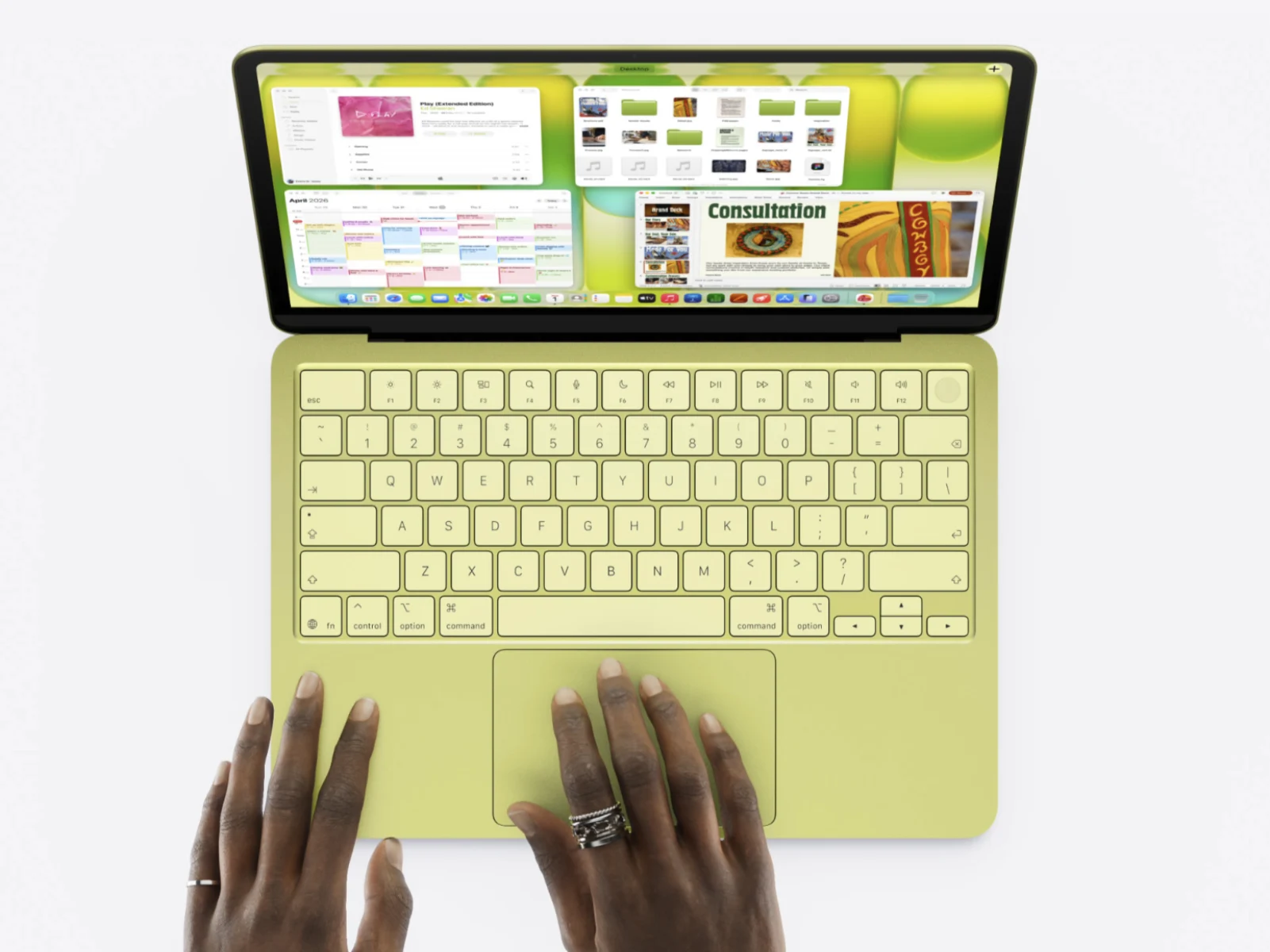
    We take a look at the entry-level version priced at $599, featuring 8 GB of RAM and 256 GB of SSD storage, presented in a bright citrus color that many may find refreshing, although personal taste plays a big role here. It also comes in silver, Indigo, or Blush. For those willing to spend $699, there’s a model that includes a bigger 512 GB SSD and a Touch ID fingerprint scanner.

    Performance and Quality

    Our first thoughts are quite good. The MacBook Neo has the feel of a standard MacBook, boasting a sturdy aluminum body and the typing experience we’ve come to expect. However, one noticeable downside is that it doesn’t have keyboard backlighting. The new clickpad, which is responsive across its entire surface, provides solid feedback, but it is smaller than the one on the MacBook Air. The IPS display maintains the quality Apple is known for, delivering vibrant colors, sharp images, and adequate brightness, complete with a brightness sensor—a feature not common in this price bracket.

    Testing Phase

    While setting up the laptop, we faced no difficulty, and so far, the performance seems really good. Even when multitasking by installing apps from the App Store, downloading files with Safari, and transferring apps from an external SSD, everything ran smoothly. Honestly, we haven’t detected any significant difference when compared to the new MacBook Air 13 up to this point. Plus, due to its passive cooling system, the Neo operates without making any noise.

    We are gearing up to conduct our standard tests and measurements. Please feel free to leave a comment if you have any specific requests or ideas for the review!

  • iPhone 17e Outperforms MacBook Neo: Budget Laptop vs. Phone

    iPhone 17e Outperforms MacBook Neo: Budget Laptop vs. Phone

    Key Takeaways

    1. The MacBook Neo underperformed compared to the iPhone 17e in Geekbench 6 tests, being about 5% slower in both single-core and multi-core performance.
    2. The MacBook Neo uses a modified A18 Pro chip, which is older than the A19 chip in the iPhone 17e, leading to slightly slower CPU performance.
    3. Both the MacBook Neo and the iPhone 17e have similar graphics capabilities in benchmark tests.
    4. Initial feedback on the MacBook Neo is positive, especially regarding its price-to-performance ratio, showcasing the advancement of Apple’s mobile chips.
    5. Future comparisons with similarly priced Windows laptops will provide a clearer picture of the MacBook Neo’s performance, with a detailed review expected soon.


    Apple’s latest MacBook Neo might actually be the slowest device in its current lineup.

    Performance Comparison

    Initial Geekbench 6 results reveal that the MacBook Neo (model Mac17,5) doesn’t perform as well as the iPhone 17e (model iPhone 18,5) in both single-core and multi-core tests. On average, the budget iPhone outperformed its laptop counterpart by about 5% in these benchmarks.

    Chip Specifications

    This result isn’t entirely unexpected, given that the MacBook Neo operates on a modified version of Apple’s A18 Pro SoC, which is the same chip found in last year’s iPhone 16 Pro and 16 Pro Max. When compared to the iPhone 17e’s newer A19 chip, the A18 Pro shows slightly slower CPU performance. However, both chips have similar graphics capabilities, with no distinct advantage for either in the various benchmark tests.

    Positive Feedback

    Early impressions of the MacBook Neo have been generally favorable, particularly regarding its price-to-performance ratio. This highlights how advanced Apple’s mobile chips have become, indicating that even the most affordable iPhone can meet the needs of many users. The initial feedback on the Neo suggests that it should serve most consumers well, which reflects positively on Apple’s current iPhone offerings.

    Future Comparisons

    Naturally, a more accurate assessment of the Neo would involve comparing it to similarly priced Windows laptops, which are still being released. Notebookcheck plans to publish a thorough review of the MacBook Neo soon, which will provide an extensive look at its performance relative to a large collection of laptops.

    Source:
    Link


  • Apple MacBook Neo Impresses Early Reviewers in Cyberpunk 2077 Tests

    Apple MacBook Neo Impresses Early Reviewers in Cyberpunk 2077 Tests

    Key Takeaways

    1. The MacBook Neo will start shipping on March 11, alongside the iPhone 17e and new MacBook Pros.
    2. Early reviews praise the A18 Pro chip for effectively running professional applications and gaming.
    3. The MacBook Neo can handle apps like Final Cut Pro and optimized games well, but struggles with high graphics settings on demanding titles.
    4. Limitations include less impressive battery life (20% decrease from M4 MacBook Air) and a lack of keyboard backlighting and ports.
    5. Overall build quality, display, keyboard, and trackpad are strong, but the MacBook Neo may not be suitable as the main laptop for tech enthusiasts.


    Apple is set to start sending out the MacBook Neo on March 11. Coincidentally, this is also the date when Apple will kick off deliveries for the iPhone 17e, MacBook Pros powered by the M5 Pro and M5 Max, along with all the other gadgets that were revealed last week.

    Early Impressions

    In the meantime, several early reviews have surfaced, offering first impressions of Apple’s much-anticipated $599 MacBook. For example, the capabilities of the A18 Pro chip and the macOS have impressed YouTubers like Dave2D and Tyler Stalman. In summary, the chipset manages to run professional applications quite effectively.

    Performance Highlights

    Additionally, the MacBook Neo is capable of running Final Cut Pro alongside other apps and browser tabs without issues. Moreover, top-tier games such as Cyberpunk 2077 can be played with the lowest graphics settings or by enabling frame generation. Games that are optimized for the A18 Pro, like Gear.Club Stradale and Oceanhorn 3, perform even better.

    Limitations

    However, the A18 Pro does have its limitations. This means that reviewers haven’t recommended the MacBook Neo as the main laptop for tech enthusiasts. The battery life is also not impressive when compared to other MacBooks, showing about a 20% decrease compared to the M4 version of the 13-inch MacBook Air. Overall, while the MacBook Neo’s build quality, display, keyboard, and trackpad seem to be strong points, it falls short with its lack of keyboard backlighting, a slower SSD, 8 GB of RAM, and a disappointing selection of ports.

    Source:
    Link


  • Apple MacBook Neo Benchmarks Show M3 Chip Outperforming Rivals

    Apple MacBook Neo Benchmarks Show M3 Chip Outperforming Rivals

    Key Takeaways

    1. The MacBook Neo will start shipping on March 11 and is available for pre-order at $599.
    2. It features the new A18 Pro chip, improving performance in CPU and GPU tasks compared to the M1 MacBook Air.
    3. The MacBook Neo scored 31,178 in the Geekbench 6.5 Metal test, slightly outperforming the M1 MacBook Air’s score of 30,112.
    4. Its single-core performance averages 3,530, nearly 50% higher than the M1 MacBook’s score of 2,363.
    5. The MacBook Neo performs about 12.7% better than the actively-cooled MacBook Pro 14 M3 and is close to Apple’s M4 generation devices.


    Apple has announced that the MacBook Neo will start shipping on March 11. This new 13-inch model can be pre-ordered for $599 through various sellers like Amazon, following its introduction on March 4. While we wait for independent reviews to come out, Geekbench has shared some early information regarding the performance of Apple’s first laptop powered by the A18 Pro chip, particularly in CPU and GPU demanding tasks.

    Performance Comparison

    In terms of GPU capabilities, it looks like the MacBook Neo is slightly better than the M1 MacBook Air that we tested back in 2020. At that time, the M1 model scored an average of 30,112 in the Geekbench 6.5 Metal test. The new MacBook Neo, however, achieved a score of 31,178 in the benchmarks released so far. This score is about 5.7% lower than the iPhone 16 Pro Max, which has 16.6% more GPU cores.

    CPU Insights

    Similarly, when it comes to multi-core CPU performance, the MacBook Neo shows a small edge over the M1 MacBook Air. The single-core performance is particularly impressive, with an average score of 3,530, which is nearly 50% greater than the M1 MacBook’s score of 2,363 points. The A18 Pro enables the MacBook Neo to perform around 12.7% better than the actively-cooled MacBook Pro 14 M3. In fact, it ranks just behind devices from Apple’s M4 generation. For further details about the $599 MacBook Neo, check out our launch article.

    Source:
    Link


  • MacBook Neo Wins Fans and Media Approval Despite Weak Hardware

    MacBook Neo Wins Fans and Media Approval Despite Weak Hardware

    Key Takeaways

    1. The MacBook Neo is priced at $599 but features hardware compromises like a mobile A18 Pro SoC and non-upgradable 8 GB RAM.
    2. Key features missing from the base model include Touch ID and keyboard backlighting.
    3. Users view the MacBook Neo as a budget-friendly upgrade from older MacBooks and lower-end Windows laptops.
    4. The target audience includes individuals already in the Apple ecosystem, looking for affordable laptops for basic tasks.
    5. The MacBook Neo poses a competitive threat to $600 Windows laptops, receiving positive reviews from major tech outlets.


    Apple officially announced the MacBook Neo on March 4. To reach the price of $599 for the MacBook Neo, the company had to make several hardware compromises. These include using a mobile A18 Pro SoC, offering only 8 GB of non-upgradable RAM, leaving out Touch ID from the base model, and not providing keyboard backlighting. Even with these limitations, the MacBook Neo has been positively received by both the media and users.

    User Reactions

    A look at r/macbook shows that many people see the MacBook Neo as a budget-friendly upgrade from older MacBook models or a step up from lower-end Windows laptops and Chromebooks. One user, who has been a “lifelong Windows user,” shared that they switched to the MacBook Neo from their heavy Windows gaming laptop. They appreciated the MacBook Neo for its long battery life and ease of carrying around.

    Target Audience

    Another user pointed out that the MacBook Neo is ideal for their sister, who is about to start graduate school. This sister is already well integrated into the Apple ecosystem with an iPhone, iPad, and Apple Watch. This is precisely the demographic Apple aims to attract with the MacBook Neo—those needing an affordable laptop for simple tasks, like browsing the web, while already owning some Apple devices.

    Competitive Landscape

    This situation should make Windows laptop manufacturers nervous, as the current selection of $600 Windows laptops can’t match up to the new MacBook. This sentiment is echoed by various tech reviewers in the industry. From Dave2D to LTT and Hardware Canucks, the MacBook Neo has garnered significant praise from major tech outlets.

    In summary, the initial reactions to the MacBook Neo appear to be quite favorable. However, it remains uncertain how the laptop will perform with regular use. We are particularly looking forward to evaluating the performance of the A18 Pro chip running macOS, as well as the battery life from its compact 36.5 Wh battery.

    Source:
    Link


  • Apple MacBook Leak: Low-Cost Model Expected Next Week with Downgrades

    Apple MacBook Leak: Low-Cost Model Expected Next Week with Downgrades

    Key Takeaways

    1. Apple is hosting a three-day “Apple Experience” event next week, featuring anticipated product updates and the return of the MacBook.
    2. The new MacBook will be a low-cost model powered by an A-series processor, likely the A18 Pro SoC, suitable for everyday tasks.
    3. Concerns exist regarding the rumored 8 GB of RAM, which may not meet the needs of students and users with demanding multitasking requirements.
    4. The MacBook is expected to have a 12.9-inch Retina display with lower brightness levels and limited storage options, potentially up to 512 GB.
    5. Pricing for the new MacBook is crucial, with speculation suggesting it may start at $749 due to rising component costs, challenging its “low-cost” label.


    Apple’s upcoming product release is just around the corner, as the company has planned a three-day “Apple Experience” event for next week. Most of the anticipated products are simply updates to existing lines, but there is one intriguing new item making a comeback for the second time.

    The Return of the MacBook

    The MacBook, which was Apple’s budget-friendly laptop from 2006 until 2012, was presumed to be discontinued. It made a return in 2015, but not as an affordable option; instead, it was relaunched as a premium 12″ model with a price that rivaled the high-end 13″ MacBook Pro.

    According to various leaks and rumors, the MacBook is set to make yet another comeback as a low-cost entry-level laptop featuring an iPhone A-series processor. Speculations suggest that Apple will choose the A18 Pro SoC, which should handle everyday tasks quite well.

    Performance Expectations

    While the SoC’s single-core performance is comparable to the top models, its multi-core performance matches that of the older Apple M1, which is now five years old. Nevertheless, the M1 SoC remains competitive in the entry-level market in 2026, so the budget MacBook should be fairly enjoyable for lighter tasks. GPU capabilities are expected to be nearly the same as the Apple M1.

    However, the rumored memory specifications raise some concerns. A mere 8 GB of RAM was sufficient in 2020, but it certainly falls short today. Students, in particular, often need multiple tabs open for research, which could lead to performance issues if the rumors hold true.

    Limitations and Display Features

    Additionally, operating systems are becoming more demanding, making 8 GB of unified memory shared between the CPU and GPU far from ideal for long-term use. Given that Apple is unlikely to allow for memory upgrades, the entry-level 8 GB model may not appeal to many buyers right away.

    The MacBook is expected to feature a 12.9-inch Retina display, though it’s rumored to have significantly lower brightness levels compared to Apple’s premium devices. For instance, the MacBook Air has a 500-nit display, while the smaller MacBook Pro can reach up to 1,000 nits. Previous versions of the MacBook Air had 400-nit displays, which might be where Apple is heading with this budget model.

    Additionally, the absence of an ambient color temperature sensor has led some insiders to suggest that the MacBook’s display won’t support True Tone, which might disappoint users who appreciated that feature.

    Storage Options and Color Choices

    Unsurprisingly, the low-cost MacBook is expected to have limited storage choices. Recent reports indicate a maximum of 512 GB, which should suffice for students but may not meet the needs of power users.

    A 128 GB option might also be available, specifically for students. It’s worth noting that the last time Apple released a MacBook with such minimal storage was about seven years ago.

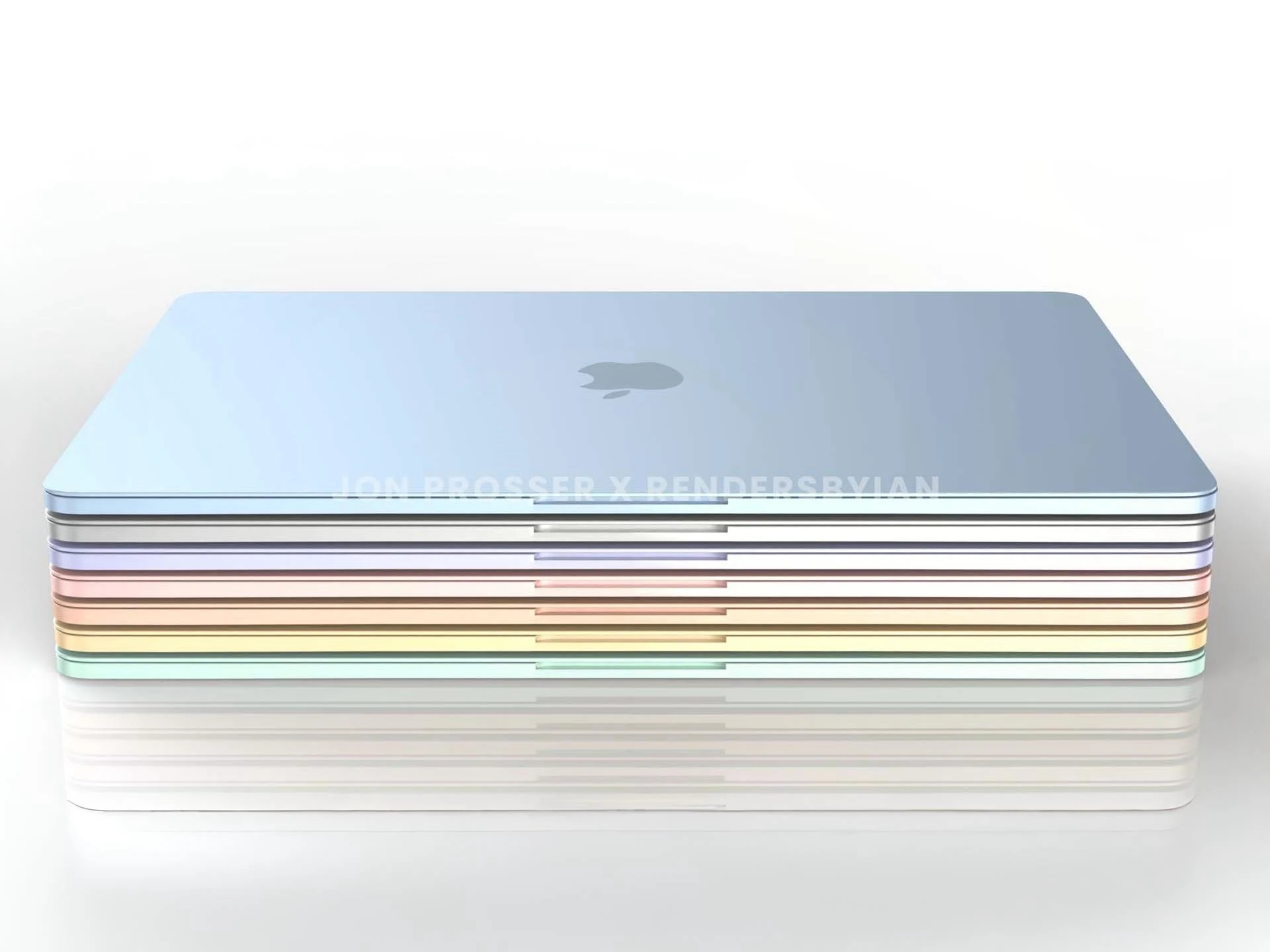
    The MacBook is anticipated to come in a variety of fun colors, including light blue, light yellow, pink, classic silver, and dark gray. Interestingly, these colors were initially planned for the Apple Silicon MacBook Air but were ultimately scrapped.

    Uncertain Details

    At this point, other specifications like thickness, weight, and I/O options remain unclear. However, leaks suggest that the system will not support high-impedance headphones.

    More surprisingly, there are claims that this budget MacBook might lack a backlit keyboard, which would be a significant drawback for many users. Given that Apple hasn’t released a MacBook without a backlit keyboard in over 15 years, this seems quite improbable.

    One area where Apple is unlikely to compromise is build quality; the MacBook will feature an all-aluminum design. Reports indicate that Apple has developed new manufacturing methods that streamline production, thus reducing costs.

    Pricing Concerns

    The pricing of the upcoming budget MacBook will be a critical factor. The Internet has dubbed it the “low-cost” MacBook for a reason—its success hinges on how affordably Apple can price it.

    Based on the rumored compromises, a price above $599 may be difficult for consumers to accept. While Apple intended to keep it low, new reports suggest that they may have to set the price as high as $749 due to rising component costs. In fact, Apple has recently agreed to 100% price increases for LPDDR5X modules from Samsung, its main supplier.

    As we approach the anticipated unveiling of the long-discussed MacBook, all speculation will soon be put to rest. The company is also expected to introduce the iPhone 17e and provide SoC upgrades to the high-end MacBook Pro, iPad, iPad Air, and MacBook Air models.

    Source:
    Link


  • iPhone Fold: 0.15mm Crease and Affordable Pricing Insights

    iPhone Fold: 0.15mm Crease and Affordable Pricing Insights

    Key Takeaways

    1. Apple is expected to unveil its first foldable device, likely called the iPhone Fold, later this year.
    2. The iPhone Fold will feature a 5.5-inch external display and a 7.8-inch internal display that is crease-free.
    3. It will be powered by the A18 Pro SoC and have a chassis thickness of 4.5 mm.
    4. The crease on the display will measure less than 0.15 mm, making it hardly noticeable to touch.
    5. The pricing for the iPhone Fold is expected to be “conservative,” potentially similar to the Z Fold 7, which is around $2,000.


    Apple seems to gearing up to unveil its first foldable device, likely called the iPhone Fold, which many anticipate will launch later this year. Alongside this, the iPhone 18 Pro is also set to make its debut, while the standard iPhone 18 might not arrive until early next year.

    Specs and Features

    Numerous leaks have provided us with a good understanding of what the iPhone Fold might offer. It’s expected to feature a 5.5-inch external display and a 7.8-inch internal display that is free of creases. The device will likely be powered by the A18 Pro SoC and have a chassis thickness of 4.5 mm, which are among the details we can be relatively confident about.

    Innovative Display Technology

    The standout feature is undoubtedly the crease-free display, which Apple is expected to highlight as a key selling point. Reports indicate that Apple has waited a long time for display technology to advance to the point where a crease-free option can be realized, making this feature highly anticipated.

    Recently, a leak from Fixed Focus Digital on Weibo provided some intriguing insights into the iPhone Fold’s display. They confirmed that the device is indeed on track for a release this year, with production orders already in place.

    Crease Details and Pricing

    The crease, it seems, is expected to measure less than 0.15 mm, and the folding angle is around 2.5 degrees. Although the crease won’t be completely absent, it should be hardly noticeable to the touch. For comparison, a human hair typically measures between 0.017 and 0.18 mm.

    Fixed Focus Digital also noted that the price for the iPhone Fold will be “conservative,” and the device’s durability is described as “good.” However, no specific figures or measurements were provided. Given that the Z Fold 7 is priced at just under $2,000 (currently $1,810 on Amazon), it’s reasonable to expect that the iPhone Fold will come with a similar price tag.

    Source:
    Link