Tag: Repairability

  • Sigma BF Teardown: Tiny Full-Frame Camera for Minimalists

    Sigma BF Teardown: Tiny Full-Frame Camera for Minimalists

    Key Takeaway

    – Sigma BF distinguishes itself with a minimalist aluminum unibody, a large touchscreen, touch-sensitive controls, and a small OLED settings display, setting it apart from rivals like the Panasonic S9.
    – The internals are densely packed and the rear display is glued (removable with heat), with a rubber-bottom cover hiding ten screws for access.
    – Servicing is time-consuming: disassembly involves removing multiple boards, ribbon cables, and screws before reaching the mainboard and the full-frame sensor.
    – Spare parts are not sold directly to end users, hindering DIY repairs and requiring Sigma-provided parts for any maintenance.

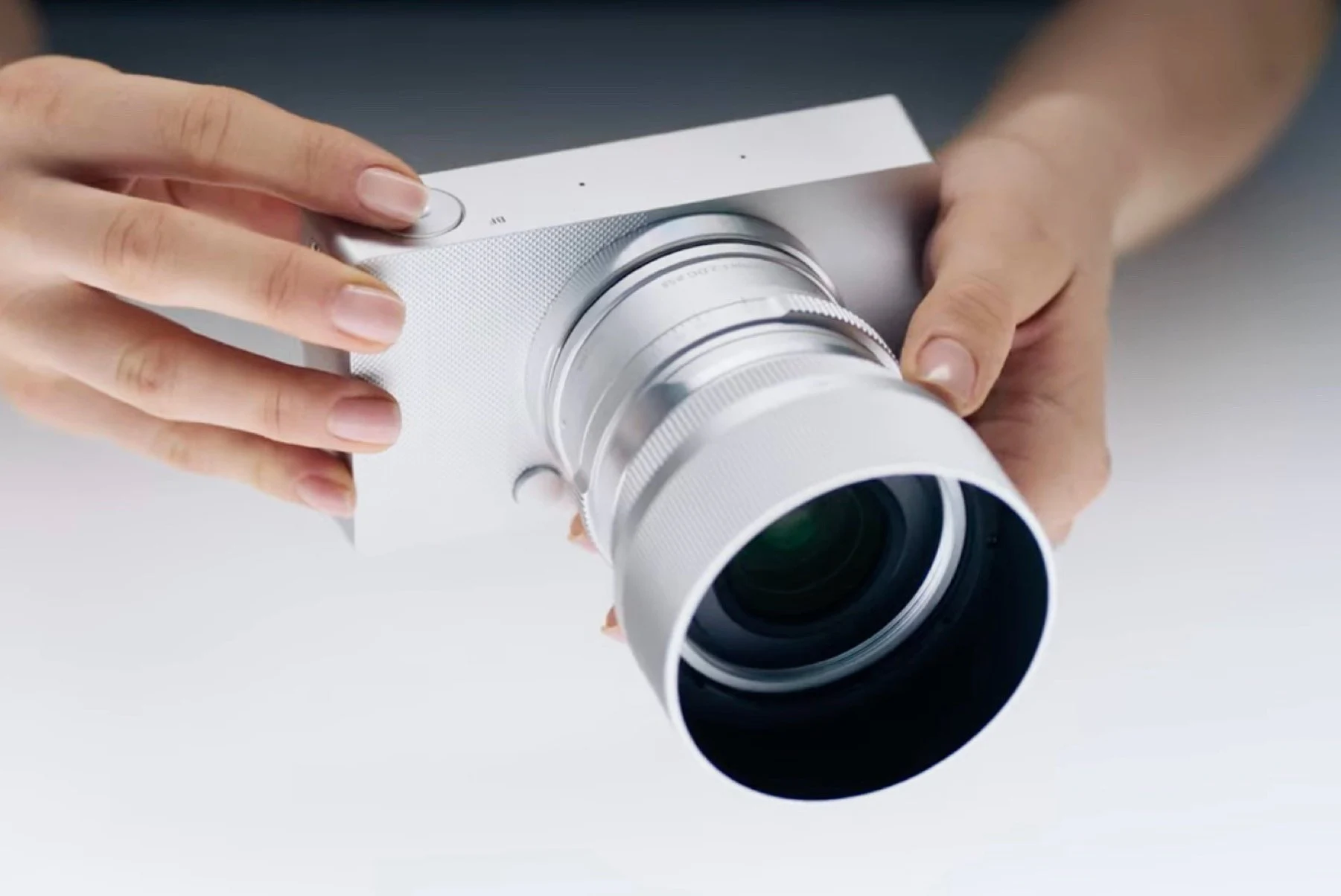
    The Sigma BF ($2,199) differs from competitors such as the Panasonic Lumix S9 primarily due to its minimalist aluminum unibody housing. With a large touchscreen, touch-sensitive buttons and a small OLED secondary display that shows settings, the Sigma BF’s operation and design are unlike any other camera on the market. The chassis feels cool to the touch, precise in its tolerances, and it communicates a sense of rugged simplicity that photographers either love or hate based on their preferences.

    Overview

    Kolari, which specializes in infrared conversions, reveals what the camera’s inner workings look like in a teardown. While the chassis is milled from a block of aluminum, there is a rubber cover on the bottom, under which a total of ten screws can be found. Once all these screws are loosened and a cable disconnected, the rear display can be removed.

    Disassembly Notes

    This is glued into the body in a similar way to a smartphone, but if the adhesive is heated with a hot air dryer, the screen can be removed without any major problems. To disassemble the camera further, numerous small boards, ribbon cables and screws have to be removed before the mainboard and ultimately the full-frame sensor can be taken out of the housing.

    This is not particularly complicated, but it is time-consuming. However, in order to repair the camera by yourself, Sigma would have to offer spare parts, which are not currently sold directly to end users. The multi-layered construction of the interior shows that Sigma has used every millimeter in the housing effectively.



    Sources

  • Foldable iPhone Ultra Design Leak | Elegant, Modular, Repairable Apple Phone

    Foldable iPhone Ultra Design Leak | Elegant, Modular, Repairable Apple Phone

    Key Takeaway

    1. The iPhone Ultra is expected to feature a highly modular internal design, making it easier to repair than other foldable phones.
    2. Apple has strategically relocated hardware components, such as moving the volume buttons to the top edge, to simplify disassembly and maximize internal space.
    3. It may include a 7.8-inch foldable display, a 5.5-inch cover screen, a large battery (estimated at 5,400 mAh), and other features like Touch ID and an eSIM-only setup.

    New Leak Suggests Revolutionary Design for Apple’s Upcoming Foldable

    Apple’s upcoming foldable device, rumored to be called the “iPhone Ultra,” might change the way we think about foldable smartphones by focusing heavily on repairability. According to a trusted source, this device will employ a surprisingly “modular” internal design that sets it apart from all other foldables on the market.

    Repairability Takes Center Stage

    Foldable phones usually are a big pain to fix because their internals are cramped, and fragille ribbon cables complicate repairs. But the latest info suggests Apple has developed a design that wont make fixing the Ultra a crazy challenge at all. The design uses what they describe as “logical yet elegant” component stacking, meaning the internal parts are arranged in a way that makes disassembly much easier than with Samsung or Google devices.

    Innovative Internal Arrangement

    Unlike traditional designs with tangled routing, apple seem to have moved the hardware strategically to make repairs smoother. The volume buttons been relocated to the top edge, which is supported by leaked images. Also, the motherboard is placed on the right side, with cables running straight upward, simplifying the disassembly process and increasing modularity. This careful layout maximizes space internally, giving the phone a potential boost in battery size.

    Powerful Specs and Expected Features

    • 7.8-inch inner foldable display
    • 5.5-inch cover screen
    • A20 Pro chip
    • Largest battery ever in an iPhone (around 5,400 mAh)
    • Touch ID, Camera Control button
    • eSIM-only plan
    • Estimated price of about $2,000

    Market Impact Anticipated with Launch

    Set to be announced in September alongside the iPhone 18 Pro, the iPhone Ultra’s qualities might prove to be a game-changer, potentially setting new standards for foldable phones. Not only could this device mark a significant technological leap for Apple but also become a real challenger to existing foldable phones by offering better repairability and possibly more robust performance.

    Sources
  • MacBook Neo Teardown: iFixit Rates Apple’s Most Repairable Laptop 6/10

    MacBook Neo Teardown: iFixit Rates Apple’s Most Repairable Laptop 6/10

    Key Takeaways

    1. Budget-Friendly Pricing: The MacBook Neo starts at $599, making it Apple’s most affordable laptop, appealing to casual users and students.

    2. High Repairability Score: iFixit awarded the MacBook Neo a repairability score of 6 out of 10, the best score Apple has achieved in over a decade.

    3. Easy Internal Access: The design allows for easy access to internal components, making repairs simpler, with modular USB-C ports and independently replaceable keyboards.

    4. Design Limitations: The laptop’s RAM and storage are soldered to the logic board, potentially hindering long-term competitiveness and making data recovery difficult if the board fails.

    5. Sound and Trackpad Trade-offs: The built-in speakers lack the quality of premium models, and the trackpad sacrifices advanced features for easier servicing.


    Apple has just unveiled its most budget-friendly laptop yet, the MacBook Neo, which runs on the A18 Pro chip, the same chip featured in the iPhone 16 Pro. For the first time in 14 years, repair services are praising Apple’s latest creation, declaring the MacBook Neo to be the most repairable MacBook to date. Starting at $599, the 13-inch MacBook Neo comes with 8 GB of memory and offers storage options of either 256 GB or 512 GB, making it a strong competitor against budget laptops for casual users and students.

    Repairability Score

    iFixit recently conducted a thorough teardown of the MacBook Neo, awarding it a repairability score of 6 out of 10, which is the best score Apple has achieved in over a decade. This time, Apple has moved away from the adhesive stretch-release battery swap, opting for a 36.5-watt-hour battery secured by 18 screws, significantly reducing the risk of damaging the lithium-ion cell during repairs.

    Easy Access Inside

    Despite the improvements, Apple still employs pentalobe screws on the bottom of the device. Once these screws are removed, the bottom shell of the MacBook Neo can be unclipped easily. The advantage of this design is that all internal components are well-organized and easy to access, including the battery, speakers, USB-C ports, trackpad, and display. The USB-C ports are modular, meaning if one breaks, users only need to replace that port instead of the entire logic board.

    Removing the antenna and hinge screws allows the display to come off without any hassle. For the first time, users can replace the keyboard independently without having to swap the complete top shell.

    Downsides of the Design

    However, the MacBook Neo has some drawbacks. To replace the keyboard, users must peel off a layer of adhesive tape and take out 41 screws, which contrasts sharply with many newer laptops like the Lenovo T14 Gen 7, which allows for tool-free keyboard replacement.

    The MacBook Neo features the same A18 Pro chip as the iPhone 16 Pro, which restricts RAM to 8 GB and storage to either 256 GB or 512 GB, both soldered to the logic board. This limitation might hinder the MacBook Neo’s competitiveness against Apple’s MacBook Air and other ultrabooks in the long run. Moreover, if the logic board fails, recovering data can be extremely difficult.

    Sound Quality and Trackpad

    Another trade-off is the quality of the built-in speakers. They are easily replaceable but lack the crispness and dynamic sound found in more premium MacBooks like the new 13-inch MacBook Air M5 or the 16-inch MacBook Pro M5.

    The trackpad on the MacBook Neo also sacrifices haptic Force Touch for more basic controls, which partly simplifies servicing the device.

    Parts Replacement Made Easier

    Lastly, Apple has simplified parts replacement with the Repair Assistant tool introduced last year. Users can easily swap out display panels, trackpads, batteries, or Touch ID modules without the laptop triggering warnings or locking them out of features.

    Source:
    Link


  • Apple MacBook Neo Teardown Reveals Modular Ports and No Glue Battery

    Apple MacBook Neo Teardown Reveals Modular Ports and No Glue Battery

    Key Takeaways

    1. The MacBook Neo is easy to open, requiring only eight screws to access the internal components.
    2. Minimal glue is used, allowing for quick swaps of parts like speakers, antennas, and the mainboard.
    3. The two USB-C ports are modular, making them easily replaceable without soldering.
    4. Battery replacement is straightforward, with no adhesive and only 18 screws holding it in place.
    5. Most components, including the display and trackpad, can be replaced easily, enhancing user repairability.


    The Apple MacBook Neo ($599 on Amazon) was released on Wednesday. A new detailed teardown video by Tech Re-Nu demonstrates how simple it is to fix the MacBook Neo and reveals the inner workings of this budget-friendly notebook, which is powered by an iPhone processor. To access the aluminum casing, users need to remove just eight screws on the bottom, similar to the MacBook Air and MacBook Pro.

    Easy Access to Components

    Once the device is opened, many parts can be swapped out by loosening screws and connectors. Thankfully, Apple has used minimal glue in the MacBook Neo. If something goes wrong, the speakers, the 3.5 mm headphone jack, the Wi-Fi and Bluetooth antennas, and even the mainboard can be replaced in just a few minutes. Furthermore, the two USB-C ports are modular and are not soldered to the mainboard.

    Battery Replacement Made Simple

    The battery is secured inside the body with a total of 18 screws; however, Apple doesn’t use any adhesive here either. This makes battery replacement easier and lowers the chances of damaging the battery while taking it out of the casing. The only part that has a glued connection is the cable linking the trackpad to the mainboard, but the glue is relatively weak and doesn’t pose a significant issue for repairs. Although the teardown video does not address the difficulty of replacing the keyboard, all other components, including the display and trackpad, can be replaced without hassle, making the MacBook Neo quite user-friendly when it comes to repairs.

    Tech Re-Nu (YouTube)

    Source:
    Link


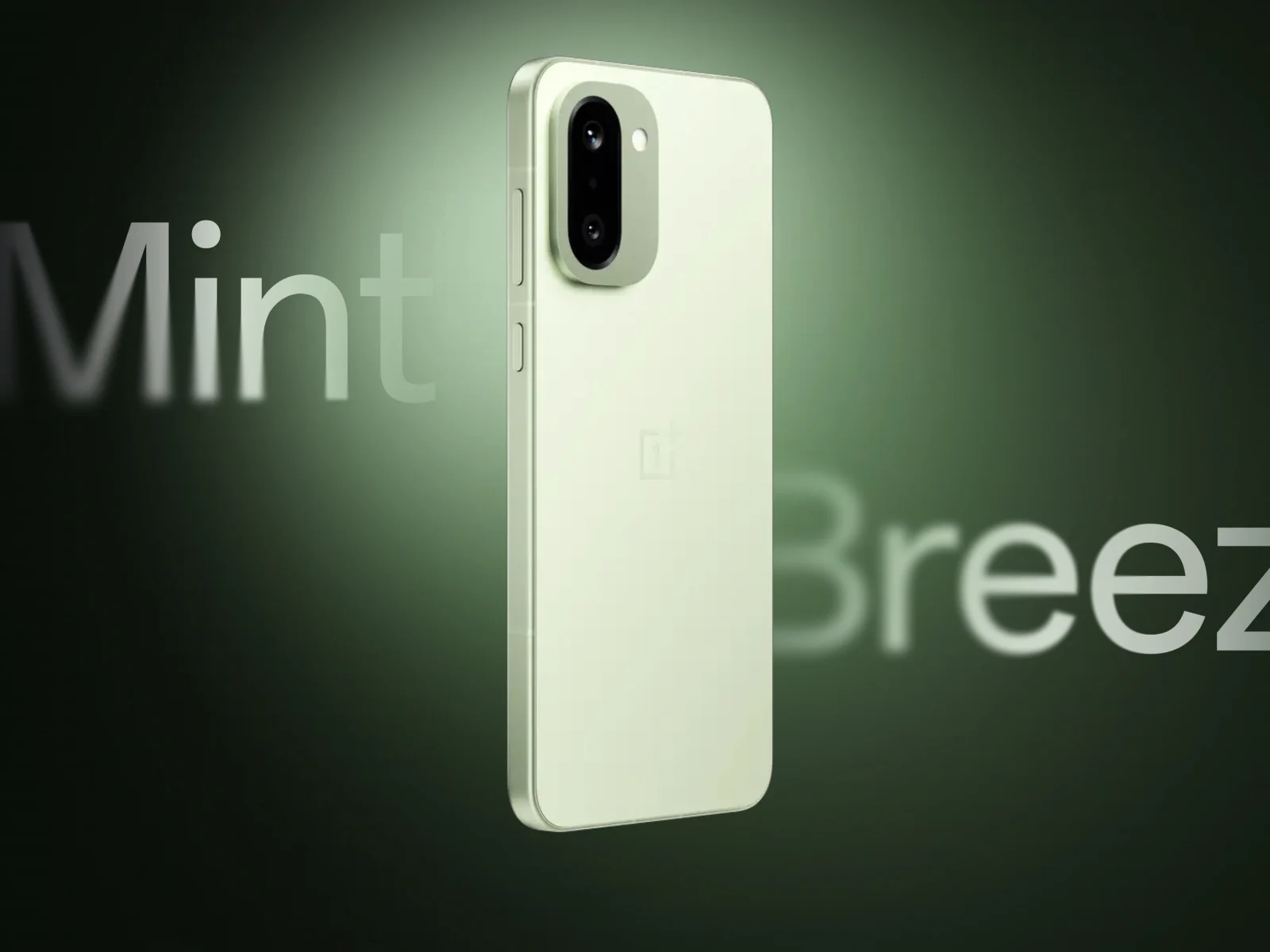
  • OnePlus 15R Teardown Reveals Easy Repair Design Insights

    OnePlus 15R Teardown Reveals Easy Repair Design Insights

    Key Takeaways

    1. The OnePlus 15R has a high repairability score of 8.5 out of 10, making it easier to fix than many other smartphones.
    2. Standard Philips screws are used for assembly, allowing users to use common tools for repairs and simplifying access to internal components.
    3. The battery features a pull pouch design, enabling easier removal without the risk of damage from prying tools.
    4. The glass backplate is secured with adhesive, requiring careful heating to avoid cracking, which can complicate the opening process.
    5. Display replacement is labor-intensive, requiring multiple components to be removed before accessing the screen flex cable.


    Repairing a broken mobile device today can be both costly and frustrating, but the new OnePlus 15R is set to flip that script with its user-friendly repair design. Recently, PBKreviews performed a teardown of the OnePlus 15R and awarded it a commendable repairability score of 8.5 out of 10.

    Accessibility Matters

    A key factor contributing to the OnePlus 15R’s impressive score is its accessibility. OnePlus opted for standard Philips screws rather than using proprietary types. This means you probably already own a screwdriver that can open the device since these screws are very common. To gain access to the main board, you only need to unscrew one fastener, making it easier to reach essential components. The cameras are designed modularly, allowing them to detach from the board effortlessly. Even the lens cover can be removed with some heat and a gentle pry, which saves users from having to dismantle the whole phone for a minor cosmetic issue.

    Battery Replacement Made Simple

    One of the biggest headaches with modern smartphones is replacing the battery, but the OnePlus 15R has tackled this issue with a pull pouch feature. This clever addition enables users to remove the battery more easily without needing risky prying tools that could potentially puncture it. The teardown video reveals that while the battery cables are secured with graphite film and copper tape, the pull pouch significantly simplifies the extraction process compared to batteries that are glued in.

    Some Drawbacks Remain

    Nevertheless, the OnePlus 15R is not without its flaws, as it still depends on adhesive for the glass backplate rather than screws or clips. To open the phone, you need to use a hairdryer or heat gun to soften the back panel, which poses a risk of cracking the glass if the heat isn’t adequate. Conversely, applying too much heat could damage the internal parts, so a steady hand is essential during these initial steps. Additionally, repairers must delicately peel back fragile strips of graphite film and copper tape to disconnect the battery cables, which adds some difficulty to an otherwise straightforward process.

    Labor-Intensive Display Replacement

    The most labor-intensive part of the repair process is replacing the display, as accessing the screen is not straightforward. To reach the screen flex cable, you must remove the back plate, screws, bottom cover, and even the subboard before you can get to the cable. After that, you need to heat and carefully pry off the screen, then apply new adhesive to secure the replacement back in place.

    PBKreviews’

    Source:
    Link


  • Google Pixel Watch 4 Gets High Repairability Score from iFixit

    Google Pixel Watch 4 Gets High Repairability Score from iFixit

    Key Takeaways

    1. The Google Pixel Watch 4 features improved repairability, using screws and gasket seals instead of adhesive for its casing.
    2. The design includes concealed screws and o-rings that maintain water resistance while ensuring the back panel is securely fastened.
    3. The battery is also secured with screws, making replacement easier compared to other smartwatches that use adhesive.
    4. The Pixel Watch 4 received a high repairability score of 9 out of 10 from iFixit, a significant improvement over most smartwatches.
    5. Current Pixel Watch users may not find enough reasons to upgrade, as the new model does not offer significantly different hardware.


    The Google Pixel Watch 4 has been introduced as a refreshed smartwatch that brings only slight upgrades compared to its earlier model. While the enhancements may not appear revolutionary at first glance, the company has put a strong focus on how easy it is to repair the device, and iFixit has verified these assertions.

    Unique Design Features

    iFixit discovered that, unlike many smartwatches available today, the Google Pixel Watch 4 utilizes gasket seals and screws instead of adhesive to secure its casing. This design choice marks a notable step forward in repairability. However, this non-standard approach might raise doubts about the sturdiness of the chassis, making it possibly prone to disassembling by itself.

    Enhanced Protection Measures

    Nevertheless, iFixit pointed out that the screws activate a set of hinged arms that firmly secure the back panel. To maintain water resistance, Google cleverly concealed these screws beneath the band lugs and included special o-rings to keep the interior of the smartwatch sealed tight.

    Battery and Component Accessibility

    Another fascinating aspect of the Google Pixel Watch 4’s design is that even its battery is secured with screws. In contrast, most other smartwatches rely heavily on adhesive, which complicates battery replacement, even if the device can be taken apart easily.

    Regarding other internal parts, the trend continues, and iFixit notes that everything within the watch seems to be crafted with the idea of replaceability. This focus on repairability earned the Google Pixel Watch 4 a commendable score of 9 out of 10 on iFixit’s repairability scale, which is quite rare for smartwatches—most others assessed by the team received scores around 3 or 4.

    Considerations for Current Pixel Watch Users

    Though this impressive repairability rating may not be sufficient reason for existing Pixel Watch 3 (41 mm currently priced at $199.99 on Amazon) or 2 users to make the switch, it’s worth noting that the new smartwatch does not feature significantly different hardware. Nonetheless, this is a positive development, and if Google continues with this design philosophy, future smartwatches with enhanced hardware could prove to be more appealing than the current model.

    Source:
    Link


  • iFixit Rates AirPods Pro 3 as Irrepairable with 0/10 Score

    iFixit Rates AirPods Pro 3 as Irrepairable with 0/10 Score

    Key Takeaways

    1. Repairability Score: The AirPods Pro 3 received a score of 0 out of 10 for repairability from iFixit, indicating severe challenges in fixing them.

    2. Battery Replacement Difficulty: The process of removing and replacing the battery is extremely challenging, often resulting in the destruction of the earbuds during attempts.

    3. Charging Case Issues: The charging case also faced irreparability, primarily due to Apple’s use of glue to secure the batteries, making them difficult to access.

    4. Consistent Trend: This poor repairability rating is consistent across all of Apple’s wireless earbuds, with previous models also receiving a 0/10 score.

    5. Limited Repair Options: Once the batteries fail, users have few choices other than to discard the device and buy a new one, as repairs are risky and complicated.


    The new AirPods Pro 3 might have great sound quality, but they miss the mark in a significant aspect for users.

    Repairability Issues

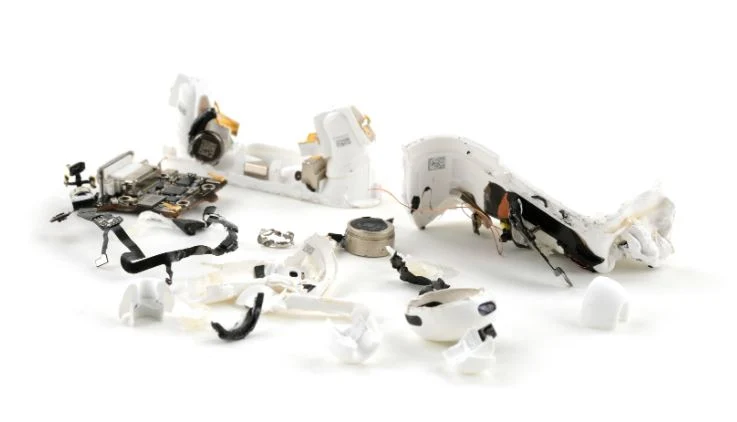
    This is the view of well-known repair site iFixit, which gave Apple’s new TWS earbuds a score of 0 out of 10 for repairability. The main issue is the extremely challenging process of removing and replacing the battery. During their last teardown of the AirPods Pro 3, iFixit completely destroyed the earbuds while trying to access the battery, causing major damage to the device.

    Charging Case Challenges

    The charging case didn’t perform any better, facing a similar fate that made it irreparable. The main reason for the difficulty in replacing the battery is Apple’s method of securing the batteries in both the earbuds and the case with glue, which makes removal nearly impossible.

    As noted by iFixit, this trend has been consistent with Apple’s wireless earbuds. The original AirPods received a 0/10 rating as well, along with every other base model or Pro version since then. Consequently, once the batteries in the earbuds or the charging case fail, consumers are left with few options other than to throw them away and purchase a new pair.

    Not Completely Unrepairable

    It should be mentioned that while the AirPods Pro 3 are not entirely beyond repair, it’s akin to saying you’re technically never safe from a lightning strike; the repair process is so complicated that even skilled technicians risk causing permanent damage during a teardown (which is why they got the 0/10 score).

    Source:
    Link


  • Google Pixel 10 Pro XL Teardown: Impressive Repairable Internals

    Google Pixel 10 Pro XL Teardown: Impressive Repairable Internals

    Key Takeaways

    1. The Pixel Watch 4 and Pixel 10 flagships have improved repairability in 2025.
    2. iFixit praised the Pixel 10 for its easier disassembly and repair features.
    3. Zack Nelson highlighted the positive aspects, including Google’s official repair manual and availability of replacement parts.
    4. Users need to be cautious when disassembling, especially when changing the display, but battery replacement is simpler.
    5. Google’s official repair guides support user-friendly repairs, aligning with growing consumer interest in sustainability.


    Google has not been famous for making smartphones and smartwatches that are easy to fix. However, this is changing a lot in 2025. The Pixel Watch 4 has made a significant shift from being a throwaway item to a repairable device, and this year’s Pixel 10 flagships have also introduced helpful internal changes that make taking them apart and fixing them simpler.

    Positive Feedback on Repairability

    iFixit has already taken apart the Pixel 10 and has given it a thumbs up for its improvements in repairability. Now, the Pixel 10 Pro XL has made its way to Zack Nelson’s workspace, and in his latest video on YouTube, he expresses his excitement about the enhanced repair features of Google’s flagship for 2025. This teardown specialist also points out the manufacturer’s official repair manual and the ease of finding replacement parts as positive aspects.

    User Caution Needed

    Zack suggests in the video that taking apart the Pixel 10 Pro XL might be easier than dismantling a Fairphone, but it’s important to remember that users still need to be careful, especially when changing the display. However, swapping out the battery has become much simpler due to pull tabs that make the process pretty hassle-free. After the disassembly, the Pixel 10 Pro XL remains operational – a job well done.

    More on Repair Guides

    For those interested in taking matters into their own hands, the official guides provided by Google give detailed instructions, which can be really helpful. This also marks a shift for the company as it aims to be more user-friendly regarding repairs. As consumers become more aware of sustainability, these changes could position Google more favorably in the market.

    Source:
    Link


  • Samsung Galaxy Z Fold 7 Reparability: Current Assessment Guide

    Samsung Galaxy Z Fold 7 Reparability: Current Assessment Guide

    Key Takeaways

    1. Design and Display: The Galaxy Z Fold7 features a foldable 8-inch OLED display with a resolution of 2160 x 2480 pixels and a 120 Hz refresh rate, along with a 6.5-inch cover display.

    2. Performance: It is powered by a Snapdragon 8 Elite processor, with options for up to 16 GB of RAM and 1 TB of storage, ensuring strong performance.

    3. Camera System: The device has a triple camera setup including a 200 MP main sensor, capable of recording 8K video, and two 12 MP front cameras for UHD video.

    4. Repairability Issues: The Galaxy Z Fold7 has low repairability, scoring only 3 out of 10 on iFixit, with challenging battery removal and no available spare parts in the USA.

    5. Software and Updates: It runs on Android 16 with One UI 8.0 and promises seven years of software updates, enhancing longevity for users.


    The Samsung Galaxy Z Fold7 measures 4.2 mm in thickness when open and 8.9 mm when closed. It has an IP48 rating, making it resistant to dust and water. The front is made of Gorilla Glass Ceramic 2, while the back uses Victus 2. The device features a foldable 8-inch OLED display with a resolution of 2160 x 2480 pixels and a refresh rate of 120 Hz. Its 6.5-inch cover display is slightly bigger than the previous model. The Snapdragon 8 Elite processor ensures strong performance, accompanied by up to 16 GB of RAM and 1 TB of storage. It includes UWB, DeX, USB 3.2, and Wi-Fi 7, but support for the S-Pen has been dropped. The triple camera setup consists of a 200 MP main sensor (23 mm), a 12 MP ultra-wide lens, and a 10 MP telephoto lens with 3x zoom, capable of recording videos at 8K/30 fps and HDR in UHD. The two front cameras, both 12 MP (23 mm and 17 mm), can shoot in UHD at 60 fps. A linear vibration motor enhances feedback, while biometric security includes a fingerprint sensor in the power button and face recognition. The software runs on Android 16 with One UI 8.0, promising seven years of updates.

    Repairability Concerns

    iFixit reports that the repairability of the Galaxy Z Fold7 (buy here on Amazon) is notably low. Battery removal is challenging due to malfunctioning pull tabs, forcing professionals to use solvents. The process of taking off the cover display is also complex, as the adhesive is very hard to remove, even with heat. Changing the flexible AMOLED inner display is especially tricky; it requires the difficult removal of the plastic bezel, which risks damaging the delicate panel. iFixit points out that there are no repair manuals or spare parts available, not even for the older model. This led to a low score of 3 out of 10 for repairability, which is quite disappointing.

    Availability of Parts

    While iFixit’s concerns are not completely off base regarding the repair difficulty, it’s worth noting that Samsung does offer a repair manual for the Galaxy Z Fold7 for download. Additionally, many replacement parts have been listed by Samsung, although they are currently unavailable or not yet priced, particularly in the EU and UK. These parts typically become available a bit later. As of now, spare parts have not been released in the USA, but technically skilled users may be able to fix a malfunctioning Fold7 on their own.


  • Pixel Watch 4: Fixing Google Wearables’ Weakness with SOS Features

    Pixel Watch 4: Fixing Google Wearables’ Weakness with SOS Features

    Key Takeaways

    1. The Pixel Watch 4 launches on August 20 with limited design and chipset changes, but features a new co-processor, a bigger battery, and a brighter display.
    2. Improved repairability makes the Pixel Watch 4 more sustainable, allowing for easier battery and glass replacements.
    3. The new model addresses past issues where broken parts rendered previous Google smartwatches as electronic waste.
    4. Enhanced safety options include expanded SOS features, Emergency SOS, crash detection, and fall detection capabilities.
    5. The Pixel Watch 4 may introduce SOS satellite communication and continuous SpO2 monitoring for detecting breathing issues.


    At first look, not much seems to have changed with the Pixel Watch 4, which is set to launch on August 20 alongside the Pixel 10 series. The design appears almost identical, and while the chipset is the same, there is a new co-processor added. The only notable updates are a slightly bigger battery and a brighter display. Overall, the new features of this Google smartwatch seem quite limited.

    New Repairability Features

    In comparison to the Pixel Watch 3’s specifications, this statement holds up, but recent leaks suggest there’s actually more to the fourth generation of the Pixel Watch. A significant improvement in repairability has been noted. Up until the Pixel Watch 3, all Google smartwatches were practically electronic waste if any part broke, with iFixit highlighting this issue through the example of a faulty battery. This unsustainable situation appears to have been addressed in the Pixel Watch 4.

    Enhanced Safety Options

    As revealed by a leak from Android Headlines, the Pixel Watch 4 is expected to be easier to repair in the future, meaning that replacing a battery or fixing a cracked glass won’t necessarily require getting a whole new watch. Additionally, there are indications that the SOS features will be broadened, including upgrades to “Personal Safety” features, Emergency SOS, crash detection, and fall detection. Finally, it is said that the Pixel Watch 4 will enable SOS satellite communication and may also be able to detect breathing issues, thanks to continuous SpO2 monitoring.

    Source:
    Link