
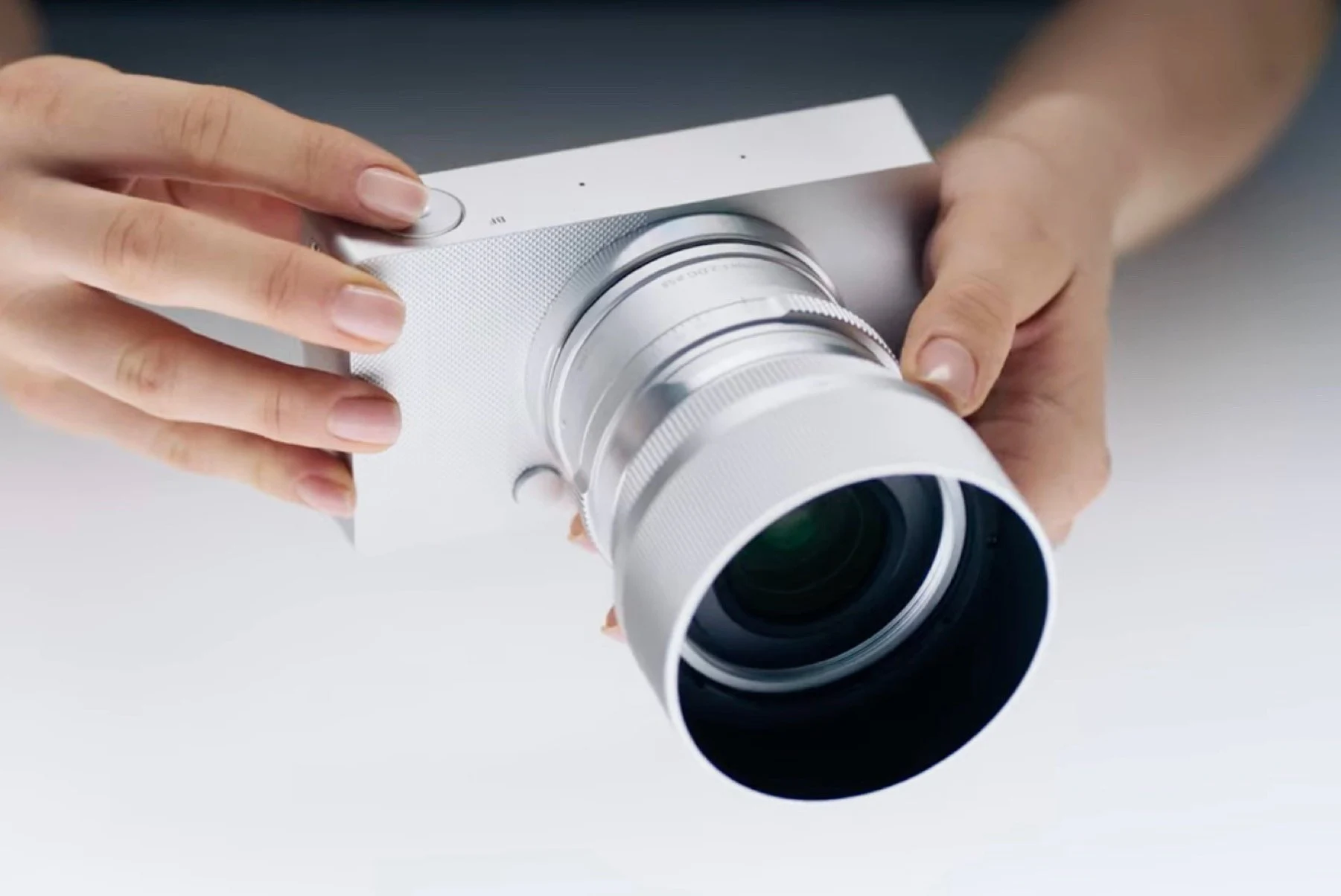
– Sigma BF distinguishes itself with a minimalist aluminum unibody, a large touchscreen, touch-sensitive controls, and a small OLED settings display, setting it apart from rivals like the Panasonic S9.
– The internals are densely packed and the rear display is glued (removable with heat), with a rubber-bottom cover hiding ten screws for access.
– Servicing is time-consuming: disassembly involves removing multiple boards, ribbon cables, and screws before reaching the mainboard and the full-frame sensor.
– Spare parts are not sold directly to end users, hindering DIY repairs and requiring Sigma-provided parts for any maintenance.
The Sigma BF ($2,199) differs from competitors such as the Panasonic Lumix S9 primarily due to its minimalist aluminum unibody housing. With a large touchscreen, touch-sensitive buttons and a small OLED secondary display that shows settings, the Sigma BF’s operation and design are unlike any other camera on the market. The chassis feels cool to the touch, precise in its tolerances, and it communicates a sense of rugged simplicity that photographers either love or hate based on their preferences.
Overview
Kolari, which specializes in infrared conversions, reveals what the camera’s inner workings look like in a teardown. While the chassis is milled from a block of aluminum, there is a rubber cover on the bottom, under which a total of ten screws can be found. Once all these screws are loosened and a cable disconnected, the rear display can be removed.
Disassembly Notes
This is glued into the body in a similar way to a smartphone, but if the adhesive is heated with a hot air dryer, the screen can be removed without any major problems. To disassemble the camera further, numerous small boards, ribbon cables and screws have to be removed before the mainboard and ultimately the full-frame sensor can be taken out of the housing.
This is not particularly complicated, but it is time-consuming. However, in order to repair the camera by yourself, Sigma would have to offer spare parts, which are not currently sold directly to end users. The multi-layered construction of the interior shows that Sigma has used every millimeter in the housing effectively.