Tag: Panasonic LUMIX S9

  • Sigma BF Teardown: Tiny Full-Frame Camera for Minimalists

    Sigma BF Teardown: Tiny Full-Frame Camera for Minimalists

    Key Takeaway

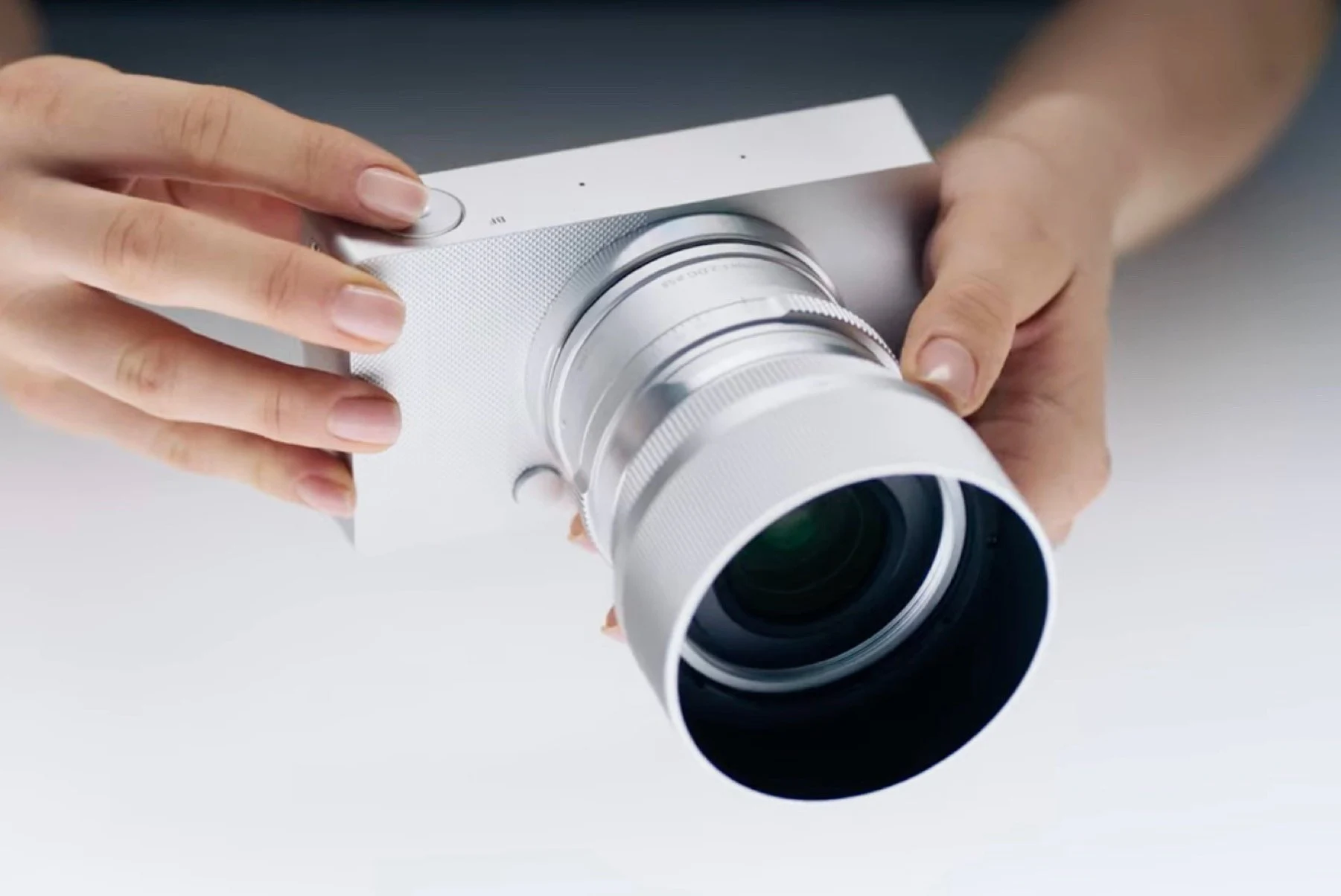
    – Sigma BF distinguishes itself with a minimalist aluminum unibody, a large touchscreen, touch-sensitive controls, and a small OLED settings display, setting it apart from rivals like the Panasonic S9.
    – The internals are densely packed and the rear display is glued (removable with heat), with a rubber-bottom cover hiding ten screws for access.
    – Servicing is time-consuming: disassembly involves removing multiple boards, ribbon cables, and screws before reaching the mainboard and the full-frame sensor.
    – Spare parts are not sold directly to end users, hindering DIY repairs and requiring Sigma-provided parts for any maintenance.

    The Sigma BF ($2,199) differs from competitors such as the Panasonic Lumix S9 primarily due to its minimalist aluminum unibody housing. With a large touchscreen, touch-sensitive buttons and a small OLED secondary display that shows settings, the Sigma BF’s operation and design are unlike any other camera on the market. The chassis feels cool to the touch, precise in its tolerances, and it communicates a sense of rugged simplicity that photographers either love or hate based on their preferences.

    Overview

    Kolari, which specializes in infrared conversions, reveals what the camera’s inner workings look like in a teardown. While the chassis is milled from a block of aluminum, there is a rubber cover on the bottom, under which a total of ten screws can be found. Once all these screws are loosened and a cable disconnected, the rear display can be removed.

    Disassembly Notes

    This is glued into the body in a similar way to a smartphone, but if the adhesive is heated with a hot air dryer, the screen can be removed without any major problems. To disassemble the camera further, numerous small boards, ribbon cables and screws have to be removed before the mainboard and ultimately the full-frame sensor can be taken out of the housing.

    This is not particularly complicated, but it is time-consuming. However, in order to repair the camera by yourself, Sigma would have to offer spare parts, which are not currently sold directly to end users. The multi-layered construction of the interior shows that Sigma has used every millimeter in the housing effectively.

    Sources

  • Sigma BF Teardown: Inside the tiny full-frame camera

    Sigma BF Teardown: Inside the tiny full-frame camera

    Key Takeaway

    – Sigma BF costs about $2,199 on Amazon and stands out with a minimalist aluminum unibody, a large touchscreen, touch-sensitive buttons, and a small OLED secondary display.
    – Kolari’s teardown shows an aluminum chassis, a rubber bottom cover with ten screws, and a rear display glued into the body that can be removed with heat.
    – Disassembly is time-consuming, requiring removal of many small boards, ribbon cables, and screws before reaching the mainboard and full-frame sensor.
    – DIY repairs are limited by Sigma not offering end-user spare parts, despite the dense, space-efficient interior design.

    The Sigma BF ($2,199) differs from competitors like the Panasonic Lumix S9 mainly due to its minimalist aluminum unibody housing. With a large touchscreen, touch-sensitive buttons and a small OLED secondary display that shows settings, the Sigma BF’s operation and design is unlike any other camera on the market.

    Unconventional Build

    Kolari, which specializes in infrared conversions, shows what the camera’s inner workings look like in the teardown video embedded below. While the chassis is milled from a block of aluminum, there is a rubber cover on the bottom, under which a total of ten screws can be found. Once all these screws have been loosened and a cable disconnected, the rear display can be removed.

    Internal View

    This is glued into the body in a similar way to a smartphone, but if the adhesive is heated with a hot air dryer, the screen can be removed without any major problems. To disassemble the camera further, numerous small boards, ribbon cables and screws has to be removed before the mainboard and ultimately the full-frame sensor can be taken out of the housing.

    Disassembly Nuances

    This is not particularly complicated, but it is time-consuming. Yet, in order to repair the camera by yourself, Sigma would have to offer spare parts, which are not currently sold directly to end users. The multi-layered construction of the interior shows that Sigma has used every millimeter in the housing effectively.


    Sources

  • Panasonic Unveils 60x Zoom Lumix FZ80D Camera with 20-1200mm Lens

    Panasonic Unveils 60x Zoom Lumix FZ80D Camera with 20-1200mm Lens

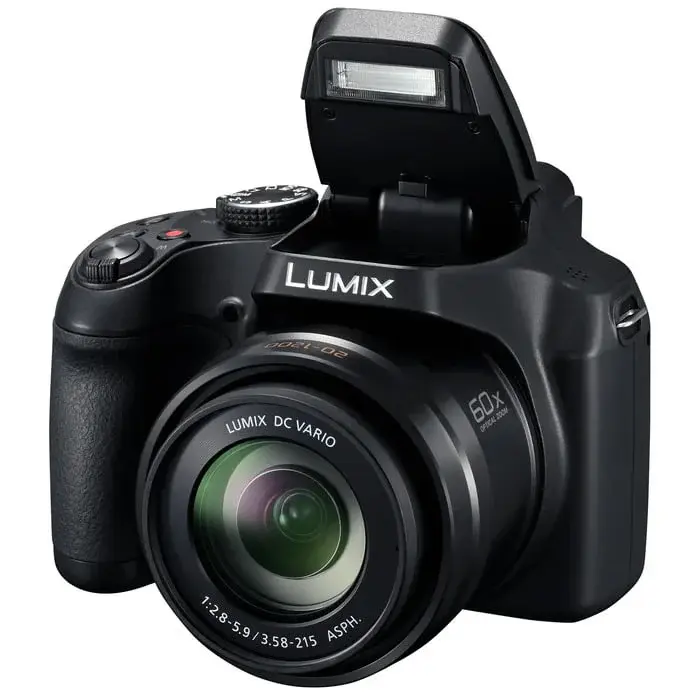
    Panasonic has unveiled its latest Lumix FZ80D camera, which boasts an impressive 60x superzoom feature. This DSLR-like bridge camera presents several enhancements over its predecessor, the 2017 Lumix FZ80, such as an electronic viewfinder, touchscreen, and USB-C port.

    Camera Specifications

    The Lumix FZ80D is equipped with an 18 MP sensor, measuring 1/2.3 inches (6.2 x 4.6mm). It includes a 3.58-215mm F/2.8-5.9 zoom lens, offering a focal length equivalent to 20-1200mm.

    Priced at $478, the Panasonic Lumix FZ80D delivers a maximum resolution of 4896 x 3672 with a 4:3 image ratio. It has 18 effective megapixels out of a 19-megapixel sensor. The ISO ranges from 80 to 3200 and can be expanded up to 6400. For focusing, the normal range starts at 30 cm (11.81 inches), while the macro focus can reach as close as 1 cm (0.39 inches).

    Display and Video Capabilities

    The camera features a 3-inch screen and an electronic viewfinder with a resolution of 2,360,000 dots. It supports video recording at 3840 x 2160 resolution at 30p with a bit rate of 100 Mbps, and 1920 x 1080 resolution at 60p with 28 Mbps. More information can be found on Panasonic’s official website.


  • Panasonic Lumix S9 Sales Surge Amid Supply Shortages

    Panasonic Lumix S9 Sales Surge Amid Supply Shortages

    The Panasonic Lumix S9 has been at the center of controversy recently due to allegations that it used stock images taken with a Nikon camera. The company has faced some difficulties since announcing the Lumix S9 earlier this year. Ahead of its official shipping date of June 20, Panasonic has issued a statement indicating that there will be delays in delivering the camera.

    Customer Demand and Delivery Delays

    Despite the criticism surrounding the promotional images of the Lumix S9, customers remain eager to purchase the compact full-frame camera, leading to potential delivery delays. In a recent statement, Panasonic reiterated its mistake in using stock images from other brands to advertise the Lumix S9. The company confirmed that due to higher-than-expected pre-orders, some customers who pre-ordered the camera might not receive it on the release date.

    Comparisons with Fujifilm Models

    The current supply issues with the Lumix S9 have led to comparisons with the Fujifilm X100V and X100VI models, both of which are compact cameras that garnered significant interest from fans and customers. Fujifilm struggled to meet demand for these models for extended periods. It remains to be seen if the Panasonic Lumix S9 will experience similar supply challenges. However, it is anticipated that the supply shortages for the Lumix S9 will be resolved in a short time. Once this happens, the Lumix S9 can start receiving the reviews it deserves for its innovative and compact design.

  • Panasonic Promotes Lumix S9 with Nikon Photos, Issues Apology

    Panasonic Promotes Lumix S9 with Nikon Photos, Issues Apology

    The Panasonic Lumix S9 lightweight and compact camera was introduced last week in China. However, it was discovered that the company had mistakenly used images captured by a Nikon camera in their promotional materials for the compact mirrorless camera. This misleading representation led to significant backlash, prompting Panasonic to issue an apology.

    Promotional Image Mix-up

    The disputed images, totaling about two, were taken by the Nikon Ambassador camera. These photos, which have since been removed, appeared on Panasonic’s official website, leading to public outcry over the misleading act. Panasonic acknowledged the mistake in an official statement, explaining that it had used stock image services or authorized images to promote the Lumix S9 without verifying their appropriateness for the context.

    Panasonic further mentioned that it has taken the feedback from users who pointed out the issue seriously and has updated the page to improve clarity. Panasonic also offered sincere apologies for any inconvenience this incident may have caused to users, fans, and camera enthusiasts.

    Specifications and Features

    The Panasonic Lumix S9 was launched as a compact full-frame mirrorless camera, priced at 10,999 yuan ($1,520) in China. It was marketed as the lightest model in its category, weighing a mere 403 grams. The camera features a free-flip screen, allowing for flexible shots from various angles. It boasts a 24.2 MP full-frame CMOS sensor that supports dual native ISO, 6K OpenGate, and 4K 60p (approximately 1.5x crop capability).

    The compact LUMIX S9's lightweight of 403 grams is complemented by a flexible shooting setup due to its free-flip screen. It also has an elegant design and is available in several color options, enabling users to effortlessly create high-quality original photos and videos that can be shared directly without needing PC editing.

    Advanced Capabilities

    The Lumix S9 includes 5-axis body stabilization and phase focus functions, which significantly reduce blur from handheld shooting and ensure stable shots in various scenarios. The camera body also features a new LUT dedicated button for quickly accessing the real-time LUT filter function, with several LUT filters available for selection.