Tag: Budget Laptops

  • Acer Hints at 4GB RAM Laptop Comeback with Cost Cuts

    Acer Hints at 4GB RAM Laptop Comeback with Cost Cuts

    Key Takeaway

    – The MacBook Neo offers premium build and features (aluminum chassis, 500 nits display, large multi-touch trackpad) at a mid-range price, but relies on a smartphone-class processor with only 8 GB RAM.
    – Snapdragon-based laptops (including upcoming Snapdragon C) target sub-$300 price points, likely sacrificing chassis quality and displays to achieve the low cost, with uncertain performance.
    – RAM and storage costs (8 GB RAM, 512 GB SSD) and DRAM market pressures could influence the appeal and value of these budget laptops in the near term.


    Overview

    The Apple MacBook Neo competes with mid-range laptops with Windows – Apple uses a smartphone processor and only 8 GB of RAM, but offers a high-quality aluminum chassis, a 500 nits bright display and a large multi-touch trackpad, which is rarely found in this price range. There is some intrigue around how this device stacks up against more traditional notebooks, especially given the emphasis on build quality and display brightness. In this space, consumers may weigh the premium feel against overall performance, portability, and battery life in daily tasks.

    Pricing and Potential Competition

    While some laptops with Qualcomm Snapdragon X are already available at a similar price to the MacBook Neo, the brand new Qualcomm Snapdragon C will enable even more affordable laptops, which will be offered at prices starting at around $300. It is still unclear how much performance buyers will get for this price, as Qualcomm has not published any details about the chip’s specifications or even benchmarks for the launch. There is probably no way around a plastic chassis and modest display for a $300 laptop. As a result, buyers might need to temper expectations regarding sustained performance and expansion options in this segment.

    Memory and Storage Notes

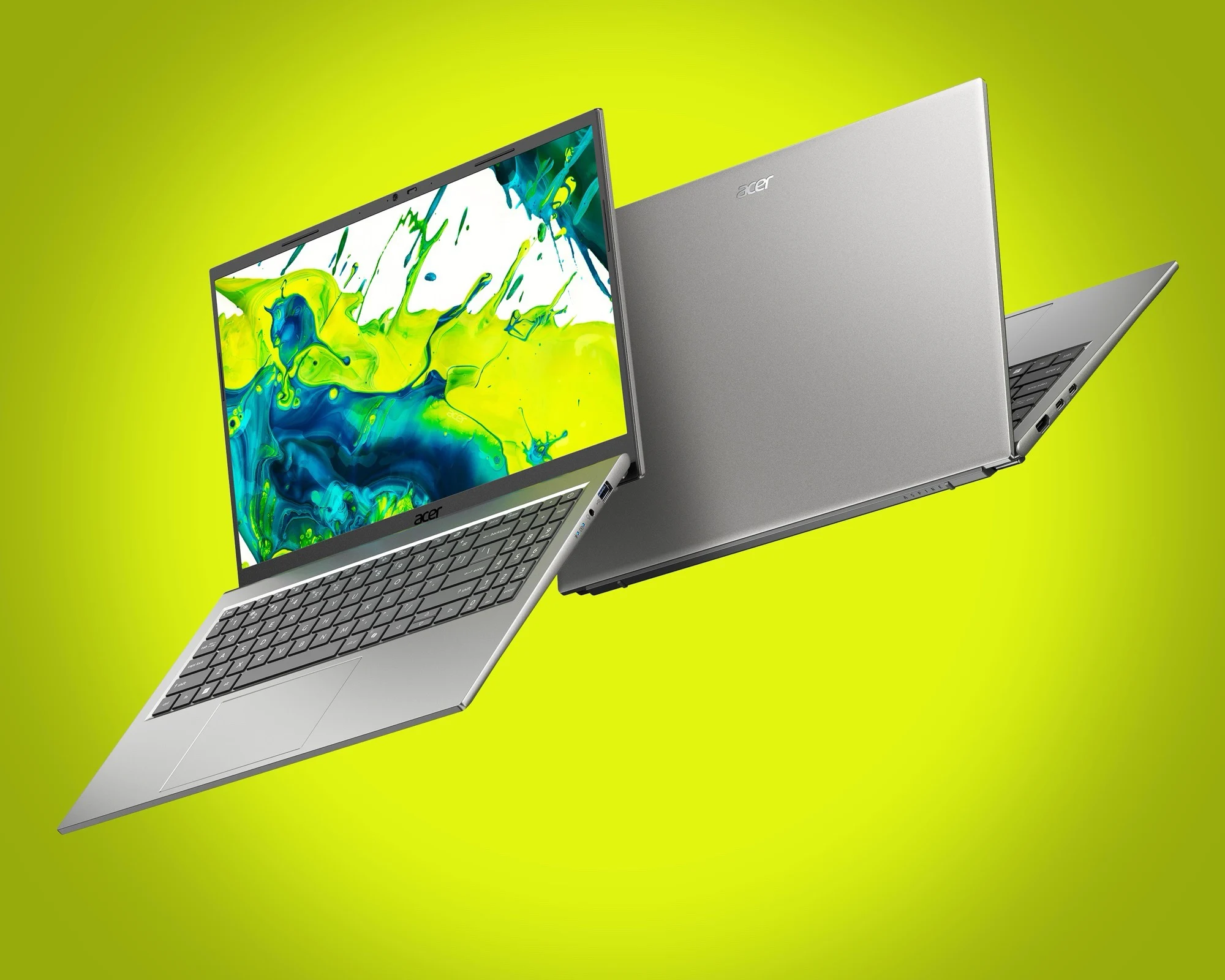
    However, the memory configuration could also evoke memories of netbooks. The data sheet for the Acer Aspire Go 15, the first laptop with Snapdragon C, states that the laptop comes with “up to” 8 GB of RAM and an “up to” 512 GB SSD. According to Microsoft, Windows 11 also runs on laptops with only 4 GB RAM and a 64 GB SSD. With 8 GB of laptop RAM already costing around $120 due to the DRAM crisis, it is not difficult to understand why $300 laptops could save money in this area in particular. The DRAM crisis could make cheap laptops far less attractive over the next few years.

    Acer

    In this landscape, Acer is one of the brands experimenting with compact, affordable hardware configurations that aim to balance price with the practical needs of everyday computing. Such approach could appeal to students, travelers, or casual users who prioritize portability and longer battery life over raw performance. The evolving market dynamics around RAM costs and mobile chip efficiency will likely influence how aggressive manufacturers can be with entry-level pricing while offering usable multitasking experiences.


    Sources

  • MacBook Neo Outperforms AMD, Intel, Qualcomm in Single-Core Performance

    MacBook Neo Outperforms AMD, Intel, Qualcomm in Single-Core Performance

    Key Takeaways

    1. The MacBook Neo’s A18 Pro chip excels in single-core performance, surpassing most mobile processors and competing closely with Apple’s own M4 and M5 chips.
    2. Benchmark tests indicate the A18 Pro outperforms all x86 processors and recent mobile chips from AMD, Intel, and Qualcomm, except for potentially upcoming Snapdragon X2 chips.
    3. The MacBook Neo offers impressive everyday performance, reinforcing Apple’s choice to use the A18 Pro over the newer A19 Pro.
    4. Budget-friendly Windows laptops are likely to struggle against the MacBook Neo’s performance due to weaker processors.
    5. The MacBook Neo combines strong performance with appealing features, such as a durable aluminum chassis and high-quality display, at a competitive price point, potentially disrupting the budget laptop market.


    When Apple unveiled its latest affordable MacBook Neo, many were curious about how the smartphone chip would perform. After conducting our first set of benchmarks, it’s clear that Apple is playfully competing with AMD, Intel, and Qualcomm. The single-core performance of the MacBook Neo outshines all other mobile processors, except for Apple’s own M4 and M5 chips. And it’s important to note that we’re examining a processor from the year 2024.

    Impressive Benchmark Results

    We ran several benchmarks and found the single-core performance to be quite impressive. Not just in the quick Geekbench test, but also in the Cinebench 2024, where a single-core test lasts around 10 minutes. The A18 Pro uses between 3.5-4 Watts during this test and achieves a score of 147 points. This puts it ahead of all x86 processors in our records, including the Intel Core Ultra 9 285K and AMD Ryzen 9 9950X3D desktop processors. This also indicates that the MacBook Neo surpasses every recent mobile chip from AMD, Intel, and Qualcomm, even though the soon-to-be-released Snapdragon X2 chips may offer slightly better performance. Additionally, the A18 Pro is marginally quicker than Apple’s M3 generation in similar tests.

    Everyday Performance Insights

    Thus, the question regarding everyday performance is mostly settled, which also clarifies why Apple did not opt for the newer A19 Pro from the latest iPhone 17 Pro. This suggests that budget-friendly Windows laptops, which typically come with weaker processors than those in our comparison chart, will struggle to keep up performance-wise. Alongside its other favorable features, such as an aluminum chassis, a bright 500-nit IPS display, and a full sRGB color range, the low price tag—especially considering the software that comes pre-installed with macOS—means the MacBook Neo could truly disrupt the budget laptop market.

  • Asus V16: Affordable Gaming Laptop with RTX 50 Series GPUs

    Asus V16: Affordable Gaming Laptop with RTX 50 Series GPUs

    Key Takeaways

    1. Asus introduced an upgraded version of the V16 laptop, now featuring the GeForce RTX 5060 GPU.
    2. The RTX 5060 shows an 18% performance improvement over the RTX 4060, making it a better choice for gaming.
    3. Other specs, such as the 16-inch FHD 144 Hz display and Intel Core 200 processors, remain unchanged.
    4. Previous reviews noted design flaws and performance issues with the base model, but the new GPU will significantly enhance gaming performance.
    5. The new V16 (V3607) is expected to launch around May, coinciding with other RTX 5060 laptops.


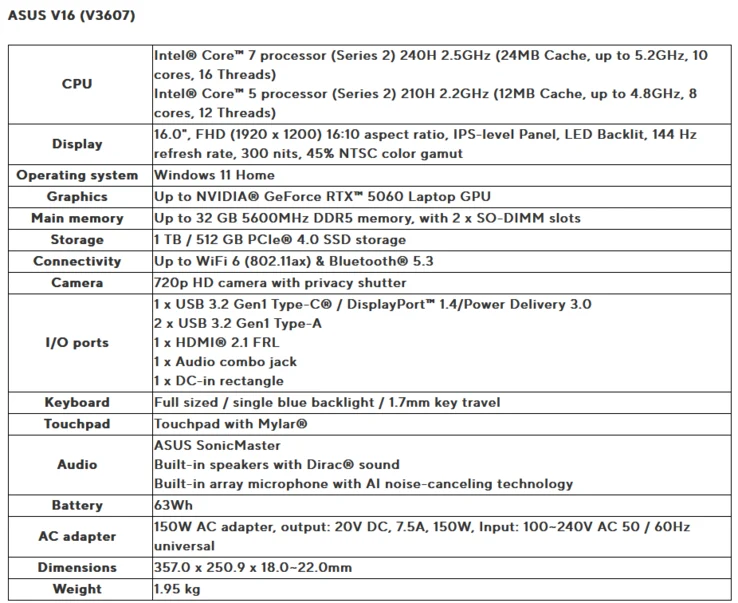
    Earlier last year, Asus introduced a completely fresh line of laptops under the V brand. The Asus V16 was named this way to mark it as a budget-friendly option. Now, Asus has revealed a new upgraded version that introduces significant improvements. The latest Asus V16 (V3607) can now be equipped with a GeForce RTX 5060 laptop GPU.

    Performance Boost

    Nvidia recently launched this GPU, and a new listing on Geekbench indicates it performs about 18% better than the GeForce RTX 4060 laptop. This enhancement alone should make it a superior gaming device compared to its predecessors powered by the RTX 4050 and 3050. Other specifications, like the 16-inch FHD 144 Hz LCD display and Intel Core 200 processors, remain unchanged.

    Review Insights

    In our comprehensive review of the Asus V16, we examined the model featuring an Intel Core 7 240H and GeForce RTX 3050. Despite the unimpressive GPU, the laptop faced several challenges, including a basic plastic design, a tendency to collect fingerprints, and a somewhat underwhelming processor. While the new GPU may not resolve all these issues, it will definitely enhance gaming performance significantly, thanks to DLSS 4.0 and other advancements introduced by Blackwell.

    Availability Timeline

    Asus has not confirmed the exact launch date for the new V16 (V3607), but it is expected to be available in stores around May. This timing aligns with when other RTX 5060 laptops are anticipated to become available on the market.

    Source:
    Link


  • CES 2025: Affordable Laptops Boosted by New Snapdragon X CPUs

    CES 2025: Affordable Laptops Boosted by New Snapdragon X CPUs

    We have recently expressed our disappointment over the decline of affordable laptop options equipped with modern CPU technology. It appears that Intel and AMD are focusing on marketing their older processors in budget devices while directing their attention towards pricier new models like Intel’s Lunar Lake and AMD’s Strix Point. As a result, purchasing an inexpensive laptop often means settling for outdated and less efficient tech.

    A New Direction from Qualcomm

    Qualcomm appears to have a different perspective on the matter. Last year, the leader in smartphone CPU technology launched the Qualcomm Snapdragon X Elite aimed at high-end laptops, followed by the Snapdragon X Plus for mid-tier devices. Now, a fresh CPU line simply known as “Snapdragon X” is on the horizon, designed specifically for budget laptops to help lower the price of ARM-based Windows machines. The goal is to create PCs that retail for under $600.

    High Performance Within Reach

    Even with the focus on budget pricing, users won’t have to sacrifice much with the Snapdragon X series CPU. This new chip uses the same Oryon CPU cores found in its more expensive counterparts. The core count remains the same, as the Snapdragon X boasts eight CPU cores, mirroring the Snapdragon X Plus. The main distinction lies in the clock frequency, with the Snapdragon X maxing out at 3.0 GHz. In contrast, the Snapdragon X Plus chips can achieve clock speeds between 3.2 and 3.4 GHz, while the X Elite can hit between 3.4 and 3.8 GHz on all cores.

    AI Performance Not Overlooked

    In addition, the Snapdragon X series keeps AI capabilities strong, offering up to 45 TOPS of NPU performance. Qualcomm highlights that CPUs from AMD and Intel in this price category usually lack an NPU altogether.

    The Qualcomm Snapdragon X series CPU is set to debut in the first PCs starting January 2025. If the Snapdragon X can provide similar levels of performance and efficiency as its higher-end Snapdragon counterparts, it could be a significant relief for a market segment that is truly in need of better processors.


    Image 1
    Image 1
  • Why Qualcomm Snapdragon X Plus 8-Core Transforms Budget Laptops

    Why Qualcomm Snapdragon X Plus 8-Core Transforms Budget Laptops

    Qualcomm's Snapdragon X Elite processors have been a formidable competitor to Apple in terms of laptop performance, AI capabilities, and battery longevity.

    At the IFA 2024 event, Qualcomm is now shifting focus towards cost-effectiveness with the introduction of the Snapdragon X Plus. This budget-friendly variant aims to make AI-driven laptops more accessible, with potential starting prices as low as $700.

    Before you consider making a purchase, let's delve into the details and implications for your upcoming laptop decision.

    The X1P Chip Variants

    The new processors are available in two versions: the X1P-46-100 and the X1P-42-100. The X1P-46-100 can reach a CPU speed of 4.0 GHz for single-core tasks, with a GPU performance of 2.1 TFLOPS (compared to 3.8 TFLOPS for the 10-core X Plus and 4.6 for the higher-end Snapdragon X Elite models). In contrast, the X1P-42-100 boosts to 3.4 GHz and has a 1.7 TFLOPS GPU. Despite these differences, all Qualcomm NPUs offer 45 trillion operations per second (TOPS), similar to the Snapdragon X Elite. Laptops utilizing these chips will feature the Copilot+ label.

    Here are the specifications for the Snapdragon X Plus (X1P-42-100):

    • Cores: 8
    • Frequency (max): 3.4 GHz
    • Memory bandwidth: 135 GB/s
    • Cache (total): 30 MB

    Microsoft indicates that laptops powered by these new Qualcomm chips will handle more generative AI and machine learning tasks locally, reducing reliance on cloud services. Even if AI isn't your primary interest, the Copilot+ PC label offers benefits. Every laptop with this label includes at least 16GB of RAM and 256GB of solid-state storage, enhancing functionality for web browsing and general computing tasks.

    Understanding the Performance

    While these chips may not set new performance records, they are expected to handle everyday tasks like browsing, document editing, and streaming effectively.

    For example, Tom's Guide tested the Asus Vivo S 15 equipped with Qualcomm's X Plus chips. Here’s how they stack up against the Apple M3 MacBook Air in Geekbench 6:

    Chip Geekbench 6 Single-Core Geekbench 6 Multi-Core
    Snapdragon X Plus 8-core (X1P-46-100) 2780-2813 11713-12001
    Snapdragon X Plus 8-core (X1P-42-100) 2385-2445 11027-11530
    Apple M3 MacBook Air 3082 12087

    As evident, both single-core and multi-core performance lag behind Apple's offerings. The same trend is observed in graphics, with the X1P-46-100 achieving approximately 26 FPS in the demanding WildLife Extreme Vulkan benchmark.

    3D Mark Wildlife Extreme FPS
    Snapdragon X Plus (X1P-46-100) 41
    Snapdragon X Elite (X1E-80-100) 36
    Apple M3 45

    The upside? This reduced performance could potentially result in extended battery life. While official figures are not yet available, these chips might power laptops for longer durations due to lower processing demands.

    Manufacturers and Availability

    Several manufacturers have embraced the new chip announcement. Asus offers a Vivobook S 15 featuring the 8-core X Plus for $899—a significant reduction from its 12-core X Elite counterpart, priced at $1,300. Similarly, Dell's Inspiron 14 is priced at $899 with this new chip.

    Expect additional announcements from Acer, HP, Lenovo, and Samsung. Rumors suggest the $999 Acer Swift Go 14 AI and a new 15-inch Samsung Galaxy Book4 Edge will debut in October.

    Although these budget-friendly Snapdragon X Plus laptops may take time to arrive in stores, their price points provide a clear expectation.

    Is the X Plus Right for You?

    So, who should consider a laptop with the new Snapdragon X Plus chip? Here’s a quick guide:

    • Budget-Conscious Buyers: If you're seeking an AI-powered laptop experience without a hefty price tag, starting prices around $700 are significantly lower than current alternatives.
    • Battery Life Enthusiasts: If extended battery life in a Windows device is your priority, these chips could be appealing, especially if manufacturers design for efficient power use.

    Conclusion

    The Snapdragon X Plus 8-core presents an intriguing choice, blending affordability with AI integration for daily tasks. However, its performance falls short when compared to top-tier options.

    The critical factor will be real-world application performance and how manufacturers incorporate these chips into their laptops. If cost-effectiveness and battery life are your priorities and you don't require high-demand performance, the X Plus could be a worthy contender.

    On the other hand, if top-notch performance is crucial, consider higher-end Qualcomm models or established brands like Apple.

  • Avoid Buying Budget Laptops: Key Reasons Explained

    Avoid Buying Budget Laptops: Key Reasons Explained

    When considering a new tech purchase, many consumers are drawn to the affordability of budget laptops. The allure of saving money while acquiring a device that promises to meet basic needs is strong. However, these low-cost options often come with hidden drawbacks that can lead to dissatisfaction, poor performance, and wasted money over time. This article will examine the reasons to reconsider buying a budget laptop and explore the technological aspects that highlight these issues.

    Compromised Build Quality

    Budget laptops usually feature cheaper materials to maintain a low price. This often results in plastic bodies, weak hinges, and keyboards that may fail after just a few months. While manufacturers attempt to give these laptops a sleek appearance, they are typically not durable. Over time, you might notice cracking in the case, loosening hinges, and malfunctioning keyboard keys. Additionally, the screens on budget laptops are often of inferior quality, with poor color accuracy and limited viewing angles. This can be particularly problematic for creative tasks like photo or video editing, where accurate color representation is essential.

    Inferior Performance

    Low-cost laptops typically come with basic processors, minimal RAM, and slower storage options. Here’s what that means in practice:

    • Processor: Budget CPUs handle simple tasks like browsing or word processing but struggle with more demanding applications. Running multiple browser tabs, streaming HD videos, or working on large spreadsheets can result in noticeable lag and slowdowns.
    • RAM: Many budget laptops are equipped with just 4GB of RAM, which barely suffices for modern operating systems. Running multiple programs can quickly exhaust memory, causing sluggish performance and frequent freezing.
    • Storage: Budget laptops often feature small-capacity hard drives (HDDs) or low-end solid-state drives (SSDs). While SSDs are generally faster than HDDs, those used in budget models are usually of lower quality, leading to slower read/write speeds. The limited storage space (often 128GB or less) means you’ll soon run out of room for your files, necessitating external storage solutions or cloud services.

    Poor Battery Life

    Battery life is another area where budget laptops often underperform. Manufacturers may choose smaller, less efficient batteries to cut costs. Moreover, energy efficiency is not optimized in low-end processors and other components, resulting in shorter battery life. Although specifications might claim 6-8 hours of battery life, real-world usage can reduce this to just a few hours, especially during more demanding tasks.

    Limited Upgradeability

    To save space and costs, manufacturers often solder components like RAM or storage to the motherboard. This means that if your laptop struggles to meet your needs, upgrading it becomes difficult. In contrast, higher-end laptops usually offer more flexibility, allowing you to add more RAM or swap out the storage drive for one with higher capacity and faster speeds.

    Subpar Software Experience

    Budget laptops often come with preloaded bloatware—unnecessary software and trial programs that slow down your system and clutter your desktop. Removing these programs can be a time-consuming process and may leave remnants that continue to affect performance. Additionally, budget laptops might lack a full version of the operating system. While upgrading to the full version is usually possible, it represents another hidden cost that adds to the total price of ownership.

    Security Concerns

    In terms of security, budget laptops can pose risks. These devices often lack advanced security features like biometric authentication (fingerprint scanners or facial recognition), which are becoming standard on mid-range and premium laptops.

    Conclusion

    While the low price of a budget laptop may seem appealing, these devices come with significant compromises that lead to a frustrating user experience. From inferior performance and build quality to poor battery life and limited upgradeability, the disadvantages outweigh the initial savings. In the long run, you may end up spending more on repairs, replacements, or external accessories to compensate for the laptop’s shortcomings. Therefore, investing a bit more upfront in a high-quality laptop that will serve you well for years to come is often a wiser choice. Whether you’re a student, a professional, or someone who values a smooth and reliable computing experience, steering clear of budget laptops is a decision you won’t regret.