Tag: Ryzen AI 9

  • New AMD Gorgon Point Mini-PC: Retro Dreamcast & PS1 Vibes

    New AMD Gorgon Point Mini-PC: Retro Dreamcast & PS1 Vibes

    Key Takeaways

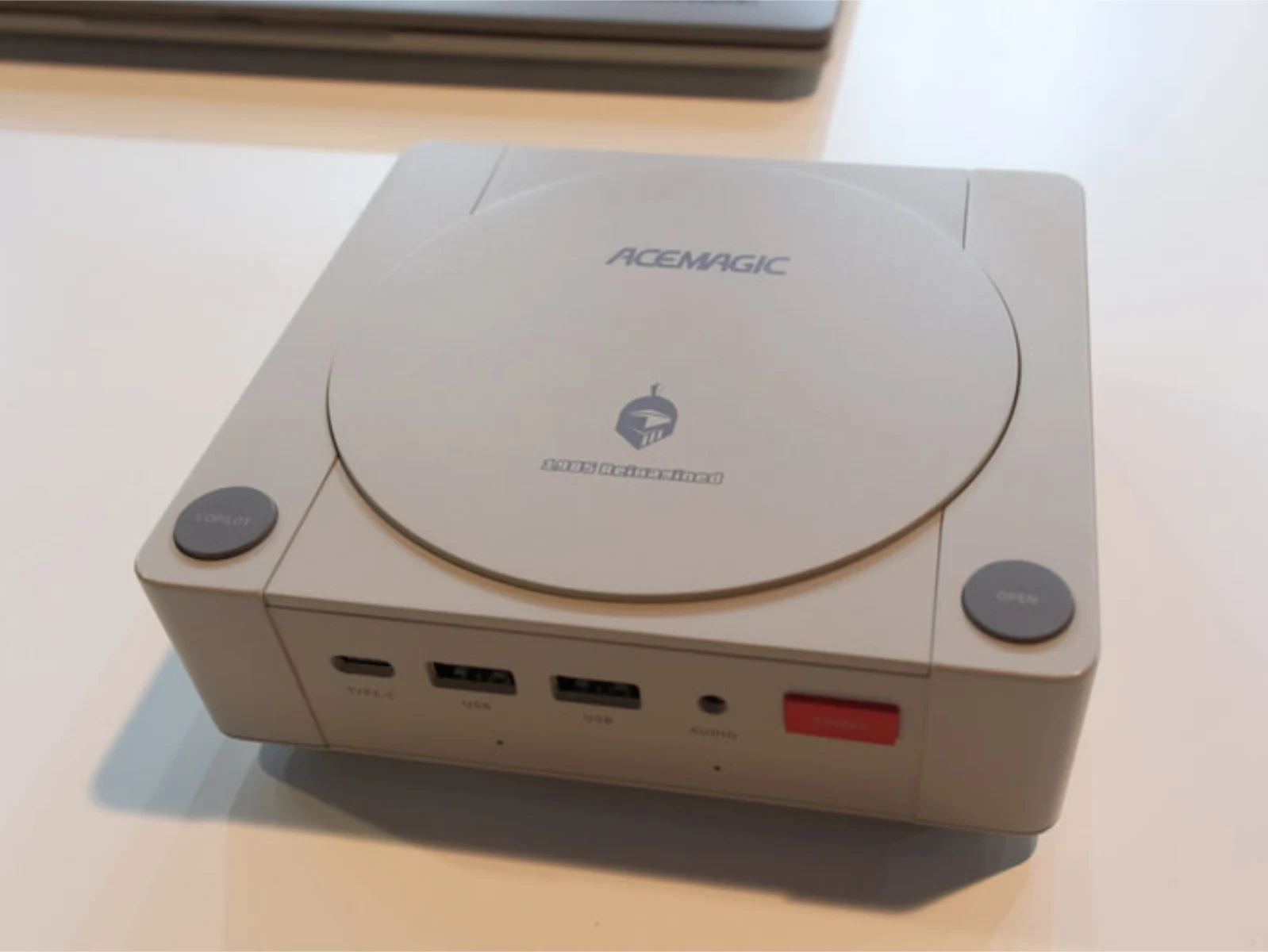
    1. Acemagic is launching a new mini-PC called the Board 3 Dual-C Retro Style, inspired by classic gaming consoles like the Dreamcast and PlayStation 1.
    2. The design features two buttons and a circular design resembling a top-loading disc drive, along with USB Type-A, Type-C, and 3.5 mm jack connections.
    3. The Retro Style will use AMD’s Gorgon Point architecture, with options for Ryzen AI 9 465 and Ryzen AI 9 HX 370 APUs.
    4. Users can configure the mini-PC with up to 64 GB of DDR5 RAM and 4 TB of storage in a compact size of 148 x 128 x 40.8 mm.
    5. Release date and pricing for the Retro Style are yet to be announced.


    Acemagic has hinted at the upcoming launch of another mini-PC that draws inspiration from retro designs. Earlier this year, the firm introduced the Retro X5, which was clearly influenced by the classic Nintendo Entertainment System (NES). This model is equipped with the same AMD Strix Point APU found in other mini-PCs, such as the Geekom A9 Max, which is currently priced at $1,199 on Amazon.

    New Additions to Retro Mini-PCs

    Now, Acemagic is set to unveil the Board 3 Dual-C Retro Style, joining its range of nostalgic mini-PCs expected to hit the market later this year. This time, the design takes cues from iconic home gaming consoles like the Dreamcast and PlayStation 1. The Retro Style sports two buttons on its upper edge, positioned near a circular design that mimics the look of a top-loading disc drive. Additionally, there is a dedicated power button located on the front edge, alongside USB Type-A, Type-C, and 3.5 mm jack connections.

    Technical Specifications

    As illustrated in the second image below, the Retro Style utilizes AMD’s latest Gorgon Point architecture. Currently, Acemagic has announced the availability of the Ryzen AI 9 465 and Ryzen AI 9 HX 370 APUs, with more options expected in the future. Furthermore, users can configure the Retro Style with a maximum of 64 GB of DDR5 RAM and up to 4 TB of storage, utilizing dual SO-DIMM and M.2 2280 slots. The entire setup is compact, fitting within a casing that measures just 148 x 128 x 40.8 mm. However, details regarding the release date and pricing are still yet to be announced at this point.

    Source:
    Link


  • Minix Unveils AMD Strix Point Mini PCs with Launch Discounts

    Minix Unveils AMD Strix Point Mini PCs with Launch Discounts

    Key Takeaways

    1. The Minix ER936-AI and ER937-AI mini PCs are now on sale with limited-time discounts: ER936-AI for $789 (originally $899) and ER937-AI for $869 (originally $999).
    2. Discount codes are required for the promotional prices: “NEW110” for ER936-AI and “NEW130” for ER937-AI.
    3. Both mini PCs have a similar design and feature a robust cooling system with a vapor chamber and dual fans for stable performance.
    4. They offer easy upgrade capabilities with a quick-removal bottom panel, supporting up to 8 TB SSDs and 96 GB of DDR5 RAM.
    5. Notable features include WiFi 7, Bluetooth 5.4, a built-in fingerprint sensor for Windows Hello, and support for quad-display output.


    First revealed at Computex 2025, the Minix ER936-AI and ER937-AI are now ready for sale. They are also offering limited-time discounts for their launch, causing the Ryzen AI 9 365-powered mini PC, the ER936-AI, to decrease in price from $899 to $789.

    Discount Details

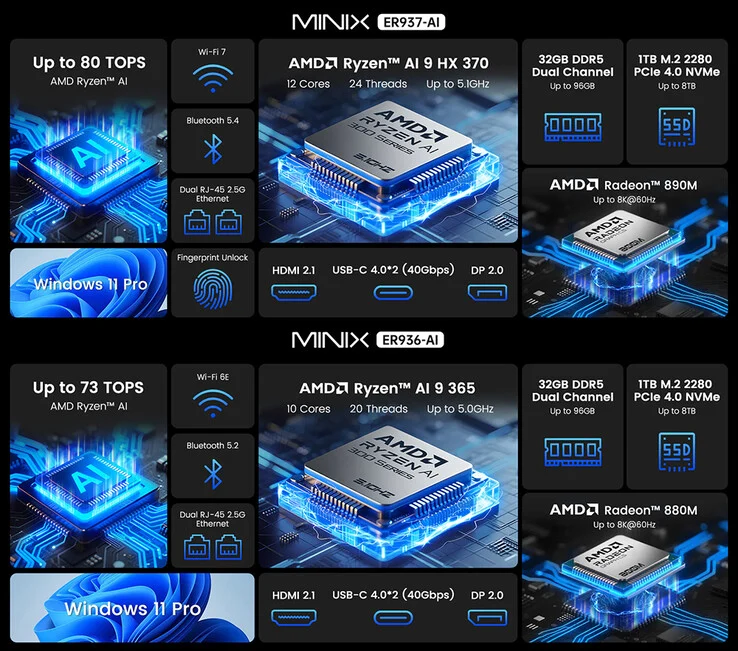
    The ER937-AI features the Ryzen AI 9 HX 370 along with the Radeon 890M. During this promotional period, its price is set at $869, which is a discount of $130 from its original price of $999. To take advantage of these offers, you must use the coupon code “NEW110” for the ER936-AI at checkout, while “NEW130” is the code for the ER937-AI.

    Design and Cooling System

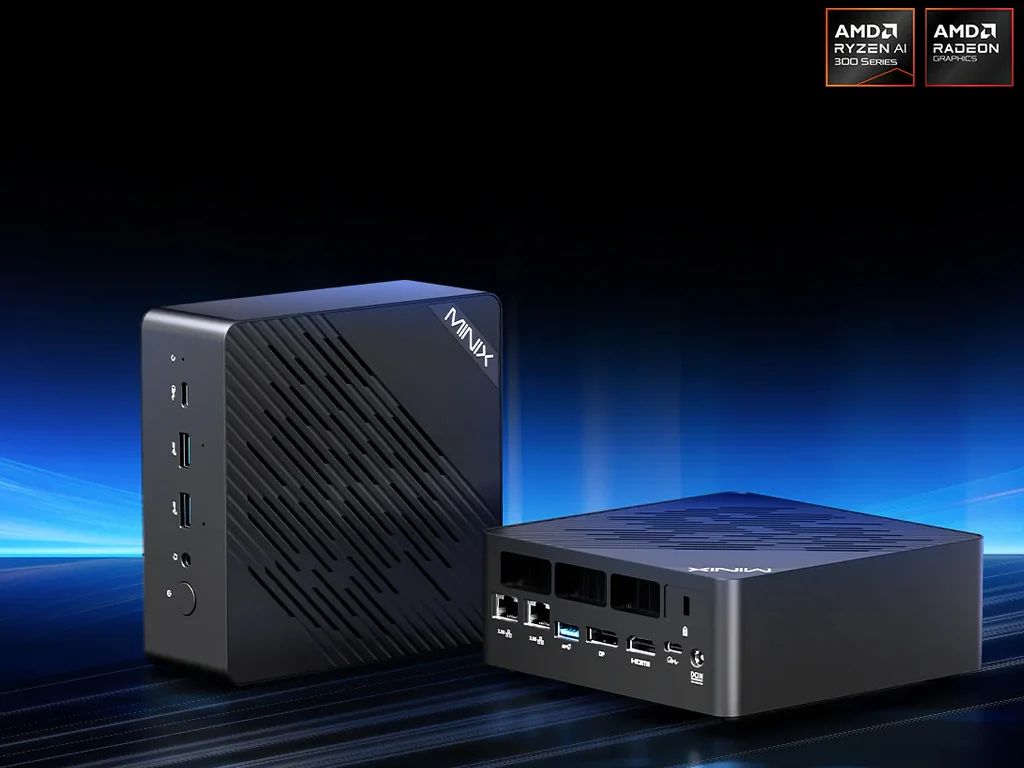
    As mentioned in our previous report, both mini PCs share a similar chassis design. The port layout of both the AMD Strix Point models is identical, which is outlined below:

    Minix emphasizes that these mini PCs come equipped with a robust cooling system. It features a vapor chamber along with dual fans, which ensures that the Strix Point APUs maintain stable performance even under heavy workloads.

    Upgrade Capabilities

    Returning to the design aspect, the mini PCs are designed with a quick-removal bottom panel, making it easy for users to upgrade their storage and memory. There is an M.2 PCIe 4.0 slot that can accommodate up to an 8 TB SSD (currently, the 4 TB WD_BLACK SN7100 is priced at $229.99 on Amazon), and these Strix Point systems can be outfitted with up to 96 GB of DDR5 RAM running at 5,600 MHz.

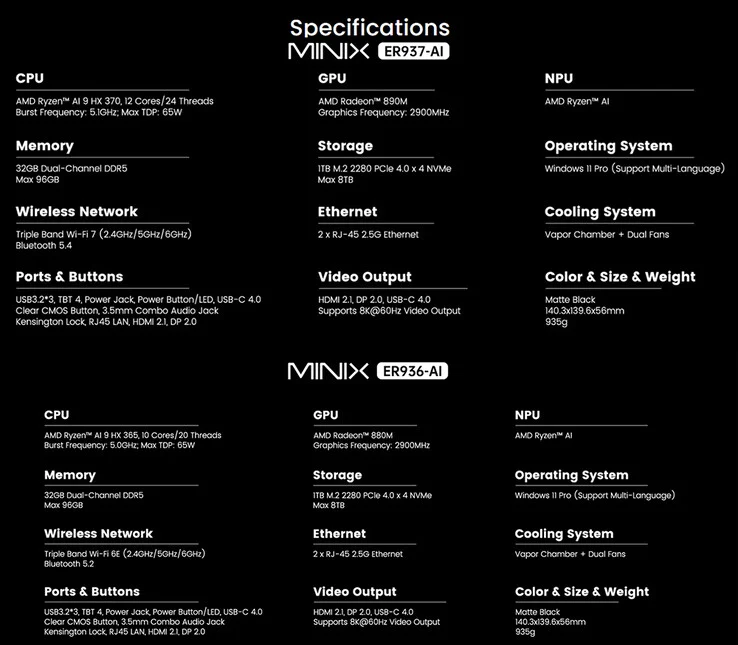
    Among the noteworthy features of the Minix ER936-AI and ER937-AI are support for WiFi 7 and Bluetooth 5.4, a built-in fingerprint sensor compatible with Windows Hello, and the ability to support quad-display output. For more details, check the attached spec sheets below regarding these two Strix Point mini PCs.


  • Razer Blade 16 2025 Pre-Orders Start at $2,799 with Ryzen 9, RTX 5090

    Razer Blade 16 2025 Pre-Orders Start at $2,799 with Ryzen 9, RTX 5090

    Key Takeaways

    1. The Razer Blade 16 2025 is 30% smaller than the previous model, making it nearly as thin and light as the MacBook Pro 16.
    2. It offers options for AMD Ryzen AI 9 365 or Ryzen AI 9 HX 370 APUs and Nvidia GeForce RTX 5070 Ti, RTX 5080, or RTX 5090 GPUs.
    3. The default configuration includes 32 GB of RAM, upgradeable to 64 GB, and storage options of 1 TB, 2 TB, or 4 TB.
    4. All configurations feature a QHD+ OLED display with a 240 Hz refresh rate and a 90 Wh battery that charges to 80% in 48 minutes.
    5. The starting price is $2,799.99, with high configurations reaching up to $4,599.99.


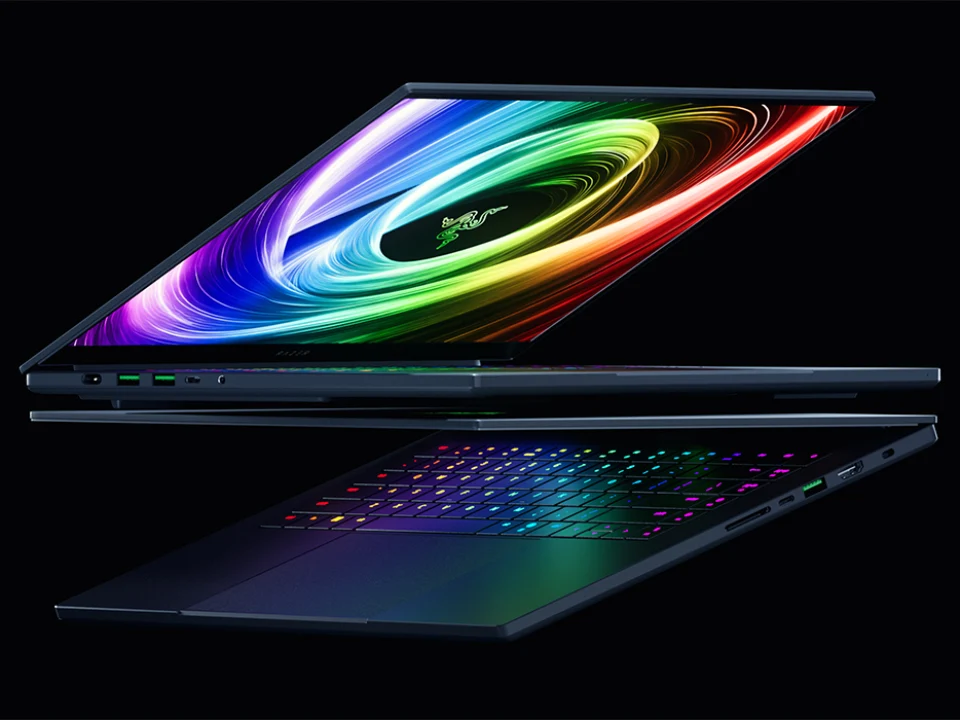
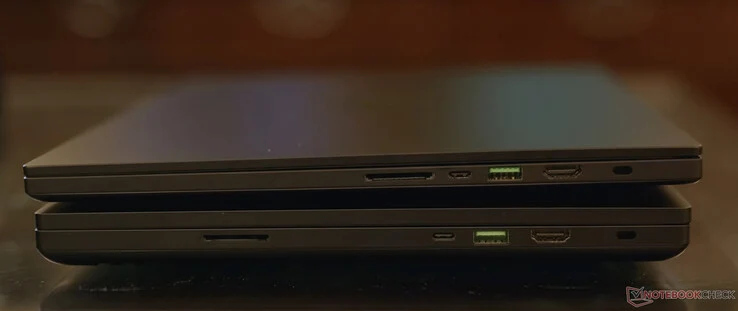
    Almost two months ago, Razer launched a new Blade 16 to take the place of the 2024 version we reviewed just a little over a year back. As we mentioned at CES 2025, the Blade 16 2025 is now 30% smaller than the previous model. Because of this, the Blade 16 is now nearly as thin and light as the latest MacBook Pro 16, which is currently priced at $2,239 on Amazon.

    Upgraded Components

    Razer has paired this reduction in size with a selection between AMD’s Ryzen AI 9 365 and Ryzen AI 9 HX 370 APUs. In addition, the Blade 16 2025 can be set up with one of Nvidia’s GeForce RTX 5070 Ti, RTX 5080, or RTX 5090 GPUs, which come with 12 GB GDDR7, 16 GB GDDR7, and 24 GB GDDR7 VRAM, respectively. The new 16-inch laptop includes 32 GB of LPDDR5X-8000 RAM by default, but users can upgrade it to 64 GB during the configuration.

    Storage and Display

    Moreover, Razer provides options for the Blade 16 2025 with 1 TB, 2 TB, or 4 TB of storage, with the maximum split across both M.2 slots using two 2 TB drives. A QHD+ (2,560 x 1,600) OLED display with a 240 Hz refresh rate is included in all configurations. To top it off, this hardware is complemented by a 90 Wh battery that can be charged up to 80% in just 48 minutes, thanks to a 200 W power adapter.

    The starting price for the Razer Blade 16 2025 is $2,799.99, which includes a Ryzen AI 9 365, 32 GB of RAM, a 1 TB SSD, and an RTX 5070 Ti GPU. However, as you move to more powerful models, prices can quickly exceed $3,000; for instance, switching to an RTX 5080 adds an additional $400. In its highest configuration, the Blade 16 2025 can reach a price of $4,599.99, which includes a Ryzen AI 9 HX 370, 64 GB of RAM, 4 TB of storage, and an RTX 5090 GPU. For further information, check Razer’s website.

    Source:
    Link


  • OneXPlayer OneXFly F1 Pro: AMD Radeon 890M Handheld with 144Hz OLED

    OneXPlayer OneXFly F1 Pro: AMD Radeon 890M Handheld with 144Hz OLED

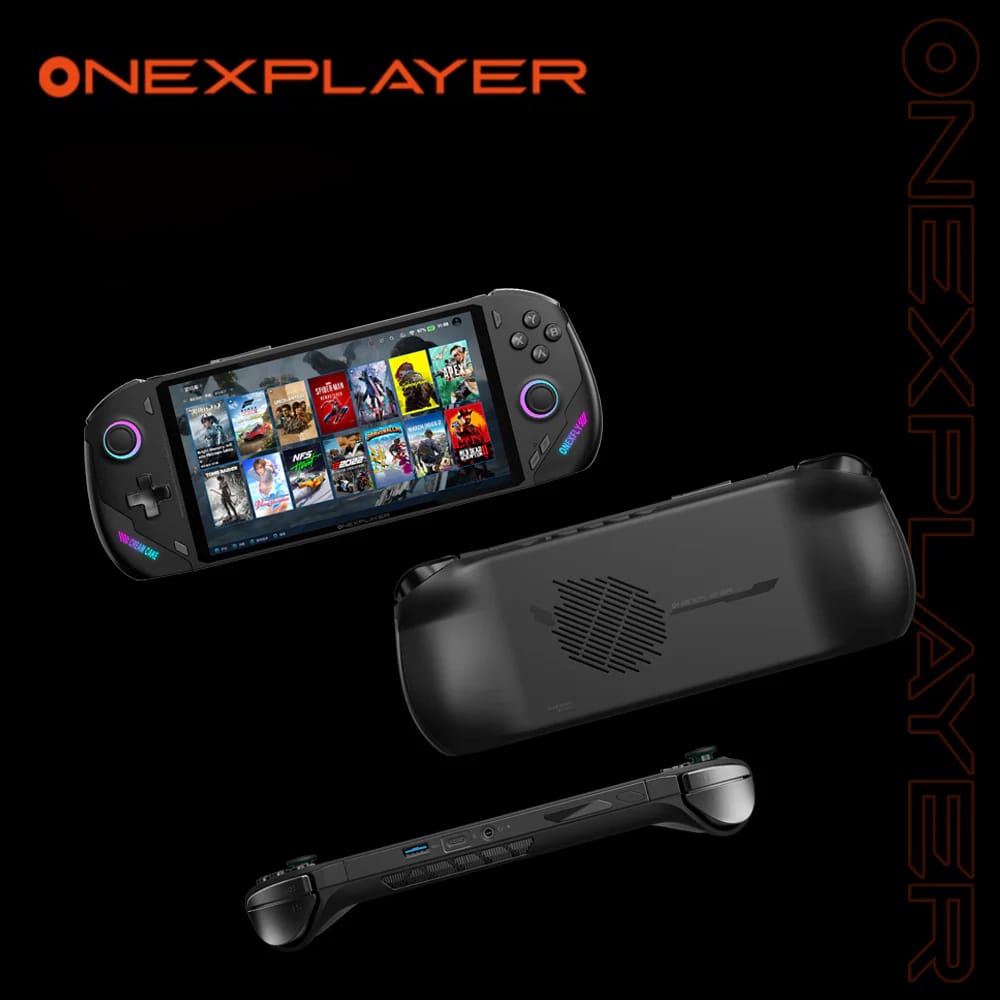
    One-Netbook has just launched the OneXFly F1 Pro, their newest handheld gaming device, which serves as the successor to last year’s OneXFly (currently priced at $769.99 on Amazon). The company began teasing this product at the end of last month. Although they have shared some details about the hardware, they held back on confirming all specifications until now.

    Key Features of OneXFly F1 Pro

    To sum it up, every OneXFly F1 Pro unit comes equipped with the following features:

    On launch, One-Netbook is offering six different configurations, including two options with AMD APUs. Specifically, buyers can choose between the Ryzen AI 9 365 or the Ryzen AI 9 HX 370, which show about a 15% performance difference based on our tests. Additionally, the Radeon 880M in the first model falls behind the Radeon 890M in the second by roughly 16% when playing modern triple-A games.

    Pricing and Availability

    The OneXFly F1 Pro starts at $1,099, featuring the Ryzen AI 9 365, 32 GB of RAM, and 1 TB of storage. For those needing more space, there’s an option to upgrade to 2 TB for just an additional $100. On the other hand, the Ryzen AI 9 HX 370 models have a base price of $1,339, which can go up to $1,699 if you opt for 64 GB of RAM and 4 TB of storage. It’s important to note that these are all pre-sale prices, with shipping expected to start at the end of November. Full pricing details can be seen below.

    One-Netbook’s


    Image 1
  • AMD Must Strengthen Laptop Partnerships and Accelerate Growth

    AMD Must Strengthen Laptop Partnerships and Accelerate Growth

    It is widely known that AMD has historically been behind Intel and Nvidia in the laptop market, particularly in the variety of available designs. Sasa Marinkovic from AMD addressed some of these worries in our conversation a few years back, but the situation has not seen significant improvement since then.

    OEM Concerns

    An AC Analysis report indicates that AMD’s increased focus on datacenter products is causing friction with its notebook OEM partners. The report describes the current relationship as a "cold war ice age," which is worrying as interest grows in Qualcomm’s Snapdragon X Series and Intel’s new Lunar Lake offerings. Additionally, AMD’s ongoing "startup culture" and compromises in the consumer market are negatively impacting its future, unlike Intel and Nvidia, which seem to balance their datacenter and consumer lines more effectively.

    OEMs are reportedly frustrated with the insufficient supply of AMD notebook chips for their designs in Q4 2023 and beyond. The analyst notes that partners have raised issues regarding miscommunication, unmet promises, and generally poor treatment, drawing parallels to Intel’s past behavior during its dominant years.

    Supply Issues

    ComputerBase supports this by highlighting that AMD has struggled to meet OEM chip demands. This is evidenced by the lack of Ryzen AI 300-powered laptops showcased at IFA 2024. Reports from discussions at the trade fair reveal that AMD’s failure to supply adequate and timely chips led manufacturers to reduce their portfolios of Strix Point laptops. One OEM remarked that AMD has "left billions of US dollars lying around" with its partners over the years.

    Currently, AMD offers only two Strix Point APUs: the Ryzen AI 9 365 and the Ryzen AI 9 HX 370. The Ryzen AI 9 HX 370 has shown impressive performance in the three Asus laptops we tested. Recently, Asus’s exclusivity with AMD for these APUs ended, which is why other OEMs are finally starting to launch Ryzen AI 300-powered models.

    New Launches and Future Prospects

    HP is set to release an OmniBook Ultra that features the Ryzen AI 9 HX 370, while MSI has announced the Summit 16 AI+, Prestige A16 AI+, and Creator A16 AI+ at IFA 2024, all powered by Ryzen AI 9 HX 370 and Ryzen AI 9 365 options. Acer mentioned back at Computex 2024 that they are working on a Swift 14 with Ryzen AI 300, but no details were provided during the IFA event.

    AMD has also quietly launched the Ryzen AI 9 HX 375 APU, which boasts a slightly faster 55 TOPS NPU, but no laptops utilizing this APU have been revealed yet. Silent paper launches are not new for AMD in the notebook sector, as laptops featuring the Ryzen 9 7840HX are still absent, and very few Ryzen 7 8840U-powered mainstream laptops have reached reviewers, aside from a GPD Win Mini handheld and the Minisforum V3 tablet.

    AMD Advantage Program

    Do you recall the AMD Advantage program? It was AMD’s response to Intel Evo. Currently, AMD officially lists just three — yes, THREE — AMD Advantage laptops available in the US. However, on a global scale, models like the Asus TUF Gaming A16, Asus ROG Zephyrus G14, Framework 16, MSI Alpha 17, and MSI Alpha 15 are part of the Advantage program, though the Alpha 17 has now shifted to using an RTX 4070 Laptop GPU.

    When discussing AMD’s mobile GPUs, the situation is similarly concerning. To date, only about five or six devices featuring RDNA 3 mobile GPUs have been reviewed. In contrast, we have tested 20 laptops with the RTX 4080 Laptop GPU and only one with the RX 7900M. This situation reminds us of the times when AMD Ryzen Renoir laptops were released with no GPUs exceeding an RTX 2060 Laptop GPU, while Intel laptops had much higher specifications.

    Despite the challenges, AMD is expected to launch more budget-friendly Copilot+ laptops featuring Kraken Point in early 2025, likely at CES 2025. Kraken Point is a simplified version of the Strix Point APU with 4x Zen 5 + 4x Zen 5c cores, 8 CU RDNA 3.5 graphics, and a 50 TOPS XDNA 2 NPU. Upcoming flagship laptops will include Strix Halo and Fire Range APUs.

    Market Share Growth

    Interestingly, despite Intel’s aggressive marketing for Meteor Lake, AMD has managed to grow its mobile CPU market share from 16.2% in Q1 2023 to 19.3% in Q1 2024, accompanied by a notable 16.3% revenue increase. The full impact of AMD’s renewed focus on datacenter products on the consumer mobile segment will only be evident later in 2025.

    Nevertheless, AMD needs to act quickly in the mobile space, especially with Qualcomm and Intel, which has introduced a staggering 80 new Lunar Lake designs, closing in on AMD’s market. Reports suggest that the company must address OEM needs promptly to prevent further reductions in designs due to a lack of mobile CPUs and GPUs.

    Moreover, AMD and OEMs need to resolve feature inconsistencies between Intel and AMD laptop SKUs to make the selection process clear and appealing for consumers, rather than forcing them to choose between features. An example of this disparity can be seen in the Alienware m18 R1 Intel and m18 R1 AMD versions we reviewed last year.

    The AMD m18 R1 lacks USB4, supports only three M.2 NVMe drives compared to four in the Intel version, has a less efficient GPU, and offers significantly lower battery life despite having a more efficient CPU. Additionally, the m18 R1 AMD experienced initial performance issues that were only resolved by reverting to an older Radeon driver.

    Here’s hoping that 2025 brings better outcomes for both AMD and its customers.