Tag: Apple M4

  • New Apple iPad Air Launch: More RAM and Performance Boost

    New Apple iPad Air Launch: More RAM and Performance Boost

    Key Takeaways

    1. The new iPad Air lineup includes 11-inch and 13-inch models powered by the Apple M4 chipset, offering 30% better performance than the previous version and 2.3 times better than the M1 models.
    2. The devices feature an 8-core CPU, a 9-core GPU, 12 GB of RAM, and storage options ranging from 128 GB to 1 TB.
    3. A C1X 5G modem is included to reduce power consumption, while display specs remain unchanged with 60 Hz IPS panels.
    4. The starting price for the new iPad Air is $599 for the 11-inch model and $799 for the 13-inch model, with prices reaching up to $1,449 for the 1 TB cellular variant.
    5. Sales for the new iPad Air models will begin on March 4 at 14:15 UTC, and more product announcements from Apple are expected before this date.


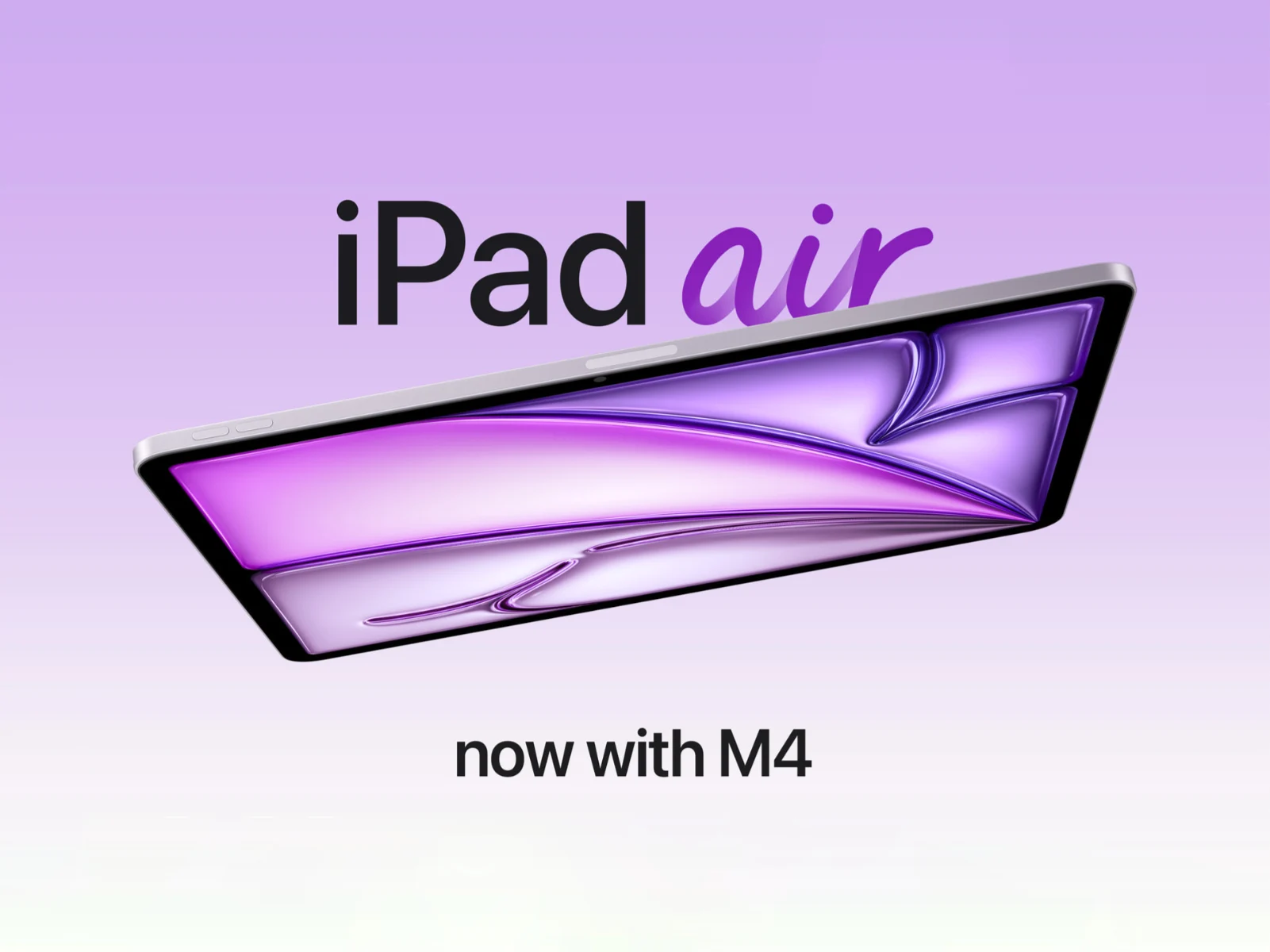
    Apple has refreshed the iPad Air lineup, which now comes in both 11-inch and 13-inch sizes. The new models replace the previous versions that featured the Apple M3 chip (currently priced at $799 on Amazon). Today, alongside the iPhone 17e, they represent two of the latest devices launched by Apple. Tim Cook hinted in a recent tweet that there are more product announcements expected before March 4.

    Key Upgrades in Performance

    The standout improvement for this year’s iPad Air is the inclusion of Apple’s M4 chipset. This model features an 8-core CPU and a 9-core GPU. Although this isn’t the most powerful version of the M4, it is anticipated to boost the iPad Air’s performance by about 30% compared to the previous model and provide a 2.3 times enhancement over the earlier Apple M1 models.

    Additional Features and Specs

    Moreover, Apple has integrated a C1X 5G modem, which aims to lower power usage. The new iPad Air also boasts 12 GB of RAM and storage options ranging from 128 GB to 1 TB. However, display specs remain unchanged, maintaining the 60 Hz IPS panels with a brightness of 500 nits for the 11-inch model and 600 nits for the 13-inch one. The devices continue to offer stereo speakers, dual 12 MP cameras, and Wi-Fi 7 support.

    The pricing for the new iPad Air starts at $599 for the 11-inch model with 128 GB of storage. The 13-inch versions have a starting price of $799 and come in four different colors. The price can go as high as $1,449 for the 1 TB variant with cellular capabilities. Sales for these new devices will commence on March 4 at 14:15 UTC.

    Source:
    Link


  • Apple Teases New M5 MacBook Pro and iPad Pro Launch Soon

    Apple Teases New M5 MacBook Pro and iPad Pro Launch Soon

    Key Takeaways

    1. The next-gen iPad Pro features the new Apple M5 chip and is set to launch soon, as suggested by an unboxing video.
    2. The MacBook Pro M5 has FCC approval but lacks Wi-Fi 7 capability.
    3. Delivery times for current iPad Pro and MacBook Pro models indicate upcoming releases, with many versions out of stock.
    4. The iPad Pro is expected to have modest upgrades, including a RAM increase from 8 GB to 12 GB and the addition of a second front camera.
    5. Significant upgrades for the MacBook Pro are not expected until the Apple M6 arrives next year, which may include a redesign and an OLED touchscreen.


    The unveiling of the next-gen iPad Pro took place recently in an unboxing video, which also showcased early performance results of the Apple M5 chip. Meanwhile, the MacBook Pro M5 has gained approval from the US Federal Communications Commission (FCC) but seems to still be missing Wi-Fi 7 capability. Additionally, the Apple Online Store has hinted that the launch of both devices is just around the corner.

    Delivery Times Indicate Upcoming Releases

    Certain versions of the iPad Pro powered by the Apple M4 are currently out of stock, with the website noting that delivery could take one to two weeks. For the base model of the 14-inch MacBook Pro, the estimated delivery period is two to three weeks, whereas models with increased storage might take longer, around seven to ten days. Such delays in delivery often suggest that Apple is gearing up to release new models, as they tend to sell off older inventory without restocking.

    Expected Features and Upgrades

    In terms of upgrades, the new chip is the main highlight for the iPad Pro, with other changes expected to be quite modest. There are rumors that Apple won’t alter the design or display. The base model is rumored to come with 12 GB of RAM, up from the previous 8 GB, and a second front camera might be introduced. As for the MacBook Pro, a more substantial upgrade is not anticipated until the Apple M6 arrives next year, which is expected to feature a redesigned look and an OLED touchscreen. In the fall, consumers can also look forward to a new Vision Pro mixed reality headset, the next-gen Apple TV 4K, and an updated HomePod mini.

    Source:
    Link


  • MacBook Pro Redesign with OLED & Apple M6: Release Window Revealed

    MacBook Pro Redesign with OLED & Apple M6: Release Window Revealed

    Key Takeaways

    1. Many users see no strong reason to upgrade from the Apple M1 or M1 Pro, as they provide enough performance for most needs.
    2. The anticipated 2025 MacBook Pro refresh with the Apple M5 chipset is unlikely to attract many upgrades due to minimal design changes.
    3. A significant redesign of the MacBook Pro is expected in 2026, featuring the Apple M6 SoC and an OLED display, which may appeal to some users.
    4. Delays in the redesign and updates mean that the new MacBook Pro models may not launch until late 2026 or early 2027.
    5. Users may remain content with their current MacBook Pro models for now, as major changes are still some time away.


    Since the initial MacBook Pro powered by Apple silicon was released, there hasn’t been much motivation for users to switch to newer models like the Apple M2, M3, or even the most recent MacBook Pro M4, which is available for $1,299 on Amazon. Mark Gurman highlighted this in his latest “Power On” newsletter dated August 10, 2025. Although users needing high performance have seen yearly enhancements, the Apple M1 from 2020 and the Apple M1 Pro from 2021 likely deliver sufficient processing power for the majority of users.

    Upcoming Changes

    The anticipated 2025 MacBook Pro refresh featuring the Apple M5 chipset probably won’t encourage many users to upgrade, particularly since a more substantial redesign was expected to debut in 2026. This new model is rumored to bring the Apple M6 SoC, an OLED display, and a slimmer, lighter design, which might be compelling enough for several Apple enthusiasts to move up from their older machines.

    Delays and Expectations

    Nonetheless, this significant redesign may have been pushed back, as the Bloomberg analyst has recently revealed a revised schedule for the new MacBook Pro M6. Previous reports indicated that the modest upcoming MacBook Pro update with the Apple M5 and the same old design from 2021 would be postponed until early 2026. Now, the complete redesign is also projected to be delayed further. Specifically, Gurman expects a launch window between late 2026 and early 2027, which still feels quite distant. As a result, Apple fans looking to upgrade will need to hold on to their current MacBook Pro a bit longer.

    Conclusion

    In summary, while there are some anticipated upgrades on the horizon, the wait for major changes may be longer than expected, leaving many users satisfied with their existing models for the time being.

    Source:
    Link


  • Apple iPad Pro: Slimmer Bezels Coming with Tandem OLED Display

    Apple iPad Pro: Slimmer Bezels Coming with Tandem OLED Display

    Key Takeaways

    1. The iPad Pro received a significant update with the introduction of M4-based models featuring Tandem OLED panels.
    2. Apple is adding LX Semicon to its supply chain to develop a new display driver IC, moving away from Samsung’s exclusivity.
    3. The new display driver IC will be paired with LG Innotek’s chip-on-film technology, allowing for thinner bezels.
    4. These changes may lead to either larger displays or smaller iPad Pro models in the future.
    5. The anticipated updates could be included in the upcoming iPad Pro (8th generation) with an M5 chipset.


    The iPad Pro got a big update last year, introducing the Apple M4-based 11-inch and 13-inch models (curr. $928.99 – refurbished on Amazon). The 7th generation iPad Pro not only showcased the M4 chipset but also featured Tandem OLED panels for the first time in the lineup. Reports suggest that Apple might be looking to enhance the display even further in the near future.

    New Supply Chain Moves

    DigiTimes has indicated that Apple is adding LX Semicon to its supply chain for upcoming iPad Pro models. LX Semicon has been given the job of developing a new display driver IC, which Apple hopes to finalize within the next week. This shift would mean that Apple is moving away from its reliance on Samsung System LSI, which currently holds exclusivity over display driver ICs for all iPad Pro (7th generation) tablets.

    Innovative Technology Integration

    In another report, The Elec mentions that Apple aims to pair LX Semicon’s display driver IC with LG Innotek’s chip-on-film (CoF) technology. This technology uses heat to bond display driver ICs to a flexible film. As a result, this change could allow Apple to create more space for reducing the size of display bezels.

    This change could mean either larger displays within the same chassis or smaller 11-inch and 13-inch iPad Pros. However, neither DigiTimes nor The Elec offered details on when these display enhancements might be introduced. The hint that Apple plans to approve a new display driver IC this month suggests that these updates might be pushed to the iPad Pro (8th generation), which is anticipated to feature an Apple M5 chipset.

    Source:
    Link


  • Mark Gurman: iPadOS 19 to Bring New macOS Features This Year

    Mark Gurman: iPadOS 19 to Bring New macOS Features This Year

    Key Takeaways

    1. Apple is positioning the iPad Pro as a laptop alternative with the new M4 chip in 11-inch and 13-inch models priced at $1,099.
    2. Current limitations of iPadOS prevent the iPad Pro from providing a full desktop experience, unlike devices like the Surface Pro.
    3. iPadOS 19 is expected to launch in September or October, aiming to make the system more similar to macOS.
    4. The update will focus on enhancing app window management, multitasking, and overall productivity.
    5. Specific details about the changes in iPadOS 19 have not yet been revealed.


    Apple has been promoting the iPad Pro as a substitute for laptops for quite some time. With the introduction of the Apple M4 chip, which is available in both the 11-inch and 13-inch models (currently priced at $1,099 on Amazon), the likelihood of these pricey tablets replacing traditional laptops seems stronger than ever.

    Limitations of iPadOS

    However, the current restrictions of iPadOS still hinder the full potential of the iPad Pro. As we pointed out in our reviews of the iPad Pro 11 and 13 last year, Apple’s claims aside, the iPad Pro cannot yet deliver the same desktop operating system experience as the Surface Pro, even when using the ARM version of Windows 11.

    Upcoming Changes

    New insights from Mark Gurman at Bloomberg suggest that Apple is planning to bridge this gap with the launch of iPadOS 19. This update is expected to arrive in either September or October and aims to make the operating system “more like macOS” in three main areas.

    Gurman indicates that iPadOS 19 will enhance app window management, building on the Stage Manager feature introduced three years ago. Additionally, the update is rumored to improve multitasking and overall productivity. Unfortunately, specific details about what these changes will entail have not yet been disclosed.

    Source:
    Link

  • Apple Teases M4 MacBook Air Launch Coming This Week

    Apple Teases M4 MacBook Air Launch Coming This Week

    Key Takeaways

    1. The new MacBook Air is set to feature the Apple M4 chip.
    2. Tim Cook hinted at the launch with the phrase “There’s something in the air.”
    3. Expect 13-inch and 15-inch MacBook Air models with upgraded RAM to 16 GB.
    4. Additional upgrades beyond the M4 chip and RAM are limited.
    5. No specific date for the announcement was provided, leaving some uncertainty.


    Now that the Apple M4 chip has had some time to develop, it’s ready to make an appearance in a new laptop: the MacBook Air. Recently, Mark Gurman predicted that Apple would unveil its latest laptops this week, and it seems like Tim Cook has confirmed this.

    Exciting Teaser

    In a recent post on X, Tim shared a not-so-subtle hint stating, “There’s something in the air,” suggesting that this relates to the M4 MacBook Air or possibly a new iPad Air. Since the iPad Air isn’t expected for a while, we can anticipate the launch of new 13-inch and 15-inch MacBook Air models shortly.

    Expected Upgrades

    Besides the M4 chip, a boost in RAM, and some Apple Intelligence features, there don’t seem to be many other upgrades for this generation of MacBook Air. However, you can relax knowing Apple won’t be offering a laptop with just 8 GB of RAM anymore as 16 GB has become standard, even for the previous generation models.

    Date Uncertainty

    Sadly, Tim did not provide a specific date for the announcement. This is a bit strange since the teaser for the iPhone 16e included a clear date. Perhaps more details will come later, or you might need to stay alert for a quietly announced press release on Apple’s site.

    Source:
    Link

  • Coloware Launches Retro Apple Mac Mini with M4 Chip

    Coloware Launches Retro Apple Mac Mini with M4 Chip

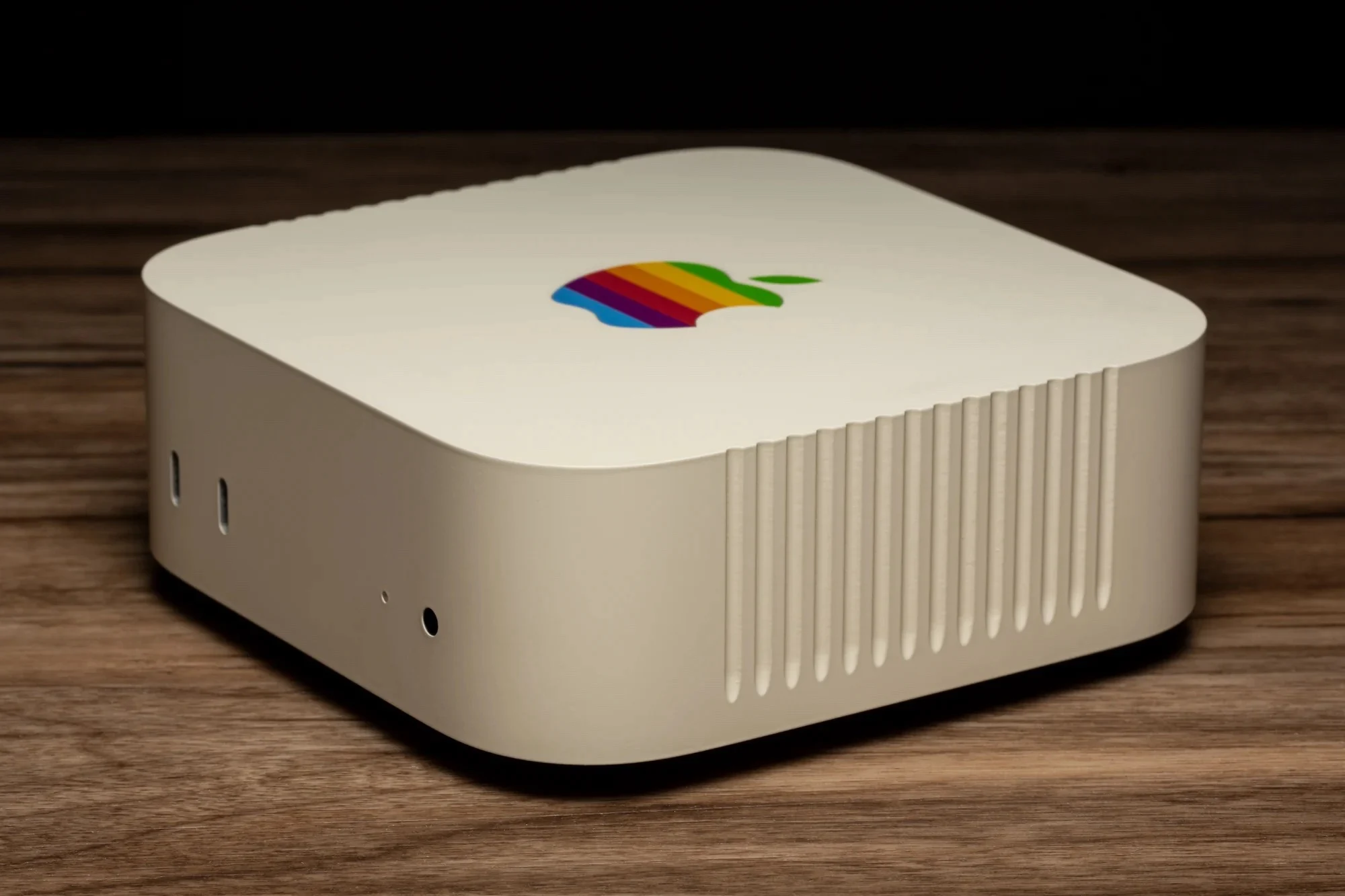
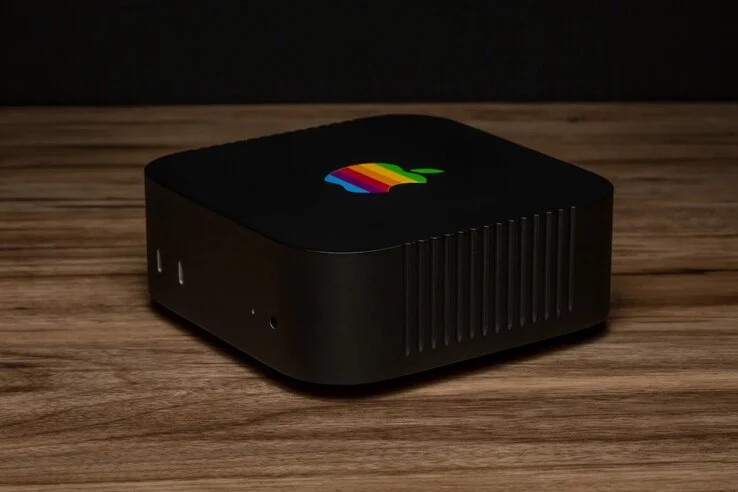
    ColorWare is bringing back the Mac mini as a Retro Edition, which comes in beige or black. This special version features a matte finish and an aluminum body with CNC-milled vents, mimicking the style of computers from the 1980s.

    Classic Design Touches

    On the top of the device, the modern Apple logo has been swapped for the vibrant logo that Apple used starting in 1977. ColorWare refers to this as a “limited edition,” but they haven’t said how many Retro units will be made. For those buying from other countries, it’s important to know that any warranty issues with this Mac mini must go through ColorWare in the US instead of Apple directly.

    Hardware Specs Remain

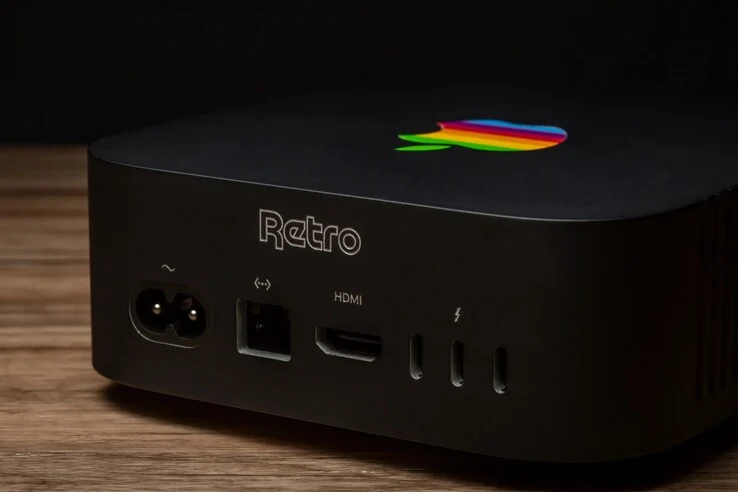
    The hardware itself hasn’t changed: The Retro Edition Mac mini can be equipped with either an Apple M4 or M4 Pro chip, along with options for 16 GB to 24 GB of RAM and a storage capacity ranging from 256 GB to 512 GB SSD. On the back, you’ll find three Thunderbolt 4 ports, one HDMI port, and one Gigabit Ethernet port, while the front hosts two USB-C ports and a headphone jack of 3.5 mm.

    Pricing and Shipping Details

    ColorWare adds an extra $300 for these design changes compared to the standard Mac mini price, so the entry model featuring the Apple M4, 16 GB RAM, and 256 GB storage is priced at $899 in ColorWare’s online shop. They also ship to many countries around the world (you can see the list here), but buyers need to be aware of added shipping charges and potential import taxes.

    Source:
    Link


  • New Mac Mini Accessory Makes It Nearly Impossible to Steal

    New Mac Mini Accessory Makes It Nearly Impossible to Steal

    Third parties are slowly changing their accessories to fit Apple’s new Mac mini, which is nearly three months old now. While the previous Mac mini models updated the unibody design that Apple first brought in 2010, last year’s version got smaller, measuring 127 x 127 x 50 mm due to a full redesign.

    New Compatibility Issues

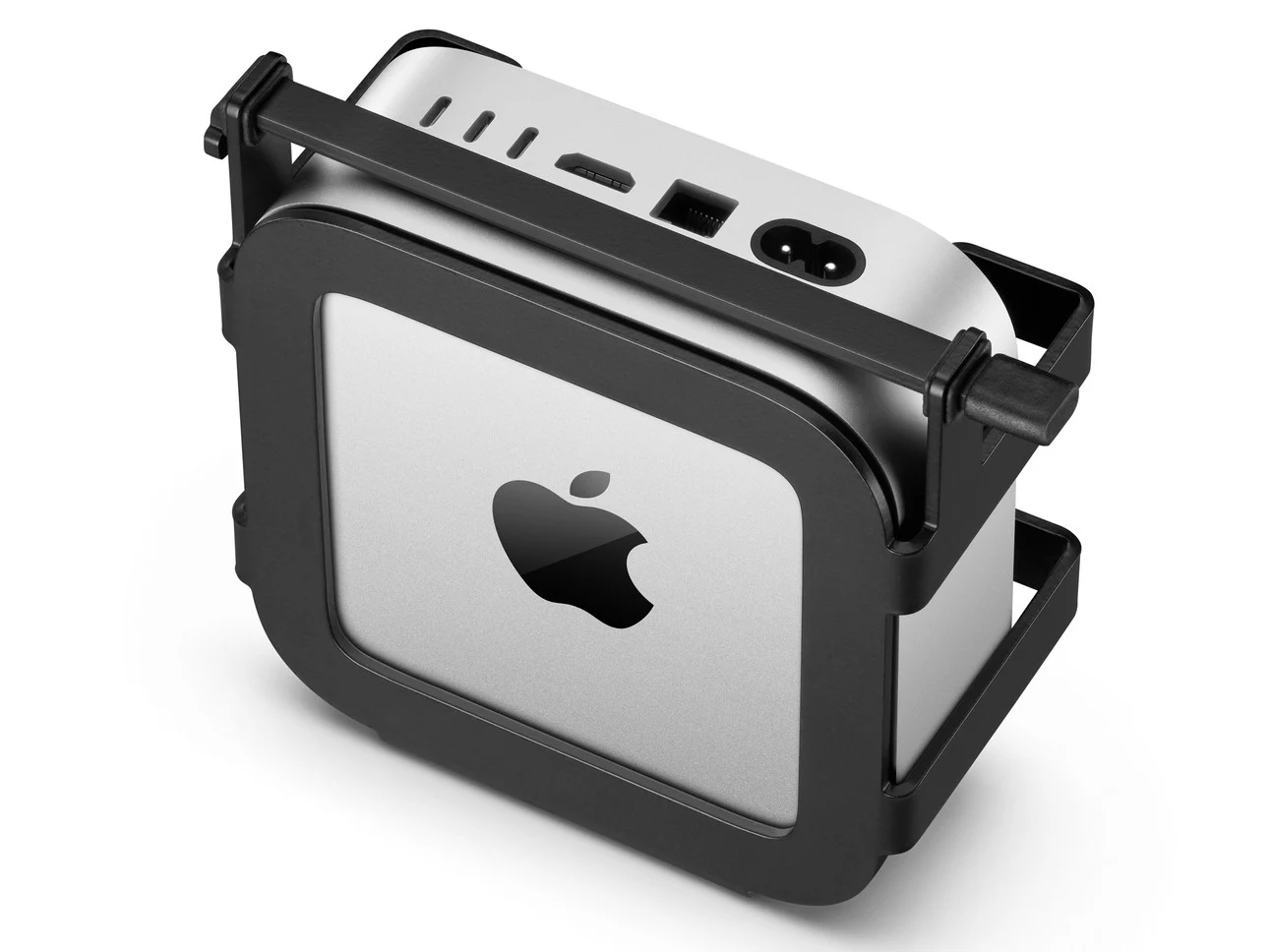
    As a result, the Mac mini with the Apple M4 chip (curr. $569 on Amazon) isn’t compatible with a lot of current accessories. To address this issue, Kensington has introduced what they call a ‘Security Mount’ specifically for the latest Mac mini. They say this mount has several key functions:

    Features of the Security Mount

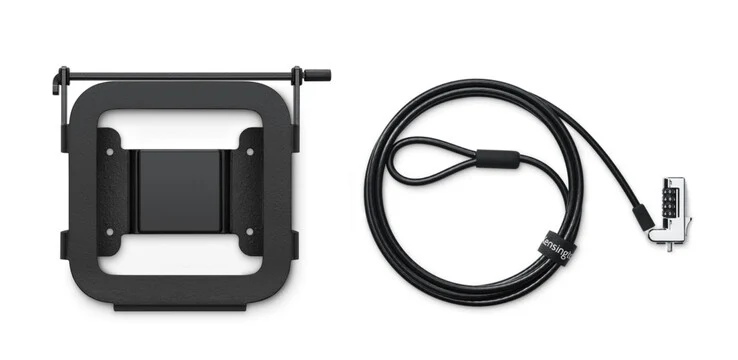
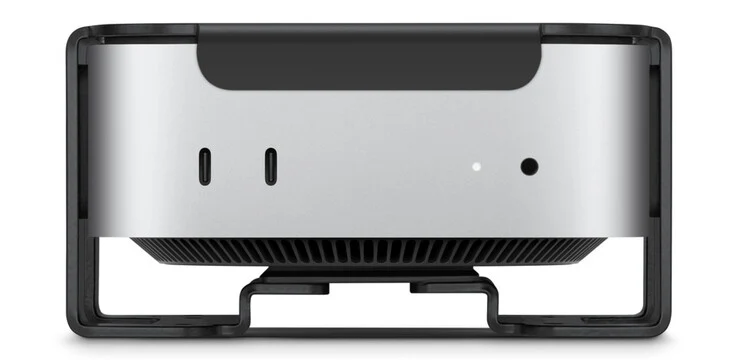
    The Kensington Security Mount for Mac mini includes everything necessary to keep your Mac secure. It can function as a mounting bracket, a locking kit, or even both. This mount is custom-built to provide a tight fit while allowing easy access to the power button and ports on the Mac mini.

    The Security Mount is made entirely of steel, weighing in at 500 g and measuring 141 x 137 x 70 mm, or 141 x 161 x 70 mm when the lock bar is attached. To put it another way, Kensington’s accessory is nearly as heavy as the Mac mini itself, which weighs 670 g or 730 g depending on whether you choose the M4 or M4 Pro chip at the time of purchase.

    Pricing and Lock Features

    Moreover, the weight of the Security Mount doesn’t include its included NanoSaver lock, which features a 183 cm carbon steel cable and can be set to one of 10,000 different combinations. You can buy the Kensington Security Mount for Mac mini from Apple for $69.95 in the US, £69.95 in the UK, and €79.95 in the Eurozone. For more details, check out Apple’s product page.

    Source:
    Link


  • M4 Mac Users Face Issues with Ultra-Wide Monitors

    M4 Mac Users Face Issues with Ultra-Wide Monitors

    The Apple M4 chip, found in devices like the new Mac mini, MacBook Pro, and iMac, allows for the connection of up to three external displays (varies by model). This includes support for two monitors with 6K resolution and one at 5K resolution. Alternatively, users can connect an 8K display at 60 Hz or a 4K monitor running at 240 Hz. Despite these capabilities, there are issues reported with specific monitors, as seen in discussions on Reddit and the Apple Community Forum.

    Issues with 5K Monitors

    Of particular concern are 5K displays with a 21:9 aspect ratio, which have a resolution of 5,120 x 2,160. While these monitors can operate at full resolution, users cannot enable the "HiDPI" mode. This mode scales a resolution of 3,840 x 1,620 to the monitor’s native resolution without losing clarity. Users affected by this problem have noted that these same monitors work perfectly when connected to older Macs equipped with either ARM or Intel chips using the same cables.

    Possible Workarounds

    Some individuals have managed to resolve this issue by utilizing third-party applications like BetterDisplay; however, doing so limits the frame rate to 60 Hz. There has been no official response from Apple regarding this situation, leaving it uncertain whether the company is addressing the problem. For those using an M4 Mac alongside a 5K x 2K display, the options available, such as BetterDisplay, SwitchRes X, and EasyRes, do provide ways to adjust resolutions, but they come with compromises in frame rate or overall image quality.

    Reddit & Apple Community Forum via 9to5Mac

    Source: Link

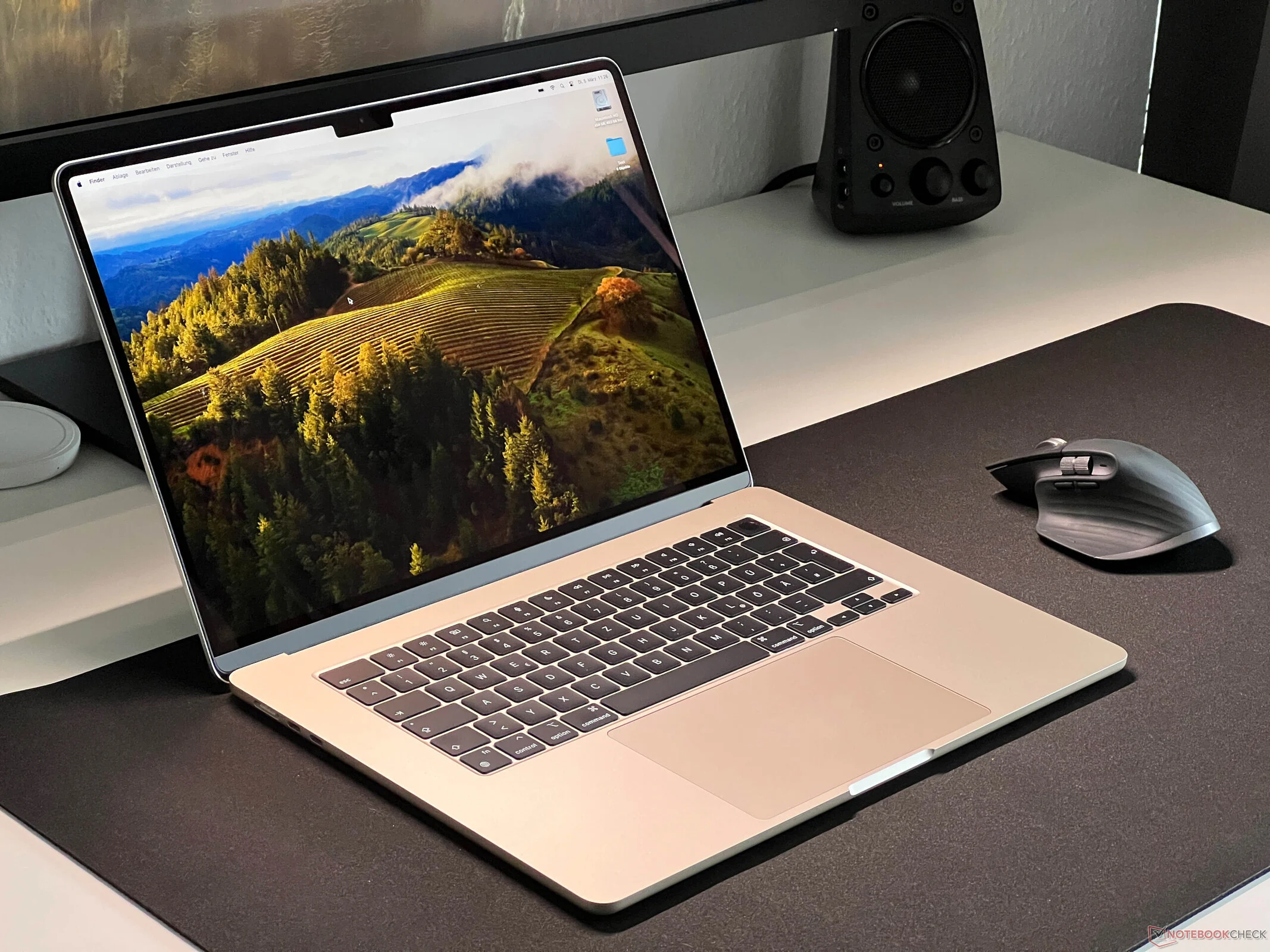
  • M4 MacBook Air in Mass Production; M4 and M5 Macs Coming 2025

    M4 MacBook Air in Mass Production; M4 and M5 Macs Coming 2025

    After the Apple M4 was introduced in the iPad Pro earlier this year, it is now being used in the Mac mini, iMac, and MacBook Pro. Based on recent updates from Bloomberg, the forthcoming MacBook Air will likely be available soon, with both the 13-inch and 15-inch models featuring the Apple M4 reportedly “deep in mass production.”

    Sales Timeline

    This indicates that sales should kick off in the first quarter, likely by the end of March. Additionally, a Mac Studio equipped with a more powerful Apple M4 is set to launch in the middle of next year, followed by an updated Mac Pro. Our tests of the Apple M4 in the iPad Pro reveal that the chip delivers up to 22% better CPU performance compared to the Apple M3 in the MacBook Air, all without requiring a fan. However, the upgrade is mostly beneficial for those using older Intel Macs or M1 MacBook Airs, since the new ARM chip is as much as 70% quicker.

    Future Upgrades

    According to Bloomberg’s Mark Gurman, the MacBook Pro is anticipated to receive an upgrade to the Apple M5, M5 Pro, and M5 Max by late 2025, but this will not include the much-awaited redesign. The new aesthetic, which will feature a dual OLED display and a 2 nm ARM chip, is now pushed back to 2026, meaning that next year’s version will be focused solely on performance enhancements. It’s still unclear whether other models, like the iMac or Mac mini, will also see an upgrade to the Apple M5 in 2025.

    Source: Link