Tag: iPad Pro M5

  • iFixit Teardown Reveals Apple iPad Pro M5 Details

    iFixit Teardown Reveals Apple iPad Pro M5 Details

    Key Takeaways

    1. The latest iPad Pro features the powerful Apple M5 chip and has a one-year warranty with potential repair costs after that period.
    2. Opening the iPad Pro is complicated due to adhesive securing the display, making repairs risky and time-consuming.
    3. The iPad Pro has a modular design, allowing for separate replacement of components like the USB-C port and cameras.
    4. Apple provides a self-service repair shop with guides and tools, and replacement parts are expected to be available soon.
    5. The iPad Pro M5 received a repairability rating of 5 out of 10 from iFixit, primarily due to the difficulty of battery replacement.


    The latest iPad Pro, powered by the Apple M5 chip, has already wowed us with its impressive performance and stunning display in our detailed review. However, it’s worth noting that Apple only provides a one-year warranty at no extra cost, meaning that any repairs needed after that will either require payment or must be handled by the user themselves.

    Teardown Insights

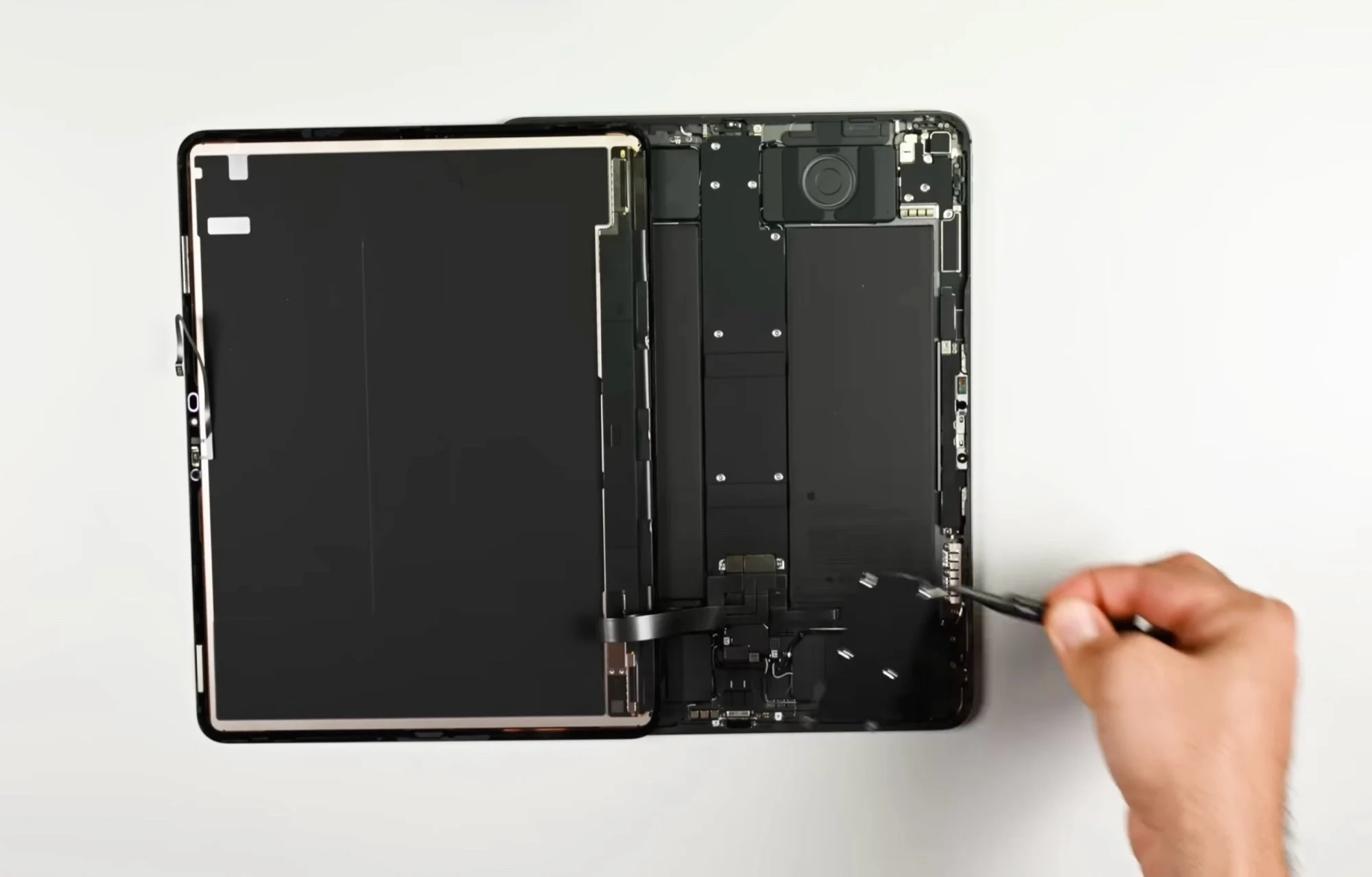
    According to the recent iFixit teardown, opening the tablet is similar to that of its predecessor; you need to detach the display from the frame. The process is complicated because Apple uses adhesive to secure the screen, making it a time-consuming and risky endeavor since the display can break quite easily. Once that’s done, you’ll need to extract ten adhesive strips to access and replace the two battery cells.

    Modular Design

    Inside, the iPad Pro is relatively modular, which means components like the USB-C port, cameras, ambient light sensor, LiDAR scanner, and speakers can be replaced separately. Apple uses two different screw types for assembly, and their self-service repair shop offers repair guides along with the necessary tools. It’s expected that replacement parts will also be made available there soon.

    Repairability Rating

    Due to the challenges involved in opening the tablet, the new iPad Pro M5 only earns a 5 out of 10 on iFixit’s repairability scale. The battery replacement, which is a common repair needed after a few years of usage, is too complicated for many average users to manage effectively.

    Source:
    Link


  • iPad Pro M5 Gaming Test: Death Stranding 1080p High Settings

    iPad Pro M5 Gaming Test: Death Stranding 1080p High Settings

    Key Takeaways

    1. The new iPad Pro features the M5 chip, enhancing performance compared to the M4 and M1 models, particularly in gaming.
    2. In gaming tests, the M5 iPad Pro achieved smoother frame rates, reaching up to 60 FPS in some cases, while older models struggled significantly.
    3. Thermal performance of the M5 is superior, maintaining performance longer under stress compared to the M4, which throttles faster.
    4. Visual quality issues were noted in games like Assassin’s Creed Mirage, with shader compilation causing frequent FPS spikes and freezes.
    5. Overall, the M5 iPad Pro shows improvements in gaming performance, but some games still require optimization to fully utilize the new chip’s capabilities.


    Apple has just introduced the refreshed iPad Pro, now equipped with the new M5 chip. While its design mirrors the previous M4 model from last year, it offers various improvements, particularly in its performance capabilities. For a thorough analysis, you can check out our detailed review of the iPad Pro M5 here.

    Gaming Performance Tested

    Recently, we received firsthand insights into the gaming abilities of the new M5 iPad Pro. The YouTube channel MrMacRight performed tests using several high-profile games, comparing the M5 model with the earlier M4 iPad Pro and the older M1 version. The M5 variant tested came with 16 GB of RAM and a 10-core CPU (consisting of 4 performance cores and 6 efficiency cores), which includes one extra performance core compared to the 12 GB base model that has a 9-core CPU (3 performance cores + 6 efficiency cores).

    The first game tested was Resident Evil 4, which was run at a scaled input resolution of 800 × 450 and an upscaled target resolution of 1600 × 900, capped at 30 FPS by default, with low settings and temporal upscaling via Apple’s Metal FX.

    Frame Rate Insights

    The game performed well with its default settings, but the YouTuber pointed out that shader compilation can lead to brief stutters during loading and sometimes while playing. On the M5 iPad Pro, Resident Evil 4 ran pretty smoothy, but the limited graphics options from Capcom and the black bars due to the fixed 16:9 aspect ratio slightly hindered the gaming experience on the iPad’s 4:3 display.

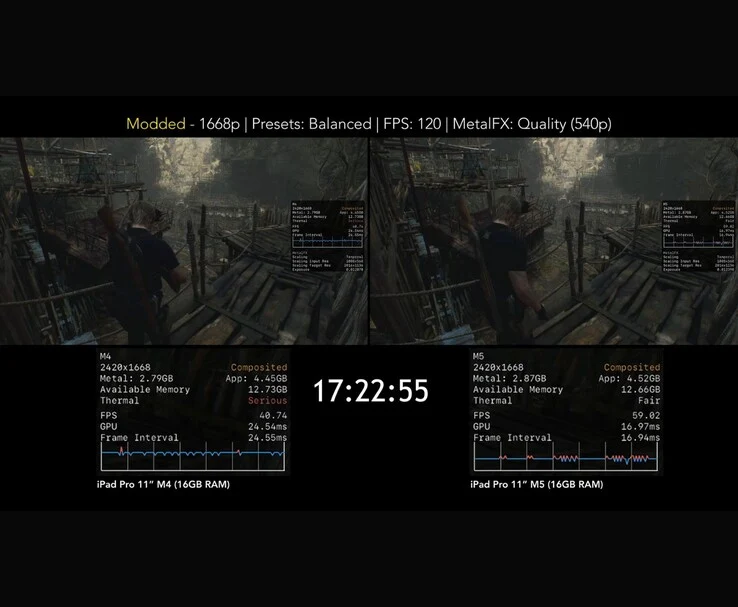
    When the YouTuber adjusted the configuration settings, the game managed to run at around 60 FPS by changing the preset to Balanced, lowering the resolution, enabling MetalFX Quality mode, and setting the FPS target to 120. Under these enhanced settings, the M5 iPad Pro performed between 50-60 FPS, whereas the M4 iPad Pro dropped to the mid-40s, and the M1 version struggled to even hit 20 FPS.

    Thermal Performance Comparison

    In a one-hour thermal throttling assessment, both the M4 and M5 were tested under the same conditions. The M4 iPad Pro started to throttle after just nine minutes, with its thermal rating declining from “Nominal” to “Serious.” In contrast, the M5 maintained its performance for about 17 minutes, keeping a 15-20 FPS advantage by the end of the test, as its rating changed from “Nominal” to “Fair.”

    Next up was Death Stranding. The game was run at a scaled input resolution of 784 × 540 and upscaled to 1567 × 1080, utilizing low graphics settings at 30 FPS with aggressive MetalFX upscaling.

    Visual Quality Observations

    Throughout the test, the M5 maintained a steady 30 FPS, but the YouTuber expressed concerns about noticeable softness and ghosting on the larger iPad screen, which were less apparent on the smaller iPhone display while running the same game.

    By swapping the iPad’s configuration file with the Mac version, the game was able to run natively at 1080p on “Very High” settings while still capping at 30 FPS. The visuals were impressive, with only slight dips during intensive scenes, suggesting that the iPad could manage higher fidelity graphics if developers permitted it.

    To achieve a 60 FPS frame rate, the YouTuber adjusted the graphics quality to “Low” and activated MetalFX in “Temporal Balanced” mode. This 1080p low setting provided smooth gameplay with only occasional dips during heavy action. The M5 iPad Pro outperformed the M4 by 5-10 FPS, and significantly surpassed the M1 model. In thermal tests, the M5 again demonstrated superior thermal performance, achieving a “Fair” state after 13 minutes and maintaining it throughout the test, while the M4 iPad Pro started throttling after 15 minutes.

    Assassin’s Creed Mirage Review

    The YouTuber then moved on to Assassin’s Creed Mirage. This game features adjustable resolution scaling up to 100% and quality presets up to “High.”

    However, it is limited to 30 FPS. On the M5 iPad Pro, MrMacRight played at 100% resolution with High graphics quality, and while it consistently held at 30 FPS, the overall experience fell short due to shader compilation issues causing frequent FPS spikes and unexpected freezes. The YouTuber described the gameplay experience as “awful.”

    The target resolution for the game is 2420 × 1362, but it renders internally at just 1210 × 682 because of a fixed 50% internal scaling. This setting is always active and cannot be adjusted, meaning even at the iPad’s native resolution, the game still runs at a lower internal resolution. GPU frame times were consistently high, around 20 ms during gameplay. MrMacRight pointed out that even if Ubisoft lifted the 30 FPS cap, the game would still struggle to achieve 60 FPS in its current state.

    Final Thoughts on Performance

    When the YouTuber lowered the resolution scale to 50%, effectively rendering at 1210 × 834 and further reducing it via MetalFX to about 606 × 340 internally, frame times remained around 20 ms. Visually, there were no significant improvements in Assassin’s Creed Mirage between the M4 and M5 iPad Pro. Both models are locked at 30 FPS and face similar shader compilation problems. However, a closer examination of the Metal HUD showed that the M5’s GPU frame times were 5-10 ms lower.

    This trial indicated that the M1 iPad Pro is best played at a much lower resolution to maintain a steady 30 FPS. Even then, the visual quality suffers, making it the least favorable option among the three for this title. MrMacRight concluded that Assassin’s Creed Mirage needs considerable optimization to fully leverage Apple’s latest M-series chips. The YouTuber also reviewed Hitman: World of Assassination and Divinity: Original Sin 2 in the video, which is linked below.

     

  • Apple iPad Pro M5 vs M4: Design, Display, and Performance Differences

    Apple iPad Pro M5 vs M4: Design, Display, and Performance Differences

    Key Takeaways

    1. Display Upgrades: The M5 iPad Pro supports external displays with a refresh rate of up to 120 Hz and features a slightly larger 11.1-inch Ultra Retina XDR display.

    2. Chip Configuration: The M5 chip retains a similar CPU layout to the M4 but introduces a redesigned GPU with dedicated Neural Accelerators for better AI and graphics performance.

    3. Performance Enhancements: The M5 offers up to 3.5 times greater AI performance, improved memory bandwidth of 153 GB/s, and more RAM in its base models (12 GB compared to 8 GB in the M4).

    4. Camera and Connectivity: Camera hardware remains unchanged, but the M5 includes new connectivity options like Wi-Fi 7 and Bluetooth 6, along with faster cellular data speeds from the new C1X modem.

    5. Battery Life and Charging: Battery life is unchanged, but the M5 now supports official fast charging and retains the USB-C connector with Thunderbolt / USB 4 support.


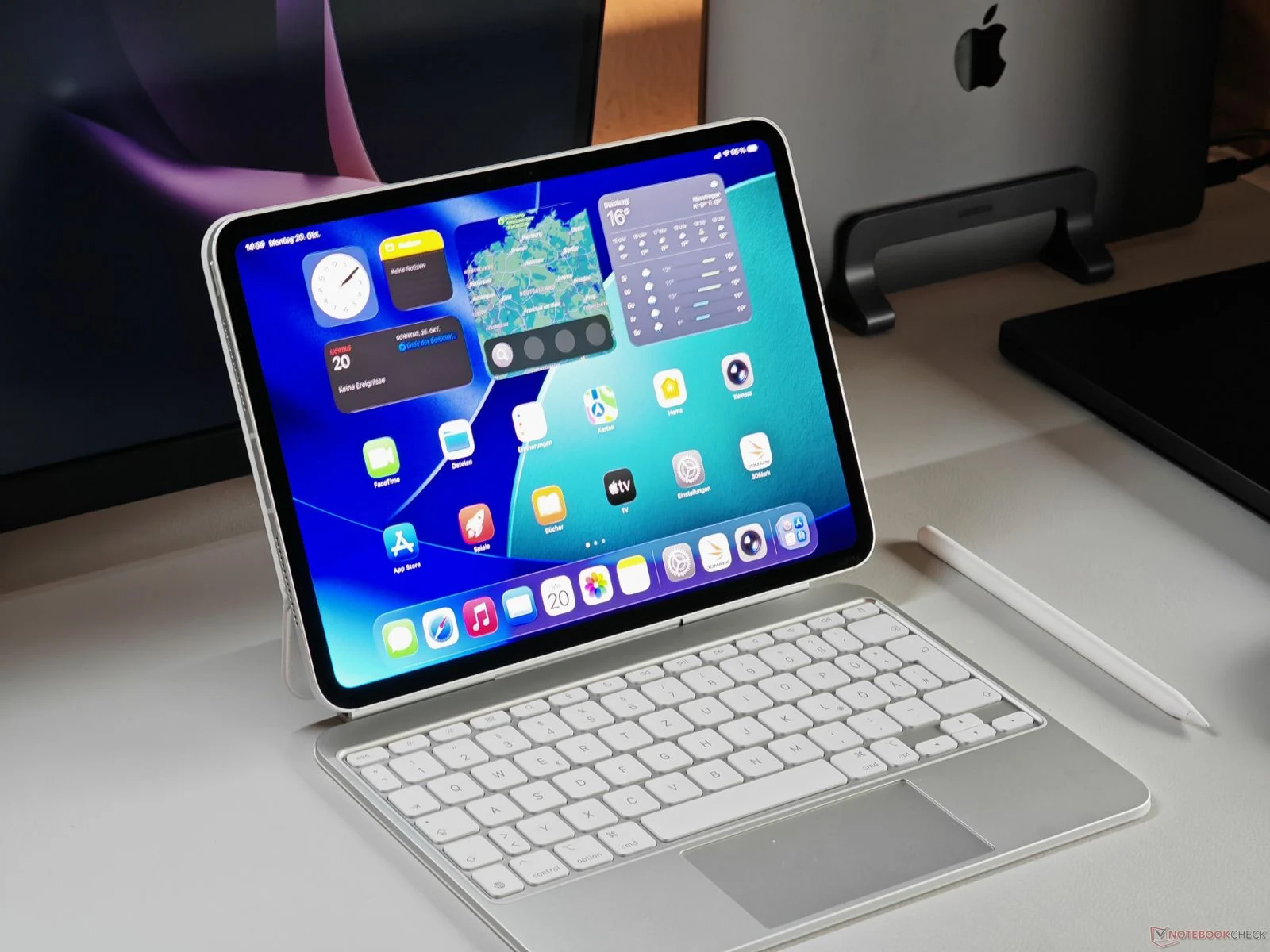
    Apple has recently upgraded the chip inside its iPad Pro to the new M5 processor, launching it alongside the tablet. At first sight, you might think the M4 iPad Pro from last year and this year’s M5 version are the same, but there are several significant changes beneath the surface beyond just the chip upgrade. Let’s dive into what’s new with the M5 iPad Pro and what still remains the same in Apple’s latest high-end tablet.

    Display Upgrades

    The M5 iPad Pro now supports external displays with a refresh rate of up to 120 Hz. In contrast, the M4 iPad Pro had a maximum refresh rate of only 60 Hz for external displays. Additionally, the M5 model sports a slightly larger 11.1-inch (28.22 cm) Ultra Retina XDR Tandem OLED display, compared to the 11.0-inch (27.96 cm) display on the M4. However, the displays on the 13-inch M4 and M5 iPad Pro models are exactly the same. Other than this, the display and build specs of both the M4 and M5 iPad Pro models are unchanged.

    Chip Configuration

    Inside the new iPad Pro, the M5 chip keeps a similar CPU layout to the M4, featuring a 9-core setup (three performance and six efficiency cores) on the 256 GB and 512 GB models, while a 10-core configuration (four performance and six efficiency cores) is available for the 1 TB and 2 TB versions. The M5 also introduces a completely redesigned GPU with dedicated Neural Accelerators in each core, which Apple states offers significantly enhanced AI and graphics performance.

    Performance Enhancements

    Apple asserts that this new architecture can provide up to 3.5 times greater AI performance than the M4, with a quicker 16-core Neural Engine and improved memory bandwidth of 153 GB/s compared to 120 GB/s on the M4. The M5 iPad Pro also comes with more memory in its base model, featuring 12 GB of RAM for the 256 GB and 512 GB versions. Meanwhile, the 1 TB and 2 TB models still have 16 GB of RAM. Both chips utilize the same advanced media engine, but the M5 introduces better encoding and decoding efficiency.

    Camera and Connectivity

    The iPad Pro M5 keeps the front and rear camera hardware identical to the M4, but it brings new advancements in connectivity. The new N1 wireless chip allows for Wi-Fi 7, Bluetooth 6, and Thread, which Apple claims enhances hotspot reliability and general wireless performance. Additionally, cellular models now include Apple’s new C1X modem, which promises data speeds that are up to 50% faster and 30% more efficient in power usage.

    Battery Life and Charging

    Battery life remains the same as its predecessor, but the M5 iPad Pro now supports official fast charging, allowing quicker power replenishment with a compatible high-wattage adapter. Both models retain a USB-C connector with Thunderbolt / USB 4 support.

    Audio and Pricing

    Concerning audio, both the M5 and M4 iPad Pro versions possess the same four-speaker audio system along with four high-quality microphones. The number and types of sensors are also unchanged across both models.

    The pricing for the M4 and M5 iPad Pro models is the same. You can find detailed pricing for the M5 iPad Pro. However, it’s worth noting that the M4 iPad Pro lineup began with a model that had 8 GB of memory and 256 GB of storage, whereas the M5 iPad Pro starts with 12 GB of memory and the same 256 GB of storage.

    Source:
    Link


  • Apple iPad Pro M5 Chip Launch: 50% More Memory, $999 Starting Price

    Apple iPad Pro M5 Chip Launch: 50% More Memory, $999 Starting Price

    Key Takeaways

    1. Apple has launched the new iPad Pro (2025) featuring the advanced M5 chip, enhancing AI performance and speed compared to the M4 model.

    2. Two Russian YouTubers leaked unboxing videos of the iPad Pro M5 before the official announcement, showcasing a similar design to the previous model but with notable internal upgrades.

    3. The M5 chip includes significant improvements, such as a third-generation ray-tracing engine, faster Neural Accelerators, and enhanced memory bandwidth, resulting in better graphics and AI capabilities.

    4. The design of the iPad Pro remains largely unchanged, featuring a slim profile and a single rear camera, with most upgrades focused on internal performance and connectivity enhancements.

    5. Pre-orders for the iPad Pro with the M5 chip began today, with shipping set for October 22, and available in silver and space black with multiple storage options.


    I recently shared details about the M5 leak timeline, highlighting the anticipated launch of the M5 MacBook in October alongside the M5 chip. Now, it’s confirmed that Apple has unveiled the new iPad Pro (2025), which is powered by the cutting-edge M5 chip, representing the company’s most robust and AI-driven iPad to date.

    Exciting Unboxing Videos

    This announcement came after a surge of online excitement when two Russian YouTubers, Wylsacom and Romancev768, uploaded unboxing clips of the iPad Pro M5 just days before the official release. These videos showcased what seemed to be an unreleased model equipped with the M5 chip.

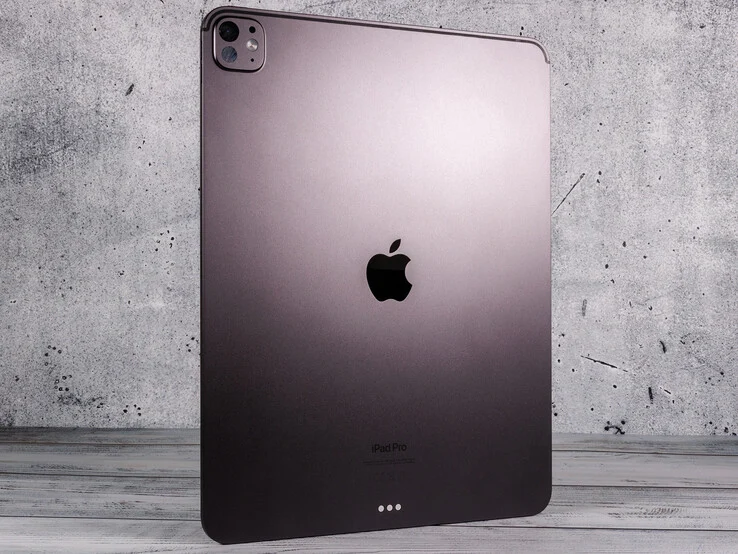
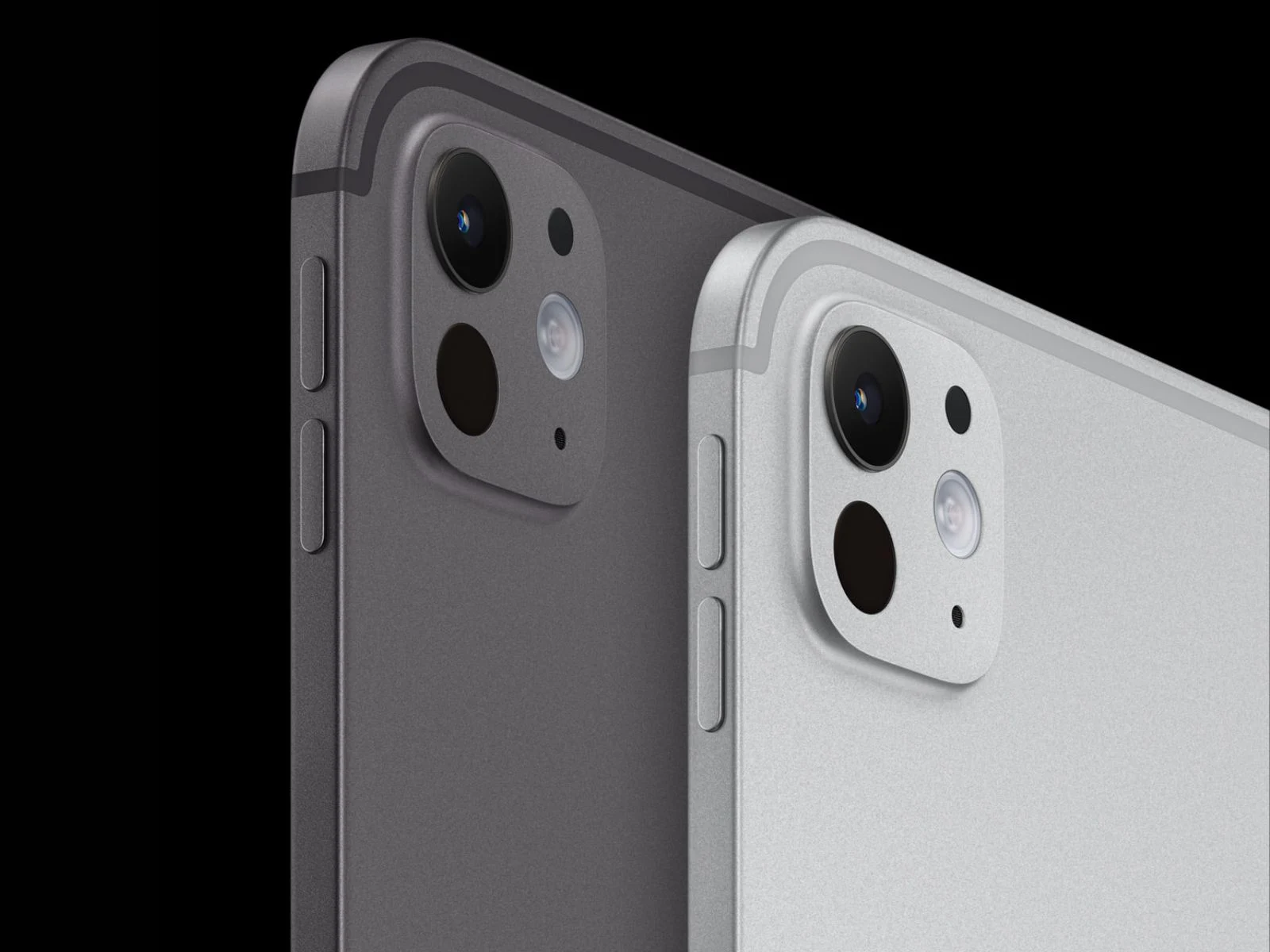
    The leaked footage displayed a design that closely resembles the existing version, featuring a single rear camera and a sleek, minimalistic body. However, the “iPad Pro” branding was conspicuously absent from the back. One device also seemed to have an additional front-facing sensor intended for portrait mode, although its specific function is still uncertain. Meanwhile, Geekbench scores from the leaked model aligned closely with Apple’s assertions of significant CPU and GPU improvements over the M4 model.

    Impressive Specifications

    The newly launched iPad Pro is equipped with the M5 chip. Each GPU core now comes with its own Neural Accelerator, which Apple claims enables AI operations to be up to 3.5 times swifter than the previous M4 model and about 5.6 times quicker than the M1 version.

    The models featuring 256 GB and 512 GB of storage maintain a 9-core CPU (three performance cores and six efficiency cores), a 10-core GPU, hardware-accelerated ray tracing, a 16-core Neural Engine, and an upgraded memory bandwidth of 153 GB/s, compared to 120 GB/s on the M4 variant.

    For the 1 TB and 2 TB models, these come with a 10-core CPU (four performance and six efficiency cores) along with a 10-core GPU.

    Enhanced Performance Features

    The M5 chip also introduces a third-generation ray-tracing engine, which claims to enhance 3D rendering speeds by as much as 6.7 times against the M1 and 1.5 times over the M4.

    Apple has incorporated two additional chips. The N1 wireless chip provides support for Wi-Fi 7, Bluetooth 6, and Thread, while the C1X modem in the cellular variant is said to offer mobile data speeds that are 50% faster and consume 30% less power.

    The M5 iPad Pro ships with iPadOS 26, which brings along a new Liquid Glass interface, smarter multitasking capabilities, and better file management. Apple’s innovative Apple Intelligence system adds features like text summarization, live translation, and smart suggestions within apps.

    A Subtle Upgrade

    The M5 version is more of an enhancement compared to last year’s M4 model. The design remains largely the same, maintaining a slim profile — 5.3 mm for the 11-inch and 5.1 mm for the 13-inch version — alongside an Ultra Retina XDR OLED display and two color choices: silver and space black. It still uses a single rear camera, and despite rumors about a second front sensor, Apple has not provided any confirmations.

    The bulk of the improvements lie internally. Apple claims that the M5 offers a noticeable enhancement in AI and graphics performance while introducing the new N1 and C1X chips for better wireless and cellular connectivity. The updated iPad Pro boasts storage read and write speeds that are up to 2× faster, with the 256 GB and 512 GB models starting with 12 GB of unified memory, while the larger 1 TB and 2 TB versions retain 16 GB of memory.

    The new iPad Pro can reach a 50 percent charge in roughly 30 minutes with a high-wattage USB-C power adapter, like Apple’s 70 W model. For those who already have the M4 iPad Pro, this year’s update is more of a minor update rather than a complete overhaul.

    Pre-Order Information

    The iPad Pro with the M5 chip is available for pre-order starting today on Apple’s website and through the Apple Store app in 31 countries, including the U.S. It is set to start shipping and arriving in stores on Wednesday, October 22. The tablet is offered in two colors — silver and space black.

    Both models come in four storage options — 256 GB, 512 GB, 1 TB, and 2 TB.

    Source:
    Link


  • Apple Teases New M5 MacBook Pro and iPad Pro Launch Soon

    Apple Teases New M5 MacBook Pro and iPad Pro Launch Soon

    Key Takeaways

    1. The next-gen iPad Pro features the new Apple M5 chip and is set to launch soon, as suggested by an unboxing video.
    2. The MacBook Pro M5 has FCC approval but lacks Wi-Fi 7 capability.
    3. Delivery times for current iPad Pro and MacBook Pro models indicate upcoming releases, with many versions out of stock.
    4. The iPad Pro is expected to have modest upgrades, including a RAM increase from 8 GB to 12 GB and the addition of a second front camera.
    5. Significant upgrades for the MacBook Pro are not expected until the Apple M6 arrives next year, which may include a redesign and an OLED touchscreen.


    The unveiling of the next-gen iPad Pro took place recently in an unboxing video, which also showcased early performance results of the Apple M5 chip. Meanwhile, the MacBook Pro M5 has gained approval from the US Federal Communications Commission (FCC) but seems to still be missing Wi-Fi 7 capability. Additionally, the Apple Online Store has hinted that the launch of both devices is just around the corner.

    Delivery Times Indicate Upcoming Releases

    Certain versions of the iPad Pro powered by the Apple M4 are currently out of stock, with the website noting that delivery could take one to two weeks. For the base model of the 14-inch MacBook Pro, the estimated delivery period is two to three weeks, whereas models with increased storage might take longer, around seven to ten days. Such delays in delivery often suggest that Apple is gearing up to release new models, as they tend to sell off older inventory without restocking.

    Expected Features and Upgrades

    In terms of upgrades, the new chip is the main highlight for the iPad Pro, with other changes expected to be quite modest. There are rumors that Apple won’t alter the design or display. The base model is rumored to come with 12 GB of RAM, up from the previous 8 GB, and a second front camera might be introduced. As for the MacBook Pro, a more substantial upgrade is not anticipated until the Apple M6 arrives next year, which is expected to feature a redesigned look and an OLED touchscreen. In the fall, consumers can also look forward to a new Vision Pro mixed reality headset, the next-gen Apple TV 4K, and an updated HomePod mini.

    Source:
    Link