
Key Takeaways
1. Jakobshavn Glacier is the most dynamic glacier on Greenland’s ice sheet and significantly contributes freshwater to the ocean during summer.
2. The meltwater from the glacier brings important nutrients like iron and nitrate, essential for phytoplankton growth, which is vital for the marine food chain.
3. Nutrient levels in surface waters typically decrease in summer, making glacial meltwater crucial for sustaining phytoplankton during this time.
4. NASA used advanced computer models to analyze Jakobshavn Glacier, finding that glacial melt can increase summer phytoplankton growth by 15% to 40%.
5. More research is needed to understand the effects of glacial melt on phytoplankton across Greenland’s 250 similar glaciers.
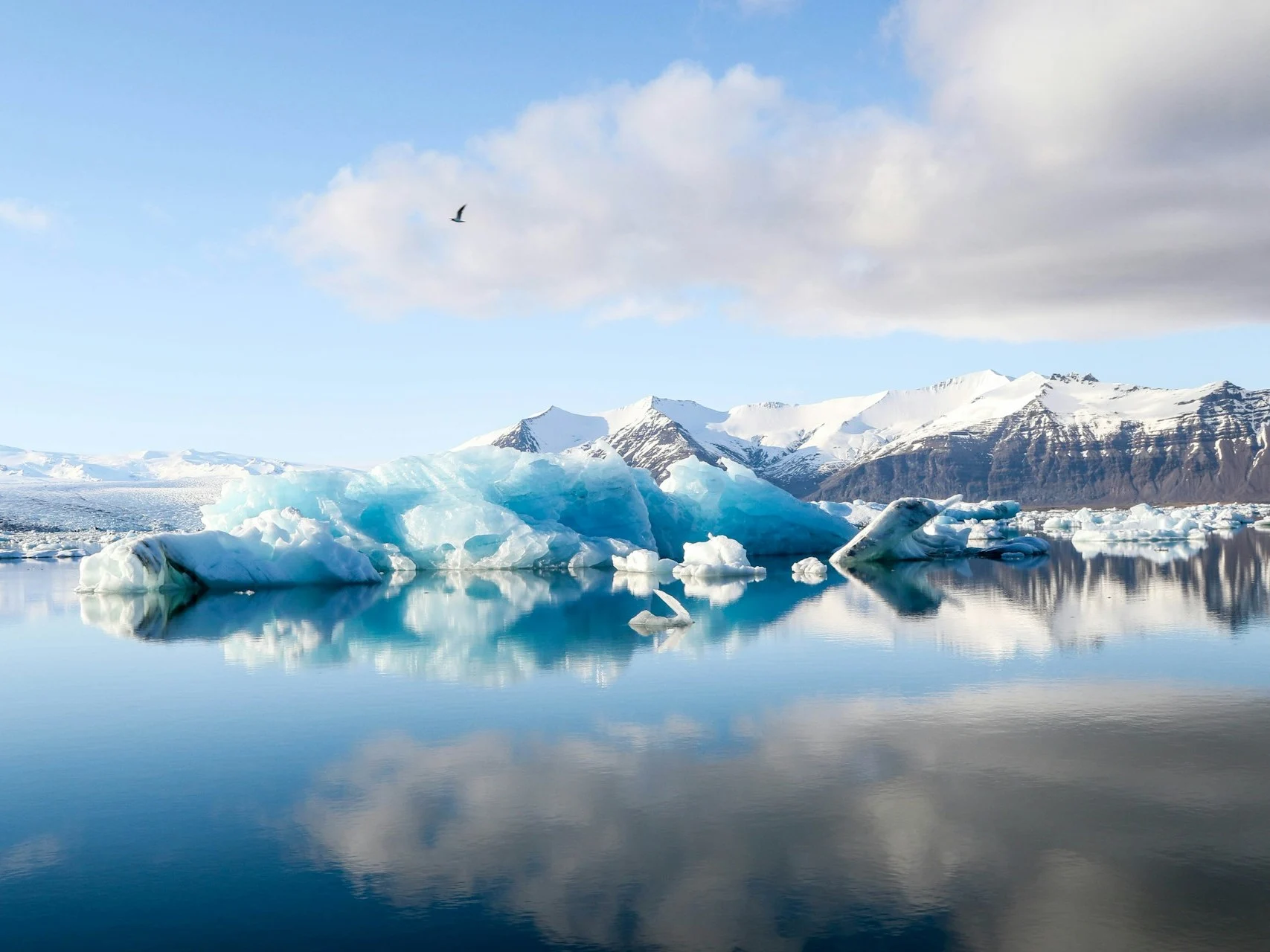
Jakobshavn Glacier, which is also referred to as Sermeq Kujalleq, stands out as the most dynamic glacier on Greenland’s ice sheet. Situated on the western coast of the island, this glacier plays a significant role in releasing large amounts of freshwater into the ocean during the summer months. The meltwater is less dense than saltwater, causing it to float and potentially bringing along important nutrients like iron and nitrate. These nutrients are crucial for phytoplankton growth, which forms the foundation of the marine food chain, providing sustenance for krill and other small creatures that larger marine animals, such as fish and whales, rely on.
Nutrient Dynamics in Summer
Typically, the levels of nutrients found in surface waters drop in the summer as they are mostly consumed during the spring phytoplankton bloom. Therefore, the upwelling caused by glacial meltwater becomes vital for sustaining Greenland’s phytoplankton during the summer season. However, validating this phenomenon close to Greenland’s thick ice sheet has been extremely difficult due to the coastal waters being filled with enormous icebergs, comparable to the size of city blocks.
NASA’s Innovative Approach
To tackle this situation, NASA employed sophisticated computer models to recreate the fjord of Jakobshavn Glacier. They used the Estimating the Circulation and Climate of the Ocean-Darwin (ECCO-Darwin) model, which leverages decades of collected data. By running this model on their powerful supercomputers, NASA discovered that glacial melt could boost summer phytoplankton growth by anywhere from 15% to 40%.
Future Research Needs
Despite these promising findings, there is still a considerable amount of research needed, as noted by Dustin Carroll, an oceanographer at NASA’s Jet Propulsion Laboratory in Southern California. “We’ve pieced together what occurs in one significant system, but there are over 250 similar glaciers all around Greenland,” Carroll pointed out.
Source:
Link


Leave a Reply