Category: Computers

  • Buy Fanless Intel Core Ultra 7 155H Mini PC with 6x 2.5 GbE NICs

    Buy Fanless Intel Core Ultra 7 155H Mini PC with 6x 2.5 GbE NICs

    Key Takeaways

    1. Cooling Efficiency: Mobile CPUs, like Intel’s Meteor Lake-H series, can run without active cooling in larger mini PCs with effective passive cooling designs.

    2. Home Lab Suitability: The UDPTCP mini PCs offer a wide range of connectors and can withstand temperatures from 0 to 60° C and humidity up to 95%, making them ideal for home labs.

    3. Pricing and Configurations: The barebones kit is priced at $559, with the best configuration (32 GB RAM + 1 TB SSD) available for $749.99.

    4. Performance Specs: All configurations feature the Core Ultra 7 155H CPU, DDR5-4800 RAM, and a PCIe 4.0 X4 SSD, with additional expansion options on the motherboard.

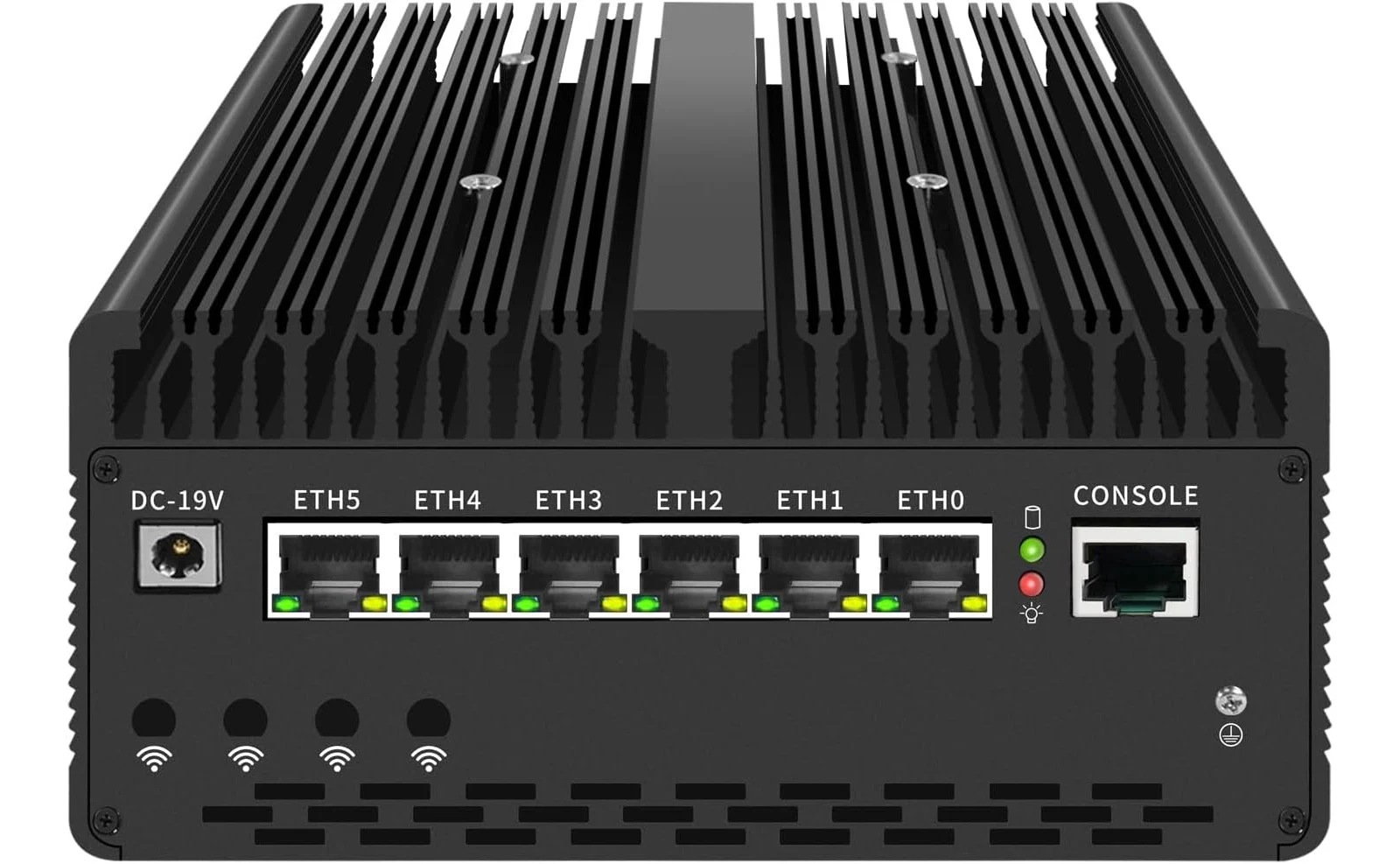
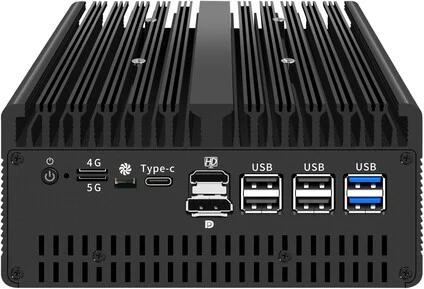
    5. Extensive Connectivity: The mini PC includes 6x Intel i226-V 2.5 GbE network cards, Thunderbolt 4, multiple USB ports, display outputs, and SIM card slots for 5G and 4G connectivity.


    As mobile CPUs become more efficient each year, the demand for complex cooling solutions is going down, especially in mini PCs that use mid-range processors. Intel’s Meteor Lake-H series has been around for nearly 2 years and initially needed the standard cooling fans. However, mini PC manufacturers in China have discovered that these processors can run without active cooling if the chassis is a bit larger and designed with substantial passive cooling systems. A recent example of this design is now listed on Amazon, featuring numerous configurations and an impressive selection of ports.

    Port Abundance for Home Labs

    Recent extreme heat waves due to global warming might pose challenges for fanless mini PC designs. Yet, the products from the lesser-known Chinese brand UDPTCP offer a remarkable variety of connectors, making these mini PCs perfect for a home lab setup. This system can tolerate temperatures ranging from 0 to 60° C and humidity levels up to 95%.

    Pricing and Configurations

    Amazon has the barebones kit priced at $559, but there are various RAM+SSD options available. The 32 GB RAM + 1 TB SSD configuration looks like the best choice at $749.99.

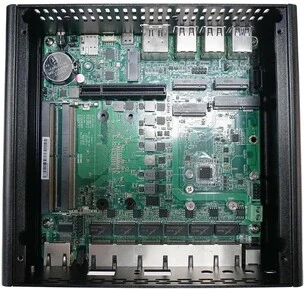
    Even though the motherboard supports DDR5-5600 memory, the top configuration on Amazon only provides DDR5-4800 RAM. The 1 TB SSD is linked to a PCIe 4.0 X4 slot. All configurations are powered by the Core Ultra 7 155H, which remains a strong mid-range mobile CPU that includes a capable Arc iGPU with 8 Xe cores. The slightly larger motherboard also features a PCIe 4.0 x8 expansion slot, along with M.2E and M.2B Key card slots. It’s noteworthy that none of the configurations available on Amazon come with a Wi-Fi card included.

    Robust Connectivity Options

    What differentiates this mini PC is not just the passive cooling case but also the extensive port selection, which comprises 6x Intel i226-V 2.5 GbE network cards and an additional network console GbE jack. The variety of peripheral connectors is also impressive, offering a Thunderbolt 4 port, 2x USB-A 3.2 Gen 2 ports, 4x USB 2.0 ports, display outputs like DP and HDMI, and 2 SIM card slots (1 for 5G and 1 for 4G).

    Source:
    Buy Fanless Intel Core Ultra 7 155H Mini PC with 6x 2.5 GbE NICsBuy Fanless Intel Core Ultra 7 155H Mini PC with 6x 2.5 GbE NICs


  • GMK M6 Ultra Mini PC: Affordable Ryzen 5 7640HS with Dual Ethernet

    GMK M6 Ultra Mini PC: Affordable Ryzen 5 7640HS with Dual Ethernet

    Key Takeaways

    1. GMK has unveiled the budget-friendly M6 Ultra mini PC powered by an AMD Ryzen 5 7640HS APU.
    2. The mini PC features 16 GB of DDR5 RAM and a Radeon 760M integrated GPU, suitable for light gaming.
    3. It offers a variety of connectivity options, including USB4, dual 2.5G Ethernet, HDMI 2.0, and support for WiFi 6, with upgradable memory up to 128 GB and storage to 8 TB.
    4. The entry-level model is priced at 1999 Yuan (about $280), while a barebones version is available for 1499 Yuan ($208).
    5. A global launch date for the M6 Ultra mini PC has not been confirmed yet, but it is expected to be released soon.


    Companies often enjoy hinting at their upcoming products, and GMK is no different. This well-known mini PC manufacturer has just teased a new budget-friendly mini PC known as the M6 Ultra. Now, this affordable system powered by AMD has been completely unveiled, and its specifications look quite appealing given the cost.

    Core Specifications

    The GMK M6 Ultra mini PC is equipped with a solid six-core AMD Ryzen 5 7640HS APU, along with 16 GB of DDR5 RAM in its base model. As a part of the Zen 4 “Phoenix” family, the Ryzen 5 7640HS remains a commendable processor even two years after its debut, standing on par with the Intel Core Ultra 7 256V in synthetic tests. The Radeon 760M integrated GPU is also impressive and should suffice for some light gaming play.

    Connectivity Options

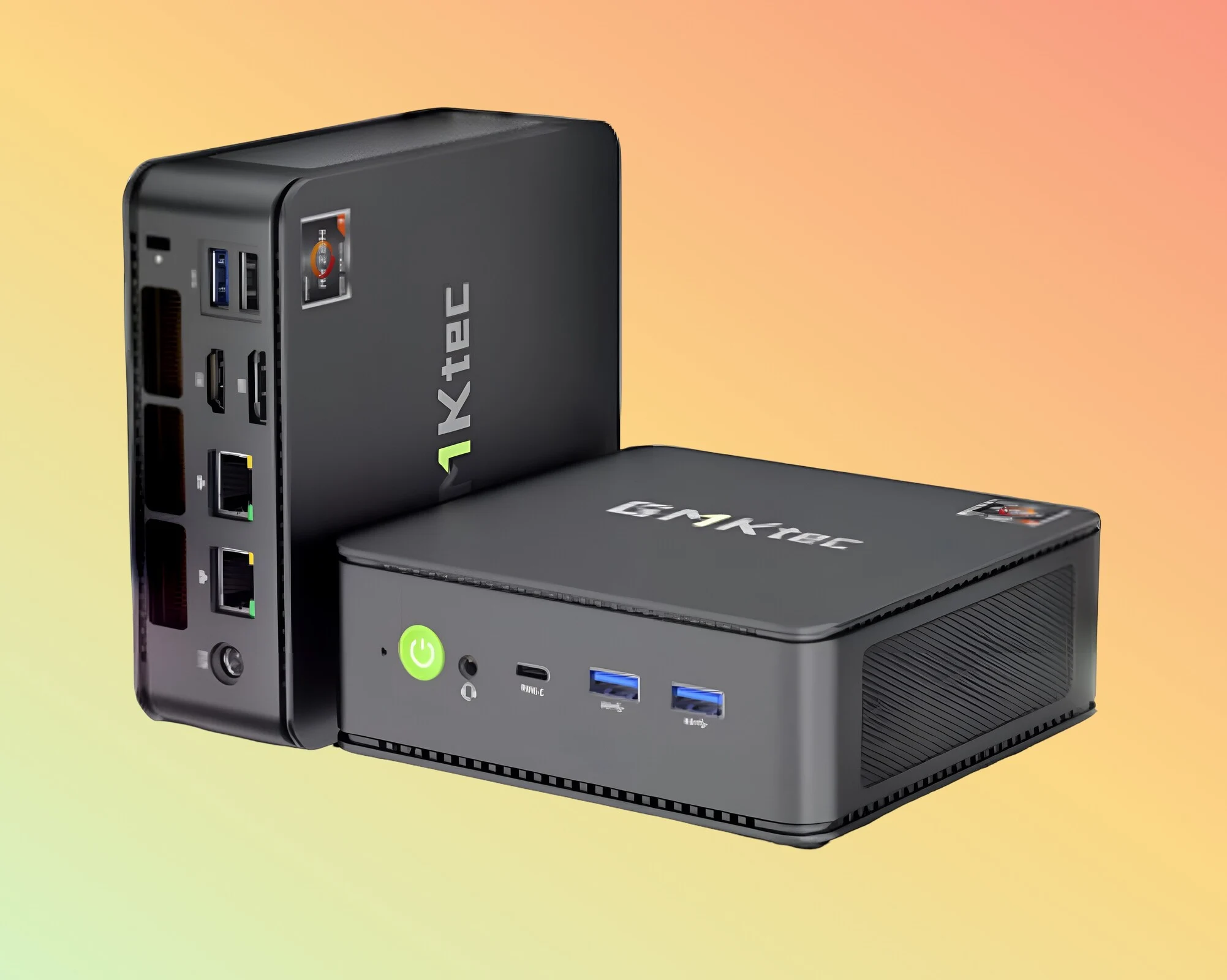
    When it comes to ports, this mini PC is well-equipped. It includes USB4, USB 2.0, dual USB 3.2 Gen 2 Type-A, USB 3.2 Gen 1 Type-A, dual 2.5G Ethernet ports, HDMI 2.0, DisplayPort 1.4, and an audio jack. Users can upgrade memory up to an impressive 128 GB and storage to 8 TB due to its dual M.2 2280 slots. For wireless connectivity, it supports WiFi 6. However, it does lack OCuLink, which isn’t too surprising considering its price point. The USB4 port can handle eGPUs, although at reduced speeds.

    Pricing and Availability

    GMK has shared the pricing for the M6 Ultra mini PC. The entry-level model, which comes with 16 GB of RAM and 512 GB of storage, is priced at 1999 Yuan, or about $280. There’s also a barebones version available for 1499 Yuan ($208). Given its specifications, the M6 Ultra mini PC seems to offer great value for the money. While a global launch date hasn’t been confirmed yet, it’s certainly a possibility.

    For those seeking more power and OCuLink support, the Aoostar GEM12+ comes with an 8-core, 16-thread Ryzen 7 PRO 8845HS APU, currently available for $359 on Amazon.

    Source:
    Link


  • Beelink SER9 Mini PC Launches Affordable 8-Core Ryzen 7 H 255

    Beelink SER9 Mini PC Launches Affordable 8-Core Ryzen 7 H 255

    Key Takeaways

    1. The Beelink SER9 Pro mini PC features the Ryzen 7 H 255 APU, offering similar performance to the Ryzen 7 8745HS.
    2. Key advantages of the SER9 Pro include a four microphone array, dual HD speakers, and an AI voice assistant called Duaobao.
    3. The standard SER9 mini PC is a cost-effective alternative, priced at 2599 Yuan (around $361), lacking the extras of the Pro version.
    4. The AMD Ryzen 7 H 255 APU has eight Zen 4-based cores and sixteen threads, with good performance for 1080p gaming in 2025.
    5. The higher-end SER9 Pro mini PC, equipped with the Ryzen AI HX 370, is available for international customers at $919 on Amazon.


    A few weeks back, Beelink launched a new basic version of the SER9 Pro mini PC. It runs on the Ryzen 7 H 255 APU, which is almost the same as the Ryzen 7 8745HS that many users appreciate. This mini PC provides good value for money. Now, it seems the standard SER9 mini PC is also being updated similarly.

    Advantages of the SER9 Pro

    The Beelink SER9 Pro mini PC comes with some perks that the regular SER9 lacks, like a four microphone array, dual HD speakers, and an AI voice assistant called Duaobao. For those who don’t need these extras, the standard SER9 is a good choice, allowing you to save about 100 Yuan. The price for the SER9 mini PC starts at 2599 Yuan, which is around $361, and it includes 32 GB of LPDDR5X-6400 memory.

    Specifications and Performance

    Most details about the mini PC remain the same. The main feature is the AMD Ryzen 7 H 255 APU designed for the Chinese market, boasting eight Zen 4-based cores and sixteen threads. As the specs show, its performance is nearly on par with Ryzen 7 8745H. The Radeon 780M integrated GPU performs well enough in 2025, making it capable of running low-end 1080p games smoothly. The selection of ports is quite good, including these options:

    Availability for International Customers

    For those living outside of China, the higher-end Beelink SER9 Pro mini PC, which is powered by the Ryzen AI HX 370, can be purchased for $919 on Amazon as of now.

    Source:
    Link


  • Iqunix Hall Effect Keyboards Outshine Wooting with Macro Features

    Iqunix Hall Effect Keyboards Outshine Wooting with Macro Features

    Key Takeaways

    1. The Iqunix EZ63 now supports on-board macros after a recent firmware update, allowing users to create and store macros without additional software.
    2. The firmware update also introduced the ability to switch profiles on-board, enhancing usability as a daily keyboard.
    3. The macro recording process is user-friendly, with 16 macro slots available, but requires the latest firmware to function properly.
    4. The EZ63 is effective for both gaming and productivity tasks, but lacks the ability to export macros and key mappings, which limits customization.
    5. Compared to competitors like Keychron, Iqunix needs to improve its export options to enhance user experience after firmware updates.


    When I checked out the Iqunix EZ63 earlier this year, I gave it high marks for its sturdy build, comfortable typing experience, and satisfying sound. The software interface was the only significant letdown when compared to the Wooting 80HE, and it still doesn’t quite match up in that area. However, a recent firmware update has introduced a feature that has long been a weak point of Wooting’s keyboards for daily use — on-board macros. Wooting offers a solution called Wootomation, which runs in the background to convert keyboard inputs into macros, but it has some drawbacks, especially with Linux where it can be quite tricky.

    New Features with Firmware Update

    With the latest firmware update from Iqunix, which applies to both the EZ and EV series Hall effect keyboards, users can create macros that are stored in the keyboard’s built-in memory directly through the Iqunix web driver. This means you don’t need to install any additional software or have background services consuming important RAM and CPU resources. It also allows for a more uniform experience across different operating systems or computers, and it works seamlessly on Linux, as long as you access it via a Chromium browser.

    Additional Improvements

    This marks the second significant feature Iqunix has rolled out through a firmware update recently, with the first being the ability to switch profiles on-board, which greatly enhances the usability of the EZ63 (currently priced at $179.99 on Amazon) as a daily keyboard option.

    Recording macros in the EZ Software is very straightforward, featuring its own dedicated tab that makes it user-friendly. There are a total of 16 macro slots available, and during our tests, the macros performed well. However, if you attempt to create macros without first updating the firmware — the tab still appears in the software even without the update — you may encounter issues where keys get stuck.

    Still Room for Improvement

    In essence, the EZ63 has transformed into an 8 kHz Hall effect gaming keyboard that is also capable of handling macro-based productivity tasks effectively. Nevertheless, there’s still one vital feature missing that would help elevate this keyboard to a more recommended status — the ability to export macros and key mappings. This is an area where Keychron currently holds an advantage over Iqunix, even if their keyboards don’t match the EZ63’s impressive speed. With the Keychron Launcher, you can easily export macros and key maps, which is especially useful if a firmware update resets all your customized settings.

    Unfortunately, on the EZ63, there’s no option to export any settings, which could have cost you significant time to configure. This is increasingly crucial for Iqunix to address, as filling all 16 macro slots means it will take time to reconfigure everything after each firmware update.


  • Lenovo ThinkBook Plus: 16.7-Inch Rollable OLED Review

    Lenovo ThinkBook Plus: 16.7-Inch Rollable OLED Review

    Key Takeaways

    1. The ThinkPad X1 Fold 16 features a large 16-inch display and a folding design, but requires multiple accessories for optimal use.
    2. Essential accessories for the ThinkPad include an external keyboard, mouse, and kickstand folio case, which can be cumbersome.
    3. The new ThinkBook Plus Gen6 rollable offers a 14-inch OLED display that expands to 16.7 inches and comes with a built-in keyboard and clickpad.
    4. The ThinkBook rollable provides a more familiar and user-friendly experience compared to the ThinkPad foldable, especially in Portrait orientation.
    5. While the ThinkPad foldable has touchscreen capability, its performance on Windows 11 is lacking, making the ThinkBook rollable a more practical choice.


    In our assessment of the ThinkPad X1 Fold 16, we highlighted its large 16-inch display and its folding design that travelers will surely appreciate. However, this system depends heavily on at least three separate accessories to function well as a Windows PC. These include an external keyboard, an external mouse, and a kickstand folio case, which can feel a bit unwieldy when combined, despite the stylish folding design. Without an external mouse, using full screen mode can be nearly impossible.

    A New Alternative

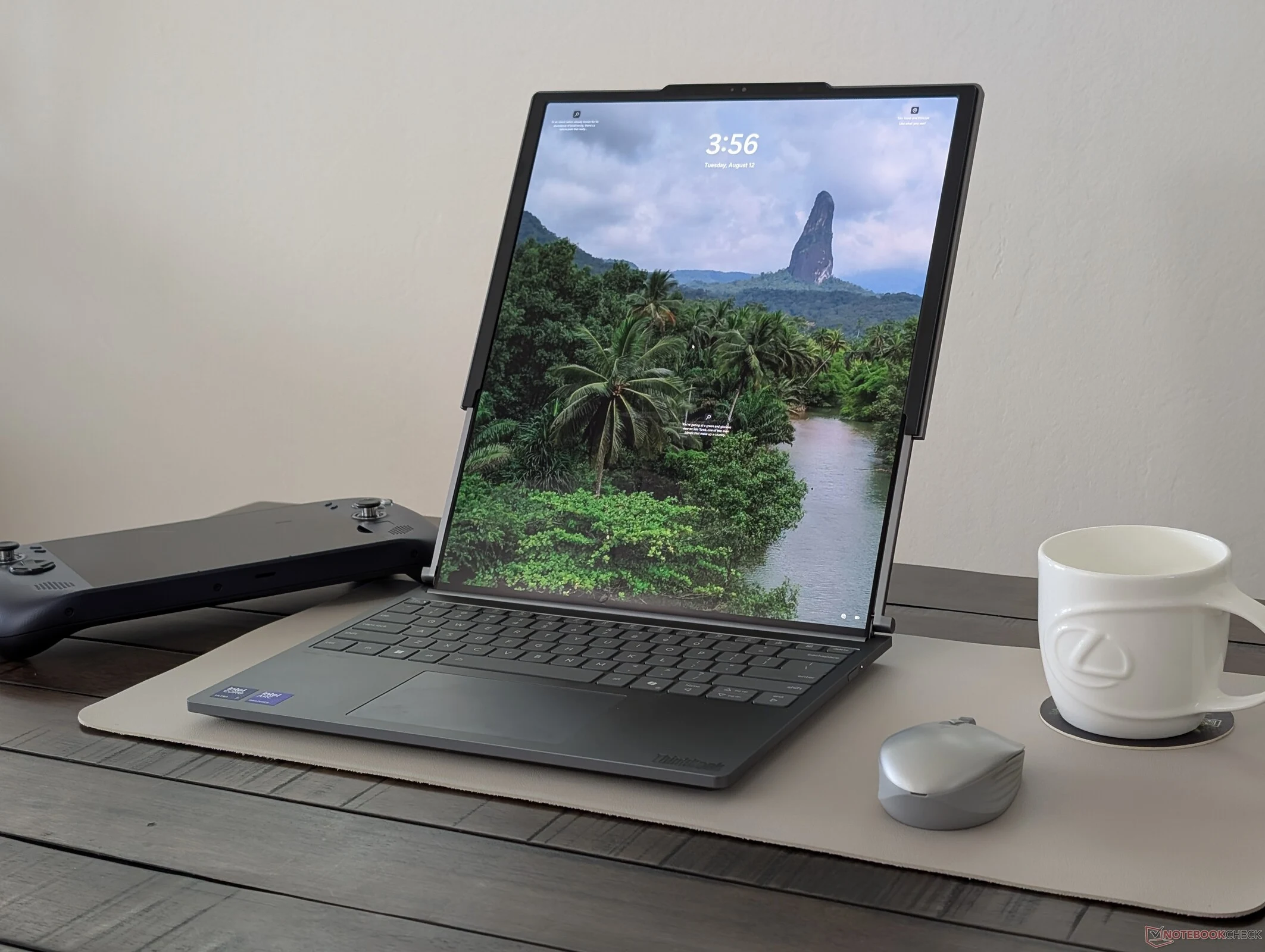
    Introducing the latest 14-inch ThinkBook Plus Gen6 rollable, which features a 14-inch OLED display that can be extended to 16.7 inches as needed. In contrast to the ThinkPad X1 Fold 16, the ThinkBook rollable resembles a standard clamshell laptop, complete with a built-in keyboard and a physical clickpad. This makes it more familiar and less awkward to use, and arguably more comfortable than the ThinkPad foldable in most instances, especially for tasks that benefit from the tall Portrait orientation.

    User Experience

    It’s worth noting that the ThinkPad foldable has one significant edge over the ThinkBook rollable: touchscreen capability. Nevertheless, the touchscreen performance on Windows 11 is infamously subpar, which makes this a minor tradeoff compared to the more user-friendly experience offered by the ThinkBook rollable.

    For more details on the unique rollable 16.7-inch OLED screen, check out our complete review of the ThinkBook Plus Gen6.


  • NASA IXPE Detects Unusual ‘Heartbeat Black Hole’ Activity

    NASA IXPE Detects Unusual ‘Heartbeat Black Hole’ Activity

    Key Takeaways

    1. Astronomers used NASA’s IXPE to study the Heartbeat Black Hole, finding a polarization degree of 9.1%, which is higher than expected.
    2. The corona is a hot X-ray-emitting region near the black hole, close to the accretion disk that pulls in matter from nearby stars.
    3. A 9.1% polarization suggests that the black hole’s corona is ideally shaped and viewed edge-on, but the exact angle remains unclear.
    4. Researchers proposed a model where X-rays pass through a wind of matter from the accretion disk, leading to increased alignment through Compton scattering.
    5. An alternative explanation involves plasma moving at high speeds within the corona, potentially increasing the observed polarization due to relativistic effects.


    Back in April, astronomers utilized NASA’s Imaging X-ray Polarimetry Explorer (IXPE) to investigate the Heartbeat Black Hole. The data revealed a polarization degree of 9.1%, significantly exceeding initial expectations. This finding indicates that the X-ray vibrations emitted from the black hole are highly aligned.

    Understanding the Corona

    The corona represents an intensely hot X-ray-emitting area located near the center of a black hole, situated close to the innermost section of the accretion disk. This accretion disk is a flattened, rotating formation typically composed of matter being drawn from nearby stars.

    Implications of High Polarization

    A polarization degree reaching 9.1% implies that the corona of the black hole is ideally shaped and seen from an edge-on perspective; however, the scientists were unable to directly assess the viewing angle due to the faintness of the stellar companion.

    To clarify this unusual phenomenon, the astronomers proposed a model that involved a wind of matter being expelled from the accretion disk. In this scenario, the X-rays emitted from the corona travel through the wind, experience Compton scattering, and become more aligned as a result.

    Alternative Explanations

    Another possibility is that the plasma within the corona might be moving outward at speeds up to 20% of the speed of light. If this is the case, relativistic effects could cause the polarization to appear even higher than it actually is. Future research will investigate additional models to further unravel this enigma, and deciphering it will enhance our current knowledge of astronomy.

    Source:
    Link


  • Student Satellite to Study Rare Aurora Cousin

    Student Satellite to Study Rare Aurora Cousin

    Key Takeaways

    1. The University of Calgary students are launching FrontierSat, the city’s first student-built satellite, expected to launch in early 2026.
    2. FrontierSat is a 3U CubeSat designed to study a unique space weather event called STEVE, which appears as a ribbon of purple and green light.
    3. STEVE is distinct from auroras, as it does not involve charged particles, indicating a different and unknown light source.
    4. The satellite will use a mini plasma imager to collect data about the ionosphere, contributing to a multi-year dataset on STEVE.
    5. The mission is primarily funded by the Canadian Space Agency and involves over 100 students from the CalgaryToSpace team.


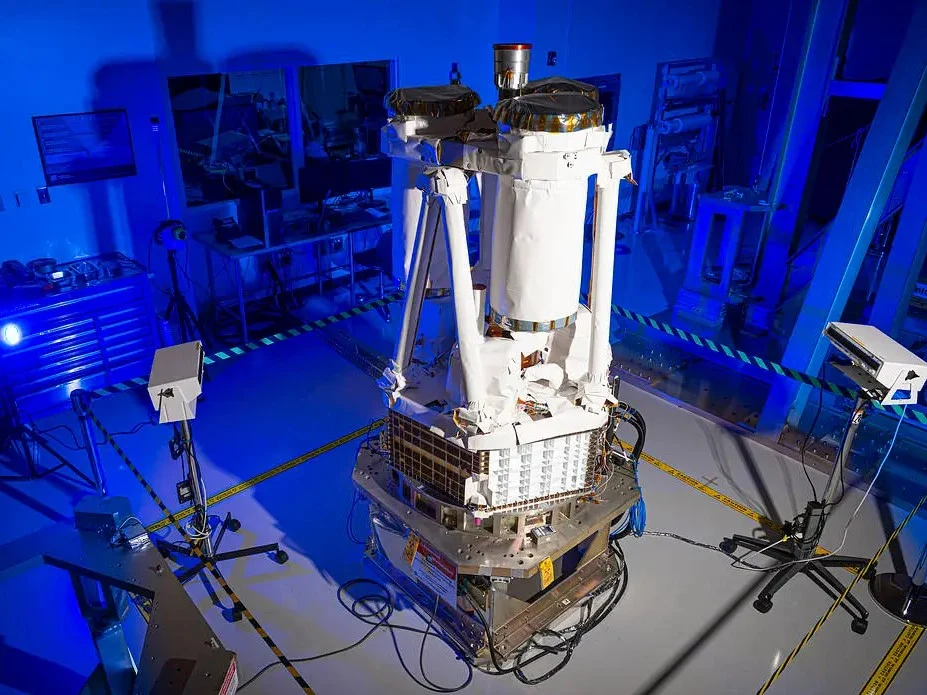
    A group of mainly undergraduate students from the University of Calgary is getting ready to launch the first satellite built by students in the city. The satellite, called FrontierSat, is a 3U CubeSat that has successfully completed its final vibration tests and is now waiting for its launch. While a specific launch date hasn’t been confirmed yet, it is expected to take place in early 2026 from California on a SpaceX Falcon 9 rocket. The SmallSat’s primary mission will be to collect data about a strange space weather event known as STEVE.

    Understanding STEVE

    STEVE, which stands for Strong Thermal Emission Velocity Enhancement, shows up in the night sky as a quick-moving, slender ribbon of purple and green light. Although it might be confused for an aurora, researchers at the University of Calgary have verified that it is actually a separate phenomenon.

    Unlike auroras, which are created by charged particles falling into Earth’s upper atmosphere, STEVE does not involve these particles. This suggests that the light it emits comes from a different and currently unknown source. The FrontierSat team is eager to investigate and unravel this cosmic enigma.

    Exciting Future Prospects

    “It would be fantastic if we could gather a multi-year dataset of STEVE observations with FrontierSat,” says Johnathan Burchill, the mission’s lead investigator.

    The satellite, roughly the size of a loaf of bread, will utilize a mini plasma imager to observe the ionosphere from space. Mainly funded by the Canadian Space Agency, this mission represents a significant milestone for the more than 100 students involved in the CalgaryToSpace team, who have dedicated their efforts to the design, construction, and testing of the satellite.

    Source:
    Link


  • L12 Pro Mini PC: Intel Core i9 & 32GB RAM at an Affordable Price

    L12 Pro Mini PC: Intel Core i9 & 32GB RAM at an Affordable Price

    Key Takeaways

    1. The Ninkear L12 Pro mini PC is priced at $693 with no additional import duties for EU customers.
    2. It features an Intel Core i9-12900HK processor, 32GB of DDR4 RAM, and a 1TB PCIe 3.0 SSD, but lacks a dedicated graphics card.
    3. The mini PC includes two 2.5 Gbps Ethernet ports and supports WiFi 6 on both 2.4 and 5 GHz bands.
    4. It can connect up to three monitors: one 4K via DisplayPort and two others via HDMI and USB Type-C.
    5. The dimensions are 5.1 x 5.0 x 2.0 inches, with standard USB 3.0 ports and a 3.5mm audio jack, but it does not support USB PD for power delivery.


    Ninkear has introduced a new small desktop computer known as the L12 Pro. It’s offered directly from the maker for $693, which they claim is a special launch price. Delivery times can differ based on where you are located, but customers in the EU won’t need to fret about additional import duties or taxes.

    Performance and Specifications

    This new mini PC is equipped with the Intel Core i9-12900HK, which should meet the needs of users seeking high performance, even if this isn’t the newest processor from Intel. However, it lacks a dedicated graphics card, making it less ideal for gaming, and it does not support external GPUs. Nevertheless, the Ninkear L12 Pro is packed with 32GB of DDR4 RAM and a 1TB PCIe 3.0 SSD. For most tasks, the slightly older and slower SSD likely won’t create a significant impact.

    Connectivity Options

    Moreover, the mini PC comes with two Ethernet ports that can reach speeds of 2.5 Gbps. Users will need a compatible router to use this feature. The same requirement goes for the WiFi 6 connections, which work on both 2.4 and 5 GHz bands.

    Display and Design Features

    Additionally, the new mini PC supports up to three high-definition monitors. You can connect one 4K display using DisplayPort, while the other two can connect through HDMI and USB Type-C. On both the front and back, there are two additional USB 3.0 Type-A ports, and the front also features a handy 3.5mm audio jack. The dimensions of the PC are 5.1 x 5.0 x 2.0 inches, and it uses a standard barrel plug for power; it seems that USB PD isn’t supported. This would typically allow for video transmission and power delivery through a single cable from a monitor.

    Source:
    Link


  • SpaceX Takes on Virginia’s $613M Broadband Plan with $60M Starlink

    SpaceX Takes on Virginia’s $613M Broadband Plan with $60M Starlink

    Key Takeaways

    1. SpaceX is unhappy with Virginia’s decision to spend over $613 million on a high-speed internet project, believing it can be done for much less using Starlink.
    2. The state plans to use funds from the BEAD program to connect homes without internet access, but SpaceX feels overlooked in this process.
    3. SpaceX criticizes the BEAD program for favoring costly fiber-optic solutions over more affordable and faster options like Starlink.
    4. SpaceX was chosen to provide Starlink service to only 5,579 of the 133,000 eligible households, receiving $3.2 million for this, while fiber connections will cost significantly more per household.
    5. SpaceX can deploy Starlink services immediately, unlike the four-year timeline proposed for fiber installation in Virginia.


    SpaceX is expressing dissatisfaction with Virginia’s decision to allocate over $613 million for a high-speed internet project, which the company believes could be achieved at a much lower cost. Instead of the costly fiber-optic solution, SpaceX has proposed to implement its Starlink systems.

    Funding for High-Speed Internet

    The state aims to utilize funds from the Broadband, Equity, Access, and Deployment (BEAD) program to connect those without internet access. In response, SpaceX has sent a letter to regulators, voicing concerns about being overlooked in a process that they see as an unnecessary expenditure of public funds.

    Concerns Over Cost and Efficiency

    SpaceX criticized the BEAD program in Virginia for favoring “expensive, slow-to-build fiber” rather than opting for “affordable, fast, and technology-neutral competition.” The company argues that it would only require $60 million to connect all eligible households in Virginia under the BEAD initiative.

    Limited Participation in the Program

    Notably, SpaceX was selected to provide Starlink to just 5,579 of the 133,000 households eligible under the BEAD plan in Virginia. It received $3.2 million, equating to approximately $584 per household. In contrast, the remaining households that will receive fiber connections will incur costs ranging from $6,000 to $8,000 each. A small total of $7.7 million was allocated to satellite internet providers, including SpaceX and Amazon.

    SpaceX also emphasized its capability to deploy Starlink services immediately, unlike the four-year timeframe suggested in Virginia’s broadband proposal. The company is urging the National Telecommunications and Information Administration (NTIA), part of the U.S. Department of Commerce, to revise Virginia’s broadband strategy.

    Source:
    Link


  • Free Transparent PC Case: Teenage Engineering Launches Computer-2

    Free Transparent PC Case: Teenage Engineering Launches Computer-2

    Key Takeaways

    1. Teenage Engineering’s new PC case, Computer-2, is offered at no cost, contrasting with their typically high-priced items.
    2. The Computer-2 case is currently out of stock, but buyers can sign up for email alerts when it becomes available.
    3. Assembly of the case requires no tools or screws, and it comes disassembled with online instruction manuals.
    4. The design is lightweight and made of slightly transparent plastic, suitable for smaller components, and resembles the Computer-1 model.
    5. The Computer-2 fits specific hardware components, including a mini-ITX motherboard and a dual-slot graphics card up to 18 cm long.


    Teenage Engineering items are usually very pricey. For instance, the TP-7 audio recorder is priced at $1,499 on Amazon, and the corresponding CM-15 microphone is available for a separate price of $1,119. However, with their new PC case, the design studio is taking a different route, allowing the Computer-2 to be ordered at no cost.

    Availability and Notification

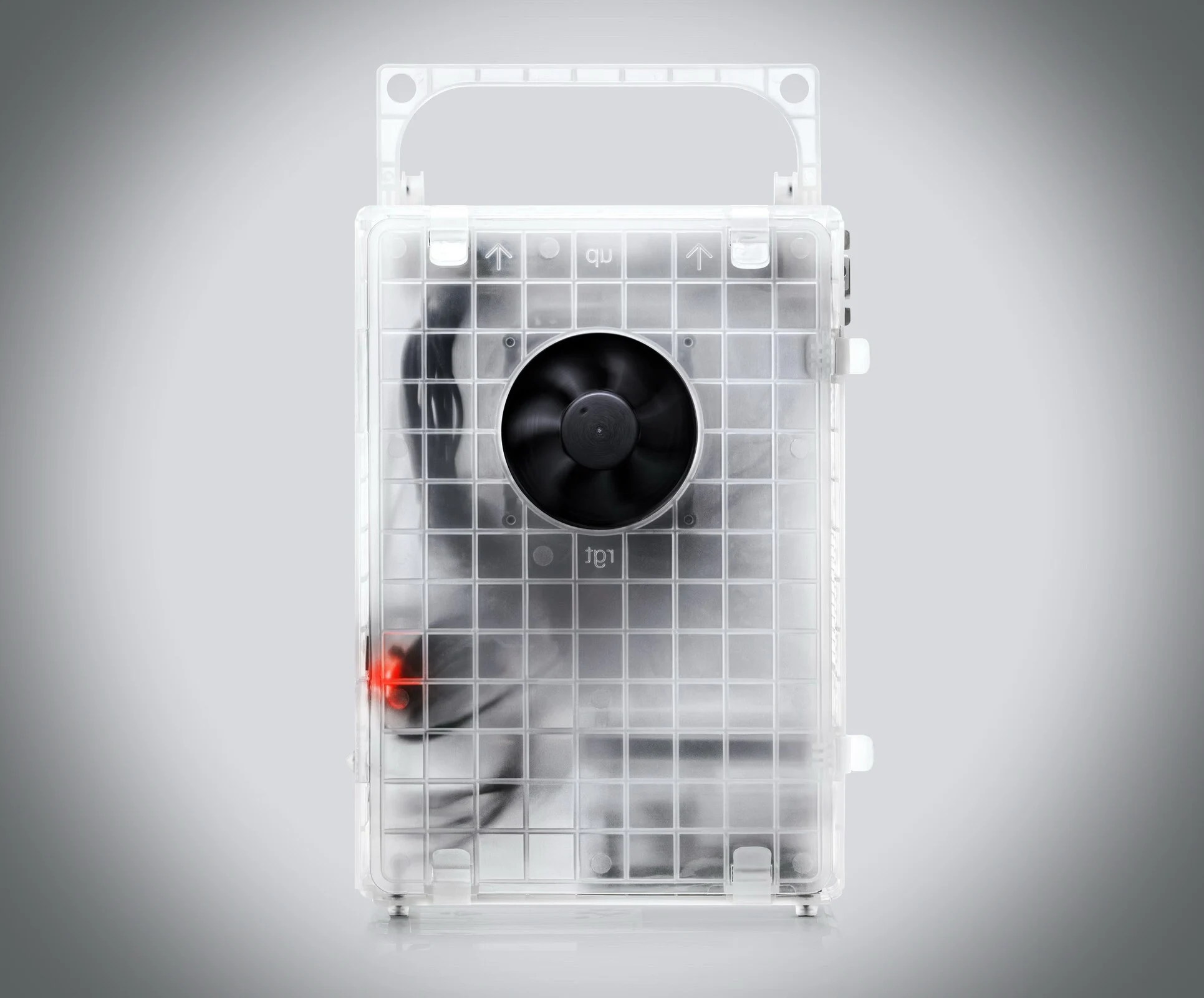
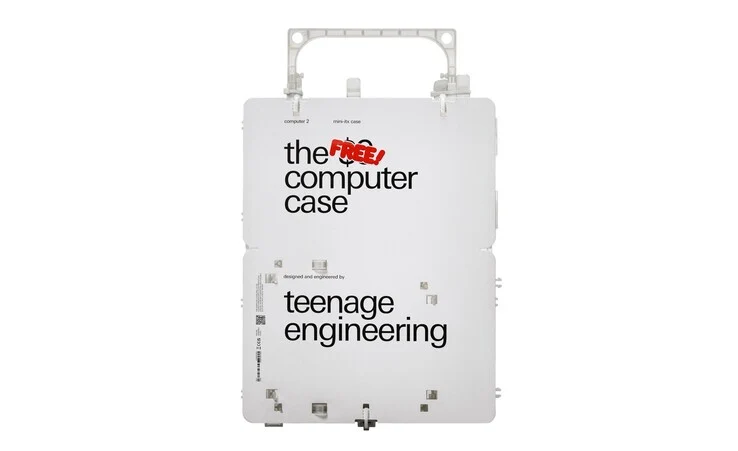
    Though the case is currently out of stock, potential buyers can sign up with their email on the product page to get alerts when it becomes available again. The Teenage Engineering Computer-2 is made up of a single plastic plate featuring a few hinges and an integrated handle for carrying. It comes disassembled, with instruction manuals offered online in PDF format.

    Assembly and Design

    No tools or screws are necessary for putting it together. The design closely resembles that of Computer-1, which is priced at €99/$99/£99. The slightly transparent plastic not only provides the new case with a unique appearance but also makes it much lighter compared to steel and aluminum cases. Nonetheless, this compact case is only suitable for smaller components.

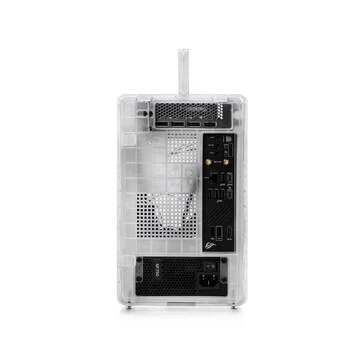
    According to Teenage Engineering, the Computer-2 fits a mini-ITX motherboard, an SFX power supply, a dual-slot graphics card that can be up to 18 centimeters long, and a single 80-millimeter fan. While the exact dimensions have not been released, it’s expected that the case will be around the same size as Computer-1, which measures 17 cm in width, 19 cm in depth, and 28.5 cm in height.

    Conclusion

    Teenage Engineering’s latest offering is a contrast to their usually high-priced products, making it an interesting option for tech enthusiasts.

    Source:
    Link