Category: Computers

  • Google to Construct Small Modular Nuclear Reactor in Tennessee

    Google to Construct Small Modular Nuclear Reactor in Tennessee

    Key Takeaways

    1. Google has partnered with Kairos Power and TVA to source energy from a small modular nuclear reactor for its data centers in Tennessee and Alabama.

    2. The Hermes 2 Plant in Oak Ridge will provide a steady capacity of 50 megawatts (MW), essential for the stable operation of data centers.

    3. The project aims to revitalize Oak Ridge as a hub for nuclear innovation, with collaboration from local universities to develop the workforce.

    4. The agreement has the potential to add up to 500 MW of new nuclear capacity by 2035, with Hermes 2 expected to start operations in 2030.

    5. Google is committed to clean energy, having signed multiple contracts for renewable sources and reducing emissions by 12% in 2024, aiming for net-zero operations.


    Google has made a deal with Kairos Power and the Tennessee Valley Authority (TVA) to get energy from a small modular nuclear reactor. This energy will be used to power Google’s data centers in Tennessee and Alabama.

    Agreement Details

    This agreement paves the way for the construction of Kairos Power’s Hermes 2 Plant in Oak Ridge, which will have a steady capacity of 50 megawatts (MW). This constant supply is crucial for data centers, as they rely on a stable and dependable electric connection.

    Local Impact

    The Hermes 2 Demonstration Plant aims to re-establish Oak Ridge as a center for nuclear innovation. This will involve new programs developed in collaboration with the University of Tennessee and local universities to help develop the local workforce.

    Future Plans

    Hermes 2 will be the first project under this agreement, which has the potential to add up to 500 MW of new nuclear capacity, expected to be operational by 2035. According to Kairos Power, the generated energy will be supplied to the TVA grid, which is where Google sources the electricity for its facilities.

    “To speed up the availability of clean energy for Google, Kairos Power plans to boost Hermes 2’s output from 28 MW to 50 MW, all from a single reactor, set to start operations in 2030,” said a representative from Kairos Power.

    Commitment to Clean Energy

    Google, a subsidiary of Alphabet, has recently signed multiple PPAs, emphasizing renewable energy sources and low-carbon technologies, such as nuclear, wind, and solar.

    In 2024, the tech giant managed to cut emissions related to energy generation by 12% compared to 2023 and secured contracts for 8 gigawatts (GW) of clean energy. The aim is to reach a net-zero operation.

    Source:
    Link



  • Hubble Spots Rare White Dwarf Forming from Merging Stars

    Hubble Spots Rare White Dwarf Forming from Merging Stars

    Key Takeaways

    1. A white dwarf is the compact core of a star that remains after it depletes its nuclear fuel and collapses, typically about the size of Earth.

    2. The newly discovered white dwarf, WD 0525+526, is a result of a rare merger between two white dwarfs and is hotter and heavier than most in its category.

    3. Researchers can identify a white dwarf from a merger by finding carbon in its atmosphere, but extreme heat can hinder these observations.

    4. Initial observations suggested WD 0525+526 was a “normal” white dwarf until ultraviolet light revealed its true origin as a merger remnant.

    5. Future research will focus on the frequency of carbon white dwarfs and uncovering how many regular white dwarfs may actually be merger remnants.


    A white dwarf represents the compact core of a star, typically comparable in size to Earth, that remains once a star depletes its nuclear fuel and collapses. The majority of white dwarfs originate from the lifecycle of an individual star. Nonetheless, there are unique varieties of white dwarfs that arise from the collision of a white dwarf with another star. These occurrences are exceedingly uncommon, with only six such cases identified prior to now.

    Discovery of a New White Dwarf

    Recently, an international group of astronomers has identified a seventh remnant from a white dwarf merger, named WD 0525+526. The team utilized Hubble’s Cosmic Origins Spectrograph, which enables observations in ultraviolet light, to make this significant finding. WD 0525+526 boasts a temperature nearing 37,000 °F (20,500 °C) and has a mass of 1.2 solar masses, which makes it both hotter and heavier than its counterparts in the same category.

    Merger Indicators

    Researchers can ascertain that a white dwarf results from a stellar merger when carbon is found in its atmosphere. This detection is typically possible in optical light. However, this presented a challenge for WD 0525+526, as its extreme heat prevents its atmospheric carbon from being plentiful enough for such observations.

    Consequently, the first observations using visible light led scientists to believe that WD 0525+526 was a “normal” white dwarf. With Hubble’s capability to detect ultraviolet light, a new narrative regarding the origin of WD 0525+526 has emerged, prompting scientists to reconsider how many “normal” white dwarfs could actually be merger remnants masquerading as typical stars.

    Future Research Directions

    We aim to further our investigation into this subject by examining how frequently carbon white dwarfs appear among similar white dwarfs, and how many stellar mergers might be concealed within the regular white dwarf population. This research will significantly enhance our understanding of white dwarf binaries and the processes leading to supernovae. — Antoine Bedrad from the University of Warwick, co-leader of the study.

    Source:
    Link


  • GPD MicroPC 2: Faster 8-Core Alder Lake-N Compact Laptop Released

    GPD MicroPC 2: Faster 8-Core Alder Lake-N Compact Laptop Released

    Key Takeaways

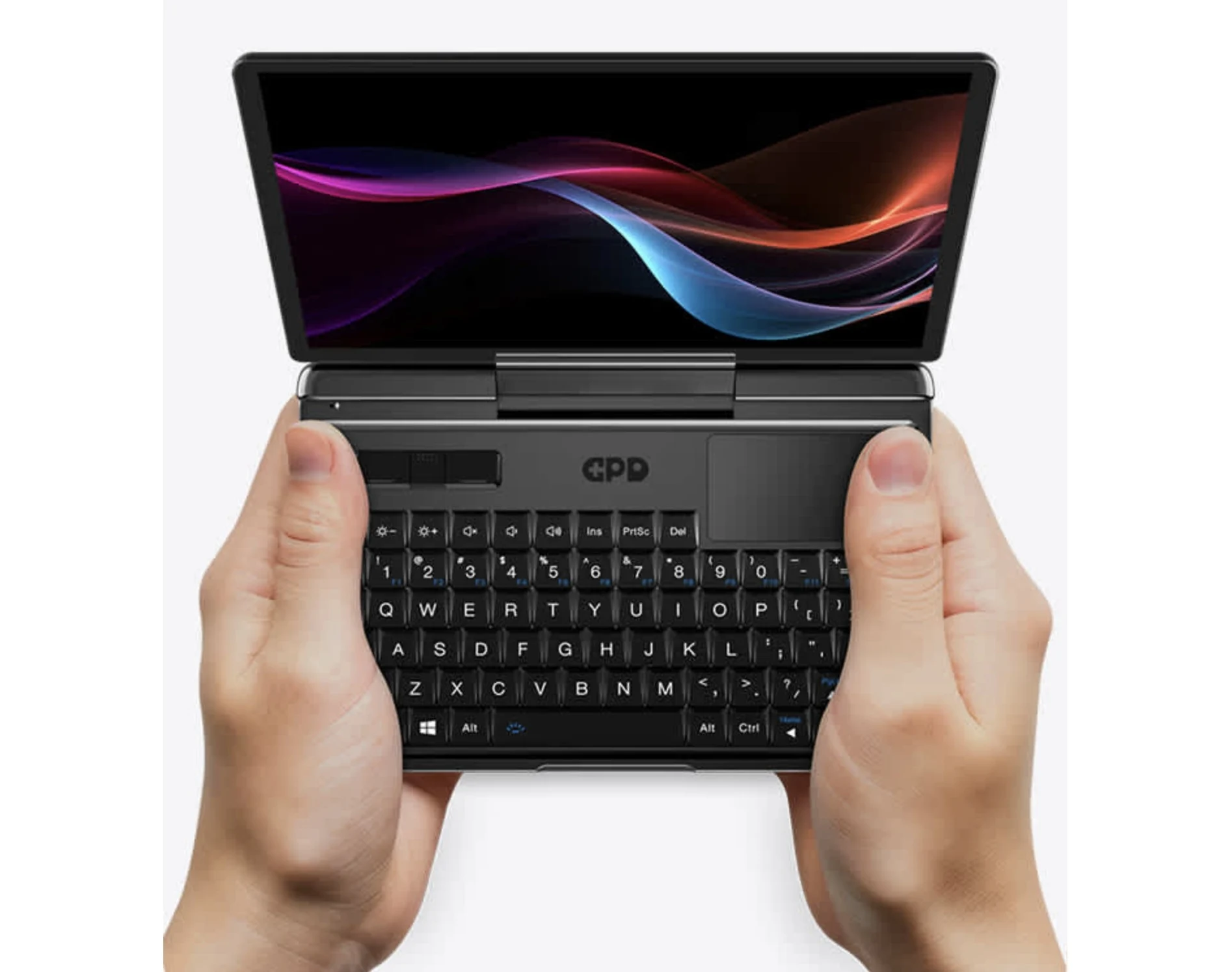
    1. The GPD MicroPC 2 features a 7-inch FHD touch display and is powered by the Intel N250 processor with 16 GB of LPDDR5 memory.
    2. An enhanced version with the Intel i3 N300 offers about 30% better multi-core performance due to its octa-core design, but graphics performance remains limited.
    3. The device includes multiple ports: dual USB 3.2 Gen 2 Type-A, dual USB 3.2 Gen 2 Type-C, HDMI 2.1, micro SD 3.0, 2.5G Ethernet, and an audio jack.
    4. The laptop has a 27.5 Wh battery rated for up to 8 hours of light use and features active cooling along with a 180° hinge for tablet functionality.
    5. The basic model is priced at $495, while the enhanced i3-N300 version costs $558; shipping is estimated for September 2025.


    Six years after the first version, the GPD MicroPC 2 has finally made its debut on Indiegogo a few months back. Initially, this handheld computer was only offered in one configuration, but now a new version with a significantly stronger processor will also be available.

    Display and Performance

    The GPD MicroPC 2 features a 7-inch FHD display with a 60 Hz refresh rate, and it also supports touch. The computing power is handled by the Intel N250, which comes with 16 GB of LPDDR5-4800 memory. Although the N250 has four cores and four threads, it’s not exactly a powerhouse, yet it should be sufficient for simple office work and casual tasks. There’s also one M.2 2280 slot included.

    Enhanced Variant

    While the new version offers a more robust chip, the difference isn’t massive. Specifically, the Intel i3 N300 in the more expensive MicroPC 2 provides about 30% better multi-core performance due to its octa-core design. However, the integrated graphics still leave much to be desired—the Intel UHD iGPU with 32 EUs is only just enough for the most basic PC games.

    Ports and Battery Life

    The selection of ports remains unchanged, which includes dual USB 3.2 Gen 2 Type-A, dual USB 3.2 Gen 2 Type-C, HDMI 2.1, micro SD 3.0, 2.5G Ethernet, and an audio jack. Being a laptop, it comes with a 27.5 Wh battery that’s rated for up to 8 hours of light use, according to GPD. Fortunately, it has active cooling, which is a great feature. The 180° hinge allows the MicroPC 2 to function as a tablet as well. There’s a side-mounted power button that has a built-in fingerprint scanner for more secure biometric access.

    The basic GPD MicroPC 2 with the Intel N250, which has 16 GB of RAM and 512 GB of storage, is priced at $495. In contrast, the new i3-N300 model costs $558 for the same memory and storage configurations. It’s important to remember that backing a crowdfunding campaign carries its own risks, something we advise our readers to take into account. Currently, GPD has indicated an estimated shipping date of September 2025.

    Source:
    Link


  • Intel Arrow Lake Refresh Leak: Up to 10% Gaming Performance Boost

    Intel Arrow Lake Refresh Leak: Up to 10% Gaming Performance Boost

    Key Takeaways

    1. Intel is updating the Core Ultra 200 Arrow Lake CPU architecture with significant improvements, expected in a few months, without a complete redesign.

    2. The Arrow Lake Refresh CPUs will maintain the same core count but feature higher clock speeds, with a potential boost clock reaching up to 6 GHz.

    3. Intel plans to enhance the Ring Bus clock frequencies to improve data transfer rates between CPU components, while avoiding previous stability issues.

    4. The die-to-die clock speed will also be increased, allowing for quicker data transfer between different silicon dies in a CPU package.

    5. Performance expectations suggest a 7-10% gaming performance boost over existing Arrow Lake chips, but it may still lag behind AMD’s Zen5X3D CPUs.


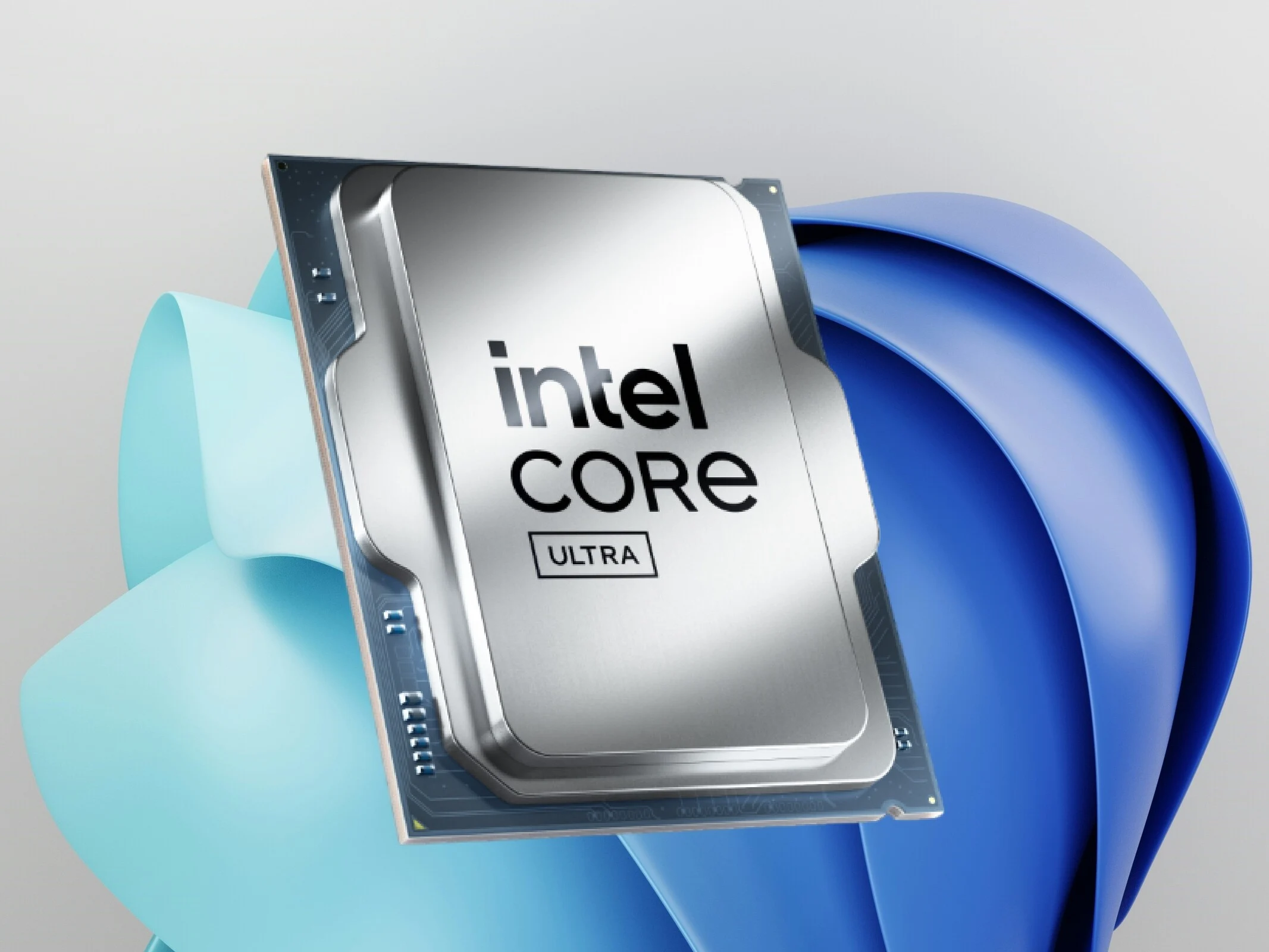
    Intel is said to be working on an updated version of the Core Ultra 200 Arrow Lake CPU architecture. This new Arrow Lake Refresh CPU architecture, which is expected to arrive in a few months, won’t be a full redesign but will include some significant improvements, based on recent leaks from Moore’s Law Is Dead.

    Core Specs and Enhancements

    Earlier, MLID reported that the Arrow Lake Refresh chips would maintain the same core count as the first-generation Arrow Lake products, with the main updates being higher clock speeds and the introduction of a new NPU4. However, later information contradicted the presence of the NPU4. Now, MLID indicates that while there won’t be a new NPU in the Arrow Lake Refresh chips, several important tweaks are still anticipated.

    The leaker emphasizes that the clock speeds for the Arrow Lake Refresh CPUs will be increased, although no exact figures were shared. Nevertheless, MLID suspects that the boost clock may reach as high as 6 GHz but is not expected to touch the 7 GHz level rumored for AMD’s Zen 6 chips.

    Clock Frequency Changes

    Interestingly, MLID suggests that Intel is planning to enhance the Ring Bus clock frequencies in the Arrow Lake Refresh products. The Ring Bus serves to connect various components of a CPU, such as cores, L3 cache, and I/O. This connection acts like a highway, facilitating smooth data transfers between parts. A higher Ring Bus clock can improve the data transfer rates, but excessively high voltage can lead to system instability, a problem seen in Intel’s 13th and 14th generation CPUs.

    According to MLID, Intel has reportedly kept the Ring Bus clock lower in the original Arrow Lake CPUs to sidestep potential instability problems. This choice might have hindered the performance of Arrow Lake CPUs, which is why Intel is said to be raising the Ring Bus clocks in the upcoming Core Ultra 200 series.

    Performance Expectations

    In addition to the increased Ring Bus frequency, Intel is also believed to be enhancing the die-to-die clock speed. The die-to-die interconnect links different silicon dies within a single CPU package. Elevating the clock speed of this interconnect should allow for quicker data transfer between the different dies.

    MLID predicts that with these improvements, the Intel Arrow Lake Refresh CPUs will deliver a gaming performance boost of 7-10% compared to the existing Arrow Lake chips. While this is a solid performance increase for a minor architectural update, it’s unlikely to surpass AMD’s Zen5X3D CPUs. For example, in our review, the Ryzen 7 9800X3D was approximately 40% faster than the Core Ultra 9 285K in gaming scenarios.

    In conclusion, the Intel Arrow Lake Refresh CPUs appear to be better than what was initially suggested. We will need to wait for the official release to assess the final performance of these CPUs and see if Intel’s decision to refresh Arrow Lake was wise. Until then, it’s best to take this information with some skepticism.

    Source:
    Link


  • Prinano Launches First Domestic Nanoimprint Lithography Tool in China

    Prinano Launches First Domestic Nanoimprint Lithography Tool in China

    Key Takeaways

    1. Prinano has delivered its first PL-SR nanoimprint lithography system, becoming the second company after Canon to place a nanoimprint device with a client for chip production.

    2. The PL-SR system supports line widths under ten nanometers but does not guarantee the ability to manufacture advanced logic at the five-nanometer node.

    3. Nanoimprint technology reduces energy consumption and equipment costs by avoiding extreme ultraviolet light sources but has trade-offs in throughput and flexibility.

    4. The PL-SR system features precise alignment and can handle 300 mm wafers, with a unique template-profile control mechanism to minimize distortion and improve yield.

    5. Practical applications for the technology include NAND Flash, silicon microdisplays, silicon photonics, and advanced packaging, helping Chinese manufacturers reduce reliance on foreign tools.


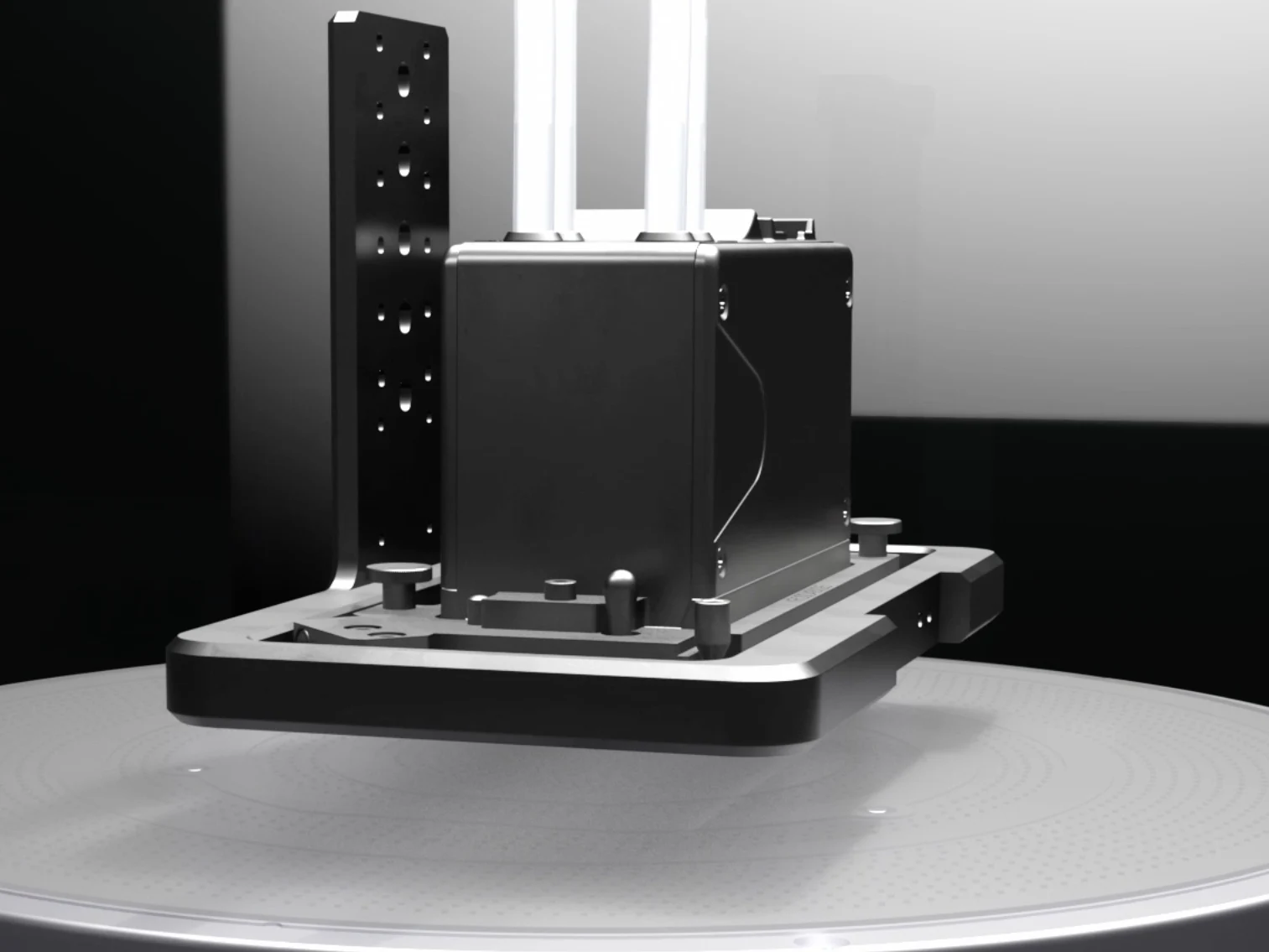
    Chinese equipment maker Prinano has recently delivered its first self-designed PL-SR step-and-repeat nanoimprint lithography system to a domestic client that specializes in unique processes. This system is now ready for actual chip production following testing by the customer, making Prinano just the second company, alongside Canon, to successfully place a nanoimprint device with a client.

    Specifications and Performance

    The PL-SR system is capable of supporting line widths that are less than ten nanometers. In comparison, Canon’s FPA-1200NZ2C achieves a line width of approximately fourteen nanometers. While it is marketed as being suitable for producing five-nanometer-class chips, it should be noted that the documents indicate Prinano’s device does not necessarily mean the PL-SR can manufacture advanced logic at a five-nanometer node.

    Advantages and Trade-offs

    The attraction of nanoimprint technology is quite clear: it bypasses the extreme ultraviolet light sources that are typically used in commercial EUV lithography, which helps to reduce both energy consumption and equipment costs. However, this comes with trade-offs in terms of throughput and flexibility, as nanoimprint technology is generally slower than traditional optical lithography and is not ideal for complex logic processes that require intricate, advanced patterns.

    Prinano’s machine operates by pressing a rigid quartz mold, which is engraved with nanoscale circuitry, into a thin resist layer that has been deposited using inkjet technology. The inkjet module of the system smartly controls droplet volume to maintain a thin residual layer (under ten nanometers with less than two nanometers variation) before curing the pattern for the next etching process. The tool can handle 300 mm wafers, aligns the mold and wafer with precise tolerances, and sequentially imprints each field with stitching to cover the entire wafer. It also allows for uniform template joins ranging from 20 mm x 20 mm to 300 mm x 300 mm.

    Practical Applications

    A unique template-profile control mechanism is designed to address curvature mismatches between the mold and wafer, allowing for the transfer of features with aspect ratios exceeding seven-to-one while minimizing distortion. This is crucial for improving yield and reducing device variability. After the imprinting process, the resist acts as a mask for etching the final structures.

    The initial validation phase is aimed at applications that require regular, repetitive patterns, such as NAND Flash, silicon-based microdisplays, silicon photonics, and advanced packaging. These areas can take advantage of the technology’s fine pitch and field-by-field stitching, without requiring the pattern diversity often needed by CPUs and GPUs. Furthermore, this development positions domestic nanoimprint technology as a means for Chinese memory manufacturers to lessen their reliance on foreign tools and compete more effectively with established suppliers.

    Source:
    Link


  • Pros and Cons of the Lenovo ThinkBook Plus Rollable OLED Screen

    Pros and Cons of the Lenovo ThinkBook Plus Rollable OLED Screen

    Key Takeaways

    1. Unique Screen Size: The ThinkBook Plus Gen6 features a rollable display, expanding from 14 inches to 16.7 inches, making it unique among laptops, but adding weight due to the motors.

    2. Convenient Usability: The taller display allows for use in smaller spaces without requiring a large desk, but its wide viewing angles may expose sensitive information in public settings.

    3. Performance Considerations: While battery life is shorter than typical clamshell laptops, the efficient Lunar Lake CPU offers over 10 hours of real-world use; however, the screen cannot be rotated in Windows.

    4. Design Limitations: The lid only opens to about 120 degrees, making it less comfortable for use on laps or soft surfaces, and its brightness is average compared to competitors like the MacBook Pro 14.

    5. Enhanced Experience: The taller display improves productivity for tasks like browsing and spreadsheets, leading to a feeling of confinement when switching back to standard 14-inch laptops.


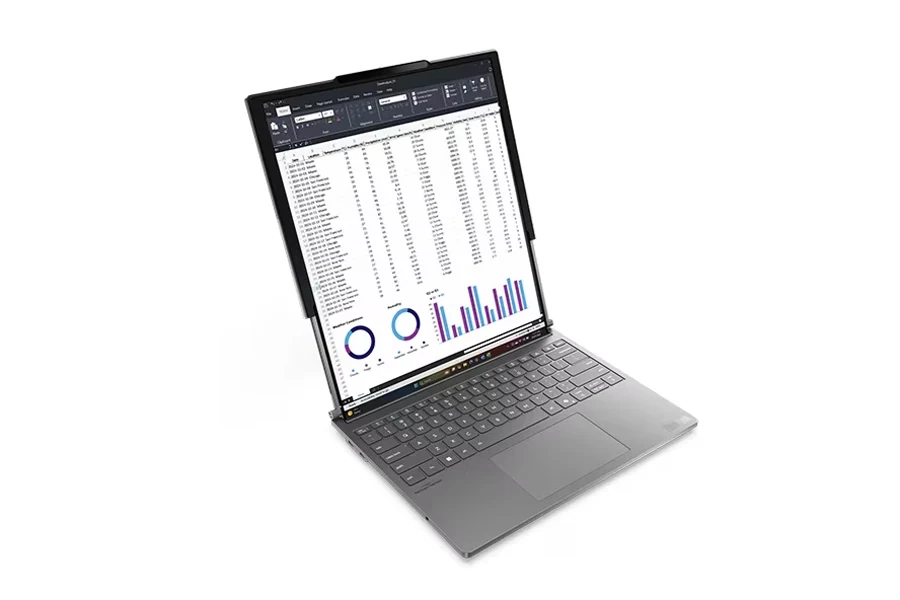
    We recently completed our evaluation of the 14-inch Lenovo ThinkBook Plus Gen6, which features a rollable 16.7-inch OLED display. While Lenovo has made other unique laptops before, this one stands out as one of their most practical and beneficial designs so far. After spending several weeks with the device, we’ve identified key advantages and disadvantages of the screen.

    Unique Screen Size

    The ThinkBook Plus Gen6 distinguishes itself as the only laptop with a display size exceeding the diagonal measurement of its chassis, thanks to its rollable screen. With just a press of a button, you can transform the 14-inch display into a larger 16.7-inch one.

    The 14-inch body can accommodate a sizeable 16.7-inch screen, but this also means that added motors contribute to the overall weight of the device. In contrast, traditional clamshell models like the MacBook Pro 14 can be several hundred grams lighter, making them more portable for travel.

    Convenient Usability

    Since the screen extends upwards, you don’t need a big desk to utilize the large display, unlike the ThinkPad X1 Fold or Zenbook Duo. The tall 16.7-inch screen can be used almost anywhere you would typically use a 14-inch laptop.

    People nearby, whether they’re strangers or someone sitting next to you, will likely notice your tall and pricey screen. It’s wise to be cautious about working on sensitive information in public, as the wide viewing angles of the OLED may not always be in your favor.

    Performance Considerations

    Although the battery life is shorter compared to a conventional 14-inch clamshell, the highly efficient Lunar Lake CPU compensates for some of that, providing a real-world WLAN runtime of over 10 hours in our tests.

    If you enjoy watching movies or multitasking with two windows open, you might be disappointed to learn that the 16.7-inch display wasn’t made to be rotated. Trying to rotate the screen in Windows will result in an error message.

    In comparison to the ThinkPad X1 Fold, which depends on accessories, or the awkward angles and keyboard of the Zenbook Pro 14 Duo, the ThinkBook’s rollable screen offers a much more ergonomic experience.

    Design Limitations

    The lid of the ThinkBook Plus Gen6 only opens to about 120 degrees, whereas most clamshell laptops can open to 150 degrees or even a full 180 degrees. This limitation can make it tricky to use the device comfortably on your lap, couch, or bed without access to a flat surface.

    Thanks to its OLED screen, users benefit from features like wide P3 color gamut, perfect black levels, and no ghosting, making it suitable for both amateur and some professional editing tasks.

    At a peak brightness of around 400 nits, the screen brightness is fairly average for the 14-inch category. In comparison, the MacBook Pro 14 is over 50 percent brighter, offering superior glare management.

    Enhanced Experience

    The tall 16.7-inch display improves the user experience across nearly all tasks. Once you adapt to browsing, emailing, or handling spreadsheets on the taller screen, a regular 14-inch laptop can start to feel quite confined.

    There are certainly more pros and cons to explore within this model as you delve deeper into its features. For more detailed insights, check out our comprehensive review of the ThinkBook Plus Gen6 rollable, where you can learn more about Lenovo’s innovative laptop.


  • Adesso Launches EasyTouch 130 & 150 Keyboards with AI Keys

    Adesso Launches EasyTouch 130 & 150 Keyboards with AI Keys

    Key Takeaways

    1. Adesso launched two new USB-A keyboards: EasyTouch 130 and EasyTouch 150, designed for quiet operation with mechanical switches.
    2. EasyTouch 130 has a standard layout, while EasyTouch 150 features a unique curved, split-keyboard design.
    3. Both models use silent Cherry Brown switches with a 2.2 mm actuation distance and can withstand up to 50 million keystrokes.
    4. A dedicated Copilot AI key provides one-touch access to AI features in Windows 11 and Edge, with larger, laser-etched lettering for better visibility.
    5. EasyTouch 130 is priced at $44.99 and EasyTouch 150 at $71.99, compatible with both Mac and Windows systems.


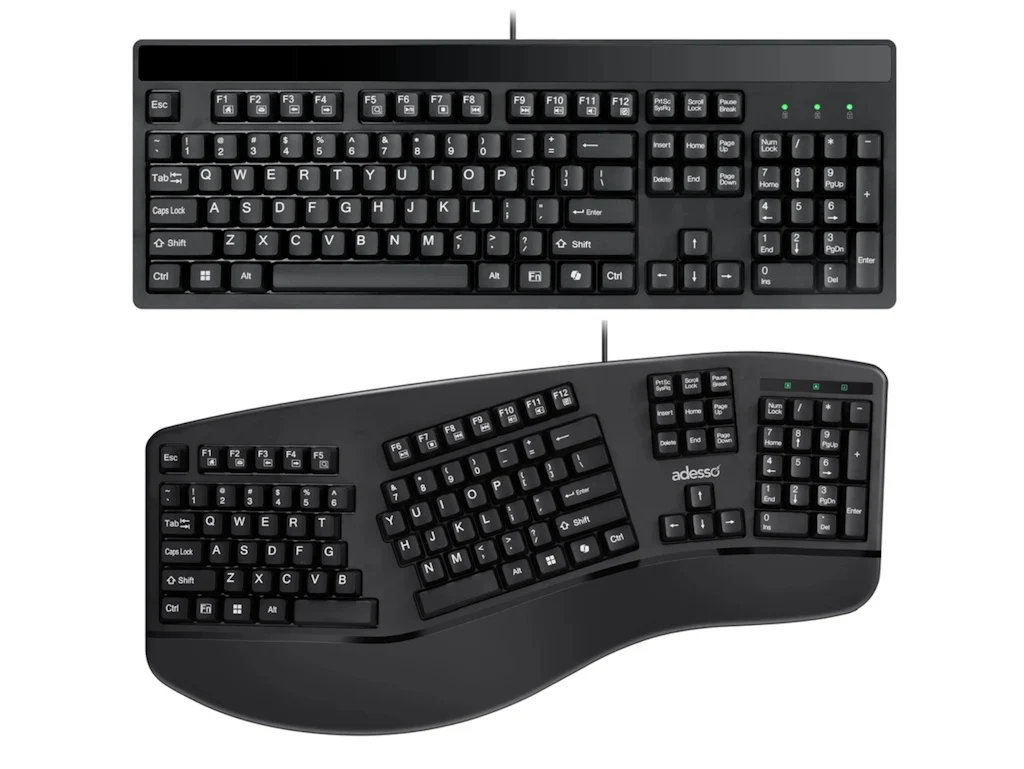
    Adesso has introduced two new USB-A keyboards: the EasyTouch 130 and EasyTouch 150, both designed to be quiet and equipped with mechanical switches and special Copilot AI keys.

    Design Differences

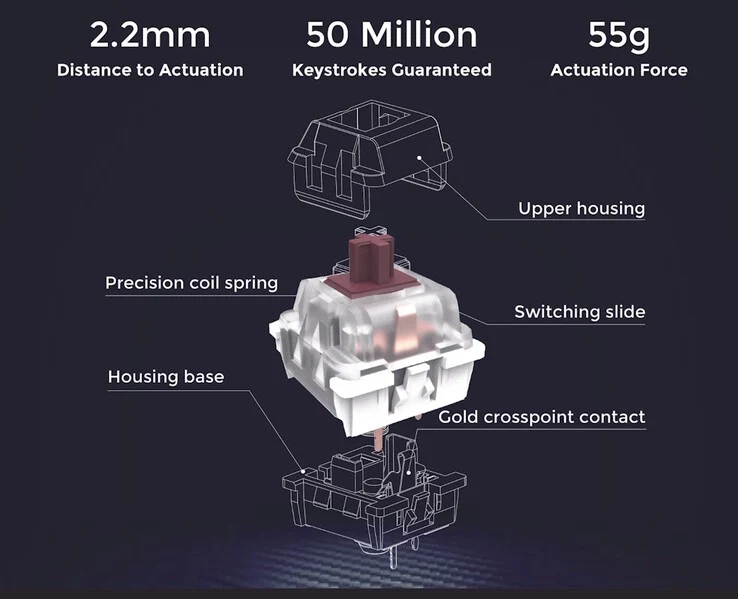
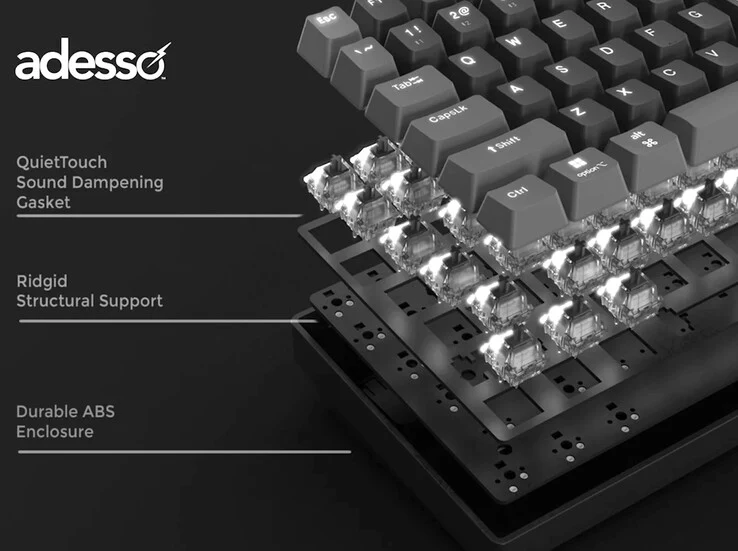
    The EasyTouch 130 features a standard rectangular layout, whereas the EasyTouch 150 showcases a unique curved, split-keyboard configuration. Both models are built with silent Cherry Brown switches, which have a 2.2 mm (0.09 in.) actuation distance and require a force of 55 g (1.94 oz.) to activate. These mechanical switches can endure up to 50 million keystrokes, and according to Adesso, they are mounted using QuietTouch gaskets to minimize noise even further.

    AI Integration and Key Features

    Located to the right of the spacebar, the dedicated Copilot AI key allows for easy one-touch access to this AI feature within Microsoft Windows 11 and the Edge browser. Each key is adorned with laser-etched lettering that is twice the usual size, enhancing visibility. The keyboards also support N-key rollover, which means they can accurately register multiple key presses at once without any issues.

    Availability and Pricing

    Users can purchase the EasyTouch 130 for $44.99 MSRP and the EasyTouch 150 for $71.99 MSRP on Amazon. Both keyboards are compatible with Mac and Windows systems, providing versatility for various computer users.

    Source:
    Link


  • Affordable Elecrow Case Transforms Raspberry Pi 5 into Gaming PC

    Affordable Elecrow Case Transforms Raspberry Pi 5 into Gaming PC

    Key Takeaways

    1. The Elecrow mini PC case is specifically designed for the Raspberry Pi 5 and features an aluminum alloy construction with clear acrylic panels.
    2. It includes a 1.3-inch OLED screen that displays system information and can show the date and time.
    3. The case offers multiple ports for various connections and comes with extender boards for easy access to the GPIO interface and SSD installation.
    4. An alternative version is available for the Nvidia Jetson Orin Nano, but it lacks certain features like the M.2 SSD module and RTC battery.
    5. The Raspberry Pi 5 model is priced at $39.90, while the Nvidia Jetson Orin Nano version costs $31.90.


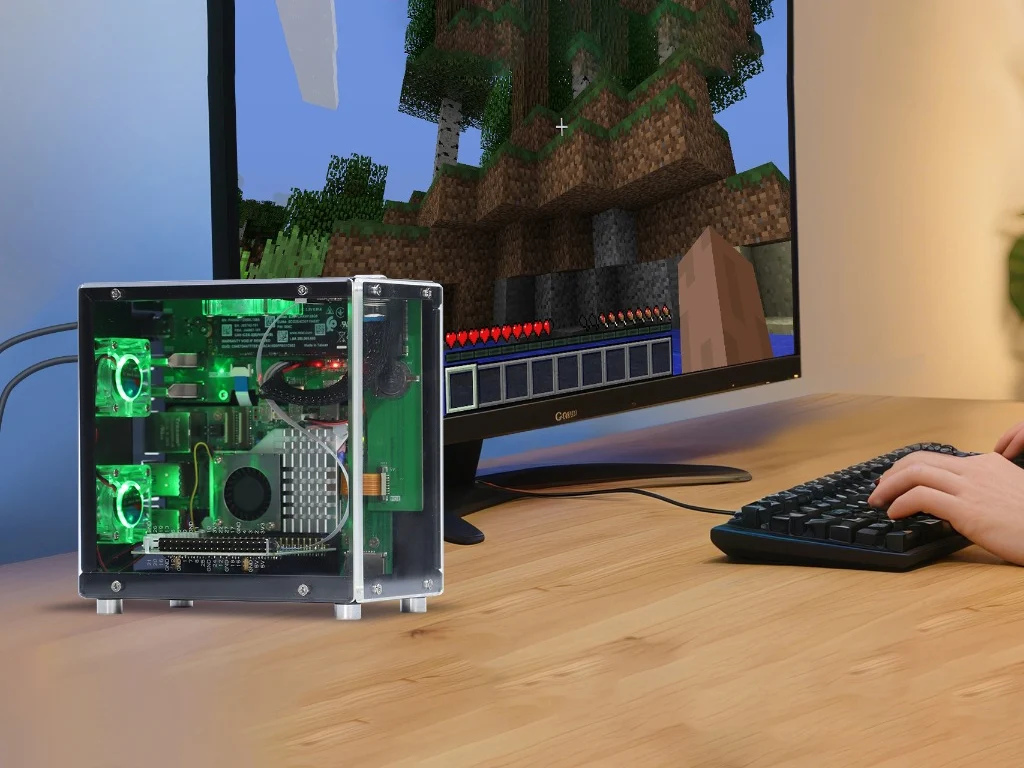
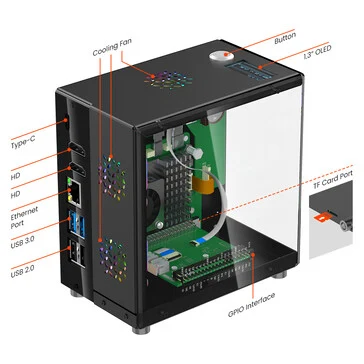
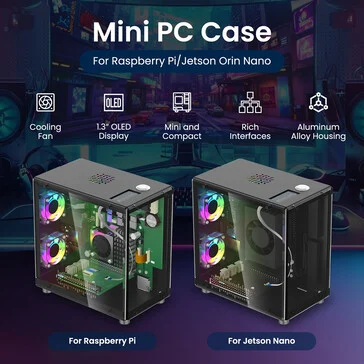
    The Elecrow mini PC case is a new accessory designed for the Raspberry Pi 5. It boasts an aluminum alloy construction complemented by clear acrylic panels on the left and front sides, resembling gaming PC cases. Additionally, it includes RGB lighting and is equipped with three system fans.

    Unique Features

    One of the standout features of this mini PC case is its integrated 1.3-inch OLED screen located on the top. This screen displays system details and can be modified to show the current date and time. Moreover, Elecrow emphasizes that the chassis provides a wide array of ports for various connections, including:

    Furthermore, the package of the mini PC case comes with extender boards, one of which allows straightforward access to the 40-pin GPIO interface of the Raspberry Pi 5. Another extender board facilitates the installation of an SSD, supporting sizes like 2280, 2260, 2242, and 2230 SSDs (the 2 TB Samsung 990 EVO Plus is currently priced at $139.97 on Amazon).

    Alternative Version

    Elecrow also has an alternative version of its mini PC case that accommodates an Nvidia Jetson Orin Nano. This variant, however, seems to be slightly less equipped compared to the one designed for the Raspberry Pi 5. Notably, it doesn’t include the M.2 SSD module, and it lacks support for an RTC battery.

    In terms of pricing, the model meant for the Raspberry Pi 5 is available for $39.90 in the official store. Meanwhile, the version compatible with the Nvidia Jetson Orin Nano is offered at a lower price of $31.90.


  • Windows 11 Update Causes SSD Failures During Heavy Transfers

    Windows 11 Update Causes SSD Failures During Heavy Transfers

    Key Takeaways

    1. Microsoft released a new Windows 11 update (KB5063878) to fix security vulnerabilities.
    2. Users are experiencing issues with SSDs during large file transfers over 50 GB, leading to SSD inaccessibility.
    3. SSDs with Phison NAND controllers are particularly affected, but other models like SanDisk Extreme Pro are also experiencing problems.
    4. The issue appears to be less widespread compared to other Windows problems, with few user complaints reported.
    5. Users are advised to avoid large file transfers or consider delaying the update if they have SSDs with Phison controllers.


    Microsoft has just rolled out a new update for Windows 11, known as KB5063878, featuring build number 26100.4946. According to the patch notes, this update aims to fix security vulnerabilities within the operating system. However, users are reporting that it may be causing problems with SSDs during heavy file transfers.

    File Transfer Problems

    According to a user on X, @Necoru_cat, the issue arises when users try to transfer files that are larger than 50 GB continuously. The operating system seems to fail in recognizing the SSD after a prolonged transfer period. If the computer is restarted, the SSD may become inaccessible. The user conducted some tests and found that SSDs utilizing Phison NAND controllers are particularly affected, though not all SSDs are experiencing this issue.

    SSDs Affected

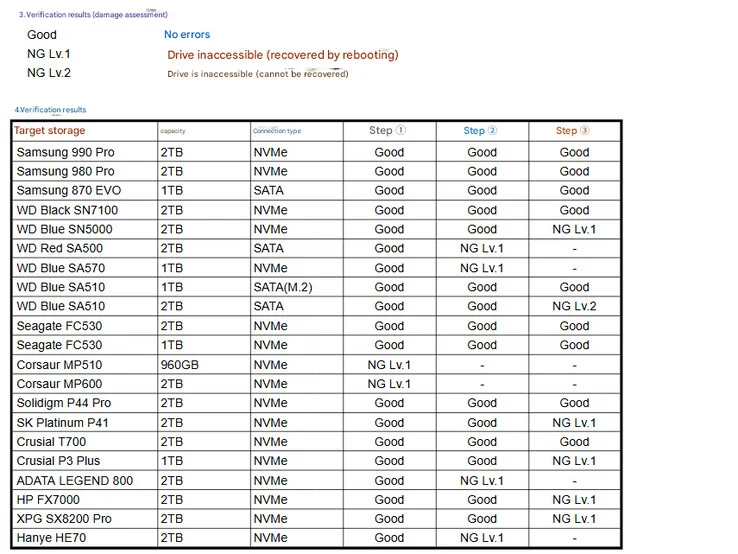
    A Japanese news site, NichePCGamer, has also covered the problem and provided a list of SSDs that are reportedly encountering issues with the Windows 11 KB5063878 update. The list indicates that it’s not just SSDs with Phison controllers that are affected; it also includes other models, such as the SanDisk Extreme Pro. @Necoru_cat later mentioned that some SSDs may become inaccessible due to this glitch, but they can often recover after a reboot. Those SSDs include:

    Currently, the issue appears to be less common compared to other significant Windows-related problems, as there aren’t many user complaints appearing on public forums. It’s important to note that both Microsoft and SSD manufacturers have not yet confirmed this issue related to the Windows 11 update. Users with both updated systems and SSDs featuring Phison controllers should refrain from making large file transfers over 50 GB. It might be wise to hold off on updating to KB5063878 or to revert to the previous version if the update has already been applied.

    Source:
    Link


  • ArmSoM CM1: New Developer Board with Extra Board Support

    ArmSoM CM1: New Developer Board with Extra Board Support

    Key Takeaways

    1. The ArmSoM-CM1 is a single-board computer that includes multiple connectors such as MIPI DSI, USB-C, and GPIO headers.
    2. It features an RK3506J SoC with three Cortex-A7 cores and one Cortex-M0 core, along with options for 256 or 512 MB of NAND storage and DDR3L RAM.
    3. The board measures 70 x 42 millimeters and is designed to work with a carrier board for additional functionality.
    4. An expansion board, CM1 IO, is available, providing two extra USB 2.0 ports, two Ethernet ports, WiFi 5, and Bluetooth 4.2.
    5. The CM1 board is priced at $15, while the kit with the expansion board costs $28.50, with varying shipping costs and delivery times.


    We’ve shared details on many single-board computers at Notebookcheck, and the Raspberry Pi 5 is likely the most well-known among them. The Raspberry Pi also comes in a Compute Module version, which is smaller and designed to work with a specific circuit board, but it lacks the usual connections found on a standard single-board computer.

    Features of ArmSoM-CM1

    The ArmSoM-CM1 is another single-board computer that can be paired with a carrier board, but it already includes multiple connectors. These consist of MIPI DSI with two lanes for video output, a USB-C port for power, and a microSD card slot. Additionally, there are two GPIO headers: one has 44 pins, while the other has 40 pins. The main chip is an RK3506J SoC, which features three Cortex-A7 cores and one Cortex-M0 core, along with either 256 or 512 MB of NAND storage and 256 or 512 MB of DDR3L RAM. The board’s size is 70 x 42 millimeters.

    Expansion and Connectivity

    This single-board computer is also available with a CM1 IO hardware interface, an expansion board that measures 100 x 70 millimeters and includes two extra USB 2.0 ports. Other specifications include two Ethernet ports that can handle a maximum data transfer rate of 100 Mbit/s, WiFi 5, and Bluetooth 4.2. The price for the CM1 board is set at $15, and the kit that includes the expansion board is available for $28.50. Shipping costs and delivery times will vary based on where the buyer is located.

    Source:
    Link