
Tag: Nuclear Energy

  • Google to Construct Small Modular Nuclear Reactor in Tennessee

    Google to Construct Small Modular Nuclear Reactor in Tennessee

    Key Takeaways

    1. Google has partnered with Kairos Power and TVA to source energy from a small modular nuclear reactor for its data centers in Tennessee and Alabama.

    2. The Hermes 2 Plant in Oak Ridge will provide a steady capacity of 50 megawatts (MW), essential for the stable operation of data centers.

    3. The project aims to revitalize Oak Ridge as a hub for nuclear innovation, with collaboration from local universities to develop the workforce.

    4. The agreement has the potential to add up to 500 MW of new nuclear capacity by 2035, with Hermes 2 expected to start operations in 2030.

    5. Google is committed to clean energy, having signed multiple contracts for renewable sources and reducing emissions by 12% in 2024, aiming for net-zero operations.


    Google has made a deal with Kairos Power and the Tennessee Valley Authority (TVA) to get energy from a small modular nuclear reactor. This energy will be used to power Google’s data centers in Tennessee and Alabama.

    Agreement Details

    This agreement paves the way for the construction of Kairos Power’s Hermes 2 Plant in Oak Ridge, which will have a steady capacity of 50 megawatts (MW). This constant supply is crucial for data centers, as they rely on a stable and dependable electric connection.

    Local Impact

    The Hermes 2 Demonstration Plant aims to re-establish Oak Ridge as a center for nuclear innovation. This will involve new programs developed in collaboration with the University of Tennessee and local universities to help develop the local workforce.

    Future Plans

    Hermes 2 will be the first project under this agreement, which has the potential to add up to 500 MW of new nuclear capacity, expected to be operational by 2035. According to Kairos Power, the generated energy will be supplied to the TVA grid, which is where Google sources the electricity for its facilities.

    “To speed up the availability of clean energy for Google, Kairos Power plans to boost Hermes 2’s output from 28 MW to 50 MW, all from a single reactor, set to start operations in 2030,” said a representative from Kairos Power.

    Commitment to Clean Energy

    Google, a subsidiary of Alphabet, has recently signed multiple PPAs, emphasizing renewable energy sources and low-carbon technologies, such as nuclear, wind, and solar.

    In 2024, the tech giant managed to cut emissions related to energy generation by 12% compared to 2023 and secured contracts for 8 gigawatts (GW) of clean energy. The aim is to reach a net-zero operation.

    Source:
    Link


  • China Expands Nuclear Energy with Approval of 10 New Units

    China Expands Nuclear Energy with Approval of 10 New Units

    Key Takeaways

    1. China has approved the construction of 10 new nuclear reactors to enhance five existing power plants.
    2. The initiative involves an investment of approximately 200 billion yuan ($27.44 billion).
    3. China is the third-largest country in nuclear power capacity, aiming to lead globally by 2030.
    4. Currently, China is building 30 nuclear reactors, contributing an expected 34.4 gigawatts to the electricity grid.
    5. China has achieved full domestic capacity for essential nuclear technology equipment, though it still relies on some Western technology.


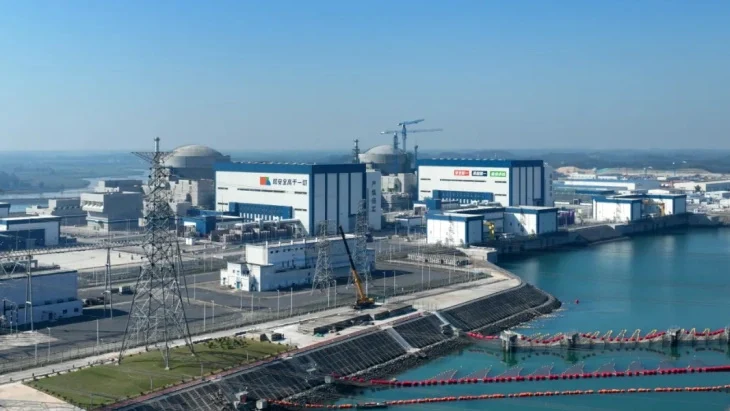
    China has given the green light for the building of 10 new nuclear reactors, which will enhance five existing nuclear power plants. This follows a pattern seen in the past few years.

    Investment and Capacity

    As per details shared by The Paper, a state-supported news outlet, the financial backing for this initiative is projected to be 200 billion yuan, which translates to about $27.44 billion. China ranks as the third-largest nation in terms of nuclear power capacity, trailing behind the United States and France. At present, the country operates 58 nuclear facilities that collectively generate 56.9 gigawatts of nuclear power, as stated in a white paper from the China Nuclear Energy Association. By the year 2030, China aims to take the lead in nuclear energy production.

    Expansion Plans

    The nuclear facilities that will be expanded include:

    Right now, China is in the process of constructing 30 nuclear reactors, which represent half of the total reactors being built around the world. These new reactors are anticipated to contribute an additional 34.4 gigawatts of nuclear power to the national electricity grid.

    Domestic Production and Technology Dependence

    The aforementioned white paper indicates that the nation has reached full domestic capacity in producing essential equipment for nuclear technology, including reactors. Notably, eight of the approved reactors will utilize the domestically developed Hualong One design. However, the World Nuclear Association points out that China still relies on Western technology in certain aspects of this development.

    Source:
    Link

  • Bees Halt Meta’s Plan for First Nuclear-Powered AI Data Center

    Bees Halt Meta’s Plan for First Nuclear-Powered AI Data Center

    Meta has had to abandon its ambitions for a nuclear-powered AI data center in the United States due to environmental hurdles. The company initially aimed to establish a facility that would utilize emissions-free energy from a recognized nuclear plant operator, positioning Meta as one of the pioneering tech entities to look into nuclear energy specifically for AI processing.

    Environmental Challenges Arise

    Unfortunately, the discovery of a rare bee species on the selected location for the data center introduced regulatory and environmental challenges, which ultimately resulted in the cessation of the project. This unexpected finding presented significant issues that Meta could not navigate, leading to the decision to halt the initiative.

    The Quest for Sustainable Energy

    Big tech firms are increasingly turning to nuclear power as a solution for their energy needs in AI advancement, primarily because AI models necessitate immense computational capabilities, resulting in high energy consumption, often 24/7. Conventional energy sources, particularly fossil fuels, face difficulties in offering sustainable and scalable energy without boosting carbon emissions.

    In contrast, nuclear energy provides a reliable, emissions-free power source that aligns with the environmental goals and long-term objectives of the tech industry, making it an attractive option for companies like Meta.

    A Setback for Meta’s Nuclear Goals

    During an all-hands meeting, CEO Mark Zuckerberg shared his frustration, indicating that the company was ready to proceed with the nuclear supplier to guarantee clean energy for the facility. Although Meta’s nuclear aspirations for this particular site are currently on hold, the company is still considering other pathways to obtain low-carbon energy. This strategy is in line with a larger movement among tech giants such as Microsoft, Google, and Amazon, all of which have recently expressed interest in nuclear energy for their data centers.

    For instance, Microsoft has entered into a 20-year contract to obtain energy from the historic Three Mile Island nuclear facility, which has been renamed the Crane Clean Energy Center, to fuel its own AI projects. Meanwhile, Google and Amazon are investing in small modular reactors (SMRs), which are compact nuclear units designed for safer and more flexible implementation, with Google anticipating that its reactors will be active by 2030.

    Looking Ahead

    Meta is still dedicated to investigating further clean energy sources to support its data-heavy AI operations. The tech industry’s growing dependence on nuclear energy highlights the increasing energy demands of AI and the essential role of clean energy in achieving sustainability objectives. Nevertheless, for the time being, the presence of at-risk wildlife and the regulatory environment have shifted Meta’s plans for a nuclear-driven AI future.


    Image 1
  • Google Partners with Kairos Power for Nuclear-Powered Data Centers

    Google Partners with Kairos Power for Nuclear-Powered Data Centers

    Google is launching an ambitious initiative to employ small nuclear reactors to supply energy for its AI data centers. They have partnered with Kairos Power to realize this vision, aiming to have the first reactor operational by the decade’s end and to introduce additional reactors by 2035.

    Innovative Cooling Methods

    Unlike traditional reactors that use water, these new systems will utilize molten salt for cooling, enhancing efficiency and being more environmentally friendly. The technology from Kairos Power emphasizes smaller, adaptable reactors, which outperform the conventional large nuclear facilities that most people are familiar with.

    Meeting Energy Demands

    As the need for AI technology soars, finding a clean, steady, and dependable energy source has become critically important. Nuclear energy, being carbon-free and capable of delivering continuous power, aligns perfectly with the tech sector’s objective to lower its carbon emissions.

    Michael Terrell, who is Google’s Senior Director for Energy, emphasized that this innovative energy strategy will enhance AI capabilities while remaining environmentally responsible.

    Regulatory Hurdles Ahead

    However, the project faces some challenges. It must navigate rigorous regulatory frameworks. The arrangement requires clearance from the US Nuclear Regulatory Commission as well as local authorities in the regions where the reactors will be built. These approvals can take a long time and are accompanied by strict safety and environmental guidelines.

    Google isn’t the sole company exploring nuclear energy. Other major corporations, such as Amazon and Microsoft, are also considering it. Amazon intends to acquire a nuclear-powered data center in Pennsylvania, while Microsoft is working on reviving the old Three Mile Island nuclear facility.

    Future of Data Center Energy

    Nuclear energy presents a robust solution, especially since energy consumption in data centers is projected to double by 2030. It provides clean, uninterrupted power, which is a major advantage for tech firms looking to innovate while minimizing their carbon footprint.

    Nonetheless, nuclear energy continues to provoke discussion due to its waste production and safety concerns. Yet, its near-zero carbon emissions position it as a strong competitor in the industry’s efforts to reduce pollution.

    Google’s collaboration with Kairos Power is indicative of a larger movement, as technology giants pivot towards alternative energy solutions to satisfy the growing needs of AI and digital infrastructure while being mindful of sustainability.

  • Tech Firms Shift from Green Energy as AI Demand Soars

    Tech Firms Shift from Green Energy as AI Demand Soars

    AI usage has rapidly expanded recently, leading tech giants like Microsoft to consider nuclear energy. This shift is driven by the rise of generative AI chatbots, such as OpenAI’s ChatGPT, and integrated AI tools like Microsoft CoPilot in Windows 11. The surge in demand for data center power is so significant that wind and solar energy alone cannot fulfill it.

    Future Power Demand

    According to McKinsey & Company, the demand for power in data centers is expected to rise from 3.7 percent of total power consumption in the US to 11.7 percent by the decade’s end. Morgan Stanley also predicts that global CO2 emissions will increase from 200 million tons to 600 million tons due to the expansion of data centers.

    In Memphis, Tennessee, a data center that trains and runs the Grok 3 AI from X seeks to raise its power needs from 50 MW to 150 MW. This amount of power could supply electricity to around 80,000 homes. Additionally, the facility consumes 30,000 gallons of water daily from underground wells for cooling purposes.

    The Energy Challenge

    The energy requirements of AI models stem from the vast number of calculations needed to answer user queries. Researchers from the University of California, Riverside, in collaboration with the Washington Post, found that generating a simple 100-word email using OpenAI’s GPT-4 AI necessitates a bottle of water for cooling and enough electricity to run 14 light bulbs for an hour.

    Constructing power plants and electrical transmission systems is a slow process. Many energy companies are already dealing with shortages of power distribution units, switchgear, and transformers, leading to delays that can exceed a year. Power generation in various regions near current data centers is either at capacity or nearing it, causing rolling blackouts in areas like California.

    Nuclear Energy as a Solution

    In response, tech firms are increasingly looking to nuclear power to satisfy their electricity needs for AI data centers. These nuclear plants can produce large quantities of energy without requiring as much land as solar and wind farms. Additionally, nuclear energy isn’t reliant on sunlight or wind conditions.

    Microsoft is not only funding the development of a new nuclear power facility but has also invested in restarting a reactor at the notorious Three Mile Island nuclear power plant, which was the site of a nuclear meltdown in 1979. This incident released radioactive gases into the atmosphere, marking it as the most severe nuclear disaster in the US, although it is less catastrophic compared to the Chernobyl and Fukushima disasters.

    Waste Disposal Concerns

    Nuclear power stations in the US produce highly dangerous radioactive waste. Regrettably, the government has yet to determine a long-term disposal solution for this waste following the cessation of funding for the Yucca Mountain nuclear waste repository during the Obama administration.

    For those looking to make a positive impact on the environment, purchasing a solar panel kit (like one available on Amazon) can help charge laptops and phones using solar energy. AI enthusiasts may also consider running AI LLM models on solar-powered laptops at home, instead of relying on nuclear-powered data centers.

    Sources include McKinsey & Company, WSJ, Washington Post, Constellation Energy, MIT Technology Review, Time, CBS Evening News on YouTube, Nuclear Energy Institute, and The Register.


    Image 1
    Image 1
    Image 1