Tag: Core Ultra 200

  • Intel Arrow Lake Refresh Leak: Up to 10% Gaming Performance Boost

    Intel Arrow Lake Refresh Leak: Up to 10% Gaming Performance Boost

    Key Takeaways

    1. Intel is updating the Core Ultra 200 Arrow Lake CPU architecture with significant improvements, expected in a few months, without a complete redesign.

    2. The Arrow Lake Refresh CPUs will maintain the same core count but feature higher clock speeds, with a potential boost clock reaching up to 6 GHz.

    3. Intel plans to enhance the Ring Bus clock frequencies to improve data transfer rates between CPU components, while avoiding previous stability issues.

    4. The die-to-die clock speed will also be increased, allowing for quicker data transfer between different silicon dies in a CPU package.

    5. Performance expectations suggest a 7-10% gaming performance boost over existing Arrow Lake chips, but it may still lag behind AMD’s Zen5X3D CPUs.


    Intel is said to be working on an updated version of the Core Ultra 200 Arrow Lake CPU architecture. This new Arrow Lake Refresh CPU architecture, which is expected to arrive in a few months, won’t be a full redesign but will include some significant improvements, based on recent leaks from Moore’s Law Is Dead.

    Core Specs and Enhancements

    Earlier, MLID reported that the Arrow Lake Refresh chips would maintain the same core count as the first-generation Arrow Lake products, with the main updates being higher clock speeds and the introduction of a new NPU4. However, later information contradicted the presence of the NPU4. Now, MLID indicates that while there won’t be a new NPU in the Arrow Lake Refresh chips, several important tweaks are still anticipated.

    The leaker emphasizes that the clock speeds for the Arrow Lake Refresh CPUs will be increased, although no exact figures were shared. Nevertheless, MLID suspects that the boost clock may reach as high as 6 GHz but is not expected to touch the 7 GHz level rumored for AMD’s Zen 6 chips.

    Clock Frequency Changes

    Interestingly, MLID suggests that Intel is planning to enhance the Ring Bus clock frequencies in the Arrow Lake Refresh products. The Ring Bus serves to connect various components of a CPU, such as cores, L3 cache, and I/O. This connection acts like a highway, facilitating smooth data transfers between parts. A higher Ring Bus clock can improve the data transfer rates, but excessively high voltage can lead to system instability, a problem seen in Intel’s 13th and 14th generation CPUs.

    According to MLID, Intel has reportedly kept the Ring Bus clock lower in the original Arrow Lake CPUs to sidestep potential instability problems. This choice might have hindered the performance of Arrow Lake CPUs, which is why Intel is said to be raising the Ring Bus clocks in the upcoming Core Ultra 200 series.

    Performance Expectations

    In addition to the increased Ring Bus frequency, Intel is also believed to be enhancing the die-to-die clock speed. The die-to-die interconnect links different silicon dies within a single CPU package. Elevating the clock speed of this interconnect should allow for quicker data transfer between the different dies.

    MLID predicts that with these improvements, the Intel Arrow Lake Refresh CPUs will deliver a gaming performance boost of 7-10% compared to the existing Arrow Lake chips. While this is a solid performance increase for a minor architectural update, it’s unlikely to surpass AMD’s Zen5X3D CPUs. For example, in our review, the Ryzen 7 9800X3D was approximately 40% faster than the Core Ultra 9 285K in gaming scenarios.

    In conclusion, the Intel Arrow Lake Refresh CPUs appear to be better than what was initially suggested. We will need to wait for the official release to assess the final performance of these CPUs and see if Intel’s decision to refresh Arrow Lake was wise. Until then, it’s best to take this information with some skepticism.

    Source:
    Link


  • How Next-Gen AI Processors Boost Workplace Productivity

    How Next-Gen AI Processors Boost Workplace Productivity

    Key Takeaways

    1. Real-time audio transcription and media enhancement can now be done locally, ensuring data privacy.
    2. The Core Ultra 200 significantly outperforms the i5-1135G7 with double the cores and threads, boosting performance by 50% in single-core and 80% in multi-threaded tasks.
    3. The Core Ultra 200 is built on a 3nm architecture, offering better efficiency and battery life compared to the i5-1135G7’s 10nm architecture.
    4. The Core Ultra 200 supports PCIe 5.0 and increased memory bandwidth for improved multitasking and AI capabilities, unlike the i5-1135G7.
    5. The i5-1135G7 lacks advanced connectivity options and security features, relying on cloud solutions for AI functions, which can negatively impact performance.


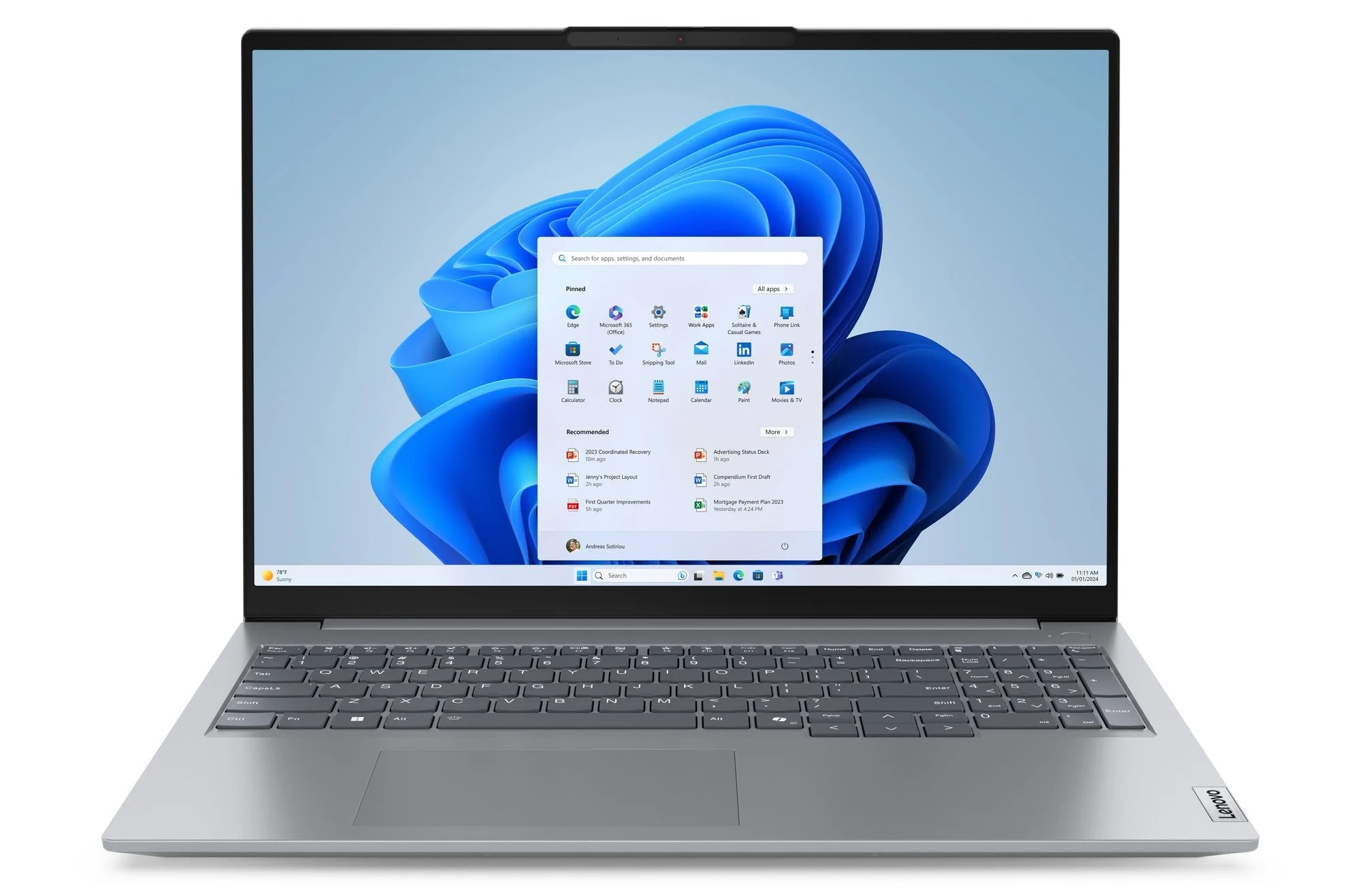
    Real-time audio transcription, along with enhancing images and videos, is now possible without sending sensitive business data to the cloud. Features like noise cancellation for platforms such as Teams or Zoom and smart search functions are all processed locally, ensuring privacy and efficiency.

    Performance Comparison

    The Core Ultra 200 outshines the i5-1135G7 with its double core and thread count. It boasts up to 8 cores—combining hybrid performance and efficiency—compared to the 4 cores found on the Tiger Lake. It can also reach a boost of up to 4.8GHz. Test results indicate a 50% increase in single-core performance and an impressive 80% improvement in multi-threaded tasks. Additionally, PCIe 5.0 and increased memory bandwidth allow for faster data handling, better multitasking capabilities, and enhanced AI features in applications like Microsoft Office and Adobe Creative Cloud.

    Efficiency and Architecture

    While the i5-1135G7 is suitable for basic office activities, its performance falls short in single-thread and multi-thread tasks. This is particularly noticeable when multitasking, managing large spreadsheets, or utilizing AI-driven document automation.

    The Core Ultra 200 is designed prioritizing efficiency, utilizing a 3nm manufacturing process and a smarter hybrid architecture. In contrast, the i5-1135G7 is based on an older 10nm architecture. It typically offers a battery life of 6-10 hours under load, but struggles with running multiple applications or background AI, resulting in quicker battery drain and more frequent charging.

    Connectivity and Features

    The Intel Core Ultra 200 provides advanced connectivity and performance, while the i5-1135G7 is limited to older generation features. It lacks basic security measures and cannot natively run local AI functions, often relying on cloud solutions or slower CPU/GPU emulation, which can hinder overall performance.


  • Arrow Lake Refresh: More Disappointing Than Anticipated

    Arrow Lake Refresh: More Disappointing Than Anticipated

    Key Takeaways

    1. Intel’s new CEO, Lip-Bu Tan, is implementing operational changes to improve the company’s performance.
    2. The Arrow Lake Refresh CPUs are expected to have quicker clock speeds but will continue using the outdated NPU 3, rather than upgrading to NPU 4.
    3. The updates for the Arrow Lake Refresh are minor, with no changes to core counts and only specific SKUs (‘K’ and ‘KF’) expected to receive enhancements.
    4. Intel will not introduce a new series name for the Arrow Lake Refresh; it will remain within the Core Ultra 200 series.
    5. The exact increase in clock speeds for the refreshed CPUs is unclear, with the launch expected in the latter half of the year.


    Intel has been facing challenges for some time, but new CEO Lip-Bu Tan is making efforts to improve the situation. Significant changes in operations have occurred since his leadership began, impacting future product launches. The company plans to update its Arrow Lake range of CPUs, but if the latest leaks are correct, the upgrades may be less significant than what was initially anticipated.

    Upcoming Changes

    A report from early July indicated that the Arrow Lake Refresh CPUs would feature quicker clock speeds and an updated NPU. The Arrow Lake chips, which include the Core Ultra 200S desktop CPUs, currently utilize NPU 3—an older version that debuted with Meteor Lake chips in late 2023. This particular NPU has a performance capability of just 11.5 TOPS, which makes it ineligible for Copilot+ certification. The report suggested that the Arrow Lake Refresh would introduce NPU 4, similar to the Lunar Lake chips, which can achieve 48 TOPS. However, it seems that Intel will continue using NPU 3 for the refresh instead.

    Leaker Insights

    Known leaker Jaykihn has been providing updates about the Arrow Lake Refresh for some time. In his most recent post, responding to one of his earlier insights, he claims neither the desktop nor the high-end laptop CPU SKUs will see any changes to the NPU. This implies that the new CPUs will merely receive a boost in clock speeds, resulting in yet another minor update. It also indicates that the core counts will likely stay the same.

    Naming and Specifications

    Regarding naming conventions, Intel is not expected to introduce a new series for the Arrow Lake Refresh, meaning it will still fall under the Core Ultra 200 series. Additionally, it’s disappointing that not all SKUs in the lineup will be updated; only the ‘K’ and ‘KF’ SKUs are anticipated to receive the special enhancements.

    The exact increase in clock speeds remains uncertain. For context, the flagship Arrow Lake processor, Core Ultra 9 285K, has a boost clock of 5.5 GHz, which is lower than that of the 14th Gen Core i7 and Core i9 processors. Nonetheless, Intel is projected to unveil the refreshed lineup sometime in the latter half of this year, although a specific date has yet to be confirmed.

    Source:
    Link

  • Intel Arrow Lake Refresh CPUs: Faster Clock Speeds for Desktops

    Intel Arrow Lake Refresh CPUs: Faster Clock Speeds for Desktops

    Key Takeaways

    1. Launch Timeline: Intel’s Arrow Lake Refresh CPUs are expected to be released in the second half of 2025.

    2. Performance Improvements: The new CPUs will feature higher clock speeds and will include NPU 4, though specific clock speed details are not yet available.

    3. Comparison to Previous Generations: The flagship Core Ultra 9 285K has a boost clock of 5.5 GHz, which needs to increase by over 8% to match the performance of the 14th-gen Core i9-14900K.

    4. NPU Integration: The Arrow Lake Refresh will incorporate NPU 4, which has seen limited practical applications on Windows, raising questions about its utility in desktop CPUs.

    5. Gaming Landscape: The second half of 2025 is shaping up to be exciting for gamers, with new Intel CPUs and anticipated launches of desktop GPUs from AMD and Nvidia.


    While Intel is gearing up to introduce Nova Lake as the next significant CPU architecture for desktops, the company is also working on the Arrow Lake Refresh chips. Similar to previous updates, the Core Ultra 200 Arrow Lake Refresh CPUs are not anticipated to deliver drastic changes. Nevertheless, there are certain important aspects where Intel aims to enhance performance.

    Upcoming Release

    As reported by ZDNET Korea (via @harukaze5719 on X), the Intel Arrow Lake Refresh CPUs are set to launch sometime in H2 2025, featuring quicker clock speeds and NPU 4. The specifics regarding the improvement in clock speeds for the Arrow Lake Refresh chips remain unclear, as the report does not provide any numerical details.

    Key Specifications

    To put it into perspective, the Core Ultra 9 285K, which is the leading Arrow Lake processor, has a boost clock of 5.5 GHz. This represents a significant reduction compared to the 14th-gen Core i9-14900K (Available on Amazon). In order for the Arrow Lake Refresh flagship to match the 14th-gen models, it will need to achieve a boost clock increase of over 8%.

    NPU Enhancements

    Currently, the Core Ultra 200S desktop CPUs utilize NPU 3, an earlier version that Intel first rolled out with Meteor Lake chips in late 2023. Intel later integrated the much-improved NPU 4 into the Core Ultra 200V Lunar Lake mobile chips. This is the NPU that Intel is reportedly planning to implement in the Arrow Lake Refresh CPUs.

    Despite the potential power of the NPU that Intel includes in its new processors, there are not many truly practical applications for an NPU on Windows at this moment. Thus, it raises the question of whether it’s wise to allocate valuable silicon for something as underused as an NPU in desktop CPUs.

    Exciting Times Ahead

    Overall, H2 2025 seems to be quite promising, as both AMD and Nvidia are also rumored to be launching new desktop GPUs within a few months. Alongside the new Intel CPUs, gamers will have plenty to look forward to this upcoming holiday season.

    Source:
    Link