Category: Computers

  • Lenovo Launches Affordable 240W USB-C Cable for Legion Laptops

    Lenovo Launches Affordable 240W USB-C Cable for Legion Laptops

    Key Takeaways

    1. Lenovo has launched the ThinkPlus 240 W Telescopic Dual-Head Type-C Data Cable, following the release of the ThinkPlus Fluxo 125 W power bank.
    2. The cable features USB Type-C connectors on both ends, stretches up to 60 cm, and weighs 63 g.
    3. It supports 240 W charging via the USB 3.2 Power Delivery standard, aimed at Lenovo’s Legion gaming laptops.
    4. Data transfer speeds are capped at 480 Mbps, adhering to the USB 2.0 standard.
    5. The cable is available in three colors for CNY 69 (about $9.62), but international availability details are not yet announced.


    Lenovo has unveiled a new accessory under its ThinkPlus brand, just a week and a half after launching the ThinkPlus Fluxo 125 W power bank that features a built-in display. This time around, they’ve rolled out a 240 W charging cable, known in China as the ThinkPlus 240 W Telescopic Dual-Head Type-C Data Cable.

    Design and Features

    As the name indicates, this cable is equipped with USB Type-C connectors on both ends. It weighs about 63 g and can be stretched up to 60 cm from its housing, which measures 74.5 × 63 × 16.4 mm. It’s important to note that while the cable itself sports a woven design, the housing is made from plain polycarbonate. Moreover, the ThinkPlus 240 W Telescopic Dual-Head Type-C Data Cable is reported to support 240 W charging through the USB 3.2 Power Delivery standard, specifically designed for Lenovo’s Legion gaming laptops, like the latest Legion 5 we reviewed last month (currently priced at $1,649 on Amazon).

    Performance and Pricing

    But Lenovo’s fast-charging technology does not apply to data transfer speeds, which are limited to a maximum of 480 Mbps, following the USB 2.0 standard. At the moment, this new charging cable can be purchased in three different colors for CNY 69 (approximately $9.62) from Lenovo’s website or retailers such as JD.com. There’s still no information on when it will be available internationally, so for more details, you might want to check Lenovo’s official website.

    Source:
    Link


  • Beelink GTR9 Pro: Affordable Mac Studio-like Ryzen Mini PC

    Beelink GTR9 Pro: Affordable Mac Studio-like Ryzen Mini PC

    Key Takeaways

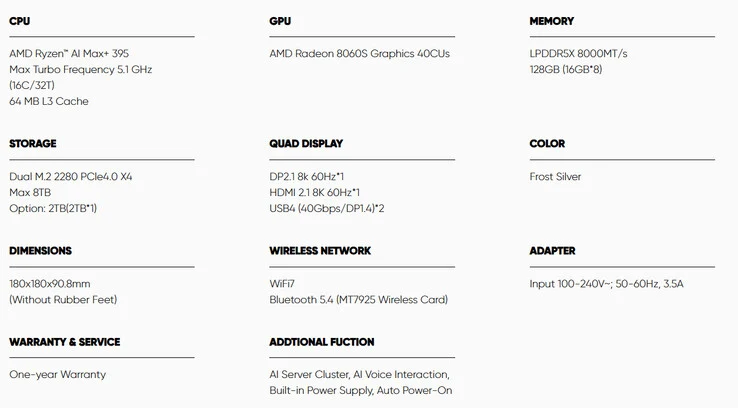
    1. Beelink has launched the GTR9 Pro mini PC, featuring the AMD Strix Halo APU, available for pre-order at a discounted price of $1,985.
    2. The GTR9 Pro includes a single configuration with 128 GB of LPDDR5x RAM and 2 TB of storage, down from an original price of $2,399.
    3. The mini PC operates at a TDP of 140 W and utilizes an MSC 2.0 cooling system for efficient thermal management.
    4. It is equipped with a Radeon 8060S GPU, offering performance comparable to the Nvidia RTX 4070 Laptop, suitable for demanding AAA games.
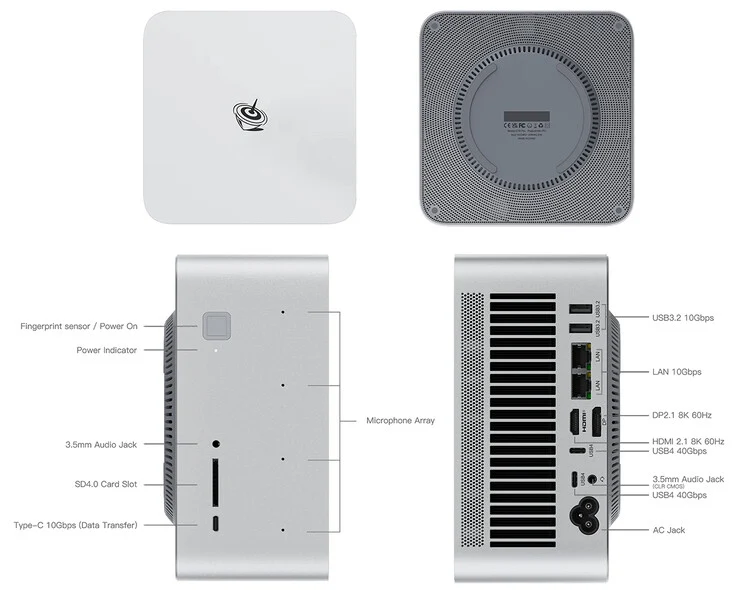
    5. The device features multiple ports, WiFi 7, Bluetooth 5.4, quad-display output support, a built-in fingerprint sensor, and an integrated 230 W PSU.


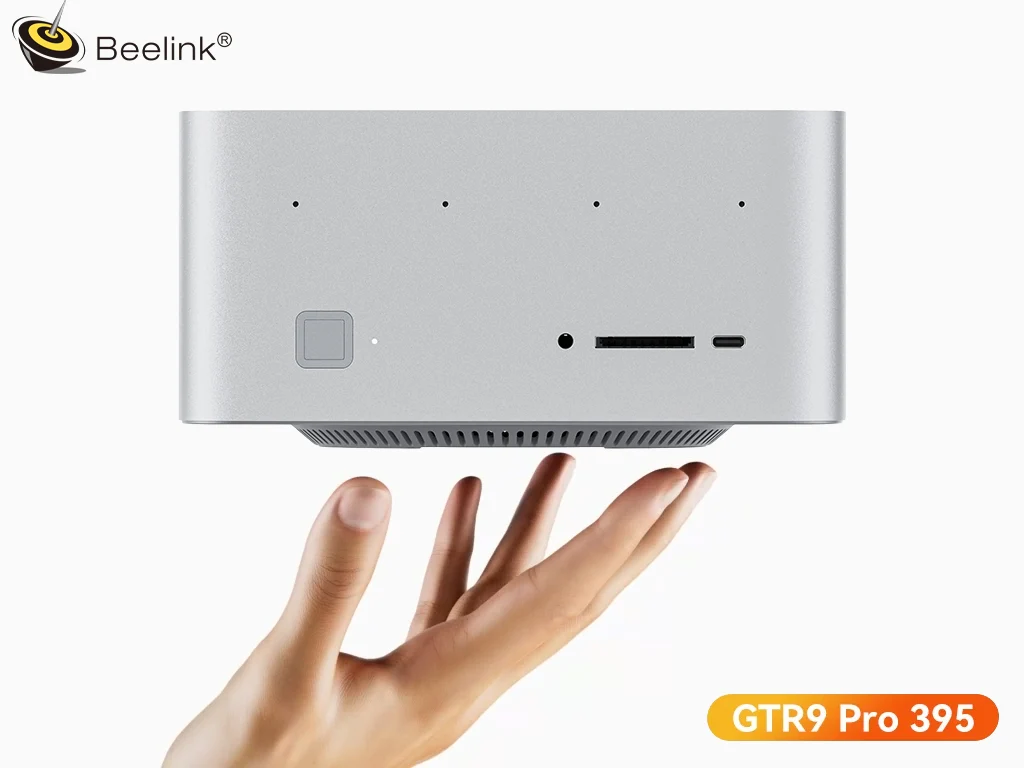
    Beelink has recently launched their latest mini PC model in China, known as the GTR9 Pro. This device is equipped with the cutting-edge AMD Strix Halo APU and is now available for consumers worldwide. Additionally, the company is providing a limited-time pre-sale discount, allowing customers to pre-order the Ryzen AI Max+ 395 for $1,985.

    Price Details

    This price represents a significant reduction from the original listing of $2,399. However, Beelink has not yet revealed when this pre-sale offer will conclude. Currently, there is only one configuration on offer, which includes 128 GB of LPDDR5x RAM along with 2 TB of storage.

    Configuration Insights

    In contrast to the GMKtec EVO-X2, there are no more affordable options for the Beelink Strix Halo mini PC at this time, especially given its Mac Studio-like aesthetic. As mentioned in our previous reports, the GTR9 Pro is said to operate at a TDP of 140 W, and it features an MSC 2.0 cooling system to maintain optimal temperatures during intense usage.

    With its Radeon 8060S, the Strix Halo mini PC proves itself as a reliable choice for gamers. Our analysis has shown that this integrated GPU competes closely with the Nvidia RTX 4070 Laptop, and Beelink states that the GTR9 Pro can effortlessly manage demanding AAA gaming titles.

    Port Features

    Another standout aspect of the AMD Ryzen AI Max+ 395 mini PC is the variety of ports it offers. Specifically, the device includes the following ports:

    Additional features encompass WiFi 7, Bluetooth 5.4, support for quad-display output, up to 8 TB of storage capacity, a built-in fingerprint sensor with Windows Hello, and an integrated 230 W PSU. For more detailed information about the Beelink GTR9 Pro, check out the complete specifications sheet linked below.

    Source:
    Link


  • Walmart Offers New M1 MacBook Airs for Just $599

    Walmart Offers New M1 MacBook Airs for Just $599

    Key Takeaways

    1. Price Drop: The M1 MacBook Air is now available at Walmart for $599, a $50 discount from its previous price of $649.

    2. Strong Performance: Despite its age, the M1 chip still delivers good performance for everyday tasks and offers over 15 hours of battery life.

    3. Compatibility Concerns: The M1 MacBook Air works with MacOS Tahoe but may not support future operating systems from Apple.

    4. Availability of Lower Prices: While Walmart offers the new M1 MacBook Air, it can often be found at even lower prices through promotions and refurbishers.

    5. Rumored Future Release: There are speculations about a budget MacBook Air with an A18 chip, potentially priced between $599 and $699, but it may lack some features of the M1 model.


    The M1 MacBook Air is celebrated for its impressive battery life, but it’s possibly even more recognized for its lengthy time on the market.

    Price Drop at Walmart

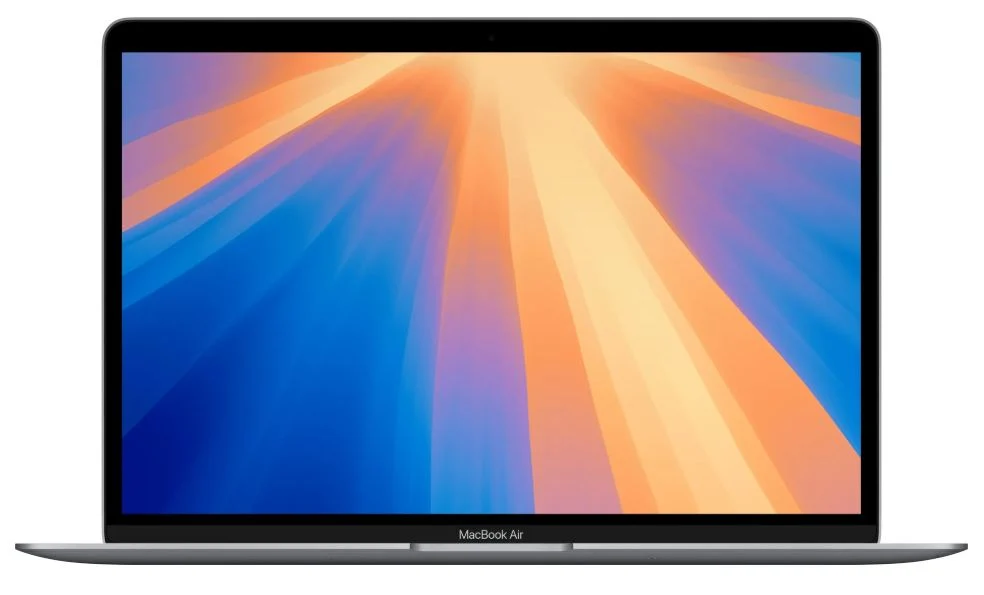
    The well-liked laptop from Apple, released in 2020, is still available as new at Walmart, now with a reduced price tag. Walmart has lowered the cost of the new M1 MacBook Airs to $599, which is a $50 discount from its previous price. Initially, Walmart sold the new M1 MacBook Airs for $699 back in March last year, dropping it to $649 in July. This pricing was for the entry-level model, which comes with 8 GB of RAM and a 256 GB SSD.

    Performance and Battery Life

    Even though the M1 chip is a bit older, it continues to perform well for the typical tasks that everyday users require, including web surfing, streaming videos, and office tasks. Additionally, it boasts excellent battery life, which many users consider to be the most crucial aspect of a laptop.

    In our assessment of the M1 MacBook Air, the device earned a score of 91%. Its key features include over 15 hours of battery life during our tests, effective and quiet performance, and a design without fans. However, the webcam is not great, and the overall design is starting to feel outdated.

    Compatibility and Pricing

    Prospective buyers should know that while the M1 MacBook Air works with MacOS Tahoe (also called MacOS 26), it might not receive support from Apple’s newer operating systems in the coming years.

    At $599, this is a solid price given the laptop’s specifications, but the M1 MacBook Air can frequently be found at lower prices through promotions on websites like Woot or from various refurbishers. Walmart’s M1 MacBook Airs are brand new, which means they come with fully functional batteries and a one-year warranty. Moreover, retailers often offer discounts on the latest M4 MacBook Air (currently available at Amazon for $799), which is only $200-250 more than the M1 Air.

    Future Releases

    Lastly, there are rumors that Apple will release a more affordable version of the MacBook Air featuring its A18 mobile chip and an updated design. Although this so-called “budget” MacBook Air is still just speculation, it is thought to be priced between $599 and $699. However, it may lack some features found in the M1 MacBook Air; if the rumors are true, Thunderbolt support might be missing from the A18 MacBook Air.

    Source:
    Link


  • PQShield Unveils UltraPQ-Suite: Expanding Post-Quantum Hardware

    PQShield Unveils UltraPQ-Suite: Expanding Post-Quantum Hardware

    Key Takeaways

    1. PQShield launched the UltraPQ-Suite, featuring fast and secure implementations of post-quantum cryptography (PQC) for essential applications.
    2. The PQPlatform-TrustSys provides a quantum-secure Root of Trust solution for ASIC and FPGA hardware, meeting NSA’s CNSA 2.0 standards.
    3. The test chip is the first silicon version of post-quantum cryptography based on NIST-approved algorithms, facilitating real-world testing of performance and security.
    4. The chip aligns with newly finalized NIST PQC standards, including CRYSTALS-Kyber for encryption and CRYSTALS-Dilithium for digital signatures.
    5. PQShield aims to use the test chip as a development platform for hardware partners to refine designs before integrating quantum-resistant algorithms into production.


    PQShield has revealed the UltraPQ-Suite, a collection of extremely fast, tiny, and secure implementations of post-quantum cryptography (PQC) aimed at essential applications. One key aspect of this suite is the newly launched PQPlatform-TrustSys, a quantum-secure Root of Trust solution that allows ASIC and FPGA hardware to meet PQC requirements, including those set by the NSA’s CNSA 2.0. This release builds on previous hardware advancements, notably the company’s first PQC silicon test chip that was introduced in September 2024. This product aims to incorporate NIST-approved quantum-safe algorithms into practical hardware for the very first time.

    Innovative Chip Design

    The test chip is noted for being the initial silicon version of post-quantum cryptography based on NIST-approved algorithms. The NIST initiative to standardize post-quantum cryptography began in 2016, and by August 2024, it had finalized the first three approved standards.

    As per the company, the chip allows for testing of post-quantum algorithms under actual conditions, such as power consumption, performance, and side-channel countermeasures. This assessment is tailored for semiconductor manufacturers creating system-on-chip designs for industries like Industrial IoT and automotive, where secure adherence to forthcoming PQC standards is becoming more crucial.

    Supporting NIST Standards

    The chip has been designed to align with the newly finalized NIST PQC standards, including CRYSTALS-Kyber for encryption and CRYSTALS-Dilithium for digital signatures. By implementing these algorithms in hardware, it facilitates direct evaluation of performance and efficiency on genuine silicon, a vital step for determining their practicality in devices with limited resources.

    A video presentation on the official YouTube channel of the company offers more technical details about the chip’s design and possible uses.

    PQShield plans for the test chip to act as a development platform for hardware partners, as mentioned by IoT World Today. The company states that by allowing realistic assessments before widespread deployment, it and its partners can fine-tune designs prior to the integration of quantum-resistant algorithms into production silicon.

    Source:
    Link


  • OneXPlayer Super X Set to Outperform Asus ROG Flow Z13

    OneXPlayer Super X Set to Outperform Asus ROG Flow Z13

    Key Takeaways

    1. One-Netbook launched the OneXPlayer Super X in China, featuring AMD’s Strix Halo architecture and Ryzen AI Max+ 395 with a power output of 120 W.
    2. The device will have a global release, following the success of the OneXPlayer X1 series, and an English teaser video has been released.
    3. The OneXPlayer Super X is positioned to compete directly with the Asus ROG Flow Z13, claiming superior resolution and an AMOLED display.
    4. It features a larger battery (83.5 W) and improved storage options with M.2 2280 and mini SSD slots.
    5. The OneXPlayer Super X is expected to launch in October, but pricing and OCuLink connectivity details are still unclear.


    Earlier today, One-Netbook unveiled the OneXPlayer Super X in China. As previously discussed, the company has confirmed that this device is one of the growing range of products utilizing AMD’s Strix Halo architecture with the Ryzen AI Max+ 395. Allegedly, the OneXPlayer Super X can push this APU to 120 W, which is a notable difference from the Asus ROG Flow Z13, currently priced at $2,229 on Amazon.

    Global Release Plans

    One-Netbook has announced that the OneXPlayer Super X will have a worldwide launch, similar to the OneXPlayer X1 series that came before. To support this, the company has released an English version of the teaser video they previously shared in Chinese, which is included below.

    Competition with ROG Flow Z13

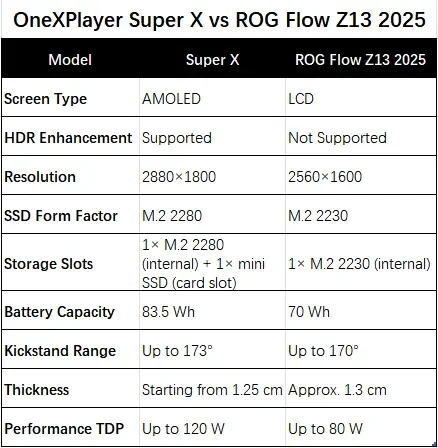
    Furthermore, the company has made it clear to Discord members that the OneXPlayer Super X is designed to directly compete with the latest ROG Flow Z13. If the teaser video didn’t already make this clear, One-Netbook has also shared a concise table that outlines the areas where the OneXPlayer Super X is said to outperform the ROG Flow Z13.

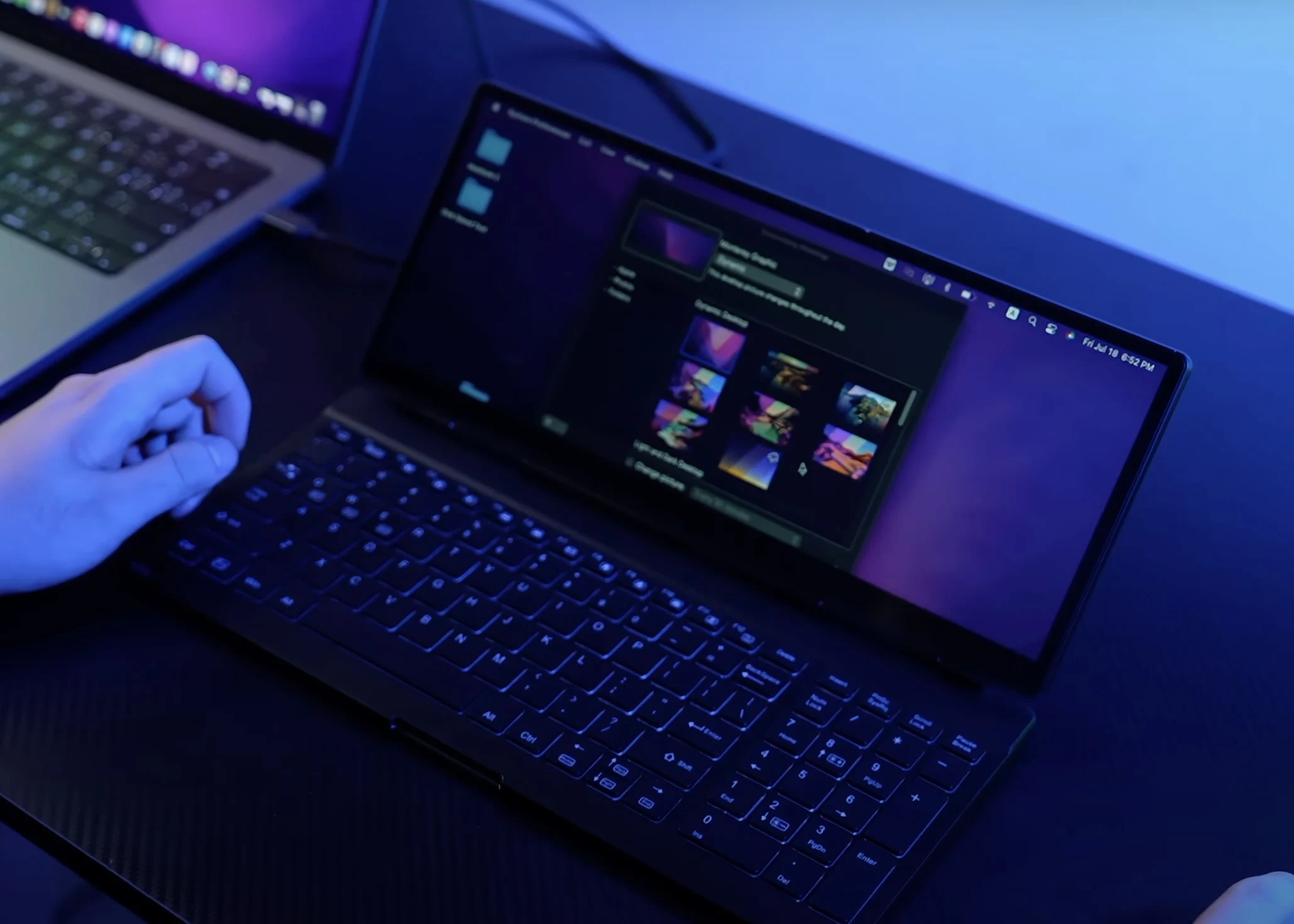
    For example, the OneXPlayer Super X features a better resolution and an AMOLED display compared to the ROG Flow Z13. It is expected to have a 14-inch panel size, considering its display type, resolution, and a larger keyboard accessory than what is offered with the OneXPlayer X1 series. This display will likely consume more power than the 2.5K IPS panel found in the ROG Flow Z13.

    Enhanced Battery and Storage Options

    To address this power demand, One-Netbook has equipped the device with a battery that is 19.2% larger, rated at 83.5 W. Additionally, the OneXPlayer Super X comes with M.2 2280 and mini SSD slots, which is a step up from the M.2 2230 slot in the ROG Flow Z13. As we understand it, this is the same 1517 SSD type made by Biwin, which will also be featured in the GPD Win 5. Currently, One-Netbook is planning to launch the OneXPlayer Super X in October. However, details on pricing and whether the device will include OCuLink connectivity remain uncertain at this time.

    Source:
    Link


  • Apple M5 MacBook Pro May Miss 2025 Launch Deadline

    Apple M5 MacBook Pro May Miss 2025 Launch Deadline

    Key Takeaways

    1. The M5 SoC for MacBook Pros is now expected to be released in 2026, contrary to earlier rumors of a 2023 launch.
    2. The A20 Pro SoC for the iPhone 18 Pro series will transition to a new manufacturing process that may reduce costs and improve efficiency.
    3. Confusion exists around Apple’s upgrade cycles, with M-series chips not following the same timeline as A-series chips.
    4. The M4 MacBook Pro remains a viable option for those needing a new laptop soon, as the M5 models likely won’t offer significant upgrades.
    5. The M2 Pro and Max chips had a 15-month gap from their predecessors, while the M3 Pro and Max were released just 9 months later, indicating inconsistent release patterns for M-series chips.


    There is no doubt that many Mac users are eagerly waiting for the M5 SoC, which is anticipated to be released in the last quarter of this year. However, while earlier rumors suggested that the MacBook Pro would get the M5 upgrade this year, a new update from a trusted source suggests otherwise.

    Changes in Chip Technology

    In his latest newsletter, Ming-Chi Kuo mentioned that the A20 Pro SoC, expected in the iPhone 18 Pro series, will move from TSMC’s InFO (Integrated Fan-Out) to WMCM (Wafer Multi-Chip Module). This change will incorporate the underfill and molding processes, which could help reduce material costs and streamline “process steps” to enhance yields. Kuo also pointed out that the M5 chips are not likely to make the transition to WMCM and will instead be used in the “2026” MacBook Pros.

    Implications for MacBook Pro Release

    Kuo’s reference to the upcoming MacBook Pro models as 2026 versions likely signifies that he believes these products won’t launch this year. Mark Gurman previously indicated that MacBook Pros equipped with M5 chipsets would debut by the end of this year, though he mentioned last month that Apple was “considering” delaying the laptops to early 2026.

    Confusion Surrounding Upgrade Cycles

    As always, Apple’s upgrade timeline for MacBooks is puzzling. The M2 Pro and Max versions arrived 15 months after the M1 Pro and Max, while the M3 Pro and Max were released just 9 months following their predecessors. The high-end M4 SoCs reverted to a 12-month cycle, and it now seems that the high-end M5 chips will surpass that 12-month timeframe once again. Given Apple’s strict adherence to a 12-month cycle for A-series SoCs, it raises questions why the M-series chips are treated any differently.

    For those who urgently need a new laptop, it may not be a big loss to purchase an M4 MacBook Pro instead, as the M5 MacBook Pros are unlikely to have significant design or external upgrades. The M4 MacBook Pro is currently priced at $1,299 on Amazon.

    Source:
    Link


  • KeyGo: Unique Keyboard with 12.8-Inch Touch Display Hits $100K

    KeyGo: Unique Keyboard with 12.8-Inch Touch Display Hits $100K

    Key Takeaways

    1. The KeyGo keyboard features a 12.8-inch IPS touchscreen display and is compatible with multiple operating systems (Windows, MacOS, Android, and Linux).
    2. It has a unique design with a 1920 x 720 display above a standard membrane keyboard and an 180° hinge for portability.
    3. The crowdfunding campaign on Kickstarter has raised over $90,000 from 345 backers, highlighting strong interest in the product.
    4. The keyboard is made from anodized aluminum and includes RGB lighting, but lacks mechanical switches, which may deter some buyers.
    5. The retail price is $538, with a promotional early bird price of $249, but potential backers should be aware of the risks associated with crowdfunding.


    There are plenty of productivity tools on the market today, mostly from brands that you may not have heard of, and they focus on making certain tasks easier. For people who liked using the secondary displays on laptops like the ZenBook Duo and want something similar for their desktop computers, the KeyGo keyboard might be a great choice.

    Features of the KeyGo Keyboard

    The KeyGo comes with a 12.8-inch IPS touchscreen display and is compatible with Windows, MacOS, Android, and Linux systems. The designers of the KeyGo wanted to create a setup that features a 1920 x 720 display placed above a standard membrane keyboard, which could help users who need an extra screen below their main monitor. Plus, it has an 180° hinge that allows it to fold like a laptop, making it easy to carry around.

    Crowdfunding Success

    The crowdfunding effort on Kickstarter has been very successful so far, raising over $90,000 from 345 backers, with a week still to go. This isn’t a surprise, since many workflows could really benefit from the features that the KeyGo provides. It’s made from anodized aluminum, so it looks nice, but the absence of mechanical switches might discourage some potential buyers. Additionally, it includes RGB lighting for those interested in that feature. Here are some other specifics:

    Pricing Concerns

    However, the pricing of the keyboard is where things get a bit out of hand. Even though backers can score a 50% discount, the KeyGo keyboard is listed at $538. This price might be a clever tactic to make people feel they need to buy it quickly. The early bird price of $249 is much more appealing, but those thinking about backing this project should remember the risks that come with crowdfunding. Shipping is set to start in November 2025.

    Source:
    Link


  • Oldest Black Hole Found: 1.3 Trillion Times Earth’s Mass

    Oldest Black Hole Found: 1.3 Trillion Times Earth’s Mass

    Key Takeaways

    1. A research group confirmed the existence of a black hole in the galaxy CAPERS-LRD-z9 using spectroscopy.
    2. CAPERS-LRD-z9 belongs to a group of ancient galaxies called “Little Red Dots” (LRDs) that are identified from the first 1.5 billion years of the universe.
    3. The brightness of LRDs suggests the presence of black holes, which consume gas and dust, creating intense radiation.
    4. The newly identified black hole is estimated to be 1.3 trillion times more massive than Earth and formed around 13.3 billion years ago.
    5. Observations were made using NASA’s James Webb Space Telescope, which explores various stages of the universe.


    A research group, guided by Anthony Taylor — a postdoctoral fellow at the Cosmic Frontier Center of the University of Texas at Austin — utilized spectroscopy to validate the existence of a black hole in the galaxy known as CAPERS-LRD-z9. This galaxy is part of a category of galaxies called “Little Red Dots” (LRDs).

    Bright Red Galaxies

    They got this name from their strikingly bright red look in telescope photographs. These ancient galaxies have only been identified within the first 1.5 billion years of the universe. Typically, the strong brightness characteristic of this galaxy type indicates the presence of many stars. However, due to the galaxy’s age, it seems unlikely that enough stars could have formed to create that level of brightness, leading to one reasonable conclusion — black holes. These black holes consume gas and dust, which spiral in at thousands of kilometers per second. This material gets compressed and heated to very high temperatures, resulting in intense radiation.

    Size and Age of the Black Hole

    What is particularly remarkable about the newly identified black hole in the CAPERS-LRD-Z9 galaxy is its immense size and ancient age. It is estimated to be up to 1.3 trillion times more massive than Earth, which is about half of CAPERS-LRD-Z9’s total stellar mass. Furthermore, it is an old giant, believed to have formed around 13.3 billion years ago, just 500 million years after the Universe was born.

    Observations Made by NASA

    The observation of CAPERS-LRD-Z9 and its giant black hole was accomplished using NASA’s James Webb Space Telescope, which has been examining every stage of our universe since its launch in December 2021.

    Source:
    Link


  • Apple’s 12.9-Inch MacBook Leaks in macOS 26 Tahoe Beta

    Apple’s 12.9-Inch MacBook Leaks in macOS 26 Tahoe Beta

    Key Takeaways

    1. macOS 26 Tahoe’s sixth beta includes a new onboarding video showcasing features for first-time users.
    2. The video features a MacBook design without a notch, leading to speculation about a new budget-friendly model.
    3. The upcoming budget 13-inch MacBook may have a design similar to the MacBook Air but could lack a notch.
    4. Mass production of the budget MacBook is expected to begin in Q3 2025, with a potential launch at the end of 2025 or early 2026.
    5. The budget MacBook is rumored to feature the A18 Pro processor, a 12.9-inch display, and vibrant color options, priced between $599 and $699.


    In the sixth beta version of macOS 26 Tahoe, Apple has added a new onboarding video that introduces users to some of the update’s features when they first boot up their MacBook after installation. Users quickly noticed that the video features a MacBook without a notch.

    Design Similarities

    Besides that, the overall design closely resembles the current MacBook Air. The most plausible reason for this oddity might be a simple oversight, where the notch was overlooked while the video was being made. Nonetheless, this has led to speculation that the upcoming budget-friendly 13-inch MacBook could lack a notch, while still reflecting the design of the MacBook Air. If Apple incorporates a smaller webcam and slightly broader screen bezels, it’s quite possible the camera could fit into the top edge of the screen without causing a significant bulge.

    Production Timeline and Specs

    Recent rumors suggest that mass production of this “budget MacBook” is anticipated to commence in the third quarter of 2025, indicating that its launch could occur towards the end of this year or at the start of the next. The notebook is rumored to come with the Apple A18 Pro processor, which is already featured in the iPhone 16 Pro, and is expected to have a 12.9-inch display. Along with a vibrant casing in colors like silver, pink, yellow, or blue, the pricing is expected to be a major attraction for this MacBook, as it is anticipated to be priced between $599 and $699.

    Source:
    Link


  • GMK NucBox M3 Ultra: New Intel Mini PC with Launch Discount

    GMK NucBox M3 Ultra: New Intel Mini PC with Launch Discount

    Key Takeaways

    1. The GMK NucBox M3 Ultra features an upgraded Intel Core i7 12700H CPU compared to the previous version’s Core i5 12450H.
    2. It supports up to 64 GB of DDR4 RAM and has two PCIe 3.0 slots for a maximum storage capacity of 8 TB.
    3. The mini PC includes multiple ports but the USB Type-C port does not support Power Delivery (PD).
    4. Key features include triple-display output, a quiet cooling system, and compatibility with VESA mounts.
    5. The barebone version is priced at $299.99, with a special launch discount available until August 25, 2025.


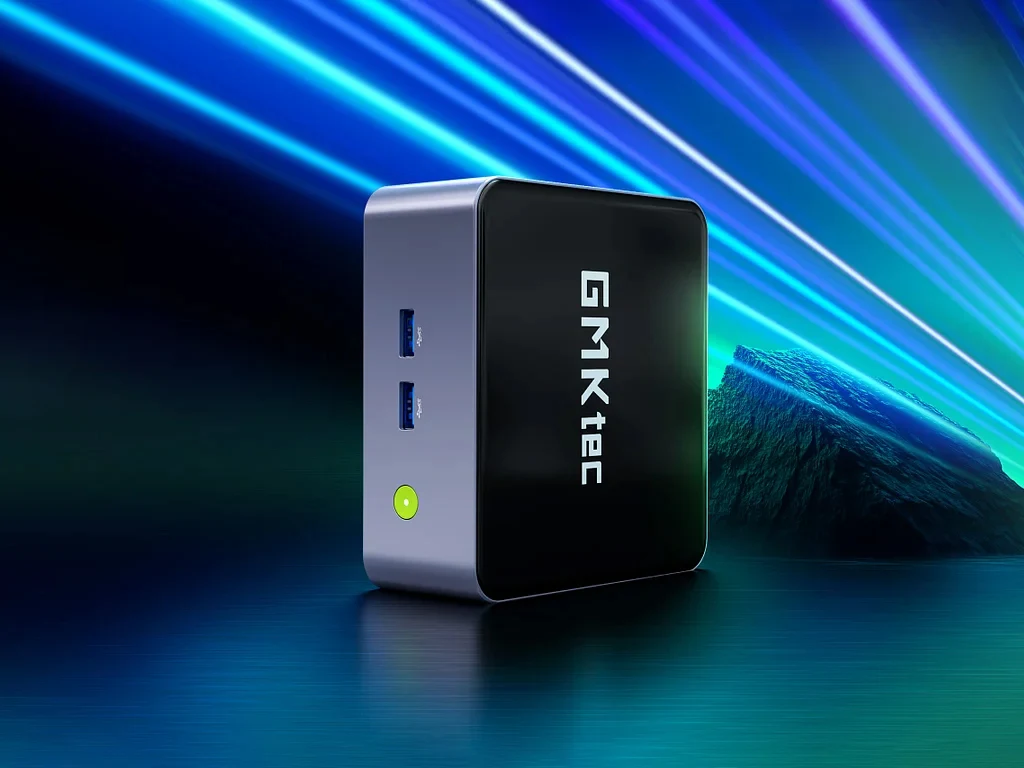
    GMKtec has launched a new Intel mini PC called the GMK NucBox M3 Ultra. This model is an improved version of the previous non-Ultra edition released in 2023. The M3 Ultra is powered by a CPU from the Alder Lake series, specifically the Core i7 12700H, in contrast to the earlier version that used the Core i5 12450H.

    Specifications and Performance

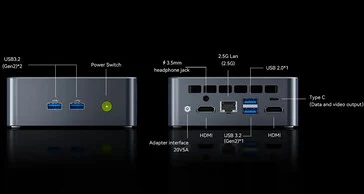
    The NucBox M3 Ultra’s Core i7 12700H can be combined with as much as 64 GB of DDR4 RAM operating at 3200 MT/s. It also boasts two PCIe 3.0 slots, allowing for a maximum storage capacity of 8 TB (for instance, a 4 TB Crucial P310 is presently priced at $234.99 on Amazon). Despite its small size, the mini PC offers a diverse array of ports, including:

    It is important to mention that the USB Type-C port on this mini PC does not serve all functions. It supports data transfer and DisplayPort, but lacks Power Delivery (PD) capabilities. For wireless connectivity, the GMKtec NucBox M3 Ultra features WiFi 6 and Bluetooth 5.2.

    Notable Features

    Additional features of this mini PC include support for triple-display output, an efficient cooling system that operates quietly, and compatibility with VESA mounts. The barebone version is available for $299.99, while a configuration with 32 GB of RAM and a 1 TB SSD is priced at $429.99. GMKtec is also providing a special launch discount with the promo code PRM3U12. This offer is valid until August 25, 2025, reducing the price by $12.

    Source:
    N/A)