
Key Takeaways
1. The University of Calgary students are launching FrontierSat, the city’s first student-built satellite, expected to launch in early 2026.
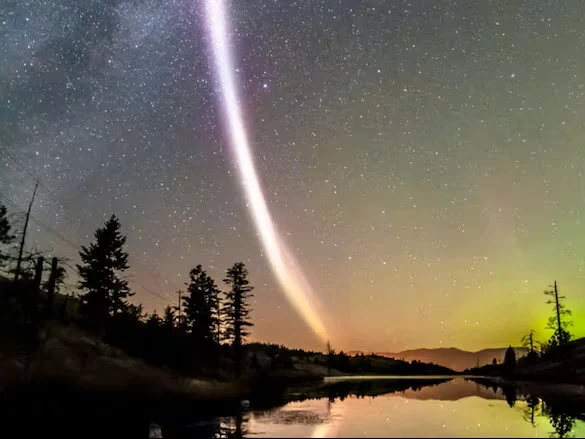
2. FrontierSat is a 3U CubeSat designed to study a unique space weather event called STEVE, which appears as a ribbon of purple and green light.
3. STEVE is distinct from auroras, as it does not involve charged particles, indicating a different and unknown light source.
4. The satellite will use a mini plasma imager to collect data about the ionosphere, contributing to a multi-year dataset on STEVE.
5. The mission is primarily funded by the Canadian Space Agency and involves over 100 students from the CalgaryToSpace team.
A group of mainly undergraduate students from the University of Calgary is getting ready to launch the first satellite built by students in the city. The satellite, called FrontierSat, is a 3U CubeSat that has successfully completed its final vibration tests and is now waiting for its launch. While a specific launch date hasn’t been confirmed yet, it is expected to take place in early 2026 from California on a SpaceX Falcon 9 rocket. The SmallSat’s primary mission will be to collect data about a strange space weather event known as STEVE.
Understanding STEVE
STEVE, which stands for Strong Thermal Emission Velocity Enhancement, shows up in the night sky as a quick-moving, slender ribbon of purple and green light. Although it might be confused for an aurora, researchers at the University of Calgary have verified that it is actually a separate phenomenon.
Unlike auroras, which are created by charged particles falling into Earth’s upper atmosphere, STEVE does not involve these particles. This suggests that the light it emits comes from a different and currently unknown source. The FrontierSat team is eager to investigate and unravel this cosmic enigma.
Exciting Future Prospects
“It would be fantastic if we could gather a multi-year dataset of STEVE observations with FrontierSat,” says Johnathan Burchill, the mission’s lead investigator.
The satellite, roughly the size of a loaf of bread, will utilize a mini plasma imager to observe the ionosphere from space. Mainly funded by the Canadian Space Agency, this mission represents a significant milestone for the more than 100 students involved in the CalgaryToSpace team, who have dedicated their efforts to the design, construction, and testing of the satellite.
Source:
Link

Leave a Reply