Category: Computers

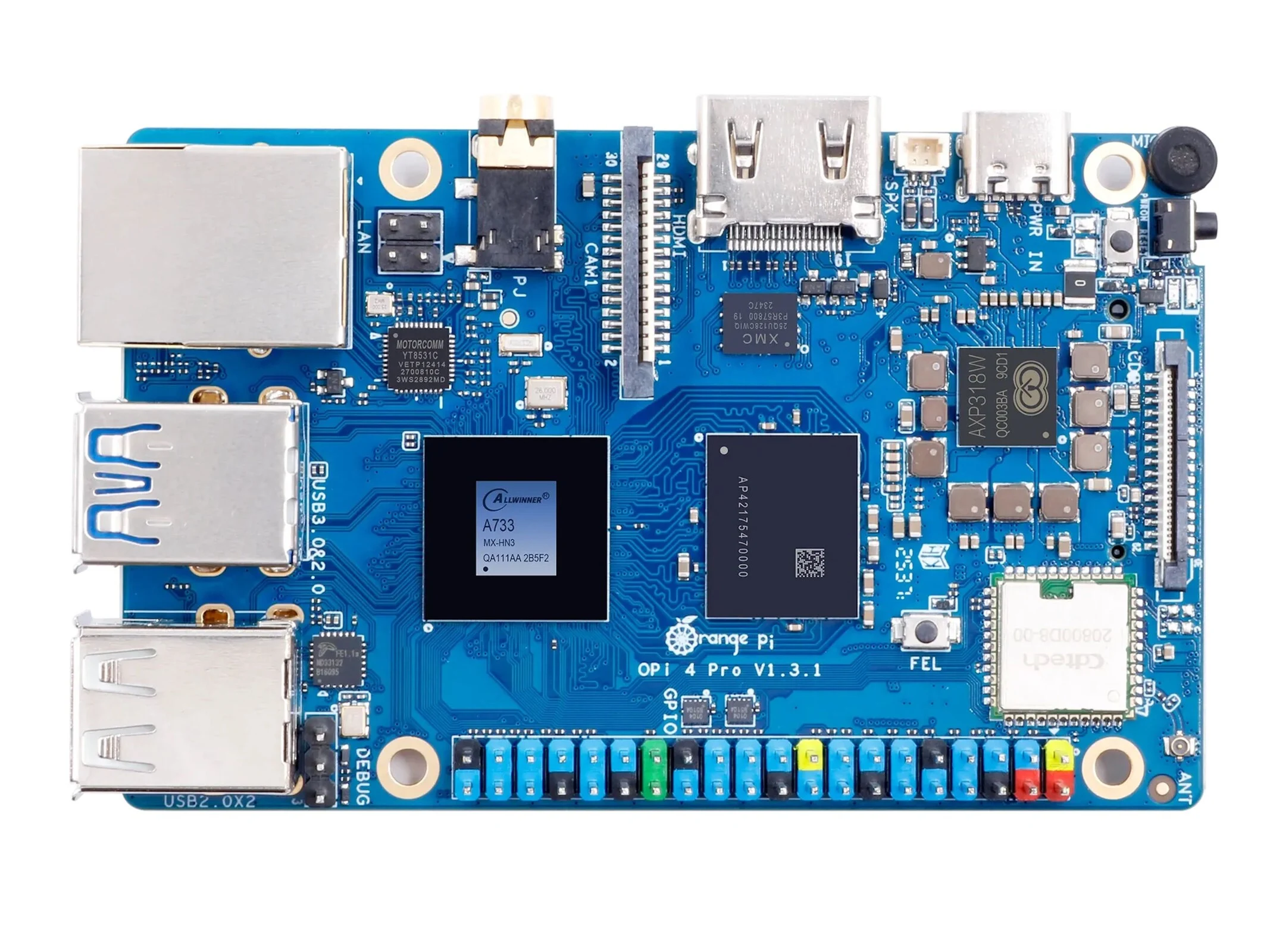
  • Orange Pi 4 Pro: Raspberry Pi 5 Alternative with 16GB RAM

    Orange Pi 4 Pro: Raspberry Pi 5 Alternative with 16GB RAM

    Key Takeaways

    1. The Orange Pi 4 Pro is a versatile single-board computer but may not be suitable for everyday users.
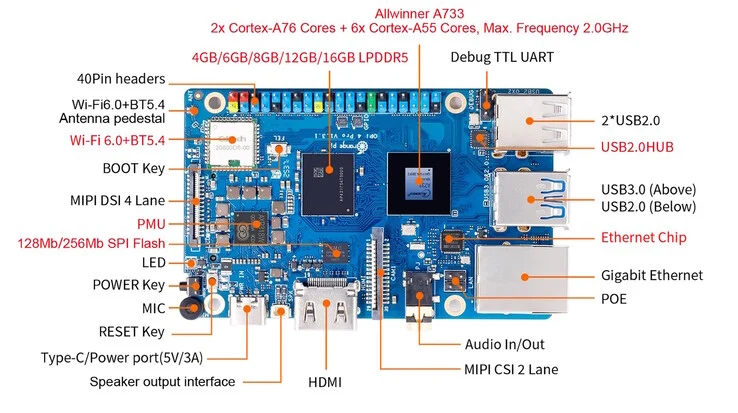
    2. It features HDMI 2.0 for 4K video output, powered by an Allwinner A733 SoC with 8 cores and up to 16GB of LPDDR5 RAM.
    3. Storage options include eMMC (16, 32, 64, or 128GB) and the ability to connect an M.2 SSD via PCIe 3.0.
    4. Connectivity options include Gigabit Ethernet, WiFi 6, Bluetooth 5.4, and a color-coded pin header for sensors and actuators.
    5. The board measures 3.5 x 2.2 inches and includes one USB 3.0 port and three USB 2.0 ports.


    The Orange Pi 4 Pro is a fresh single-board computer that seems ideal for a variety of applications. It’s worth noting, however, that it might not be the best choice for everyday users. It can function as a desktop system, provided that users are comfortable with the Linux-based operating system.

    Specs and Features

    In terms of competition, the Orange Pi serves as a rival to the Raspberry Pi 5, offering HDMI 2.0 support for 4K video output at 60Hz. The device is powered by the Allwinner A733 SoC, which includes two Cortex-A76 cores and six Cortex-A55 cores. It can also have up to 16GB of LPDDR5 RAM. For storage, it offers eMMC options of 16, 32, 64, or 128GB. In addition, there is a microSD card slot and the ability to connect an M.2 SSD through PCIe 3.0.

    Connectivity Options

    Much like the Raspberry Pi 5 (with the 16GB version priced from $119 on Amazon), the Orange Pi SBC includes a color-coded pin header for connecting sensors and actuators. Cameras can be linked through MIPI CSI, and displays can connect via MIPI DSI. The board is also equipped with an NPU that has 3 TOPS, which, while not particularly powerful by today’s standards, could still manage tasks such as image analysis or processing a live feed using an AI model.

    Networking and Dimensions

    For networking, users have the option of Gigabit Ethernet or wireless connections through WiFi 6. Bluetooth 5.4 is also available, which can be handy for pairing accessories like keyboards and mice. Finally, the Orange Pi 4 Pro measures 3.5 x 2.2 inches and includes one USB 3.0 port alongside three USB 2.0 ports.

    Source:
    Link


  • Crypto Recovers Quickly After $19 Billion Loss: Data Insights

    Crypto Recovers Quickly After $19 Billion Loss: Data Insights

    Key Takeaways

    1. The cryptocurrency market experienced a rapid rebound after a significant sell-off, losing $19 billion in leveraged positions in 24 hours.
    2. Bitcoin surged by 3% to nearly $115,000, while Ethereum increased by almost 9% to $4,130, contributing to a 5% overall market recovery.
    3. The recent liquidation was the largest ever recorded in a single day, impacting even stablecoins like USDe.
    4. The quick recovery indicates that traders re-entered the market swiftly, helping restore stability to major digital assets.
    5. Improvements in blockchain technology and liquidity solutions are aiding the cryptocurrency market in managing ongoing volatility more effectively.


    The cryptocurrency market is known for its wild ups and downs, but the latest bounce back has been impressively quick. Just days ago, news outlets reported that around $19 billion in leveraged positions were erased in just 24 hours, leading to a frantic sell-off that drove the market cap below $4 trillion.

    Bitcoin and Ethereum Surge

    In an unexpected upswing, Bitcoin has risen by 3%, nearly reaching $115,000. Ethereum has outdone it, soaring almost 9% to trade at $4,130. All in all, the crypto market has gained approximately 5%, helping to recover a significant portion of Friday’s massive drop.

    According to the crypto analytics site CoinGlass, this recent liquidation marks the largest ever recorded in one single day. Even stablecoins weren’t immune; the USDe token fell to $0.65 before rebounding back to $1 on Binance. The quick recovery across several major digital assets suggests that traders quickly re-entered the market, aiding in the return to stability.

    Ongoing Volatility and Improvements

    One could say that volatility continues to reign in the realm of digital currencies. Yet, the swift resurgence points to how improvements in infrastructure are mitigating systemic risks. New blockchain technologies and liquidity solutions appear to be enabling the crypto market to maintain stability better than in years past.

    To put it differently, the cryptocurrency space remains unstable, but the entire ecosystem is adapting to recover more quickly.

    Source:
    Link


  • Baseus EnerGeek GX11 4G MiFi Power Bank with Integrated Cable

    Baseus EnerGeek GX11 4G MiFi Power Bank with Integrated Cable

    Key Takeaways

    1. 4G Hotspot Functionality: The EnerGeek GX11 features a built-in 4G hotspot, allowing connection to 10 devices without a physical SIM card using CloudSIM technology.

    2. Impressive Battery Capacity: The power bank has a 20,000 mAh capacity and can last up to 114 hours in WiFi mode, with a maximum output of 67 W across multiple ports.

    3. High-Speed Connectivity: It offers download speeds of up to 150 Mbps and upload speeds of up to 50 Mbps, compatible with major service providers like AT&T and Verizon.

    4. Compact and Lightweight Design: Weighing 15.2 oz and measuring 4.9 x 2 x 2 inches, it is designed for easy transport with a detachable USB-C cable that also serves as a strap.

    5. Promotional Pricing: The power bank is priced at $129.99, currently available for a limited time at $99.99 with a promotion code.


    Last month, Baseus introduced the PicoGO AM61 Qi2.2 magnetic power bank. Now, the well-known power solutions company has unveiled its newest EnerGeek GX11 4G MiFi power bank across various countries. The standout feature of this power bank is its built-in 4G hotspot function. It utilizes uCloudlink’s CloudSIM technology and supports 13 different global frequency bands, such as FDD-LTE, TD-LTE, and WCDMA.

    Hotspot Connectivity

    This device allows you to connect to top-tier local networks without needing a physical SIM card. Thanks to its 4G hotspot capability, you can hook up to 10 devices simultaneously. Moreover, it provides upload speeds of up to 50 Mbps and download speeds reaching 150 Mbps. It’s also compatible with major service providers like AT&T, T-Mobile, and Verizon.

    Impressive Battery Life

    When it comes to battery performance, the EnerGeek GX11 4G MiFi power bank features a robust 20,000 mAh capacity. It can deliver a maximum output of 67 W across three ports: two USB-C and one USB-A, which support PD and QC charging protocols. The manufacturer claims that the power bank can last up to 114 hours in WiFi mode. In addition, it comes with a detachable USB-C cable that can extend to 0.82 ft (0.25 cm) and also serves as a strap for easy transport.

    Specifications and Pricing

    Weighing in at 15.2 oz (430 grams), this power bank measures 4.9 x 2 x 2 inches (119.1 x 50.8 x 50.8 mm). Other features include a multi-layer security algorithm, a web portal protection system, and a significant heat-dissipation structure.

    The Baseus EnerGeek GX11 4G MiFi power bank is listed at $129.99. As part of a special launch promotion, the price has been reduced from $129.99 to $99.99 for a limited period. To avail of this offer, use the promotion code BOZCFCGS. Interested consumers can buy the power bank through Amazon.

    Baseus via PRNewswire

    Source:
    Link


  • Mac vs Windows: How Companies Choose Between Apple and PC

    Mac vs Windows: How Companies Choose Between Apple and PC

    Key Takeaways

    1. Windows dominates the business sector with over 75% of global computer shipments, while Apple accounts for only 5%.
    2. Organizations typically fall into three categories regarding computer usage: PC-first, allowing employee choice, or strictly PC-based.
    3. Macs are often designated for specific tasks like design and software development, where macOS tools offer advantages.
    4. Some businesses implement performance-based criteria, like 30-day trials, to assess the value of Mac purchases, reducing unnecessary requests by 67%.
    5. Analysts suggest that Apple’s value proposition is evolving, potentially increasing its presence in enterprises as younger decision-makers prefer flexibility.


    Despite Apple becoming more noticeable in workplaces, Windows still dominates the business sector. A recent report from IDC indicates that Apple only makes up 5% of worldwide commercial computer shipments. In contrast, Lenovo, HP, and Dell together hold more than 75%. In the United States, Macs have reached around 11% of laptop deployments, which still keeps them in a smaller group.

    Division of Computer Usage

    Organizations generally fall into three categories regarding computer usage. There are PC-first companies with few exceptions for Macs, those that allow employees to choose freely, and firms that strictly use PCs. According to BlueRadius Cyber, an IT consultancy, the choice often hinges on the specific needs and budget. Macs are usually designated for tasks such as design, software development, or testing within Apple’s ecosystem, where tools in macOS provide distinct benefits.

    Performance-Based Purchase Criteria

    Some businesses even use performance criteria before allowing Mac purchases. Luca Dal Zotto from Rent a Mac explained to The Register a system where employees go through a 30-day trial to document measurable enhancements before getting approval. These improvements can be about video render times or debugging speeds. This method has reportedly decreased unnecessary Mac requests by 67%.

    Changing Value Proposition

    Yet, analysts believe that Apple’s value proposition is evolving. Canalys analyst Kieren Jessop pointed out that the MacBook Air’s 16GB RAM and its price of $1,199 are closing the gap between Apple and other premium PCs like the Dell XPS 13. As younger IT decision-makers lean towards flexibility, Apple’s presence in enterprises might keep increasing, although Windows still stands as the corporate standard for now.

    Source:
    Link


  • Key Mechanism of Cell Movement Decoded for Cancer Research Insights

    Key Mechanism of Cell Movement Decoded for Cancer Research Insights

    Key Takeaways

    1. The cytoskeleton, made of actin filaments, gives cells their shape and stability, with a newly discovered mechanism for filament breakdown.
    2. Researchers identified a collaboration between three proteins—coronin, cofilin, and AIP1—acting together in a “molecular dance” to facilitate actin filament disassembly.
    3. Coronin modifies actin filaments, cofilin weakens them, and AIP1 pulls them apart, revealing a new understanding of filament breakdown dynamics.
    4. The study challenges previous beliefs by showing that AIP1, not cofilin, plays the key role in severing filaments.
    5. Understanding these mechanisms can lead to new therapeutic targets for diseases like cancer, potentially hindering tumor cell movement and metastasis.


    Inside each cell, there’s a delicate framework of protein threads called the cytoskeleton, which gives the cell its shape and stability. Actin filaments are essential components of this framework. These small protein strands are constantly being built up and broken down to allow movement. However, the specific mechanism behind how they break down has been a mystery until now.

    Discoveries by Researchers

    A team from the Max Planck Institute, led by structural biologist Stefan Raunser, has identified that three proteins – coronin, cofilin, and AIP1 – collaborate seamlessly. The researchers liken this collaboration to a “molecular dance,” where each protein has its unique function. Their research was published in Cell in October 2025.

    The Role of Each Protein

    Initially, coronin attaches to the filament and slightly modifies its structure, facilitating chemical changes, particularly the removal of phosphate groups. This process essentially “matures” the filament, setting it up for what comes next. After that, cofilin takes charge, pushing coronin away and causing further weakening of the filament’s structure. Lastly, AIP1 acts like little pincers, pulling the fragile filament apart and stopping it from being reformed.

    To investigate this process, the researchers employed advanced cryo-electron microscopy. This method involves quickly freezing the proteins and using electron beams to create highly detailed 3D images. In total, the team gathered over a million images and pieced together 16 snapshots that illustrate the entire sequence of actions.

    Implications of the Findings

    The result is a new, detailed model of filament breakdown that challenges previous beliefs. For a long time, cofilin was thought to be the primary protein responsible for severing the filaments. However, it turns out that AIP1 actually holds this key role. The study sheds light on the essential mechanisms that enable cell movement.

    These discoveries hold significance beyond basic research. Cell movement is also crucial in various diseases, including cancer and immune responses. In particular, during metastasis – the process where cancer cells spread throughout the body – tumor cells utilize similar mechanisms as healthy cells do when healing wounds.

    Now that scientists have a clearer understanding of how proteins like AIP1, cofilin, and coronin regulate cell movement, new targets may arise for therapies. In the long run, this knowledge could lead to treatments that slow down or even stop the spread of cancer cells by disrupting their ability to move.

  • Samsung Galaxy Book5 Pro 14 OLED Panel Lags Behind Rivals

    Samsung Galaxy Book5 Pro 14 OLED Panel Lags Behind Rivals

    Key Takeaways

    1. The Samsung Galaxy Book5 Pro 14 features an impressive OLED touchscreen with a resolution of 2880 x 1800 pixels, offering sharp visuals and vibrant colors.

    2. The display has a high refresh rate of 120 Hz, ensuring fluid movements and providing various color profiles for P3 and sRGB color spaces.

    3. The maximum HDR brightness of 530 nits is lower than many competitors, which often achieve peak brightness levels exceeding 1,000 nits.

    4. PWM flickering at a low frequency of 240 Hz may cause discomfort for sensitive users, while competitors offer higher flicker frequencies and smaller amplitudes.

    5. Despite being a leading OLED supplier, Samsung’s Galaxy Book5 Pro 14 falls short in display performance compared to rival models.


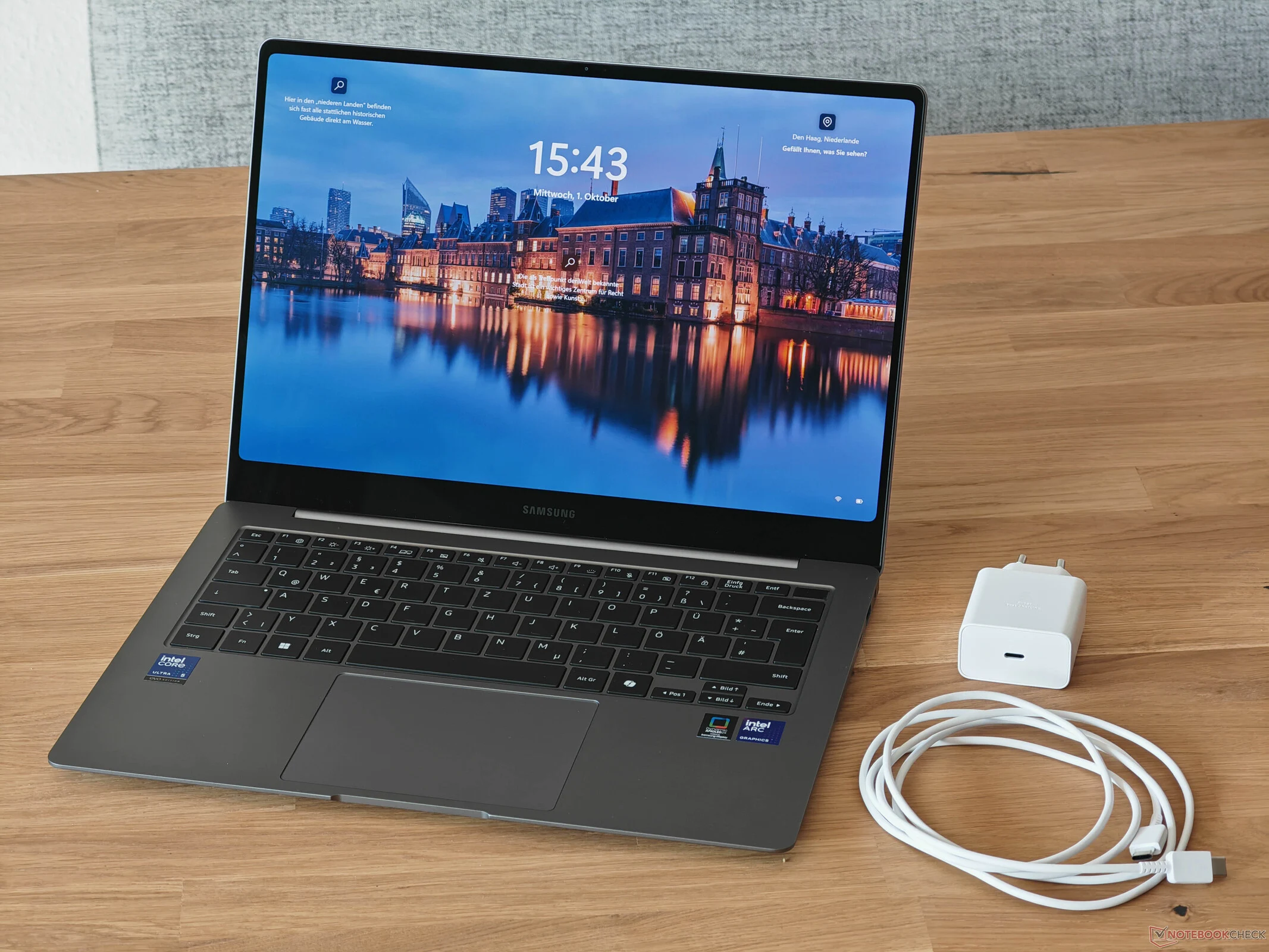
    We recently took a closer look at the Samsung Galaxy Book5 Pro 14, which features an OLED touchscreen boasting a resolution of 2880 x 1800 pixels. The display quality remains impressive, showcasing sharp visuals, vibrant colors, and deep blacks. Even on lighter surfaces, there’s no noticeable graininess, which can often be a drawback with touchscreens. Additionally, the high refresh rate of 120 Hz ensures that movements appear fluid, and it offers various color profiles for the P3 and sRGB color spaces.

    Brightness and HDR Performance

    However, there are two areas where Samsung seems to lag behind its competitors: brightness levels, particularly in HDR content, and PWM flickering. While the standard brightness of 400 nits is acceptable, the maximum HDR brightness of around 530 nits is quite low, especially when many rivals achieve double that figure. Lenovo has stepped up its OLED offerings this year, with even budget models like the Yoga Slim 7 14 G10 featuring OLED panels that reach peak brightness levels exceeding 1,000 nits. Similarly, Honor’s MagicBook Art 14 includes a high-resolution OLED display that outperforms the Galaxy Book5 Pro 14 in nearly every aspect.

    PWM Flickering Concerns

    Another important issue is PWM flickering, which may cause discomfort or headaches for some users. The OLED display on the Galaxy Book5 Pro 14 flickers at a relatively low frequency of 240 Hz with a noticeable amplitude, which could be problematic for sensitive individuals. On the other hand, manufacturers like Lenovo excel in this area, offering higher flicker frequencies (over 1 kHz) and significantly smaller amplitudes.

    Despite being one of the leading OLED suppliers, it is surprising that the pricey Galaxy Book5 Pro 14 does not come with a superior display.

  • 2.1 Million Photo IDs Stolen in 1.5TB Discord Data Breach

    2.1 Million Photo IDs Stolen in 1.5TB Discord Data Breach

    Key Takeaways

    1. Hackers claim to have breached Discord, holding 1.5 terabytes of age-verification photos, including over 2 million government-issued IDs and selfies.
    2. The breach has led to extortion attempts against Discord, raising concerns about identity theft and phishing threats for its 250 million monthly users.
    3. The incident originated from a compromise of Discord’s third-party customer service provider, Zendesk, rather than a direct breach of Discord’s main system.
    4. Compromised data includes user names, email addresses, partial billing details, IP addresses, and limited internal documents, but does not include full credit card numbers, CVV codes, private messages, or passwords.
    5. Discord is notifying affected users and urging them to remain vigilant for suspicious communications following the breach.


    Hackers claiming to have executed a significant breach on Discord have intensified their threats by asserting they hold 1.5 terabytes of age-verification photos. This includes 2,185,151 images of government-issued identification, such as passports and driver’s licenses, along with selfies that users submitted during automated age verification appeals.

    Extortion and Risks

    The hackers are utilizing the stolen data to blackmail Discord for ransom. This security incident has raised serious concerns about identity theft and phishing threats, especially since Discord has over 250 million active users each month. The breach has sparked widespread worry as users ponder the safety of their personal information.

    Background of the Breach

    The incident was initially brought to light by cybersecurity monitors such as Hackmanac and Discord Previews. The age-verification system in place raises additional issues regarding data retention practices and increasing regulatory demands for age verification in places like the UK and Australia. This breach traces back to September 20, when an unauthorized user compromised Discord’s third-party customer service provider, Zendesk, granting them access to ticket systems without directly breaching Discord’s main framework.

    Discord identified the issue shortly after it occurred and made a public announcement on October 3, clarifying that only a small group of users who had reached out to customer support or trust and safety teams were at risk.

    Details of the Compromise

    In its official communication, Discord described the extent of the breach, noting that the attacker specifically targeted data to use for extortion. This calculated strategy has sent shockwaves through other industries, including cryptocurrency, where Zendesk has provided services to exchanges like BtcTurk and HTX, both of which have experienced multimillion-dollar hacks in the past.

    According to Discord’s press release, the compromised data includes names, usernames, email addresses, and other contact information shared with support, such as partial billing details like payment types, the last four digits of credit cards, and purchase histories. It also involves IP addresses, discussions with customer support agents, and some limited internal documents like training materials and presentations.

    What Wasn’t Compromised

    However, the leaks do not include full credit card numbers, CVV codes, private messages, or passwords. While Discord did confirm that hackers accessed “a small number of government-ID images” from age-verification requests, the hackers claim to possess over two million such files, possibly gathered before automated deletions could take place.

    Discord has commenced sending notifications to those affected and is advising users to stay vigilant for any suspicious messages.

    Source:
    Link


  • Atomic-Thin Chip Breakthrough: Faster, Thinner, Power-Efficient Devices

    Atomic-Thin Chip Breakthrough: Faster, Thinner, Power-Efficient Devices

    Key Takeaways

    1. Scientists from Fudan University developed the first fully functional 2D-CMOS chip, merging 2D memory cells with traditional silicon technology.
    2. The innovation, called Atom2Chip, overcomes engineering challenges in integrating delicate 2D materials onto silicon chips.
    3. The chip features a comprehensive on-chip process and unique packaging to protect fragile atomic layers.
    4. The 1-Kb 2D NOR flash memory chip achieves a clock speed of 5 MHz with fast programming and erasing times of 20 nanoseconds.
    5. This breakthrough promises future memory devices with increased density, enhanced energy efficiency, and potential applications in processors.


    A group of scientists, led by Chunsen Liu from Fudan University in Shanghai, has developed the first fully functional 2D-CMOS chip. This innovative chip merges atomically thin 2D memory cells with a traditional silicon chip. This breakthrough, published in the journal Nature, connects the theoretical possibilities of 2D materials to their practical uses.

    Challenges with Silicon Technology

    For many years, researchers have been striving to miniaturize circuits on silicon chips. However, this technology is nearing its physical limits. 2D materials, which consist of just one layer of atoms, offer a potential solution, but combining them with standard processors has proven to be a significant engineering challenge due to their delicate nature and instability.

    The Atom2Chip Innovation

    To tackle these issues, the team devised a new technology known as Atom2Chip. This approach includes several important innovations, such as a comprehensive on-chip process that enables the integration of the 2D material (monolayer molybdenum disulfide) onto the rough surface of the CMOS chip. Additionally, a unique packaging was created to safeguard the fragile atomic layer. The scientists also created a new cross-platform system that allows the advanced 2D circuits to interact effortlessly with the established CMOS platform.

    Impressive Performance Metrics

    The outcome is not merely a basic laboratory prototype; it is a fully functional 1-Kb 2D NOR flash memory chip that can perform complex, instruction-driven tasks. In various tests, this chip achieved a clock speed of 5 MHz and exhibited rapid programming and erasing capabilities of 20 nanoseconds while maintaining low energy consumption.

    This 2D flash chip acts as a model for future memory devices, promising increased density and enhanced energy efficiency. While the current demonstration centers on data storage, the same technique could eventually be utilized for processors. Such technological progress could result in devices that are faster, slimmer, and more efficient in terms of power consumption.

    Nature via Tech Xplore

    Source:
    Link


  • Scientists Use 1,039 Dust Devils to Map Martian Wind Patterns

    Scientists Use 1,039 Dust Devils to Map Martian Wind Patterns

    Key Takeaways

    1. Researchers have successfully captured images and tracked the movement of 1,039 dust devils on Mars.
    2. Wind speeds of up to 158 kilometers per hour were recorded, exceeding previous measurements from rovers.
    3. The study was led by Valentin Bickel from the University of Bern, Switzerland.
    4. Innovative tracking methods utilized color offsets from the ESA’s Mars Express and ExoMars Trace Gas Orbiter.
    5. Findings will enhance understanding of wind behaviors on Mars, aiding future exploration efforts.


    Over many years, researchers have spotted various dust devils on Mars. Thanks to rovers like the Perseverance rover, this has become possible. However, none of those rovers have successfully followed the movement of these whirlwind-like phenomena.

    New Findings on Dust Devils

    A recent research led by Valentin Bickel from the University of Bern in Switzerland not only succeeded in capturing images of dust devils but also gauged their speed and direction. The team produced a map that highlights the positioning of 1,039 dust devils, additionally indicating the movement direction of 373 of them.

    Impressive Wind Speeds

    The scientists recorded wind speeds reaching up to 158 kilometers per hour while observing the speed of these dust devils. Remarkably, this wind velocity surpasses anything that researchers have previously measured using the rovers.

    Innovative Tracking Methods

    How Bickel and his colleagues monitored the dust devils is also significant. They utilized an unintended feature of the ESA’s Mars Express and ExoMars Trace Gas Orbiter (TGO). When observing a moving entity like a dust devil, there are delays in the images from Mars Express and ExoMars TGO, resulting in what the ESA calls “color offsets.” Bickel’s team cleverly took advantage of these color offsets to follow the dust devils.

    This research is aiding scientists in enhancing their knowledge of wind behaviors across Mars, which could prove advantageous when organizing future expeditions to the Red Planet.

    Source:
    Link


  • Apple M5 Mac Lineup Leaked: Timeline, Models, and Specs Revealed

    Apple M5 Mac Lineup Leaked: Timeline, Models, and Specs Revealed

    Key Takeaways

    1. M5 MacBook Pro Launch: The first M5 MacBook Pro is expected to debut before October 2025, maintaining the same design as the M4 but featuring a significantly upgraded M5 chip for better GPU performance.

    2. MacBook Air Models: Two M5 MacBook Air models (13-inch and 15-inch) are anticipated to launch in early 2026, featuring a new 3 nm M5 SoC for improved CPU performance and energy efficiency, along with a potential price increase.

    3. Premium M5 Pro and M5 Max: Higher-end M5 Pro and M5 Max models are set for a spring 2026 release, promising enhanced gaming performance through advanced GPU capabilities without external design changes.

    4. Desktop Model Updates: M5 desktop models, including the Mac mini, Mac Studio, and iMac, are expected in mid-2026, aligning with Apple’s silicon upgrade schedule while focusing on performance improvements rather than visual redesigns.

    5. Future Prototypes: Early indications suggest that M6-series prototypes are already being tested, hinting at ongoing advancements in Apple’s chip technology beyond the M5 series.


    Apple might have unintentionally disclosed its entire upcoming Mac lineup in the latest macOS Tahoe 26. Code details found by AppleInsider indicate every forthcoming M5-equipped device, starting with a base 14-inch MacBook Pro anticipated to launch later this month. Additionally, there are updates on the MacBook Air, iMac, Mac mini, and Studio models expected to debut through 2026. Notably, the findings also highlight the introduction of new M5 Pro and M5 Max chips, as well as some early indications of M6-series prototypes already being tested.

    First M5 MacBook Pro on the Horizon

    AppleInsider reports that internal codes included in macOS Tahoe 26.0.2 verify the M5 MacBook Pro (J704) is indeed in the works. This model is likely to be the first Mac to feature the M5 chip, aiming for a launch before October 2025. It’s set to succeed the existing M4 MacBook Pro while keeping the same chassis, mini-LED display, and port configuration.

    The main upgrade here is the new M5 chip, which, according to preliminary benchmarks from the iPad Pro, seems to offer a notable boost in GPU performance over the M4. Design-wise, no significant changes are anticipated, indicating that this refresh will be more focused on enhancing graphics performance.

    Upcoming MacBook Air Models

    The M5 MacBook Air is expected to make its debut in early 2026, coinciding with the launch of macOS 26.2. Code references reveal two models: the 13-inch (J813) and the 15-inch (J815) versions.

    Design-wise, Apple is likely to maintain the sleek aluminum chassis, MagSafe 3 charging port, and Liquid Retina display. The significant update will be the transition to the M5 SoC, manufactured with an improved 3 nm process, which should offer slight CPU enhancements and better energy efficiency. Battery life might see minor upgrades due to this new chip. Furthermore, the M5 MacBook Air could see a small price hike compared to the M4 MacBook Air that started at $999. To keep the entry price low for the MacBook series, there are rumors of a new model powered by a Pro SoC similar to that used in iPhones.

    Higher-End Models and Gaming Performance

    The premium M5 Pro and M5 Max MacBook Pro variants, known internally as J714 and J716, are slated for a spring 2026 release alongside macOS 26.3. These chips are expected to use TSMC’s SoIC-MH packaging tech, allowing Apple to separate CPU and GPU units, which could lead to more flexible scaling and possibly higher GPU core counts. With the performance of the M4 chip already evident in demanding games like Cyberpunk 2077, an upgraded GPU could significantly enhance gaming experiences on Macs, especially as the game library expands.

    While these changes might lead to impressive graphics performance, don’t expect any external design modifications this time. An OLED MacBook Pro featuring a touch panel is rumored to be released later in 2026, according to a reliable industry insider.

    Desktop Models and Future Releases

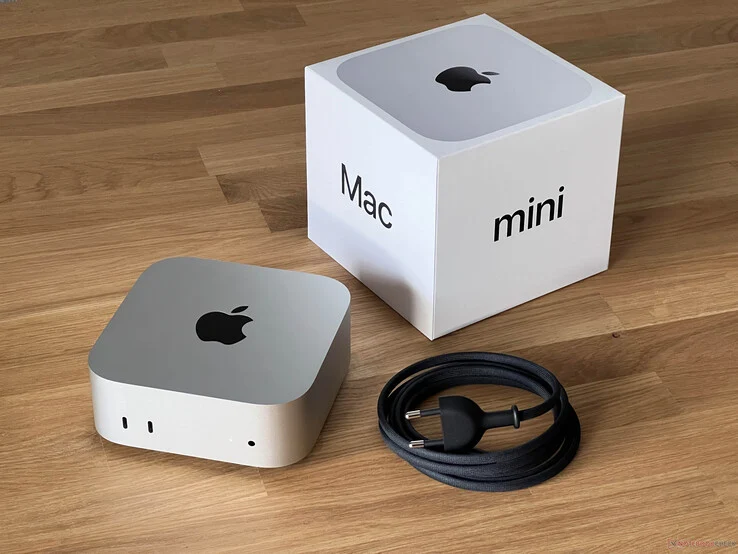
    M5 desktop models are anticipated to follow in mid-2026, probably during WWDC 2026 when Apple announces macOS 26.4. The leaked identifiers include the M5 Mac mini (J873s / J873g), M5 Mac Studio (J775c / J775d), and M5 iMac (J833ct).

    These desktop variants are expected to align with Apple’s standard silicon upgrade schedule, incorporating M5, M5 Pro, or M5 Max chips to enhance efficiency and performance while maintaining the current design aesthetic. While no substantial visual changes are expected, the updated SoC may enable better thermal management and consistent performance during heavy workloads.

    Based on this leaked information, if you can wait a little longer, it might be wise to hold out for the base M5 MacBook Pro arriving later this October. It could either provide better value for the same price or drive down the costs of the existing M4 models.

    Source:
    Link