
Key Takeaways
1. The Samsung Galaxy Book5 Pro 14 features an impressive OLED touchscreen with a resolution of 2880 x 1800 pixels, offering sharp visuals and vibrant colors.
2. The display has a high refresh rate of 120 Hz, ensuring fluid movements and providing various color profiles for P3 and sRGB color spaces.
3. The maximum HDR brightness of 530 nits is lower than many competitors, which often achieve peak brightness levels exceeding 1,000 nits.
4. PWM flickering at a low frequency of 240 Hz may cause discomfort for sensitive users, while competitors offer higher flicker frequencies and smaller amplitudes.
5. Despite being a leading OLED supplier, Samsung’s Galaxy Book5 Pro 14 falls short in display performance compared to rival models.
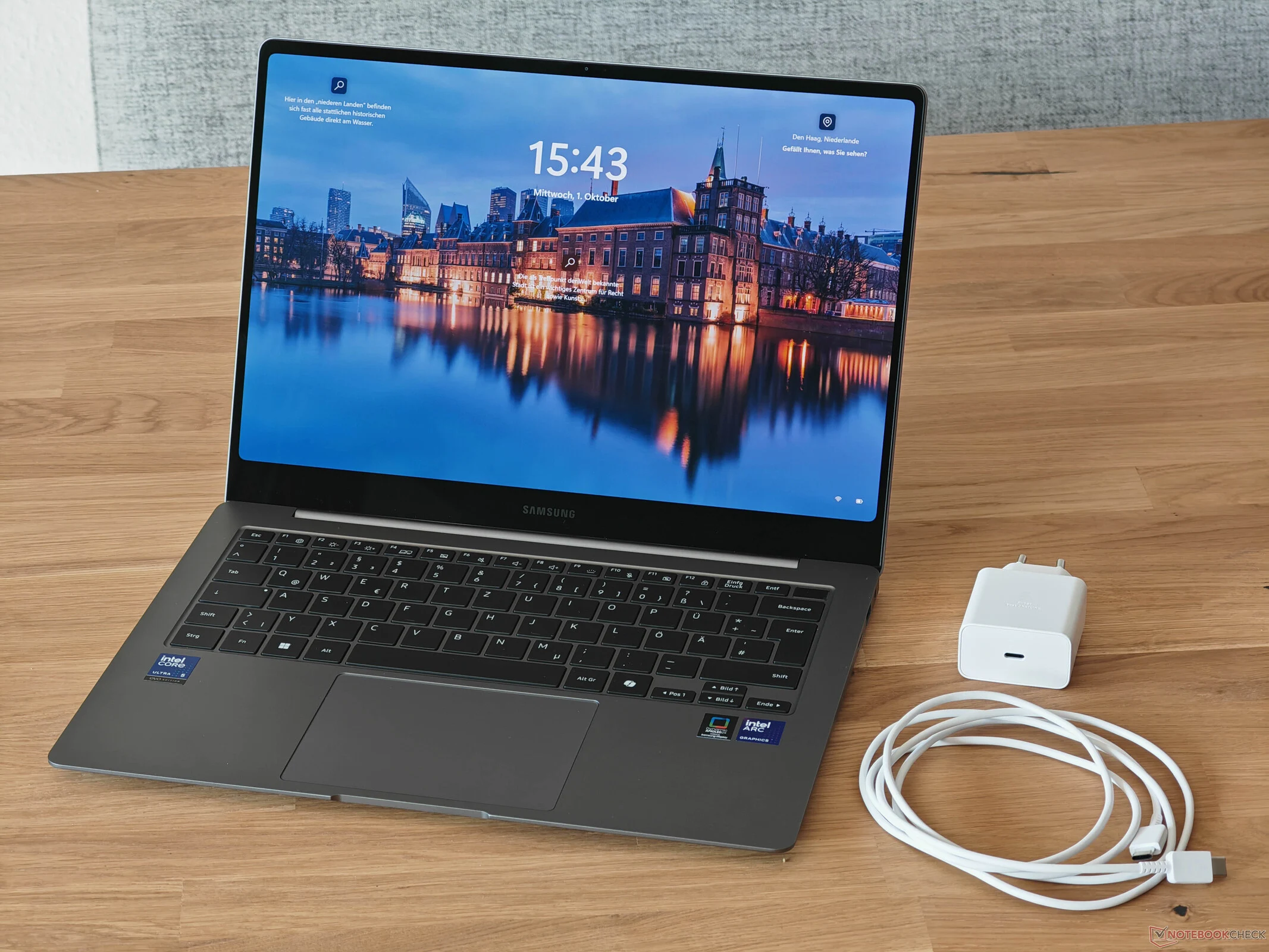
We recently took a closer look at the Samsung Galaxy Book5 Pro 14, which features an OLED touchscreen boasting a resolution of 2880 x 1800 pixels. The display quality remains impressive, showcasing sharp visuals, vibrant colors, and deep blacks. Even on lighter surfaces, there’s no noticeable graininess, which can often be a drawback with touchscreens. Additionally, the high refresh rate of 120 Hz ensures that movements appear fluid, and it offers various color profiles for the P3 and sRGB color spaces.
Brightness and HDR Performance
However, there are two areas where Samsung seems to lag behind its competitors: brightness levels, particularly in HDR content, and PWM flickering. While the standard brightness of 400 nits is acceptable, the maximum HDR brightness of around 530 nits is quite low, especially when many rivals achieve double that figure. Lenovo has stepped up its OLED offerings this year, with even budget models like the Yoga Slim 7 14 G10 featuring OLED panels that reach peak brightness levels exceeding 1,000 nits. Similarly, Honor’s MagicBook Art 14 includes a high-resolution OLED display that outperforms the Galaxy Book5 Pro 14 in nearly every aspect.
PWM Flickering Concerns
Another important issue is PWM flickering, which may cause discomfort or headaches for some users. The OLED display on the Galaxy Book5 Pro 14 flickers at a relatively low frequency of 240 Hz with a noticeable amplitude, which could be problematic for sensitive individuals. On the other hand, manufacturers like Lenovo excel in this area, offering higher flicker frequencies (over 1 kHz) and significantly smaller amplitudes.
Despite being one of the leading OLED suppliers, it is surprising that the pricey Galaxy Book5 Pro 14 does not come with a superior display.
Leave a Reply