Tag: Perseverance rover

  • NASA’s Perseverance Rover Can Now Track Its Location in Real Time

    NASA’s Perseverance Rover Can Now Track Its Location in Real Time

    Key Takeaways

    1. NASA’s Perseverance rover has been exploring Mars since 2021 and takes pictures to track its movements.
    2. Tiny navigation errors can cause the rover to be off by over 100 feet, leading to pauses for guidance from Earth.
    3. The new Mars Global Localization technology helps the rover avoid lengthy delays in navigation.
    4. On February 2, Perseverance used navigation cameras to create a 360-degree view of “Mala Mala,” resulting in a precise position identification.
    5. The onboard algorithm allows Perseverance to autonomously navigate with an accuracy of 10 inches, improving its movement without waiting for Earth commands.


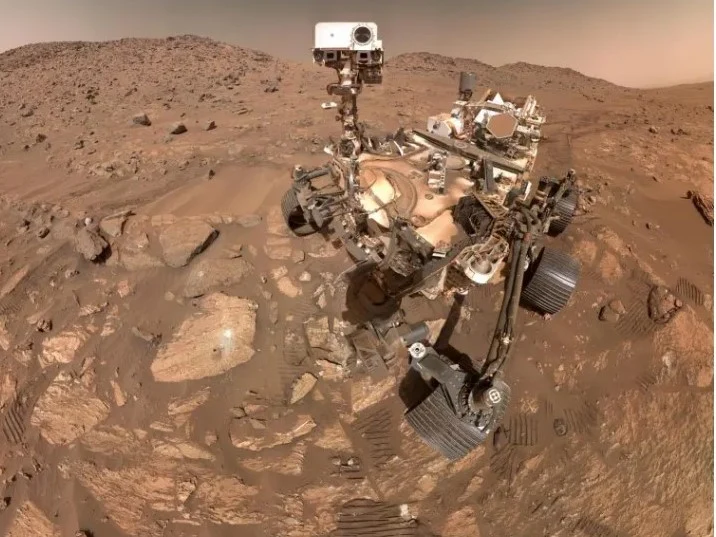
    NASA’s Perseverance rover has been roaming Mars since 2021. As it travels across the red planet, the rover snaps pictures every few feet while tracking its wheel movement. However, tiny mistakes add up over time. On long journeys, the rover might end up being off by more than 100 feet, which is around 35 meters. When this occurs, it halts, believing it could be close to risky ground. Then, it waits for guidance from Earth, a procedure that can take a day or longer. The new technology named Mars Global Localization helps to avoid this slow process.

    New Technology in Action

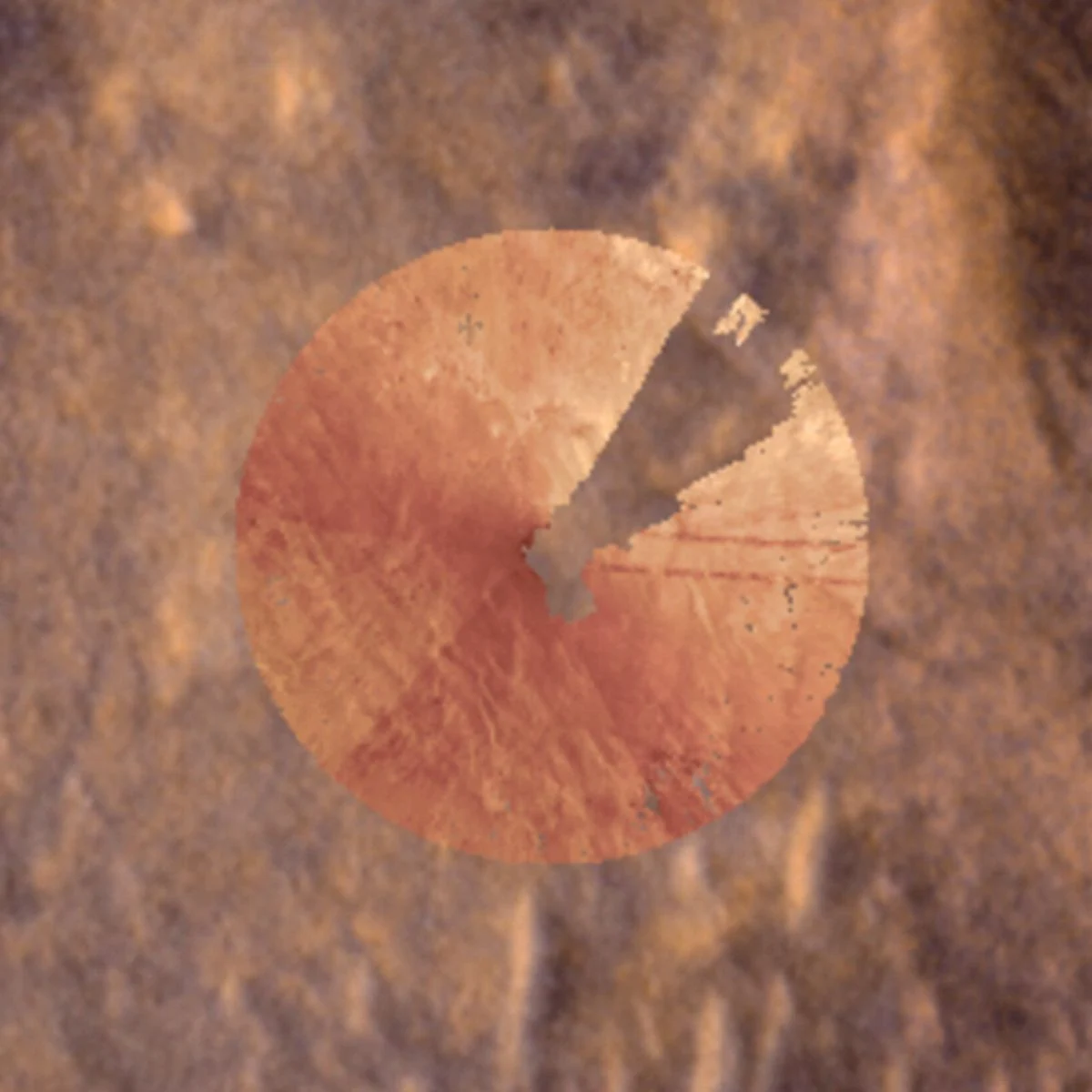
    On February 2, the navigation cameras (navcam) on Perseverance captured a complete 360-degree view of the area known as “Mala Mala.” This spot is characterized by its lack of distinctive features and is located on the edge of Jezero Crater. The images were combined to create a circular overhead image called an orthomosaic. An onboard algorithm then compared this image to pictures from the Mars Reconnaissance Orbiter (MRO). This technique enabled the rover to identify its position with a precision of 10 inches. Remarkably, the whole operation only took about two minutes.

    Improved Autonomy

    The algorithm operates on a processor that Perseverance had previously used to communicate with the now retired Ingenuity Mars Helicopter. This advancement allows Perseverance to figure out where it is and keep moving along its planned path without needing to pause and wait for further orders.

    Source:
    Link


  • NASA’s Perseverance Finds Electrical Sparks on Mars

    NASA’s Perseverance Finds Electrical Sparks on Mars

    Key Takeaways

    1. Dust devils on Mars can create electrical discharges, proving a long-held scientific theory.
    2. The Perseverance rover recorded audio and signals from a dust devil, confirming the presence of sparks.
    3. Dust particles colliding inside dust devils generate electrical charges through the triboelectric effect.
    4. Mars’ thin atmosphere reduces the charge needed for sparks, allowing for significant electrical activity.
    5. Understanding these discharges is important for assessing risks to robotic missions and future human exploration on Mars.


    Dust devils are little whirlwinds that spin and lift up dust and sand as they travel across the surface of Mars. For a long time, scientists have believed that these dust devils can create electrical discharges. Now, they have finally been able to prove their theory.

    Capturing the Sound of Dust Devils

    The Perseverance rover’s SuperCam instrument recorded audio and electromagnetic signals when a dust devil went by. Researchers confirmed that the “snap” sound heard in the recordings came from a spark generated inside the dust devil.

    They found out that dust particles within these dust devils bump into each other, creating electrical charges. When these charges grow strong enough, they can produce a spark. This is known as the triboelectric effect.

    The Role of Mars’ Atmosphere

    It was expected that the charges from the dust particles would be too weak to cause any sparks. However, Baptiste Chide, a member of the Perseverance team, pointed out that the thin atmosphere on Mars lowers the amount of charge needed to produce a spark.

    The consequences of this finding are significant. These electrical discharges can lead to the creation of chlorates and perchlorates, which are chemicals that can break down organic molecules essential for life. Additionally, electrical charges may help in the rapid destruction of methane, possibly explaining why methane disappears so quickly on the Red Planet.

    Understanding Future Risks

    Fortunately, there have been no reports of electrical discharges harming Mars rovers. Still, this confirmed discovery could be crucial for scientists to assess potential risks for ongoing robotic missions and future human expeditions. This significant finding was published in Nature on November 26.

    Nature via NASA

    Source:
    Link


  • NASA Finds Clearest Signs of Life on Mars Ever Discovered

    NASA Finds Clearest Signs of Life on Mars Ever Discovered

    Key Takeaways

    1. Unusual rocks found on Mars, about 3.5 billion years old, may show signs of past life.
    2. The rocks have unique patterns resembling leopard spots, possibly linked to ancient microbial activity.
    3. There is a debate on whether the patterns are biological or the result of natural geological processes.
    4. Mars once had a thicker atmosphere and liquid water, suggesting a warmer, wetter environment in the past.
    5. Future investigations and studies on Earth are needed to determine the true origins of these rock patterns.


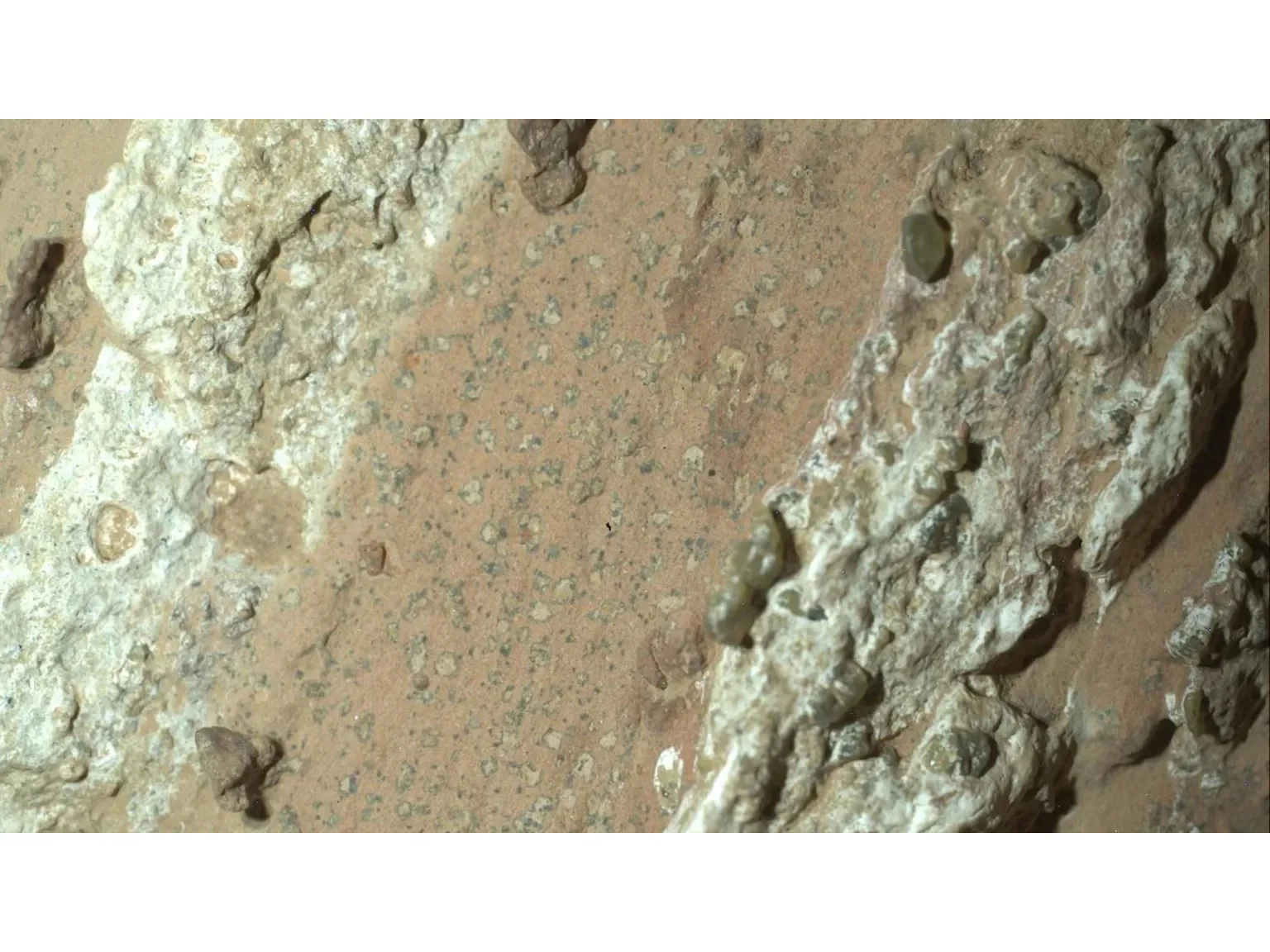
    Unusual rocks have been found on Mars that might show signs of life from the past. These rocks, which are around 3.5 billion years old, were located by NASA’s Perseverance Rover in a dried riverbed within Jezero Crater.

    Unique Patterns Observed

    The rocks feature strange patterns that look like leopard spots. Scientists think these spots could have formed through chemical reactions linked to ancient microbial activity on Mars. NASA has claimed that these might be the most obvious signs of life ever discovered. Yet, there’s another theory that suggests these patterns could be due to natural geological activities. This would have needed higher temperatures, and the rocks don’t look like they were extremely heated. Professor Sanjeev Gupta, a planetary scientist at Imperial College London, says:

    “We haven’t seen anything like this before, and that’s the important part. We have discovered characteristics in the rocks that, if they were found on Earth, could be attributed to biology – to microbial activity. So, we’re not claiming we’ve found life, but we’re suggesting that this gives us something to investigate further.”

    Mars’ Past Environment

    Today, Mars looks like a chilly desert, but evidence shows it once had a much thicker atmosphere and abundant liquid water on its surface billions of years ago. Oceans and rivers made the planet warmer and wetter than it is today. Dr. Nicola Fox, deputy director of NASA’s Science Mission Directorate, commented on this finding during a press conference:

    “It’s like coming across a fossil. It might be a remaining meal, or perhaps that meal has been excreted, and that’s what we’re observing here.”

    Future Investigations Needed

    Whether these rocks truly hint at a biosignature or if they have non-biological origins—something researchers think is less probable—will be determined in the future. Scientists will need to study the rocks on Earth to get clear answers.

    Source:
    Link


  • Scientists Use 1,039 Dust Devils to Map Martian Wind Patterns

    Scientists Use 1,039 Dust Devils to Map Martian Wind Patterns

    Key Takeaways

    1. Researchers have successfully captured images and tracked the movement of 1,039 dust devils on Mars.
    2. Wind speeds of up to 158 kilometers per hour were recorded, exceeding previous measurements from rovers.
    3. The study was led by Valentin Bickel from the University of Bern, Switzerland.
    4. Innovative tracking methods utilized color offsets from the ESA’s Mars Express and ExoMars Trace Gas Orbiter.
    5. Findings will enhance understanding of wind behaviors on Mars, aiding future exploration efforts.


    Over many years, researchers have spotted various dust devils on Mars. Thanks to rovers like the Perseverance rover, this has become possible. However, none of those rovers have successfully followed the movement of these whirlwind-like phenomena.

    New Findings on Dust Devils

    A recent research led by Valentin Bickel from the University of Bern in Switzerland not only succeeded in capturing images of dust devils but also gauged their speed and direction. The team produced a map that highlights the positioning of 1,039 dust devils, additionally indicating the movement direction of 373 of them.

    Impressive Wind Speeds

    The scientists recorded wind speeds reaching up to 158 kilometers per hour while observing the speed of these dust devils. Remarkably, this wind velocity surpasses anything that researchers have previously measured using the rovers.

    Innovative Tracking Methods

    How Bickel and his colleagues monitored the dust devils is also significant. They utilized an unintended feature of the ESA’s Mars Express and ExoMars Trace Gas Orbiter (TGO). When observing a moving entity like a dust devil, there are delays in the images from Mars Express and ExoMars TGO, resulting in what the ESA calls “color offsets.” Bickel’s team cleverly took advantage of these color offsets to follow the dust devils.

    This research is aiding scientists in enhancing their knowledge of wind behaviors across Mars, which could prove advantageous when organizing future expeditions to the Red Planet.

    Source:
    Link


  • NASA Rover Finds New Signs of Life on Mars

    NASA Rover Finds New Signs of Life on Mars

    Key Takeaways

    1. NASA’s Perseverance rover discovered “leopard spots” in Mars’ Bright Angel area, consisting of vivianite and greigite, minerals linked to possible past life.
    2. The formation of these minerals suggests a potential biological process rather than purely geological activity.
    3. Lead scientist Joel Hurowitz likened the discovery to a treasure hunt, indicating valuable findings but with unknown implications.
    4. Caution is advised, as the “leopard spots” do not provide definitive evidence of life; similar patterns can occur through non-biological processes.
    5. Analyzing the rock samples on Earth could yield strong evidence of life on Mars, but current budget cuts and political issues are delaying this possibility.


    According to a report from Space.com, lead scientist Joel Hurowitz from Stony Brook University shared some exciting news about NASA’s Perseverance rover. It has found strange “leopard spots” in the Bright Angel area of Mars. These areas are made up of the minerals vivianite (iron phosphate) and greigite (iron sulfide), which are both seen as possible signs of past life on Earth. These minerals form through redox reactions, a method some microbes on our planet use to create energy.

    A Treasure Hunt in Space

    Hurowitz described the finding like a treasure hunt: “The metal detector has gone off – we’ve found something valuable, but we don’t yet know exactly what.” The rock layers looked at show no signs of high heat or pressure, which makes it less likely that the “leopard spots” formed purely from geological processes. This raises the exciting possibility that biological processes could have played a role in their formation. In another interview with Space.com, Mike Tice from Texas A&M University pointed out that forming greigite naturally on Mars would be quite hard without some type of microbial activity.

    Caution on Claims of Life

    While the “leopard spots” are intriguing, they do not provide clear evidence of life beyond Earth. Similar chemical patterns can happen from non-biological means, and these can only be completely ruled out by thorough lab tests back on Earth. However, this would mean bringing the rock samples collected by Perseverance back to our planet – a task currently stalled due to budget cuts at NASA and political issues.

    If the samples can eventually be closely examined, they might give us the first strong proof of life outside Earth. “It would be the strongest evidence we’ve ever had on Mars,” Hurowitz said.

    Source:
    Link


  • NASA’s New Discovery Offers Strong Evidence of Past Life on Mars

    NASA’s New Discovery Offers Strong Evidence of Past Life on Mars

    Key Takeaways

    1. NASA’s Perseverance rover collected rock samples from the “Bright Angel” formation in Jezero crater, labeled as “Sapphire Canyon” and “Cheyava Falls.”
    2. The rover discovered “leopard spots” containing iron-rich minerals, which may indicate past microbial activity in the area.
    3. The Bright Angel formation has high levels of organic carbon, sulfur, oxidized iron, and phosphorus, potentially supporting microbial life.
    4. The sedimentary rocks in the formation, made of clay and silt, are known to preserve traces of ancient life on Earth.
    5. Preliminary findings suggest that the formation of the observed spots may be linked to biological processes, offering hope for evidence of past life on other planets.


    The inquiry, “Are we alone?” has been a persistent topic within the realm of science. Researchers are determined to shed light on this deep question. A key player in this endeavor is NASA’s Perseverance rover.

    Rock Sample Collection

    In July 2024, Perseverance collected samples from a rock located in the “Bright Angel” formation, which is found in the Jezero crater. The Bright Angel formation features rocky outcrops along the edges of an ancient river valley known as Neretva Vallis. The NASA science team associated with Perseverance labeled the samples “Sapphire Canyon” and referred to the rock it was gathered from as “Cheyava Falls.”

    Discoveries on Cheyava Falls

    While on Cheyava Falls, Perseverance unveiled what the team termed “leopard spots.” Within these spots, two iron-rich minerals were identified: vivianite and greigite. The existence of these spots and their distinct makeup suggest potential chemical reactions that could indicate past microbial activities. Even though it’s possible that these spots formed without biological influence, a new study hints at a different possibility.

    The sedimentary rocks in the Bright Angel formation are abundant in organic carbon, sulfur, oxidized iron (rust), and phosphorus. These elements can serve as energy sources for microbial development. Scientists believe that as microbes consumed these energy sources, they left behind the spots observed on Cheyava Falls.

    Implications of Findings

    Additionally, the rocks in the Bright Angel formation are composed of clay and silt. On Earth, these materials often preserve traces of ancient microbial life. Furthermore, for the formation of these spots to have happened without biological assistance, specific high temperatures and acidic conditions would have been necessary. However, the rocks at Bright Angel do not display any evidence of having undergone these extreme conditions.

    At this point, nothing is definitively established. More research is on the horizon. Yet, these preliminary findings provide a glimmer of optimism in the quest for evidence of past life on other planets, as scientists have struggled to demonstrate that the formations resulted from inorganic processes.

    Source:
    Link


  • NASA’s Stunning Image Reveals Mars’ Float Rocks and Sand Ripples

    NASA’s Stunning Image Reveals Mars’ Float Rocks and Sand Ripples

    Key Takeaways

    1. NASA’s Perseverance rover captured 96 images of the ancient site named “Falbreen” on Mars, creating a detailed panorama.
    2. A notable “float rock” was discovered, believed to have originated from a different location and moved by natural processes.
    3. The panorama features a distinctive band separating lighter-toned rocks rich in olivine from darker, older rocks containing clay.
    4. Perseverance has been drilling into the Martian surface at Falbreen, creating a bright white abrasion patch in the images.
    5. The rover is advancing our understanding of Mars and paving the way for future human exploration.


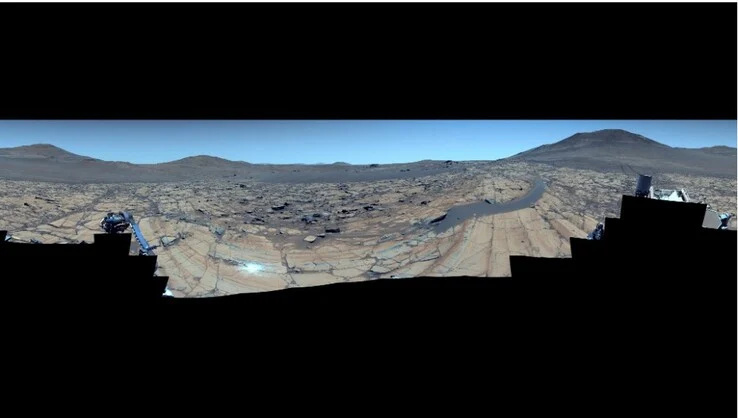
    On May 26, 2025, the imaging team aboard NASA’s Perseverance rover took advantage of the rover’s Mastcam-Z instrument to gather 96 images from a site thought to be among the oldest ever explored by the robotic vehicle. This location has been named “Falbreen” by the science team. The images were combined to create a stunning panorama that presents Mars as clear as daylight.

    Float Rock Discovery

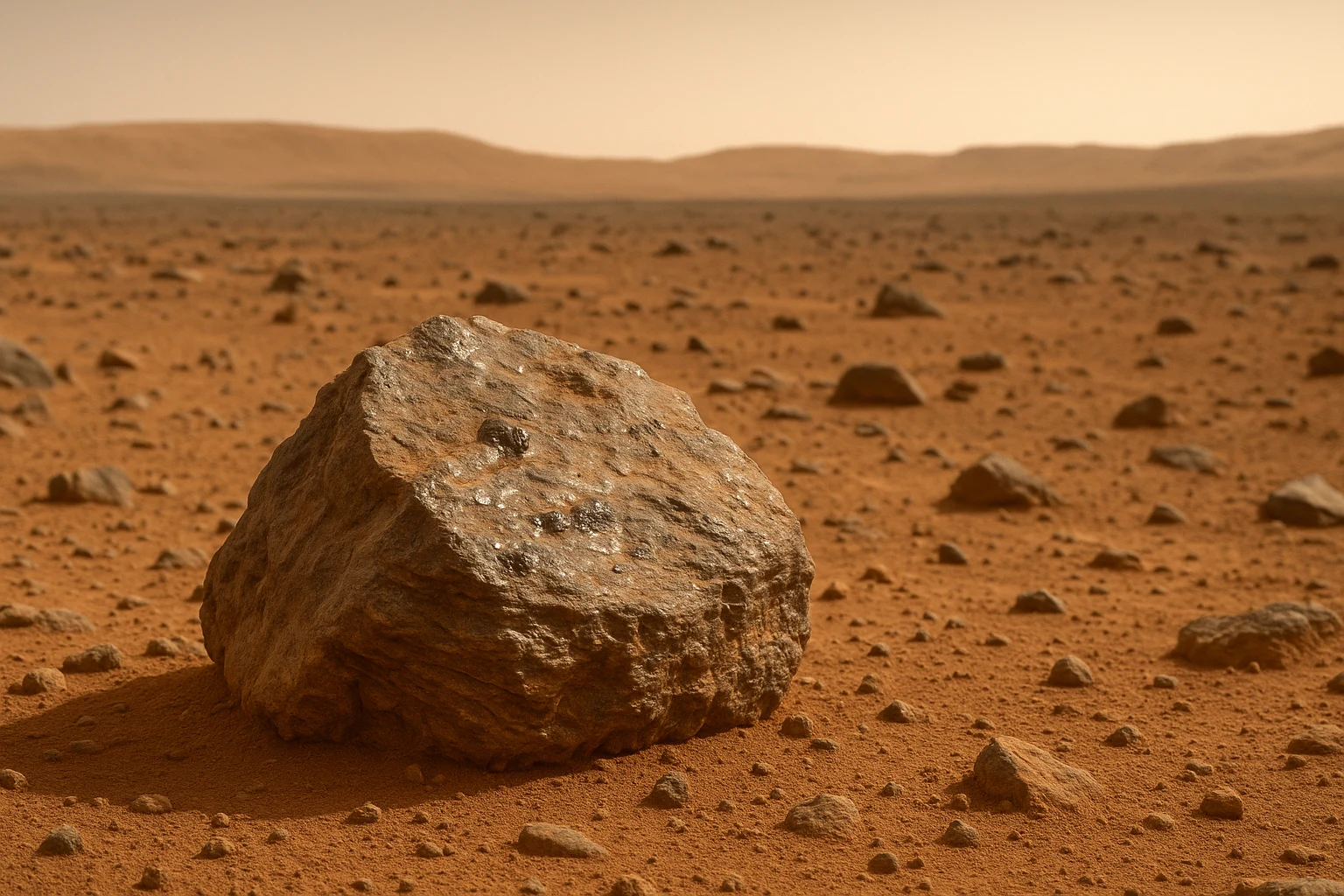
    A prominent feature in the images is a sizeable rock that geologists refer to as a “float rock.” This term is used because scientists think the rock originated from a different location and was moved there by various natural processes, including landslides, water, or wind. The float rock is seen resting on a dark, crescent-shaped sand ripple that is approximately 14 feet (4.27 meters) away from the rover, positioned just to the right of the center of the mosaic.

    Distinctive Rock Bands

    Another interesting aspect of the panorama is a band that crosses the image from one side to the other, located just past the center. This band separates the lighter-toned rocks, which are closer to the rover, from the darker-toned rocks that are further away. The lighter rocks contain a high concentration of olivine, while the darker rocks are thought to be significantly older and rich in clay.

    Drilling and Analysis

    Perseverance has been examining the rocks and soil at Falbreen by drilling into the Martian surface. This drilling has created an abrasion patch that appears as a bright white circle just to the left of the center and near the bottom of the image. NASA’s Perseverance rover, which touched down on Mars on February 18, 2021, is continually enhancing our understanding of the planet, clearing a path for future human exploration.

    Source:
    Link