
Key Takeaways
1. Unusual rocks found on Mars, about 3.5 billion years old, may show signs of past life.
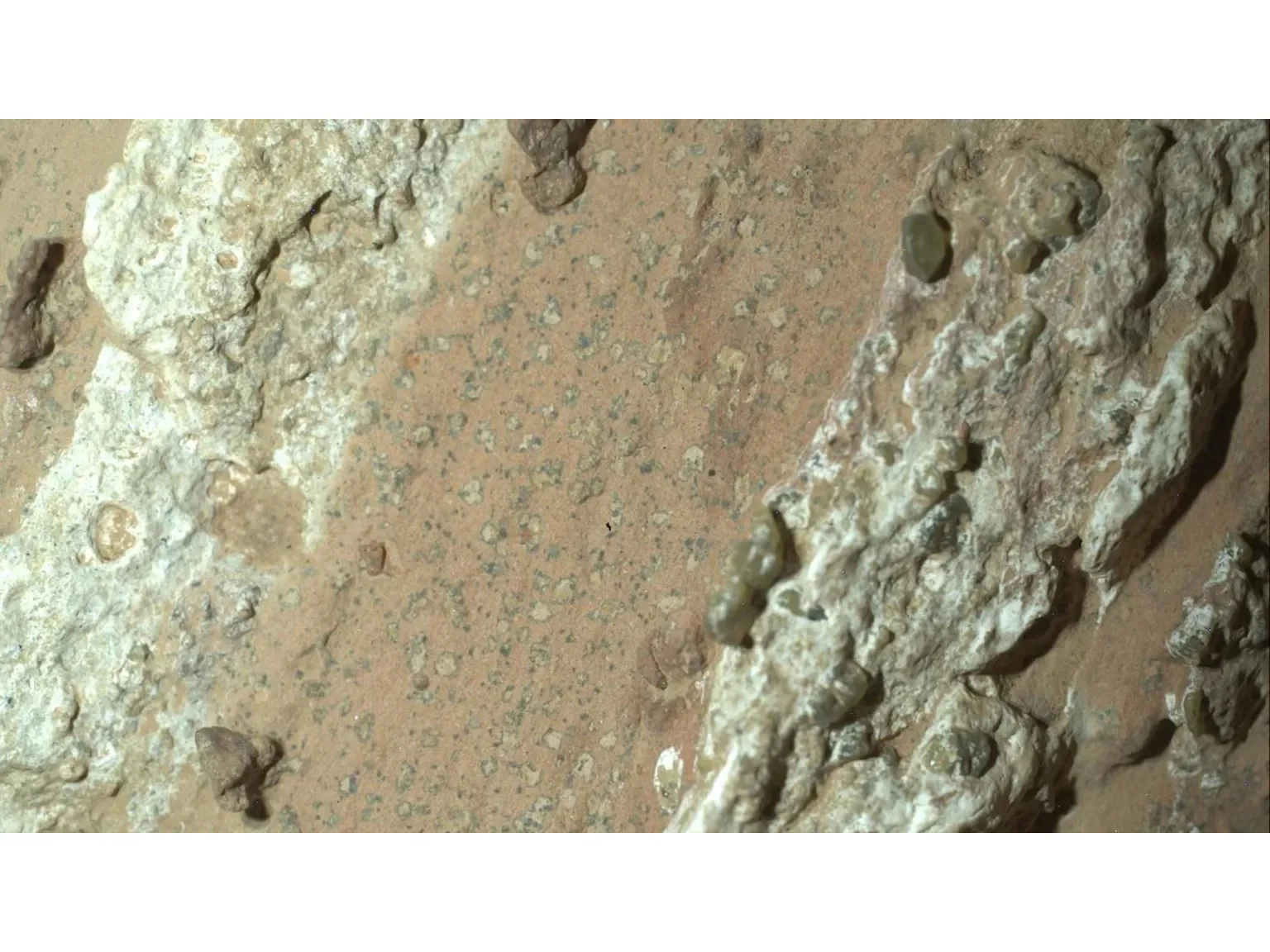
2. The rocks have unique patterns resembling leopard spots, possibly linked to ancient microbial activity.
3. There is a debate on whether the patterns are biological or the result of natural geological processes.
4. Mars once had a thicker atmosphere and liquid water, suggesting a warmer, wetter environment in the past.
5. Future investigations and studies on Earth are needed to determine the true origins of these rock patterns.
Unusual rocks have been found on Mars that might show signs of life from the past. These rocks, which are around 3.5 billion years old, were located by NASA’s Perseverance Rover in a dried riverbed within Jezero Crater.
Unique Patterns Observed
The rocks feature strange patterns that look like leopard spots. Scientists think these spots could have formed through chemical reactions linked to ancient microbial activity on Mars. NASA has claimed that these might be the most obvious signs of life ever discovered. Yet, there’s another theory that suggests these patterns could be due to natural geological activities. This would have needed higher temperatures, and the rocks don’t look like they were extremely heated. Professor Sanjeev Gupta, a planetary scientist at Imperial College London, says:
“We haven’t seen anything like this before, and that’s the important part. We have discovered characteristics in the rocks that, if they were found on Earth, could be attributed to biology – to microbial activity. So, we’re not claiming we’ve found life, but we’re suggesting that this gives us something to investigate further.”
Mars’ Past Environment
Today, Mars looks like a chilly desert, but evidence shows it once had a much thicker atmosphere and abundant liquid water on its surface billions of years ago. Oceans and rivers made the planet warmer and wetter than it is today. Dr. Nicola Fox, deputy director of NASA’s Science Mission Directorate, commented on this finding during a press conference:
“It’s like coming across a fossil. It might be a remaining meal, or perhaps that meal has been excreted, and that’s what we’re observing here.”
Future Investigations Needed
Whether these rocks truly hint at a biosignature or if they have non-biological origins—something researchers think is less probable—will be determined in the future. Scientists will need to study the rocks on Earth to get clear answers.
Source:
Link