Tag: Mars

  • Ancient Arabia Terra: Cratered History of Mars Uncovered

    Ancient Arabia Terra: Cratered History of Mars Uncovered

    Key Takeaways

    1. Arabia Terra is one of the oldest regions on Mars, dating back 3.7 to 4.1 billion years from the Noachian period.
    2. Trouvelot Crater, a significant feature in Arabia Terra, is about 130 km wide and shows signs of erosion and age.
    3. The floors of some craters contain dark materials, possibly indicating the presence of mafic minerals from volcanic rocks.
    4. Barchan dunes within Trouvelot Crater suggest a consistent wind direction on Mars.
    5. Light-colored mounds in the area contain minerals that may indicate past water activity, enhancing our understanding of Mars’ geological history.


    Arabia Terra is a region found in the northern part of Mars’ southern highlands. It is one of the oldest areas on the planet, with its surface dating back between 3.7 and 4.1 billion years, originating from the Noachian period. During this time, the planets faced heavy bombardment from asteroids and comets, leaving behind impact scars that are still visible on Mars today.

    Trouvelot Crater

    One of the significant features in the area is the Trouvelot Crater, which spans about 130 km in width and is very ancient. Signs of its age can be seen in the eroded rim of the crater, the terraced walls, and the craters that overlap it. Nearby, another crater has been identified that is even older, with its rim nearly fully eroded.

    Geological Features

    Some floors of the craters appeared to be dark, which scientists think might be due to the presence of mafic minerals that are typically found in volcanic rocks. Within the Trouvelot Crater, curved formations known as barchan dunes indicate that there is a consistent wind direction on Mars. Additionally, light-colored mounds were noted containing minerals that form when in contact with water, hinting at possible past water activity.

    The image was taken by a high-resolution stereo camera aboard the Mars Express, an orbiter launched by the European Space Agency in 2003, aimed to observe Mars’ atmosphere and surface. This research provides insights into potential past water activity and enhances our understanding of the geological history of Mars.

    Source:
    Link


  • Using Mars Ice to Create Insulated Radiation-Shielded Habitats

    Using Mars Ice to Create Insulated Radiation-Shielded Habitats

    Key Takeaways

    1. Mars has significant frozen water, which could aid human habitation.
    2. Thick ice walls can raise internal temperatures from -120 °C to -20 °C.
    3. Ice blocks harmful UV radiation while allowing visible and infrared light to pass through.
    4. Building structures on Mars requires processing large amounts of ice daily, consuming substantial energy.
    5. A protective layer on Martian ice could prevent sublimation and improve structural strength.


    Mars has a significant amount of frozen water either on its surface or beneath it. A new study suggests that this ice could enhance the ability for humans to live on the planet when they arrive.

    Ice Thickness and Temperature Rise

    The study discovered that ice walls several meters thick could increase the temperature inside from around -120 °C outside to a much warmer -20 °C.

    UV Protection and Natural Light

    Moreover, researchers found that ice can effectively block a lot of the harmful UV radiation that is prevalent on Mars. Interestingly, while it offers protection from these rays, visible and infrared light can still pass through the ice. This means that people living on Mars can be safeguarded from cosmic rays yet still enjoy some natural lighting.

    Challenges in Ice Usage

    Despite highlighting the insulating and protective qualities of ice, there are significant challenges to consider. For instance, to build just one structure, it may be necessary to process around 15 square meters of ice each day, which would use a huge amount of energy—comparable to the energy used by the International Space Station. Additionally, ice might lose some of its efficiency as an insulator if it gathers dust.

    To combat these issues, the researchers recommend putting a protective, water-resistant layer on Martian ice. This would help to stop sublimation (the process where ice turns straight into gas without becoming liquid) and would also enhance the strength of the structure.

    Source:
    Link


  • NASA’s Escapade Mission Captures First Photo with Good News

    NASA’s Escapade Mission Captures First Photo with Good News

    Key Takeaways

    1. Mars continues to be a focus for scientists exploring the possibility of life beyond Earth.
    2. The ESCAPADE probes were launched on November 13, with an initial image captured shortly after.
    3. The first image taken shows a solar panel in deep space, confirming the probes are operational.
    4. The probes aim to fill knowledge gaps about how solar wind affects Mars and its atmosphere.
    5. The mission will take several years, with key milestones set for 2026 and 2028 before full operations begin.


    Mars is a planet that intrigues a lot of scientists, especially when it comes to the possibility of life beyond Earth. Numerous spacecraft are dispatched to explore it, including the ESCAPADE probes, which were launched on November 13 by the New Glenn rocket from Blue Origin. Even though their voyage will take several more years, an initial photograph has been captured, marking a promising start for this mission.

    Capturing the First Image

    On November 21, one of the two probes utilized the cameras from the Visible and Infrared Observation System (VISIONS) to capture a “selfie.” This remarkable image features two pictures taken just eight days post-launch, revealing a solar panel against a backdrop of deep space, which appears completely black.

    Operational Confirmation

    Moreover, this image confirms that the devices are functional and ready to carry out their tasks. It’s worth noting that while the MAVEN and Mars Express missions have enhanced our understanding of Mars, these two new probes are expected to address certain knowledge gaps. They will investigate how solar wind impacts the planet’s environment and work to gain deeper insights into its atmosphere.

    Future Steps Ahead

    Nonetheless, researchers will have to wait a few additional years before they can analyze the first findings, as the two probes need to reach Lagrange Point 2, which is roughly a million miles away from Earth. In November 2026, they will then use Earth’s gravitational pull to navigate towards Mars. Ultimately, by the end of 2027, they will need to fine-tune their orbit and kick off their mission by mid-2028.

    NASA Science

    Source:
    Link


  • NASA Finds Clearest Signs of Life on Mars Ever Discovered

    NASA Finds Clearest Signs of Life on Mars Ever Discovered

    Key Takeaways

    1. Unusual rocks found on Mars, about 3.5 billion years old, may show signs of past life.
    2. The rocks have unique patterns resembling leopard spots, possibly linked to ancient microbial activity.
    3. There is a debate on whether the patterns are biological or the result of natural geological processes.
    4. Mars once had a thicker atmosphere and liquid water, suggesting a warmer, wetter environment in the past.
    5. Future investigations and studies on Earth are needed to determine the true origins of these rock patterns.


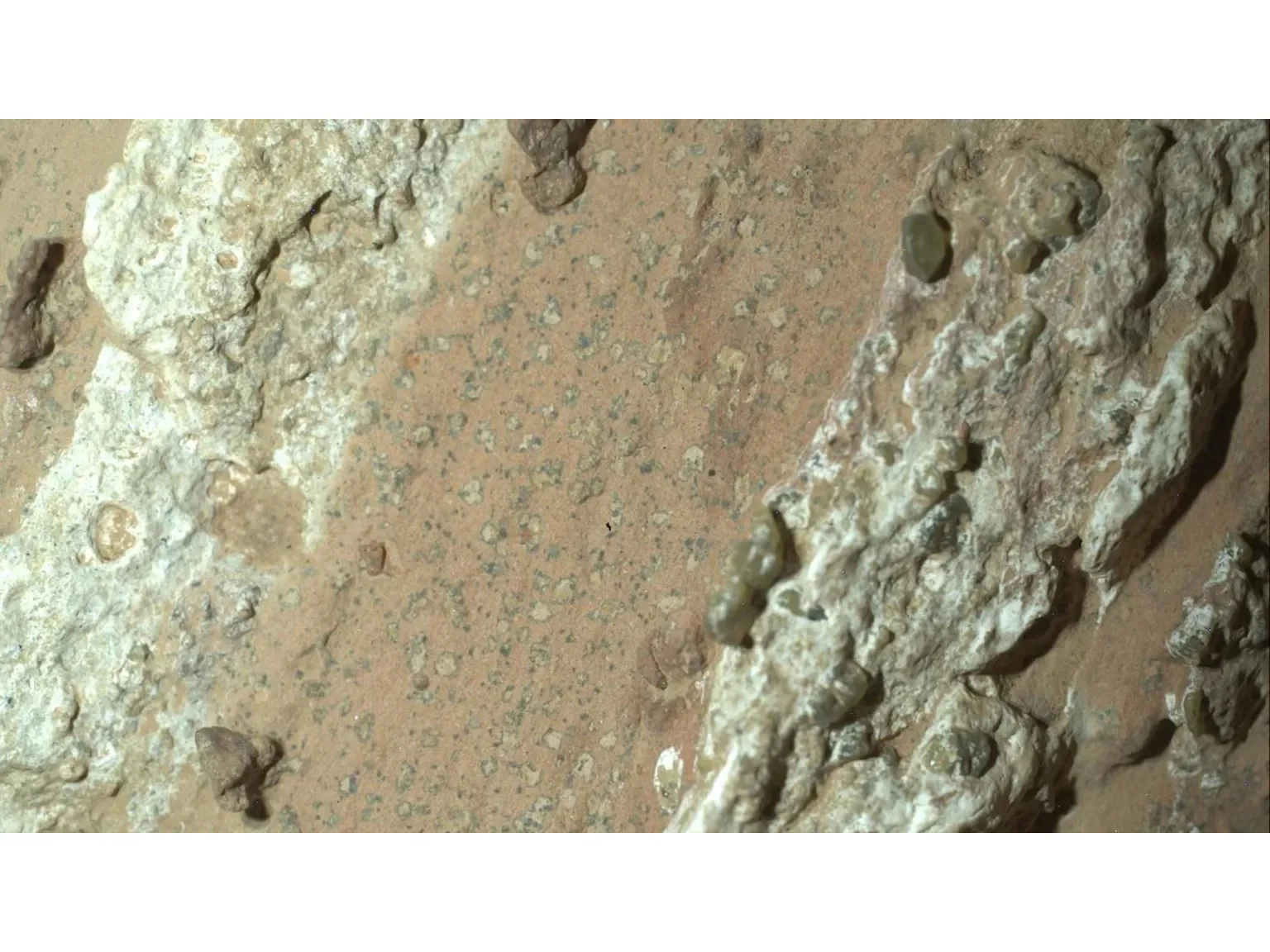
    Unusual rocks have been found on Mars that might show signs of life from the past. These rocks, which are around 3.5 billion years old, were located by NASA’s Perseverance Rover in a dried riverbed within Jezero Crater.

    Unique Patterns Observed

    The rocks feature strange patterns that look like leopard spots. Scientists think these spots could have formed through chemical reactions linked to ancient microbial activity on Mars. NASA has claimed that these might be the most obvious signs of life ever discovered. Yet, there’s another theory that suggests these patterns could be due to natural geological activities. This would have needed higher temperatures, and the rocks don’t look like they were extremely heated. Professor Sanjeev Gupta, a planetary scientist at Imperial College London, says:

    “We haven’t seen anything like this before, and that’s the important part. We have discovered characteristics in the rocks that, if they were found on Earth, could be attributed to biology – to microbial activity. So, we’re not claiming we’ve found life, but we’re suggesting that this gives us something to investigate further.”

    Mars’ Past Environment

    Today, Mars looks like a chilly desert, but evidence shows it once had a much thicker atmosphere and abundant liquid water on its surface billions of years ago. Oceans and rivers made the planet warmer and wetter than it is today. Dr. Nicola Fox, deputy director of NASA’s Science Mission Directorate, commented on this finding during a press conference:

    “It’s like coming across a fossil. It might be a remaining meal, or perhaps that meal has been excreted, and that’s what we’re observing here.”

    Future Investigations Needed

    Whether these rocks truly hint at a biosignature or if they have non-biological origins—something researchers think is less probable—will be determined in the future. Scientists will need to study the rocks on Earth to get clear answers.

    Source:
    Link


  • Scientists Use 1,039 Dust Devils to Map Martian Wind Patterns

    Scientists Use 1,039 Dust Devils to Map Martian Wind Patterns

    Key Takeaways

    1. Researchers have successfully captured images and tracked the movement of 1,039 dust devils on Mars.
    2. Wind speeds of up to 158 kilometers per hour were recorded, exceeding previous measurements from rovers.
    3. The study was led by Valentin Bickel from the University of Bern, Switzerland.
    4. Innovative tracking methods utilized color offsets from the ESA’s Mars Express and ExoMars Trace Gas Orbiter.
    5. Findings will enhance understanding of wind behaviors on Mars, aiding future exploration efforts.


    Over many years, researchers have spotted various dust devils on Mars. Thanks to rovers like the Perseverance rover, this has become possible. However, none of those rovers have successfully followed the movement of these whirlwind-like phenomena.

    New Findings on Dust Devils

    A recent research led by Valentin Bickel from the University of Bern in Switzerland not only succeeded in capturing images of dust devils but also gauged their speed and direction. The team produced a map that highlights the positioning of 1,039 dust devils, additionally indicating the movement direction of 373 of them.

    Impressive Wind Speeds

    The scientists recorded wind speeds reaching up to 158 kilometers per hour while observing the speed of these dust devils. Remarkably, this wind velocity surpasses anything that researchers have previously measured using the rovers.

    Innovative Tracking Methods

    How Bickel and his colleagues monitored the dust devils is also significant. They utilized an unintended feature of the ESA’s Mars Express and ExoMars Trace Gas Orbiter (TGO). When observing a moving entity like a dust devil, there are delays in the images from Mars Express and ExoMars TGO, resulting in what the ESA calls “color offsets.” Bickel’s team cleverly took advantage of these color offsets to follow the dust devils.

    This research is aiding scientists in enhancing their knowledge of wind behaviors across Mars, which could prove advantageous when organizing future expeditions to the Red Planet.

    Source:
    Link


  • NASA’s ESCAPADE Mission: A Step Toward Future Mars Exploration

    NASA’s ESCAPADE Mission: A Step Toward Future Mars Exploration

    Key Takeaways

    1. Mars has a fragmented magnetic field, unlike Earth, which lacks a protective magnetic barrier against solar wind.
    2. Atmospheric escape occurs when solar wind energizes particles in Mars’ atmosphere, causing them to drift into space.
    3. NASA’s ESCAPADE mission aims to study Mars’ magnetic field and its interaction with solar wind through two orbiting spacecraft.
    4. The mission will help understand how the Martian magnetosphere changes over time and affects particle motion.
    5. The ESCAPADE mission is set to launch no sooner than this fall using Blue Origin’s New Glenn rocket, with spacecraft inspections underway.


    Unlike our planet, Mars lacks a comprehensive magnetic field. Instead, it features a fragmented magnetic field. Consequently, when solar wind strikes, certain atmospheric particles become energized and drift away into space. This phenomenon is known as atmospheric escape.

    Understanding Magnetic Interactions

    To secure the success of future human and robotic missions to Mars, it’s crucial to grasp the planet’s magnetic field and its relationship with solar wind. This is precisely the focus of NASA’s ESCAPADE (Escape and Plasma Acceleration and Dynamics Explorers) initiative.

    ESCAPADE aims to send two spacecraft into orbit around Mars. The mission will investigate the configuration of Mars’ magnetic field. It will shed light on how this magnetic field influences the motion of particles around the planet and how it reacts to solar wind. Such observations will illustrate the changes in the Martian magnetosphere over time.

    Launch Plans

    After opting to halt a launch attempt the previous year, NASA and its collaborators have now planned for ESCAPADE to launch no sooner than this upcoming fall. The twin spacecraft will be launched using Blue Origin’s New Glenn rocket.

    The spacecraft reached the Astrotech Space Operations Facility in Titusville, Florida, on September 16. There, engineers will perform inspections and functional tests before preparing the two spacecraft for their upcoming launch.

    Source:
    Link


  • Transforming Toxic Mars Soil for Future Farming with Microbes

    Transforming Toxic Mars Soil for Future Farming with Microbes

    Mars, once home to flowing rivers and a thick atmosphere, now presents a pretty difficult environment for any ambitions of colonization. Its smaller size led to a rapid cooling of the core, which in turn caused the planet to lose its magnetic field along with most of its atmosphere. What remains is a dry and desolate place filled with toxic perchlorates, making agriculture on Mars a real challenge.

    NASA and SpaceX’s Plans

    NASA’s Artemis program aims to establish a human presence on Mars that isn’t reliant on Earth, while Elon Musk and SpaceX are planning to create a city of a million residents there within twenty years. However, a major obstacle exists: those annoying perchlorates scattered throughout the Martian soil.

    Perchlorates are harmful salts composed of chlorine and oxygen, and they exist on Mars in concentrations 1,000,000 times greater than those found on Earth. This pollution means that the Martian regolith—loose material on the surface like dust and sand—won’t support plant growth. Unlike Earth’s nutrient-rich soil, Martian dirt lacks the necessary elements for plants to flourish.

    The Challenge of Farming on Mars

    According to Rafael Loureiro, a plant stress expert from Winston-Salem State University, there’s no sidestepping the perchlorate problem if humans want to farm on Mars. While hydroponics may sustain small teams for a limited time, it’s impractical for a growing population. The only viable long-term solution is to modify the Martian soil for agricultural use.

    Scientists are investigating several methods to remove perchlorates from Martian soil:

    Microbial remediation is seen as the most promising approach for both Mars and Earth. In fact, NASA and the National Science Foundation are already financing research on this concept, hoping it could aid Mars and help restore damaged areas on Earth.

    Research Efforts in Microbial Remediation

    Anca Delgado, a microbiologist at Arizona State University’s Biodesign Institute, leads a team dedicated to this research. Her work builds on previous efforts to clean toxic substances on Earth, such as those used in dry cleaning and metal degreasing.

    Delgado’s group is focused on cultivating microbes that can thrive on perchlorates, breaking them down into non-toxic substances. This process not only eliminates toxins but also contributes to the development of organic matter in the soil, which is critical for healthy plant growth.

    With $1.9 million in funding from the NSF and NASA, the project involves collaboration between Arizona State University, the University of Florida, and the Florida Institute of Technology. Each institution tackles a distinct aspect of the problem—from reducing perchlorates to increasing organic matter and examining plant growth in the treated Martian soil.

    Given that scientists lack actual Martian soil for experimentation, they’re using Mars Global Simulant (MGS-1), which replicates the characteristics of soil samples examined by the Curiosity rover.

    As the quest to land humans on Mars progresses, addressing the perchlorate issue is crucial for establishing sustainable farming there. Discoveries from this research could even assist in tackling some of Earth’s most challenging agricultural issues, turning barren and polluted land into fruitful farmland.