
Key Takeaways
1. Arabia Terra is one of the oldest regions on Mars, dating back 3.7 to 4.1 billion years from the Noachian period.
2. Trouvelot Crater, a significant feature in Arabia Terra, is about 130 km wide and shows signs of erosion and age.
3. The floors of some craters contain dark materials, possibly indicating the presence of mafic minerals from volcanic rocks.
4. Barchan dunes within Trouvelot Crater suggest a consistent wind direction on Mars.
5. Light-colored mounds in the area contain minerals that may indicate past water activity, enhancing our understanding of Mars’ geological history.
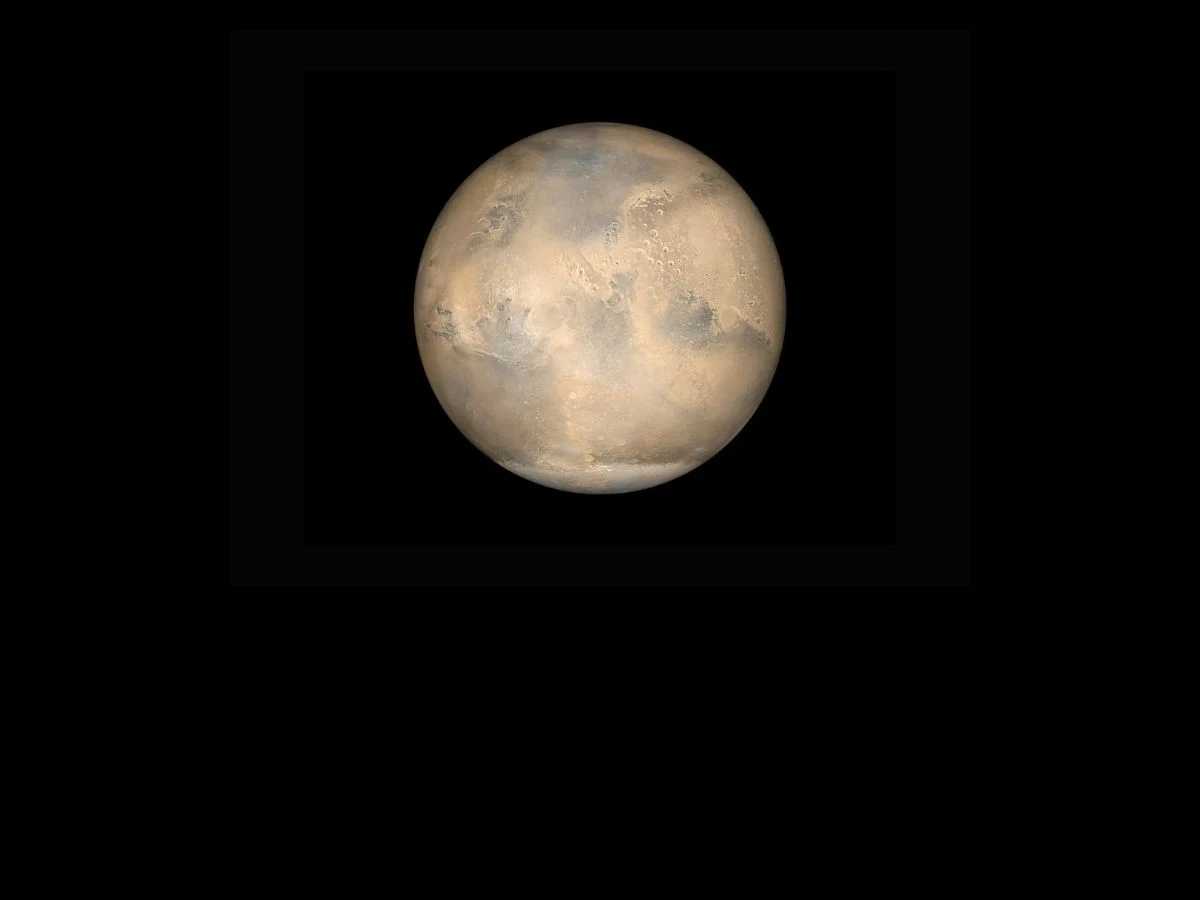
Arabia Terra is a region found in the northern part of Mars’ southern highlands. It is one of the oldest areas on the planet, with its surface dating back between 3.7 and 4.1 billion years, originating from the Noachian period. During this time, the planets faced heavy bombardment from asteroids and comets, leaving behind impact scars that are still visible on Mars today.
Trouvelot Crater
One of the significant features in the area is the Trouvelot Crater, which spans about 130 km in width and is very ancient. Signs of its age can be seen in the eroded rim of the crater, the terraced walls, and the craters that overlap it. Nearby, another crater has been identified that is even older, with its rim nearly fully eroded.
Geological Features
Some floors of the craters appeared to be dark, which scientists think might be due to the presence of mafic minerals that are typically found in volcanic rocks. Within the Trouvelot Crater, curved formations known as barchan dunes indicate that there is a consistent wind direction on Mars. Additionally, light-colored mounds were noted containing minerals that form when in contact with water, hinting at possible past water activity.
The image was taken by a high-resolution stereo camera aboard the Mars Express, an orbiter launched by the European Space Agency in 2003, aimed to observe Mars’ atmosphere and surface. This research provides insights into potential past water activity and enhances our understanding of the geological history of Mars.
Source:
Link