
Key Takeaways
1. Mars continues to be a focus for scientists exploring the possibility of life beyond Earth.
2. The ESCAPADE probes were launched on November 13, with an initial image captured shortly after.
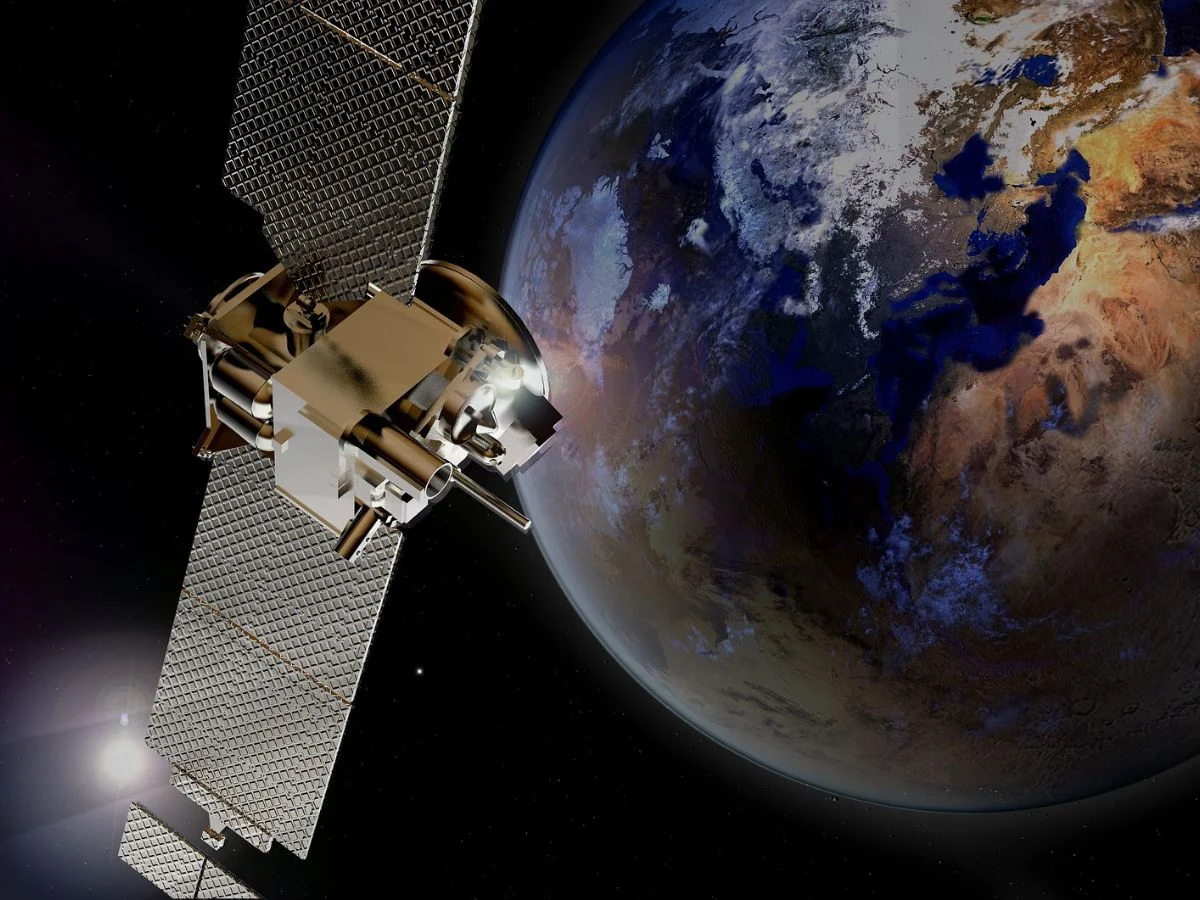
3. The first image taken shows a solar panel in deep space, confirming the probes are operational.
4. The probes aim to fill knowledge gaps about how solar wind affects Mars and its atmosphere.
5. The mission will take several years, with key milestones set for 2026 and 2028 before full operations begin.
Mars is a planet that intrigues a lot of scientists, especially when it comes to the possibility of life beyond Earth. Numerous spacecraft are dispatched to explore it, including the ESCAPADE probes, which were launched on November 13 by the New Glenn rocket from Blue Origin. Even though their voyage will take several more years, an initial photograph has been captured, marking a promising start for this mission.
Capturing the First Image
On November 21, one of the two probes utilized the cameras from the Visible and Infrared Observation System (VISIONS) to capture a “selfie.” This remarkable image features two pictures taken just eight days post-launch, revealing a solar panel against a backdrop of deep space, which appears completely black.
Operational Confirmation
Moreover, this image confirms that the devices are functional and ready to carry out their tasks. It’s worth noting that while the MAVEN and Mars Express missions have enhanced our understanding of Mars, these two new probes are expected to address certain knowledge gaps. They will investigate how solar wind impacts the planet’s environment and work to gain deeper insights into its atmosphere.
Future Steps Ahead
Nonetheless, researchers will have to wait a few additional years before they can analyze the first findings, as the two probes need to reach Lagrange Point 2, which is roughly a million miles away from Earth. In November 2026, they will then use Earth’s gravitational pull to navigate towards Mars. Ultimately, by the end of 2027, they will need to fine-tune their orbit and kick off their mission by mid-2028.
NASA Science
Source:
Link