

Key Takeaways
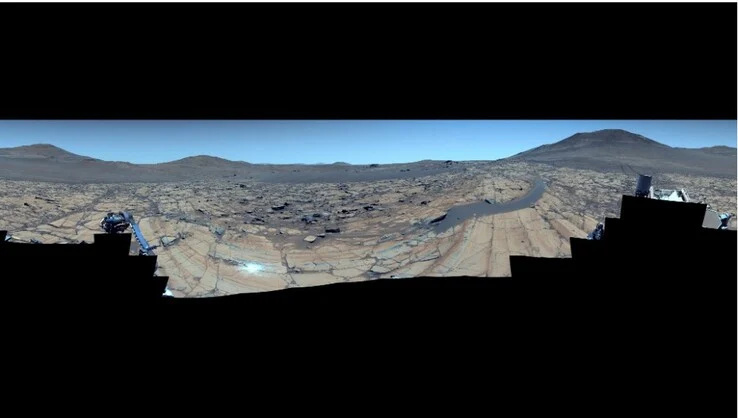
1. NASA’s Perseverance rover captured 96 images of the ancient site named “Falbreen” on Mars, creating a detailed panorama.
2. A notable “float rock” was discovered, believed to have originated from a different location and moved by natural processes.
3. The panorama features a distinctive band separating lighter-toned rocks rich in olivine from darker, older rocks containing clay.
4. Perseverance has been drilling into the Martian surface at Falbreen, creating a bright white abrasion patch in the images.
5. The rover is advancing our understanding of Mars and paving the way for future human exploration.
On May 26, 2025, the imaging team aboard NASA’s Perseverance rover took advantage of the rover’s Mastcam-Z instrument to gather 96 images from a site thought to be among the oldest ever explored by the robotic vehicle. This location has been named “Falbreen” by the science team. The images were combined to create a stunning panorama that presents Mars as clear as daylight.
Float Rock Discovery
A prominent feature in the images is a sizeable rock that geologists refer to as a “float rock.” This term is used because scientists think the rock originated from a different location and was moved there by various natural processes, including landslides, water, or wind. The float rock is seen resting on a dark, crescent-shaped sand ripple that is approximately 14 feet (4.27 meters) away from the rover, positioned just to the right of the center of the mosaic.
Distinctive Rock Bands
Another interesting aspect of the panorama is a band that crosses the image from one side to the other, located just past the center. This band separates the lighter-toned rocks, which are closer to the rover, from the darker-toned rocks that are further away. The lighter rocks contain a high concentration of olivine, while the darker rocks are thought to be significantly older and rich in clay.
Drilling and Analysis
Perseverance has been examining the rocks and soil at Falbreen by drilling into the Martian surface. This drilling has created an abrasion patch that appears as a bright white circle just to the left of the center and near the bottom of the image. NASA’s Perseverance rover, which touched down on Mars on February 18, 2021, is continually enhancing our understanding of the planet, clearing a path for future human exploration.
Source:
Link
Leave a Reply