Category: Artificial intelligence

  • Japanese Entertainment Giants Accuse OpenAI’s Sora 2 of Copyright Violation

    Japanese Entertainment Giants Accuse OpenAI’s Sora 2 of Copyright Violation

    Key Takeaways

    1. CODA, formed in 2002, aims to combat piracy and promote Japanese entertainment globally, including major companies like Square Enix and Studio Ghibli.

    2. CODA has requested OpenAI to stop using copyrighted material for training its AI video tool, Sora 2, due to concerns over content similarities with existing Japanese works.

    3. Sora 2’s outputs may infringe copyright as they closely replicate specific copyrighted pieces, raising legal concerns regarding the use of Japanese materials in AI training.

    4. CODA argues that OpenAI’s opt-out mechanism for copyright owners does not comply with Japanese copyright laws, which typically require prior consent for the use of copyrighted works.

    5. CODA demands OpenAI to protect its members’ intellectual property and respond to claims regarding potential copyright violations related to Sora 2’s outputs.


    Japan’s Overseas Distribution Association (CODA) has made a formal request for OpenAI to stop using copyrighted material in the training of its AI video creation tool, Sora 2.

    CODA’s Formation and Purpose

    Established in 2002, CODA aims to combat piracy while enhancing the global presence of Japanese entertainment. The association includes major players like Square Enix, Bandai Namco, Kadokawa (the parent company of FromSoftware), Studio Ghibli, and Cygames. They reached out to OpenAI, led by Sam Altman, through an official letter expressing their concerns.

    Sora 2’s Launch and Concerns

    Sora 2 was announced on September 30, with an exclusive iOS release on October 1. In their letter, CODA made it clear that a significant amount of content generated by Sora 2 closely mirrors existing Japanese works. They have concluded that this similarity stems from utilizing Japanese materials as training data for the AI.

    CODA expressed that when Sora 2 reproduces specific copyrighted pieces or creates similar outputs, it could be seen as copyright infringement due to the replication that occurs in the machine learning process.

    Legal Standpoint of CODA

    Furthermore, CODA pointed out that OpenAI’s opt-out mechanism, which requires creators to indicate their intellectual property to prevent its use as training data, does not align with Japanese copyright laws. They explained that:

    Reports indicate that Sora 2 operates via an opt-out system responding to requests from copyright owners. However, under Japan’s copyright framework, prior consent is typically necessary for utilizing copyrighted works, and there is no system permitting one to escape liability for infringement through later objections.

    The catalyst for this situation was Sora 2’s remarkable capability to create AI videos that closely imitate Japanese media. One viral video featured Sam Altman playing in a field with Pokémon characters, humorously captioned, “I hope Nintendo doesn’t sue us.” It’s worth noting that Nintendo is not affiliated with CODA.

    CODA’s Demands

    CODA’s requests to OpenAI are quite clear. OpenAI must ensure that the intellectual property of CODA members is not harvested without their consent. Failing to do so could lead to legal complications for Sam Altman.

    CODA insists that OpenAI “addresses claims and inquiries from CODA member companies related to copyright violations concerning Sora 2’s outputs.”

    These incidents have surfaced alongside a recent Japanese survey revealing that more than half of the surveyed Japanese companies, including Capcom and Level-5, are exploring AI for game development.

    Source:
    Link


  • Toyota Launches Walk Me: AI Mobility Chair That Walks and Folds

    Toyota Launches Walk Me: AI Mobility Chair That Walks and Folds

    Key Takeaways

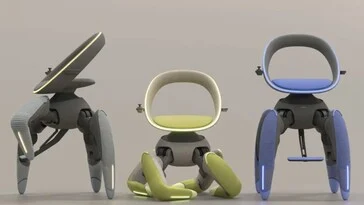
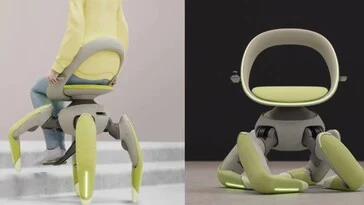
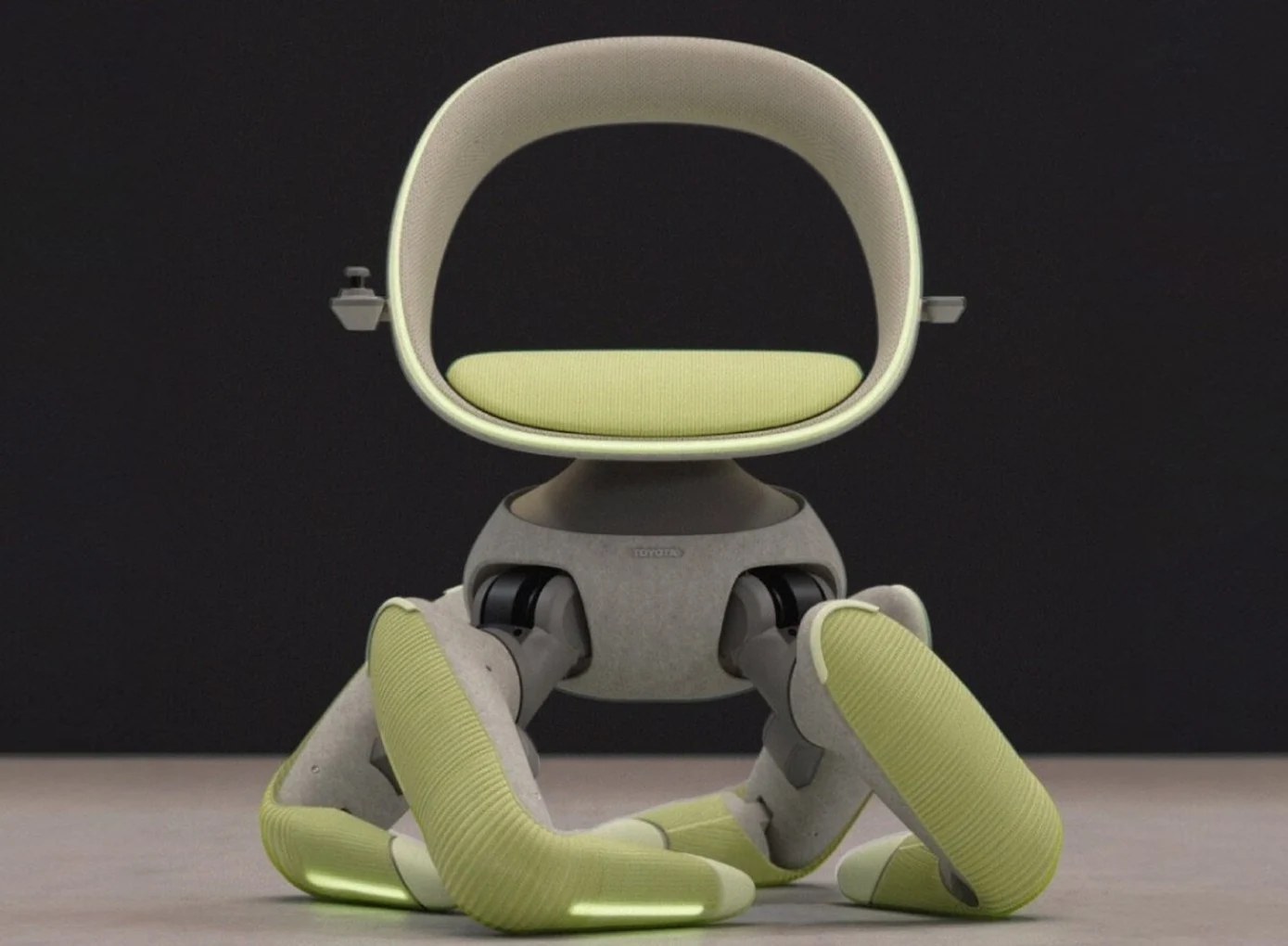
    1. Innovative Design: Walk Me is a unique wheelchair without traditional wheels, designed to assist users in navigating stairs and uneven surfaces using four adjustable legs.

    2. Inspiration from Nature: The chair’s movement is inspired by animals like goats and crabs, utilizing sensors to analyze terrain and provide support while navigating obstacles.

    3. User-Centric Features: Walk Me offers a comfortable, adjustable seat, voice command functionality, and a display for tracking battery life and distance traveled.

    4. Safety and Convenience: The chair includes safety features such as automatic pauses for overheating joints and a telescopic design for easy storage when not in use.

    5. Current Status: Walk Me is still a concept, with no information on when or if it will be available for sale, showcasing Toyota’s commitment to using AI and robotics for mobility solutions.


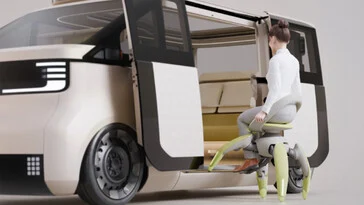
    Toyota is famous for creating automobiles, but the company is also exploring other ways of mobility. At the Japan Mobility Show 2025, they introduced an autonomous chair called Walk Me.

    Innovative Design

    Walk Me is a wheelchair that lacks traditional wheels and aims to assist individuals with mobility challenges, enabling them to tackle stairs and uneven surfaces.

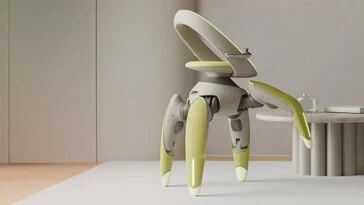
    The chair may appear charming with its four pastel-colored legs, but don’t be misled by its cuteness. Each leg is equipped with sensors and actuators that allow it to flex and adjust to its environment in real-time.

    Inspiration from Nature

    According to Teche Blog and Designboom, Toyota drew inspiration for Walk Me from animals adept at traversing tough terrains, such as goats and crabs. The front legs analyze height to figure out how to pull the chair and its user forward, while the back legs provide support and generate thrust.

    Walk Me utilizes LiDAR and radar to identify obstacles in its path. If you’re curious about how the user stays balanced and doesn’t end up in a viral fall video, the chair includes weight sensors and an automatic stabilization system for slopes and uneven ground.

    User-Centric Features

    Toyota has focused on comfort in its design, creating a seat that conforms to each user’s shape and includes adjustable armrests. The chair also responds to voice commands, so you can instruct it to “go faster” or tell it your desired destination. Additionally, there are handles for manual steering.

    A small display on Walk Me allows users to keep track of battery life and distance traveled. The entire device is powered by a compact battery located beneath the seat, which Toyota asserts can last an entire day of use. Charging is simple, similar to how one would charge a smartphone.

    Safety and Convenience

    For added safety, the chair pauses and notifies the user if any joint becomes excessively hot.

    When not in use, Walk Me can minimize its size and move out of the way. Its legs retract telescopically, making it easy to store in a car or at home.

    Currently, Walk Me remains a concept, and Toyota has not provided any information about plans to offer it for sale. Nevertheless, it’s encouraging to witness the company showcase how AI and robotics can address real-world challenges for people.

    Source:
    Link


  • Robot Chef Launches in Supermarket, Offers Eight Meal Options

    Robot Chef Launches in Supermarket, Offers Eight Meal Options

    Key Takeaways

    1. Introduction of the Circus CA-1: A new cooking robot by the start-up Circus, which autonomously prepares meals using advanced technology and artificial intelligence.

    2. Innovative Design and Functionality: The CA-1 features robotic arms, multiple ingredient containers, and cameras to manage the cooking, serving, and cleaning processes without human assistance.

    3. Pilot Program Launch: The CA-1 is starting a six-month trial in three Rewe supermarkets in Düsseldorf and Bonn, aimed at supplementing staff and addressing skilled worker shortages.

    4. Production Plans: Circus has made ten units so far, with plans to ramp up production to 6,000 units annually to meet future demand in grocery stores and self-service restaurants.

    5. Job Implications: While the technology may automate some tasks, it could also create new job roles in maintenance and programming; however, traditional cooking techniques remain a limitation for the robot.


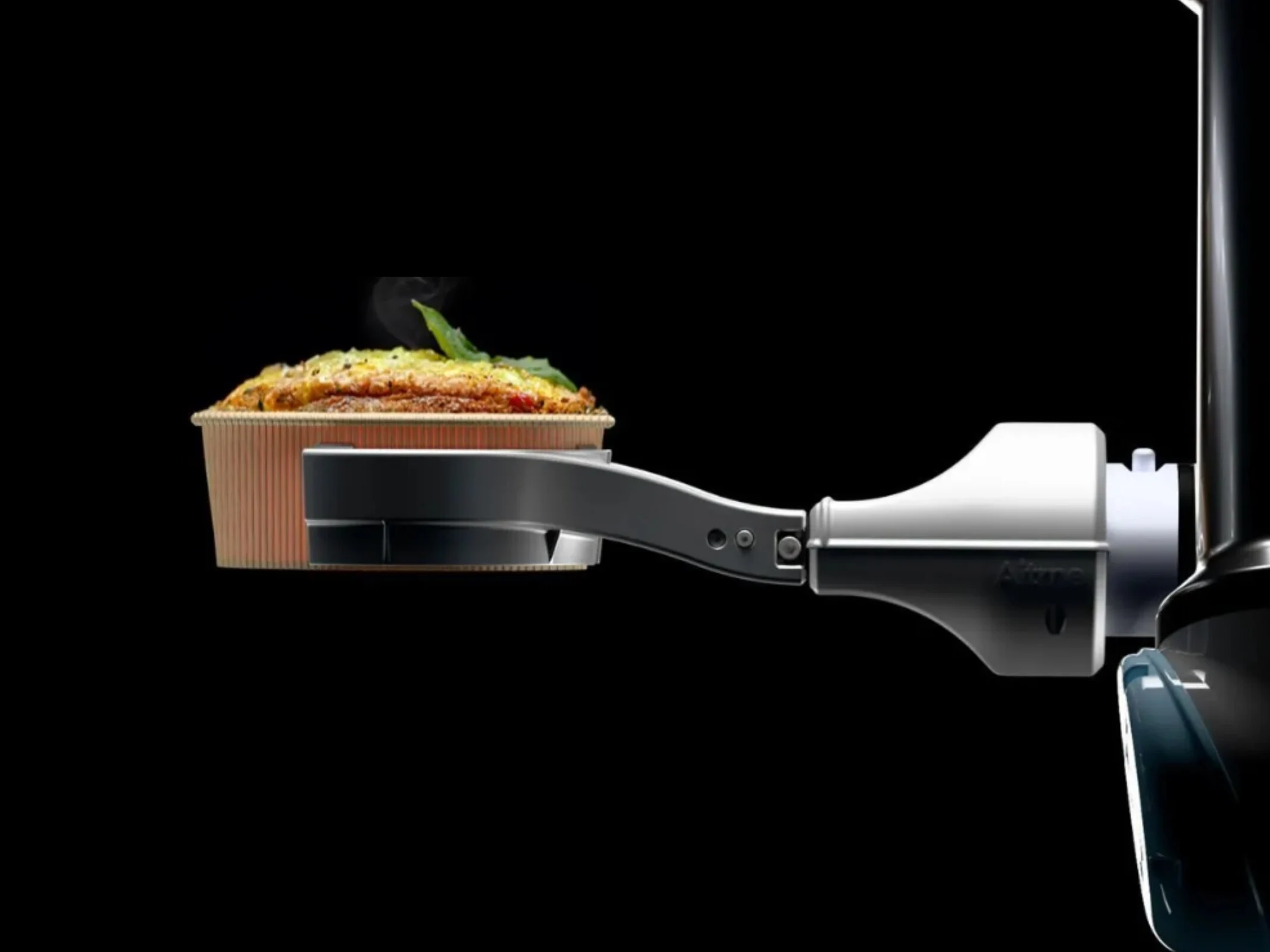
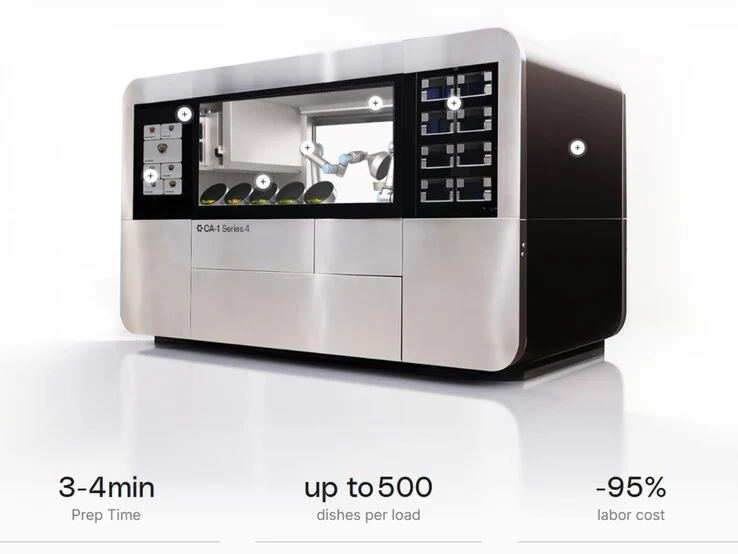
    Vending machines that prepare full meals are not a new idea; pizza and burger vending machines have been around for many years. However, a start-up in Hamburg called Circus is looking to push this concept even further by using artificial intelligence. Their invention, the Circus CA-1, is a cooking robot that autonomously handles everything from chopping ingredients and heating food to serving dishes and cleaning up afterward. The CA-1 was introduced to the public on Wednesday, October 29, 2025, at a Rewe supermarket located in Düsseldorf’s Heerdt area. Circus claims they are the only company globally that manufactures such systems on a commercial scale.

    Innovative Design and Functionality

    This robot, which has a modern stainless-steel look, takes up about seven square meters of space. Behind its screen, there are two robotic arms that prepare one of the eight available meals – like penne arrabiata, lentil curry, and the Austrian sweet Kaiserschmarrn – based on what the customer orders. Equipped with six cameras, the machine oversees the entire cooking process, using as many as 36 different ingredient containers to create, serve, and clean up without needing any human help. In theory, it can be set up to create countless dishes as long as the right ingredients and recipes are accessible. A video from RTL WEST shows the robot in action. Initial responses from customers have been mostly positive, with compliments for the taste and freshness, although some mentioned the food could be served a bit warmer.

    Pilot Program and Future Plans

    This launch signals the beginning of a six-month trial program at three Rewe stores in Düsseldorf and Bonn. The robots are on lease for this period, but the exact rental fees are not disclosed. The cost to purchase a Circus CA-1 is €250,000. Lars Klein, who is the Managing Director of Rewe West, pointed out that the robot is designed to supplement staff rather than replace them. The aim is to help tackle the shortage of skilled workers while also giving customers more fresh food choices.

    Circus has reported that they have manufactured ten units so far and are currently working to ramp up production. In the future, they expect to produce up to 6,000 cooking robots annually. It might not be long before many grocery stores incorporate similar machines – or even whole self-service restaurants that rely entirely on this technology.

    Job Implications in the Catering Industry

    It’s still uncertain whether jobs in the food service industry will be safe in the long term. On one side, robots can handle some repetitive tasks; on the other side, self-sufficient cooking systems could lead to new job roles, such as maintaining and programming these machines or creating new recipes. Nevertheless, the robot does have limitations: it still can’t handle cooking techniques that involve breading, deep-frying, or flambéing.


    Source:
    Link


  • Google’s NotebookLM Update Boosts Power for Role-Playing Games

    Google’s NotebookLM Update Boosts Power for Role-Playing Games

    Key Takeaways

    1. NotebookLM simplifies document analysis by quickly providing specific details from uploaded files with just one command.
    2. The AI focuses on analyzing documents rather than searching online, offering features like audio summaries, flashcards, and quizzes to support learning.
    3. Enhanced chat functionality allows for longer inputs and saves chat history, enabling multi-layered conversations without losing context.
    4. The AI provides nuanced responses by examining sources from various angles and allows users to personalize the chat experience based on their goals.
    5. Users can assign specific roles to the AI, tailoring its responses to functions like a tough examiner or a creative game master.


    Whether it’s the endless PowerPoint show from the previous meeting, the lengthy “summary” of important points from a college lecture, or the transcript from the latest court session, anyone looking for specific details in these documents often had to spend a lot of time. But now, things are changing. With Google’s AI assistant, NotebookLM, many of these boring tasks can be simplified: just one command is needed, and the AI can sift through various uploaded files, usually providing results in mere seconds.

    Focus on Document Analysis

    Unlike other Google AI tools, NotebookLM doesn’t aim to find information online; instead, it concentrates on examining uploaded documents. The AI also aims to support learning, offering features like audio summaries, flashcards, and quizzes.

    Enhanced Features and Capabilities

    Following the recent addition of Google’s newest AI image generation tool, “Nano Banana,” the system has seen further backend enhancements. Thanks to new Gemini models, the chat functionality has been greatly improved.

    For instance, it now allows much longer inputs (up to one million tokens, which is about eight times the previous context window), and it can sustain extensive, multi-layered conversations without losing the context. A handy feature is that the chat history is saved, making it easy to pick up conversations later. However, chats involving shared notebooks will still be kept private.

    Nuanced Responses and Personalization

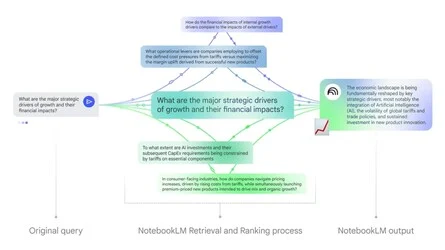
    Another exciting update is how the system handles inputs. Rather than just trying to answer a user’s question and potentially missing vital context, the AI now examines the sources from various angles. This should lead to more detailed and nuanced responses.

    Moreover, users can now personalize the chat experience, meaning how the AI replies can be adjusted. For example, an “overarching goal” can be set for the notebook, which could help in studying for an exam, preparing for a presentation, or just diving deeper into a specific subject. The style and depth of the answers can also be tailored.

    Role Definition and Future Updates

    Additionally, users can now assign roles to the AI. For example, NotebookLM can take on the persona of a tough academic examiner or a creative game master.

    As per Google, most of these new features are currently available, with certain functionalities like conversation history storage expected to roll out in the upcoming weeks.

    Source:
    Link


  • SK Hynix Supplies DRAM, NAND, HBM Chips to Nvidia Amid Rising AI Demand

    SK Hynix Supplies DRAM, NAND, HBM Chips to Nvidia Amid Rising AI Demand

    Key Takeaways

    1. SK hynix’s production capabilities for DRAM, NAND, and HBM are fully booked through 2026, driven by a significant order from Nvidia.
    2. The company reported a Q3 2025 profit of $8 billion, a 62% increase from the previous year, largely due to HBM3E chip sales to Nvidia.
    3. SK hynix now holds over 50% of the global HBM market, significantly outpacing competitors Samsung and Micron.
    4. The company plans to ramp up production of HBM4 memory by late 2025, which promises enhanced bandwidth and energy efficiency for future AI processors.
    5. The demand for HBM is rapidly increasing, with predictions estimating the global HBM market to reach $43 billion by 2027, highlighting the critical role of memory manufacturers in the AI infrastructure.


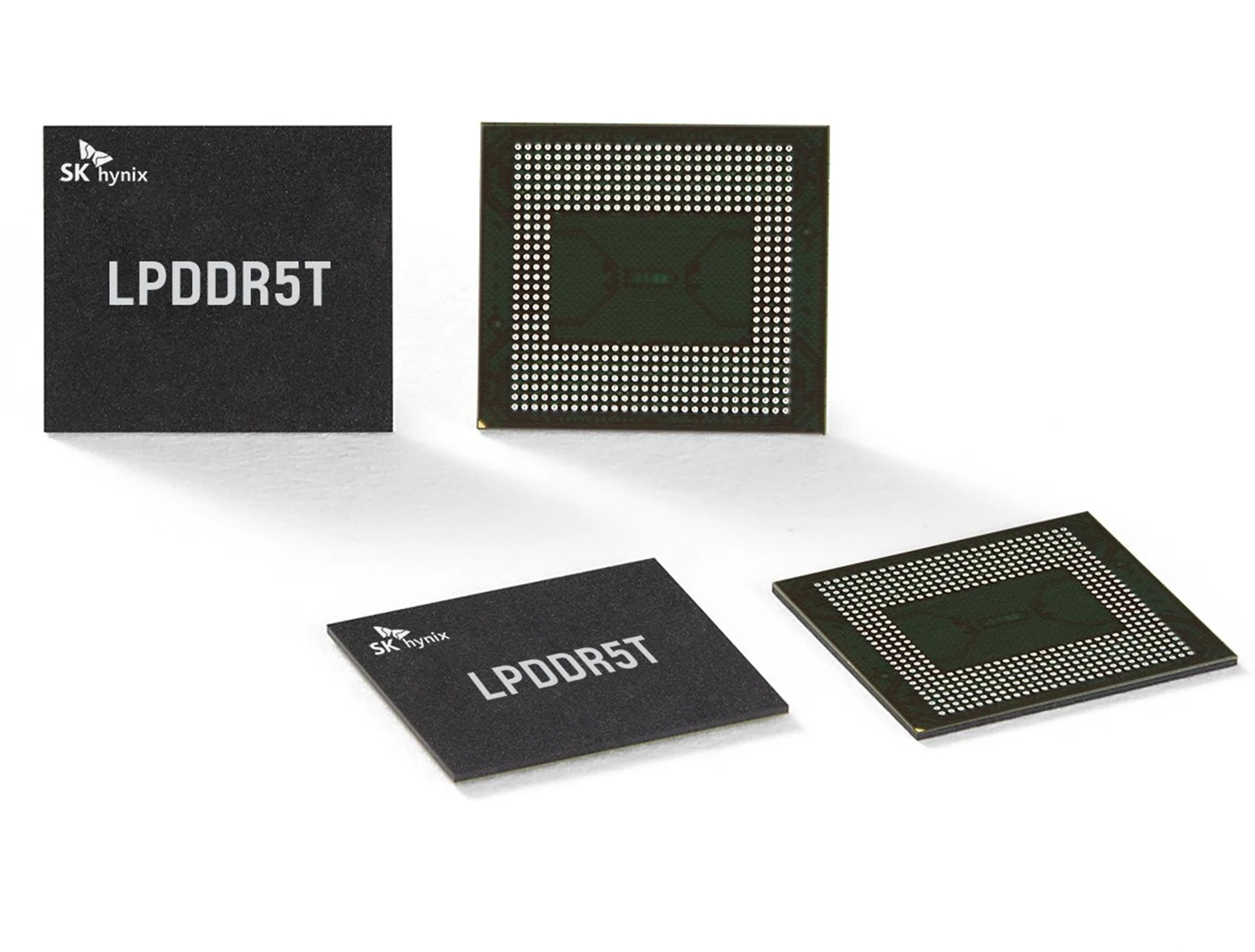
    SK hynix has recently revealed that its production capabilities for DRAM, NAND, and high-bandwidth memory (HBM) are completely booked through 2026. This accomplishment is largely attributed to a significant order from Nvidia. The world’s largest company by market cap relies on SK hynix’s HBM semiconductors, such as the H100 and B200 models, to power its AI processors.

    Financial Success

    SK hynix experienced a remarkable Q3 2025, reporting a profit of $8 billion (₩11.4 trillion), which is a 62% increase from the previous year. Revenue rose by 39% to ₩22.4 trillion, primarily driven by sales of HBM3E chips that Nvidia purchased for their data center GPUs. Consequently, SK hynix’s market value now surpasses that of its rivals.

    Market Dominance

    According to TrendForce, SK hynix now dominates over 50% of the global HBM market, while competitors Samsung and Micron hold about a quarter each. The company’s recent financial performance illustrates how closely linked the AI hardware ecosystem is becoming, with Nvidia’s leading position in GPUs significantly boosting SK hynix’s exceptional performance.

    “We have completely sold out our DRAM, NAND, and HBM capacity for the upcoming year,” remarked Kim Kyu-hyun, the head of DRAM marketing at SK hynix. He also mentioned that clients have already booked manufacturing slots up to 2026. This means SK hynix will be mostly unable to accept new orders next year.

    Future Production Plans

    The company is gearing up to ramp up production of its HBM4 memory by late 2025. If successfully implemented, it promises a significant enhancement in both bandwidth and energy efficiency. The next-gen chips are anticipated to be crucial for Nvidia’s forthcoming AI processors and supercomputing platforms.

    SK hynix has also entered into supply agreements with OpenAI for its planned Stargate supercomputer project. This initiative is projected to more than double the industry’s total HBM needs.

    Changing Landscape

    The strong performance of SK hynix indicates a broader shift in the tech landscape. Memory manufacturers are now vital players in AI infrastructure. “Demand for HBM is growing at a rapid pace, making it challenging for supply to keep up in the near future,” stated Kim Ki-tae, head of HBM sales and marketing.

    Citi Research predicts that the global HBM market will reach US$43 billion by 2027. The partnership between SK hynix and Nvidia positions both companies at the forefront of the AI semiconductor surge, while Samsung and Micron are left scrambling to catch up.

    Source:
    Link


  • Asus ROG Rapture GT-BE19000AI Router: AI Processor & 32GB Storage

    Asus ROG Rapture GT-BE19000AI Router: AI Processor & 32GB Storage

    Key Takeaways

    1. Asus has launched the ROG Rapture GT-BE19000AI, the world’s first AI-driven Wi-Fi 7 router.
    2. The router features a quad-core CPU at 2.6 GHz, 4 GB RAM, and a dedicated AI processor with its own 4 GB RAM.
    3. Advanced capabilities include running applications like Home Assistant and a Private Edge AI chatbot for troubleshooting.
    4. The router can reduce gaming latency by up to 34% and achieves wireless speeds up to 19 Gbps.
    5. Wired connections include two 10 GbE ports and four 2.5G LAN ports, with a total possible wired speed of 31 Gbps.


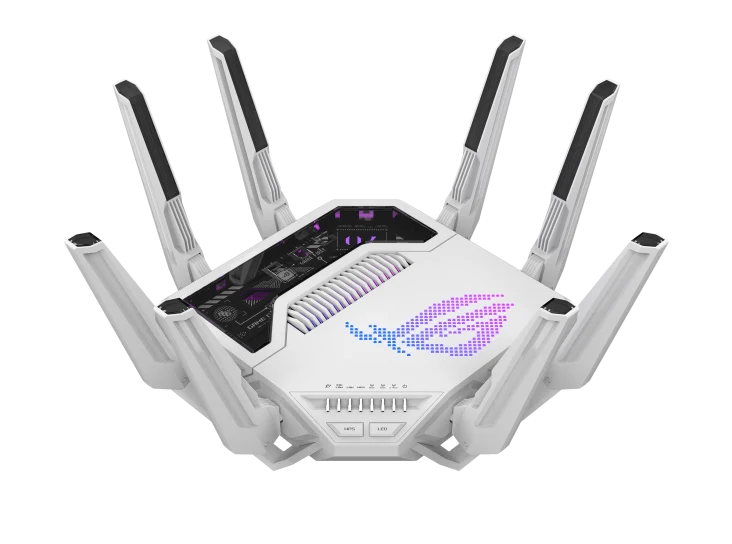
    AI continues to be a major attraction for device manufacturers, which explains their tendency to include AI features in nearly every product imaginable. If you’re looking for a router that uses AI to optimize latency, simplify network access, and maintain top-notch performance, Asus has introduced the ROG Rapture GT-BE19000AI, marking it as the first AI-driven Wi-Fi 7 router in the world.

    Specifications and Performance

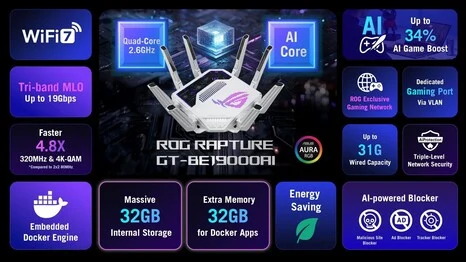
    This router is powered by a quad-core CPU operating at 2.6 GHz, backed by 4 GB of RAM and 32 GB flash storage. It also has a dedicated AI processor with four cores clocked at 2.1 GHz and a 7.9 TOPS NPU, featuring an extra 4 GB of RAM and another 32 GB of flash storage. This setup allows AI functionalities to operate independently from the main tasks, ensuring smooth performance.

    Advanced Features

    The separate AI processor allows for the incorporation of a Docker Engine, enabling users to run applications such as Home Assistant for smart home control or Frigate for AI-driven video recognition. Many additional applications are compatible and can run directly on the router, allowing users to manage various IoT devices effortlessly over a broader coverage area.

    Another innovative feature is the Private Edge AI chatbot assistant. This tool assists users in troubleshooting common problems and executing quick control functions. Moreover, the AI Enhancement suite provides automatic options to enhance Wi-Fi stability, gaming latency, energy efficiency, and device management, which helps create a faster and more reliable online experience.

    Gaming Capabilities

    When it comes to gaming, the ROG Rapture GT-BE19000AI can minimize latency by as much as 34% through features like GTNet and Adaptive QoE. These functionalities continuously monitor network traffic and adjust priorities on the fly, ensuring the quickest routes are taken in real time.

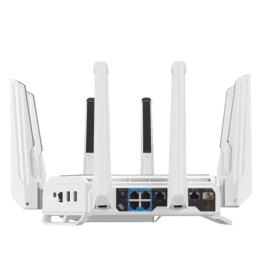
    With the latest Wi-Fi 7 technology, this router can achieve wireless speeds of up to 19 Gbps. In terms of wired connections, there are two 10 GbE ports and four additional 2.5G LAN ports. One of the 10G ports can serve as a dedicated gaming connection, which can be set up with minimal configuration. For even higher wired speeds, two Ethernet ports can be bonded to create a single logical link, providing a combined bandwidth of 20 Gbps. The total wired speeds can reach an impressive 31 Gbps.

    Source:
    Link


  • Asus Launches PE3000N Mini PC with Nvidia Jetson IGX Thor T5000

    Asus Launches PE3000N Mini PC with Nvidia Jetson IGX Thor T5000

    Key Takeaways

    1. Nvidia launched the Jetson IGX Thor platform, with development kits and modules now available for OEM partners to create devices like Asus IoT’s PE3000N mini PC.
    2. The Jetson IGX Thor T5000 module features advanced specs, including a Blackwell GPU, 14-core ARM processor, and 128 GB RAM, offering 2,070 FP4 TFLOPS for AI tasks.
    3. The PE3000N mini PC is designed for high-bandwidth sensor fusion, supporting up to 16 GMSL cameras and various I/O options, including USB-A, USB-C, and HDMI.
    4. The device excels in AI capabilities, capable of running generative AI models and facilitating real-time video analytics and autonomous control.
    5. Pricing for the PE3000N is not yet available, but it is expected to be similar or higher than Nvidia’s development kit, with availability anticipated in Q1 2026.


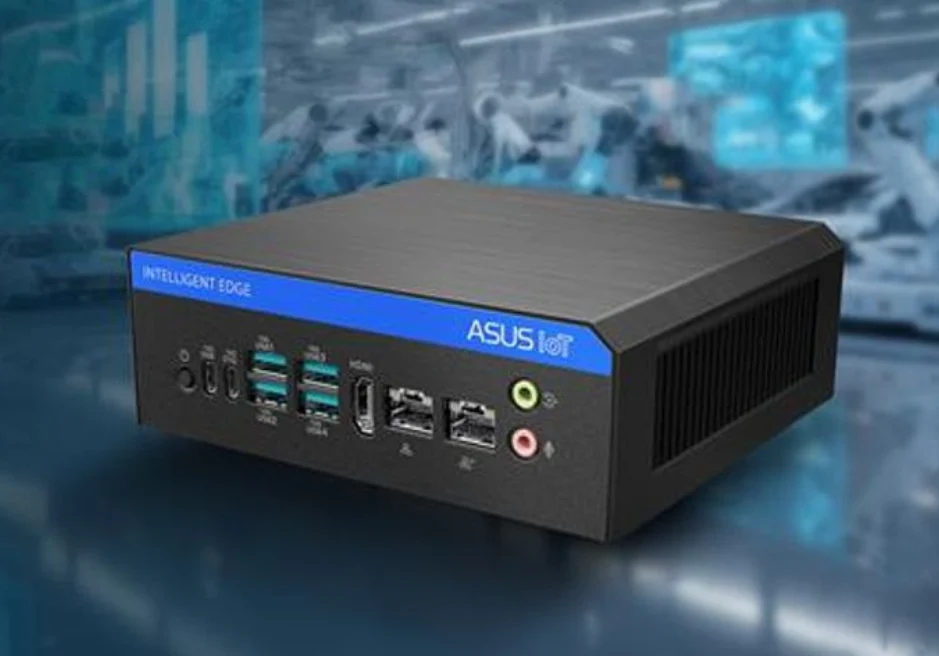
    Nvidia launched the Jetson IGX Thor platform in August, but its release was slow, similar to the DGX Spark platform. Now that the development kit and the standalone module are finally up for grabs on the official website, Nvidia’s OEM partners are gearing up to roll out their devices that run on the Jetson IGX Thor platform. Asus IoT is among the first to announce their device, the PE3000N mini PC, which is designed to meet the high standards of next-gen robotics and smart automation.

    Performance Specifications

    The Jetson IGX Thor T5000 module features a Blackwell GPU, a 14-core ARM processor, and 128 GB LPDDR5X RAM, offering 2,070 FP4 TFLOPS for AI tasks. The compact design of the PE3000N mini PC allows developers and integrators to reach new heights in autonomy, sensor fusion, and AI-driven control for industrial, commercial, and smart infrastructure applications. Built for industrial environments, this device boasts a rugged chassis that meets MIL-STD-810H standards and can function in temperatures from -20°C to 60°C.

    Configurability and Connectivity

    Asus provides excellent configurability with the PE3000N, allowing it to come with up to 4x 25 GbE NICs and support for 16 GMSL cameras, making it ideal for high-bandwidth sensor fusion and advanced machine vision. On the I/O front, there are standard desktop ports, including 4x USB-A, 2x USB-C, and HDMI video out along with audio jacks. Many industrial applications can also be catered to through an optional second stack, which adds interfaces like PoE, GMSL, CAN, and QSFP28. Other supported standards include PTP/PPS for accurate sensor synchronization, onboard TPM 2.0 for enhanced security, plus LTE/5G/GNSS modules for broader connectivity.

    AI Capabilities

    With the powerful AI-processing abilities of the Jetson IGX Thor T5000 module, the PE3000N is capable of running generative AI models, such as visual language models (VLMs) and large language models (LLMs), as well as facilitating real-time video analytics and autonomous control tasks. Nvidia’s Jetson IGX Thor is also compatible with various physical AI applications, including Nvidia Isaac for robotics, Nvidia Holoscan for real-time sensor processing, and Nvidia Blueprint for AI agents focused on video analytics.

    At this moment, there’s no pricing information available, but considering that Nvidia’s own development kit is priced at around ~3,000 EUR, it’s likely that the price of the PE3000N will be similar or even higher with all the extra I/O options included. The device is expected to be available in Q1 2026.

    Source:
    Link


  • Nvidia Invests $1 Billion in Nokia for AI and 6G Innovation

    Nvidia Invests $1 Billion in Nokia for AI and 6G Innovation

    Key Takeaways

    1. Nvidia plans to invest $1 billion in Nokia, acquiring a 2.9% ownership stake to enhance AI networking technologies, including AI-RAN and 6G development.
    2. Nokia will issue approximately 166 million new shares to Nvidia, using the funds for AI connectivity and general business needs.
    3. The partnership will focus on joint development of AI networking solutions, integrating Nokia’s tech into Nvidia’s future AI infrastructure designs.
    4. T-Mobile U.S. will manage and test AI-RAN technologies in collaboration with Nokia and Nvidia, aiming for efficient network performance enhancements.
    5. This collaboration positions Nokia as a key player in AI-native networks and prepares both companies for advancements in the telecom industry and 6G technology.


    U.S. chip maker Nvidia has revealed plans to put $1 billion into Nokia, giving it a 2.9 percent ownership in the Finnish telecom giant. The deal, valued at $6.01 per share, represents a strategic investment aimed at accelerating the development of AI networking technologies, including AI-RAN (Radio Access Network) and 6G tech.

    Share Issuance and Future Goals

    As part of this agreement, Nokia will issue 166,389,351 new shares to Nvidia, with a standard closing consideration. The funds raised will be used to enhance trusted connectivity in the AI supercycle as well as for general business needs. The partnership goes beyond just financial investment; Nokia aims to improve its 5G and 6G RAN software to leverage Nvidia’s advanced AI architecture, paving the way for smarter and more flexible networks. Additionally, the collaboration will extend to networking solutions for data centers, where Nokia seeks to expand its presence in AI and cloud infrastructure markets.

    Joint Development of AI Solutions

    Both companies shared in a joint statement that they will work together on AI networking solutions and may integrate Nokia’s data center switching and optical tech into future AI infrastructure designs by Nvidia.

    In a bid to enhance this partnership, T-Mobile U.S. will play a role in managing and testing the AI-RAN technologies amid ongoing 6G advancements. The planned trials aim to demonstrate efficiency and performance enhancements through AI-driven network optimization, expected to roll out next year. Justin Hotard, Nokia’s President and CEO, highlighted the significance of this partnership by stating:

    “The next phase in telecom isn’t merely an upgrade from 5G to 6G—it’s a complete redesign of the network to provide AI-powered connectivity that can process intelligence from the data center all the way to the edge. Our collaboration with Nvidia, along with their investment in Nokia, will hasten AI-RAN innovation to make an AI data center accessible to everyone.”

    Industry Transformation and Future Deployments

    Hotard further added that Nokia is collaborating with Nvidia, Dell Technologies, and T-Mobile U.S. to launch the first AI-RAN deployment in T-Mobile’s network. “We’re excited to lead this industry transformation alongside Nvidia, Dell Technologies, and T-Mobile U.S. Our initial AI-RAN implementations in T-Mobile’s network will ensure that America maintains its lead in the advanced connectivity required for AI,” he mentioned.

    Jensen Huang, the Founder and CEO of Nvidia, remarked that this partnership is crucial for national infrastructure and tech supremacy. “Telecommunications represents an essential national infrastructure—the digital nervous system of our economy and security. Built on Nvidia CUDA and AI, AI-RAN will transform telecommunications—a generational platform shift that will enable the United States to reclaim its global leadership in this vital tech sector,” Huang stated.

    “Together with Nokia and the U.S. telecom ecosystem, we’re sparking this revolution, empowering operators to create intelligent, adaptive networks that will define future global connectivity.”

    This investment will position Nokia as a significant contender in the race to develop AI-native networks and prepare for 6G, while also giving Nvidia a foothold in the telecom industry, which is crucial for scaling its AI computing platforms.

    Source:
    Link


  • Adobe Max 2025: New AI Features for Photoshop, Premiere, and More

    Adobe Max 2025: New AI Features for Photoshop, Premiere, and More

    Key Takeaways

    1. Photoshop now features generative AI models for image creation using text prompts and includes the Harmonize feature for seamless blending of AI-generated images with existing photos.
    2. Premiere Pro introduces the AI Object Mask feature for easier rotoscoping and offers GPU-accelerated, real-time transitions and effects for improved editing.
    3. Illustrator enhancements include live brush previews and the ability to rotate 2D vector images into 3D using Firefly AI.
    4. Firefly allows for user personalization by generating AI images based on uploaded references, and the Firefly Foundry service secures a company’s intellectual property for exclusive content creation.
    5. Adobe Max 2025 showcased numerous AI enhancements across Creative Cloud products, accessible to all Adobe Creative Cloud subscribers.


    Adobe recently shared a wide range of new features for its Creative Cloud offerings during Adobe Max 2025, an annual event that showcases its software tools. Many of these updates harness the power of AI, helping artists to produce their work more swiftly and with greater ease.

    Exciting Updates for Photoshop

    Photoshop is getting a boost with additional generative AI models that enable users to create images simply by typing in text prompts. The newly introduced Harmonize feature allows these AI-generated images to blend seamlessly into existing photos. Additionally, users can take advantage of AI image upscaling through Topaz Labs.

    Enhancements in Premiere Pro

    Premiere Pro now includes the AI Object Mask feature, which makes it easier to create precise masks for special effects rotoscoping. Furthermore, it introduces numerous GPU-accelerated, real-time transitions and effects, enhancing the editing experience significantly.

    Illustrator Improvements

    Illustrator has rolled out various quality-of-life enhancements, such as live brush previews while drawing. It also offers the ability to rotate a 2D vector image into 3D, automatically adjusting characters and objects from this new viewpoint, thanks to the integration of Firefly AI.

    Personalization with Firefly

    Firefly now allows for user personalization, generating AI images that align with the style and appearance of uploaded references. Businesses can take advantage of the newly launched Firefly Foundry, a managed service that securely holds all of a company’s intellectual property (IP) for generating matching audio, images, and videos for exclusive usage.

    To catch a glimpse of the numerous other AI enhancements added to Adobe Creative Cloud products, be sure to watch the opening keynote from Adobe Max 2025 or explore further details here. All applications are available to anyone with an Adobe Creative Cloud subscription.

    Source:
    Link


  • 1X Opens Pre-Orders for $20,000 NEO Humanoid Home Robot

    1X Opens Pre-Orders for $20,000 NEO Humanoid Home Robot

    Key Takeaways

    1. Innovative Design and Safety: NEO features a Tendon Drive system for movement, 3D polymer padding for safety, and can carry weights up to 55 pounds while operating quietly.

    2. Advanced AI Capabilities: Powered by the Nvidia Jetson Thor platform, NEO can chat, learn new tasks, and perform household chores autonomously.

    3. Navigation and Functionality: Weighing 66 pounds, NEO navigates homes with 22 degrees of freedom in its hands and operates indoors and outdoors with a 5G connection.

    4. Battery Life and Charging: The robot can function for up to four hours on its battery and automatically returns to its dock when low on power.

    5. Pre-Order Information: NEO is available for pre-order with a $200 deposit, priced at $20,000 or a monthly subscription option, with deliveries starting in 2026.


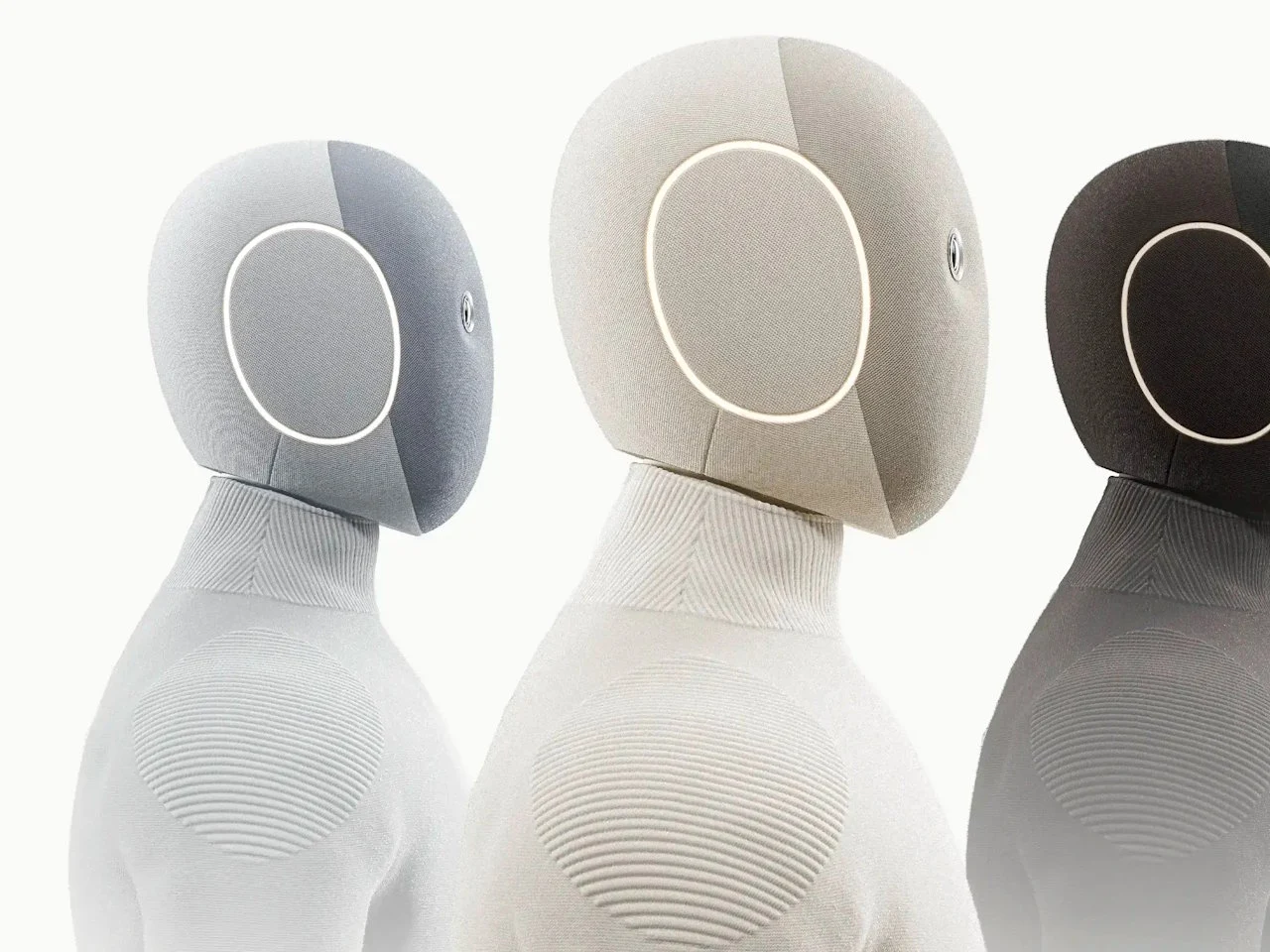
    1X has started taking pre-orders for its NEO humanoid AI home robot, bringing a sigh of relief to overworked moms everywhere. This 5-foot 6-inch (1.68 m) robot was introduced in 2024.

    Innovative Design and Safety

    The robot features the Tendon Drive, a unique movement system that combines tendon-based transmission with high-torque motors. Its body is shielded with a layer of 3D polymer padding and is dressed in a turtleneck, which enhances safety for those nearby, as stated by the company.

    With its robust motors, NEO can transport laundry to the washing machine and food to the refrigerator, handling weights up to 55 pounds (24.95 kg) while producing a quiet 22 dB of motor noise, according to 1X. It is equipped with two 8 MP cameras, four 360-degree microphones, and three speakers, allowing it to see, hear, and communicate with its owners.

    Advanced AI Capabilities

    Thanks to the Nvidia Jetson Thor platform, the AI robot can remember all conversations and access the internet for answers. NEO can chat with its owners, perform routine household tasks like laundry and kitchen cleaning, and, with the help of human experts from 1X, learn to tackle chores it hasn’t been programmed for yet.

    Weighing 66 pounds (29.94 kg), the NEO robot can navigate around the house to autonomously manage chores, utilizing hands that offer 22 degrees of freedom. Its 5G wireless connection enables it to function both indoors and outdoors in dry conditions. The humanoid operates for up to four hours on its internal 0.75 kWh battery pack, and it automatically returns to its dock for charging when the battery is running low.

    Pre-Order Details

    The 1X NEO humanoid AI home robot is available for pre-order with a deposit of $200. Prospective buyers can opt for a one-time payment of $20,000 or a monthly subscription of $499. Deliveries are expected to begin in 2026.

    NEO is not fully autonomous yet, unlike the robots depicted in Isaac Asimov’s I, Robot, so those concerned about a Terminator-like scenario in their homes can be at ease…for now.

    Source:
    Link