Tag: Sora 2

  • Sora 2: OpenAI’s Unpredictable AI Video Creation Tool

    Sora 2: OpenAI’s Unpredictable AI Video Creation Tool

    Key Takeaways

    1. Environmental Realism: Sora 2 excels in creating realistic environments, with accurate lighting, reflections, and interactions, making scenes feel immersive and cinematic.

    2. Inconsistent Performance: While Sora 2 can produce stunning visuals, it often struggles with complex human interactions and choreography, leading to moments of surreal distortion.

    3. Democratization of Video Creation: The technology allows anyone to create visually engaging content easily, raising questions about creative ownership and the nature of originality in AI-generated art.

    4. Sound Quality Issues: Despite impressive visuals, Sora 2’s audio capabilities remain weak, often resulting in poor sound quality that detracts from the overall experience.

    5. Cultural and Artistic Implications: Sora 2 represents a shift in filmmaking, emphasizing collaboration between AI and humans, while highlighting the challenges of balancing creativity, control, and copyright concerns.


    Where many AI video systems have difficulty maintaining continuity, Sora 2 excels in understanding how environments interact. Shadows change in realistic ways. Water surfaces ripple when objects approach. Reflections can be seen in glass and puddles, avoiding random angles.

    OpenAI claims Sora 2 can create “complex scenes with multiple characters, specific movements, and detailed backgrounds that stay consistent over time.” While this is accurate, “consistent” is subjective in this context.

    Ambitious Testing

    The first test was bold:

    “A tranquil day in Central Park, New York. Tourists wander under gentle sunlight. Suddenly, a figure in flowing robes activates a glowing staff and urges everyone to find safety. Another dark-robed figure emerges from the trees, wielding a red weapon. The crowd disperses as the two engage in a duel—elegant, dance-like motions, glowing arcs of light reflecting off the nearby water. The camera circles continuously as autumn leaves swirl around.”

    What resulted was visually captivating—soft golden hues, smooth camera movement, and realistic reflections. But then chaos ensued. The glowing staffs flickered, twisted, and turned into bizarre shapes. The fighters lost their balance, limbs passing through one another like ghostly polygons from an old video game. The choreography shifted into a surreal dance rather than a cinematic battle.

    Recognized Limitations

    This issue isn’t isolated to my test. OpenAI has noted that Sora 2 “struggles with sustained, believable humanoid combat or weapon choreography,” a limitation that becomes apparent as soon as the action starts.

    Yet, the environment looked real enough that it was almost forgivable. The scene had a cinematic feel, even if the action did not.

    Sora 2 did respond well to the next prompt:

    “A calm afternoon in New York’s Central Park. Tourists stroll and snap photos under soft golden sunlight. Suddenly, a figure in light robes activates a glowing staff, urgently calling for safety. Another dark-robed figure appears from the trees, holding a red energy weapon. The crowd scatters as the two engage in a precise, cinematic duel—elegant, dance-like movements, glowing arcs of light reflecting on the water nearby. The camera circles them in one continuous shot as autumn leaves swirl around. No contact or injury is shown—only skillful choreography and dynamic motion.”

    This time, it actually succeeded. The movements appeared grounded, fluid, and surprisingly human, with a final strike that flowed so smoothly you might forget you’re watching something produced by AI.

    Wildlife Scene Success

    For a more tranquil test, I turned to nature with the prompt:

    “Create a wildlife scene depicting birds and lions naturally drinking from a watering hole. Every animal should move realistically, and the scene must be hyper-realistic.”

    In this scenario, Sora 2 was in its element. The birds flitted and dipped with believable wing movements. Sunlight glittered on the water’s surface, and reflections naturally changed as the animals shifted. The textures—fur, feathers, and muddy ripples—approached the quality of a nature documentary.

    However, some quirks remained. One lion awkwardly appeared at the muddy edge, seemingly trying to drink from the dirt instead of the water. It’s a small but revealing detail: Sora 2 captures the overall scene but sometimes struggles with how objects interact with surfaces.

    Regardless, this was by far the most convincing result—and it hinted at where Sora 2 truly shines: environmental realism.

    Futuristic Urban Challenge

    For the final test, I pushed for maximum motion, lighting, and atmosphere:

    “A vast futuristic city at dawn. A cyberpunk courier in a dark jacket races across rooftops, clutching a glowing data case. A chasing drone weaves between antennas and vents, its thrusters glowing blue.

    The camera follows from behind and to the right, handheld style, as the runner leaps across a gap. The drone overtakes mid-air; lens flare and motion blur enhance the scene.”

    The output was breathtaking—and surprisingly cinematic.

    The lighting was stunning: the sunrise reflecting off glass buildings, glimmers on metallic surfaces, and subtle lens flare during the jump. Motion felt fluid and heavy. The drone chase added real tension, while the shallow depth of field mimicked the feel of a 35 mm film camera.

    This was Sora 2 performing at its peak—complex, cohesive, and believable. If this had been shown as a teaser for a game or film, most viewers wouldn’t suspect AI involvement immediately.

    Across these tests, one key point emerged: Sora 2 is consistently inconsistent. At times, it gets everything right. Other times, it produces something so strange that it’s hard not to laugh. This unpredictability has become part of its appeal.

    Community Reactions

    On Reddit, one user captured this perfectly:

    “Sora 2 either gives you Pixar or fever-dream energy, no in-between.”
    — r/AIGuild

    The model sometimes distorts objects, alters colors mid-scene, or misreads prompts in delightfully absurd ways. A prompt for “two plush animals walking side by side” once resulted in creatures that looked like a mix of teddy bear and inflatable balloon. It’s not accurate—but it’s unforgettable.

    This chaos can be a drawback for professionals seeking reliability, but for creative experiments, it’s invaluable. Sora 2 often behaves more like a collaborator with a vivid imagination than a predictable tool.

    When Sora 2 gets it right, it feels magical. However, it’s not magic—it’s a machine interpreting language through probability and visual pattern recognition. It thrives on context, not accuracy. Provide it with a strong sense of place—lighting, camera angles, tone—and it convincingly fills in the gaps. But ask for precision in choreography or delicate interactions, and it may falter.

    This aligns with observations from users in Reddit and Discord testing groups. Creators note that simpler human actions (walking, looking, gesturing) are believable, but more complex sequences (fighting, hugging, playing instruments) tend to break down. It seems OpenAI’s physics modeling still views the human body as separate moving parts instead of a cohesive unit. It’s realistic for a brief time—then chaos ensues.

    Cultural Implications

    What makes Sora 2 intriguing isn’t just its technical advancements… It’s the cultural shift it signifies.

    For years, creating videos was costly, time-consuming, and restricted by access to equipment or talent. Now, anyone with a good idea and a short paragraph can create something visually engaging.

    This democratization is powerful but also complicates creative ownership. When a model “imagines” part of a scene incorrectly, is that a failure or just a different take?

    In my Central Park duel, the warped weapons shattered realism yet introduced a dreamlike quality. It wasn’t what I sought, but it hinted at a surreal, artistic vibe—more akin to experimental film than mainstream action.

    Perhaps the deeper understanding is this: AI filmmaking isn’t about control but about negotiation.

    OpenAI recognizes the excitement and unease surrounding this technology. The company continues to limit access, citing concerns over misuse and the necessity for content safeguards.

    Recently, Japan’s government urged OpenAI to ensure Sora 2 respects anime and manga copyrights—a reminder that AI’s creative potential carries real-world legal implications. There’s also the question of originality. Sora 2’s outputs may appear new, but they’re built on vast amounts of existing media. The more realistic it gets, the harder it is to differentiate between homage and imitation. That’s why, despite its marvels, Sora 2 stands at a crossroads between artistry and automation.

    Most Sora 2 outputs still struggle with audio. While the visuals often impress, the sound quality can be poor, flat, muffled, or unnatural. Sora 2 attempts to generate ambient noise, sound effects, and dialogue simultaneously, but it can’t isolate them like a real sound designer. The result is overcompressed, metallic, or strangely balanced audio that seldom matches the cinematic quality of the visuals. For now, the best method to enhance Sora 2 videos’ sound is to add real-world ambience, effects, and music during post-production to breathe life into the scene.

    After several days of testing, Sora 2 left me feeling impressed, entertained, and a little uneasy. It’s both an engineering marvel and a reminder that human movement, emotion, and storytelling are uniquely intricate.

    Summary of Pros and Cons

    Strengths: Environments, lighting, atmosphere, dynamic motion, and short sequences of realism.

    Weaknesses: Human interactions, weapon physics, and occasional surreal distortions.

    Sora 2 marks a significant step towards AI-assisted filmmaking… Just don’t expect perfect realism just yet. Moreover, true filmmakers remain the essential artists we need… As Sora 2 still grapples with the natural movement of humans and animals.

    As one Redditor put it:

    “Sora 2 feels like watching the future learn how to dream.”
    — r/OpenAI

    It’s an apt description. Sora 2 doesn’t just replicate reality… It plays with it. And for those observing this evolution, it’s both exciting and profoundly human… Just with very poor audio quality.


    Source:
    Link


  • Japanese Entertainment Giants Accuse OpenAI’s Sora 2 of Copyright Violation

    Japanese Entertainment Giants Accuse OpenAI’s Sora 2 of Copyright Violation

    Key Takeaways

    1. CODA, formed in 2002, aims to combat piracy and promote Japanese entertainment globally, including major companies like Square Enix and Studio Ghibli.

    2. CODA has requested OpenAI to stop using copyrighted material for training its AI video tool, Sora 2, due to concerns over content similarities with existing Japanese works.

    3. Sora 2’s outputs may infringe copyright as they closely replicate specific copyrighted pieces, raising legal concerns regarding the use of Japanese materials in AI training.

    4. CODA argues that OpenAI’s opt-out mechanism for copyright owners does not comply with Japanese copyright laws, which typically require prior consent for the use of copyrighted works.

    5. CODA demands OpenAI to protect its members’ intellectual property and respond to claims regarding potential copyright violations related to Sora 2’s outputs.


    Japan’s Overseas Distribution Association (CODA) has made a formal request for OpenAI to stop using copyrighted material in the training of its AI video creation tool, Sora 2.

    CODA’s Formation and Purpose

    Established in 2002, CODA aims to combat piracy while enhancing the global presence of Japanese entertainment. The association includes major players like Square Enix, Bandai Namco, Kadokawa (the parent company of FromSoftware), Studio Ghibli, and Cygames. They reached out to OpenAI, led by Sam Altman, through an official letter expressing their concerns.

    Sora 2’s Launch and Concerns

    Sora 2 was announced on September 30, with an exclusive iOS release on October 1. In their letter, CODA made it clear that a significant amount of content generated by Sora 2 closely mirrors existing Japanese works. They have concluded that this similarity stems from utilizing Japanese materials as training data for the AI.

    CODA expressed that when Sora 2 reproduces specific copyrighted pieces or creates similar outputs, it could be seen as copyright infringement due to the replication that occurs in the machine learning process.

    Legal Standpoint of CODA

    Furthermore, CODA pointed out that OpenAI’s opt-out mechanism, which requires creators to indicate their intellectual property to prevent its use as training data, does not align with Japanese copyright laws. They explained that:

    Reports indicate that Sora 2 operates via an opt-out system responding to requests from copyright owners. However, under Japan’s copyright framework, prior consent is typically necessary for utilizing copyrighted works, and there is no system permitting one to escape liability for infringement through later objections.

    The catalyst for this situation was Sora 2’s remarkable capability to create AI videos that closely imitate Japanese media. One viral video featured Sam Altman playing in a field with Pokémon characters, humorously captioned, “I hope Nintendo doesn’t sue us.” It’s worth noting that Nintendo is not affiliated with CODA.

    CODA’s Demands

    CODA’s requests to OpenAI are quite clear. OpenAI must ensure that the intellectual property of CODA members is not harvested without their consent. Failing to do so could lead to legal complications for Sam Altman.

    CODA insists that OpenAI “addresses claims and inquiries from CODA member companies related to copyright violations concerning Sora 2’s outputs.”

    These incidents have surfaced alongside a recent Japanese survey revealing that more than half of the surveyed Japanese companies, including Capcom and Level-5, are exploring AI for game development.

    Source:
    Link


  • OpenAI Unveils Sora 2: Real Physics in AI Videos with User Cameos

    OpenAI Unveils Sora 2: Real Physics in AI Videos with User Cameos

    Key Takeaways

    1. Launch of Sora 2: OpenAI’s new flagship model, Sora 2, enhances video and audio generation with realistic physics and synchronized sound effects, launching on September 30, 2025, in the U.S. and Canada.

    2. Advancement in World Simulation: Sora 2 significantly improves world simulation, depicting plausible scenarios and complex actions accurately, moving beyond previous models’ limitations.

    3. User Integration Features: Users can upload their own videos and audio to create personalized scenes, incorporating elements like friends and pets with high accuracy.

    4. Focus on Creation: The Sora app prioritizes user creation over engagement, with features like customizable feeds, daily limits for teen accounts, and enhanced human moderation to prevent abuse.

    5. Future Plans: OpenAI aims to develop general-purpose world simulators and advanced robotics, with Sora 2 serving as a foundation for better understanding and interacting with the physical world.


    OpenAI has revealed its new flagship model, Sora 2, aimed at enhancing video and audio generation, marking a significant advancement in AI-driven content creation. This updated model features more realistic physics, improved controllability, and introduces synchronized dialogue along with environmental sound effects, providing a deeper level of immersion for AI-generated media. Sora 2 is being launched together with a new social application called Sora, which seeks to change the way individuals engage with AI-generated content. The launch starts today, September 30, 2025, in both the United States and Canada.

    Evolution of Generative Video

    The original Sora model, which was released in early 2024, is seen by OpenAI as a crucial milestone for generative video, akin to the influence of GPT-1 on natural language processing. In comparison, Sora 2 is described as achieving a “GPT-3.5 moment” for video, establishing a new standard for AI’s grasp of physical reality and world simulation.

    Enhanced World Simulation

    OpenAI claims that Sora 2 signifies a significant leap in “world simulation” abilities. While earlier models often distorted reality to comply with a prompt, Sora 2 aims to depict plausible scenarios, such as misses and rebounds in basketball, instead of just moving objects around to fit the storyline. The model is now capable of rendering complex scenarios that previously challenged older systems, such as Olympic-level gymnastics, precise water backflips that consider buoyancy and rigidity, or even a triple axel with a cat hanging on. These improvements extend to the audio realm as well, with Sora 2 creating background soundscapes, synchronized dialogue, and sound effects that perfectly align with the visual action, adding a new layer of authenticity.

    Unique Features for Users

    One standout feature allows users to “upload yourself.” By recording a short video and audio clip, Sora 2 can integrate these elements (along with friends, pets, and real-world objects) into generated scenes with high accuracy in visuals and voice.

    To showcase the capabilities of Sora 2, OpenAI is introducing a new iOS application, Sora. This app lets users create and remix short videos, explore community-generated content in a customizable feed, and participate in AI-generated scenes using the “cameos” feature. Cameos require a quick verification process for ensuring user control and consent, with options for privacy and content removal.

    Focus on Creation

    OpenAI emphasizes that the new Sora app is designed with a focus on creation rather than maximizing engagement. The default feed highlights users you follow and content that might inspire your own creations; the company mentions it is not optimizing for time spent. Accounts for teens come with daily feed-view limits and stricter cameo permissions, while parental controls (accessible through ChatGPT) provide options to disable algorithmic personalization or limit infinite scrolling. Additionally, OpenAI is enhancing human moderation to combat bullying and other abuse concerns.

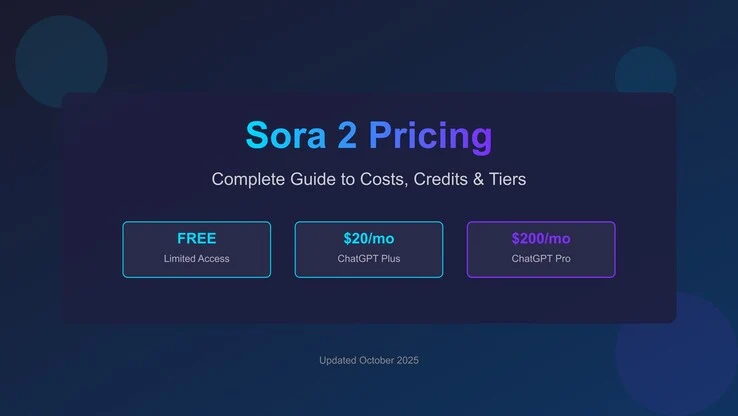
    Sora 2 is launching today in the U.S. and Canada, with intentions to expand to more regions. The app will initially be invite-only, promoting collaborative use among friends. The model is free to use at first, with “generous limits,” subject to computational constraints. ChatGPT Pro users can access the high-quality Sora 2 Pro model in advance via ChatGPT, with support in the Sora app coming soon. OpenAI also plans to release Sora 2 via API for wider integration. Users will continue to have access to content generated with Sora 1 Turbo in their libraries.

    OpenAI sees Sora 2 as a crucial step toward developing general-purpose world simulators and, ultimately, advanced robotics. The company views enhancements in video-native AI models as a pathway not only for creative tools but also for systems capable of better understanding, interacting with, and eventually existing within the physical world.

    Source:
    Link


  • OpenAI to Launch AI-Driven TikTok Clone Soon

    OpenAI to Launch AI-Driven TikTok Clone Soon

    Key Takeaways

    1. OpenAI is entering the short video market, competing with TikTok, Instagram Reels, and YouTube Shorts, focusing on AI-generated content.
    2. The platform will use OpenAI’s Sora 2 video generation model, allowing video lengths of up to ten seconds and featuring user-uploaded images.
    3. The app will include features like Remix, enabling users to modify content created by others.
    4. Copyright issues may arise as the app can generate copyrighted material, requiring owners to opt out to prevent their work from being used.
    5. Future developments will enhance Sora’s capabilities, and OpenAI may adopt an invite-only strategy to manage access and create interest.


    Wired has discovered that OpenAI is looking to dive into the short video scene, going head-to-head with platforms like TikTok, Instagram Reels, and YouTube Shorts. But there’s a big twist with OpenAI’s approach: it will focus solely on AI-generated content, which takes away much of the work involved in creating videos. This could be a great opportunity for prompt engineers.

    Initial Features

    At the start, the new platform will utilize OpenAI’s Sora 2 video generation model, keeping video lengths to a maximum of ten seconds. Users will be able to upload their own image to the app through a verification tool. Key features found in TikTok and Reels, like Remix, will also be included, allowing users to alter content made by others.

    Copyright Issues

    Interestingly, the app will have the ability to create copyrighted material. For copyright owners, this means they will have to actively opt out to prevent their work from appearing on the platform. This could cause a lot of trouble for creators and companies at first, as there may be significant uncertainty regarding what content is allowed.

    Future Developments

    By focusing exclusively on AI-generated videos, OpenAI can enhance future versions of Sora. The content will stay within the app, potentially reducing the need for popular tools like CapCut from ByteDance. It’s still unclear if this will truly affect the crowded short video landscape.

    OpenAI hasn’t made any official statements yet, but now that the news is out, it won’t be long before they do. Considering the massive computing power needed for AI video creation, OpenAI might adopt an invite-only strategy to create buzz and limit access to a few markets.

    Source:
    Link