Category: Artificial intelligence

  • Amazon Plans to Cut 600,000 Jobs Using AI and Robotics

    Amazon Plans to Cut 600,000 Jobs Using AI and Robotics

    Key Takeaways

    1. Shift to Automation: Amazon plans to automate 75% of its operational tasks, aiming for significant efficiency and cost savings of about $14 billion from 2025 to 2027.

    2. Shreveport Model: The Shreveport, Louisiana facility serves as a prototype for automation, using 1,000 robots and employing 25% fewer workers than similar sites.

    3. Expansion Plans: Amazon intends to implement the Shreveport model in 40 additional logistics centers by the end of 2027, reducing workforce needs through natural attrition.

    4. Job Replacement Concerns: The move towards automation is leading to debates about job losses, with experts warning that Amazon may become a net job destroyer.

    5. Public Relations Strategy: Amazon is framing its transition as a shift towards “advanced technology” rather than explicitly mentioning automation and AI, aiming to manage public perception.


    The current shift in technology within the logistics sector is compelling numerous firms to rethink their workforce strategies. As per detailed insights from the New York Times, Amazon is gearing up to restrict its employee growth in the next few years. While the e-commerce giant anticipates its sales volume to double by 2033, its strategic aim is to replace over 600,000 jobs in the US by leveraging cutting-edge technology and automation.

    Focus on Automation and Efficiency

    The automation in Amazon’s fulfillment centers is expected to be the main area of focus, with the goal of automating 75% of its overall operational tasks. This extensive digital shift is projected to yield substantial efficiency improvements and notable cost reductions, with internal evaluations suggesting about $14 billion in savings from 2025 to 2027. This translates to roughly $0.35 less in fulfillment expenses for each item delivered.

    Shreveport as a Model

    The Shreveport, Louisiana facility is set to be a model for this automated future. Referred to as the Shreveport model, this warehouse currently operates with a thousand robots and has 25% fewer employees compared to similar non-automated sites. The planned addition of more cobots (collaborative robots) is expected to further decrease the need for human workers, leading to greater reductions in the workforce.

    By the end of 2027, Amazon intends to implement the Shreveport model in around 40 more logistics centers. Facilities that are only a few years old, such as those in Stone Mountain, Georgia, are also being adapted to fit the new robotics framework. An internal analysis for Stone Mountain indicates that it may need as many as 1,200 fewer employees after the transition. The company aims to achieve this reduction mainly through natural attrition, effectively instituting a hiring freeze for standard warehouse roles. The remaining positions will shift towards more skilled technical roles, like mechatronics, but the overall number of required staff is projected to decline sharply.

    Debate on Job Impact

    The scale of job replacement by AI is sparking significant discussions. Amazon has reacted by characterizing the documents as not fully representative and highlighting the emergence of new, more challenging positions. However, the leaked documents indicate a focused public relations approach, avoiding the explicit use of terms like “automation” and “AI” and opting for “advanced technology” to shape public opinion.

    Daron Acemoglu, an economics expert at MIT, forecasts that if these plans are fully executed, the company, which was once seen as a major job creator, could turn into a net job destroyer.

  • Manus 1.5 AI: Build Full-Stack Web Apps Through Chat

    Manus 1.5 AI: Build Full-Stack Web Apps Through Chat

    Key Takeaways

    1. Improved Efficiency: The new models reduce task completion time from 15 minutes and 36 seconds to 3 minutes and 43 seconds, with a 15% increase in task quality.

    2. Advanced Features: Manus-1.5 can create web apps from scratch and includes features like event-driven notifications, user authentication, traffic analytics, and AI integration for text and image generation.

    3. Collaboration Tools: New features facilitate teamwork by managing files during shared AI chat sessions.

    4. Pricing Options: Manus-1.5-Lite is free, while Manus-1.5 is subscription-based, starting at $192 per year.

    5. Learning Resources: Users can find books on how to utilize Manus available on Amazon.


    Manus has unveiled the Manus-1.5 and Manus-1.5-Lite, which are the newest versions of its AI systems.

    Improved Efficiency

    These models have been fine-tuned to provide responses much faster, cutting down the average time to complete tasks from 15 minutes and 36 seconds earlier this year to just 3 minutes and 43 seconds, as stated by the company. While the exact methods used remain a secret, there’s been a reported 15 percent enhancement in the quality of tasks performed.

    Advanced Features

    The AI systems are built to be practical in real-life applications, with the newest models capable of creating web apps from scratch through chat interactions. Manus claims that these features include event-driven notifications, user authentication, traffic analytics, and comprehensive full-stack scaffolding. A key highlight of Manus 1.5 is its ability to integrate AIs into applications, which includes functions for generating text and images.

    Collaboration Tools

    To facilitate teamwork, users can utilize the new Collaboration and Library features that help manage files during shared AI chat sessions.

    Manus-1.5-Lite is offered at no cost, while Manus-1.5 is exclusive to subscribers, with pricing starting at $192 per year.

  • DeepSeek OCR AI: Process 200,000 Pages Daily with Nvidia A100

    DeepSeek OCR AI: Process 200,000 Pages Daily with Nvidia A100

    Key Takeaways

    1. DeepSeek stands out for its efficiency and cost-effectiveness compared to other AI models like ChatGPT and Gemini due to its open-source nature.
    2. The DeepSeek-OCR model achieves 97% recognition accuracy while compressing documents into images, with a compression ratio of under 10x.
    3. DeepSeek-OCR can process up to 200,000 pages daily using just one Nvidia A100 GPU, significantly outperforming other solutions in speed and scale.
    4. The model employs advanced algorithms that maintain accuracy across various document sizes and types, including complex documents with graphs and diagrams.
    5. Extensive training on 30 million PDF pages in multiple languages has improved accuracy, but the impact on reasoning abilities in language models remains uncertain.


    With the rise of AI data centers and the related costs of processing, the focus has shifted towards the effectiveness of algorithms. Among all, DeepSeek stands out for its efficiency. Its models are available as open source, making their training considerably cheaper than that of OpenAI’s ChatGPT or Google’s Gemini.

    A Breakthrough in Learning Efficiency

    The recently introduced DeepSeek-OCR model demonstrates remarkable learning efficiency. It utilizes optical mapping to significantly compress lengthy documents by transforming them into images, achieving an impressive 97% recognition accuracy with a compression ratio of under 10x.

    By employing advanced encoder and decoder techniques, the model can turn over nine tokens of document text into just a single visual token, which greatly reduces the computational resources needed for processing. Even at a 20x compression ratio, the DeepSeek-OCR system can still maintain a 60% optical recognition accuracy, which is quite an extraordinary achievement.

    Speed and Scale of Processing

    Thanks to innovative AI compression algorithms, DeepSeek-OCR can process scientific or historical texts at an astonishing rate of 200,000 pages each day using just one Nvidia A100 data center GPU. This means that a 20-node A100 cluster can handle about 33 million document pages daily, marking a significant advancement in the learning of text-heavy LLMs. Based on the OmniDocBench rankings, DeepSeek-OCR far surpasses other well-known solutions like GOT-OCR2.0 and MinerU2.0 in terms of the number of vision tokens utilized per page.

    The new DeepEncoder algorithms are capable of managing various document sizes and resolutions without losing speed or accuracy. Meanwhile, the DeepSeek3B-MoE-A570M decoder uses a mixture-of-experts architecture that shares knowledge among specialized models tailored for each OCR task. This enables DeepSeek-OCR to effectively process intricate documents that include graphs, scientific formulas, diagrams, or even images, regardless of the languages used.

    Comprehensive Training for Accuracy

    To reach such a high level of scale and precision, DeepSeek processed 30 million pages in Portable Document Format (PDF) across nearly 100 different languages. This extensive training included diverse categories, from newspapers and scientific handwriting to textbooks and PhD dissertations. However, while the rapid and efficient visual tokenization provided by the new DeepSeek-OCR system is impressive, it remains uncertain whether this will translate into improved performance in language models, particularly in reasoning abilities when compared to the existing text-based token systems.

  • Gardena Smart Sileno Sense: AI-Powered Robotic Lawn Mower

    Gardena Smart Sileno Sense: AI-Powered Robotic Lawn Mower

    Key Takeaways

    1. Gardena’s Smart Sileno Sense robotic lawn mower comes in two models for areas up to 400 m² and 600 m², respectively.
    2. The mower uses GPS-RTK and AI-based optical sensors for navigation, eliminating the need for boundary wires.
    3. Advanced AI technology allows the mower to detect and avoid various obstacles while recognizing different lawn edges.
    4. Users can customize cutting height (25 to 45 mm) and mowing frequency based on grass growth, with easy cleaning using a garden hose.
    5. The mower can handle slopes up to 25% and features an integrated SIM card for continuous mobile connectivity.


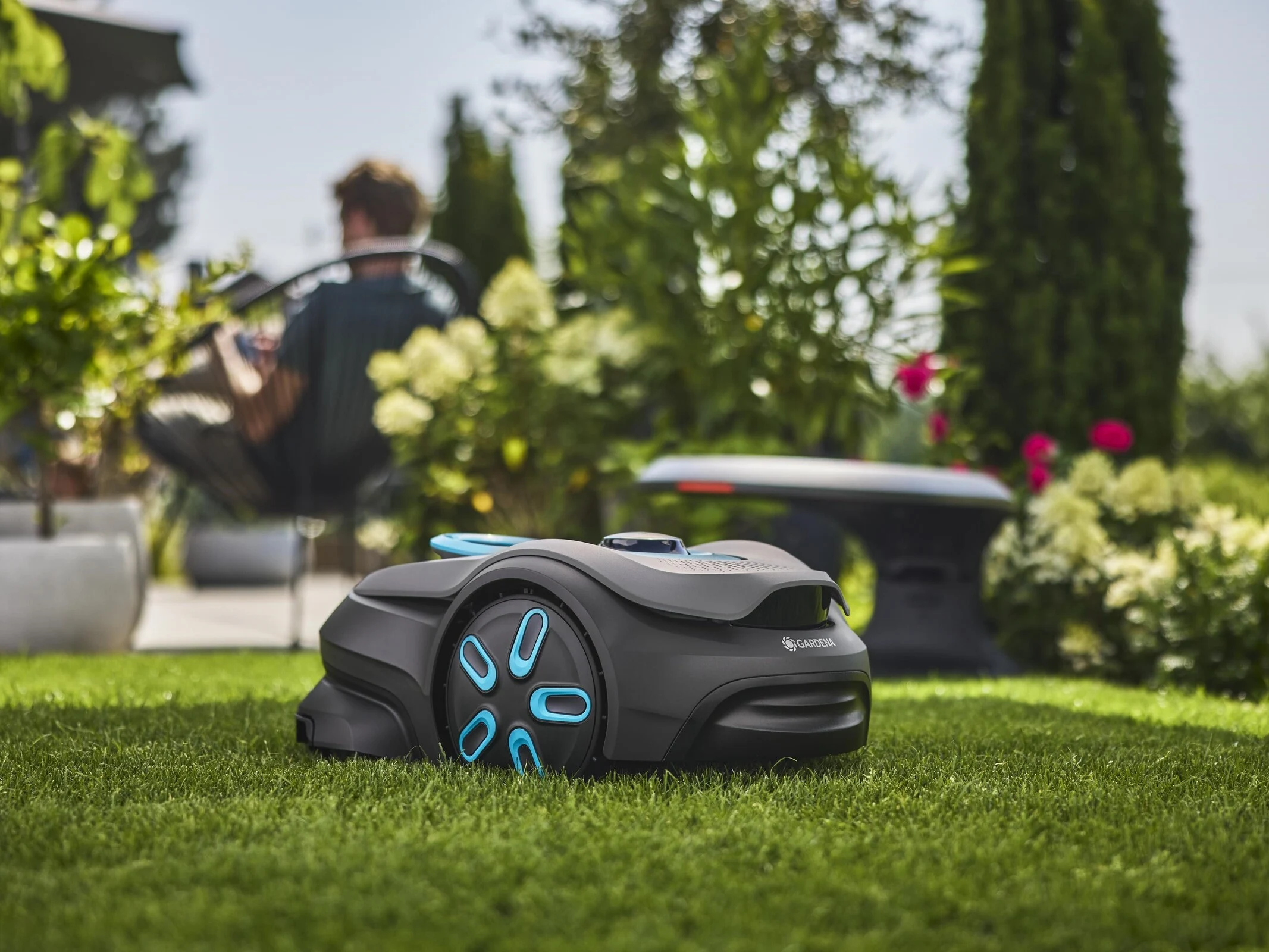
    Gardena has introduced a new robotic lawn mower called the Gardena Smart Sileno Sense, which is available in two different models. These models vary in their recommended maximum mowing areas; one can handle up to 400 m², while the other can manage up to 600 m². Notably, neither model requires a boundary wire, using instead GPS-RTK and AI-based optical sensors for navigation. During the initial run, the mower scans the garden—specifically the edges of the lawn—and “remembers” the layout. For the AI processing, a Jetson module from Nvidia is utilized.

    Advanced Obstacle Detection

    With the help of AI, the optical sensor technology of the Gardena Smart Sileno Sense is capable of distinguishing between various obstacles. This means that the mower can navigate over leaves but will avoid branches or toys. It can also recognize different types of lawn edges, like a wall compared to a flower bed, employing the trim-to-edge feature to ensure grass is cut right up to the edge.

    Customizable Features

    The mower allows users to adjust the cutting height between 25 and 45 millimeters, with mowing frequency tailored to the lawn’s growth rate. Cleaning the device appears to be quite simple, as users can just use a garden hose for maintenance. Moreover, the mower’s blade disc, which features three blades, enables it to tackle slopes up to 25%. An integrated SIM card offers a continuous free mobile network connection.

    Source:
    Link


  • Husqvarna Launches New AI Vision Automower Robotic Lawn Mowers

    Husqvarna Launches New AI Vision Automower Robotic Lawn Mowers

    Key Takeaways

    1. Husqvarna introduced new robotic mowers for 2026, including models 405VE, 410VE, 430V, 450V NERA, and Automower 540 EPOS.
    2. The mowers feature AI Vision and night vision cameras, allowing real-time obstacle navigation and wireless mowing with EPOS technology.
    3. Models 405XE NERA and 410VE NERA are designed for lawns up to 900 and 1,500 square meters, respectively, with EdgeCut technology for edge mowing.
    4. The Automower 430V and 450V NERA can handle areas up to 4,800 and 7,500 square meters, with adjustable cutting heights and slope management.
    5. The Automower 540 EPOS is aimed at professional users, covering up to 4,000 square meters in 24 hours, with pricing and release dates yet to be announced.


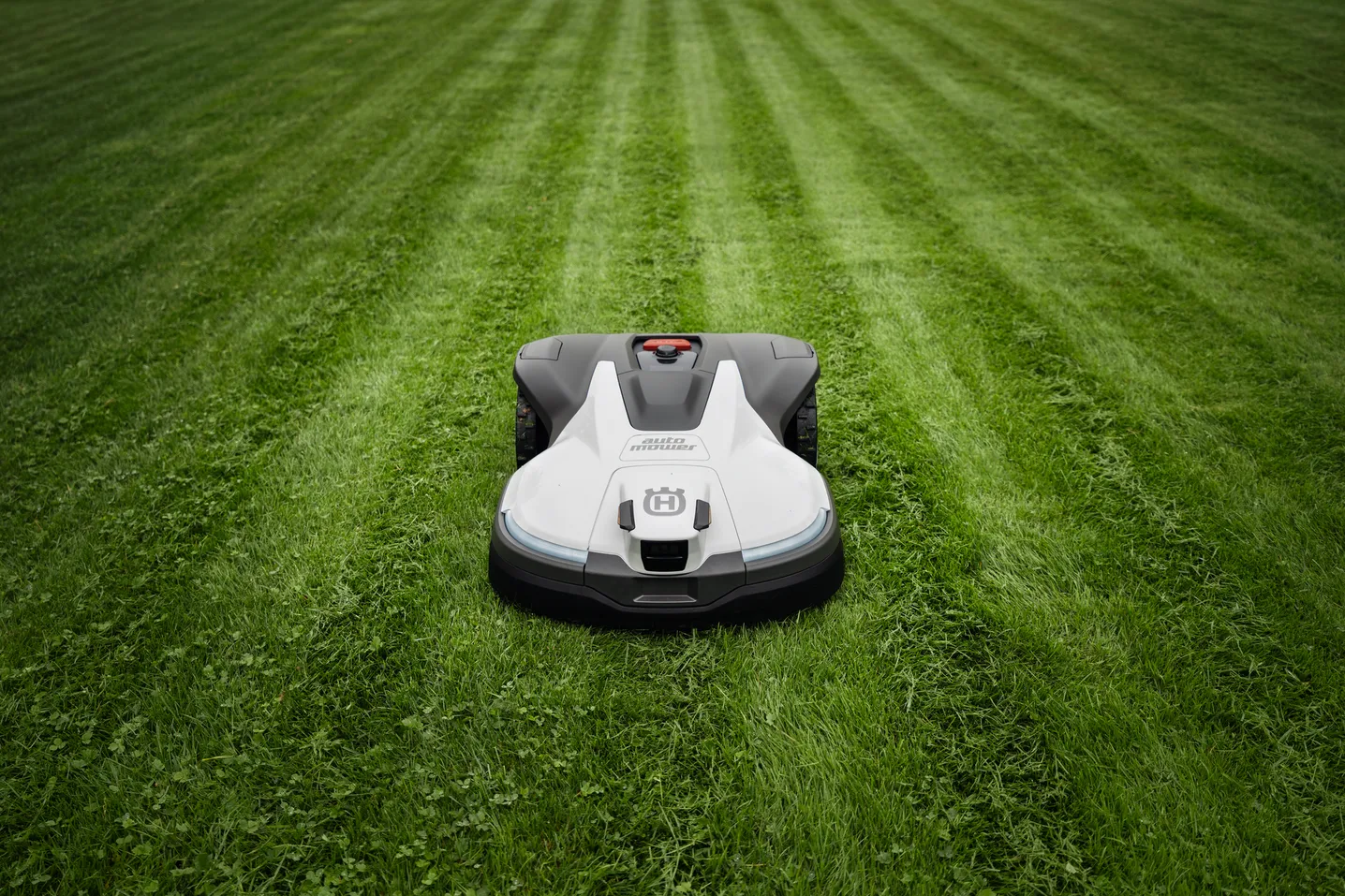
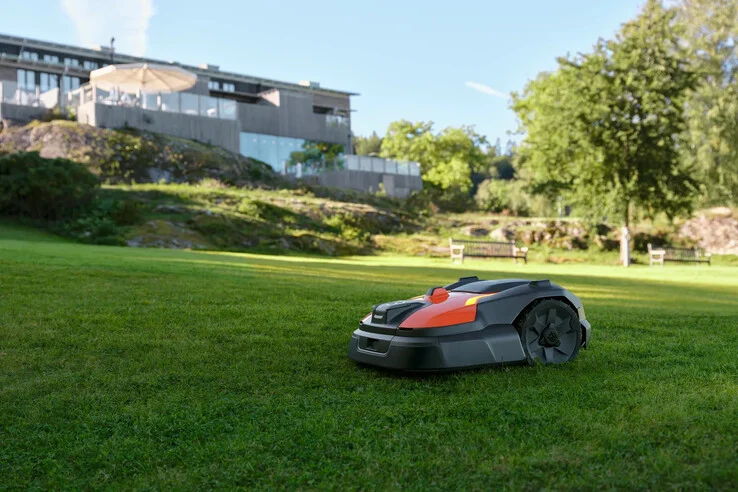
    Husqvarna has recently unveiled a range of new robotic mowers for 2026, including the Husqvarna Automower 405VE, 410VE, 430V, 450V NERA, and the Automower 540 EPOS.

    Advanced Features

    Similar to the recently launched Gardena Smart Sileno Sense, these Husqvarna models are equipped with AI Vision and night vision cameras. Husqvarna is enhancing its lineup with cutting-edge features, keeping in line with a trend already embraced by many other brands in the realm of modern robotic mowers that operate without boundary wires.

    With the help of cameras and artificial intelligence, these latest mowers from Husqvarna can identify, respond, and modify their tasks in real-time. This capability enables the mowers to navigate around obstacles on the lawn, minimizing or preventing collisions and unexpected halts. Interestingly, the night vision functionality also allows them to operate after dark, although it’s still advisable to limit night-time use of robotic mowers to safeguard wildlife. The company integrates EPOS technology for wireless mowing within virtual boundaries, eliminating the necessity for a local reference station.

    Model Specifications

    The 405XE NERA and 410VE NERA models take over from the existing 405XE NERA and 410XE NERA robotic mowers. They are crafted for lawns measuring up to 900 and 1,500 square meters, respectively, and include the well-known EdgeCut technology at the back for edge-to-edge mowing. These models can tackle slopes of up to 30% and have an adjustable cutting height ranging from 20 to 55 mm.

    Husqvarna’s Automower 430V and 450V NERA, which are the new versions of the 430X and 450X NERA, are suitable for areas of up to 4,800 and 7,500 square meters, respectively. These mowers can also adjust their cutting height from 20 to 60 mm and manage slopes of up to 50%.

    Professional Use

    The new Husqvarna Automower 540 EPOS is tailored for professional needs, coming equipped with the latest AI Vision technology. This model can efficiently cover up to 4,000 square meters within a 24-hour period.

    Source:
    Link


  • InnAIO T10: World’s First AI Translator with Voice Cloning

    InnAIO T10: World’s First AI Translator with Voice Cloning

    Key Takeaways

    1. The InnAIO T10 is the first AI translator that can mimic the user’s voice using a 30-second sample.
    2. It supports over 130 languages, translates in 0.5 seconds, and boasts a 98% accuracy rate.
    3. The device can translate conversations from social media apps like WeChat, Messenger, and WhatsApp, as well as photos and text.
    4. The T10 has a lightweight, magnetic design compatible with MagSafe accessories but operates on a subscription basis with limited features in the free plan.
    5. The retail price for the InnAIO T10 is $189.


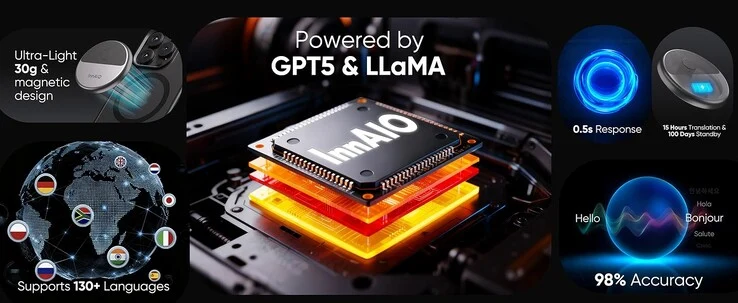
    InnAIO has introduced the T10, which is said to be the “first ever” AI translator that can mimic the user’s voice. The company claims that by using a 30-second sample, the device can reproduce the user’s voice, making it possible to converse in any language while keeping their unique tone.

    Features and Capabilities

    According to the brand, the translator is driven by GPT-5 along with InnAIO’s own language model, supporting more than 130 languages. Users can also easily switch between different dialects. InnAIO mentions that the device can translate in just 0.5 seconds and has an impressive accuracy rate of 98%.

    Social Media Integration

    Beyond straightforward translations, the InnAIO T10 can also translate conversations from social media applications. The company highlights that it comes with cross-app compatibility, including apps like WeChat, Messenger, and WhatsApp. Additionally, it supports translation for both photos and text.

    Design and Subscription Model

    In terms of design, the InnAIO T10 remains similar to its earlier model. It features a lightweight and magnetic design, which lets users attach the translator to the back of compatible phones that use MagSafe accessories (like the Pixel 10).

    However, despite these impressive features, the T10 operates on a subscription basis. There is a free plan available, but it comes with limitations. For instance, the free version doesn’t allow in-app voice or video call translations, and it restricts users to a maximum of 120 minutes of real-time translation each month.

    Pricing Information

    Regarding the cost, the InnAIO T10 can be purchased from the official store for $189. To find out more about this translator, be sure to check out the images below.


  • Apple Faces Challenges with AI-Powered Siri Despite New V2 Update

    Apple Faces Challenges with AI-Powered Siri Despite New V2 Update

    Key Takeaways

    1. Apple initially planned to release an AI-enhanced Siri with iOS 18, but the feature was not launched, and iOS 19 included only partial upgrades.

    2. Concerns about Siri’s performance have emerged from internal testing, particularly regarding deeper app integration and context-based in-app actions.

    3. Despite hopes for improvement with a shift from V1 to V2 architecture, Siri continues to face significant challenges.

    4. The recent departure of Ke Yang, head of the AKI team, indicates possible larger internal issues within Apple’s development of Siri.

    5. The final version of iOS 26.1 is expected by the end of October, while iOS 26.4 is anticipated to launch in spring 2026.


    Apple initially introduced an AI-enhanced Siri with more advanced features for iOS 18, but that release did not materialize. Later, iOS 19 included some upgrades, although the redesigned Siri was still not close to being fully developed. Now, the company aims to launch the new iteration with iOS 26.4, but this timeline is now under scrutiny, according to a prominent industry expert.

    Concerns Arise About Siri’s Performance

    Mark Gurman from Bloomberg shared some disappointing updates about the new Siri on X. He mentioned that several people from the internal testing group have raised worries regarding the performance of the improved voice assistant. This may relate to the deeper app integration that Apple is trying to achieve. Earlier in August, reports surfaced indicating that Apple engineers were having difficulties with specific context-based in-app actions that were to be part of iOS 26.4.

    Architecture Changes and Ongoing Struggles

    When Apple’s Senior Vice President of Software Engineering stated that the V1 architecture of Siri was limiting its capabilities, there was hope among fans that the switch to V2 architecture would pave the way for better functionality. However, it appears that the voice assistant continues to face challenges.

    It is yet unclear whether these issues extend beyond architectural limitations. The recent exit of Ke Yang, who led Apple’s Answers, Knowledge and Information (AKI) team, might suggest there are larger internal challenges that Apple needs to address.

    Upcoming iOS Releases

    At present, iOS 26.1 beta 3 has been rolled out, with the final version, iOS 26.1, anticipated to be released in the last week of October. The launch of iOS 26.4 is still several months off, with an expected arrival in spring 2026.

    Source:
    Link


  • Hideo Kojima: AI as a Friend in Game Development Creativity

    Hideo Kojima: AI as a Friend in Game Development Creativity

    Key Takeaways

    1. Hideo Kojima views AI as a collaborative “friend” that enhances efficiency in game development rather than a threat to human creativity.
    2. Many companies, including Activision and Capcom, are increasingly using AI for tasks like developing game engines and generating assets.
    3. Kojima believes AI can streamline repetitive tasks, allowing creators to focus on the main creative aspects of game design.
    4. He emphasizes a balanced approach to automation, using AI as a tool for efficiency rather than a complete replacement for human roles.
    5. Despite challenges in production, Kojima aims for greater realism in future projects while maintaining human creativity as a priority.


    Hideo Kojima has recently shared an encouraging perspective on artificial intelligence, seeing it not as a danger to the gaming industry or to human creativity, but rather as a collaborative “friend” that can assist with the more tedious parts of game development.

    Kojima’s Unique Perspective

    In a recent chat with Wired Japan, Kojima pointed out that while numerous people in the industry employ AI to generate ideas, his viewpoint is somewhat different. He remarked, “Many individuals use AI in creative tasks to generate concepts. However, I perceive AI more as a companion… I would take charge of the creative aspects and utilize AI to enhance efficiency.”

    AI’s Growing Influence

    Kojima’s views about AI and its function in creative processes come at a time when various companies, including Activision, Level-5, and Capcom, are incorporating AI. A recent study conducted in June and July revealed that 32% of CESA member companies are utilizing AI for developing in-house game engines, expanding visual game assets, generating text, and aiding in programming.

    It’s rather astonishing to see how entrenched AI is becoming in gaming, especially when some companies have been quite transparent about their utilization of AI in almost everything from visual enhancement to code generation, even with ongoing pushback from users and developers across different platforms.

    Streamlining Game Development

    Kojima’s approach demonstrates how AI can streamline repetitive tasks such as animation, motion capture, and NPC behaviors without replacing the main creative process in video game creation.

    He further expressed in the Wired interview,

    “I would prefer AI to take care of the monotonous assignments. That would decrease costs and save time. It’s not just about using it; it’s more like co-creating with AI. I envision a future where I remain one step ahead, collaborating with AI.”

    A Balanced View on Automation

    Kojima’s viewpoint regarding AI starkly contrasts with the push for complete automation in certain areas, viewing AI as a tool for improving efficiency rather than a total replacement. For example, during the production of Death Stranding 2: On the Beach, Kojima Productions used machine learning to scan actors, including Elle Fanning and Shioli Kutsuna, to create digital replicas.

    Even though Death Stranding 2: On the Beach has received acclaim for its stunning visuals, lifelike character models, and facial animations, Kojima himself considers the result to be “okay” and aspires for even more realism in future projects like OD and Physint.

    Challenges in Production

    At the New Global Sport Conference in Riyadh this past August, he talked about some hurdles faced during the production of Death Stranding 2, stating:

    “We scanned and created a rig, an AI machine learning rig. It took us a lot of time to ensure we scanned them into digital form but also kept them moving in a natural way. It took a great deal of time. Looking back, it’s okay. But for my next project, I want to achieve more realism.”

    Debates surrounding AI in the gaming industry continue to rage on, even as it remains a major factor behind layoffs in an industry that’s struggling to achieve sustainable profitability. While some developers are pushing for total automation, Kojima’s vision of using AI as a co-creator could potentially help lower game development costs while ensuring that human creativity remains at the forefront of innovation.

    Source:
    Link


  • Users Drive AI Hallucinations, Study Reveals

    Users Drive AI Hallucinations, Study Reveals

    Key Takeaways

    1. AI hallucinations can occur due to its reward system, which encourages guessing.
    2. User communication styles significantly impact AI responses, often leading to misunderstandings.
    3. Linguistic differences, such as grammar and politeness, are more effective in human-to-human interactions than in human-to-AI exchanges.
    4. Training AI to handle various language styles can improve understanding and reduce hallucinations.
    5. To minimize false responses, users should communicate with AIs in full sentences, correct grammar, and a polite tone.


    Fictitious information, made-up quotes, or entirely false sources—AI can be really helpful, but it comes with the risk of hallucinations. OpenAI researchers highlight that a major factor is a simple reward system that encourages AI to make guesses. A study released on October 3 on arXiv.org indicates that users may also play a role in sparking these hallucinated answers.

    Study Insights

    The research titled “Mind the Gap: Linguistic Divergence and Adaptation Strategies in Human-LLM Assistant vs. Human-Human Interactions” indicates that many AI hallucinations might stem from how users express themselves. Researchers examined over 13,000 conversations between humans and 1,357 real interactions with AI chatbots. They discovered that users often communicate differently when engaging with AIs—messages tend to be shorter, less grammatically correct, less courteous, and employ a narrower vocabulary. These variations can affect how clearly and confidently language models respond.

    Linguistic Analysis

    The study concentrated on six linguistic aspects, including grammar, politeness, vocabulary diversity, and content quality. While grammar and politeness were more than 5% and 14% better in human-to-human chats, the actual information shared was almost the same. This means that users transmit the same content to AIs, but with a noticeably more abrupt tone.

    The team describes this as a “style shift.” Because large language models like ChatGPT or Claude are trained on well-organized and polite language, a sudden alteration in tone or style can lead to misunderstandings or invented details. Essentially, AIs are more prone to hallucinations when they receive unclear, rude, or poorly constructed messages.

    Improving AI Interactions

    If AI systems are trained to accommodate a broader variety of language styles, their understanding of user intent improves—by at least 3%, as per the study. The researchers also explored a second method: automatically paraphrasing user messages in real time. However, this somewhat decreased performance because emotional and contextual subtleties were frequently lost. Consequently, the authors advocate for making style-aware training a new norm in AI fine-tuning.

    To reduce the chances of your AI assistant generating false responses, the study recommends treating it more like a human—by communicating in full sentences, using correct grammar, sticking to a clear style, and maintaining a polite tone.

    Source:
    Link


  • American-Made Nvidia AI Chips Taped Out by TSMC in US Onshoring

    American-Made Nvidia AI Chips Taped Out by TSMC in US Onshoring

    Key Takeaways

    1. Nvidia is producing advanced AI chips using its new Blackwell architecture at TSMC’s facility in Arizona.
    2. TSMC has invested $165 billion in its Arizona chip factory, contributing to the US’s domestic chip supply chain.
    3. This marks the first time crucial chips are produced domestically by TSMC in the US, supporting reindustrialization efforts.
    4. The Arizona foundry’s rapid development showcases TSMC’s commitment to onshoring advanced technology production.
    5. Other semiconductor companies, like Tesla and Samsung, are also collaborating to manufacture AI chips in the US, enhancing local tech capabilities.


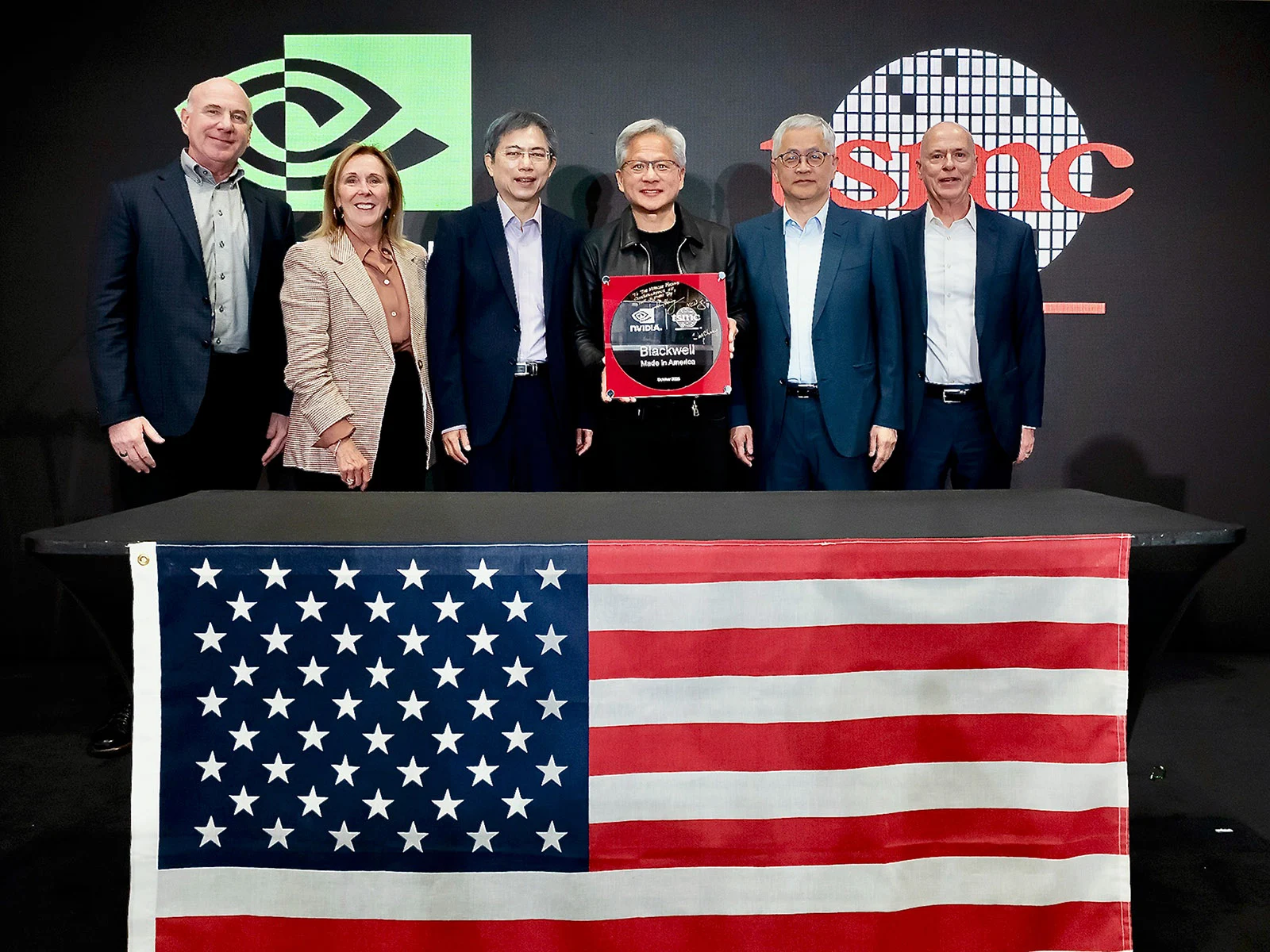
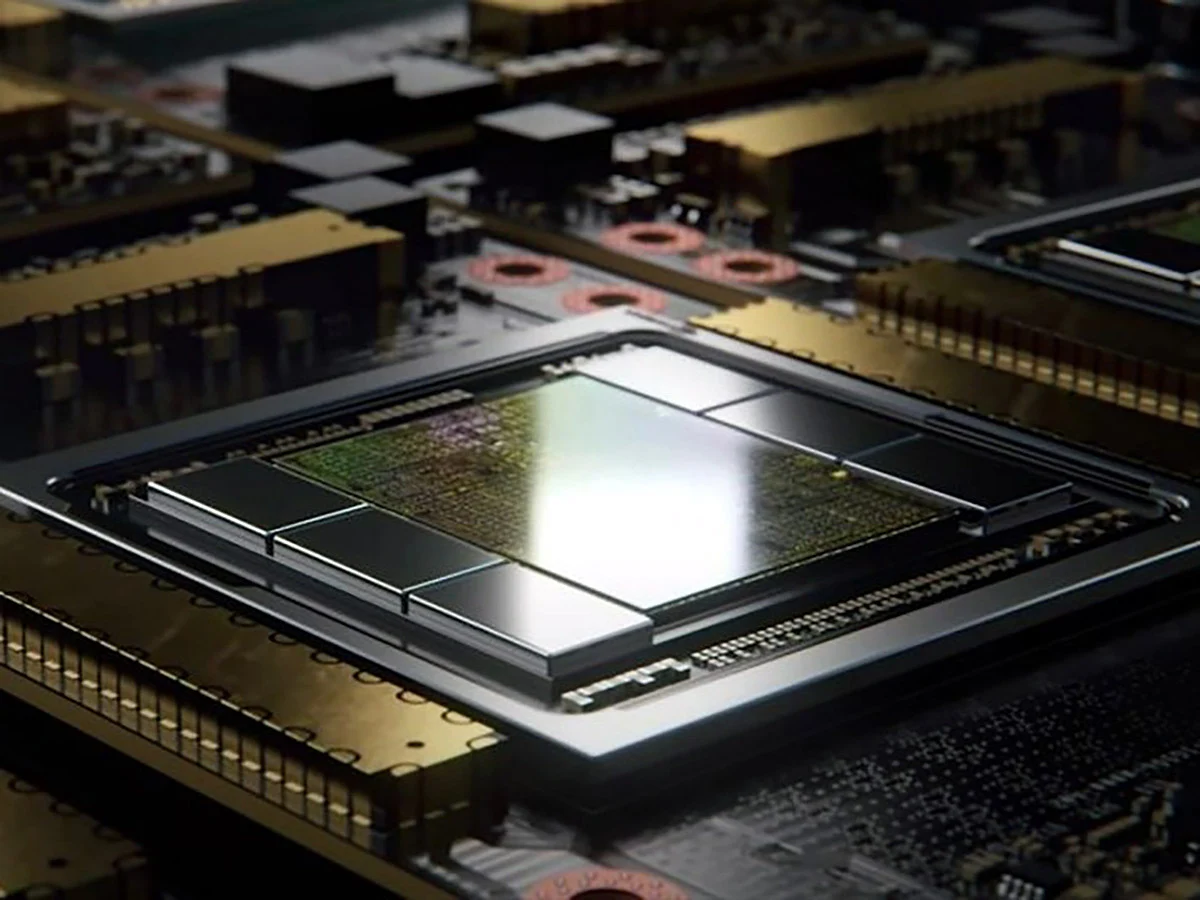
    Nvidia is now making state-of-the-art AI chips using its new Blackwell architecture in the US. The first wafers made in America meant for Blackwell tapeouts have been produced at TSMC’s facility in Arizona.

    Keynote Ceremony

    Jensen Huang, Nvidia’s CEO, celebrated this achievement with a keynote speech in front of TSMC employees at the American foundry. He also signed a Blackwell wafer alongside Wang, TSMC’s VP of operations.

    Major Investment

    TSMC has made a significant investment in its initial chip factory located in the US, committing $165 billion so far, with more funds to come. Although the Arizona plant will only fulfill a small part of the processor requirements for US companies, the ability to create the most advanced AI chips highlights its strategic role.

    The US is working to create a domestic chip supply chain to gain more independence in AI data processing, and the first Blackwell wafers made in Arizona showcase that its new onshoring strategy is yielding results. Huang stated, “this is a historic moment for several reasons.”

    Historic Moment

    This marks the first time in recent US history that the most crucial chip is being produced domestically by the top-notch fab, TSMC, in America. This aligns with President Trump’s vision for reindustrialization—bringing manufacturing back to the US, generating jobs, and emphasizing that this sector is the most critical manufacturing industry and technology sector worldwide.

    TSMC is clearly proud of its achievements as well. It took just a few years from beginning work on the Arizona foundry to producing cutting-edge AI chips there, utilizing the architecture that drives popular gaming cards like the Asus RTX 5070 Ti, which is currently on sale for 15% off on Amazon. The US encouraged TSMC to invest in Intel, but ultimately, it opted to have TSMC nearly double its chip production investment in the US to avoid import tariffs.

    Collaborations in AI Chip Production

    In addition to TSMC, several other leading semiconductor companies have struck deals with American firms to manufacture AI chips within the US. Tesla recently joined forces with Samsung to create the upcoming AI6 chips for autonomous driving and Optimus robots at its Texas factory. Unlike TSMC’s Nvidia Blackwell production, which is being taped out in Arizona on a 4nm node, Samsung’s AI chips for Tesla will be manufactured in Texas using a next-gen 2nm process.

    Source:
    Link