Tag: AI models

  • OpenAI GPT 5.5 and 5.5 Pro Launch with $25,000 Bounty

    OpenAI GPT 5.5 and 5.5 Pro Launch with $25,000 Bounty

    Key Takeaway

    1. OpenAI’s GPT 5.5 and 5.5 Pro are more advanced and capable than previous models and competitors, but carry increased security risks.
    2. The new models show notable improvements in solving complex problems, but also pose heightened risks in the creation of biological threats and hacking tools.
    3. OpenAI has implemented safeguards and launched a bio bug bounty program to identify vulnerabilities, highlighting concerns over potential misuse.
    4. Competitors like Anthropic’s Claude are also developing highly capable, but potentially more insecure, AI models, impacting cybersecurity considerations.
    5. OpenAI offers options for local deployment of older open-source GPT models for users with suitable hardware.

    OpenAI Unveils New GPT 5.5 and 5.5 Pro Models

    OpenAI recently announced their newest AI models, GPT 5.5 and GPT 5.5 Pro, which power the ChatGPT AI chatbot and its API offerings. These models are more smart than their previous version GPT 5.4 and also outdo other AI models like Claude Opus 4.7 and Gemini 3.1 Pro. But,, the leap in technology also brings more risks along with its advantages. Both GPT 5.5 variants are available for subscribers of ChatGPT, with API access to follow shortly.

    Enhanced Capabilities and Risks

    With the latest updates, these AI models show marked improvements in tackling tough questions from academics and in using computers for complex tasks. A downfall for these advanced models is that they also have a higher chance of creating sensitive or harmful content. In terms of security, they can generate more insecure code than before. This raises concerns, especially since other AI systems, like Claude models, have been known to produce vulnerable code more frequently. The advancements mean that while the AI is smarter and more useful, it also needs tighter controls to prevent misuse.

    Security Threats and Bio Safety Tests

    Because these models are considered high risk, OpenAI has added new safety measures. Still, they’re going a step further with a special Bio Bug Bounty program. They’re offering $25,000 for anyone who can successfully hack GPT-5.5 in a biosafety challenge called Codex Desktop. This challenge involves answering five questions related to biological safety and security. Interested hackers or researchers have until June 22, 2026, to submit their efforts for this bounty.

    Concerns Over National Security

    Meanwhile, the company Anthropic has a model called Claude Mythos that can find cybersecurity vulnerabilities so well that they won’t even release it to the public because of national security risks. Their other model, Claude Code, which is also publicly accessible, has already been used to crack open the FreeBSD operating system. These developments highlight the fine line between innovation and potential threats within AI technology.

    Using GPT Locally

    For those who want to run AI models on their own computers, an older, open-source version called GPT-OSS is available on Hugging Face. You will need a high-performance Nvidia GPU, like one with 16 GB of memory or more, such as the 5090 GPU, to run it smoothly. This option allows users to experiment with AI models without relying solely on online services and helps keep up with fast-changing AI tech advancements.


  • Manus 1.5 AI: Build Full-Stack Web Apps Through Chat

    Manus 1.5 AI: Build Full-Stack Web Apps Through Chat

    Key Takeaways

    1. Improved Efficiency: The new models reduce task completion time from 15 minutes and 36 seconds to 3 minutes and 43 seconds, with a 15% increase in task quality.

    2. Advanced Features: Manus-1.5 can create web apps from scratch and includes features like event-driven notifications, user authentication, traffic analytics, and AI integration for text and image generation.

    3. Collaboration Tools: New features facilitate teamwork by managing files during shared AI chat sessions.

    4. Pricing Options: Manus-1.5-Lite is free, while Manus-1.5 is subscription-based, starting at $192 per year.

    5. Learning Resources: Users can find books on how to utilize Manus available on Amazon.


    Manus has unveiled the Manus-1.5 and Manus-1.5-Lite, which are the newest versions of its AI systems.

    Improved Efficiency

    These models have been fine-tuned to provide responses much faster, cutting down the average time to complete tasks from 15 minutes and 36 seconds earlier this year to just 3 minutes and 43 seconds, as stated by the company. While the exact methods used remain a secret, there’s been a reported 15 percent enhancement in the quality of tasks performed.

    Advanced Features

    The AI systems are built to be practical in real-life applications, with the newest models capable of creating web apps from scratch through chat interactions. Manus claims that these features include event-driven notifications, user authentication, traffic analytics, and comprehensive full-stack scaffolding. A key highlight of Manus 1.5 is its ability to integrate AIs into applications, which includes functions for generating text and images.

    Collaboration Tools

    To facilitate teamwork, users can utilize the new Collaboration and Library features that help manage files during shared AI chat sessions.

    Manus-1.5-Lite is offered at no cost, while Manus-1.5 is exclusive to subscribers, with pricing starting at $192 per year.

  • Judge Halts Antropic’s $1.5B Settlement in AI Piracy Case

    Judge Halts Antropic’s $1.5B Settlement in AI Piracy Case

    Key Takeaways

    1. U.S. District Judge William Alsup expressed concerns about a $1.5 billion ruling against AI firm Anthropic for using writers’ works without permission.
    2. The ruling requires a payment of approximately $3,000 for each of 465,000 affected works, raising questions about its fairness and effectiveness.
    3. Alsup requested a detailed list of pirated books to avoid complications from potential new lawsuits.
    4. Industry leaders criticized the court’s understanding of the publishing sector and the potential administrative burden on authors and publishers.
    5. The lawsuit against Anthropic, which has backing from Google and Amazon, is considered a significant moment in U.S. copyright litigation history.


    U.S. District Judge William Alsup raised alarms regarding the recent decision against the AI firm Anthropic. This ruling mandated a payment of $1.5 billion to writers who claimed their published works were used without permission to train AI systems.

    Concerns Raised by Alsup

    According to AP reports, Alsup found the ruling “full of pitfalls.” He set another hearing for September 25 to re-evaluate the situation. The decision, which allocates about $3,000 for each of roughly 465,000 affected titles, faced intense scrutiny. Alsup requested a “drop-dead list” detailing the total number of pirated books by September 15 to prevent the number from increasing due to potential new lawsuits “emerging from the shadows.”

    Industry Reactions

    Maria Pallante, the leader of the Association of American Publishers and the Author’s Guild, told Reuters that Alsup’s ruling showed a “lack of understanding” about the publishing sector.

    “It’s vital that the total number of works in the settlement is finalized,” Pallante emphasized. “The Court’s hesitation to provide the parties with time for this — without any reasoning — is concerning.”

    Criticism of the Court’s Approach

    Mary Rasenberger, CEO of the Author’s Guild, expressed her “shock” over the court’s casual suggestion. She accused the groups involved of “acting behind the scenes in ways that could pressure authors,” which contradicts their proposed role as informational advisors.

    “Pallante added that the Court appears to be imagining a claims process that would be administratively burdensome, making it unmanageable for the class members, which could lead authors and publishers into years of additional litigation.”

    Anthropic, which has backing from Google and Amazon, faced a lawsuit last year from authors who contended that the company had downloaded and utilized pirated versions of their works to develop its Claude AI models. The settlement is thought to be the largest “publicly reported recovery in the history of U.S. copyright litigation.”

    Source:
    Link


  • Microsoft Explores Alternatives to OpenAI for 365 Copilot

    Microsoft Explores Alternatives to OpenAI for 365 Copilot

    OpenAI’s GPT models have been a key focus for Microsoft within its 365 Copilot enterprise offerings. Nevertheless, it seems that Microsoft is looking to expand its options and integrate additional models to enhance its AI services.

    Shifting Strategies

    According to Reuters, Microsoft is aiming to lessen its dependency on OpenAI’s models “because of worries regarding cost and speed for enterprise clients.” To improve the speed and performance of Copilot for businesses, Microsoft is tailoring several open-weight models.

    Copilot Features

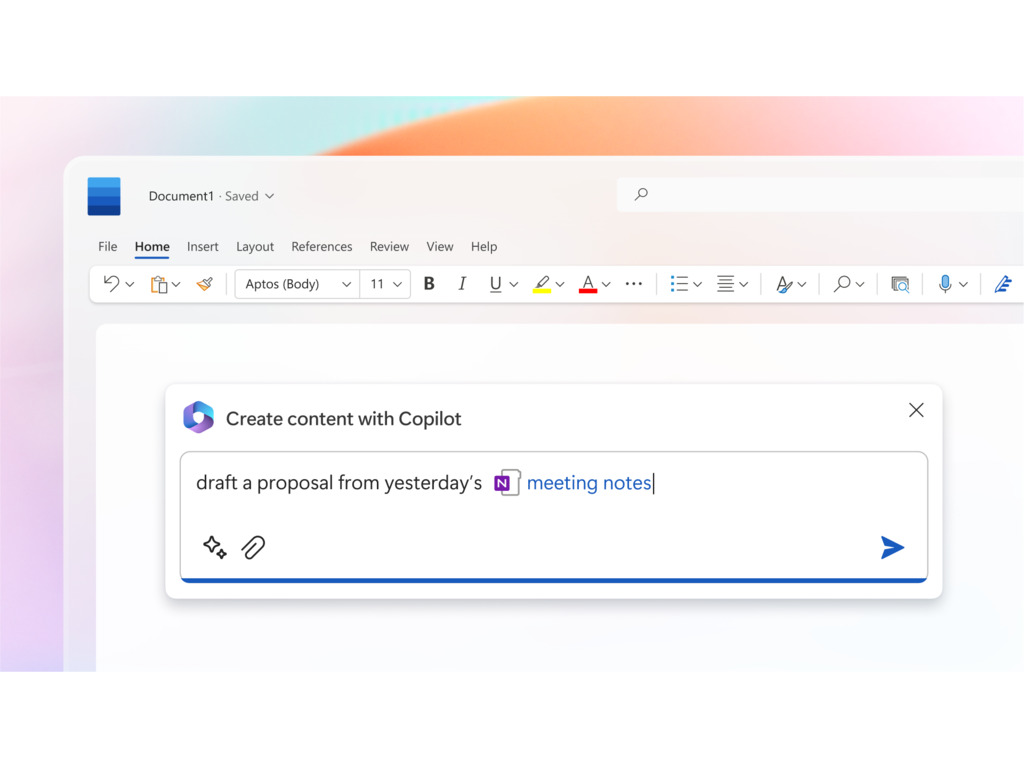
    Microsoft 365 Copilot serves as the company’s premier AI assistant, incorporated into a range of 365 applications like Word, Excel, PowerPoint, Outlook, Teams, and others. It is capable of providing contextual answers, assisting with drafts, and summarizing documents effectively.

    Future Plans

    The organization is keen on making Copilot’s AI more affordable to operate and may “transfer these savings to the final customer.” Microsoft’s subsidiary, Github, currently utilizes models from Anthropic and Google alongside OpenAI, while the tech giant from Redmond also offers a blend of internal models with GPT in the consumer version of Copilot.

    When approached for a statement, a Microsoft representative informed Reuters that the firm uses “a variety of models from OpenAI and Microsoft based on the specific product and user experience.” The representative further mentioned that OpenAI remains a partner for advanced models.

    Source: Link