
Key Takeaways
1. Shift to Automation: Amazon plans to automate 75% of its operational tasks, aiming for significant efficiency and cost savings of about $14 billion from 2025 to 2027.
2. Shreveport Model: The Shreveport, Louisiana facility serves as a prototype for automation, using 1,000 robots and employing 25% fewer workers than similar sites.
3. Expansion Plans: Amazon intends to implement the Shreveport model in 40 additional logistics centers by the end of 2027, reducing workforce needs through natural attrition.
4. Job Replacement Concerns: The move towards automation is leading to debates about job losses, with experts warning that Amazon may become a net job destroyer.
5. Public Relations Strategy: Amazon is framing its transition as a shift towards “advanced technology” rather than explicitly mentioning automation and AI, aiming to manage public perception.
The current shift in technology within the logistics sector is compelling numerous firms to rethink their workforce strategies. As per detailed insights from the New York Times, Amazon is gearing up to restrict its employee growth in the next few years. While the e-commerce giant anticipates its sales volume to double by 2033, its strategic aim is to replace over 600,000 jobs in the US by leveraging cutting-edge technology and automation.
Focus on Automation and Efficiency
The automation in Amazon’s fulfillment centers is expected to be the main area of focus, with the goal of automating 75% of its overall operational tasks. This extensive digital shift is projected to yield substantial efficiency improvements and notable cost reductions, with internal evaluations suggesting about $14 billion in savings from 2025 to 2027. This translates to roughly $0.35 less in fulfillment expenses for each item delivered.
Shreveport as a Model
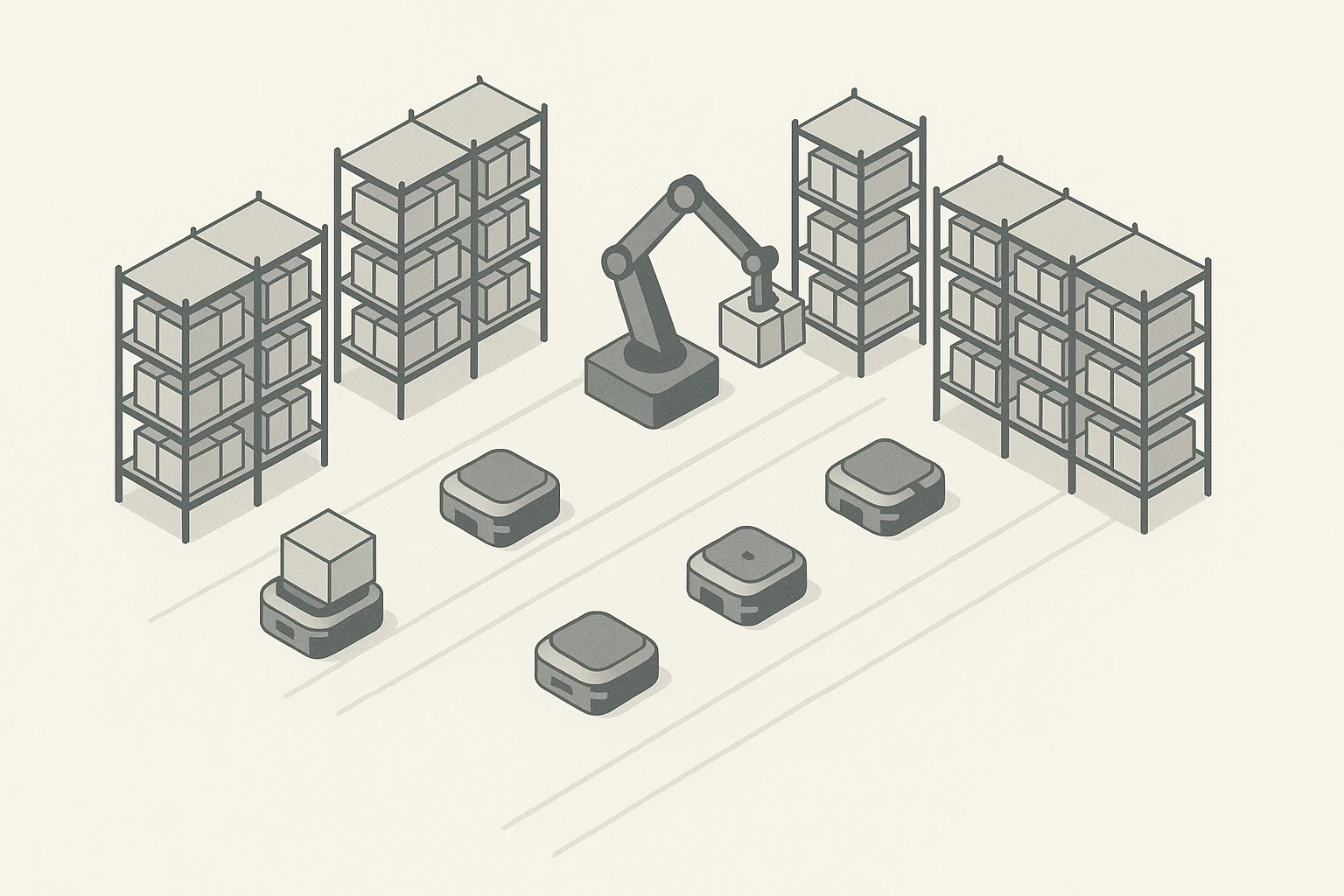
The Shreveport, Louisiana facility is set to be a model for this automated future. Referred to as the Shreveport model, this warehouse currently operates with a thousand robots and has 25% fewer employees compared to similar non-automated sites. The planned addition of more cobots (collaborative robots) is expected to further decrease the need for human workers, leading to greater reductions in the workforce.
By the end of 2027, Amazon intends to implement the Shreveport model in around 40 more logistics centers. Facilities that are only a few years old, such as those in Stone Mountain, Georgia, are also being adapted to fit the new robotics framework. An internal analysis for Stone Mountain indicates that it may need as many as 1,200 fewer employees after the transition. The company aims to achieve this reduction mainly through natural attrition, effectively instituting a hiring freeze for standard warehouse roles. The remaining positions will shift towards more skilled technical roles, like mechatronics, but the overall number of required staff is projected to decline sharply.
Debate on Job Impact
The scale of job replacement by AI is sparking significant discussions. Amazon has reacted by characterizing the documents as not fully representative and highlighting the emergence of new, more challenging positions. However, the leaked documents indicate a focused public relations approach, avoiding the explicit use of terms like “automation” and “AI” and opting for “advanced technology” to shape public opinion.
Daron Acemoglu, an economics expert at MIT, forecasts that if these plans are fully executed, the company, which was once seen as a major job creator, could turn into a net job destroyer.

Leave a Reply