
Tag: automation

  • Amazon Plans to Cut 600,000 Jobs Using AI and Robotics

    Amazon Plans to Cut 600,000 Jobs Using AI and Robotics

    Key Takeaways

    1. Shift to Automation: Amazon plans to automate 75% of its operational tasks, aiming for significant efficiency and cost savings of about $14 billion from 2025 to 2027.

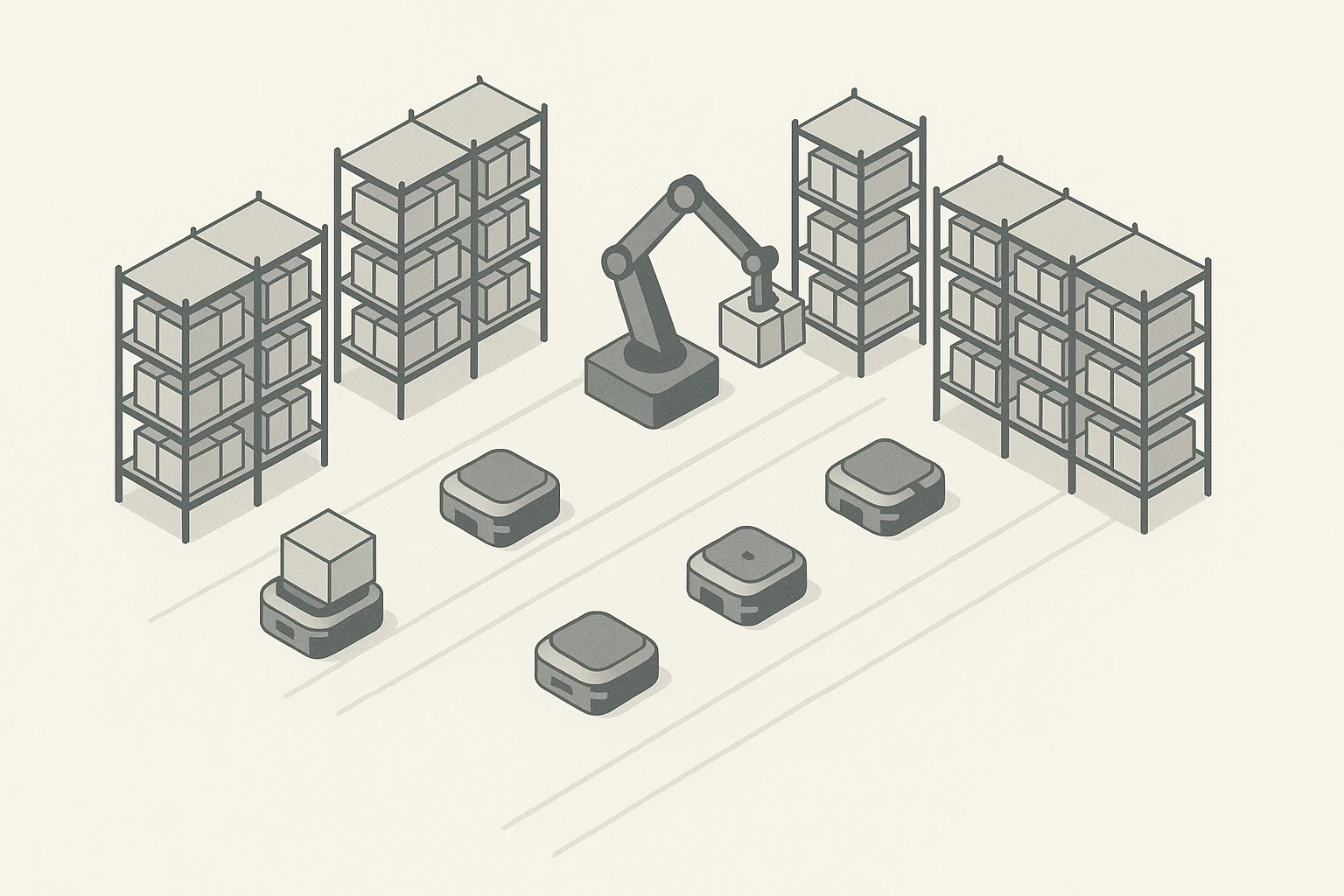
    2. Shreveport Model: The Shreveport, Louisiana facility serves as a prototype for automation, using 1,000 robots and employing 25% fewer workers than similar sites.

    3. Expansion Plans: Amazon intends to implement the Shreveport model in 40 additional logistics centers by the end of 2027, reducing workforce needs through natural attrition.

    4. Job Replacement Concerns: The move towards automation is leading to debates about job losses, with experts warning that Amazon may become a net job destroyer.

    5. Public Relations Strategy: Amazon is framing its transition as a shift towards “advanced technology” rather than explicitly mentioning automation and AI, aiming to manage public perception.


    The current shift in technology within the logistics sector is compelling numerous firms to rethink their workforce strategies. As per detailed insights from the New York Times, Amazon is gearing up to restrict its employee growth in the next few years. While the e-commerce giant anticipates its sales volume to double by 2033, its strategic aim is to replace over 600,000 jobs in the US by leveraging cutting-edge technology and automation.

    Focus on Automation and Efficiency

    The automation in Amazon’s fulfillment centers is expected to be the main area of focus, with the goal of automating 75% of its overall operational tasks. This extensive digital shift is projected to yield substantial efficiency improvements and notable cost reductions, with internal evaluations suggesting about $14 billion in savings from 2025 to 2027. This translates to roughly $0.35 less in fulfillment expenses for each item delivered.

    Shreveport as a Model

    The Shreveport, Louisiana facility is set to be a model for this automated future. Referred to as the Shreveport model, this warehouse currently operates with a thousand robots and has 25% fewer employees compared to similar non-automated sites. The planned addition of more cobots (collaborative robots) is expected to further decrease the need for human workers, leading to greater reductions in the workforce.

    By the end of 2027, Amazon intends to implement the Shreveport model in around 40 more logistics centers. Facilities that are only a few years old, such as those in Stone Mountain, Georgia, are also being adapted to fit the new robotics framework. An internal analysis for Stone Mountain indicates that it may need as many as 1,200 fewer employees after the transition. The company aims to achieve this reduction mainly through natural attrition, effectively instituting a hiring freeze for standard warehouse roles. The remaining positions will shift towards more skilled technical roles, like mechatronics, but the overall number of required staff is projected to decline sharply.

    Debate on Job Impact

    The scale of job replacement by AI is sparking significant discussions. Amazon has reacted by characterizing the documents as not fully representative and highlighting the emergence of new, more challenging positions. However, the leaked documents indicate a focused public relations approach, avoiding the explicit use of terms like “automation” and “AI” and opting for “advanced technology” to shape public opinion.

    Daron Acemoglu, an economics expert at MIT, forecasts that if these plans are fully executed, the company, which was once seen as a major job creator, could turn into a net job destroyer.


  • Study Warns 50% of Jobs at Risk in Major Labor Market Shift

    Study Warns 50% of Jobs at Risk in Major Labor Market Shift

    Key Takeaways

    1. By 2040, AI and robotics could potentially take over half of the jobs in Germany, according to a survey conducted by the Bonn Business Academy and the Diplomatic Council.
    2. 69% of surveyed leaders expect AI to become as common in workplaces as Microsoft Office by 2027, with varying predictions for the adoption of humanoid robots.
    3. 77% of participants are concerned that automation may eliminate many jobs, especially in routine fields like production, logistics, and administration.
    4. Despite fears of job loss, 45% of respondents see benefits in reduced physically demanding tasks, and 64% believe AI will boost productivity and reduce costs.
    5. There is a possibility that AI could create new jobs to balance the loss, but there are concerns about whether this transition will happen quickly enough to prevent disruption.


    Is AI a threat to jobs or a force for advancement? This question has sparked intense discussions lately. A new survey by the Bonn Business Academy (BWA) in partnership with the Diplomatic Council (DC) reveals some concerning insights: by the year 2040, artificial intelligence and robotics could take over half of the jobs currently available in Germany. These results will be shared at the 8th Ordinary Trade Union Congress of the IGBCE, scheduled from October 19 to 24 in Hanover.

    Survey Insights

    The research, led by Harald Müller, who is the Managing Director of BWA and Co-Chair of the Real-World AI Forum at the Diplomatic Council, involved responses from 150 leaders in large and medium-sized firms, along with trade union members. The aim was to explore the prospects, dangers, and timelines of the technological shift prompted by AI and humanoid robots.

    As per the survey, 69% of participants predict that by 2027, artificial intelligence will be as ubiquitous in workplaces as Microsoft Office is now. In the manufacturing sector, 35% foresee a significant AI presence by 2030, while 55% believe this won’t occur until after 2040. When it comes to humanoid robots, the forecasts are even more reserved: just 18% think they will be widely used by 2030, while 40% expect this to happen closer to 2040. Almost half – 46% – think that broad acceptance before 2050 is unrealistic.

    Job Displacement vs. Benefits

    A significant majority of those surveyed – 77% – worry that automation could eliminate up to half of all jobs by 2040, particularly affecting routine positions in production, logistics, and administration. Nonetheless, 45% see potential upsides, like a decrease in physically taxing or monotonous tasks. Simultaneously, 64% of employers anticipate that AI and robotics will enhance productivity and cut costs.

    On another note, there are studies indicating that AI might not greatly disrupt the job market. In fact, AI and robotics may lead to the creation of new jobs and fields that could balance out the loss of traditional employment. The key question, though, is if this change will occur swiftly enough to mitigate the anticipated upheavals.

    Conclusion

    In conclusion, the future of work in the age of AI remains uncertain. As technology evolves, so too will the landscape of employment. The conversation continues as we seek to understand the full impact of these advancements on our workforce and economy.

    Source:
    Link


  • AI Automation’s Impact on Knowledge Jobs: Microsoft Copilot Study

    AI Automation’s Impact on Knowledge Jobs: Microsoft Copilot Study

    Key Takeaways

    1. Generative AI has significant implications for jobs involving communication and information processing, impacting professions like journalism, technical writing, and translation.
    2. Jobs that require physical tasks or interpersonal relations, such as caregiving and skilled trades, are less likely to be affected by automation.
    3. The current wave of automation is different from past technological shifts, affecting higher-skilled, knowledge-based professions rather than just simple, routine tasks.
    4. Companies and workers must integrate AI tools into workflows and focus on training to stay competitive in the evolving job market.
    5. A strategic approach to human resources and organizational planning is essential for adapting to the changes brought by generative AI.


    In a new study titled “Working with AI: Measuring the Occupational Implications of Generative AI,” Microsoft Research looked at more than 200,000 anonymized conversations with its AI assistant, Bing Copilot. The study aimed to evaluate the real potential for automation, relying on actual tasks performed with AI support rather than just theoretical scenarios. Findings indicate that tasks involving communication and information processing strongly align with the capabilities of generative AI.

    Impact on Various Professions

    Microsoft’s research points out that this trend particularly impacts certain professional groups, including journalists, technical writers, mathematicians, and translators. In these fields, researchers found a significant link between common job responsibilities and the functionalities offered by AI.

    A notable statement from the publication asserts:

    “Jobs with high-information tasks and intensive communication are more susceptible to AI-driven automation.”

    Jobs Less Affected by Automation

    On the other hand, roles that involve physical tasks or interpersonal relations—like caregiving, skilled trades, and transportation—are seen as being at much lower risk. These jobs demand human interaction, a physical presence, or actions tailored to specific situations, which generative models cannot easily imitate.

    Occupations facing the least threat include nurses, massage therapists, and bricklayers. These professions require physical presence, specialized skills, and direct contact with people.

    The Shift in Automation

    Conversely, translators, interpreters, journalists, and mathematicians are more significantly impacted by the automation brought on by generative AI. Their work mostly revolves around intensive information processing and communication activities, which are increasingly being complemented or even replaced by AI systems.

    The study emphasizes that the current wave of automation is structurally different from past technological shifts. Unlike previous advancements that mainly targeted simple, routine tasks, today’s transformation is affecting higher-skilled, knowledge-based professions.

    Call to Action for Companies and Workers

    There is a pressing call for action among businesses and workers alike. The integration of AI tools into existing workflows, along with training and strategic changes, is becoming crucial for success. Staying competitive now requires not just technical skills but also foresight in organizational planning and a long-term approach to human resources strategies.

    Source:
    Link