Key Takeaways
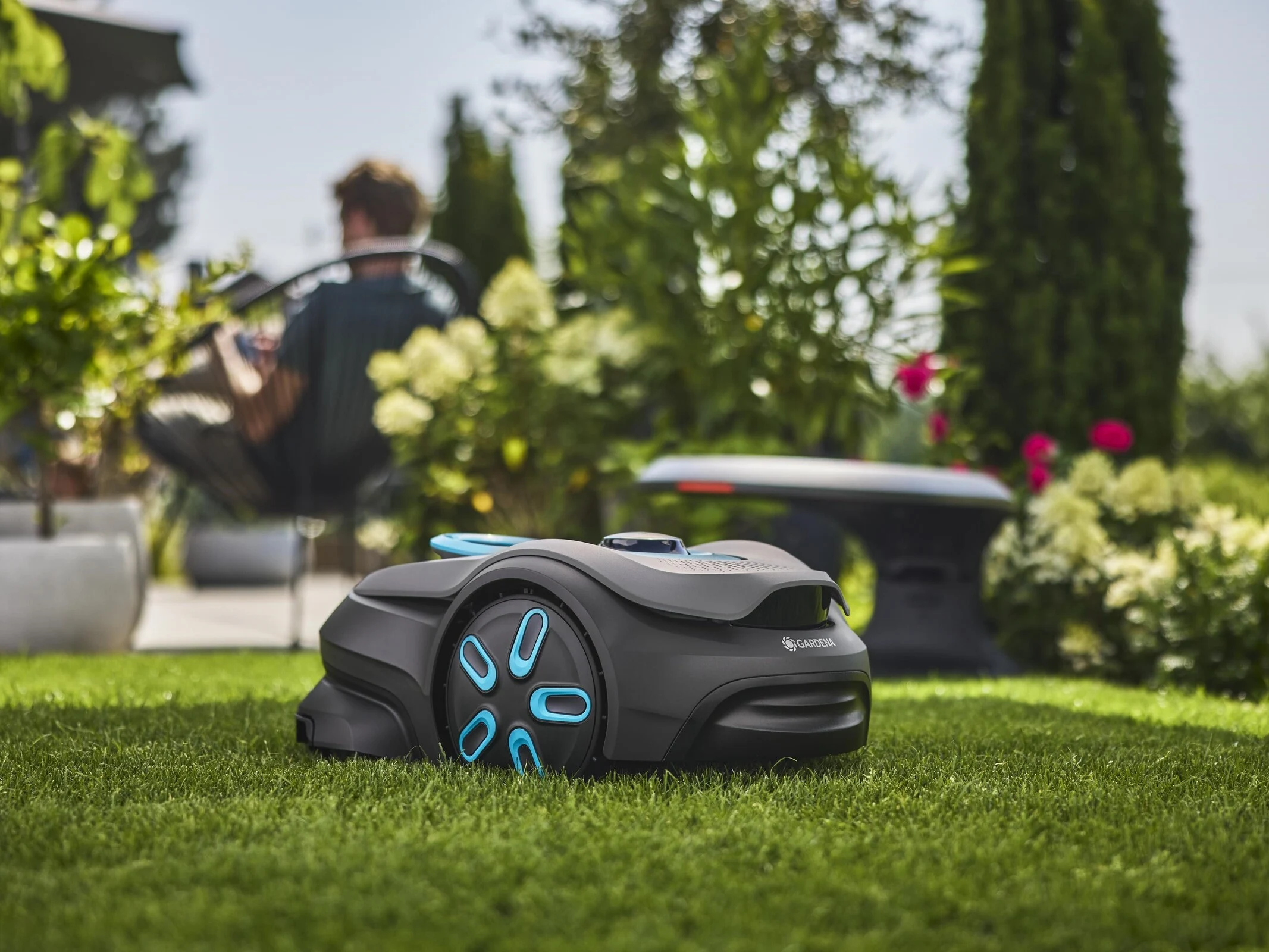
1. Gardena’s Smart Sileno Sense robotic lawn mower comes in two models for areas up to 400 m² and 600 m², respectively.
2. The mower uses GPS-RTK and AI-based optical sensors for navigation, eliminating the need for boundary wires.
3. Advanced AI technology allows the mower to detect and avoid various obstacles while recognizing different lawn edges.
4. Users can customize cutting height (25 to 45 mm) and mowing frequency based on grass growth, with easy cleaning using a garden hose.
5. The mower can handle slopes up to 25% and features an integrated SIM card for continuous mobile connectivity.
Gardena has introduced a new robotic lawn mower called the Gardena Smart Sileno Sense, which is available in two different models. These models vary in their recommended maximum mowing areas; one can handle up to 400 m², while the other can manage up to 600 m². Notably, neither model requires a boundary wire, using instead GPS-RTK and AI-based optical sensors for navigation. During the initial run, the mower scans the garden—specifically the edges of the lawn—and “remembers” the layout. For the AI processing, a Jetson module from Nvidia is utilized.
Advanced Obstacle Detection
With the help of AI, the optical sensor technology of the Gardena Smart Sileno Sense is capable of distinguishing between various obstacles. This means that the mower can navigate over leaves but will avoid branches or toys. It can also recognize different types of lawn edges, like a wall compared to a flower bed, employing the trim-to-edge feature to ensure grass is cut right up to the edge.
Customizable Features
The mower allows users to adjust the cutting height between 25 and 45 millimeters, with mowing frequency tailored to the lawn’s growth rate. Cleaning the device appears to be quite simple, as users can just use a garden hose for maintenance. Moreover, the mower’s blade disc, which features three blades, enables it to tackle slopes up to 25%. An integrated SIM card offers a continuous free mobile network connection.
Source:
Link