Category: Artificial intelligence

  • Subscribers Prefer ChatGPT Over Google as Default Web Gateway

    Subscribers Prefer ChatGPT Over Google as Default Web Gateway

    Key Takeaways

    1. AI services are becoming essential in daily digital life, with many users making ChatGPT their main browser homepage, reducing reliance on traditional search engines.
    2. On average, AI subscribers spend around $66 monthly on AI tools, which is close to their average budget of $72, leading to concerns about affordability.
    3. Over 60% of users prioritize AI subscriptions over video streaming, indicating a shift in consumer spending towards productivity tools.
    4. Users are engaging in “subscription cycling” to manage costs, signing up for services temporarily instead of maintaining ongoing subscriptions.
    5. The landscape of AI is evolving into a complex ecosystem, with Bango’s “Super Bundling” strategy aimed at enhancing customer retention and addressing commercial interests.


    British payment company Bango, along with research group 3Gem, has shared a detailed study about the growing use of paid AI services. Information gathered from 2,000 US users who pay for such services in October 2025 shows that AI technology is now more than just a trendy gadget; it’s becoming a vital part of our digital lives. This change is especially seen in how people search online: a large number of ChatGPT users have made the chatbot their main browser homepage, slowly pushing aside traditional search engines like Google, Bing, and DuckDuckGo. On smartphones, AI widgets now take center stage on the home screen, making the usual search bar less significant.

    The Financial Impact of AI Subscriptions

    However, this reliance comes with a price tag. On average, AI subscribers shell out 66 USD every month for their collection of tools. This amount often surpasses what they spend on video streaming, getting close to their financial limits. With the average budget reported by users being only 72 USD, there’s not much flexibility for price hikes. Interestingly, one-third of those surveyed consider the costs too high, putting pressure on service providers to either enhance value or offer more affordable options for new users.

    Competition in the Subscription Landscape

    The rise of artificial intelligence is igniting a tough competition in the subscription market. More than 60% of participants in the study stated they would rather cancel their video streaming subscriptions than give up their AI assistants, highlighting that productivity is prioritized over entertainment. To keep their spending in check, many users have started practicing “subscription cycling,” where they sign up for services momentarily and cancel them immediately, instead of letting them become ongoing expenses.

    Many users dream of a “super-app” that answers questions and simplifies shopping for products and services directly. However, if shopping through AI becomes commonplace, it could jeopardize the impartiality of these assistants. Should AI models transition into marketplaces, there could be financial reasons to favor certain services or products.

    The Evolution of AI Services

    Moreover, Bango’s “Super Bundling” approach is not merely about convenience. It is also a strategic method to keep customers from frequently switching platforms, aiming for long-term retention. The landscape of AI is slowly shifting from being a neutral instrument into a complex ecosystem with significant commercial interests.

    Source:
    Link


  • Nvidia Surpasses Apple as TSMC’s Top Customer in 2025

    Nvidia Surpasses Apple as TSMC’s Top Customer in 2025

    Key Takeaways

    1. Nvidia has become the world’s largest company with a market valuation of approximately $4.3 trillion, driven by demand for Data Center equipment from AI firms.
    2. In 2025, Nvidia surpassed Apple to become TSMC’s top client, significantly increasing its revenue share from 11% to more than Apple’s 25%.
    3. Nvidia’s Data Center revenue in Q3 2025 exceeded Apple’s iPhone revenue for the first time.
    4. TSMC may soon prioritize Nvidia over Apple, possibly offering Nvidia the same privileges Apple previously enjoyed.
    5. Despite Apple’s success with the iPhone 17 series, Nvidia’s strong growth trajectory is expected to influence TSMC’s future strategies.


    Thanks to an unmatched surge in demand for Data Center equipment from AI firms, Nvidia has now become the world’s biggest company with a market valuation of approximately $4.3 trillion. Their growth was especially impressive in 2025, showcasing a 62% Year-over-Year increase in revenue for Q3 FY2026. The Data Center items, particularly the H200, played a pivotal role in driving this revenue surge. Thus, it’s not shocking to learn that Nvidia has reportedly emerged as the largest customer for TSMC, given that its latest Data Center and client GPUs use TSMC’s advanced process nodes.

    Nvidia Surpasses Apple

    In a podcast, Nvidia’s CEO Jensen Huang disclosed that Nvidia has surpassed Apple to become TSMC’s top client in 2025. In 2024, Apple represented about 25% of TSMC’s revenue, while Nvidia made up less than half at 11%. This indicates that in 2025, Nvidia generated more revenue for TSMC than Apple, a claim supported by Nvidia’s record-setting Q3 FY2026 earnings.

    Record-Breaking Revenue

    According to information shared by I/O Fund (cited by Beth Kindig on X), Nvidia’s revenue from Data Centers in Q3 2025 surpassed Apple’s iPhone revenue for the very first time.

    For a considerable time, Apple has received special treatment from TSMC, which included discounts and priority access to the latest process nodes. This was understandable, given that Cupertino’s orders formed a significant part of TSMC’s yearly earnings. With Nvidia now taking over Apple’s position, it is reasonable to anticipate that TSMC will extend the privileges previously exclusive to Apple to Team Green.

    Future Outlook

    Rumors are already circulating that TSMC is urging Apple to agree to a significant price increase. While the accuracy of this information remains uncertain, it seems likely that TSMC will prioritize Nvidia over Apple in the future, especially since Nvidia’s Data Center business shows no signs of slowing down.

    That’s not to suggest that Apple is struggling, as the iPhone 17 series has gained considerable popularity. However, the momentum and anticipated growth of Nvidia will surely be crucial indicators for TSMC moving forward.

    Source:
    Link


  • Amazon Launches Alexa+ on the Web at Alexa.com

    Amazon Launches Alexa+ on the Web at Alexa.com

    Key Takeaways

    1. Amazon has launched Alexa.com, a web-based platform for its Alexa+ AI assistant, allowing users to interact with Alexa through a browser.

    2. Access to Alexa.com is currently limited to US users with an Amazon account, an Alexa+ subscription, and at least one compatible device.

    3. The platform features a chat-style interface that maintains conversation context across devices, enabling seamless transitions between Alexa.com, Echo speakers, and the Alexa mobile app.

    4. Alexa.com integrates with the Amazon ecosystem, allowing users to upload documents, create shopping lists, and connect with grocery delivery services, though some features are still being rolled out.

    5. Alexa+ enhances traditional Alexa capabilities with more conversational interactions and agentic tasks, and is available for $19.99 per month, free for US Prime members.


    Amazon is expanding Alexa’s reach beyond just Echo speakers and Fire TVs. The company has discreetly introduced Alexa.com, a web-based platform for its new Alexa+ AI assistant. This allows users with Early Access to communicate with Alexa through a web browser, similar to how they would use ChatGPT or Google Gemini.

    Access Requirements

    Currently, Alexa.com is part of the Alexa+ Early Access initiative. To utilize this feature, you must have an Amazon account based in the US, access to Alexa+, and at least one compatible device. This includes items like the Amazon Echo Studio, Fire TV, or Fire tablet that are linked to your account. It’s important to note that child profiles are not yet available on the web, and Amazon is limiting access to users in the United States at this time.

    Features and Integration

    Amazon claims that Alexa.com offers the “full power of Alexa+” in a browser setting. The website features a user-friendly chat-style interface where you can:

    Notably, Alexa+ on the web is meant to maintain context across your devices. If you start a conversation on Alexa.com, you can continue it later on an Echo speaker, Fire TV, or through the Alexa mobile app, with the assistant remembering your previous discussions.

    The web application also connects with the broader Amazon ecosystem. Reports indicate that it supports uploading documents and images for Alexa+ to analyze, turning recipes into shopping lists, and connecting with services like Amazon Fresh and Whole Foods for meal planning and grocery delivery. However, some of these features are still being rolled out.

    Limitations and Future Updates

    Alexa.com is still categorized as an Early Access experience and has several limitations worth noting:

    Amazon promises that additional features will be added in the future, presenting the web app as a supplement to Echo devices rather than a complete substitute.

    Alexa+ represents Amazon’s generative AI upgrade to the traditional Alexa assistant. It enables more conversational and multi-step interactions, allowing for “agentic” tasks such as booking services or managing follow-up actions for you. The service is priced at US$19.99 per month, but it comes at no extra charge for US Prime members, according to earlier announcements from Amazon regarding Alexa+.

    With Alexa.com, Amazon is clearly aiming to position Alexa+ as a rival to browser-based AI chatbots like ChatGPT and Google Gemini, capitalizing on its existing user base of over half a billion Alexa-enabled devices. Users can now seamlessly switch between voice on Echo, touch on Fire TV, and keyboard-and-mouse in a browser, all connected to the same assistant and account.

    Source:
    Link


  • SwitchBot AI Hub: Local AI for Quick Smart Home Automation

    SwitchBot AI Hub: Local AI for Quick Smart Home Automation

    Key Takeaways

    1. SwitchBot’s AI Hub is priced at $259 with a 20% discount, but requires a subscription after a one-month trial.
    2. The device features intelligent capabilities like face, pet, and object recognition for real-time camera feeds.
    3. Local VLM automations allow for device control based on recognized objects and activities.
    4. The AI Hub’s performance is rated at 6 TOPS, but is modest compared to NPUs found in modern AMD and Intel chipsets.
    5. It supports local API access, compatibility with Home Assistant, Matter over Bridge, and MQTT, and can connect up to eight 2K cameras.


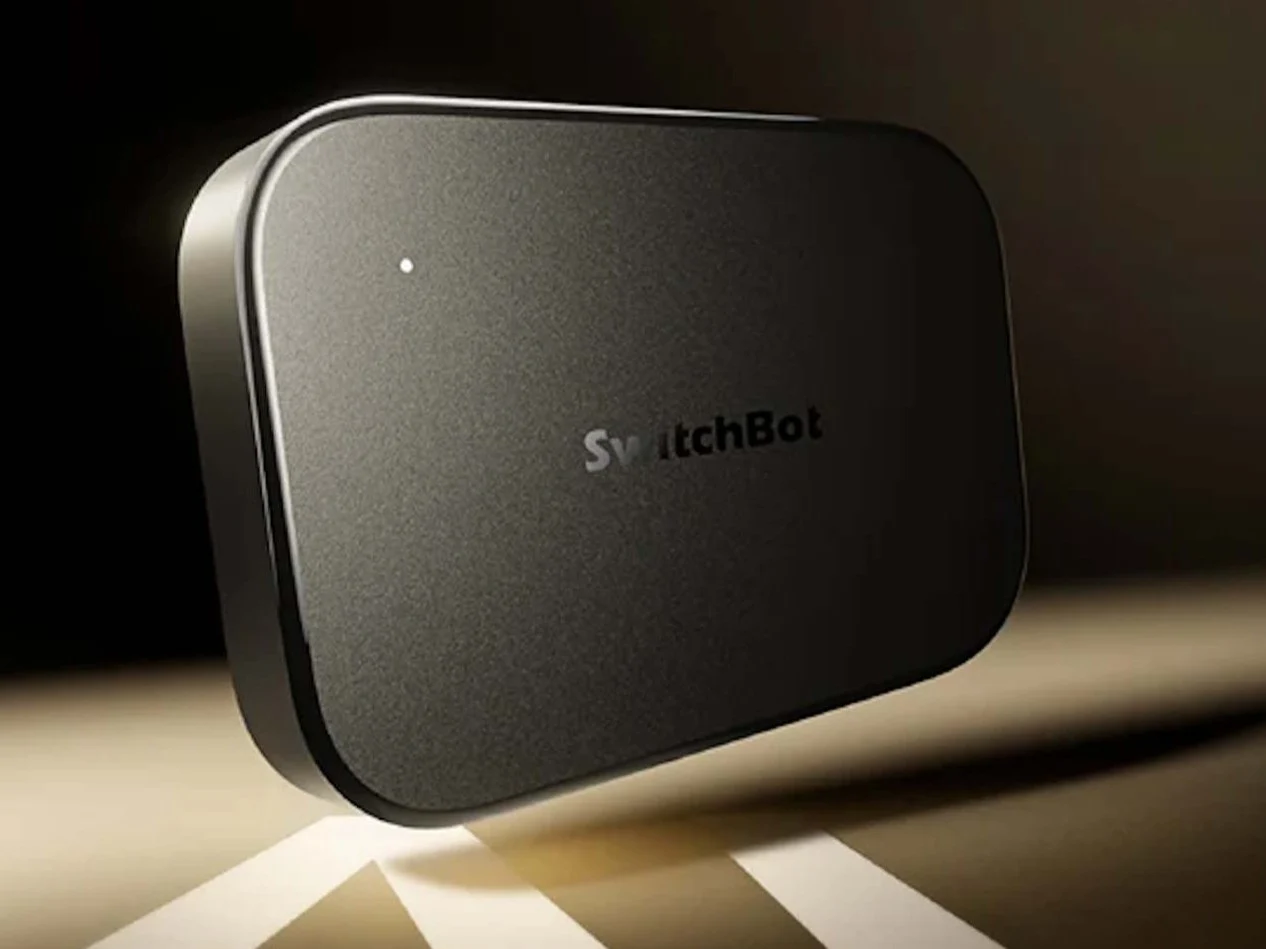
    SwitchBot has introduced a fresh addition to its product range, called the AI Hub. This device is available for purchase at $259, thanks to a 20% discount. The AI Hub aims to enhance smart home capabilities with its Vision Language Model (VLM). After a trial period of one month, users will need to pay subscription fees. Thus, the local AI processing doesn’t really offer a long-term benefit, as it fails to remove the not-so-favored subscription costs.

    Features and Automation

    SwitchBot claims that the AI Hub comes loaded with various intelligent features, like face, pet, and object recognition for real-time camera feeds. It also supports local VLM automations, enabling the control of devices based on recognized objects. For instance, SwitchBot illustrates that the hub can switch on a light when it detects a person lounging on the couch. It can recognize different activities and initiate smart routines based on them. The smart home hub promotes an AI performance of 6 TOPS.

    Comparison with Other NPUs

    When compared to the Neural Processing Units (NPUs) found in modern AMD and Intel chipsets, this performance seems somewhat modest. Nevertheless, local API access is provided, along with compatibility with Home Assistant, Matter over Bridge, and MQTT. Users can connect up to eight 2K cameras at the same time, and videos can be saved on microSD cards or external hard drives.

    SwitchBot

    Source:
    Link


  • Asus Chairman Halts Smartphone Launches to Focus on AI Tech

    Asus Chairman Halts Smartphone Launches to Focus on AI Tech

    Key Takeaways

    1. Asus will stop launching new smartphone models and focus on the AI market.
    2. The company plans to invest in AI robotics and AI glasses for future developments.
    3. Asus experienced a 26.1% revenue growth, mainly from increased AI server installations.
    4. Future laptops may use Snapdragon X processors instead of Qualcomm chips.
    5. Asus acknowledges rising RAM costs and plans to manage price increases through design and supply chain strategies.


    As the AI boom is happening, businesses are quickly changing their focus. Jonney Shih, the chairman of Asus, has confirmed that the company will no longer be launching new smartphones. Instead, the focus will shift to making profits in the highly profitable AI market, particularly in robotics and smart glasses.

    Confirmation of Shift in Strategy

    VideoCardz shared recent statements made by Shih, which were captured by Taiwanese Money UDN. During a gala on January 16th, he stated, “Asus will no longer add new mobile phone models in the future.” Because of this, customers might not see a new Zenfone or ROG Phone for a while. Nonetheless, Shih promised to support the current models throughout this transition.

    Focus on AI Innovations

    The chairman mentioned that the company plans to explore “AI robot & robotics” and “AI glasses.” Looking at its 2025 financial report, the rationale behind this shift is clear. Revenue rose by 26.1% from the previous year, with a significant portion of the growth coming from increased AI server installations.

    Asus has never really taken the lead in the smartphone market with its high-end Zenfone or gaming models. Similarly, smart glasses from tech giants like Google and Apple have also had a hard time achieving widespread acceptance. Regardless, Shih might think that progress in AI technology could turn these gadgets into more mainstream products.

    Future Product Developments

    Inside TW expects that Asus will move away from using Qualcomm chips in its smartphones. Consumers might notice that more of its laptops will be powered by Snapdragon X processors. Qualcomm’s Dragonwing platform will play a vital role in creating more autonomous robots.

    Shih also talked about the memory shortage, acknowledging that current laptops and other items may see price increases. The company plans to rely on “design thinking and supply chain collaboration” to lessen the effect of rising RAM costs. Asus has already increased some MSRPs for laptops and desktops. However, it maintains that it has enough parts on hand to postpone other price hikes.

    Source:
    Link


  • ChatGPT Introduces Ads in Affordable Go Tier for Answer Integrity

    ChatGPT Introduces Ads in Affordable Go Tier for Answer Integrity

    Key Takeaways

    1. OpenAI is launching ChatGPT Go for $8 per month, offering broader access to the GPT-5.2 model with a higher message and file upload limit.
    2. Both the free version and ChatGPT Go will include ads to help keep the service affordable.
    3. Users can avoid ads by subscribing to higher tiers like ChatGPT Plus, Pro, Business, or Enterprise.
    4. OpenAI ensures that advertisers will not access chat content and personal information will not be sold, with options to disable ad personalization.
    5. Ads will be clearly marked and relevant to conversations, with no impact on the quality or bias of ChatGPT’s responses.


    OpenAI is introducing a budget-friendly ChatGPT Go option that gives users broader access to its latest GPT-5.2 model, along with a message and file upload limit that is ten times greater than what the free tier offers.

    Pricing and Advertising Details

    ChatGPT Go will cost $8 per month but will include ads, similar to the free version. This means that OpenAI will start displaying advertisements for both the free and ChatGPT Go tiers, at least for American users. “Ads help us uphold our goal of making AI reachable for everyone, allowing us to keep ChatGPT available at low and free price points,” says OpenAi.

    Subscription Options to Avoid Ads

    For those who wish to avoid seeing advertisements, they will need to subscribe to the pricier tiers such as ChatGPT Plus, Pro, Business, and Enterprise. OpenAI claims that they have effectively separated the ad component from the chatbot interactions and that the responses generated by ChatGPT will not be influenced by the ads.

    To ensure user privacy, OpenAI states that it will prevent advertisers from accessing chat content and will not sell personal information. Users of the free ChatGPT or the new $8 per month Go plan will have the option to disable ad personalization and delete their stored data whenever they want.

    User Experience with Ads

    The advertisements will appear at the bottom of the chat, clearly marked, and will only feature products or services related to the conversation. OpenAI reassures users that the quality of answers will remain unchanged despite the ads, and ChatGPT will continue to avoid bias. The ad-supported version of ChatGPT is set to launch in the US in the coming weeks, providing an opportunity to evaluate OpenAI’s claims regarding integrity.

    Source:
    Link


  • Steam Requires Developers to Disclose In-Game AI Features

    Steam Requires Developers to Disclose In-Game AI Features

    Key Takeaways

    1. Steam’s AI disclosure form now focuses on visible AI-generated content rather than behind-the-scenes AI tools for efficiency.
    2. Developers must indicate if generative AI is used to create game content, including art, audio, narratives, and promotional materials.
    3. A public note explaining the use of generative AI will be displayed on the game’s Steam store page in the “About This Game” section.
    4. Developers must disclose if their game generates AI content during gameplay, which requires additional precautions to manage.
    5. Valve emphasizes the responsibility of developers to prevent inappropriate or illegal AI-generated content, with potential consequences for non-compliance.


    Valve has subtly revised the AI disclosure form for Steam, making it more straightforward concerning what types of AI usage developers need to report on their store pages. The main emphasis of this disclosure is not on how AI enhances development efficiency, but rather on AI-generated content that players can see, hear, or engage with.

    Key Changes in AI Disclosure

    The most significant update is that Steam is now clearly stating that it does not care about AI tools that operate behind the scenes for improving efficiency, such as coding assistants or development applications that use AI in the background. Instead, the new form places its focus on two specific categories of AI usage that developers are required to disclose.

    Generative AI in Game Content

    Firstly, developers must indicate whether generative AI is utilized to produce content that is included with the game. This can encompass items like artwork, audio, narrative elements, localization, descriptions for the store page, or even promotional materials. If a game incorporates AI in this manner, developers must provide a brief note explaining its usage. This note will be publicly displayed on the game’s Steam store page in the “About This Game” section and can be modified whenever needed.

    AI Content During Gameplay

    Secondly, Steam requests that developers disclose if their game generates AI content during gameplay. This is relevant for games that dynamically create images, sounds, text, or other types of content while players are engaged. Since this content cannot be fully reviewed beforehand, Valve emphasizes that developers have added responsibility to implement appropriate safeguards.

    Valve also clarifies that developers must take measures to stop inappropriate or illegal AI-generated content from reaching players. Steam will provide tools allowing players to report issues through the Steam Overlay, but if developers do not effectively manage these systems, their game might be removed from the store.

    Source:
    Link


  • Raspberry Pi 5 Expansion Board Delivers Intel and AMD APU Performance

    Raspberry Pi 5 Expansion Board Delivers Intel and AMD APU Performance

    Key Takeaways

    1. The Raspberry Pi AI HAT+ 2 enhances the AI computing capability of the Raspberry Pi 5 by up to 40 TOPS (INT4) using an NPU for data analysis.
    2. Installation of the expansion board is simple and follows the familiar HAT concept, connecting via screws, GPIO header, and PCIe link.
    3. Compatibility is limited to newer Raspberry Pi models due to the lack of PCIe interface in older versions.
    4. The expansion board is user-friendly, automatically detected by Raspberry Pi OS for easy AI application use.
    5. The Raspberry Pi AI HAT+ 2 is available at specialized stores, priced around $130.


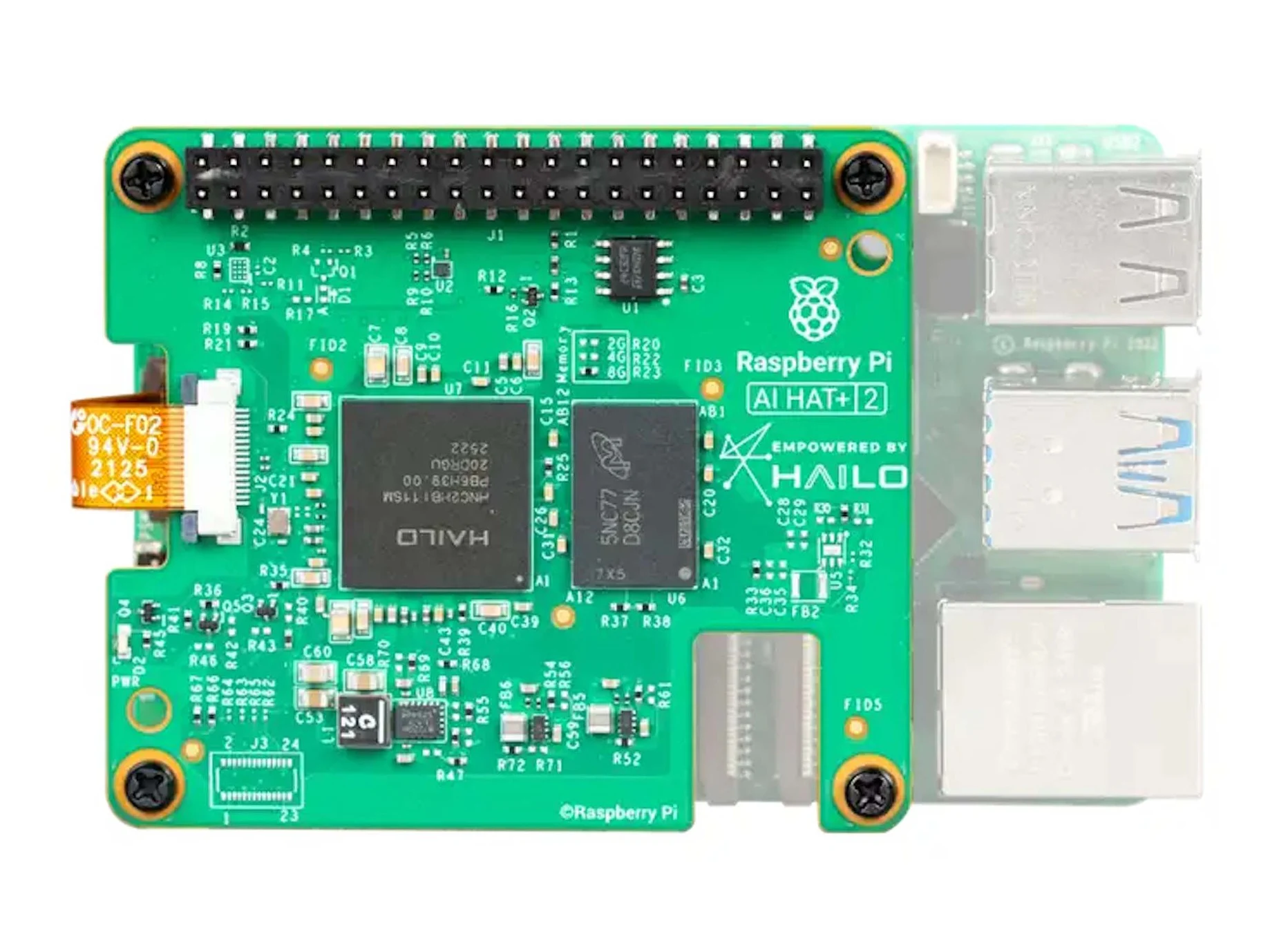
    Single-board computers gain a lot from using an NPU, as it allows for data analysis through neural networks. This can be helpful in recognizing patterns within data or images. The Raspberry Pi AI HAT+ 2 is a recent expansion board designed to enhance the AI computing capability of the Raspberry Pi 5 by as much as 40 TOPS (INT4). It features a well-established NPU, the Hailo-10H, equipped with 8GB of onboard memory. Consequently, running AI models should ideally have minimal or no effect on the overall performance of the single-board computer.

    Easy Installation

    Installing this expansion board is quite simple and adheres to the familiar HAT concept. Users can attach the board to the Raspberry Pi 5 (the 8GB version starts at $105 on Amazon) using screws, then connect it via the GPIO header and a PCIe link. Unfortunately, older models of the Raspberry Pi lack a PCIe interface, restricting compatibility to the newer single-board computers.

    User-Friendly Features

    The Raspberry Pi 5 expansion board is designed to be user-friendly, which is something one would expect from an official accessory. More specifically, the Raspberry Pi AI HAT+ 2 is automatically detected by the Raspberry Pi OS, allowing users to run AI applications with ease. This new board is already available at select specialized stores and is priced at around $130.

    Raspberry Pi Foundation

    Source:
    Link


  • Ugreen Power Bank Launches with AI Voice Recording Feature

    Ugreen Power Bank Launches with AI Voice Recording Feature

    Key Takeaways

    1. Ugreen has launched the MagFlow AI Voice Recording Magnetic Power Bank at CES 2026.
    2. The power bank features a 10,000 mAh battery and a wireless charging pad, with a digital display for battery level and charging data.
    3. It includes voice recording capabilities, utilizing built-in AI to translate and summarize notes.
    4. Details on how to retrieve voice recordings and summaries are currently unclear.
    5. Release date and pricing for the new power bank have not been announced.


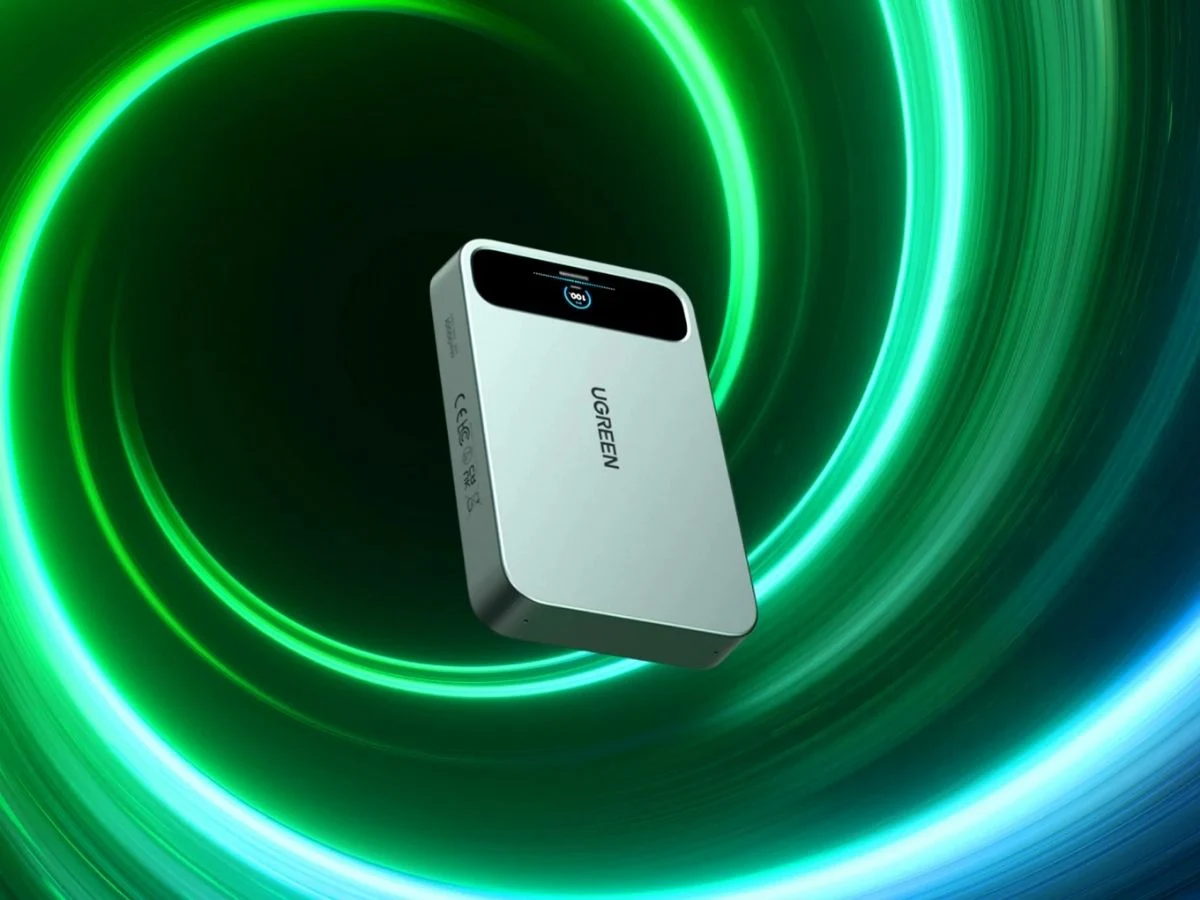
    Ugreen has unveiled the MagFlow AI Voice Recording Magnetic Power Bank. This versatile gadget made its first appearance at CES 2026, alongside the company’s new NASYnc iDX Series and the Nexode Pro 300W 8-Port Desktop GaN Fast Charger.

    Power Bank Features

    True to its name, the Ugreen MagFlow AI Voice Recording Magnetic Power Bank serves two main purposes. It functions as a power bank, featuring a 10,000 mAh battery and a wireless charging pad. The sole image available on the brand’s website does not clarify if it includes any additional outputs, such as a USB-C port. Nevertheless, the digital display included is shown to offer details like the current battery level and possibly real-time charging data.

    Voice Recording Capability

    The second notable aspect of this Ugreen power bank is its capability to record voice notes. The company mentions that “built-in AI” allows the device to translate and summarize your notes, enhancing convenience. At present, it is not clear how users will be able to retrieve these voice recordings and summaries.

    Release and Pricing Information

    Ugreen has not yet revealed when the MagFlow AI Voice Recording Magnetic Power Bank will be available for purchase, nor has it announced its price. For comparison, the older Ugreen Qi2 25W MagFlow Power Bank, which does not include the AI voice recording feature, is priced at $89.99 in the US (currently $69.99 on Amazon).

    Source:
    Link


  • Nano Banana Pro Experiment: Spotting AI with the Naked Eye

    Nano Banana Pro Experiment: Spotting AI with the Naked Eye

    Key Takeaways

    1. High-Quality Image Generation: Nano Banana Pro produces nearly perfect images with accurate anatomy, consistent perspectives, and correct proportions, making it an impressive AI tool.

    2. Detail Inaccuracies: Despite its strengths, Nano Banana Pro can overlook small details, leading to noticeable mistakes when images are closely examined.

    3. Zipper and Fabric Issues: Specific problems include missing zipper teeth, inconsistent snap fasteners, and illogical collar designs, which reveal the AI’s limitations.

    4. Perspective Flaws: While the initial perspective appears correct, closer inspection shows inconsistencies in vanishing points and alignment, indicating potential flaws in the AI’s spatial understanding.

    5. AI Recognition Challenges: After minor edits, AI detection tools struggle to identify images as AI-generated, highlighting the importance of human judgment in recognizing subtle errors commonly found in AI-created images.


    Nano Banana Pro is a fantastic tool for creating stunning images with ease. Initially, the images produced by Google’s AI seem nearly perfect. The hands have four fingers and a thumb, and the anatomy and proportions look right. The perspectives are consistent, and the proportions are typically accurate. This image generator is so advanced that, after only minor post-processing, many automatic AI detection tools struggle, as shown in our first trial.

    Details Matter

    However, even Nano Banana Pro can miss some details. A little zooming in can expose various mistakes in the image. Let’s examine these issues closely.

    In our image, the woman is dressed in an olive-green jacket that has a style blending a field jacket and a parka. Nano Banana Pro captures the folds and fabric beautifully, but other aspects of the jacket are problematic. When we look closer, the inconsistencies become obvious.

    Zipper Problems

    Let’s focus on the zipper. On the right side of the image, the zipper teeth vanish halfway. The left side shows varying lengths and spacing of the zipper teeth. The snap fasteners reveal that this image was made by AI. Instead of round holes, we see a D-shape. Lastly, the jacket’s collar raises questions. The right side shows a white fur trim, which is missing on the left. Instead, the collar fabric merges smoothly with the shoulder pieces on the left. Moreover, the cut of the collar section displayed doesn’t make any sense.

    There’s also an issue with the zipper on the black fleece jacket. It lacks teeth, the pull tab is bent, and below, the zipper transforms into fabric.

    Perspective Flaws

    The devil is in the details here as well. Gemini, or Nano Banana Pro, does well with perspective at first glance. Only one vanishing point seems visible. But if you look closer, you can see that, despite the blur, some vanishing point lines cross different floors or, in the case of the two buses on the left, simply vanish into nothing. We highlighted the inconsistent lines in purple after identifying the perspective’s vanishing point.

    When it comes to hands, even Google’s top AI has slight flaws. If you examine closely, the fingers and hand of the woman holding the banana are not anatomically correct. There are clear issues with the middle finger. The width of the finger and fingernail is off, the front joint has no articulation, and the connection to the hand is unclear. Additionally, the skin folds between the fingers stretch down to the knuckles.

    At the hairline, it’s particularly noticeable that almost all the hair, including gray strands, starts with a brown base. This is especially striking at the front of her head.

    AI Recognition Challenges

    In the first part of our series, we put the image of the woman with the banana through several AI image recognition tools. After some editing, unfortunately, six online platforms declared that the image was not AI-generated. Relying on a human eye and common sense is much more useful in this case. The image shows a series of indicators that it is AI-generated. Anyone who remains doubtful should consider the inherent issues in generative image creation. Small details often aren’t rendered accurately, including the textures of fabrics, jewelry, knitwear, zippers, and other common items. Tire tread patterns and rims on cars and planes, wooden surfaces, and skin wrinkles frequently signal AI processing.

    Source:
    Link