
Key Takeaways
1. High-Quality Image Generation: Nano Banana Pro produces nearly perfect images with accurate anatomy, consistent perspectives, and correct proportions, making it an impressive AI tool.
2. Detail Inaccuracies: Despite its strengths, Nano Banana Pro can overlook small details, leading to noticeable mistakes when images are closely examined.
3. Zipper and Fabric Issues: Specific problems include missing zipper teeth, inconsistent snap fasteners, and illogical collar designs, which reveal the AI’s limitations.
4. Perspective Flaws: While the initial perspective appears correct, closer inspection shows inconsistencies in vanishing points and alignment, indicating potential flaws in the AI’s spatial understanding.
5. AI Recognition Challenges: After minor edits, AI detection tools struggle to identify images as AI-generated, highlighting the importance of human judgment in recognizing subtle errors commonly found in AI-created images.
Nano Banana Pro is a fantastic tool for creating stunning images with ease. Initially, the images produced by Google’s AI seem nearly perfect. The hands have four fingers and a thumb, and the anatomy and proportions look right. The perspectives are consistent, and the proportions are typically accurate. This image generator is so advanced that, after only minor post-processing, many automatic AI detection tools struggle, as shown in our first trial.
Details Matter
However, even Nano Banana Pro can miss some details. A little zooming in can expose various mistakes in the image. Let’s examine these issues closely.
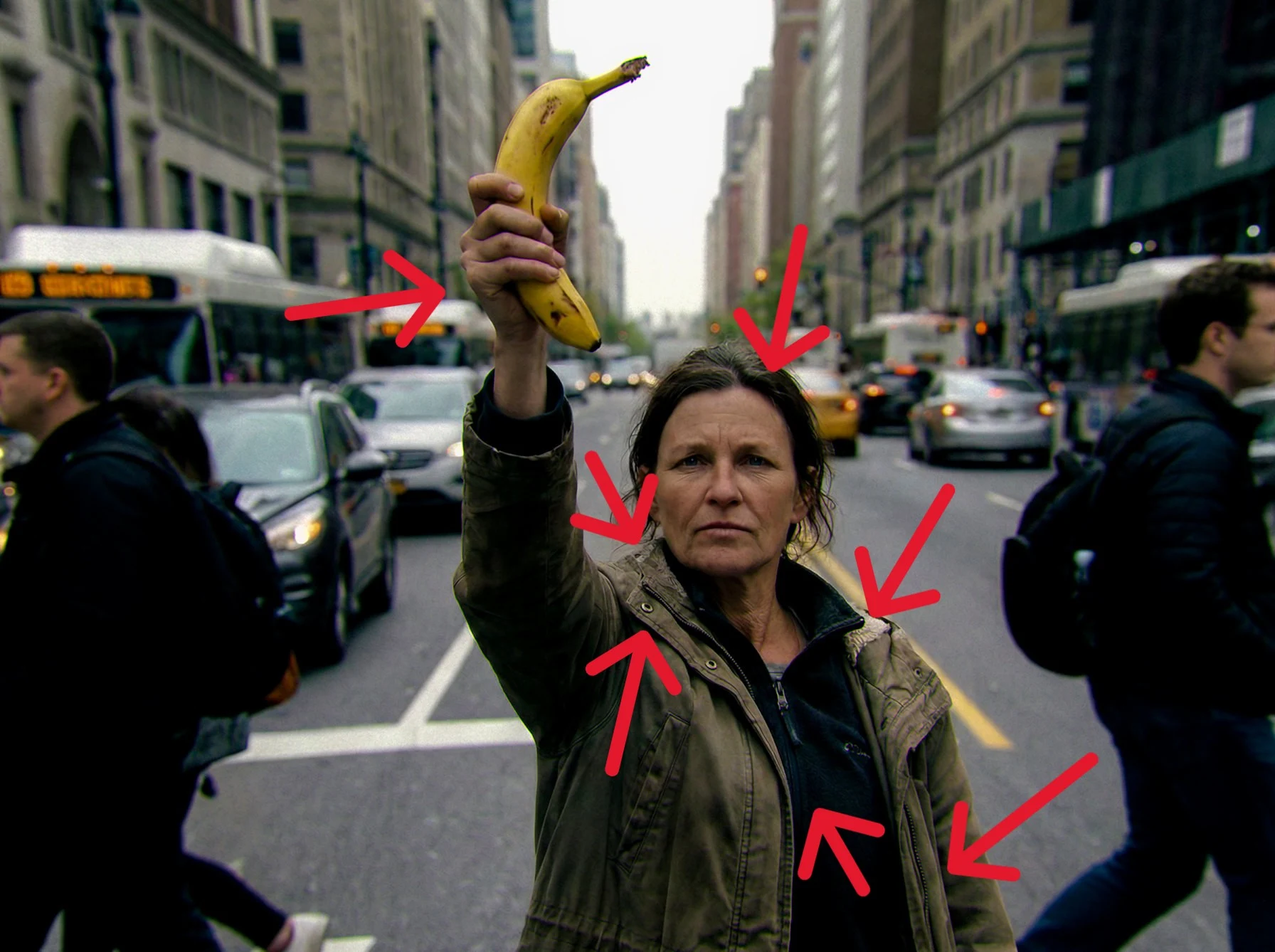
In our image, the woman is dressed in an olive-green jacket that has a style blending a field jacket and a parka. Nano Banana Pro captures the folds and fabric beautifully, but other aspects of the jacket are problematic. When we look closer, the inconsistencies become obvious.
Zipper Problems
Let’s focus on the zipper. On the right side of the image, the zipper teeth vanish halfway. The left side shows varying lengths and spacing of the zipper teeth. The snap fasteners reveal that this image was made by AI. Instead of round holes, we see a D-shape. Lastly, the jacket’s collar raises questions. The right side shows a white fur trim, which is missing on the left. Instead, the collar fabric merges smoothly with the shoulder pieces on the left. Moreover, the cut of the collar section displayed doesn’t make any sense.
There’s also an issue with the zipper on the black fleece jacket. It lacks teeth, the pull tab is bent, and below, the zipper transforms into fabric.
Perspective Flaws
The devil is in the details here as well. Gemini, or Nano Banana Pro, does well with perspective at first glance. Only one vanishing point seems visible. But if you look closer, you can see that, despite the blur, some vanishing point lines cross different floors or, in the case of the two buses on the left, simply vanish into nothing. We highlighted the inconsistent lines in purple after identifying the perspective’s vanishing point.
When it comes to hands, even Google’s top AI has slight flaws. If you examine closely, the fingers and hand of the woman holding the banana are not anatomically correct. There are clear issues with the middle finger. The width of the finger and fingernail is off, the front joint has no articulation, and the connection to the hand is unclear. Additionally, the skin folds between the fingers stretch down to the knuckles.
At the hairline, it’s particularly noticeable that almost all the hair, including gray strands, starts with a brown base. This is especially striking at the front of her head.
AI Recognition Challenges
In the first part of our series, we put the image of the woman with the banana through several AI image recognition tools. After some editing, unfortunately, six online platforms declared that the image was not AI-generated. Relying on a human eye and common sense is much more useful in this case. The image shows a series of indicators that it is AI-generated. Anyone who remains doubtful should consider the inherent issues in generative image creation. Small details often aren’t rendered accurately, including the textures of fabrics, jewelry, knitwear, zippers, and other common items. Tire tread patterns and rims on cars and planes, wooden surfaces, and skin wrinkles frequently signal AI processing.
Source:
Link