Category: Artificial intelligence

  • AEKE K1 Smart Home Gym: Transform Your Fitness Journey Today

    AEKE K1 Smart Home Gym: Transform Your Fitness Journey Today

    Key Takeaways

    1. All-in-One Solution: The AEKE K1 combines strength training, cardio, and flexibility assessment into one compact device, eliminating the need for multiple gym equipment.

    2. Smart Features: AI-driven technology provides real-time feedback, posture correction, and adaptive training plans based on user performance and goals.

    3. User-Friendly Design: The system is easy to use for all fitness levels, offering guided movements and progress tracking, making it suitable for beginners and experienced users alike.

    4. Immersive Experience: Features like a 43-inch 4K screen and Hi-Fi sound enhance the workout experience, simulating personal coaching with instant feedback on form.

    5. Cost-Effective: The AEKE K1 has no subscription fees, providing long-term value with robust hardware and integrated AI coaching, proven by a successful Kickstarter campaign.


    Finding the perfect fitness gift that people will actually use can be a challenge. Many home workout tools promise great results but often lead to confusion instead. The AEKE home gym takes a unique route. It emphasizes guidance, feedback, and measurable progress rather than just hype. This makes the AEKE K1 smart home gym an excellent choice for those who are serious about exercising at home.

    All-in-One Home Gym Solution

    The AEKE K1 AI-powered smart home gym merges strength training, cardio, flexibility, and posture assessment into one device, replacing the need for several pieces of home gym equipment with a single compact system.

    Smart weight recommendations automatically adjust resistance. The AI-driven real-time correction evaluates posture and movements within just 0.5 seconds. Training plans evolve based on your performance, recovery, and fitness goals.

    Designed for All Users

    Users find the experience to be straightforward, confident, and organized. Movements are guided, making it easy to keep track of progress.

    Beginners appreciate the immediate form correction, while more experienced users enjoy the precise resistance and data insights. Families can also benefit from shared profiles and fitness games.

    Immersive Workout Experience

    The 43-inch 4K screen and Hi-Fi sound create an immersive workout experience, resembling guided personal coaching. Short sessions are perfect for busy days, while longer programs cater to serious training.

    Unlike other fitness equipment that competes based on the amount of content, the K1 stands out with its intelligence. A 6D AI fitness assessment checks posture, flexibility, cardio ability, and strength. The system monitors 42 skeletal points and 17 main joints, providing accurate feedback and promoting safer progress.

    Instant Feedback for Better Form

    Real-time voice and visual cues correct form immediately—such as when performing shallow squats or if your posture is unstable—preventing bad habits from developing. Smart resistance can adjust up to 220 lb with five power modes suitable for rehab, endurance, and strength training.

    The AEKE home workout equipment is focused on space efficiency. The K1 can be folded with a single click and requires only 0.3㎡ of space. There’s no need for drilling or installation—just plug and play. This makes the AEKE home gym suitable for living rooms, offices, or garages. It has won awards like the Red Dot, IDA, and CMF for its minimalist and multifunctional design. The optional AEKE B1 fitness bench increases exercise options while keeping the same compact size.

    Cost-Effective Smart Gym

    Many smart fitness mirrors and connected gyms come with monthly fees, which can add up over time. The AEKE smart home gym completely avoids this model.

    With no subscription fees, robust hardware, and integrated AI coaching, the long-term value remains competitive. The successful $1.4M Kickstarter campaign indicates a strong market demand and early user trust.

    Source:
    Link



  • AMD and Nvidia Shift CES Focus to AI, Leaving Consumers Behind

    AMD and Nvidia Shift CES Focus to AI, Leaving Consumers Behind

    Key Takeaways

    1. AMD and Nvidia had limited offerings for gamers at CES 2026, with no new GPUs announced.
    2. Both companies heavily focused on artificial intelligence during their keynotes, with AMD mentioning “AI” 214 times and Nvidia 136 times.
    3. The term “gaming” was absent from Nvidia’s keynote and mentioned only three times by AMD and Intel, indicating a shift away from consumer interests.
    4. The emphasis on AI is negatively affecting the consumer market, leading to rising prices for memory, storage, and potential GPU price increases.
    5. The outlook for consumers in 2026 appears bleak, with concerns about potential market pullbacks from companies like SK Hynix in the DRAM and NAND sectors.


    While CES 2026 showcased a variety of innovative tech, especially in gaming and multimedia laptops, it was disappointing to see that AMD and Nvidia had little to offer gamers. Nvidia, for example, only introduced DLSS 4.5 and didn’t present any new GPUs, not even any minor updates like the RTX 50 Super cards. AMD, on the other hand, launched the Ryzen AI 400 APUs, additional Ryzen AI Max+ chips, and the Ryzen 7 9850X3D, but these processors didn’t bring any new architectures or integrated graphics options.

    AI Takes Center Stage

    At CES 2026, both AMD and Nvidia primarily focused on artificial intelligence. According to 3DCenter, AMD mentioned “AI” a whopping 214 times during its 114:2-minute keynote, averaging 1.87 mentions per minute. Nvidia was not far behind, with “AI” appearing 136 times in its 85:04-minute presentation, which averages to 1.6 per minute. In contrast, Intel performed better, only using the term 55 times at a rate of 1.33 times per minute.

    The Absence of Gaming

    Interestingly, the term “gaming” was missing entirely from Nvidia’s keynote, while it only surfaced three times in the presentations from AMD and Intel. This shows a clear shift in focus from consumer interests to AI, which is unfortunate for companies that built their reputations on catering to everyday consumers, gamers, and DIY enthusiasts.

    Even though AMD, Nvidia, and Intel are companies that must prioritize profits for their stakeholders, the heavy emphasis on AI is negatively impacting the consumer market. This focus has resulted in skyrocketing prices for memory and storage, potential increases in GPU prices, and more.

    A Gloomy Outlook

    Sadly, it doesn’t seem like conditions will get better anytime soon. In fact, 2026 might turn out to be worse for consumers, especially with rumors circulating that SK Hynix might pull out of the consumer DRAM and NAND sectors.

    Source:
    Link


  • Nano Banana Pro Experiment: AI Detection Tools Fail to Deliver

    Nano Banana Pro Experiment: AI Detection Tools Fail to Deliver

    Key Takeaways

    1. Unregulated AI content in the legal field poses significant risks, highlighting the need for reliable detection tools.
    2. Current AI detectors struggle with new image generation models, creating blind spots that allow AI-generated images to evade detection.
    3. Basic modifications, like removing watermarks, can fool many detection tools, demonstrating their limitations.
    4. Advanced photo editing techniques can significantly reduce the detection probability of AI-generated images, making them appear as real photographs.
    5. The findings indicate that existing AI detection technologies are in their early stages and may provide a false sense of security in critical settings like courts and newsrooms.


    The case involving Melissa Sims has shown the significant risks posed by unregulated AI content within the legal field. There’s a promise in the form of “AI detectors,” which are software programs designed to cleverly determine if an image is created by a human or a machine. Still, doubts linger about how reliable these digital tools are, especially when they encounter intentional misleading. A test involving six of the most popular detection services aimed to evaluate their effectiveness.

    Experiment Setup

    To assess the performance of these detection tools, we employed the image generator known as “Nano Banana Pro,” based on Google Gemini. The prompt we chose was intentionally straightforward yet a bit playful: “A woman striking a fighting pose holding a banana against the sky. Background typical cityscape with uninterested people.”

    Challenges Faced by Detectors

    The first significant challenge for the detection software arose from the particular model in use. As Nano Banana Pro is relatively new, many detectors are not equipped to recognize it, presenting a blind spot.

    These detection services often depend on machine learning techniques and are trained to spot the specific “fingerprints” of established models like Midjourney, DALL-E 3, Stable Diffusion, or Flux. Thus, a novel model like Nano Banana Pro has a distinct edge since its specific generation patterns are not yet included in the detectors’ training datasets, making it easier to evade detection.

    Initial Testing Results

    Initially, the detectors had a straightforward job. The original PNG file was converted into a JPG, and its metadata got wiped. Notably, though, the image still displayed a clear Gemini watermark.

    One might think that a visible AI watermark would be easy for detection software to catch. However, the outcome was surprising: even in this basic form, two out of the six tools failed to identify the image as AI-generated, despite the clear watermark.

    Realistic Forgery Scenario

    Next, we moved toward a more realistic forgery scenario by removing the identifying watermark. Using the AI eraser in the default Windows Photos app, this change was made seamlessly in just a few seconds.

    After this simple edit, the results shifted. One more tool was fooled, now indicating a low probability of AI generation. Interestingly, Illuminarty actually raised its probability rating for the image being AI-generated post-edit. Nevertheless, three of the six tools still estimated less than 30% likelihood that the banana-holding woman was an AI creation.

    Final Testing Phase

    The final test was crucial. AI-generated images often appear “too smooth” and perfect, lacking typical noise. To effectively mislead the detection tools, the image needed to incorporate artificial “realism,” simulating common errors found in digital photography. Using Cyberlink PhotoDirector, adjustments were made. Lens correction was applied, artificial chromatic aberration created color fringes, contrast was boosted, and realistic image noise was added. The goal was to make the image resemble a photo taken by an imperfect camera—all accomplished in just a few minutes.

    The outcome of this last phase was a complete triumph over the detection technology. After undergoing standard post-processing, all six detection services failed to assert that the image was AI-generated, with none indicating a probability greater than 5 percent. For the software, the image of the woman with the banana was now unmistakably a real photograph.

    Conclusion

    Our experiment clearly illustrates that current AI detection technologies are still very much in their early stages. If it only takes a few minutes with standard photo editing tools to reduce detection rates from “very likely” to “under 5 percent,” these tools are not just ineffective for courts, newsrooms, or law enforcement—they pose a risk. They foster a false sense of security that simply is not warranted. The idea of “trust, but verify” only holds if the verifiers aren’t blind.

    Source:
    Link


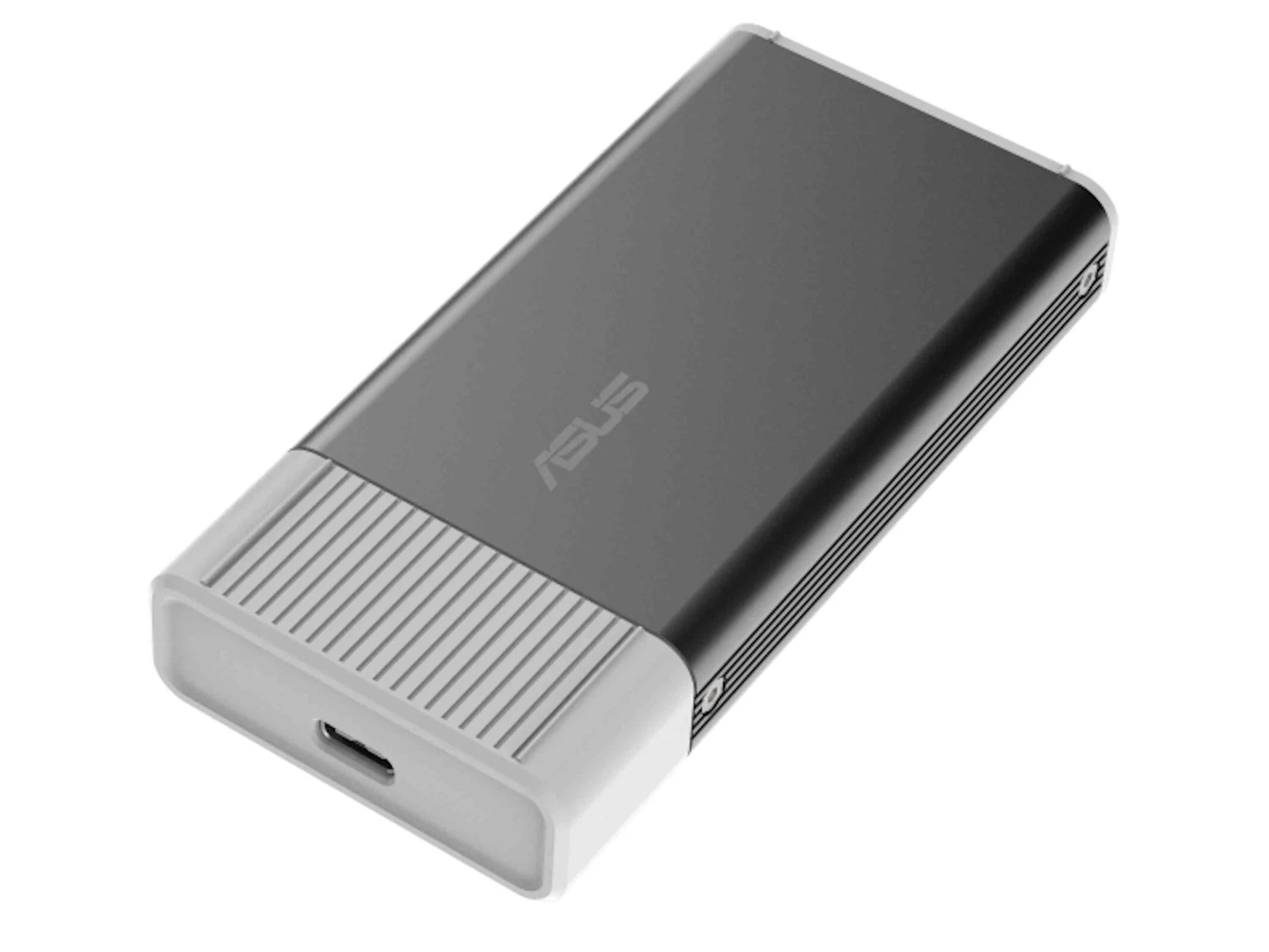
  • Asus Launches First USB Edge AI Accelerator for Classic and Generative AI

    Asus Launches First USB Edge AI Accelerator for Classic and Generative AI

    Key Takeaways

    1. Expansion cards, like the UGen300, enhance AI capabilities in PCs, even with built-in NPUs in newer systems.
    2. The UGen300 is a USB expansion card that does not require installation in a PCI slot, simplifying setup.
    3. It features a Hailo 10H NPU with a performance of 40 TOPS (INT4) and low power usage of 2.5 watts.
    4. The card is compatible with x86 and ARM platforms, supporting Windows, Linux, and Android, along with popular AI frameworks.
    5. Asus offers over 100 pre-trained models for various applications, such as image and pattern recognition, but pricing and availability are not yet announced.


    Expansion cards have been around for PC systems for quite some time, with special graphics cards being essential for gamers who demand high performance. In the past, we’ve talked about expansion cards that help speed up AI models. However, many new PCs now come with NPUs built into their APUs, meaning these cards might not be as necessary as before. Still, they can be handy for boosting the AI capabilities of current setups. Asus has recently introduced an expansion card called the UGen300.

    Product Features

    The UGen300 is a USB expansion card that operates using USB 3.1 Gen 2. This means you don’t need to install it in a PCI slot or even open up your PC case. It features a Hailo 10H NPU, which is claimed to deliver performance of 40 TOPS (INT4). The power usage is quite low, at just 2.5 watts, making it almost negligible. It also comes with 8 GB of LPDDR4 RAM, which may not be enough for serious AI fans, as dedicated AI setups typically offer more than 100 GB of RAM.

    Compatibility and Usage

    This expansion card is said to work with both x86 and ARM platforms, along with supporting Windows, Linux, and Android devices. It is also compatible with several frameworks including TensorFlow, PyTorch, and ONNX. Asus has mentioned that there are over 100 pre-trained models ready for users. One of the typical uses could be for advanced image or pattern recognition and analysis. Unfortunately, there is no information yet about its pricing or when it will be available for purchase.

    Source:
    Link


  • US Senators Demand Removal of X and Grok from App Stores

    US Senators Demand Removal of X and Grok from App Stores

    Key Takeaways

    1. Three US senators are urging Apple and Google to remove X (formerly Twitter) and Grok from their app stores due to concerns about non-consensual sexualized images of women and children created by Grok.
    2. The senators claim that Grok violates app store policies by producing illegal content, including images of child abuse, and that X CEO Elon Musk seems to support this issue.
    3. Apple’s and Google’s guidelines explicitly ban content that could lead to child exploitation or abuse, and ignoring these violations could harm the integrity of their app store moderation.
    4. The senators reference previous app removals, arguing that similar action against X and Grok is warranted due to the serious allegations.
    5. They have requested a written evaluation from Apple and Google regarding the situation by January 23, 2026, and suggest suspending the app during an investigation.


    In a strong message from Washington, three US senators are urging Apple and Google to take down X (previously known as Twitter) and Grok from their app stores. In a letter dated January 9, 2026, addressed to Tim Cook (the CEO of Apple) and Sundar Pichai (CEO of Google and Alphabet), they express deep concerns regarding the use of Grok, an AI feature within the X app, in the creation of non-consensual, sexualized images involving women and children.

    Senators’ Concerns

    Senators Ron Wyden from Oregon, Ben Ray Luján from New Mexico, and Edward J. Markey from Massachusetts claim that the content produced by Grok violates the terms of both app stores and clearly breaks their policies. Reports indicate that Grok not just alters images of private individuals but also shows sexualized scenarios while keeping a database of potentially illegal material, which includes images of child abuse. Furthermore, the senators highlight that X CEO Elon Musk seems to endorse this situation through his social media responses.

    Demand for Action

    The request from the senators relies on the current guidelines from Apple and Google that explicitly ban content which could lead to child exploitation or abuse. Apple’s terms specifically forbid any kid-related content that might be deemed “offensive” or “just plain creepy.” The senators stress that ignoring these breaches would jeopardize the integrity of App Store moderation practices, weakening both Apple’s and Google’s arguments against regulatory actions in their app stores.

    Historical Context

    To illustrate their point, they reference past actions taken by both companies, such as removing apps like ICEBlock and Red Dot. Those apps did not include illegal content but merely shared information about the activities of US authorities related to immigration. The senators argue that a similar response is justified considering the serious accusations made against X and Grok. They suggest at the very least, the app should be suspended while a thorough investigation takes place. Apple and Google have been requested to provide their evaluation of the situation in writing by January 23, 2026.

    Source:
    Link


  • Stanford AI Analyzes Sleep Data for Early Disease Risk Detection

    Stanford AI Analyzes Sleep Data for Early Disease Risk Detection

    Key Takeaways

    1. SleepFM is an AI-based model developed by Stanford Medicine that uses full polysomnography (PSG) recordings to analyze sleep data.
    2. Polysomnography tracks various signals, including brain activity, breathing patterns, and heart rates, to create a unified dataset for sleep analysis.
    3. The model analyzed 585,000 hours of sleep data from 65,000 individuals, breaking it into five-second segments to identify patterns.
    4. SleepFM can analyze multiple physiological signals simultaneously, helping to detect misalignments during sleep.
    5. The model successfully predicted 130 health conditions, achieving over 80% accuracy, and researchers aim to enhance it further by including data from wearable devices.


    The team of researchers at Stanford Medicine, along with their partner institutions, has developed an AI-based model called SleepFM. This model utilizes full polysomnography (PSG) recordings, which are extensive sleep studies that assess how a person’s body operates while they are sleeping.

    Understanding PSG

    Polysomnography tracks a variety of important signals, including brain activity, respiratory patterns, eye movements, muscle engagement, heart rates, and levels of oxygen in the blood. SleepFM’s goal is to advance beyond merely diagnosing sleep disorders by treating these various signals as a unified physiological dataset.

    Analyzing Sleep Data

    With the help of artificial intelligence, the team scrutinized an unprecedented dataset consisting of 585,000 hours of sleep from 65,000 individuals. SleepFM broke down the recordings into five-second segments, which enabled the model to identify patterns in a manner similar to how large language models interpret words and sentences.

    The Significance of SleepFM

    SleepFM is hailed as a significant advancement due to its capability to integrate various signal sources. It can concurrently analyze brain activity, muscle movements, breathing patterns, and more. By monitoring multiple bodily systems, SleepFM is able to identify when these physiological signals become misaligned during sleep.

    The researchers employed a method known as leave-one-out contrasting learning to teach the model how different body systems interact. This method involves removing one signal and reconstructing it using the other signals.

    Predicting Health Conditions

    To investigate whether sleep data alone could predict future health issues, the team combined medical records from a single clinic with the sleep information. The outcome was that SleepFM successfully predicted 130 different health conditions, such as dementia, cancer, Parkinson’s disease, and heart attacks. It achieved C-index scores exceeding 0.8, meaning it accurately forecasted patient conditions more than 80% of the time.

    The researchers are currently focused on enhancing SleepFM and incorporating data from wearable devices for even better results.

    Source:
    Link


  • MSI AI Edge Mini-PC with AMD Ryzen AI Max+ 395 Coming Soon

    MSI AI Edge Mini-PC with AMD Ryzen AI Max+ 395 Coming Soon

    Key Takeaways

    1. MSI unveiled new gadgets at CES 2026, including the updated Claw 8 AI Plus and a new mini-PC under the AI brand.
    2. Pricing and availability details for the new products have not yet been disclosed by MSI.
    3. The AI Edge mini-PC features a maximum of 128 GB of LPDDR5X-8000 RAM and a Radeon 8060S integrated GPU.
    4. The AI Edge is expected to perform at 15 Tokens per second (TPS) and handle up to 120 B LLMs, thanks to its XDNA 2 NPU.
    5. The AI Edge mini-PC is built around AMD’s Strix Halo platform, suggesting it may be more affordable than the EdgeXpert AI.


    MSI has unveiled a variety of new gadgets at CES 2026 this week, which includes an updated Claw 8 AI Plus that features an M.2 2280 slot. The company also introduced a new mini-PC under the AI brand, following last year’s launch of the Nvidia DGX Spark-based EdgeXpert AI.

    Pricing and Availability

    At this time, MSI has not disclosed any details regarding pricing or when the products will be available. The company’s focus has primarily been on the hardware, which is built around AMD’s Strix Halo platform. If we look at the GMKtec EVO-X2 (currently priced at $1,659 on Amazon) and other Strix Halo mini-PCs, it’s likely that the AI Edge will be much more affordable than its EdgeXpert AI counterpart, which has a MSRP of $2,999.

    Specifications

    The MSI AI Edge will come with a maximum of 128 GB of LPDDR5X-8000 RAM, with 96 GB dedicated to the mini-PC’s Radeon 8060S integrated GPU. So far, MSI has indicated that this 4-liter mini-PC will also include the Ryzen AI Max+ 395. However, we can’t completely dismiss the possibility of less expensive Ryzen AI Max APU options being offered, especially since the AI Edge is being launched right alongside AMD’s latest Strix Halo updates.

    Performance Features

    In addition, MSI claims that the AI Edge can achieve an output of 15 Tokens per second (TPS) while handling up to 120 B LLMs. This impressive performance is largely due to the mini-PC’s XDNA 2 NPU, which can provide up to 50 TOPS of theoretical capability. Unfortunately, more specific information about the AI Edge is still not available at this time.

    MSI via Liliputing

    Source:
    Link


  • OpenAI Launches ChatGPT Health with Apple Health Integration

    OpenAI Launches ChatGPT Health with Apple Health Integration

    Key Takeaways

    1. OpenAI launched ChatGPT Health, allowing users to link external health accounts for personalized insights.
    2. Over 230 million people use ChatGPT for health questions, prompting the need for a safer interaction environment.
    3. Strong privacy measures include encryption, isolation, and a commitment not to use health chat data for model training.
    4. The feature simplifies complex health information, analyzes wearable data, and helps prepare for doctor’s visits.
    5. Currently, access is limited to a small group of early users in the US, with advanced features not available in the UK, Switzerland, and the European Economic Area.


    OpenAI has launched a new feature called ChatGPT Health, which is now part of the ChatGPT app. This feature allows users to link their external accounts like Apple Health, MyFitnessPal, Function, Weight Watchers, AllTrails, Instacart, and Peloton to gain personalized health insights. The company states that it was developed in close collaboration with doctors to assist users in taking a more active part in understanding and managing their health and wellness.

    Global Interest in Health Queries

    According to OpenAI’s internal data, over 230 million people worldwide are already using ChatGPT for health and wellness questions. This new feature seeks to create a safer and more organized environment for these types of interactions. Since linking sensitive medical information to an AI platform necessitates strict security protocols, OpenAI implements “purpose-built encryption and isolation” to ensure that these discussions are “protected and compartmentalized.”

    Privacy and Security Measures

    OpenAI guarantees that it will not use your health chat data to train its models. It also recommends enabling multi-factor authentication for users who want extra security for their accounts. For individuals interested in connecting their medical records, OpenAI has teamed up with b.well, which is known as “the largest and most secure network of live, connected health data for US consumers,” and that “adheres to the highest industry standards in data security and privacy.”

    User-Friendly Health Insights

    ChatGPT Health can simplify complex lab results, analyze data from wearables, summarize care instructions, and even help users prepare questions for future doctor’s appointments. To use this feature, you can select it from the sidebar menu in the main ChatGPT interface. However, access is currently limited to “a small group of early users,” and it does not include the UK, Switzerland, and the European Economic Area. While general wellness features may become more widely available, the more advanced medical record integrations are presently exclusive to the US.

    Source:
    Link


  • Razer Forge AI Workstations: Custom Xeon W & Threadripper Pro Desktops

    Razer Forge AI Workstations: Custom Xeon W & Threadripper Pro Desktops

    Key Takeaways

    1. Razer introduced the Forge AI Dev Workstation for AI developers at CES 2026, designed for running large-language models (LLMs) locally.
    2. The workstation features powerful specifications, including Intel Xeon W or AMD Threadripper Pro CPUs with up to 96 cores and support for multiple high-end GPUs.
    3. Users can connect multiple workstations with dual 10-Gigabit Ethernet ports to create compute clusters and can optionally rack the units for space-saving.
    4. Razer offers tailored builds and quotes for the Forge AI Dev Workstation, encouraging users to reach out for more information.
    5. Budget-friendly alternatives exist, such as distilled AI LLM models that can run on more affordable laptops like the HP EliteBook Ultra G1q 14.


    Razer has introduced the Forge AI Dev Workstation to AI developers during CES 2026. This product offers customers a specially designed desktop capable of running the most extensive artificial intelligence large-language models (LLMs) locally, providing greater security and cost efficiency compared to cloud servers or rented solutions.

    Powerful Specifications

    The Forge AI Dev Workstations are built with either Intel Xeon W or AMD Threadripper Pro CPUs, boasting up to 96 cores. They can support as many as four Nvidia RTX Pro or AMD Radeon Pro GPUs, alongside eight DDR RDIMMs, four PCIe Gen5 M.2 NVMe SSDs, eight SATA drives, and a robust 2,000W power supply. To ensure proper cooling, there are four 120 mm fans located at the front and back of the system, enabling airflow to all internal components.

    Network and Expandability

    Users can connect multiple Forge AI Dev Workstations using their dual 10-Gigabit Ethernet ports to form compute clusters. Moreover, these units can be optionally racked to save space in a work environment.

    If you’re interested, it’s recommended to reach out to Razer for tailored builds and quotes, as well as more information regarding the specifications of the Forge AI Dev Workstation.

    Budget-Friendly Alternatives

    For those who may not have the budget for a high-end workstation or at least an Nvidia 5070 GPU, there are alternatives. Distilled AI LLM models (like the one available on Hugging Face) can be utilized on more affordable laptops, such as the HP EliteBook Ultra G1q 14, which is available for purchase on Amazon.

    Razer’s

    Source:
    Link


  • Loona DeskMate: Transform Your iPhone into a Smart AI Assistant

    Loona DeskMate: Transform Your iPhone into a Smart AI Assistant

    Key Takeaways

    1. The Loona DeskMate is a budget-friendly AI robot that connects to an iPhone using MagSafe, acting as a desk charger.
    2. It features interactive elements like moving eyes and head, giving it a cute personality when connected to the iPhone.
    3. DeskMate utilizes the iPhone’s cameras and microphones to enhance its AI capabilities, allowing it to perform tasks like summarizing texts and setting up meetings.
    4. The robot leverages the iPhone’s processing power for quick responses to user commands, including voice and gestures.
    5. Loona DeskMate will be funded through Kickstarter, with potential early sign-up discounts of $100 for interested users.


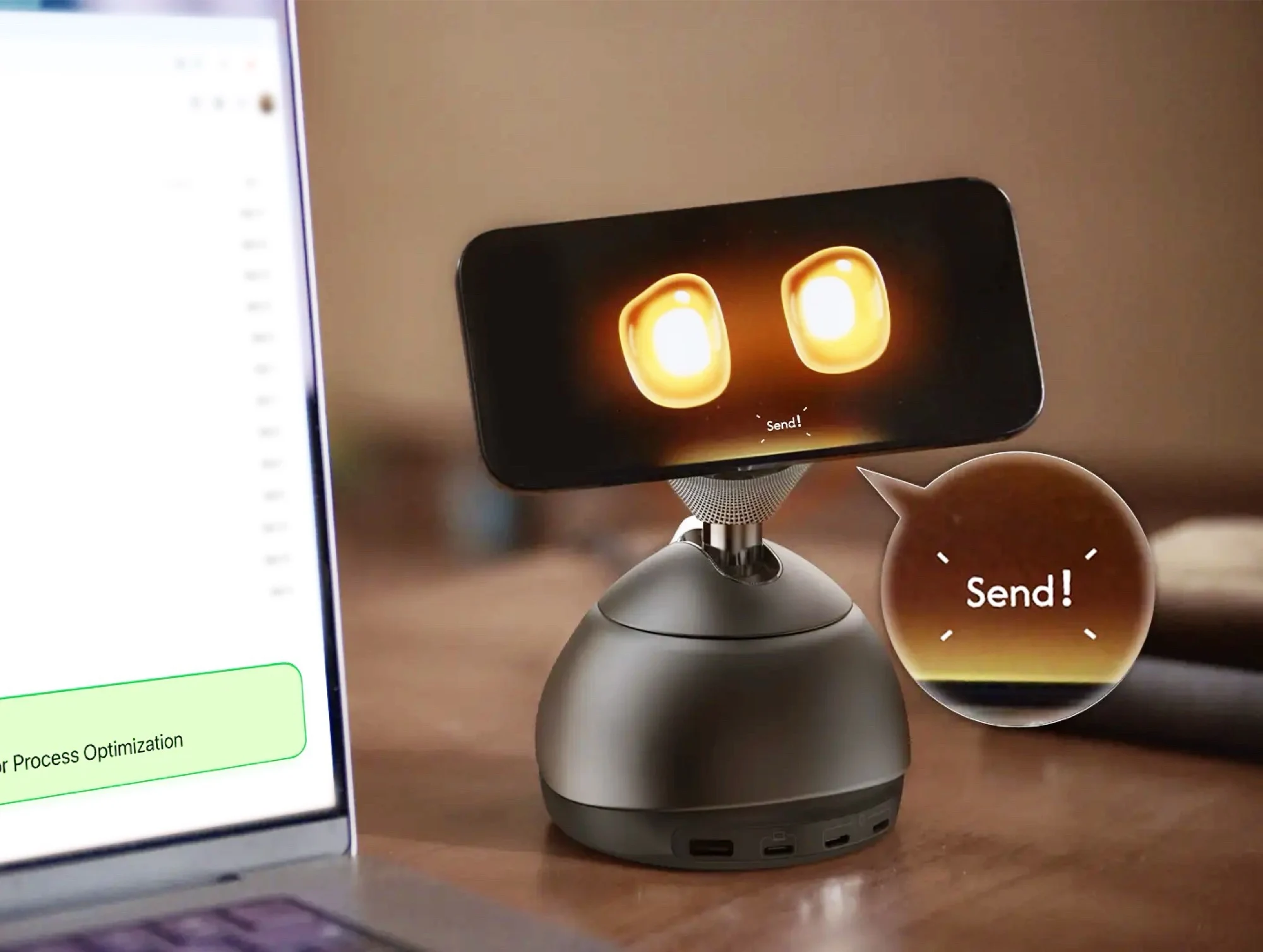
    The Loona DeskMate is being advertised as a budget-friendly AI robot since it doesn’t require its own powerful processor, screen, microphones, or speakers. Instead, it connects to an Apple iPhone using MagSafe, allowing the phone to charge while it is attached. This means DeskMate is meant to replace a desk charger rather than take up more room with another device.

    Interactive Features

    When you connect your iPhone to DeskMate and launch the related app, the screen displays two big eyes. Additionally, a motor enables the display to move and face the user. These eye and head movements are meant to give the robot a cute personality. The Loona DeskMate can also utilize the iPhone’s cameras and microphones, as well as show content from a Mac or Windows PC on the desk.

    Smart Functionality

    This setup enables DeskMate to provide comprehensive AI features, like summarizing texts, responding to emails, adjusting calendar settings, or even setting up Zoom meetings. Although these tasks can be done through an app, the company claims that the Loona DeskMate leverages the iPhone’s robust processing power to minimize the delay between a user’s request and the AI’s response. Additionally, the front camera gives extra context, allowing the AI to react to voice commands and gestures.

    Crowdfunding and Savings

    Loona DeskMate is planned to be funded through Kickstarter, so the exact launch date and pricing for the iPhone robot are currently unknown. Users who sign up with their email address on the manufacturer’s website before the product launches can reportedly receive a discount of $100 when it becomes available on Kickstarter.

    Keyi Tech

    Source:
    Link