Category: Artificial intelligence

  • Hyundai Orders 30,000 Atlas Robots with Self-Swappable Batteries

    Hyundai Orders 30,000 Atlas Robots with Self-Swappable Batteries

    Key Takeaways

    1. New Production Plans: Boston Dynamics plans to manufacture up to 30,000 Atlas humanoid robots annually for use in Hyundai’s U.S. car manufacturing plants.

    2. Cost-Effective Design: The latest Atlas model features fewer custom parts and utilizes components from Hyundai’s existing supply chain for faster and cheaper production.

    3. Advanced Capabilities: Atlas can assess its environment in real-time, maintain balance with Hyundai Mobis actuators, and adjust grip strength using tactile sensors.

    4. AI Enhancement: The robot’s AI capabilities are powered by Nvidia chips, with collaboration from Google’s DeepMind to improve its cognitive functions.

    5. Competitive Landscape: The introduction of Atlas poses significant competition for Tesla’s Optimus in the humanoid robot market, especially with the rapid growth of similar manufacturing in China.


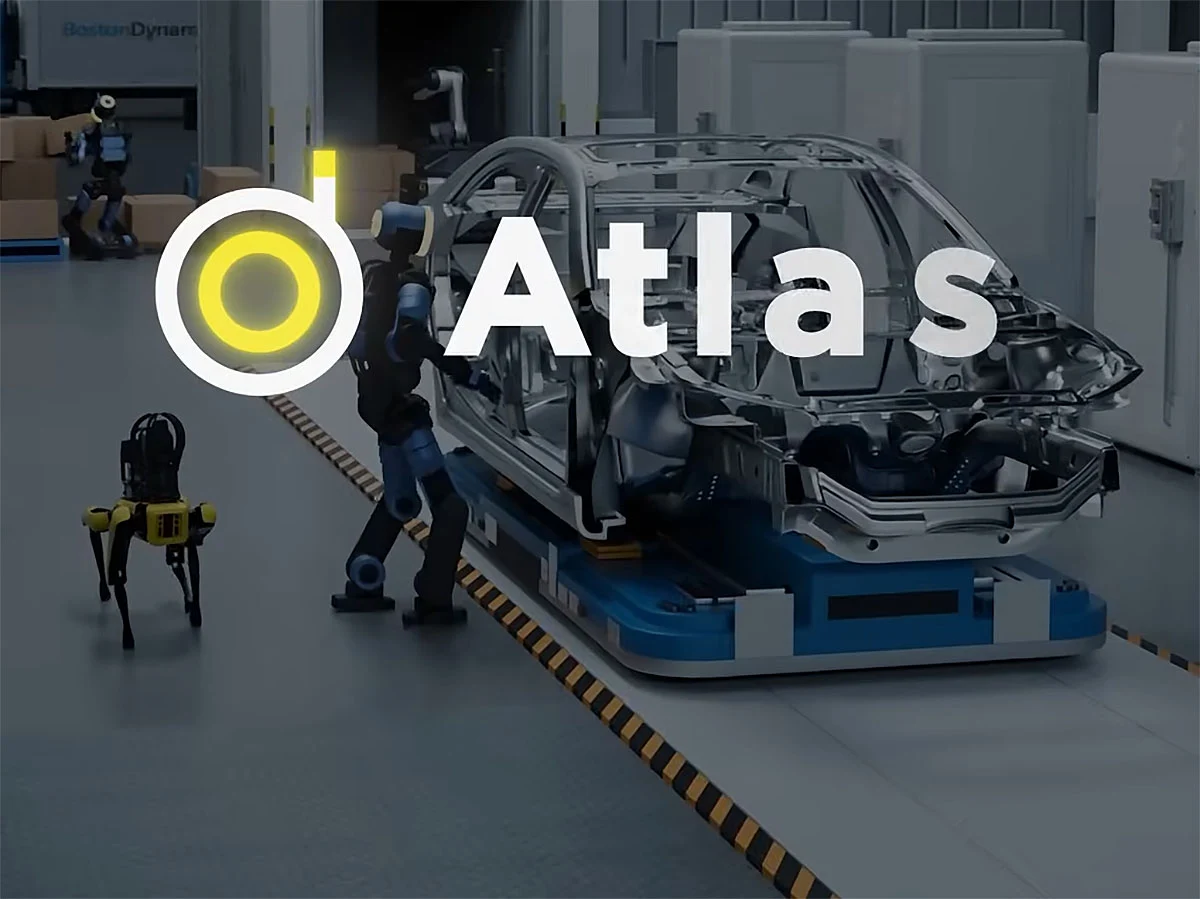
    Hyundai’s robotics branch, Boston Dynamics, has revealed the latest version of its Atlas humanoid robot, which has been around long before Tesla’s flashy marketing for Optimus stirred up the humanoid robot excitement.

    New Production Plans

    The newest Atlas model is designed specifically for high-volume production, and Boston Dynamics is set to begin manufacturing right away, aiming to produce up to 30,000 humanoid robots annually. Hyundai plans to use these robots in its car manufacturing plants located in the United States.

    Cost-Effective Design

    To facilitate mass production, the latest Atlas units have minimized the number of custom parts, opting instead for components that are easily sourced from the automaker’s existing supply chain. This approach allows the robots to be manufactured quickly and cost-effectively.

    Advanced Capabilities

    The Atlas robot can assess its environment in real-time. Hyundai Mobis actuators help in maintaining its balance and adjusting its stance, while tactile sensors fine-tune the grip strength of its hands, allowing for adaptability based on the required tasks. The AI that interprets its surroundings is powered by Nvidia chips, and Boston Dynamics has teamed up with Google’s DeepMind to create foundational models to enhance its cognitive abilities further.

    The initial production units of the Atlas humanoid robot are now on their way to key partners, Hyundai and Google, for testing purposes. With the competition from Atlas and the rapid growth of humanoid robot manufacturing in China, it appears that Tesla’s Optimus will encounter significant rivalry when it finally arrives on factory floors.

    Source:
    Link


  • Razer Launches Project Ava: Holographic AI Desktop Companion

    Razer Launches Project Ava: Holographic AI Desktop Companion

    Key Takeaways

    1. Razer has launched Project Ava, a holographic AI buddy for Windows computers with a 5.5-inch holographic screen.
    2. Users can interact with a 3D avatar that displays unique personalities, facial expressions, and tracks eye movements.
    3. The primary AI powering Project Ava is xAI’s Grok AI, with potential for additional AI options in the future.
    4. Project Ava can assist with gaming, daily tasks, professional projects, and promote healthier habits.
    5. Pre-orders for Project Ava start with a $20 deposit and it is expected to be available in late 2026, with the final price yet to be announced.


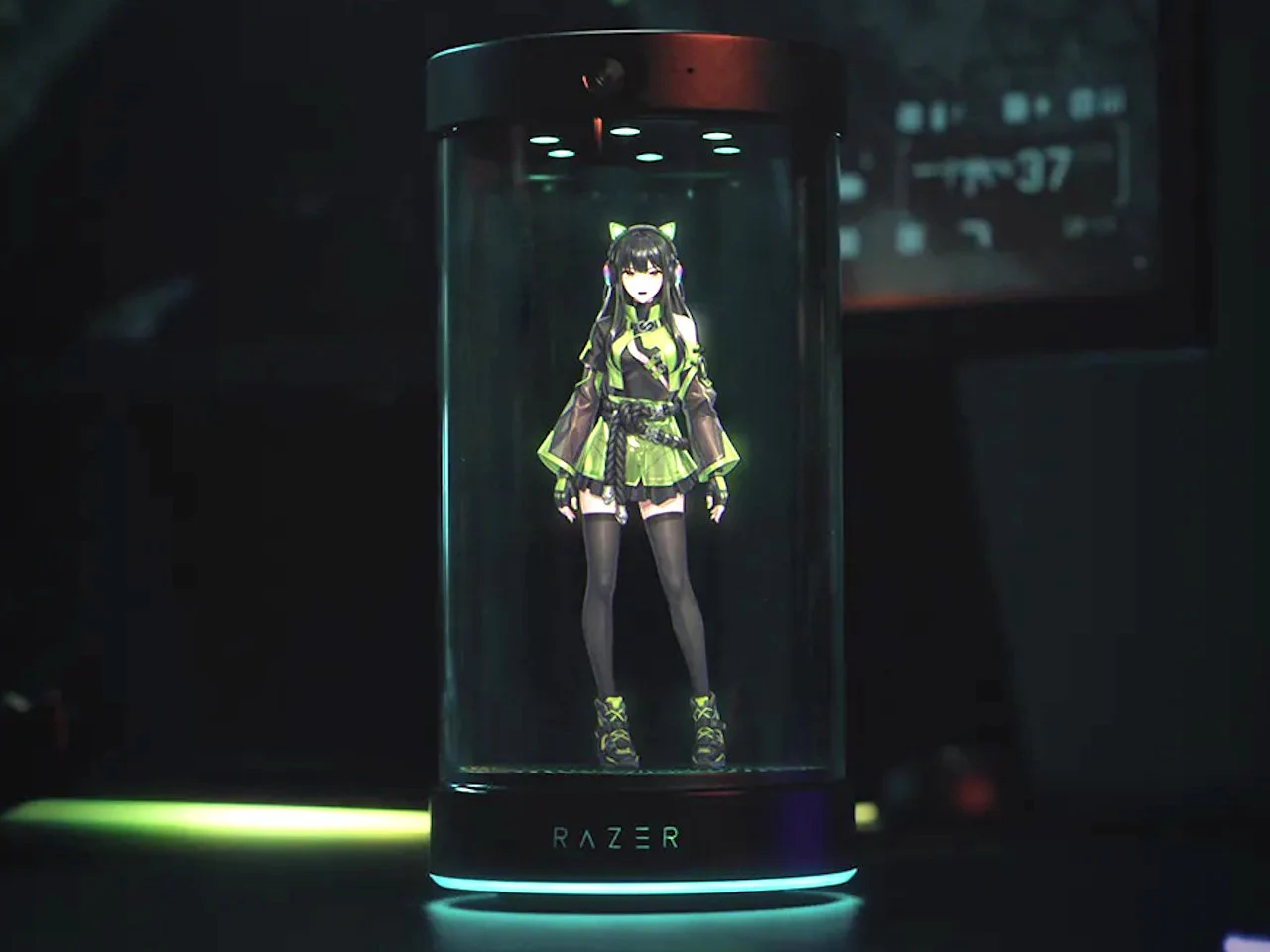
    Razer has introduced Project Ava, a new holographic AI buddy for users of Microsoft Windows computers. This gadget comes equipped with a speaker, far-field microphones, an HD camera, and LED lights.

    A Unique Experience

    Project Ava creates a 3D avatar on a 5.5-inch holographic screen that users can converse with and engage. Different avatars will be available upon the device’s launch, each showcasing a unique personality. These avatars will be lively, displaying facial expressions and tracking eye movements.

    Future Possibilities

    The avatars will primarily run on xAI’s Grok AI, but there’s a chance that additional AI options may be added later on. Project Ava aims to be a loyal companion, ready for interaction any time, whether for gaming, work, or everyday life.

    Versatile Functionality

    This holographic helper can celebrate your gaming achievements, respond to in-game inquiries, and offer strategies for victory. Beyond gaming, it can assist in managing daily tasks, sending reminders, and promoting healthier habits. For professional use, it can help with project development, analyze data, and provide live translation services.

    You can pre-order Razer Project Ava with a $20 deposit, and it is expected to be available in the latter part of 2026. The final price is yet to be disclosed.

    Razer, Razer news release.

    Source:
    Link


  • Litheli Launches Skope 800 AI Robotic Lawn Mower with Boundary Detection

    Litheli Launches Skope 800 AI Robotic Lawn Mower with Boundary Detection

    Key Takeaways

    1. Advanced Navigation System: The Skope 800 uses NEO-FSD intelligent navigation to map the lawn without needing boundary wires, effectively staying within designated limits.

    2. Efficient Power and Coverage: It can manage lawns from 1/5 to 1/4 acre (800 to 1,000 m²) with a 5.0 Ah Infinity Power Share lithium-ion battery compatible with other Litheli tools.

    3. Smart Obstacle Detection: Equipped with AI visual obstacle avoidance, the mower can identify over 200 obstacles, including people and pets, while operating quietly at less than 60 dB(A).

    4. Water Resistance and Rain Sensing: The Skope 800 has an IPX6 water resistance rating and a rain sensing feature that allows it to adjust mowing schedules based on weather conditions.

    5. Anti-Theft Features: The mower includes an anti-theft system to protect it when working unattended, ensuring security during operation.


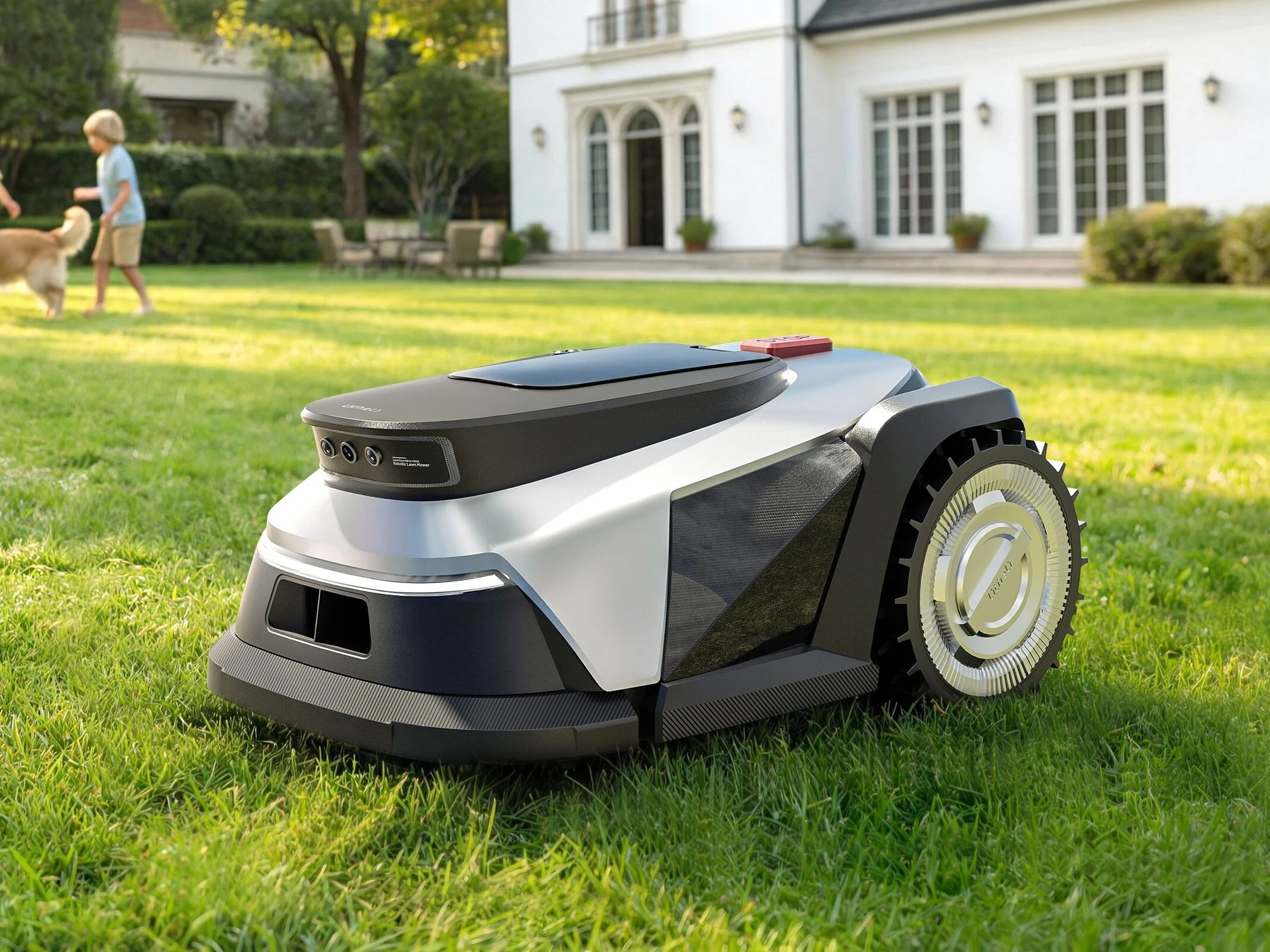
    Litheli has introduced the Skope 800 AI-Vision robotic lawn mower, which is driven by artificial intelligence and equipped with smart vision cameras.

    Advanced Navigation System

    The Skope 800 features NEO-FSD intelligent navigation, allowing it to create a map of the lawn for effective mowing without needing to go over the same area multiple times. This system can identify various terrains and lawn layouts, enabling it to automatically discern and remain within the designated lawn limits. This means lawn owners no longer need to install boundary wires to keep the robotic mower from wandering off, as stated by Litheli.

    Efficient Power and Coverage

    This mower is capable of handling lawns sized between 1/5 to 1/4 acre (800 to 1,000 m2), thanks to a 5.0 Ah Infinity Power Share (IPS) lithium-ion battery that works with other outdoor power tools from Litheli, which are available for purchase in the Litheli store on Amazon.

    Smart Obstacle Detection

    The robotic mower can identify over 200 different obstacles, including people and pets, using onboard cameras that employ AI visual obstacle avoidance technology to avert mishaps. The electric motor operates at a sound level of less than 60 dB(A) while enabling the Skope 800 to tackle slopes of up to 22° (42%), as reported by the company.

    Water Resistance and Anti-Theft Features

    The mower holds an IPX6 rating for water resistance and includes a rain sensing feature that allows it to schedule mowing around days with wet grass. If the mowing process is interrupted, the Skope 800 can pick up right where it left off. Additionally, it is equipped with an anti-theft system to safeguard against loss while it works unattended.

    As of now, information regarding market availability and pricing has not yet been disclosed.

    Source:
    Link


  • Court Orders OpenAI to Release 20 Million ChatGPT Logs

    Court Orders OpenAI to Release 20 Million ChatGPT Logs

    Key Takeaways

    1. A New York court ordered OpenAI to provide 20 million chat logs to lawyers from major media outlets due to a copyright lawsuit.
    2. The lawsuit claims OpenAI used media articles for training its AI without consent, and the chat logs may help demonstrate copyright issues.
    3. The court believes that anonymizing the data is enough to protect user privacy, despite concerns over its effectiveness.
    4. OpenAI expressed that compiling this data could harm customer privacy and be a burden, but the court dismissed these worries.
    5. This ruling is seen as a legal setback for OpenAI and poses significant risks to user privacy, potentially inviting similar lawsuits.


    Now folks might get a bit anxious if they thought the deep or even silly chats they had with ChatGPT would stay secret forever. A New York court has ordered OpenAI to hand over around twenty million chat logs to lawyers representing major media outlets such as the Chicago Tribune and the New York Times due to a continuing copyright battle. While the data will be anonymized, there’s still a considerable amount of information exchanged here. It remains debatable whether truly anonymizing regular users can work effectively given this scale.

    Background of the Lawsuit

    This situation stems from a lawsuit where media companies claim that OpenAI has been using their articles for training its AI without consent. The plaintiffs aim to utilize the chat logs to demonstrate that ChatGPT often reproduces copyrighted content and not just when the bot is manipulated to do so intentionally (“hacking”), as OpenAI has asserted. Judge Sidney H. Stein has reaffirmed a previous ruling and dismissed OpenAI’s worries. The company argued that compiling data was too burdensome and could jeopardize customer privacy.

    Court’s Perspective

    The court, however, had a different view and concluded that anonymizing the data was adequate as a safeguard, asserting that the importance to the case outweighed the potential risks. For OpenAI, this marks a legal setback that security professionals are already calling a disaster. Dr. Kolochenko from ImmuniWeb pointed out that this could lead to imitators in similar situations. This ruling poses a significant threat to user privacy, regardless of whether the 20 million data sets include serious copyright violations.

    Source:
    Link


  • WALL·E Returns: Affordable Home Robot by Zeroth Robotics Unveiled

    WALL·E Returns: Affordable Home Robot by Zeroth Robotics Unveiled

    Key Takeaways

    1. Zeroth Robotics debuted at CES 2026, launching five AI-driven robots, including the versatile W1 model.
    2. The W1 robot features caterpillar tracks for navigating uneven surfaces, with a capacity to carry 44 pounds and tow 110 pounds.
    3. Equipped with advanced navigation and monitoring systems, the W1 can be controlled via an app, voice commands, or a remote.
    4. Pre-orders for the W1 are set at $4,999, with US shipping starting on April 15, 2026; it is already available in China for approximately $5,599.
    5. Other robots in Zeroth’s lineup include the M1 humanoid for family assistance and the A1 research robot, all sharing a common technological foundation.


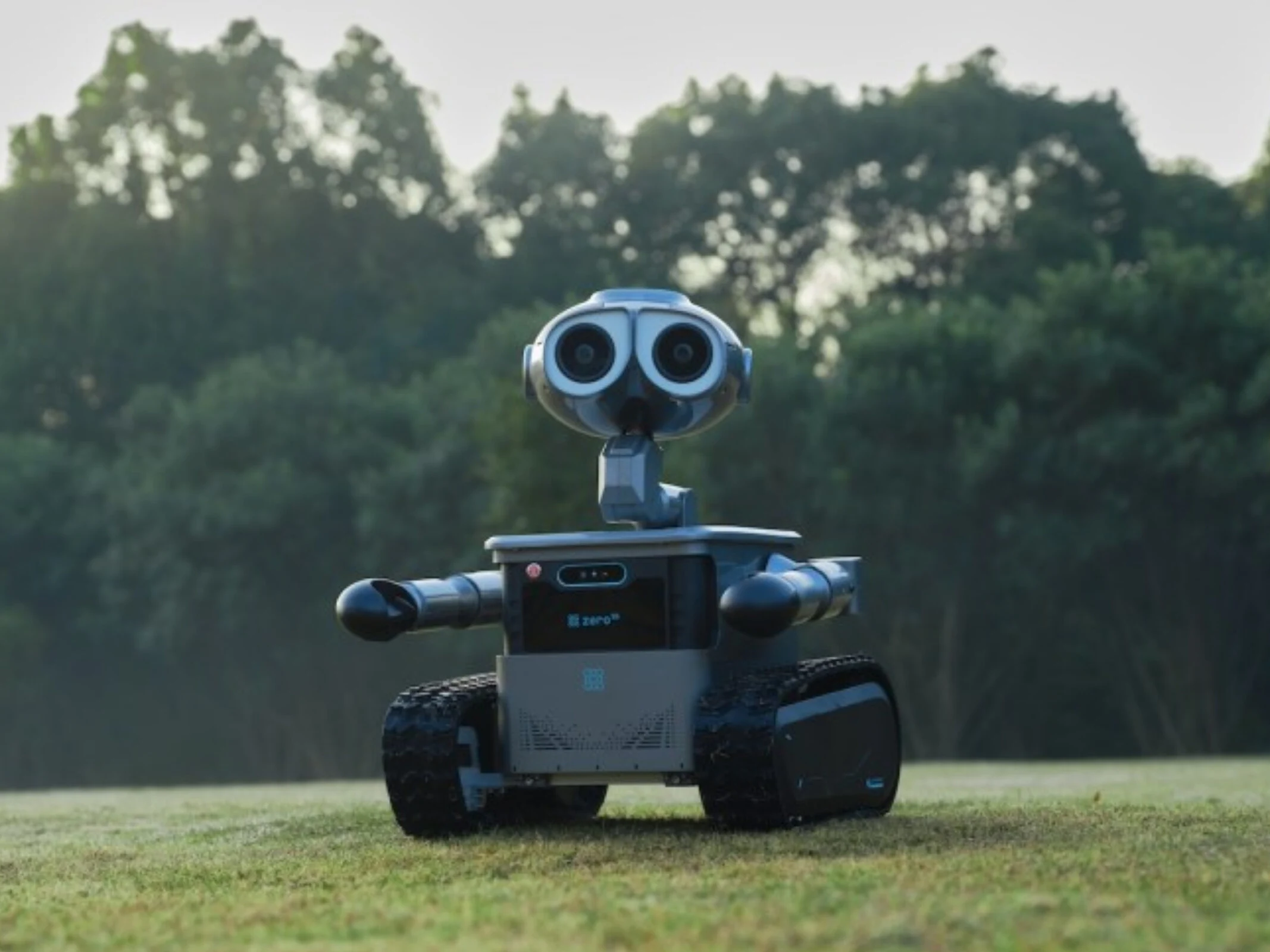
    Zeroth Robotics made its official entrance at CES 2026, coming out of stealth mode and launching into the US market. This previously lesser-known startup unveiled a full range of five AI-driven robots, which includes the W1. This versatile service robot, inspired by Pixar’s WALL-E, is designed to be used in homes, outdoors, by small businesses, and by developers. The W1 employs caterpillar tracks instead of wheels, allowing it to traverse uneven surfaces, tackle inclines of up to 20 degrees, and overcome minor obstacles. With a capacity to carry up to 44 pounds and tow 110 pounds, it serves various purposes like transport, surveillance, or assisting in gardens and business environments.

    Features of the W1

    Equipped with GPS and Beidou navigation, the W1 boasts multiple cameras, including RGB-D depth sensors, along with ultrasonic and infrared sensors, all part of a comprehensive 360-degree monitoring system. It can be controlled through an app, via voice commands, or with a specialized two-hand remote. The W1 is powered by a 308 Wh battery that offers as much as 20 hours of standby time and supports fast charging at 100 watts, reaching full charge in about an hour. While its design evokes echoes of WALL-E, it’s important to note that the W1 is not a licensed Disney product. A press release stated that a true WALL-E companion robot is available for families, schools, and theme parks, but only in the Chinese market.

    Launch Plans

    The W1 is set to launch in the US within the first quarter of 2026. The company has announced that pre-orders will be available for $4,999, with shipping expected to start on April 15. In China, this model is already available for purchase at a price of approximately $5,599.

    Alongside the W1, Zeroth Robotics also presented several other models, including the M1, a small humanoid robot standing around 15 inches tall. Designed for interaction, reminders, and daily assistance, the M1 operates on an AI system powered by Google Gemini. Aimed at families and senior citizens, the M1 is anticipated to release in April 2026, starting at $2,899.

    Additional Models

    The lineup features the A1, a four-legged research robot created for universities and R&D teams, as well as “Jupiter,” a large humanoid robot intended for logistics, service, and security tasks. All models are constructed upon a shared technological base that Zeroth refers to as “Technology DNA,” which incorporates motion control, interaction capabilities, and specially designed actuators.

    Source:
    Link


  • AMD Ryzen AI Halo: 16 Cores & Radeon 8060S in Mini PC

    AMD Ryzen AI Halo: 16 Cores & Radeon 8060S in Mini PC

    Key Takeaways

    1. AMD’s Ryzen AI Halo mini workstation rivals Nvidia’s DGX Spark, featuring the Ryzen AI Max+ 395 chip.
    2. The Ryzen AI Max+ 395 has 16 processor cores, boosts up to 5.1 GHz, and includes the Radeon 8060S with 40 compute units.
    3. It can run demanding games smoothly at 1080p and is designed for AI developers with support for up to 128 GB of RAM.
    4. The system can handle models with up to 200 billion parameters and is compatible with both Windows 11 and Linux.
    5. The Ryzen AI Halo is expected to launch between April and June 2026, with no pricing details available yet.


    AMD is revealing a new rival to Nvidia’s DGX Spark AI mini workstation at CES. Nvidia combines an ARM processor and 20 CPU cores with a graphics chip that achieves an AI performance of 1,000 TOPS, whereas AMD’s Ryzen AI Halo features the Ryzen AI Max+ 395.

    Chip Specifications

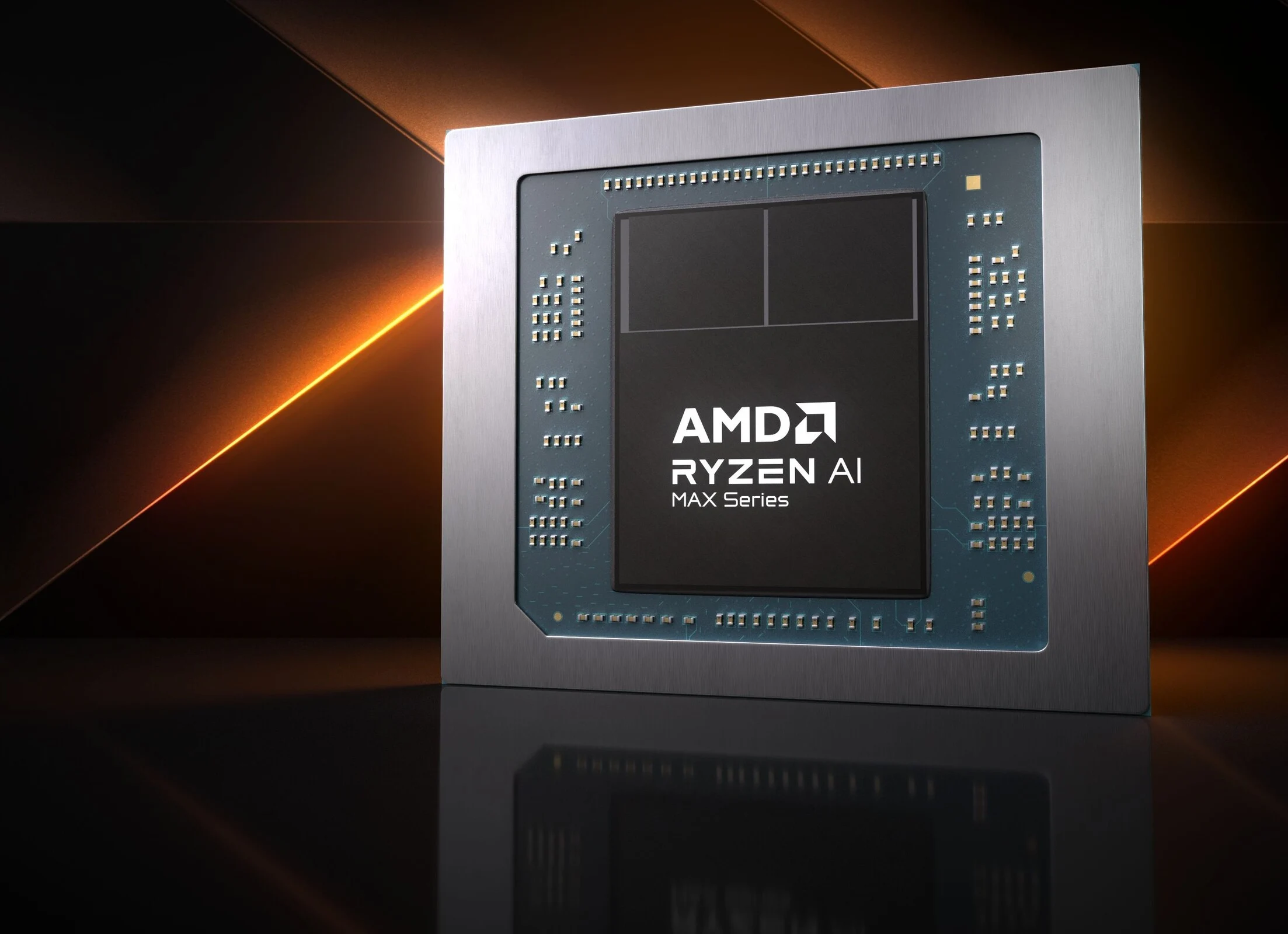
    This chip consists of 16 processor cores that can boost their clock speeds to a maximum of 5.1 GHz and includes the integrated Radeon 8060S with 40 compute units. It provides enough power to run games like Assassin’s Creed Shadows, The Elder Scrolls IV: Oblivion Remastered, and Cyberpunk 2077 smoothly at 1080p resolution with high to maximum detail settings. Yet, this mini-PC primarily targets AI developers, who will gain from the ability of both the processor and the graphics chip to access up to 128 GB of RAM.

    Performance Capabilities

    With this setup, it should be possible to run models with as much as 200 billion parameters locally. The AMD Ryzen AI Halo is compatible with both Windows 11 and Linux systems. To cool the Strix Halo chip, which can draw over 180 watts of power when under heavy load, AMD uses two fans and a large heatsink. There are also discreet ventilation openings spread across the majority of the casing, which displays two AMD logos. A small LED strip provides a nice accent to the overall appearance.

    Release Timeline

    The AMD Ryzen AI Halo is projected to be released in the second quarter of 2026, somewhere between April and June. AMD has yet to share any pricing information. For reference, the GMKtec EVO-X2, which is built on the same Ryzen AI Max+ 395, retails for $1,840, including 64 GB of RAM on Amazon.

    Source:
    Link


  • Nvidia Rubin AI Cuts Token Costs 10x vs Blackwell, Musk Praises

    Nvidia Rubin AI Cuts Token Costs 10x vs Blackwell, Musk Praises

    Key Takeaways

    1. Nvidia’s Rubin AI architecture features six subsystems, including the Vera CPU and new GPU, designed for enhanced AI inference at lower costs.
    2. The Rubin platform reduces token costs by ten times, requiring only a quarter of the GPUs needed for the Blackwell edition.
    3. The architecture competes with China’s low-cost AI models by addressing both performance and cost concerns.
    4. The Vera CPU is designed for efficient data movement and supports various workloads while maintaining full Arm compatibility.
    5. The Vera CPU offers 88 custom cores and 1.2 TB/s memory bandwidth, improving efficiency over the previous Blackwell platform.


    Nvidia has unveiled its next-generation Rubin AI computational architecture, which aims to align with China’s AI strategy by providing AI inference capabilities at significantly lower costs compared to the existing Blackwell edition.

    Architecture Overview

    As the rumors about Nvidia Rubin suggested, this platform consists of six processing subsystems that work in harmony: the Vera CPU, the new Nvidia Rubin GPU, the third-gen NVLink 6 Switch, the ConnectX-9 SuperNIC, the BlueField-4 DPU, and the Spectrum-6 Ethernet Switch. These chips utilize advanced TSMC foundry nodes and introduce interface optimizations designed to greatly reduce token costs and training times.

    Cost Efficiency

    Nvidia’s approach of “codesign” across these six new chips allows for model training using only a quarter of the GPUs required in the current Blackwell platform, reducing token costs by ten times. Elon Musk has also promised a tenfold decrease in token costs for Tesla’s upcoming AI5 computer, but it won’t begin mass production until next year. Musk referred to Nvidia Rubin as the “rocket engine for AI,” which will facilitate the scaling of edge models.

    Competitive Landscape

    China boasts impressively low AI token prices by open-sourcing models like DeepSeek and linking multiple midrange AI GPUs, such as the Huawei 910C. The Nvidia Rubin architecture addresses both performance and cost concerns for running AI models, making it a competitive option.

    Highlighting the Vera CPU

    One of the most fascinating aspects of the Rubin platform is the new Nvidia Vera CPU, which is “engineered for data movement and agentic reasoning across accelerated systems, with full confidential computing support.” This CPU can function alongside an Nvidia GPU or operate independently, handling “analytics, cloud, orchestration, storage, and high-performance computing (HPC) workloads” while maintaining full Arm compatibility.

    Vera CPU Specifications

    The Vera CPU boasts 88 custom cores and an impressive 1.2 TB/s of LPDDR5X memory bandwidth, all while consuming minimal power. The integration of the NVLink-C2C connectivity interface allows synchronized CPU-GPU memory access, contributing to the Rubin platform’s efficiency, which is significantly better than the Blackwell-based predecessor.

    Purchase Information

    You can find the Nvidia DGX Spark personal AI supercomputer available for purchase on Amazon.

    Source:
    Link


  • “Codee Codeebot: Teach Kids Visual AI Robot Programming”

    “Codee Codeebot: Teach Kids Visual AI Robot Programming”

    Key Takeaways

    1. Codeebot allows children to program without a computer using magnetic blocks that represent coding logic.
    2. Built-in lights and a rotary knob help kids trace code execution and fix errors easily.
    3. An AI voice tutor powered by ChatGPT aids children in understanding programming concepts.
    4. Codeebot can be used to program AI robots for various tasks, such as opening curtains and moving objects.
    5. The Codeebot is set to launch in February 2026, with pricing details still to be announced.


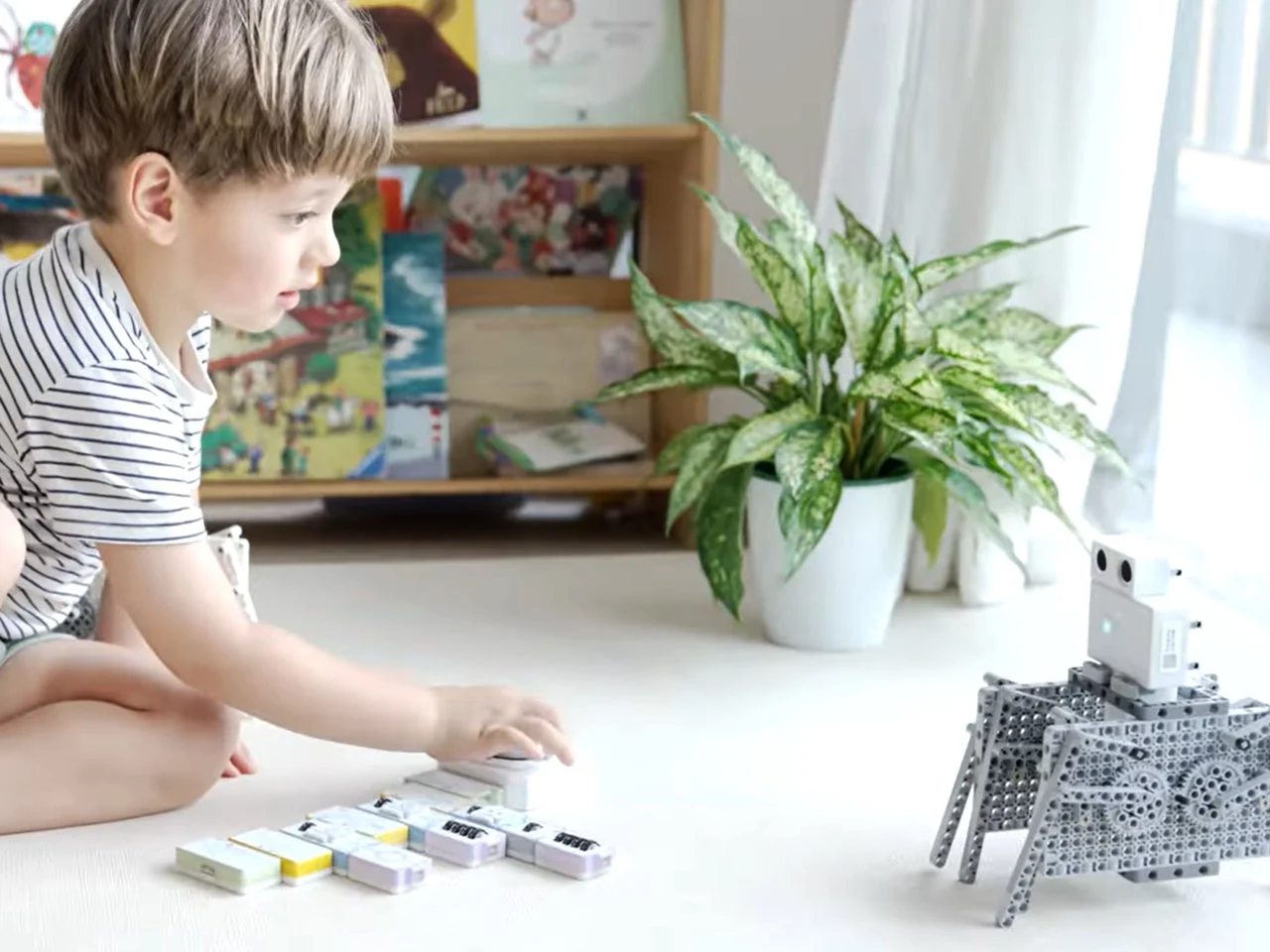
    Codee has introduced the Codeebot, a hands-on programming system designed for building software to control AI robots. The Codeebot features physical blocks that interlock, resembling the coding blocks found in Scratch, a visual programming language developed by the MIT Media Lab.

    Easy Coding without a Computer

    Children do not need a computer to write code with the Codeebot system. Instead, they piece together code logic using various magnetic blocks. When these blocks are connected, built-in lights indicate how the software executes, while a rotary knob allows for step-by-step execution of the code, making it simpler to trace flows and fix errors. Additionally, a built-in ChatGPT-powered AI voice tutor helps kids understand programming logic and coding concepts.

    Versatile Programming for AI Robots

    The Codeebot system enables the programming of AI robots to perform multiple tasks, such as opening curtains, dispensing soap, and moving trash cans. Creators can also utilize Codeebot to develop complex programs for their own innovative projects.

    The launch of Codeebot is planned for February 2026, but pricing details have yet to be revealed.

    Source:
    Link


  • AMD ROCm 7.2: AI Training for Ryzen AI 400 with ComfyUI Support

    AMD ROCm 7.2: AI Training for Ryzen AI 400 with ComfyUI Support

    Key Takeaways

    1. ROCm is AMD’s open-source alternative to Nvidia’s CUDA, supporting HPC and datacenter GPUs.
    2. ROCm 7.2 adds support for the latest Ryzen AI 400 APUs on both Windows and Linux platforms.
    3. Version 7.1 demonstrated significant performance improvements, achieving up to 5 times better performance compared to version 6.4.4.
    4. ROCm 7.2 enables enhanced performance for various AI models, including a 5.4 times increase in video generation tasks.
    5. A ComfyUI build with ROCm 7.2 will be available, and users can install it alongside Adrenalin 26.1.1.


    AMD is sharing several new updates to its ROCm software stack at CES 2026. ROCm, which originally meant Radeon Open Compute Platform but no longer serves as an acronym, is AMD’s open-source alternative to Nvidia’s proprietary CUDA. This software has been a key component for HPC and datacenter GPUs, such as the Instinct accelerators and Radeon Pro.

    Overview of ROCm Functionality

    ROCm consists of runtimes, compilers, tools, and libraries that allow for GPU kernel-level programming tailored for high-level end-user applications. It is utilized in training AI models and performing inference, as well as handling HPC tasks like scientific simulations and data analysis. Additionally, it supports general-purpose GPU (GPGPU) tasks that do not require graphics, all utilizing AMD hardware.

    New Features in ROCm 7.2

    The recent ROCm 7.1 version has shown remarkable performance in text-to-video generation models like LTX Video 0.9 and Wan 2.2, managing to meet the prompt requirements in merely 3 minutes on Ryzen AI Max+ APUs and just 45 seconds on Radeon AI Pro GPUs.

    With the release of version 7.2, ROCm now accommodates the latest Ryzen AI 400 APUs for both Windows and Linux platforms. A ComfyUI build featuring the integrated ROCm 7.2 will be accessible from ComfyUI.org. Also, users can install this software stack alongside Adrenalin 26.1.1.

    Performance Highlights

    Initially, ROCm introduced Windows support with version 7.1, which also delivered a notable performance increase of 5 times compared to version 6.4.4. For Ryzen Max APUs, AMD boasts a 2.6 times boost in performance for Stable Diffusion XL (SDXL) and 5.2 times for Flux S with the new v7 in comparison to the earlier versions.

    ROCm 7 can also harness the capabilities of Radeon AI Pro R9700 GPUs, achieving a performance increase of 5.4 times in the Wan 14b video generation model.

  • AMD Launches Zen 5 Strix Halo APUs to Compete with Nvidia and Apple

    AMD Launches Zen 5 Strix Halo APUs to Compete with Nvidia and Apple

    Key Takeaways

    1. AMD launched the Ryzen AI Max+ Strix Halo series to improve high-performance tasks in slim devices, featuring a unified memory and graphics solution.
    2. New models, the Ryzen AI Max+ 392 and 388, were introduced at CES 2026, designed specifically for AI developers with enhanced GPU power.
    3. AMD claims significant performance improvements with the Ryzen AI Max+ processors, including better value in AI tasks and enhanced multitasking and gaming capabilities.
    4. Extensive ecosystem support for Ryzen AI Max+ processors will come from major brands like Acer, Asus, HP, and Lenovo, along with various mini PC manufacturers.
    5. The GMKtec EVO-X2 mini PC with Ryzen AI Max+ 395 is available for purchase on Amazon.


    Last year, AMD launched the Ryzen AI Max+ Strix Halo series, aiming to enhance high-performance tasks in slim and lightweight devices.

    Unified Memory and Graphics

    The Strix Halo provided a combined memory solution along with a specialized XDNA 2 NPU and a robust Radeon 8060S GPU, which eliminated the necessity for a separate graphics card. The lineup initially included the 16C/32T Ryzen AI Max+ 395, the 12C/24T Ryzen AI Max 390, and the 8C/16T Ryzen AI Max 385. These models appeared in various high-end laptops like the HP ZBook Ultra G1a and the Asus ROG Flow Z13, as well as mini PCs such as the HP Z2 Mini G1a, Bosgame M5, and Minisforum MS-S1 Max, among others.

    New Additions at CES 2026

    At CES 2026, AMD is rolling out two fresh SKUs in the Ryzen AI Max+ family — the Ryzen AI Max+ 392 and Ryzen AI Max+ 388, specifically designed for AI developers. AMD has labeled both APUs with the Max+ title, since they now feature 40 RDNA 3.5 compute units (CUs), producing up to 60 TFLOPs of GPU compute power.

    The Ryzen AI Max+ 392 has a slight spec improvement over the Ryzen AI Max 390, maintaining the same 12C/24T setup with a 5 GHz boost and up to 50 TOPS NPU. The RDNA 3.5 GPU now comes with 40 CUs. Likewise, the Ryzen AI Max+ 388 is an enhanced version of the Ryzen AI Max 385, retaining the same core and clock settings but sporting a 40 CU GPU.

    Performance Claims

    In terms of performance, AMD asserts that the Ryzen AI Max+ delivers 1.5x and 1.7x more tokens per second per dollar in LM Studio when utilizing the GPT-OSS 20B and GPT-OSS 120B models, respectively, with a $2,500 HP Z2 Mini G1a utilizing the Ryzen AI Max+ 395 compared to the $4,000 Nvidia DGX Spark, both equipped with 128 GB unified memory.

    AMD also suggested a 1.4x improvement in AI performance, 1.8x enhancement in multitasking and content creation, and 1.6x faster gaming when comparing an Asus ROG Flow Z13 powered by the Ryzen AI Max+ 395 at 55 W (Silent profile) against the Apple MacBook Pro 14 with its 10-core M5 chip (Balanced profile) and 24 GB RAM.

    Broad Ecosystem Support

    AMD mentioned that there is extensive ecosystem support for the Ryzen AI Max+ processors from various device manufacturers and ISVs. New laptop designs utilizing Ryzen AI Max+ APUs will come from brands like Acer, Asus, Framework, HP, and Lenovo. We have also observed gaming handhelds like the GPD Win 5, which runs both Windows 11 and SteamOS, powered by Strix Halo.

    Companies such as Geekom, Minisforum, GMKtec, Beelink, Corsair, Colorful, and more will also be providing a range of Ryzen AI Max+ desktops and mini PCs.

    Source:
    Link