Key Takeaways
1. Tesla’s Optimus robot is experiencing performance issues, including overheating joints and malfunctions.
2. CATL has successfully deployed the Moz robot for mass production in the electric vehicle battery sector, marking a significant industry achievement.
3. The Moz robot performs complex quality assurance tasks, showing capabilities beyond simple assembly tasks demonstrated by Tesla’s Optimus.
4. The Moz robot boasts a 99% insertion success rate and adapts in real-time to changes in material positions and connection points.
5. Analysts express concerns about overcapacity in China’s humanoid robot market, despite CATL’s leadership in the EV and battery sectors.
While Tesla seems to be facing issues with the performance of its Optimus robot in factories, experiencing problems like overheating joints and frequent malfunctions in its intricate hand mechanism, CATL has proudly announced a significant achievement. They have successfully deployed a humanoid robot for mass production in the electric vehicle battery sector.
CATL’s Moz Robot Breakthrough
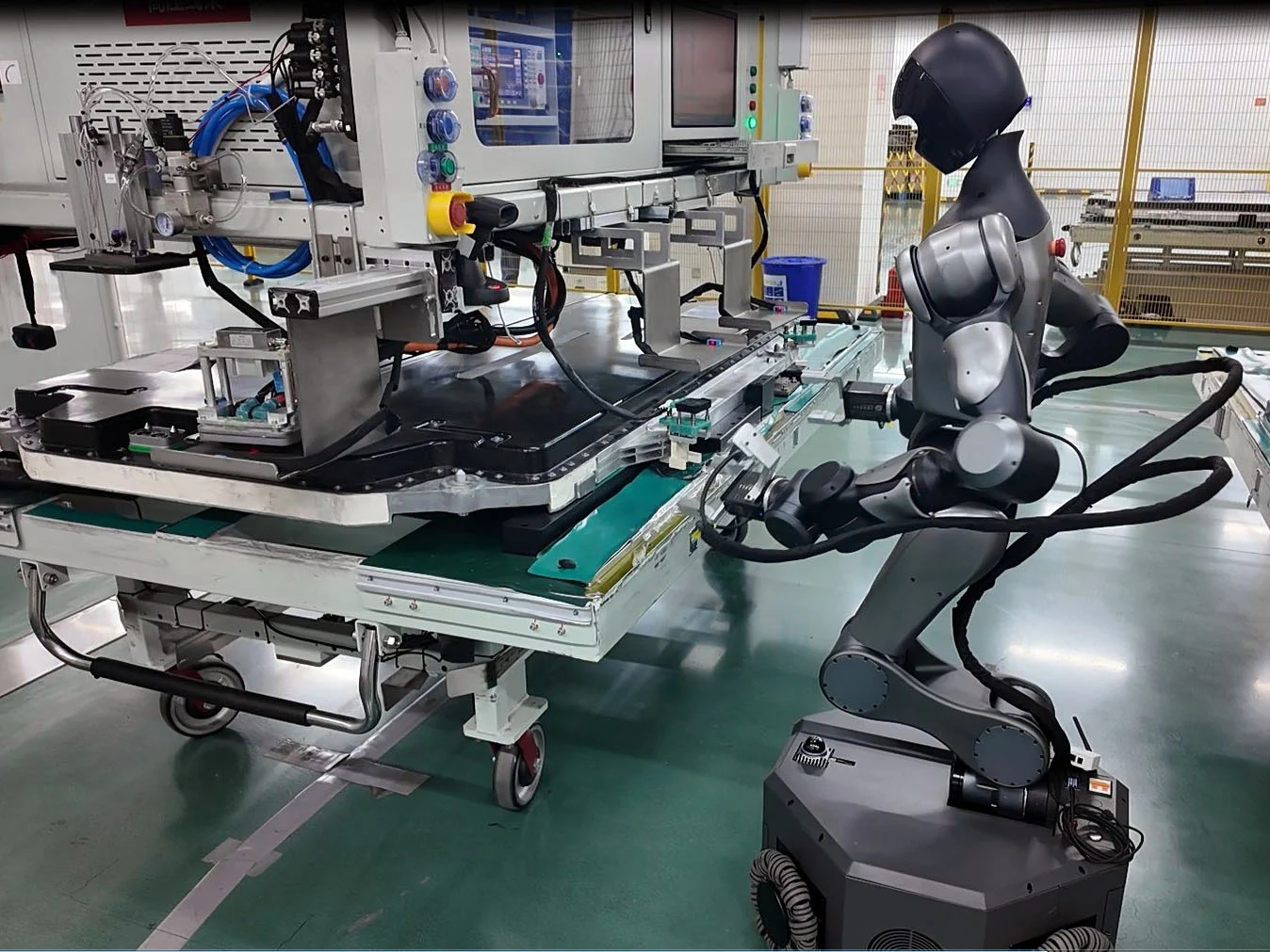
The Moz robot, created by CATL’s Spirit AI subsidiary, is operating “the world’s first power battery pack production line to achieve large-scale deployment of humanoid embodied intelligence robots,” as stated by the leading battery manufacturer. This deployment marks a notable milestone in the industry.
Precision Tasks Beyond Tesla’s Reach
The tasks that the Moz robot undertakes are not as straightforward as Tesla’s Optimus video, which shows the robot simply picking up and placing 4680 battery cells into a crate. The Moz robot performs critical quality assurance roles, where it must attach battery connectors with a level of precision and speed comparable to that of “skilled human workers,” according to CATL.
Impressive Performance Metrics
Achieving a remarkable 99% insertion success rate, the Moz robots utilize an end-to-end vision model that allows them to adapt to “material position deviations and connection point changes, continuously modifying their operational posture in real-time.” Additionally, CATL’s humanoid robot can effectively gauge the force required to secure the harness without risking damage to the delicate wires. “Moz demonstrated strong environmental perception and task generalization capabilities,” CATL asserts.
China is currently filled with AI companies focused on humanoid robots. Some analysts caution that the market may be reaching an overcapacity stage, which contributed to its status as a global leader in the EV and battery sectors. Hence, the news regarding CATL’s Moz robot deployment in mass production lines isn’t particularly surprising.
Source:
Link