Tag: Tesla Optimus

  • Unitree Launches Humanoid Robot for Home Chores and Elder Care

    Unitree Launches Humanoid Robot for Home Chores and Elder Care

    Key Takeaways

    1. Unitree has sold over 5,500 humanoid robots in 2025, surpassing American competitors like Tesla and Agility Robotics.
    2. The company plans to introduce a more affordable general-purpose humanoid robot by 2030, focusing on practical applications for everyday use.
    3. Unitree aims to extend the use of humanoid robots beyond industrial tasks to household chores and elder care within the next three years.
    4. The design of Unitree’s upcoming robots will incorporate cloud-based training and real-world data collection for improved decision-making.
    5. Real-world data collection is crucial for enhancing the intelligence of humanoid robots and preparing them for domestic use at lower prices.


    While Elon Musk believes the Tesla Optimus robot will outperform its Chinese rivals upon its release, companies like Unitree have already delivered thousands of humanoid robots and are transitioning from flashy demonstrations to creating practical household assistants.

    Unitree’s Impressive Sales

    In 2025, Unitree sold over 5,500 humanoid robots, exceeding the total production of all American competitors such as Tesla, Figure AI, and Agility Robotics. The company plans to ship up to 20,000 units in 2026, indicating that they are not waiting for the technology to be perfected before ramping up production.

    A Shift Towards Domestic Use

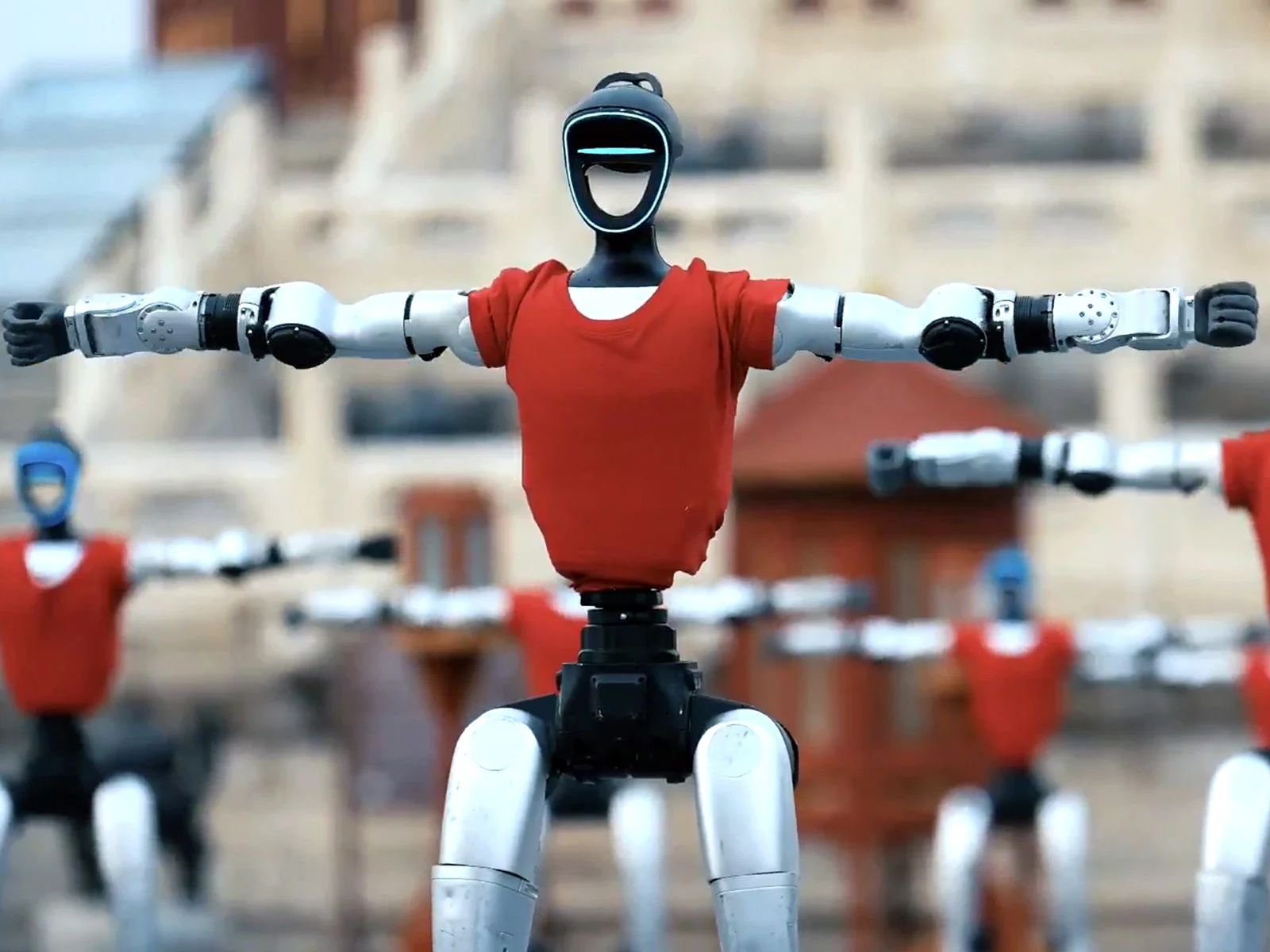
    Unitree, better known for viral videos showcasing a marching army of robots or the impressive martial arts displays of its WuBots captivating viewers at the Spring Festival Gala, is now focusing on a more practical future for its machines. According to its IPO filing with the Shanghai Stock Exchange, which aims to raise over $600 million, the company plans to introduce a more affordable “general-purpose humanoid robot embodied foundation model” by 2030.

    This new model focuses on four main areas: scene, instruction, action, and task. Its design intends to connect cloud-based model training, edge-side inference, and real-world data collection. This approach mirrors the technology used in self-driving electric vehicles but is adapted for decision-making and execution in humanoid robots.

    Moving Beyond Industrial Applications

    Although the immediate emphasis for humanoid robots like Optimus or Hyundai’s Atlas has been within industrial and manufacturing settings—where the environment is controlled to ensure reliable operation—Unitree aims to begin selling a general-purpose humanoid in the next three years. They believe that as generalization, reliability, and safety improve, the uses for these robots will extend beyond industrial tasks to include household chores, elder care, and everyday activities like laundry.

    This goal isn’t just theoretical. Unitree’s R1 robot can already perform simple household chores using voice and vision-based interaction. Moreover, its open-sourced UnifoLM-VLA-0 model enables the G1 humanoid to manage 12 different categories of complex tasks autonomously, such as unpacking a tennis racket, rather than just executing pre-programmed kung fu routines.

    The Importance of Real-World Data

    The current challenge is to gather data from real-world interactions. Industry experts assert that once a specific threshold is achieved, overall intelligence will significantly increase, marking a pivotal moment when humanoid robots will be ready to transition from demonstrations to homes at a lower price than current models.

    Source:
    Link


  • High Cost of Atlas Humanoid Robots Makes Worker Replacement Feasible

    High Cost of Atlas Humanoid Robots Makes Worker Replacement Feasible

    Key Takeaways

    1. Elon Musk estimates the Tesla Optimus could cost between $20,000 and $30,000 if mass-produced, but this is met with skepticism from industry experts.
    2. Achieving low production costs similar to cars is challenging due to competition from established companies like Boston Dynamics, which have higher manufacturing costs.
    3. Analysts believe that even with reduced prices, humanoid robots like Atlas at $130,000 may not effectively replace skilled workers due to current limitations and challenges.
    4. Hyundai aims to significantly cut production costs of robot components by 70% by 2030, but creating cheaper yet durable parts remains a significant hurdle.
    5. Tesla’s Optimus is set to launch in 2027, but its capabilities and final cost are still uncertain amid the emergence of more efficient humanoid robots from competitors.


    While Elon Musk has stated that the Tesla Optimus may be priced between $20,000 and $30,000 when mass-produced, other companies that have more experience in making humanoid robots are skeptical about that figure.

    The Realities of Production Costs

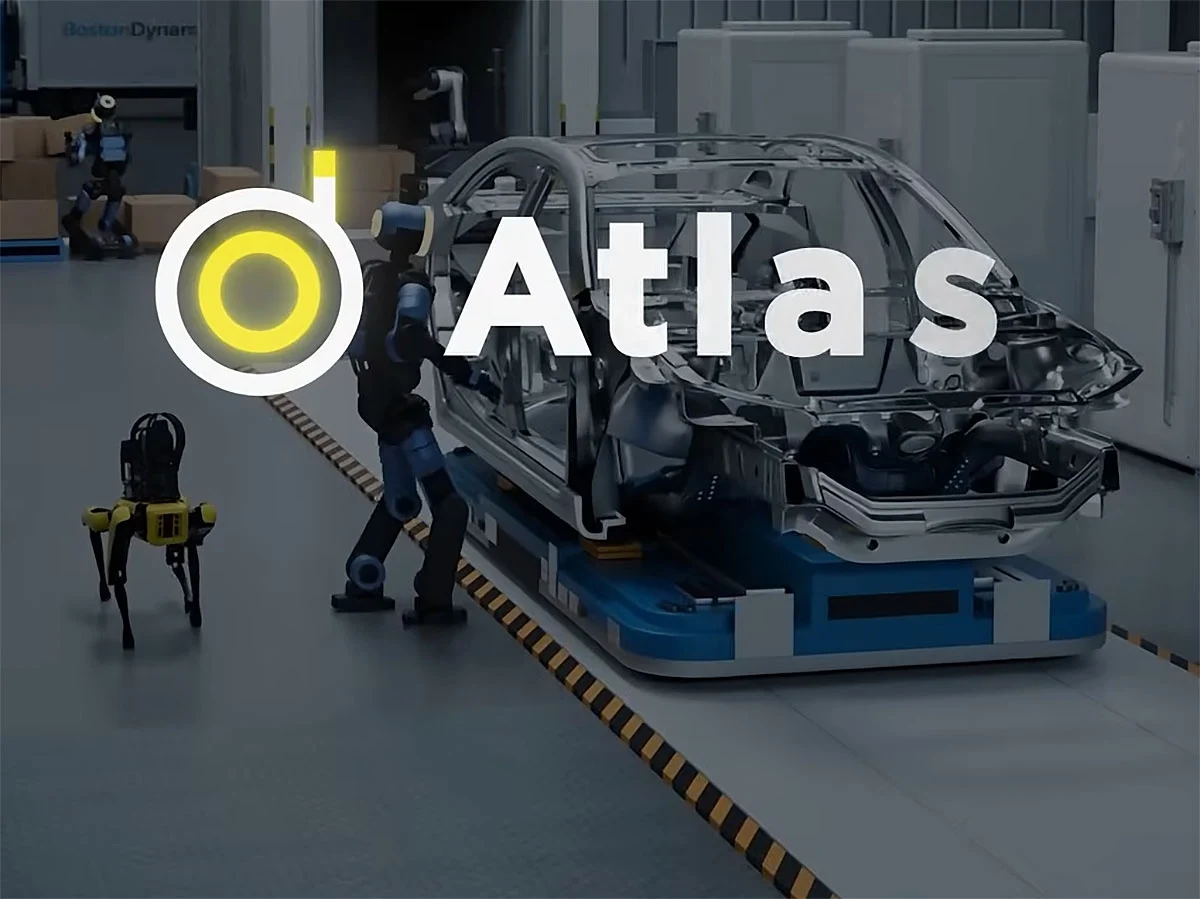
    Elon did mention that a $30,000 price tag for Optimus is only achievable if they produce it in large quantities, similar to how cars are made. However, reaching that production level could be tough due to growing competition from companies like Boston Dynamics. Their Atlas robot showcases impressive capabilities, like doing backflips from a still position on flat ground and swapping its own battery for more operational time. Nevertheless, the manufacturing cost of the latest version is around $300,000. Hyundai, which owns Boston Dynamics, aims to significantly reduce those expenses by integrating more affordable parts, which could potentially lower the cost to about $130,000 by the time they plan to deploy 30,000 Atlas robots in factories by 2030.

    Challenges Ahead

    Analysts suggest that even with a reduced price, $130,000 is still too high to effectively replace a skilled worker. Presently, humanoid robots face several challenges such as balance problems, overheating joints, limited autonomy, and difficulties in manipulating objects accurately — issues that humans do not have. For a robot to take over human jobs, especially for anything beyond simple tasks, it needs to be both inexpensive and robust, but achieving those two goals is going to be difficult.

    Hyundai is working to cut the costs of the joints and actuators, which account for more than half of the Atlas’s production price, by 70% by 2030. This effort aims to make large-scale manufacturing more affordable, but creating components that are cheaper yet just as durable could prove to be a tough challenge. Even after these reductions, the humanoid robots might still start at $130,000, and they may not match the versatility or efficiency of human workers.

    Scaling Issues

    Hyundai’s strategy is to use the Boston Dynamics Atlas robots exclusively in its own factories, which could limit their overall production scale. On the other hand, Tesla is working on the Optimus as a versatile robot set to launch in 2027, but it also faces the same durability concerns. Elon Musk has a reputation for making grand promises that don’t always come to fruition. It remains uncertain what capabilities Optimus will offer and, crucially, how much it will cost, particularly when considering the recent surge of cost-effective and efficient humanoid robots like the XPeng Iron from China, which are already being mass-produced.

    Source:
    Link


  • CATL Surpasses Tesla with Humanoid Robots for EV Battery Production

    CATL Surpasses Tesla with Humanoid Robots for EV Battery Production

    Key Takeaways

    1. Tesla’s Optimus robot is experiencing performance issues, including overheating joints and malfunctions.
    2. CATL has successfully deployed the Moz robot for mass production in the electric vehicle battery sector, marking a significant industry achievement.
    3. The Moz robot performs complex quality assurance tasks, showing capabilities beyond simple assembly tasks demonstrated by Tesla’s Optimus.
    4. The Moz robot boasts a 99% insertion success rate and adapts in real-time to changes in material positions and connection points.
    5. Analysts express concerns about overcapacity in China’s humanoid robot market, despite CATL’s leadership in the EV and battery sectors.


    While Tesla seems to be facing issues with the performance of its Optimus robot in factories, experiencing problems like overheating joints and frequent malfunctions in its intricate hand mechanism, CATL has proudly announced a significant achievement. They have successfully deployed a humanoid robot for mass production in the electric vehicle battery sector.

    CATL’s Moz Robot Breakthrough

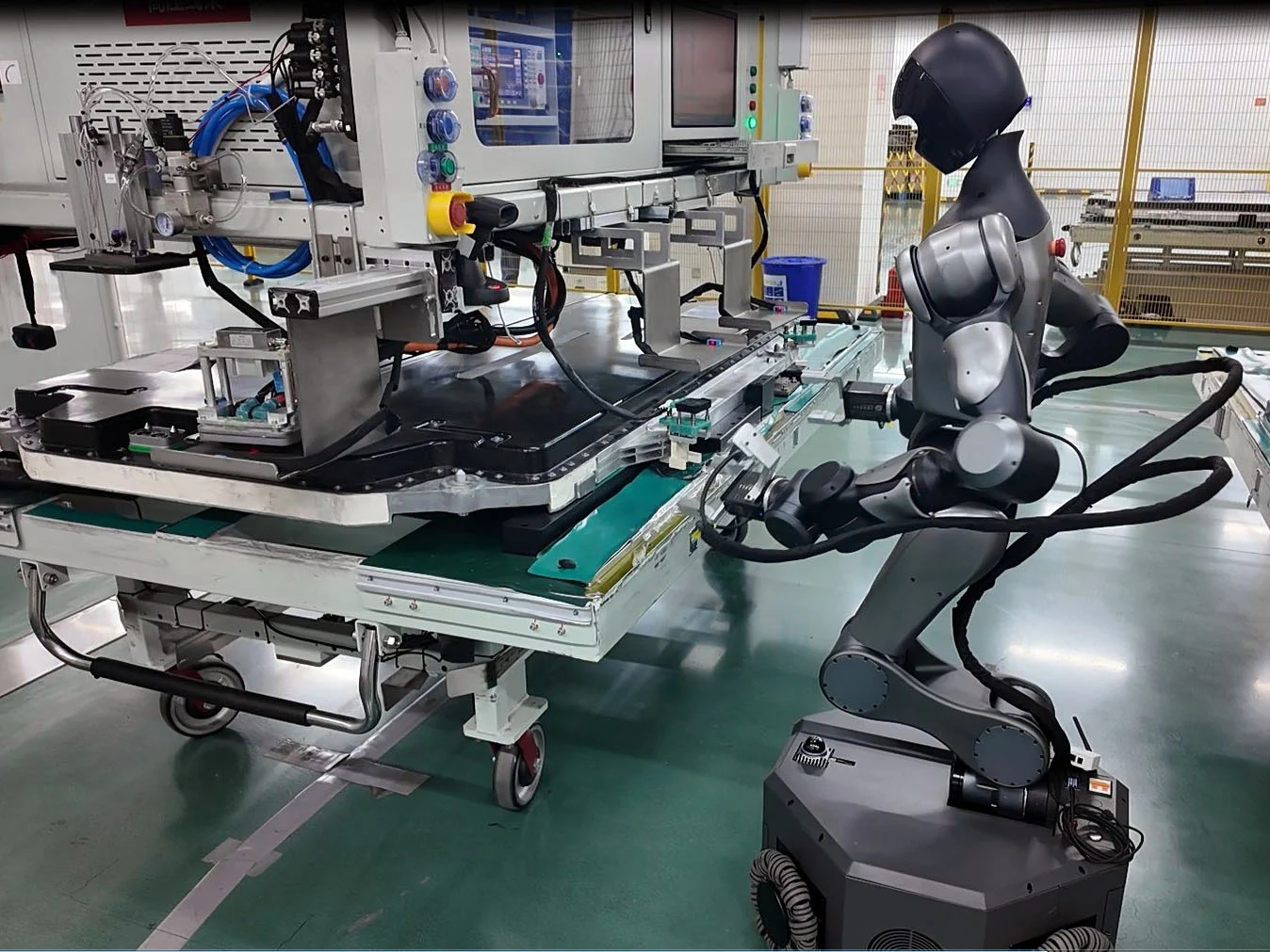
    The Moz robot, created by CATL’s Spirit AI subsidiary, is operating “the world’s first power battery pack production line to achieve large-scale deployment of humanoid embodied intelligence robots,” as stated by the leading battery manufacturer. This deployment marks a notable milestone in the industry.

    Precision Tasks Beyond Tesla’s Reach

    The tasks that the Moz robot undertakes are not as straightforward as Tesla’s Optimus video, which shows the robot simply picking up and placing 4680 battery cells into a crate. The Moz robot performs critical quality assurance roles, where it must attach battery connectors with a level of precision and speed comparable to that of “skilled human workers,” according to CATL.

    Impressive Performance Metrics

    Achieving a remarkable 99% insertion success rate, the Moz robots utilize an end-to-end vision model that allows them to adapt to “material position deviations and connection point changes, continuously modifying their operational posture in real-time.” Additionally, CATL’s humanoid robot can effectively gauge the force required to secure the harness without risking damage to the delicate wires. “Moz demonstrated strong environmental perception and task generalization capabilities,” CATL asserts.

    China is currently filled with AI companies focused on humanoid robots. Some analysts caution that the market may be reaching an overcapacity stage, which contributed to its status as a global leader in the EV and battery sectors. Hence, the news regarding CATL’s Moz robot deployment in mass production lines isn’t particularly surprising.

    Source:
    Link


  • Solid-State Battery Fuels Iron Humanoid Robot to Outpace Tesla Optimus

    Solid-State Battery Fuels Iron Humanoid Robot to Outpace Tesla Optimus

    Key Takeaways

    1. XPeng’s Iron humanoid robot aims for mass production by the end of 2026 and can be customized in various human-like designs.
    2. The robot features advanced technology with three Turing AI chips, 3,000 TOPS of computing power, and 82 degrees of freedom in its body.
    3. XPeng’s Iron robot is powered by an all-solid-state battery, achieving over 500 Wh/kg energy density, outperforming Tesla’s Optimus battery.
    4. The design includes innovative elements like a humanoid spine, bionic muscles, and flexible artificial skin for a more human-like appearance.
    5. XPeng plans to position the Iron robot for diverse roles, potentially making it the first mass-produced humanoid robot, ahead of Tesla.


    One of the leading electric vehicle startups in China, XPeng, has introduced a new generation of its Iron humanoid robot that could challenge Tesla’s Optimus. This development raises questions about Elon Musk’s ambitious claims regarding the trillion-dollar valuation that could come from it.

    Production Timeline and Design

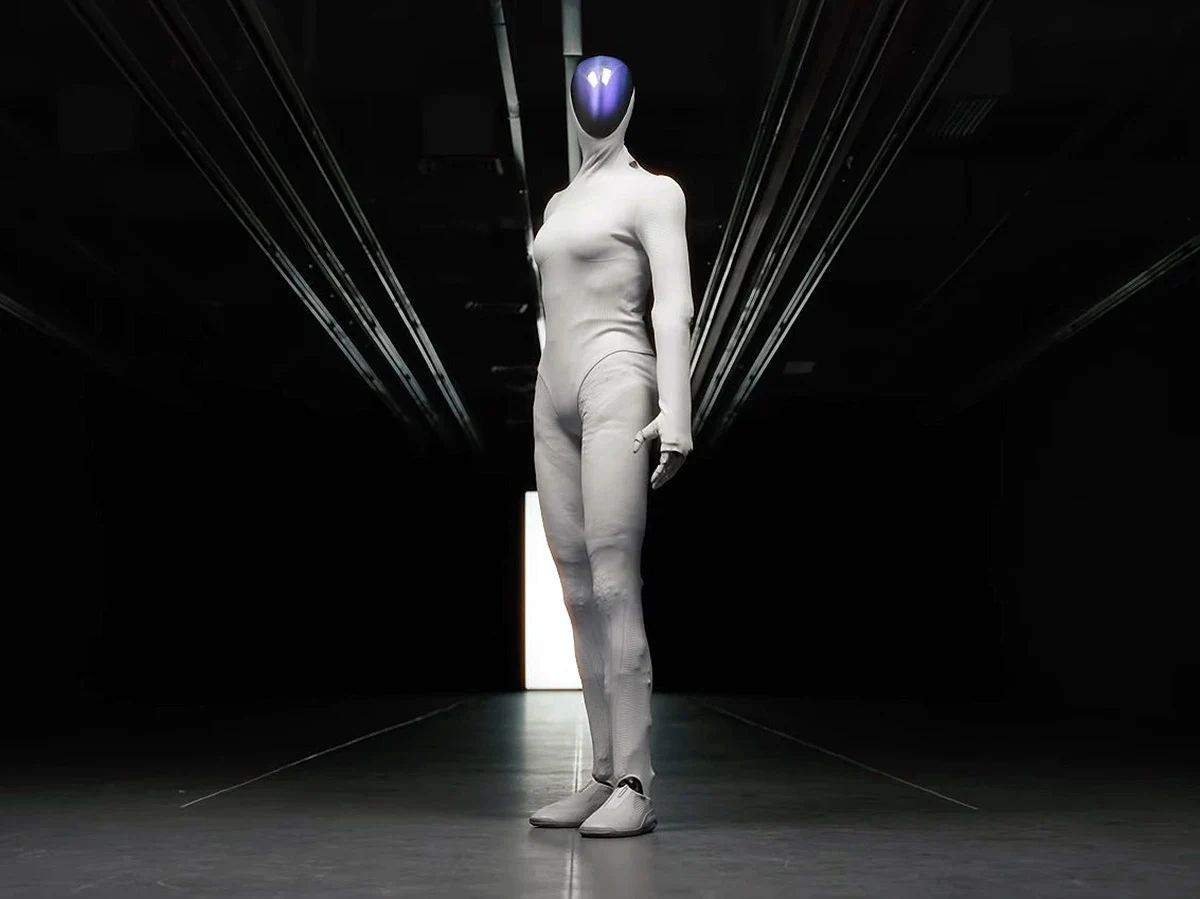
    Set for mass production by the end of 2026, the Iron robot can be customized with various human-like designs, including a female form that ignited debates online about whether XPeng had concealed a human inside. To clarify, an employee had to unzip the robot’s artificial skin to show its mechanical components.

    Advanced Technology

    The second generation of XPeng’s Iron robot is powered by three specially designed Turing AI chips that collectively deliver 3,000 TOPS of computing power. Its “face” is made from a curved OLED display. The robot offers an impressive 82 degrees of freedom in its body, while its robotic hand features the smallest harmonic joint globally and also boasts 22 degrees of freedom, matching Tesla’s Optimus.

    Battery Innovation and Applications

    In addition to a seamless and quiet demonstration, XPeng highlighted the all-solid-state battery that powers its new Iron humanoid robot. Leading battery manufacturers like CATL have indicated that solid-state batteries are better suited for high energy density applications, such as drones or robots, rather than electric vehicles, and XPeng is taking this advice seriously.

    A solid-state battery can achieve energy densities exceeding 500 Wh/kg, which is twice the capacity of the battery used in Tesla’s Optimus, all within the same size constraints. This improvement has enabled XPeng to reduce the dimensions of other parts of the humanoid robot, outfitting it with a “humanoid spine and bionic muscles.” Additionally, Iron is covered in a flexible artificial “skin,” similar to the adult Optimus bodysuit available on Amazon, to enhance its human-like appearance compared to other models.

    Future Prospects

    The Iron robot could potentially be the first mass-produced humanoid robot of its kind, getting ahead of Tesla if production begins as planned next year. XPeng aims to monetize its innovative physical AI platform by offering the Iron robot for roles such as a tourist guide, traffic officer, or shopping assistant for businesses.

    Source:
    Link


  • Ubtech to Launch Humanoid Home Robot by 2025, Challenging Tesla

    Ubtech to Launch Humanoid Home Robot by 2025, Challenging Tesla

    Key Takeaways

    1. Ubtech Robotics is known for industrial robots used by major clients like BYD and Foxconn, with premium models costing around $100,000 and produced in limited quantities.

    2. There is a rising demand in China for household androids due to the need for elderly care and a shortage of skilled workers, prompting Ubtech to plan a humanoid household robot priced around $20,000.

    3. The upcoming household robot is expected to build on Ubtech’s existing Walker series, featuring humanoid traits, and may focus on caregiving and assistance without needing extensive new development.

    4. Initial functions of the new robot may include simple tasks like fetching items, opening doors, and sending reminders, while more complex tasks like cooking and cleaning are still beyond current technology.

    5. Ubtech faces competition from companies like Tesla, which is developing its own household robot, while leveraging China’s government support for robotics to enhance research and development in a rapidly growing market.


    Ubtech Robotics is mainly recognized for its industrial robots that are utilized in manufacturing by significant clients like BYD and Foxconn. These premium models, which are about $100,000 each, are still made in small numbers. In a discussion with Bloomberg, Chief Brand Officer Michael Tam pointed out the increasing demand in China for androids that can help in home environments. This trend is partly due to a growing need for elderly care and a lack of skilled workers. To meet this demand, Ubtech has revealed plans to introduce a humanoid household robot later this year, with a target price of around $20,000 to make it suitable for home use.

    Details on the Upcoming Robot

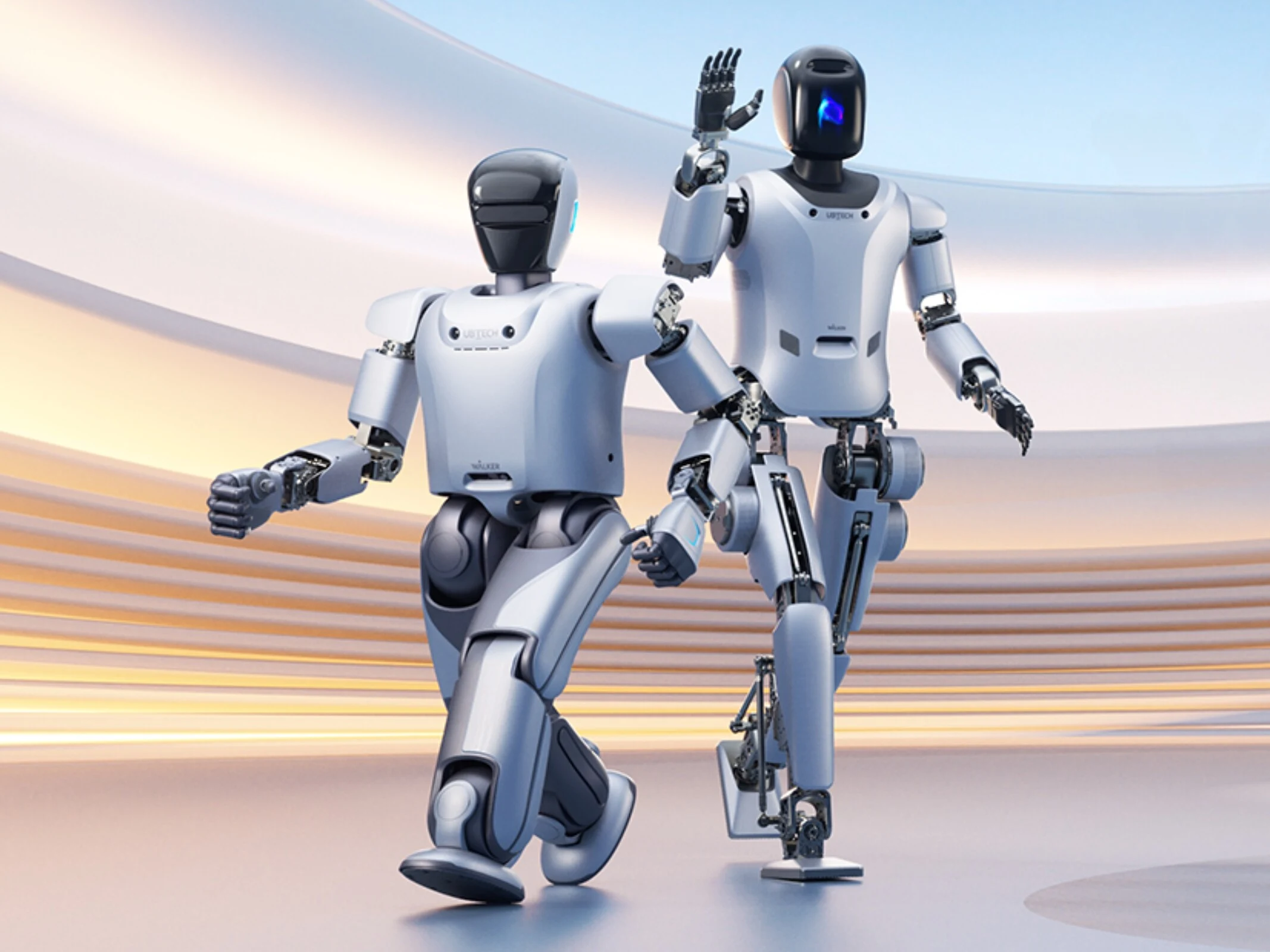
    Ubtech has yet to announce a specific name for its new household robot. However, it’s likely that the forthcoming device will expand upon the company’s current Walker series. These robots, showcased on Ubtech’s website, are designed with humanoid features, including arms, legs, and precise motorized grippers. Adapting this design for home use would enable Ubtech to utilize an already established tech base. A customized version of the Walker line could be fine-tuned for caregiving and assistance functions without the need for entirely new development. But for the moment, this is still just a guess.

    Expected Functions of the Robot

    The specific functions of Ubtech’s upcoming household robot have not been outlined yet. Nevertheless, it is anticipated that it will initially perform simple support tasks – like fetching items, opening doors, sending reminders, or helping with communication – especially in elder care situations. More complicated jobs like cooking, cleaning, or independently managing home appliances are still considered beyond the reach of present-day technology. Even Chief Brand Officer Michael Tam admits that a fully functional home robot will need several more years of development.

    In China, the robotics industry is receiving significant backing from the government. President Xi Jinping has marked this field as a national priority, leading to a boom in investment, research, and practical applications. Ubtech hopes to take advantage of this momentum, aiming to surpass competitors in turning prototypes into usable products. However, the company is entering a competitive arena; in the last two years, numerous start-ups have emerged in humanoid robotics. Simultaneously, swift advancements in large language models are revealing new avenues for sophisticated robot intelligence.

    Competition and Market Position

    By introducing a household robot, Ubtech would find itself in direct competition with Tesla and its Optimus robot, which is built to perform a range of domestic tasks and is projected to hit the consumer market at a price between $20,000 and $30,000. Tam sees this international competition – especially from the United States – as a positive force. While the U.S. is at the forefront of developing advanced AI algorithms, China has the edge in deploying these technologies in factories and large-scale manufacturing.

    Source:
    Link

  • Unitree G1 Robot Showcases Amazing Spinning Kicks and Skills

    Unitree G1 Robot Showcases Amazing Spinning Kicks and Skills

    Key Takeaways

    1. Humanoid robots, like Figure AI’s and Tesla’s Optimus, are rapidly advancing, with real-world applications in factories.
    2. Unitree’s G1 robot showcases exceptional mobility and agility, capable of performing complex maneuvers like kung fu kicks.
    3. The G1 features 43 joints and specialized actuators, allowing it to maintain balance on narrow surfaces and carry weights without falling.
    4. Unitree promotes innovation through an open-source approach, enabling global developers to create custom applications for the G1.
    5. The G1 has sparked discussions on platforms like Reddit, with some users questioning the authenticity of its showcased abilities.


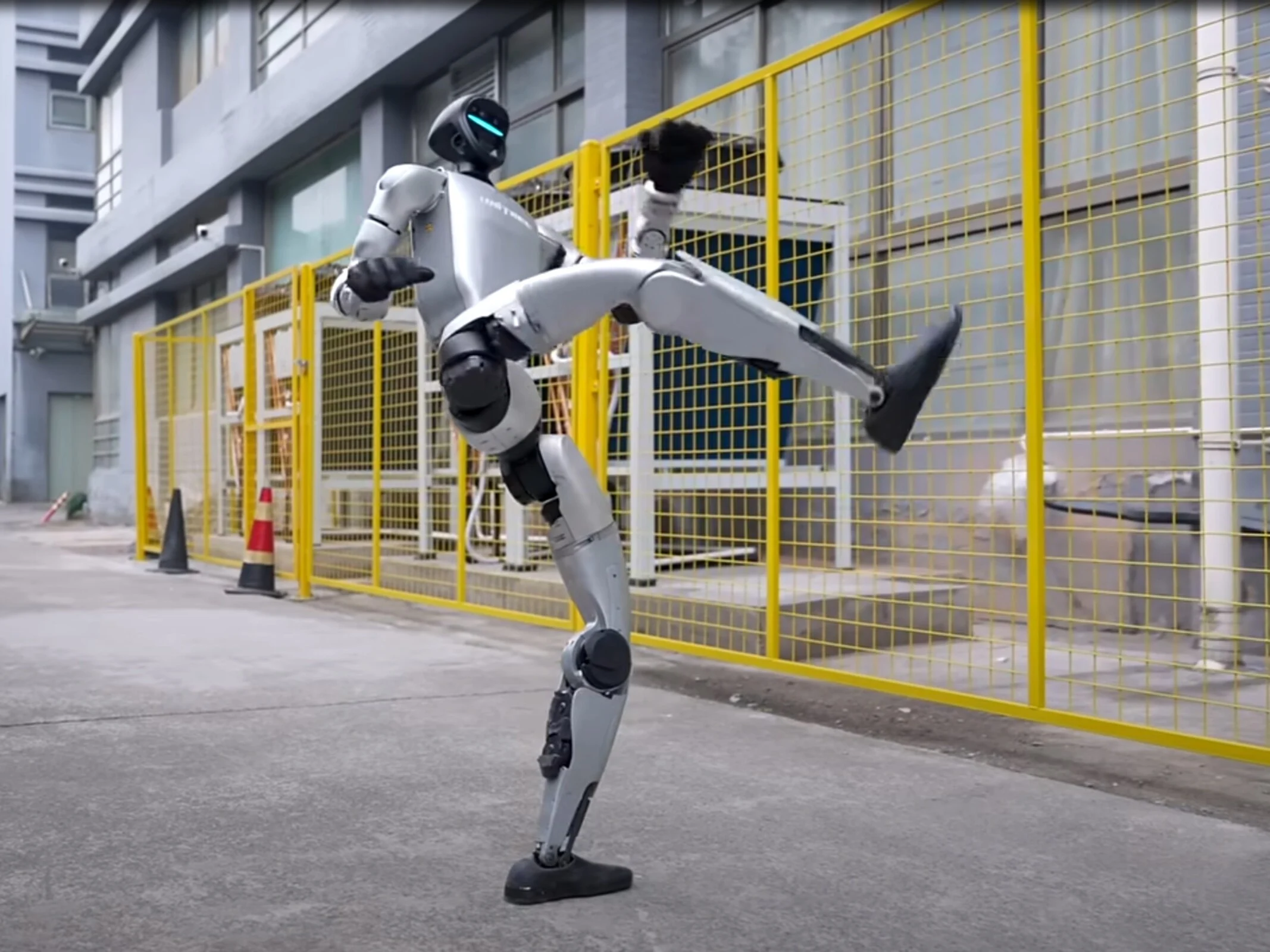
    The growth of humanoid robots has sped up in the last few years. Figure AI has already sent its first robot to a customer, while Tesla’s Optimus is busy operating in its factories. It was quite remarkable to see Optimus traverse challenging terrain in November 2024. Nevertheless, what Unitree demonstrates with the G1 elevates the concept to an entirely different level. A recent video showcased the robot executing intricate kung fu maneuvers, including a spin kick. Although the movements seem a bit rigid, no one would want to be on the receiving end of such a kick.

    Exceptional Mobility

    These detailed movements are achievable thanks to 43 joints, which provide the G1 with remarkable maneuverability. Specialized actuators, acting like human muscles, assist in keeping the robot stable even during swift actions. As per Unitree, the G1 can maintain its balance while standing on a surface merely 20 centimeters wide and can carry a backpack weighing 6 kg without losing its footing. The robot is available starting at $16,000.

    Open-Source Approach

    Unitree adopts an open-source method with the G1, allowing developers globally to access its algorithms, control interfaces, and simulation tools. This approach encourages researchers and businesses to design custom applications for the robot, while also aiding in the progress of robotics.

    The G1 is already igniting significant discussions on Reddit. While many users admire its technical skills, others doubt the authenticity of the video. Some skeptics believe that certain scenes were modified or enhanced using CGI to showcase the robot’s abilities as more advanced. This wouldn’t be the first instance of possible trickery in humanoid robotics. Similar accusations have been directed at Tesla, with claims that its Optimus bot was likely remote-controlled while sorting small components.

    Source:
    Link