
Key Takeaways
1. XPeng’s Iron humanoid robot aims for mass production by the end of 2026 and can be customized in various human-like designs.
2. The robot features advanced technology with three Turing AI chips, 3,000 TOPS of computing power, and 82 degrees of freedom in its body.
3. XPeng’s Iron robot is powered by an all-solid-state battery, achieving over 500 Wh/kg energy density, outperforming Tesla’s Optimus battery.
4. The design includes innovative elements like a humanoid spine, bionic muscles, and flexible artificial skin for a more human-like appearance.
5. XPeng plans to position the Iron robot for diverse roles, potentially making it the first mass-produced humanoid robot, ahead of Tesla.
One of the leading electric vehicle startups in China, XPeng, has introduced a new generation of its Iron humanoid robot that could challenge Tesla’s Optimus. This development raises questions about Elon Musk’s ambitious claims regarding the trillion-dollar valuation that could come from it.
Production Timeline and Design
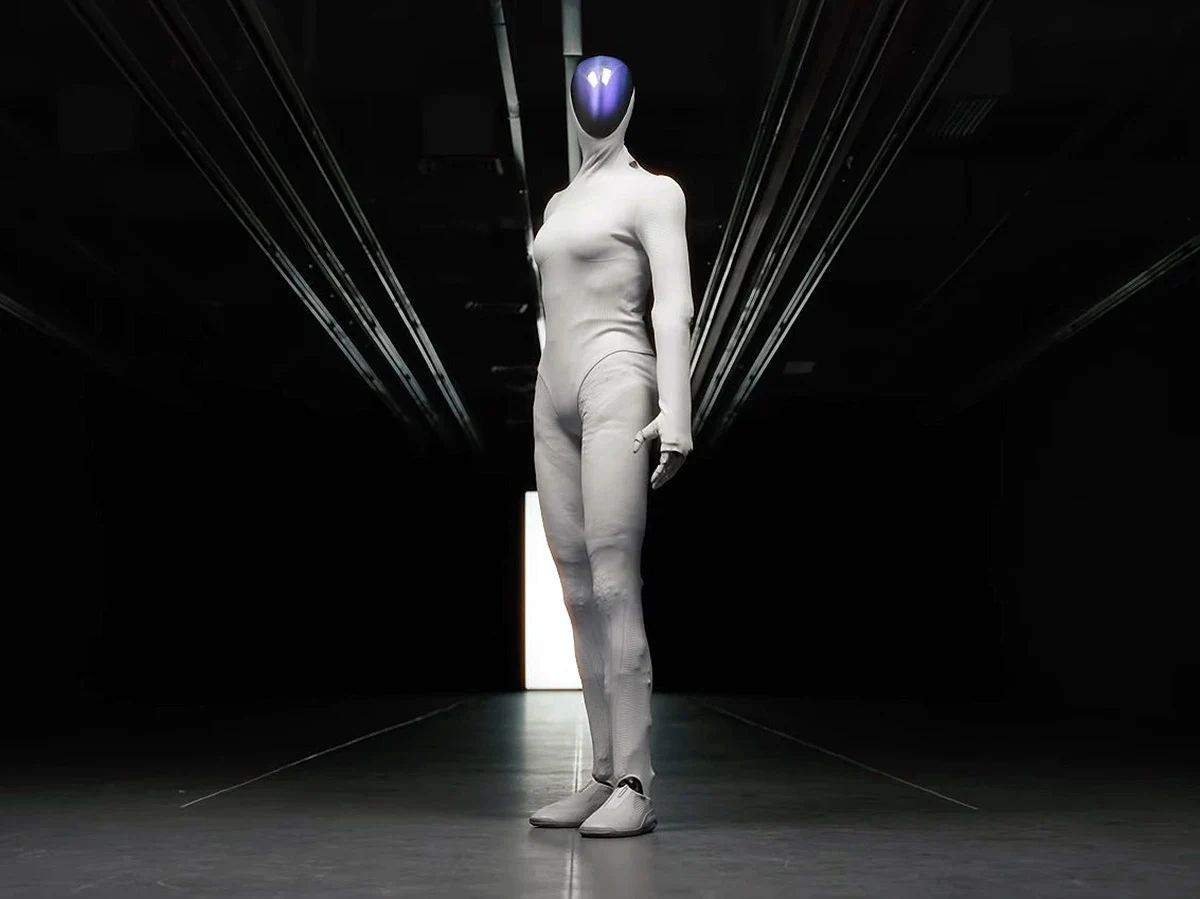
Set for mass production by the end of 2026, the Iron robot can be customized with various human-like designs, including a female form that ignited debates online about whether XPeng had concealed a human inside. To clarify, an employee had to unzip the robot’s artificial skin to show its mechanical components.
Advanced Technology
The second generation of XPeng’s Iron robot is powered by three specially designed Turing AI chips that collectively deliver 3,000 TOPS of computing power. Its “face” is made from a curved OLED display. The robot offers an impressive 82 degrees of freedom in its body, while its robotic hand features the smallest harmonic joint globally and also boasts 22 degrees of freedom, matching Tesla’s Optimus.
Battery Innovation and Applications
In addition to a seamless and quiet demonstration, XPeng highlighted the all-solid-state battery that powers its new Iron humanoid robot. Leading battery manufacturers like CATL have indicated that solid-state batteries are better suited for high energy density applications, such as drones or robots, rather than electric vehicles, and XPeng is taking this advice seriously.
A solid-state battery can achieve energy densities exceeding 500 Wh/kg, which is twice the capacity of the battery used in Tesla’s Optimus, all within the same size constraints. This improvement has enabled XPeng to reduce the dimensions of other parts of the humanoid robot, outfitting it with a “humanoid spine and bionic muscles.” Additionally, Iron is covered in a flexible artificial “skin,” similar to the adult Optimus bodysuit available on Amazon, to enhance its human-like appearance compared to other models.
Future Prospects
The Iron robot could potentially be the first mass-produced humanoid robot of its kind, getting ahead of Tesla if production begins as planned next year. XPeng aims to monetize its innovative physical AI platform by offering the Iron robot for roles such as a tourist guide, traffic officer, or shopping assistant for businesses.
Source:
Link

Leave a Reply