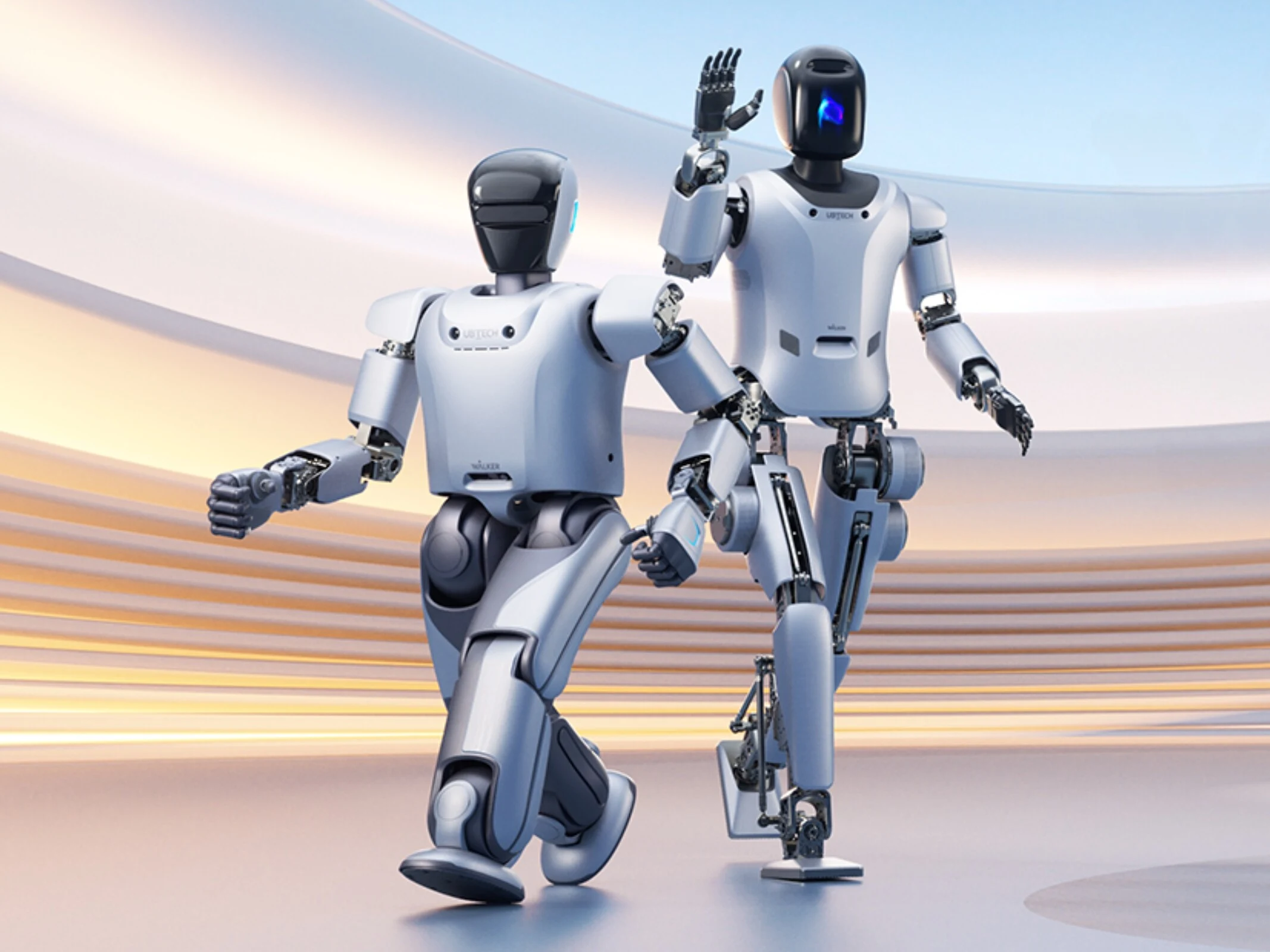
Tag: Ubtech Robotics

  • Humanoid Robot Plays Tennis Against Human in Exciting Video

    Humanoid Robot Plays Tennis Against Human in Exciting Video

    Key Takeaways

    1. The Walker S2 humanoid from Ubtech Robotics showcases smooth and controlled movements while playing tennis in a video demonstration.
    2. The robot’s racket arm is missing some fingers, raising questions about its functionality and performance.
    3. The humanoid must track a fast-moving tennis ball, coordinate movements, and maintain balance to play effectively.
    4. It remains unclear if the Walker S2 operates autonomously or is controlled by a human, and final scores from the demonstration are not provided.
    5. Ubtech is exploring commercial uses for the Walker S2, while other companies like Foxconn are planning to employ humanoids in various fields by 2026.


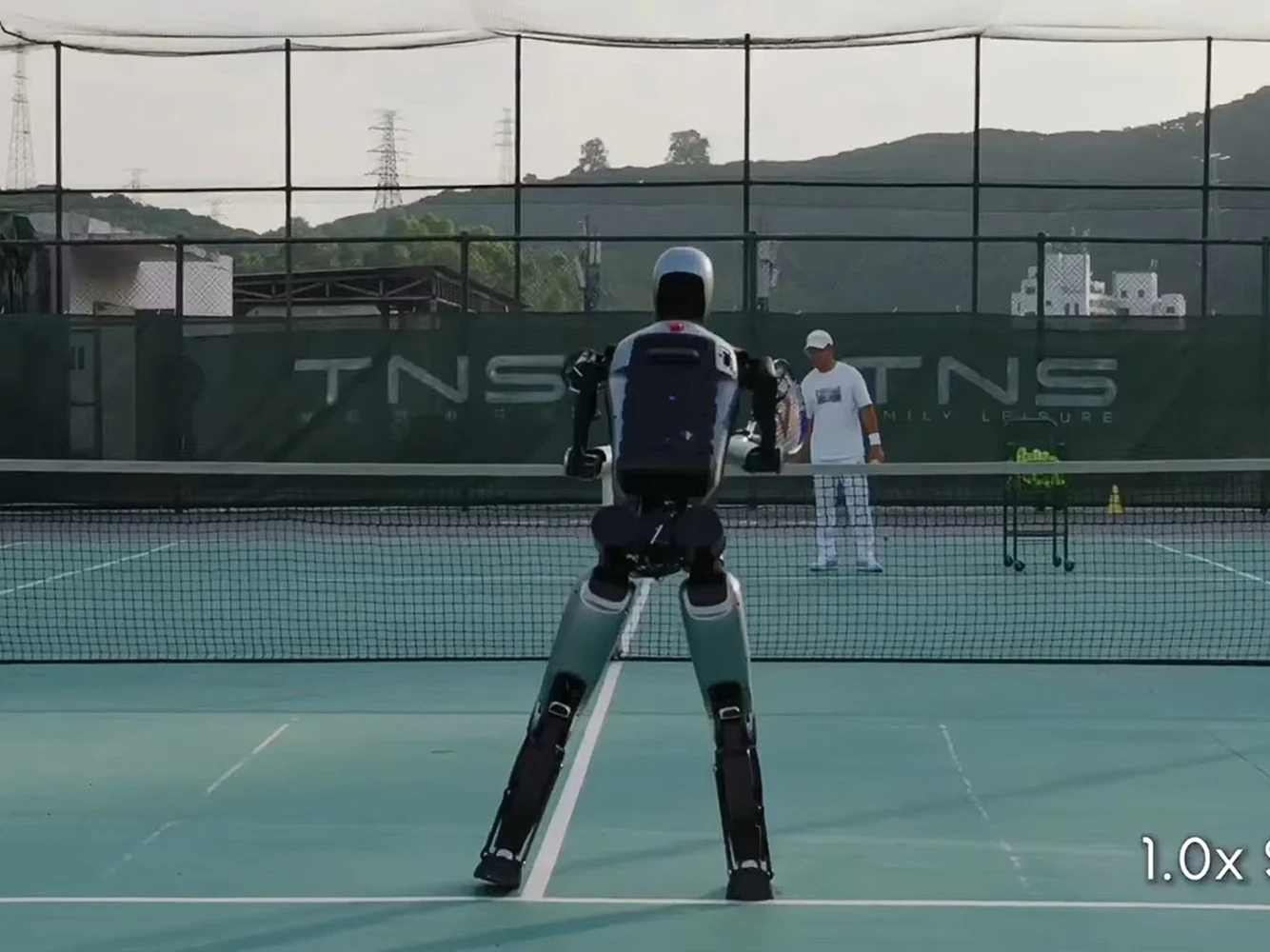
    The Walker S2 humanoid from Ubtech Robotics is making waves. A video showcases the robot wielding a tennis racket and responding to shots from a human player on the opposite side of the court.

    Smooth Movements

    Even though the video appears to be heavily edited, you can see the Walker S2 moving around quite well. It takes on various stances and swings its racket in what looks like smooth, controlled actions. At one point, the robot even manages a backhand stroke.

    Missing Details

    What’s peculiar is that the racket arm of the humanoid is missing some fingers. This becomes more apparent towards the end of the 43-second video when it gives a high-five to the human player with its hand that has fingers.

    Every tennis player knows how difficult it is to hit a fast-moving target that’s the size of a fist. The humanoid needs to track the fast-moving tennis ball and coordinate its arm and leg actions to accurately send the ball over the net. It must also keep its balance while making its movements look natural and human-like.

    Unclear Operations

    We still haven’t figured out if the humanoid was acting on its own or was controlled by a person, and we couldn’t determine the final scores either.

    Ubtech has stated that they are using the Walker S2 humanoid for commercial purposes and even shared a video, but there’s some debate about whether it’s genuine. Meanwhile, Foxconn, which partners with Apple, has laid out more detailed plans for employing humanoids by 2026.

    Robots are starting to get involved in sports, like the versatile Unitree G1, which is known for its skills in shooting basketballs, performing kung fu, and getting ready for boxing activities.

    Source:
    Link


  • China’s Humanoid Robot Army: Viral Delivery Video Raises Concerns

    China’s Humanoid Robot Army: Viral Delivery Video Raises Concerns

    Key Takeaways

    1. The Walker S2 industrial robot was recently introduced and has gained attention through a viral video showcasing hundreds of them moving in unison.
    2. Public reactions to the video are mixed, with some viewers feeling excited about advancements in robotics, while others express concerns about potential job losses.
    3. The robots in the video demonstrate autonomy by managing their battery packs and marching to transport trucks, highlighting their advanced capabilities.
    4. There is ongoing debate about the video’s authenticity, with skepticism regarding whether it is real or AI-generated, reflecting concerns about technology’s reliability.
    5. Ubtech Robotics emphasizes that the perceived perfection of the Walker S2 is a result of skilled design, marking a significant step in smart manufacturing.


    The progress in humanoid robots is moving at an astounding speed. In our previous article, we mentioned a trial for the new 1X Neo home robot, which is available for pre-order now. This time, we’re shifting our focus to a viral clip that has captured attention on social media:

    The Walker S2 Reveal

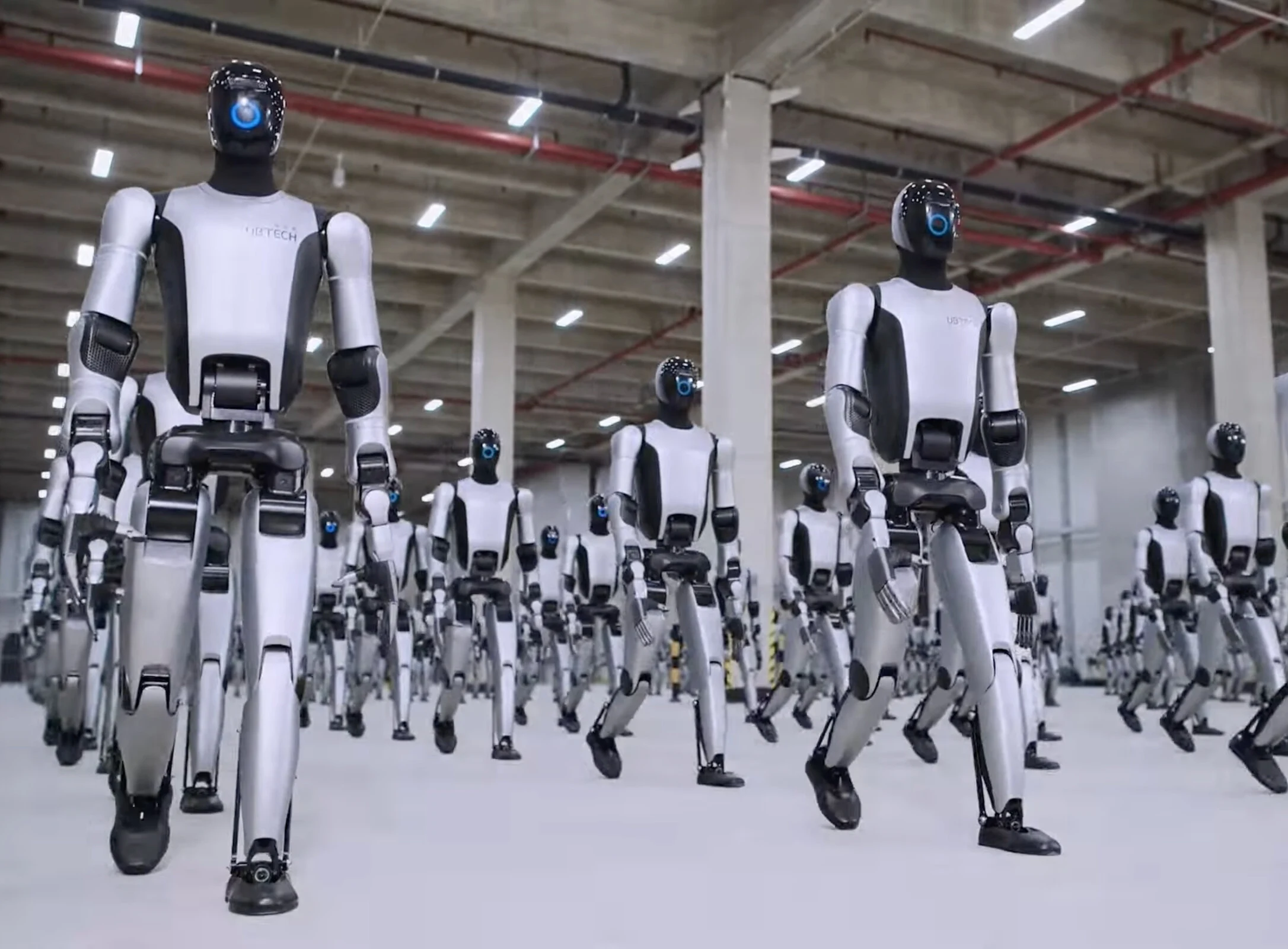
    Three months ago, the Walker S2 industrial robot was introduced, and now a viral video featuring what looks like an army of robots is making waves online. The video showcases hundreds of Walker S2 humanoid robots from Ubtech Robotics marching in unison just before their large-scale delivery. The way they are perfectly aligned in a spacious warehouse, along with their synchronized movement, is truly remarkable.

    Public Reactions

    The video naturally brings to mind unsettling science fiction movies. Many viewers find it eerie and alarming, reminding them of dystopian films. While some are excited about this new advancement and believe it will benefit humanity, others are worried about the potential for major job losses.

    In the clip below, the humanoid robots exhibit their independence by first taking out their battery packs on their own and then putting them back in to maintain continuous operation. They then march towards the trucks that will transport them. Shot with a drone, the footage offers a 360-degree perspective of the AI robots, giving it a movie-like feel.

    Debates on Authenticity

    Since the release of this video, there has been a flurry of conversations on social media, not just about possible job losses but also concerning the video’s authenticity. People are debating if the video is legitimate or merely an AI-generated trick, which has become quite common in today’s world.

    The fact that the video’s creator felt the need to clarify its authenticity in the caption underscores the public’s skepticism towards hyper-realistic, AI-created content. This discussion—whether the showcased perfection is genuine or digitally crafted—highlights the uncertainty surrounding the rapid advancement and reliability of technology. The Walker S2’s manufacturer comments in the caption, stating:

    They mentioned it seemed too flawless to be real. But perfection isn’t just made up—it’s skillfully designed. This marks the significant mass delivery of UBTECH (优必选) Walker S2. The new age of smart manufacturing has arrived. Let’s build it together!

    Ubtech Robotics, Ubtrobotics’

    Source:
    Link


  • Walker S2 Robot Beats Tesla Optimus with 3-Minute Battery Swap

    Walker S2 Robot Beats Tesla Optimus with 3-Minute Battery Swap

    Key Takeaways

    1. Elon Musk sees the Optimus robot as a future multitrillion-dollar venture for Tesla, but it faces growing competition.
    2. UBtech’s Walker S2 robot features 11 degrees of freedom in its arm, enabling it to handle delicate items effectively and move at a speed of two meters per second.
    3. The Walker S2 can operate autonomously and has the ability to change its own battery, ensuring continuous productivity without downtime.
    4. Battery swap stations for electric vehicles are becoming popular in China, allowing quick battery replacements and enhancing vehicle efficiency.
    5. UBTech’s Walker S2 applies the battery swap concept, allowing it to exchange its battery in just three minutes, contrasting with Tesla’s Optimus which requires stationary charging.


    While Elon Musk believes the Optimus robot will become a multitrillion-dollar venture for Tesla in the future, it faces increasing competition.

    New Developments in Robotics

    One example is the newly launched S2 version of the Walker industrial humanoid robot from UBtech Robotics. Similar to Optimus 2, it provides 11 degrees of freedom (DoF) in its robotic arm, allowing it to handle small and delicate items more effectively, along with various features expected from a modern humanoid robot designed for industrial applications.

    The Walker S2 can traverse a warehouse at a speed of two meters per second. It can also bend or squat for lifting heavy items, offering a pitch angle range of 170°, and it can twist its torso up to 162 degrees.

    Advanced Features

    The S2 is equipped with a large language AI model that enables voice commands and interactions with humans as it performs its tasks, much like Optimus does.

    However, where it surpasses Tesla’s Optimus is in its ability to operate autonomously around the clock. The second generation of Optimus can locate a charging station on its own, drive there, and plug itself in for recharging.

    In contrast, the Walker S2 has taken it a step further by not needing to remain inactive during charging. The company asserts that it has developed the first humanoid industrial robot that can change its own battery, ensuring continuous productivity.

    Battery Swap Innovations

    Battery swap stations for electric vehicles are gaining traction in China as a quicker alternative to conventional charging. For instance, an EV manufacturer like NIO completes 100,000 swaps daily and has achieved 80 million total, allowing them to sell their vehicles at a 30% lower price through a battery-as-a-service (BaaS) model. When a swap station is required, vehicles can exit the highway, reach the station, and have their batteries replaced automatically in just a few minutes, enabling them to continue their journey with a new battery.

    This battery swap idea has recently gained a significant advocate in China. The largest battery manufacturer, CATL, is making a substantial investment in battery swaps and intends to establish numerous stations in key urban areas and along major routes, either independently or in collaboration with innovative firms like NIO.

    Inspired by the electric vehicle trend in China, UBTech has effectively mirrored this concept with the Walker S2. As showcased in the product video below, the new Walker robot can travel to a factory swap station, remove its depleted battery, install a fully charged one, and resume work in just three minutes, while Optimus remains stationary, plugged in and charging.

    Source:
    Link

  • Ubtech to Launch Humanoid Home Robot by 2025, Challenging Tesla

    Ubtech to Launch Humanoid Home Robot by 2025, Challenging Tesla

    Key Takeaways

    1. Ubtech Robotics is known for industrial robots used by major clients like BYD and Foxconn, with premium models costing around $100,000 and produced in limited quantities.

    2. There is a rising demand in China for household androids due to the need for elderly care and a shortage of skilled workers, prompting Ubtech to plan a humanoid household robot priced around $20,000.

    3. The upcoming household robot is expected to build on Ubtech’s existing Walker series, featuring humanoid traits, and may focus on caregiving and assistance without needing extensive new development.

    4. Initial functions of the new robot may include simple tasks like fetching items, opening doors, and sending reminders, while more complex tasks like cooking and cleaning are still beyond current technology.

    5. Ubtech faces competition from companies like Tesla, which is developing its own household robot, while leveraging China’s government support for robotics to enhance research and development in a rapidly growing market.


    Ubtech Robotics is mainly recognized for its industrial robots that are utilized in manufacturing by significant clients like BYD and Foxconn. These premium models, which are about $100,000 each, are still made in small numbers. In a discussion with Bloomberg, Chief Brand Officer Michael Tam pointed out the increasing demand in China for androids that can help in home environments. This trend is partly due to a growing need for elderly care and a lack of skilled workers. To meet this demand, Ubtech has revealed plans to introduce a humanoid household robot later this year, with a target price of around $20,000 to make it suitable for home use.

    Details on the Upcoming Robot

    Ubtech has yet to announce a specific name for its new household robot. However, it’s likely that the forthcoming device will expand upon the company’s current Walker series. These robots, showcased on Ubtech’s website, are designed with humanoid features, including arms, legs, and precise motorized grippers. Adapting this design for home use would enable Ubtech to utilize an already established tech base. A customized version of the Walker line could be fine-tuned for caregiving and assistance functions without the need for entirely new development. But for the moment, this is still just a guess.

    Expected Functions of the Robot

    The specific functions of Ubtech’s upcoming household robot have not been outlined yet. Nevertheless, it is anticipated that it will initially perform simple support tasks – like fetching items, opening doors, sending reminders, or helping with communication – especially in elder care situations. More complicated jobs like cooking, cleaning, or independently managing home appliances are still considered beyond the reach of present-day technology. Even Chief Brand Officer Michael Tam admits that a fully functional home robot will need several more years of development.

    In China, the robotics industry is receiving significant backing from the government. President Xi Jinping has marked this field as a national priority, leading to a boom in investment, research, and practical applications. Ubtech hopes to take advantage of this momentum, aiming to surpass competitors in turning prototypes into usable products. However, the company is entering a competitive arena; in the last two years, numerous start-ups have emerged in humanoid robotics. Simultaneously, swift advancements in large language models are revealing new avenues for sophisticated robot intelligence.

    Competition and Market Position

    By introducing a household robot, Ubtech would find itself in direct competition with Tesla and its Optimus robot, which is built to perform a range of domestic tasks and is projected to hit the consumer market at a price between $20,000 and $30,000. Tam sees this international competition – especially from the United States – as a positive force. While the U.S. is at the forefront of developing advanced AI algorithms, China has the edge in deploying these technologies in factories and large-scale manufacturing.

    Source:
    Link