Tag: humanoid robot

  • Robot at Work Live Stream Goes Viral: Simply Fascinating

    Robot at Work Live Stream Goes Viral: Simply Fascinating

    Key Takeaway

    – The 03 robot demonstrates surprisingly human-like parcel sorting, including precise box rotation to align barcodes for scanning.
    – The livestream’s appeal hinges on the monotonous, routine task paired with minor delays and visual novelty, drawing sustained viewer interest.
    – Due to limited battery life, multiple units are rotated on duty, highlighting practical constraints in continuous robotic operations.
    – A human competitor briefly outperformed the robot (2.79s vs 2.83s), but the creator suggested humans may soon be surpassed.


    Figure AI sparks online hype with 03 robot

    Figure AI has sparked a small online hype with its 03 robot. On May 13, the US robotics company launched a livestream with content that is rather unspectacular, but apparently still captivating: a humanoid robot sorting parcels. The experiment was originally planned to run for just eight hours. Due to unexpectedly high viewer interest, however, the stream was extended and has now been running for more than a week.

    Stream location and task details

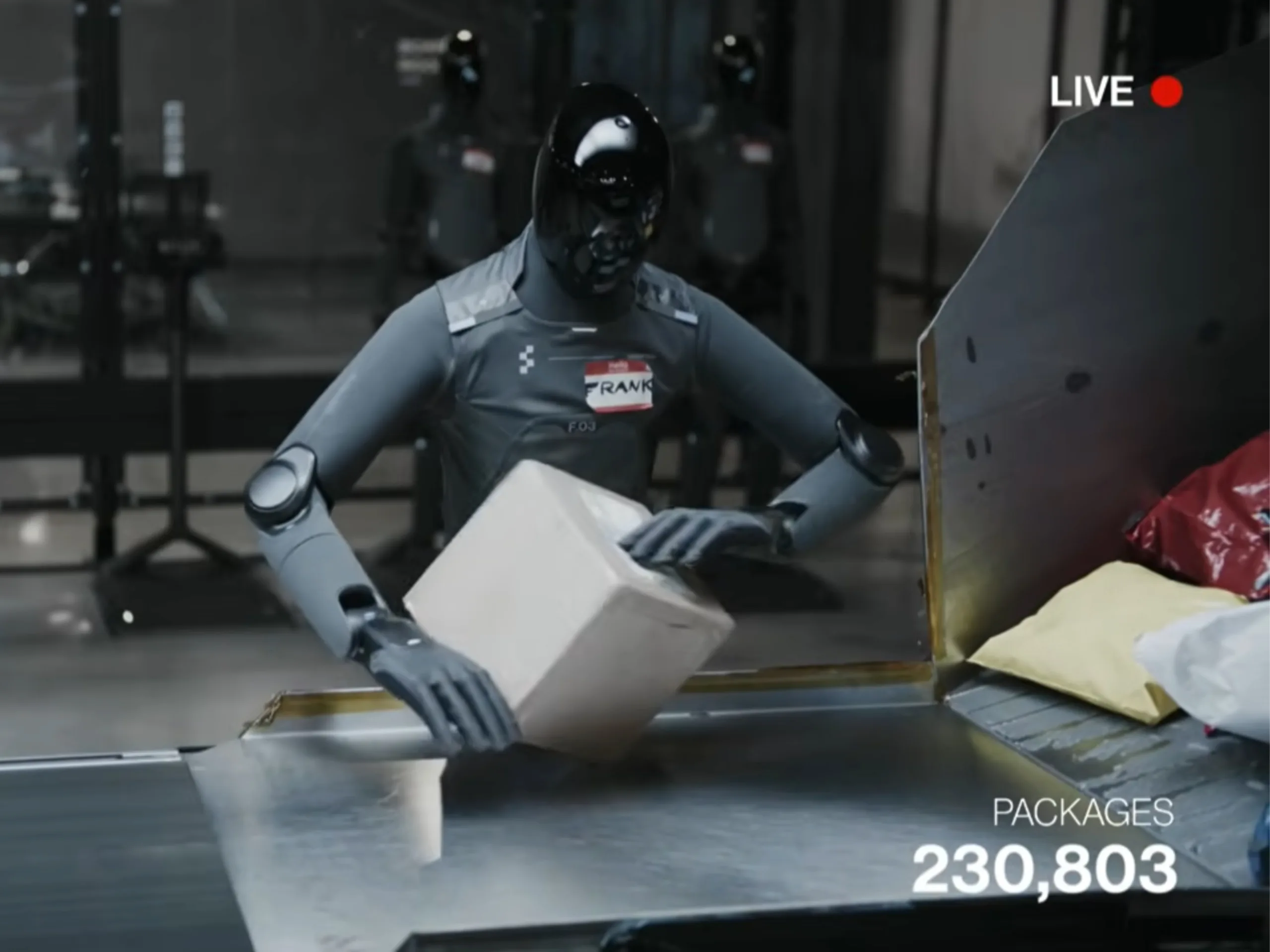
    The stream is broadcast from the company’s headquarters in San José. The task is simple: pick up boxes and shipping bags, align them with the barcode facing downward and place them on a conveyor belt. Due to the 03 model’s limited battery life, which Figure AI says is around five hours under peak load, more than one robot is being used. The electronic workers are swapped out regularly, as can be seen from their name tags. At the time of research, “Frank” was on duty – watched by more than 1,000 viewers.

    Why viewers find it compelling

    It is precisely the monotonous nature of the task that seems to make the stream so compelling. The robot sorts parcels with almost human-like precision. Particularly impressive is how easily Figure AI’s robot rotates boxes between its fingers to find the barcode. At times, it still needs a little longer to figure things out, but this mix of routine, technology and small delays appears to be exactly what makes the stream so fascinating.

    Comparison with human speed

    As a video by Figure AI founder Brett Adcock on X shows, a human worker also competed against the 03 robot during the livestream – and narrowly won. The human needed 2.79 seconds per parcel, while the robot was slightly behind at 2.83 seconds. Adcock commented: “This is the last time a human ever will win” – and that does not sound entirely unrealistic. It is probably only a matter of time before the Figure AI 03 becomes even faster and more precise at sorting.
    Sources
  • Toyota CUE7 Basketball Robot Hits 25-Meter Shots

    Toyota CUE7 Basketball Robot Hits 25-Meter Shots

    Key Takeaway

    1. Toyota’s humanoid basketball robot, CUE7, has demonstrated improved performance, including smoother movements and the ability to score from 25 meters away.
    2. The CUE series has evolved since 2017, initially as a side project by Toyota employees, now serving as a platform for AI, sensor technology, and motion control development.
    3. Toyota aims to expand its robotics initiatives, positioning itself as a competitor to companies like Tesla and Unitree in fields such as medical care, logistics, and assistance systems.

    Recent advancements in humanoid robot technology reveal impressive feats

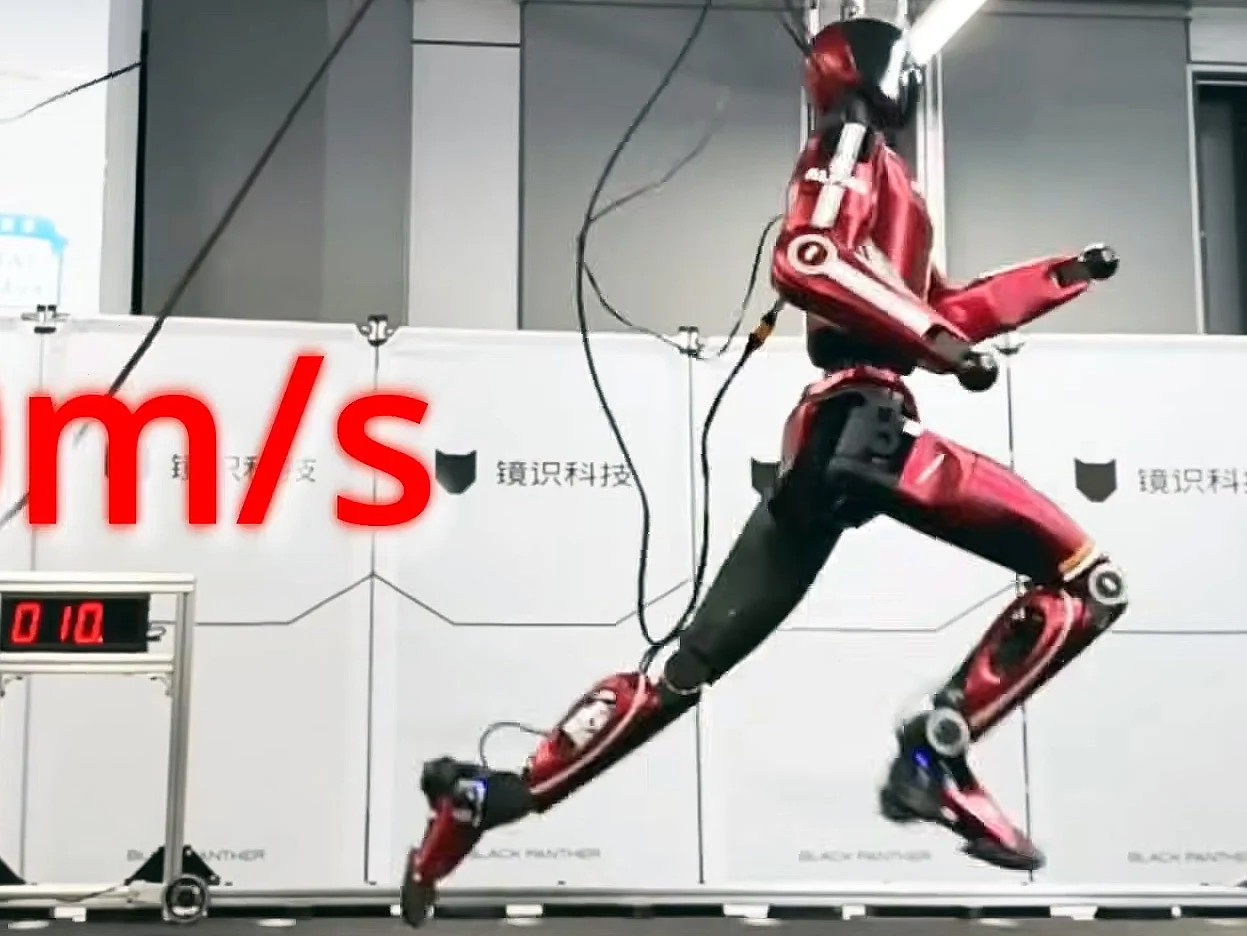
    Just recently, a humanoid robot achieved an extraordinary top speed of 10.1 m/s in a 100-meter dash, showcasing rapid progress. Furthermore, robots capable of playing basketball are now becoming common enough not to impress anymore. Yet, Toyota’s new update of its basketball robot, the CUE7, pushes the limits further, suggesting there’s still many uncharted territories in robotics. The latest footage shared by WELT on YouTube shows this remarkable machine in action, capturing widespread attention.

    Evolution from earlier models to cutting-edge performance

    Looking back, previous versions of these robots have already shown impressive feats. For example, CUE3 managed to make 2,020 free throws in succession, a remarkable number for a robot. Additionally, CUE5 broke a Guinness World Record with a basketball shot nearly 25 meters (82 feet) away, specifically 24.55 meters (80.5 feet). Now, CUE7 aims to surpass these automated accomplishments by scoring from distances up to 25 meters, while sporting a sleek and smoother movement profile, making it a more refined player.

    Design features and capabilities of the new CUE7

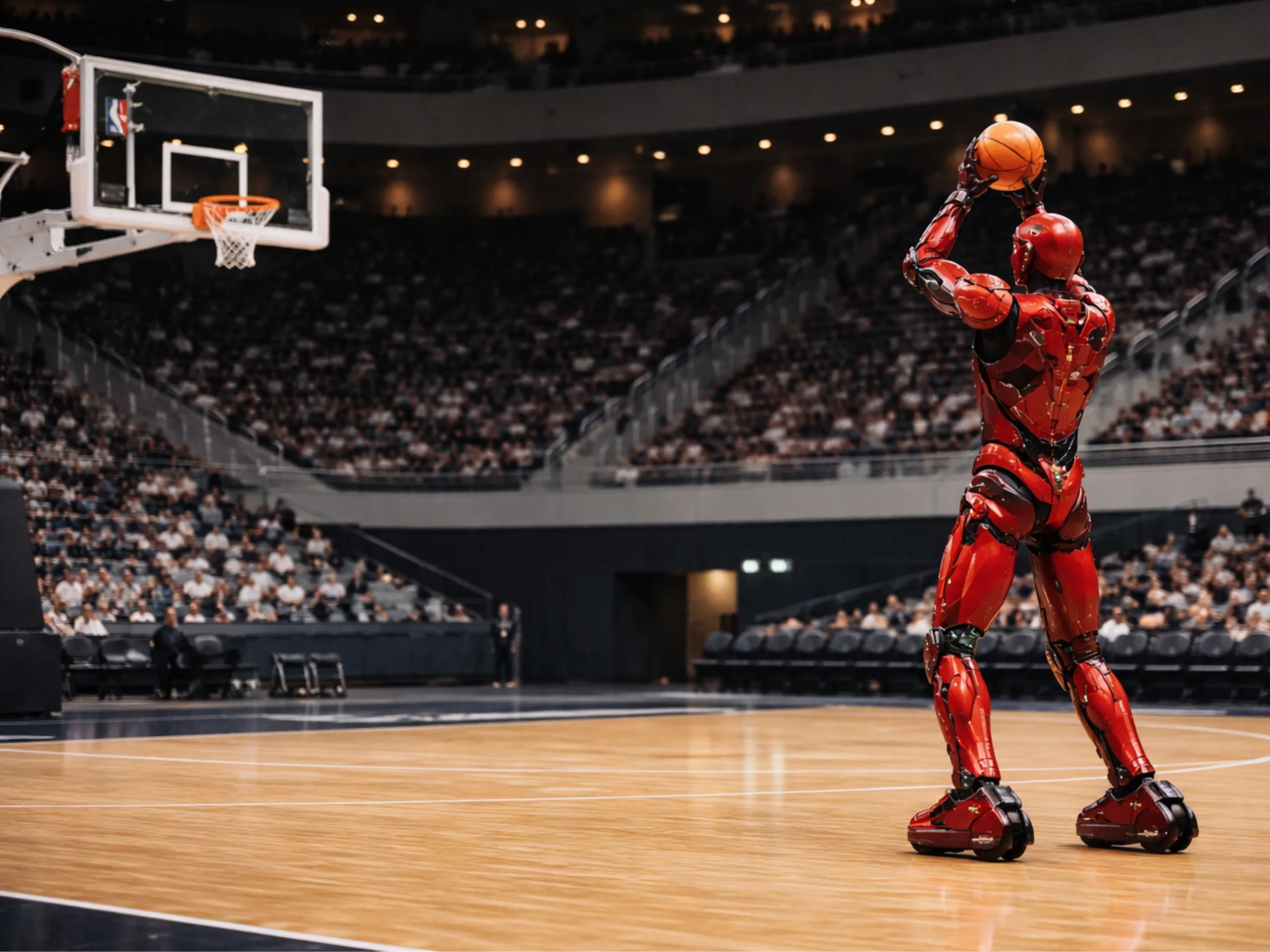
    The robotic design of CUE7 has been optimized for improved functionality. Unlike the Unitree G1, which also plays basketball, CUE7 uses rollers on its feet to improve mobility, and its gripping hands are especially crafted to handle and toss a basketball more effectively. Standing at 2.19 meters (7.2 feet) tall, this larger size might give it an edge over smaller competitors in a match, providing better reach and stability.

    Broader implications for robotics in various industries

    This project is more than mere entertainment; it acts as a testing ground for new tech in artificial intelligence, sensors, and motion control. Since its inception in 2017, the CUE project has evolved from a voluntary side endeavor to a significant research platform. The technologies developed here could be adapted for use in fields like healthcare, logistics, and even personal assistance. Sources indicate that Toyota plans to expand its efforts in robotics, aiming to position itself as a main competitor against firms like Tesla and Unitree in this rapidly growing sector.

    Sources
  • Humanoid Robot Achieves 10.1 m/s in 100m Sprint Before Usain Bolt

    Humanoid Robot Achieves 10.1 m/s in 100m Sprint Before Usain Bolt

    Key Takeaway

    1. The Unitree H1 achieved a peak speed of 10.1 m/s during a 100-meter run, but did not break the world record time of 9.58 seconds set by Usain Bolt.
    2. The robot’s design includes advanced gear systems, powerful motors, a depth camera, and 3D lidar to facilitate autonomous sprinting.
    3. Currently, the H1’s movement and control systems still lag behind human athletes, requiring further development to reach competitive sprinting performance.
    4. Achieving elite-level performance would require improvements in acceleration, sustained high speed, and precision within lane boundaries.

    Speed Claims and Technical Aspects

    Usain Bolt might laugh if he sees this: Unitree’s humanoid H1 clocked a top speed of 10.1 m/s on a 100-meter track. But, for now, he can breath a sigh of relief because no official record has been broken. The company is probably giving a bit of a boost to that number, the video title is a bit misleading. It only shows the robot’s maximum speed at some point during the run. When we’re talking about the actual race time, Bolt’s still way ahead with his record of 9.58 seconds. Still, the feat is pretty interesting to watch from a technological perspective. Unitree uploaded a video showing the robot sprinting on YouTube.

    Design Specifications and Technology

    The humanoid H1 from Unitree is designed similar to a human, standing about 1.78 meters tall, which is roughly 5 feet 10 inches. It tips the scales at 62 kilograms or about 137 pounds. Its legs, both upper and lower, are each around 40 centimeters long, giving it a total leg length of approximately 0.8 meters or 31.5 inches. The robot’s movement depends on custom gear systems, strong motors, and advanced sensors like a depth camera and 3D lidar, all meant to help it run independently. Compared to the basketball-playing G1 from Unitree, the H1 looks less athletic. While it can reach impressive speeds, it still has a long way to go before it can match Bolt’s speed or agility.

    Challenges for Competitive Performance

    If the H1 wanted to beat Bolt’s 9.58 seconds, it would need more than just a moment of high velocity. It requires rapid acceleration from a start, and to keep a high, consistent pace throughout the race. Bolt’s average speed in his record run was around 10.44 m/s. Moreover, the robot must stick to its designated lane without drifting off-course, something that the video shows it struggles with a bit. To actually compete at top-tier levels, the sensor tech would need to be refined for better stability and accuracy. However, the progress suggests it’s not out of reach for humanoid robots to race professionally someday soon.

    Sources
  • Helix 02 Humanoid Robot Cleans Living Room Autonomously

    Helix 02 Humanoid Robot Cleans Living Room Autonomously

    Key Takeaways

    1. Figure’s Figure 03 robot uses Helix 02 AI for vision, language, and action to perform household chores independently.
    2. The robot moves at a human-like speed, allowing it to clean quietly without disturbing the environment.
    3. Figure 03 can learn new tasks without prior training, showcasing its adaptability in home settings.
    4. The robot effectively navigates the unpredictable layout of homes, handling various tasks and objects.
    5. Competition in the robotics industry is rising, with several companies introducing innovative humanoid robots for entertainment and production.


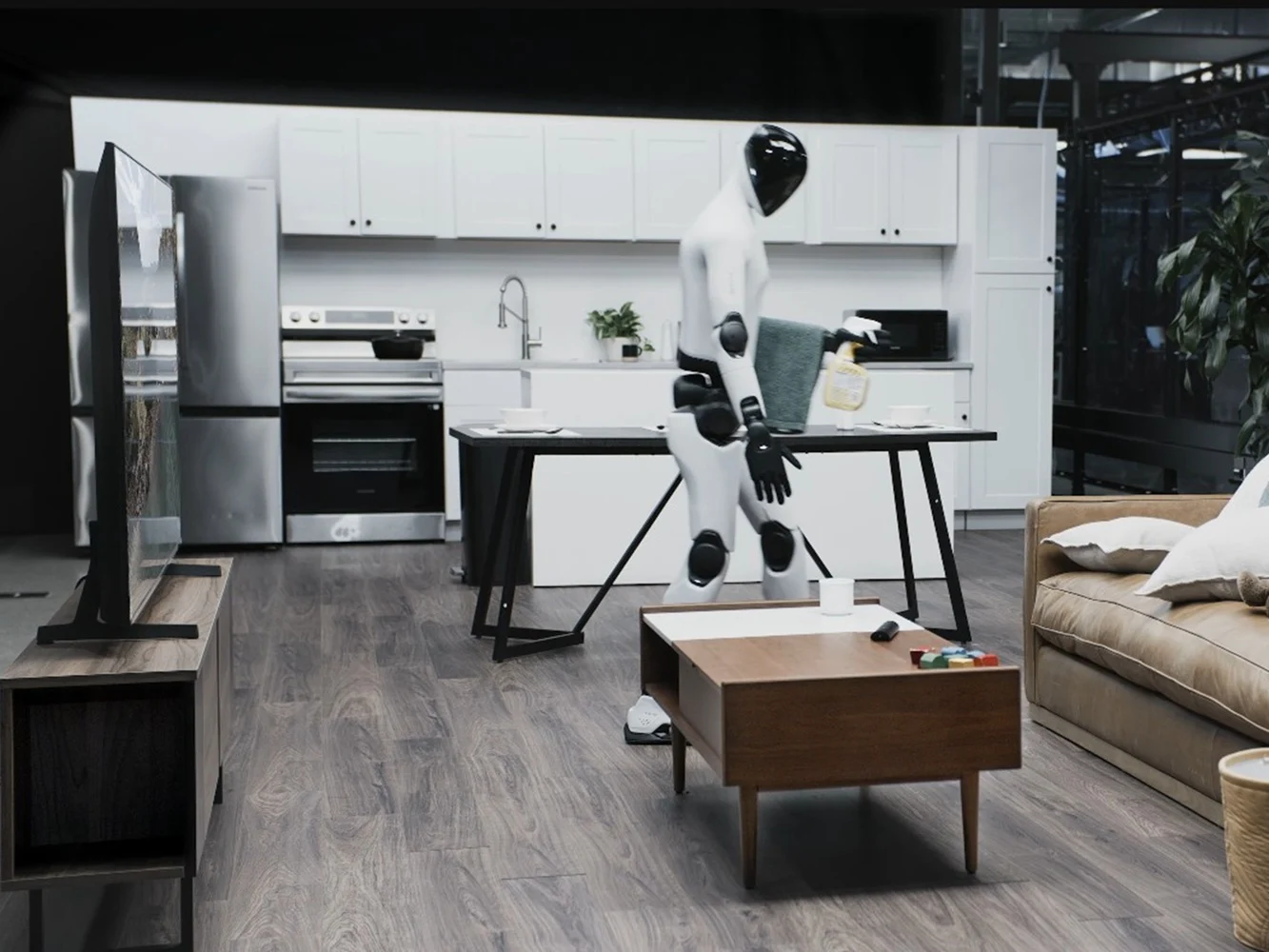
    Figure is a robot manufacturer located in California, USA. Their Figure 03 humanoid robot, which uses the unique Helix 02 AI for vision-language-action, has been seen doing common household chores all by itself. The robot picked up scattered toys, rearranged couch cushions, and cleaned the furniture in the living room.

    The Robot’s Speed

    Curiously, the bipedal robot carried out these tasks at a pace similar to that of a human. Although the speed may seem “unnatural” for robots, it indicates that the humanoid can clean the house quietly and without disturbing the peace.

    Figure states that Helix 02 is able to understand commands and engage with the real world. The company asserts that Figure 03 can learn to do new tasks without prior training.

    Unique Challenges of Home Environments

    Cleaning a living room may appear trivial to a human. Nevertheless, robots are typically used in organized spaces like factories or warehouses, where the layout is constant. In contrast, homes are always changing, with objects scattered unpredictably, making navigation tricky. Moreover, softer items like pillows and towels respond differently when touched.

    These factors create a unique disorder for the robot, but Figure 03 managed to navigate it effectively. It showed that it can handle multiple tasks with both hands while moving about the room. Despite the impressive demonstration, Figure has not yet announced that the robot is ready for sale.

    Rising Competition

    At the same time, competition in the robotics industry is becoming more intense. Honor introduced a dancing robot at the 2026 Mobile World Congress. XPeng had to modify its model to prove it wasn’t just a person in a costume. Beyond entertainment, Samsung has shared its intentions to integrate humanoids into its production lines.

    Source:
    Link


  • Unitree G1 Robot Walks 130,000 Steps in -53.3°F Snow

    Unitree G1 Robot Walks 130,000 Steps in -53.3°F Snow

    Key Takeaways

    1. The Unitree G1 humanoid robot is participating in a project for the 2026 Winter Olympics, showcasing its abilities in extreme conditions.
    2. The robot was modified for cold weather, featuring a thermal jacket, insulated battery, protected joints, and specialized software.
    3. It navigated using China’s Beidou satellite system, achieving high accuracy during its mission.
    4. The G1 took around 130,000 steps to create a large Olympic logo in the snow, demonstrating impressive mobility and control.
    5. Despite skepticism about the video’s authenticity, the public reaction has been largely positive, highlighting the robot’s advanced capabilities.


    The Unitree G1 has been seen doing various things, like playing table tennis and showing off its kung fu skills. Now, this humanoid robot is involved in a bigger project connected to the 2026 Winter Olympics. In the Altay region of Xinjiang, China, it walked through untouched snow to imprint the Olympic logo into the ground. The G1 faced harsh conditions, with temperatures reaching as low as -53.3 °F (-47.4 °C), which is much colder than what regular tech can usually handle.

    Special Features for Extreme Weather

    Unitree stated that the G1 was modified to work in very cold environments. The robot was fitted with a thermal jacket, used an insulated battery, had protected joints, and operated on specially designed software. For navigation, it relied on China’s Beidou satellite system, which provided an accuracy of around four inches (approximately ten centimeters). The robotics firm highlighted that the entire mission was conducted without any human help.

    Impressive Steps and Logo Creation

    The robot, standing at 4.17 feet tall (1.27 meters) and weighing 77 pounds (35 kilograms), took about 130,000 steps to carve a logo that is around 610 by 328 feet (186 × 100 meters) into the snow. A video shared on YouTube on February 2 shows the G1 taking a few steps before showing the completed logo, which looked quite impressive.

    Challenging Conditions and Public Reaction

    What makes this achievement especially remarkable is the tough environment the G1 was in. Moving through deep snow and extremely cold temperatures is much harder than just walking on flat asphalt, which makes its careful movements stand out even more. Although some people have raised doubts about the authenticity of the video, most comments on YouTube have been quite positive, with many viewers expressing their astonishment at the robot’s capabilities.

    Unitree Robotics via YouTube

    Source:
    Link


  • Humanoid Robot Sprinter Named After Usain Bolt Breaks Records

    Humanoid Robot Sprinter Named After Usain Bolt Breaks Records

    Key Takeaways

    1. China’s humanoid robot industry is advancing rapidly, similar to its previous success in electric vehicles and energy storage batteries.
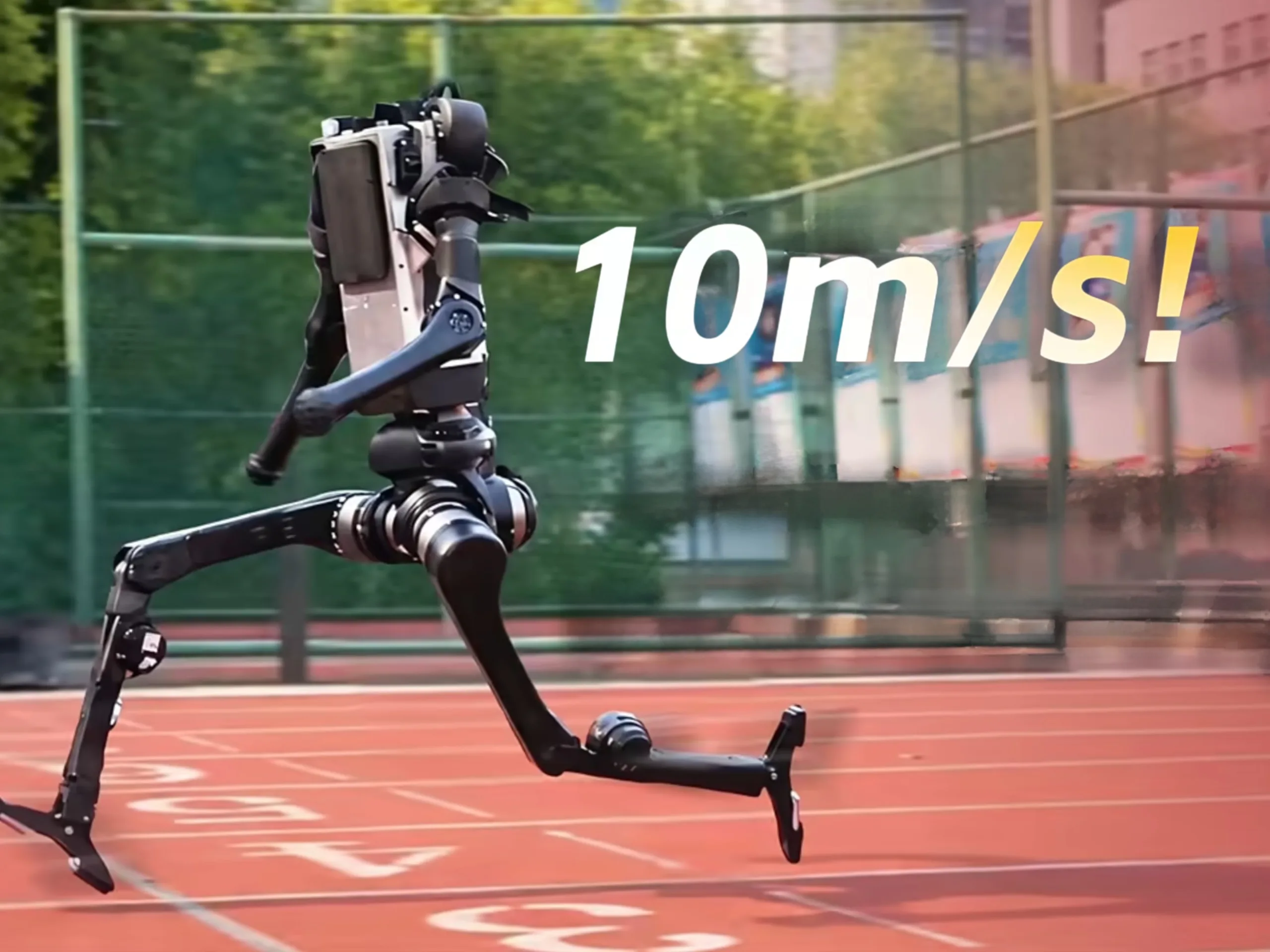
    2. The Bolt robot is the world’s fastest humanoid robot, capable of running at speeds of 10 m/s (22 mph).
    3. Bolt was inspired by Usain Bolt, who was known for reaching speeds of 27.8 mph, highlighting the competitive nature of robot speed.
    4. Mirror Me’s Black Panther II quadruped robot surpasses Bolt in speed, achieving up to 30 mph, indicating a focus on speed differentiation in the market.
    5. The design of Bolt emphasizes running agility, balance, and control, showcasing the complexities of creating a fast humanoid robot compared to quadrupeds.


    China’s humanoid robot industry is advancing rapidly, following the successful path set by the government’s focus on electric vehicles and energy storage batteries about ten years ago, which has made it a dominant player in these sectors.

    Introduction of Bolt

    The company behind the fastest robotic dog, designed for scientific exploration, has now introduced the world’s quickest humanoid robot. Named Bolt, after the famous Olympic athlete, this robot features an AI-powered gait that allows it to run at speeds of 10 m/s, which is roughly 22 mph.

    Speed Comparisons

    With Usain Bolt, the greatest sprinter, being the inspiration behind the robot, it’s interesting to note that he reached an incredible 27.8 mph (44.7 km/h) during the Berlin Games in 2009. This is impressive when you consider that most humans can sprint between 13 and 15 mph. Mirror Me is getting closer to competing with top-level sprinters.

    In contrast, Mirror Me’s Black Panther II quadruped robot can achieve speeds of up to 30 mph, making it faster than the bipedal Bolt. The company is prioritizing speed in its products to differentiate itself in the bustling market of Chinese robotics startups.

    Innovations in Design

    Despite the impressive speed of 22 mph, the Bolt robot is equally remarkable as it matches the average human’s height and weight. The team at Mirror Me focused on enhancing Bolt’s running agility, which improves its balance and control at high velocities. This task is more complicated than working with a quadruped, and the creation of the fastest humanoid robot emerged as a beneficial result of their research.

    For those interested, you can find the Unitree Go2 Pro AI robot dog quadruped available on Amazon.

    Source:
    Link


  • Humanoid Robot Plays Tennis Against Human in Exciting Video

    Humanoid Robot Plays Tennis Against Human in Exciting Video

    Key Takeaways

    1. The Walker S2 humanoid from Ubtech Robotics showcases smooth and controlled movements while playing tennis in a video demonstration.
    2. The robot’s racket arm is missing some fingers, raising questions about its functionality and performance.
    3. The humanoid must track a fast-moving tennis ball, coordinate movements, and maintain balance to play effectively.
    4. It remains unclear if the Walker S2 operates autonomously or is controlled by a human, and final scores from the demonstration are not provided.
    5. Ubtech is exploring commercial uses for the Walker S2, while other companies like Foxconn are planning to employ humanoids in various fields by 2026.


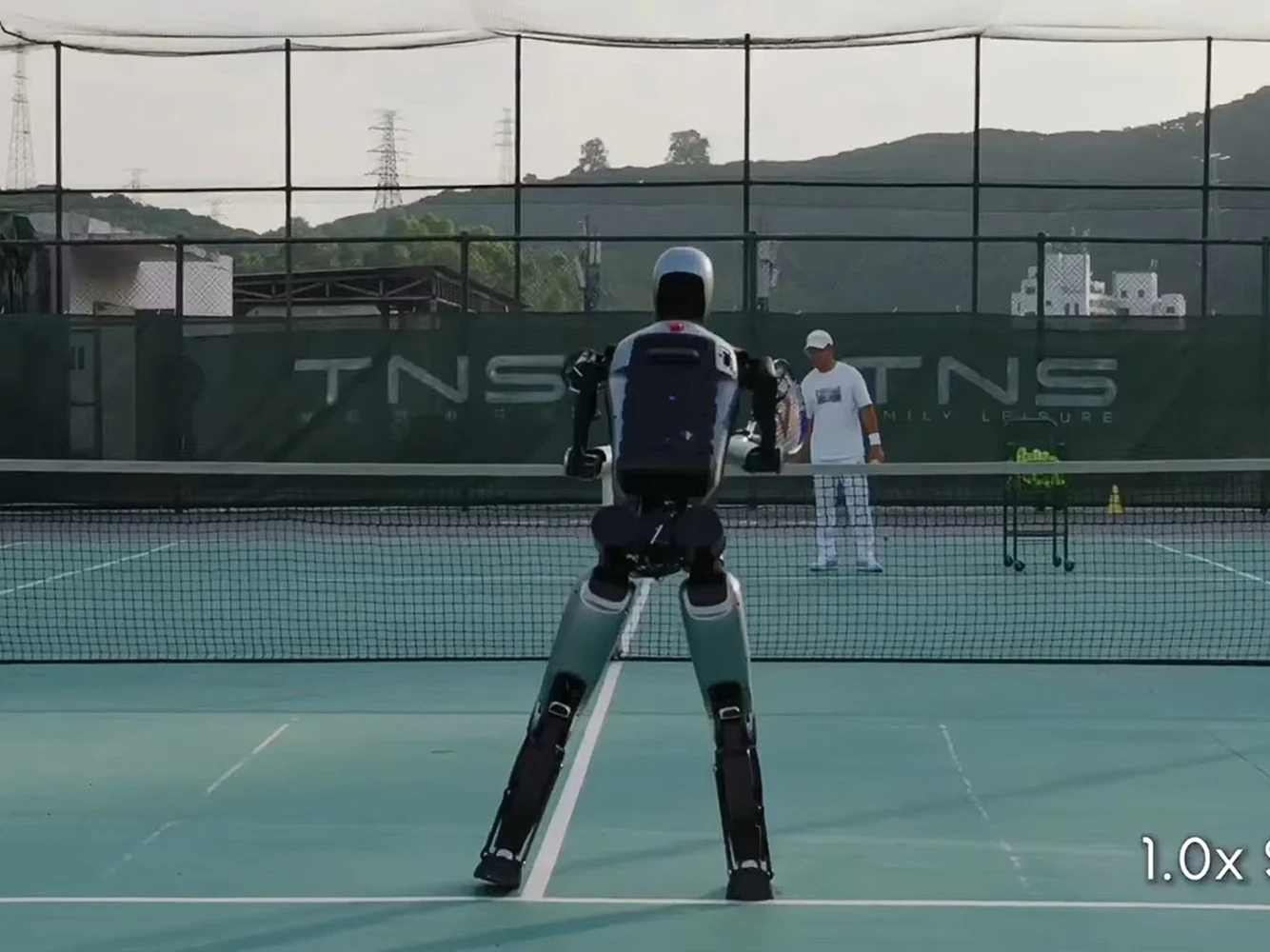
    The Walker S2 humanoid from Ubtech Robotics is making waves. A video showcases the robot wielding a tennis racket and responding to shots from a human player on the opposite side of the court.

    Smooth Movements

    Even though the video appears to be heavily edited, you can see the Walker S2 moving around quite well. It takes on various stances and swings its racket in what looks like smooth, controlled actions. At one point, the robot even manages a backhand stroke.

    Missing Details

    What’s peculiar is that the racket arm of the humanoid is missing some fingers. This becomes more apparent towards the end of the 43-second video when it gives a high-five to the human player with its hand that has fingers.

    Every tennis player knows how difficult it is to hit a fast-moving target that’s the size of a fist. The humanoid needs to track the fast-moving tennis ball and coordinate its arm and leg actions to accurately send the ball over the net. It must also keep its balance while making its movements look natural and human-like.

    Unclear Operations

    We still haven’t figured out if the humanoid was acting on its own or was controlled by a person, and we couldn’t determine the final scores either.

    Ubtech has stated that they are using the Walker S2 humanoid for commercial purposes and even shared a video, but there’s some debate about whether it’s genuine. Meanwhile, Foxconn, which partners with Apple, has laid out more detailed plans for employing humanoids by 2026.

    Robots are starting to get involved in sports, like the versatile Unitree G1, which is known for its skills in shooting basketballs, performing kung fu, and getting ready for boxing activities.

    Source:
    Link


  • EngineAI CEO Demonstrates T800 Robot’s Jackie Chan-Like Kicks

    EngineAI CEO Demonstrates T800 Robot’s Jackie Chan-Like Kicks

    Key Takeaways

    1. EngineAI’s CEO demonstrated the T800 robot’s capabilities by enduring kicks to counter skepticism about its authenticity.
    2. The T800 robot is 1.73 m tall, weighs 75 kg, and has 29 degrees of freedom in its joints, with advanced tactile sensors in its hands.
    3. It features a 360-degree omnidirectional LIDAR sensor for navigation and is powered by an Intel N97 CPU and Nvidia AGX Orin AI module.
    4. The T800 is available in multiple models, with prices ranging from approximately $25,000 to $50,000, and pre-orders can be made with a $700 deposit.
    5. EngineAI has recently secured additional funding, raising over 1 billion yuan (~$140 million) to support its growing team of over 150 engineers.


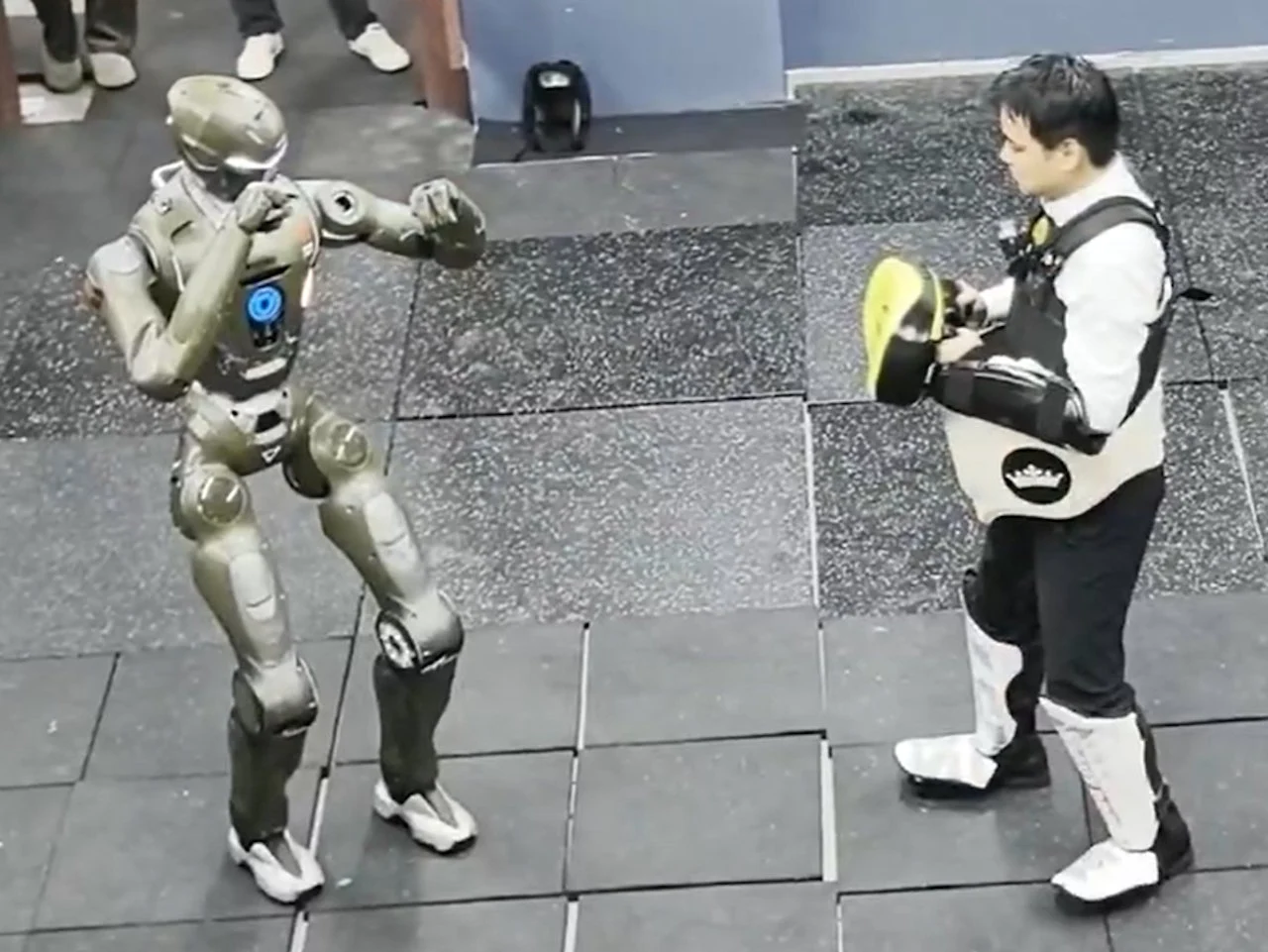
    EngineAI has shared a new video on X to address social media concerns about the authenticity of its clip featuring the recently revealed T800 general-purpose robot. To combat skepticism, CEO Zhao Tongyang donned protective gear to endure kicks from the humanoid in a tweet that was just posted.

    Specifications of the T800

    The T800 was unveiled on December 2, 2025, standing at 1.73 m (5 ft. 8 in.) tall, and constructed with a body made of magnesium-aluminum alloy. It boasts a remarkable 29 degrees of freedom in its major joints, plus 7 degrees of freedom in each hand.

    Weighing in at 75 kg (165 lbs.), the robot is powered by a modular solid-state lithium battery that can last for about 4 hours, as stated by the company. Each leg motor achieves a maximum torque of 450 N⋅m (332 lb⋅ft) due to a peak joint power of 14 kW. Each hand is capable of lifting up to 5 kg (11 lbs.) and is equipped with tactile sensors.

    Advanced Features

    The T800 features a 360-degree omnidirectional LIDAR sensor, allowing it to navigate around people and objects while moving at speeds of up to 3 m/s (9.8 ft/s). The humanoid is driven by an Intel N97 CPU, along with an Nvidia AGX Orin 64GB AI module, enabling it to perform martial arts kicks or operate in industrial environments like warehouses.

    The EngineAI T800 starts at a price of 180,000 yuan (~$25k) for the Base model. The Ecosystem model, which is open-source, is available for $33k, while the Pro model with an upgraded processor is priced at $38.5k, and the premium Max model retails for $50k. A $700 deposit can be made on the pre-order page on JD.com to ensure delivery by June 2026.

    Funding and Growth

    In addition, the company has recently completed additional Series A1+ and A2 funding rounds, following its initial raise of one billion yuan (~$140 million) to support its team, which consists of over 150 project engineers.

    Source:
    Link


  • Optimus Robot Faints While Serving Drinks for Tesla Event

    Optimus Robot Faints While Serving Drinks for Tesla Event

    Key Takeaways

    1. Tesla’s Optimus robot collapsed while serving drinks at an event, mirroring a previous incident with a Russian humanoid robot.
    2. The Optimus robot was likely operated remotely, a common practice for Tesla in similar situations.
    3. The fall occurred when the robot mimicked taking off a nonexistent virtual reality headset, causing it to lose balance.
    4. Unlike the Russian robot’s fall, which was due to a demonstration, the Optimus incident seems linked to a distracted human operator.
    5. Tesla is developing an Optimus 3.0 version aimed at improving movement capabilities with advanced AI technology.


    While the first humanoid robot from Russia that tumbled during its presentation led to many drunken jokes, Tesla’s Optimus has now revealed its own human-like moment by collapsing while serving drinks at an event.

    Operator Control

    The Optimus robot was likely being operated remotely, a tactic Tesla has used before, especially when robots were mixing drinks for guests at last year’s Cybercab launch.

    The Incident

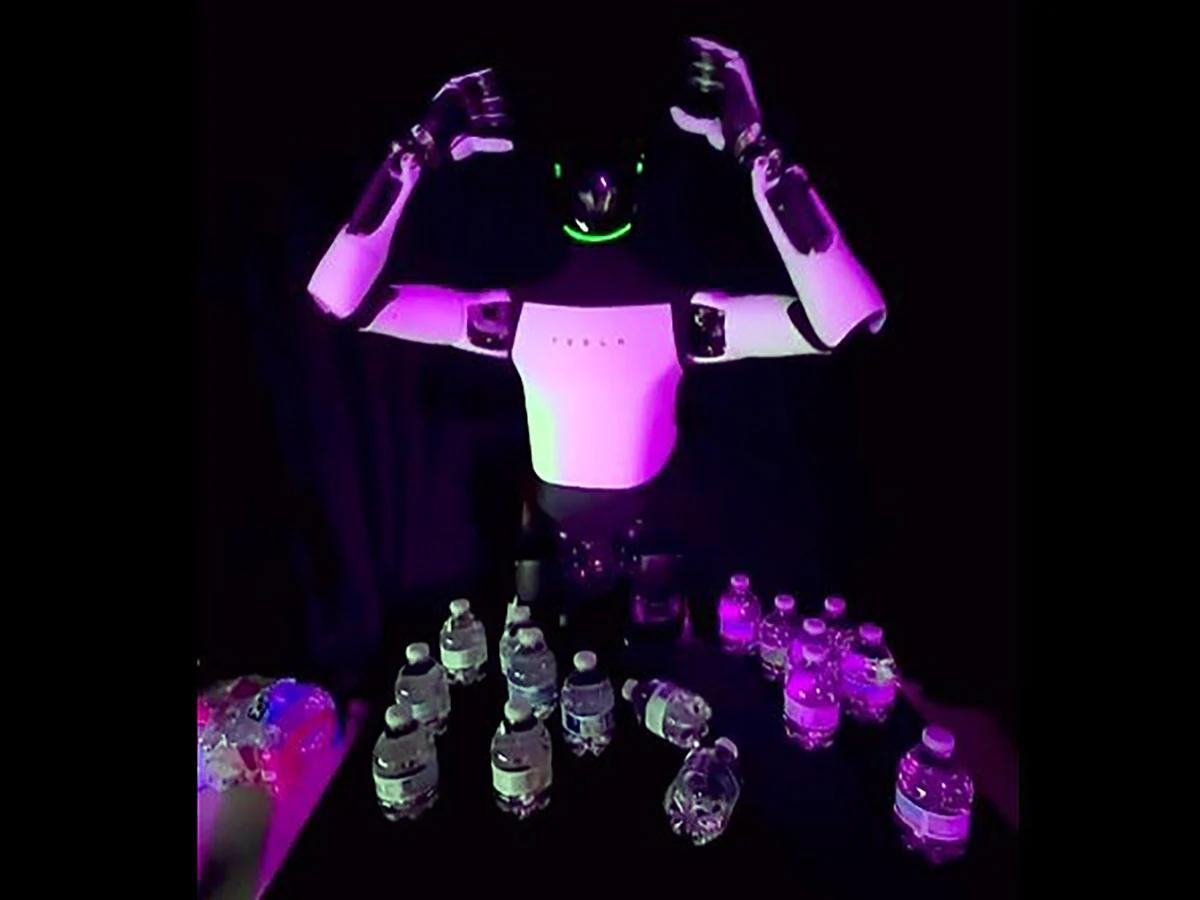
    At Tesla’s “Future of Autonomy Visualized” exhibition in the Miami Design District over the weekend, the humanoid butler was positioned behind a tray filled with water bottles. Suddenly, it mimicked the action of taking off a nonexistent virtual reality headset, causing some bottles to topple over before it lost its balance and fell flat on its back in a truly amusing way.

    Some observers suggested that the fall was merely a malfunction, but the gesture seemed to suggest that a distracted operator had momentarily gotten up and made an unusual move, causing the robot’s weight to shift too quickly and leading to its fall.

    Robot Stability

    In contrast, the Russian robot fell when its handlers were demonstrating its balancing skills by nudging it gently forward, while the Optimus incident likely stemmed from the actions of its human operator.

    Most modern humanoid robots are quite nimble and can easily maintain their balance, even on uneven surfaces or during martial arts demonstrations. Tesla is currently developing an Optimus 3.0 version, which will reportedly offer enhanced movement capabilities and be powered by its advanced AI5 and AI6 chips.

    Source:
    Link


  • Humanoid Home Robot 1X Neo: Vacuums Well, Can’t Crack Walnuts

    Humanoid Home Robot 1X Neo: Vacuums Well, Can’t Crack Walnuts

    Key Takeaways

    1. The 1X Neo humanoid robot is now available for pre-order in the U.S., competing with other AI household assistants like Figure 03 and Tesla Optimus.
    2. Evaluations revealed performance limitations, such as struggling with tasks requiring strength and slow response times, highlighting the need for enhancements.
    3. Safety features include a fabric covering for visual appeal and lightweight design, reducing the risk of damage if the robot falls.
    4. The current model operates remotely via an AI controller, with plans for a more autonomous version set for release in 2026.
    5. Concerns about data privacy arise from the robot’s need to transmit visual and auditory data to improve its AI capabilities, with assurances made about user privacy.


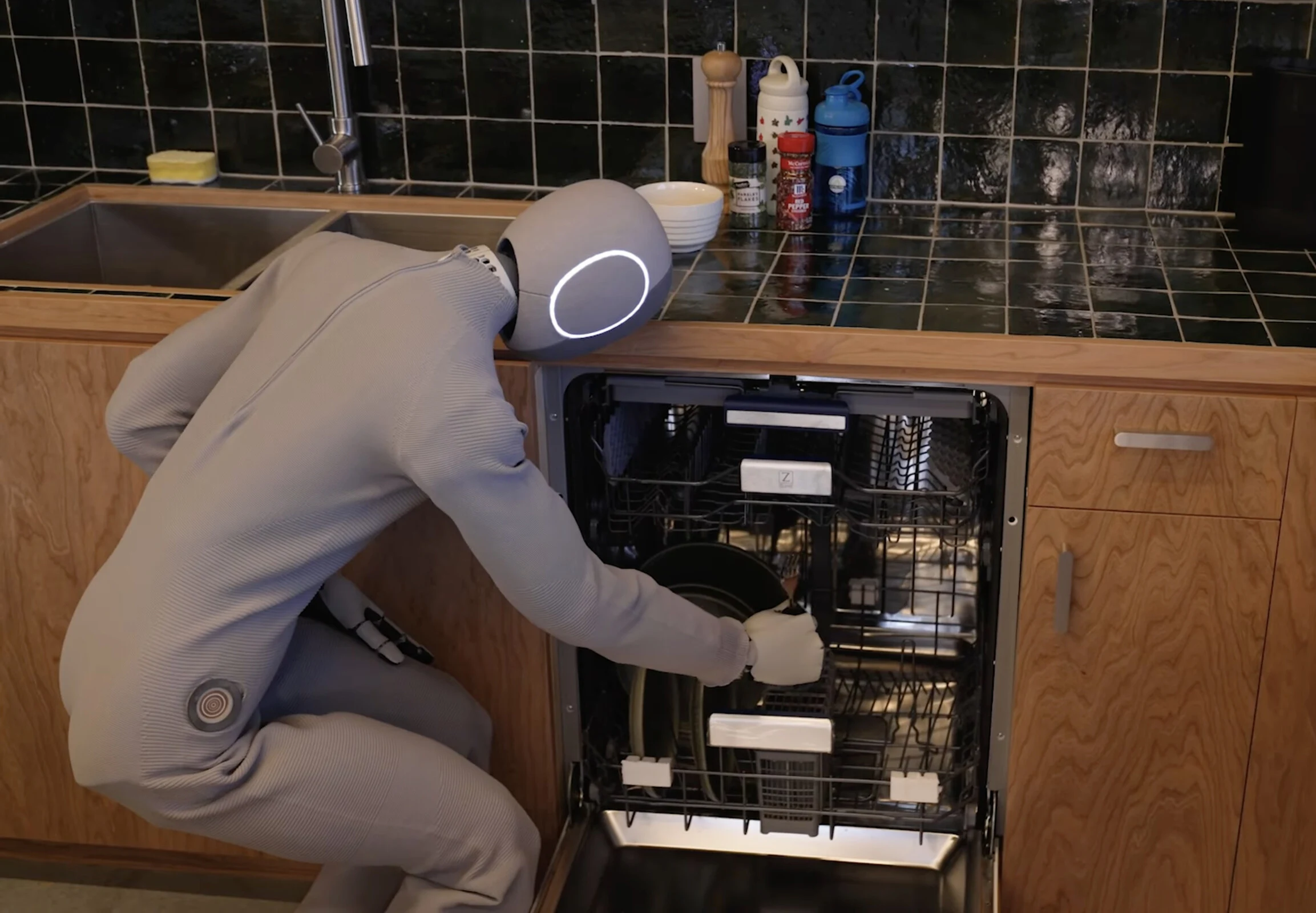
    The 1X Neo humanoid home robot was introduced in 2024 and has now become available for pre-order in the United States. This innovative robot is in competition with other AI household assistants like Figure 03 and Tesla Optimus. Yet, there are lingering questions about the real abilities of this new product aimed at the general public. Given the recent visible failings of the first Russian humanoid robot demonstration, some skepticism is perhaps justified.

    Testing the Capabilities

    Joanna Stern from the Wall Street Journal evaluated the 1X Neo’s performance and found several areas needing enhancements. Bernt Børnich, the robot’s developer, also took part in the evaluation. The robot is advertised to be capable of tasks like washing dishes, cleaning the kitchen, and doing laundry, among others.

    Focus on Safety

    When discussing home robots, safety is as crucial as their functionality and intelligent features. Unlike industrial robots that operate on assembly lines, Neo is dressed in a fabric covering that looks like clothing. This design choice not only makes it visually appealing but also adds a layer of safety.

    Inside the Neo, there are several strong yet lightweight motors that use belts, akin to muscles, instead of gears. This design makes the robot quieter and allows for smoother movements. Its weight can be brought down to 30 kg (66 pounds). This is especially significant in case it falls, as lighter robots are less likely to cause damage. Despite being lightweight, it can handle loads of up to 68 kg (150 pounds).

    Performance Limitations

    At first glance, one might think this robot is exceptionally powerful, but that’s not entirely accurate. The 1X Neo struggled to crack a walnut manually. This appears to be a deliberate design choice, as the robot emphasizes finesse and delicacy rather than sheer strength. It’s also important to remember that this is just the initial version, and improvements are anticipated.

    The robot took a minute and seven seconds to fetch a water bottle from the fridge and deliver it to the tester standing a few steps away. The main obstacle was opening the refrigerator door. The assessment also tested various capabilities like loading a dishwasher and charging cycles, and Neo reportedly excelled at using a vacuum cleaner.

    Future Developments

    It is crucial to highlight that the tested model was still operated remotely by an AI controller. This version precedes the upcoming model set for release in 2026, which is expected to have increased dexterity, more autonomy, and better safety features. Initially, Neo won’t act as a true household helper but more like a child that requires guidance and is connected to human assistance through an app. The remote control mode is referred to as ‘expert mode’, where a human takes over tasks that the robot can’t manage independently yet.

    To enhance its AI, visual and auditory data from the user’s home must be transmitted to 1X’s servers through the robot’s cameras and microphones. The company promises that faces will be blurred and assures users they will know when an operator is engaged. However, this aspect raises significant concerns about data privacy for many. The developers aim for Neo to learn as much as possible in domestic environments, with hopes that within five years it can evolve into a fully capable assistant.

    In this way, Neo signifies the dawn of a new age of humanoid household robots. The developers claim that when fully realized, Neo will offer substantial help with numerous household chores, catering not just to standard situations but also assisting those with disabilities, the elderly, and other communities. Pre-orders are currently limited to the USA, requiring a $200 deposit. Interested buyers can opt for either a one-time payment of $20,000 or a monthly subscription of $499.

    Source:
    Link