Tag: AMD GPUs

  • AMD Launches Two New Radeon Pro GPUs for AI Workloads

    AMD Launches Two New Radeon Pro GPUs for AI Workloads

    Key Takeaways

    1. AMD introduced two new Radeon AI Pro GPUs: the R9700S and R9600D, which are lower-performance versions of the R9700.
    2. The R9700S features 64 Compute Units, 32 GB of GDDR6 VRAM, and a maximum power draw of 300 Watts, but lacks an active cooling system.
    3. The R9600D has 48 Compute Units, also offers 32 GB of VRAM, and has a lower power consumption of 150 Watts, making it suitable for 450 Watt power supplies.
    4. Both GPUs support ECC functionality on Linux systems and include a single DisplayPort 2.1 for video output.
    5. They are designed for non-gaming applications but support features like AMD Fluid Motion Frames and Radeon Anti-Lag; pricing and availability details are not yet provided.


    AMD has quietly introduced two new Radeon AI Pro GPUs, the Radeon AI Pro R9700S and the Radeon AI Pro R9600D. These models are lower-performance versions of the previously launched Radeon AI Pro R9700. The R9700S is nearly identical to the R9700, showing no significant differences in specifications.

    Detailed Specifications of R9700S

    The Radeon AI Pro R9700S features 64 Compute Units (CUs), which amounts to 4,096 stream processors, along with 128 Render Output Units (ROPs). It also offers 32 GB of GDDR6 VRAM on a 256-bit memory bus, resulting in a total memory bandwidth of 640 GB/s and a boost clock speed of 2.92 GHz. This GPU connects to motherboards using two 16-pin PCIe connectors and has a maximum power draw of 300 Watts. Unlike the R9700S, it lacks an active cooling system and is best suited for server racks that have their own cooling solutions.

    Overview of R9600D Features

    On the other hand, the Radeon AI Pro R9600D reduces the number of CUs to 48, translating to 3,072 stream processors, 32 GB of VRAM on the same 256-bit bus (also providing 640 GB/s memory bandwidth), and 96 ROPs. It consumes only 150 Watts of power, making it compatible with a 450 Watt power supply. Similar to the R9700S, the R9600D also utilizes passive cooling.

    Both cards come equipped with a single DisplayPort 2.1 for video output and are capable of supporting ECC functionality, though this is only available on Linux systems. While these GPUs are not aimed at gamers, they do support several features such as AMD Fluid Motion Frames, Radeon Super Resolution, Smart Access Memory, Radeon Boost, and Radeon Anti-Lag. At this time, AMD has not disclosed pricing or availability details for either of these GPUs.

    Source:
    Link


  • AMD Roadmap Reveals Zen 7, Medusa Point, and Gorgon Point Launch Dates

    AMD Roadmap Reveals Zen 7, Medusa Point, and Gorgon Point Launch Dates

    Key Takeaways

    1. Zen 7 Announcement: Zen 7 is on AMD’s roadmap with a release planned for beyond 2026, featuring a new Matrix Engine.

    2. Zen 6 Launch: Zen 6 is expected to launch in 2026, incorporating Zen 6 and Zen 6c cores, built on an unspecified TSMC 2 nm node.

    3. Laptop Developments: Medusa refers to upcoming laptop components based on Zen 6, while Gorgon is a mid-cycle update for Zen 5, with Medusa launching in 2027.

    4. Advanced Technology: Zen 7 may utilize four types of CPU cores and TSMC’s advanced A16 node, promising more 3D V-cache than Zen 5.

    5. Limited GPU Information: No specific details on the next generation of GPUs or mid-cycle updates for RDNA 4 were provided during the presentation.


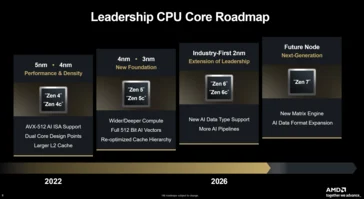
    While the focus of AMD’s Financial Analyst Day was mostly on finances, Team Red also shared some details about its future products. Zen 7 has made its way onto AMD’s official roadmap, scheduled for release ‘beyond 2026.’ Sadly, there isn’t much information available, apart from the fact that Zen 7 will feature a new Matrix Engine.

    Details on Zen 7

    Earlier leaks from Moore’s Law is Dead suggested that Zen 7 might use four types of CPU cores: Classic, Dense, Efficiency, and Low Power. It is expected to utilize TSMC’s advanced A16 node and provide significantly more 3D V-cache than Zen 5. A tentative launch is set for 2028, but we can’t verify this info until more sources come forward.

    Upcoming Releases

    Looking ahead, Zen 6 is predicted to launch in 2026, combining Zen 6 and Zen 6c cores. This will be the first consumer-grade CPU in the industry to be built on an unspecified TSMC 2 nm node. This isn’t completely new information, as it was subtly confirmed earlier this year when AMD mentioned its upcoming Epyc server chip had already been taped out on a TSMC N2 class node.

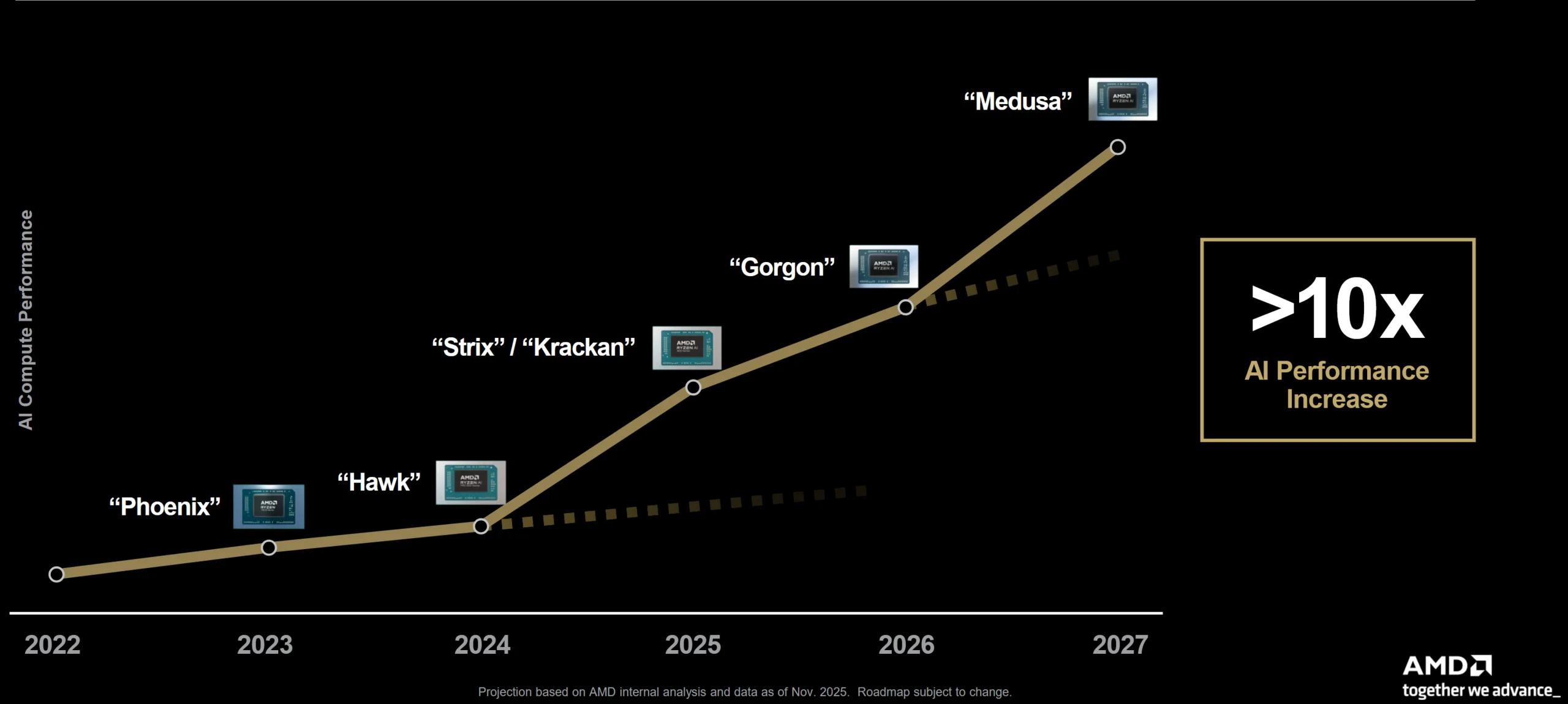
    On the laptop front, AMD specifically mentioned Medusa and Gorgon. Medusa refers to laptop components that utilize the Zen 6 architecture, while Gorgon represents a mid-cycle update to existing Zen 5 components. Medusa is anticipated to feature standard Medusa Point Ryzen AI parts along with the Medusa Halo, which is the Ryzen AI Max-branded successor to the Strix Halo. However, Medusa is not expected to launch until 2027, meaning the only new AMD laptop models next year will be based on Zen 5 Gorgon parts.

    GPU Information

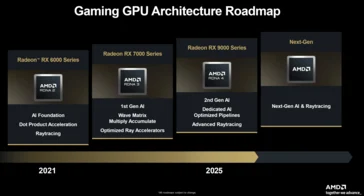
    Information regarding GPUs is limited, with the presentation merely recognizing the next generation of GPUs without offering a tentative release date or any indication of a mid-cycle update for the current RDNA 4 GPUs.

    AMD

    Source:
    Link