Tag: Zen 7

  • AMD Zen 7 CCD on TSMC A14 node: latest tip for 2025

    AMD Zen 7 CCD on TSMC A14 node: latest tip for 2025

    Key Takeaway

    – Zen 7 is rumored to use TSMC A14 for the Zen 7 CCD (Grimlock) with up to 16 cores and 224 MB L3 cache via 3D V-cache, and may adopt FOPLP packaging.
    – Not all Zen 7 parts may be on 14A; Samsung Foundry may supply IO die and Infinity Fabric for some components, suggesting mixed manufacturing.
    – Cost pressure is a concern, as A14 wafers are expensive and AMD may split production to balance price competitiveness against Intel 14A offerings.


    AMD Zen 7 Rumors Summary

    Overview

    Even though Zen 6 is yet to surface, leaks have already started talking about its successor: Zen 7. Moore’s Law is Dead predicted it would first surface sometime in 2027-28 with new Epyc CPUs codenamed Florence, complete with a top-spec SKU with a whopping 288 physical cores. The chatter keeps shifting, yet the core idea remains: AMD plans to push more cores and bigger caches into the lineup, claiming a leap that could redefine workstation performance for multi-threaded workloads. The tone of the talk mixes optimism with cautious notes about supply and manufacturing realities, and it sets a horizon that enthusiasts and enterprise buyers are watching closely.

    Spec highlights

    Consumer Zen 8 CPUs should ideally launch a year later. Taiwanese news outlet Commercial Times has now tacitly confirmed yet another Zen 7 spec foretold by Tom. For starters, it states a Zen 7 CCD can support up to 16 cores and 224 MB of L3 cache with a 3D V-cache tile. The details suggest AMD plans to equip Zen 7 with substantial cache and core counts that could significantly boost performance in memory-bound workflows, gaming, and content creation. This spec read sounds ambitious, yet it lines up with AMD’s historical trend of expanding cache sizing to improve throughput.

    Fabrication plans

    AMD plans to use TSMC’s A14 node for its Zen 7 CCD, codenamed Grimlock. Unlike Intel 18A and newer nodes, TSMC A14 won’t support backside power delivery. That upgrade is expected to arrive in a subsequent node revision. The exact details about how 14A improves upon current-gen nodes like N2 and N2X are unclear. Zen 7 will also leverage cutting-edge tech like FOPLP (Fan-Out Panel-Level Packaging) to enable more efficient operation. The manufacturing story remains murky, with mixed signals about where each die will be produced and how packaging innovations could affect power handling and yields.

    Industry implications

    If true, it will be one of the first major players to fabricate its high-end chips on TSMC A14, joining the likes of Apple and likely Qualcomm. However, not all Zen 7 parts may be made on 14A, or, for that matter, even at TSMC. Jukan, a South Korean analyst, hints that Samsung Foundry has won some orders from AMD, likely for laptop CPUs. Therefore, it would be reasonable to assume some non-critical components, such as the IO die and Infinity Fabric, could be manufactured on Samsung production lines. A14 wafers won’t be cheap, and AMD will definitely look for ways to keep overall costs low, lest it run the risk of being undercut by Intel’s 14A products.
    Sources
  • AMD Roadmap Reveals Zen 7, Medusa Point, and Gorgon Point Launch Dates

    AMD Roadmap Reveals Zen 7, Medusa Point, and Gorgon Point Launch Dates

    Key Takeaways

    1. Zen 7 Announcement: Zen 7 is on AMD’s roadmap with a release planned for beyond 2026, featuring a new Matrix Engine.

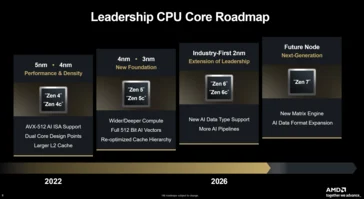
    2. Zen 6 Launch: Zen 6 is expected to launch in 2026, incorporating Zen 6 and Zen 6c cores, built on an unspecified TSMC 2 nm node.

    3. Laptop Developments: Medusa refers to upcoming laptop components based on Zen 6, while Gorgon is a mid-cycle update for Zen 5, with Medusa launching in 2027.

    4. Advanced Technology: Zen 7 may utilize four types of CPU cores and TSMC’s advanced A16 node, promising more 3D V-cache than Zen 5.

    5. Limited GPU Information: No specific details on the next generation of GPUs or mid-cycle updates for RDNA 4 were provided during the presentation.


    While the focus of AMD’s Financial Analyst Day was mostly on finances, Team Red also shared some details about its future products. Zen 7 has made its way onto AMD’s official roadmap, scheduled for release ‘beyond 2026.’ Sadly, there isn’t much information available, apart from the fact that Zen 7 will feature a new Matrix Engine.

    Details on Zen 7

    Earlier leaks from Moore’s Law is Dead suggested that Zen 7 might use four types of CPU cores: Classic, Dense, Efficiency, and Low Power. It is expected to utilize TSMC’s advanced A16 node and provide significantly more 3D V-cache than Zen 5. A tentative launch is set for 2028, but we can’t verify this info until more sources come forward.

    Upcoming Releases

    Looking ahead, Zen 6 is predicted to launch in 2026, combining Zen 6 and Zen 6c cores. This will be the first consumer-grade CPU in the industry to be built on an unspecified TSMC 2 nm node. This isn’t completely new information, as it was subtly confirmed earlier this year when AMD mentioned its upcoming Epyc server chip had already been taped out on a TSMC N2 class node.

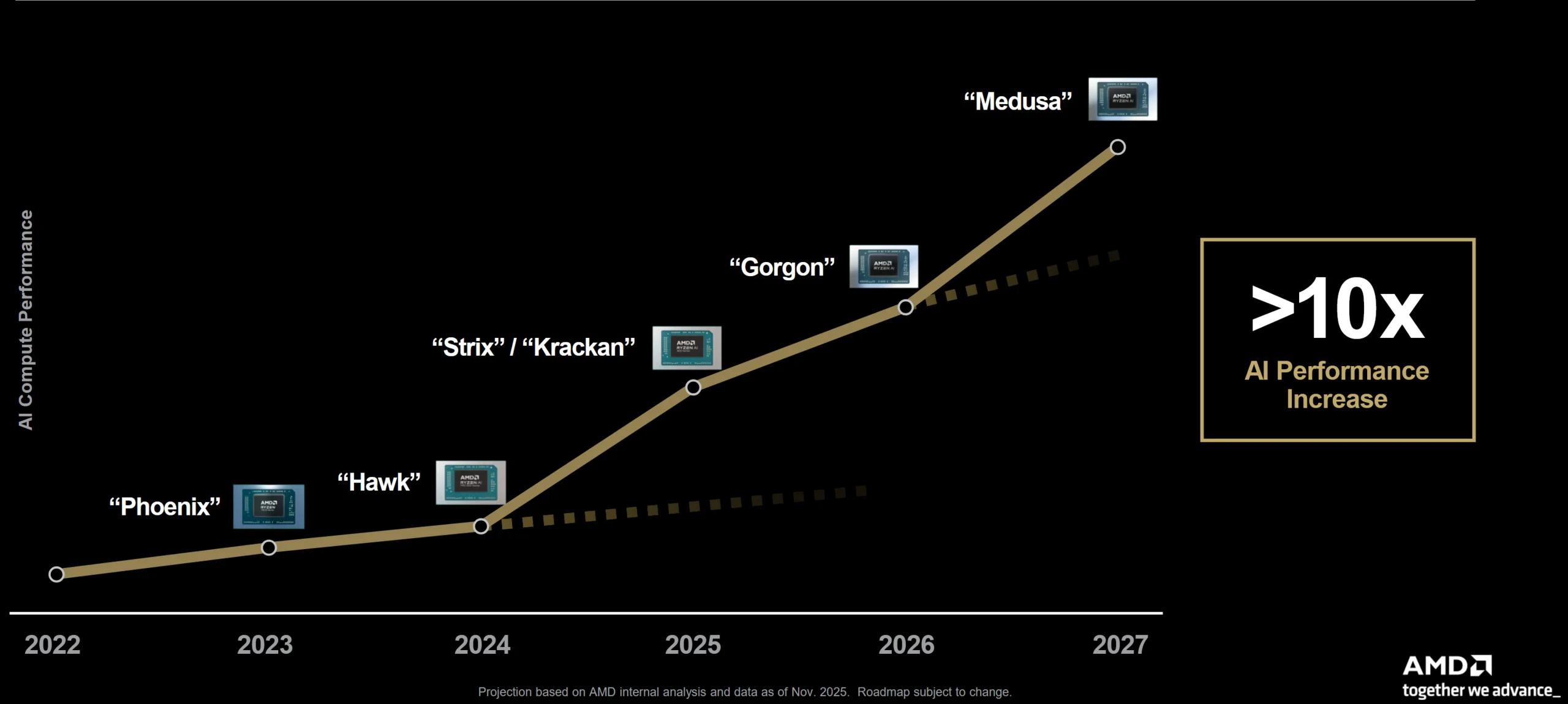
    On the laptop front, AMD specifically mentioned Medusa and Gorgon. Medusa refers to laptop components that utilize the Zen 6 architecture, while Gorgon represents a mid-cycle update to existing Zen 5 components. Medusa is anticipated to feature standard Medusa Point Ryzen AI parts along with the Medusa Halo, which is the Ryzen AI Max-branded successor to the Strix Halo. However, Medusa is not expected to launch until 2027, meaning the only new AMD laptop models next year will be based on Zen 5 Gorgon parts.

    GPU Information

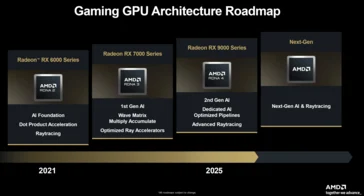
    Information regarding GPUs is limited, with the presentation merely recognizing the next generation of GPUs without offering a tentative release date or any indication of a mid-cycle update for the current RDNA 4 GPUs.

    AMD

    Source:
    Link


  • AMD AM6 Socket: 22% More Pins, Same Size & Cooler Compatibility

    AMD AM6 Socket: 22% More Pins, Same Size & Cooler Compatibility

    Key Takeaways

    1. The upcoming AM6 socket will feature a 22% increase in pin count, totaling 2,100 pins compared to the AM5’s 1,718 pins.
    2. The AM6 socket is expected to maintain a similar size to the AM5, allowing compatibility with existing AM5 coolers.
    3. The new socket will support DDR6 memory and PCIe 6.0, enhancing overall performance and features.
    4. AMD’s Zen 7 architecture, compatible with the AM6 socket, is expected to offer significant performance gains with a potential increase in core count up to 32 cores.
    5. The AM6 socket is projected to be available to the public in 2028, coinciding with the release of Zen 7 CPUs.


    Looks like AMD is getting ready to boost the pin count on its upcoming AM6 socket again. Even so, users might still be able to utilize AM5 compatible coolers since the overall size of the socket probably won’t change much. The new socket is still a few years off from being available to the public, but it will support AMD’s seventh generation Zen architecture, along with the latest PCIe standards.

    Pin Density Increase

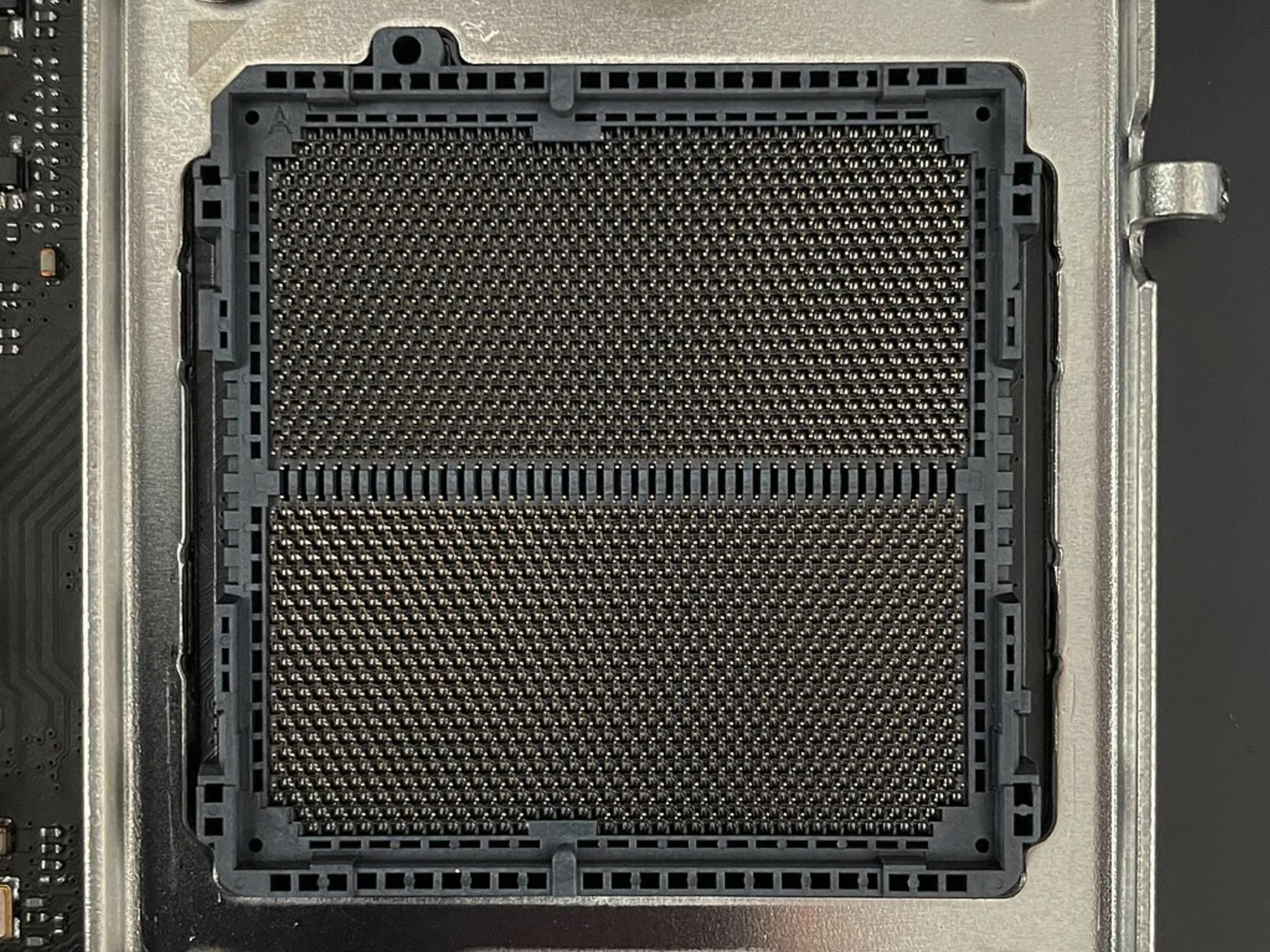
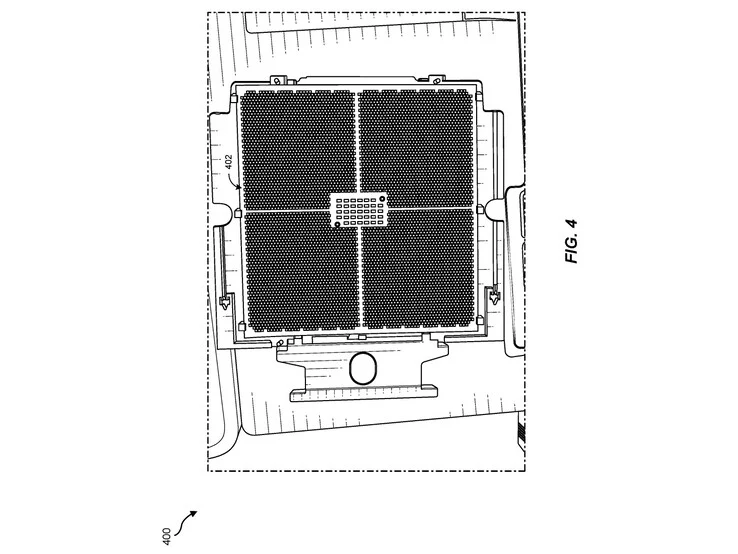
    A report from Bits and Chips, which references insider sources, claims that the AM6 socket will feature a greater pin density than the AM5, coming in at a total of 2,100 pins. The AM5 socket has 1,718 pins, indicating that the new socket will see a 22% increase. This report includes some images from an AMD patent that shows a socket with densely packed pins. Though the images are hard to decipher and the patent itself is not accessible, the arrangement of the pins appears to differ from the current generation socket.

    Similar Size, More Features

    Interestingly, the new socket is said to maintain a similar size to the AM5 socket. AMD seems to have managed to increase the pin density without expanding the overall size of the socket, suggesting that existing CPU coolers should still work with the AM6. The greater pin density will also enable support for DDR6 memory and PCIe 6.0. Furthermore, it is reported that it will be compatible with AMD’s Zen 7 architecture, with CPUs built on this architecture expected to come with significant improvements over those based on Zen 6.

    Core Count and Performance Boost

    A well-known leaker suggested back in June that the Zen 7 CPUs will see a nice increase in core count, possibly reaching up to 32 cores due to dual 16-core CCDs. With Hyperthreading, these CPUs could handle 64 threads. Additionally, the leaker mentioned that these CPUs will include “tons of V-Cache.”

    In conclusion, the Bits and Chips report states that the AM6 socket is set to be commercialized in 2028, which aligns with when the Zen 7 is anticipated to be ready.

    Source:
    Link


  • AMD Zen 7 Desktop CPU Core Count Leaks: Up to 2x Increase Over Zen 5

    AMD Zen 7 Desktop CPU Core Count Leaks: Up to 2x Increase Over Zen 5

    Key Takeaways

    1. AMD is developing five different versions of the Zen 7 CPU architecture, focusing on performance and efficiency.
    2. The Zen 7 “Classic” desktop CPUs are expected to have up to 32 cores and 64 threads with Hyperthreading.
    3. The Zen 7 consumer CPUs will feature significant IPC and clock speed improvements, along with increased core counts compared to Zen 6.
    4. A top-tier Zen 7 Ryzen 9 CPU may have 50% more cores than the flagship Zen 6 chip, making it an attractive upgrade for Ryzen 9000 owners.
    5. Zen 7 is still over two years away, and current specifications may change before release.


    Around May, it was reported that AMD might be working on as many as five different versions of the Zen 7 CPU architecture. Each of these versions has unique design objectives, with some concentrating on pure performance and others on efficiency. The Zen 7 “Classic” aimed for desktop AM6 platform is said to be focusing on improvements in IPC and clock speeds.

    Core Count Increase

    New information from Moore’s Law Is Dead suggests that, in addition to the IPC and frequency enhancements, the Zen 7 consumer CPUs will also see a significant increase in core count compared to Zen 6. According to MLID, this information comes from one of his top sources at AMD.

    Specifications and Features

    The Zen 7 “Classic” desktop CPUs are expected to feature up to 32 cores, thanks to dual 16-core CCDs. With Hyperthreading enabled, this means there could be an impressive 64 threads available. However, the previously leaked “3D Core” variant seems not to be available for the consumer versions of Zen 7 CPUs.

    As per MLID, the Zen 7 chips designed for the AM6 platform will include “lots of V-Cache,” since the 3D Core design is not likely to be included in the consumer CPUs. Nevertheless, both the Zen 7 consumer CPUs and the 3D Core variant are believed to have IPC that is “comparable,” with the “Classic” cores featuring higher voltages and clock speeds.

    Potential Upgrade Path

    A top-tier Zen 7 desktop Ryzen 9 CPU might boast 50% more cores than the flagship Zen 6 chip, which is rumored to increase its core count to 24, effectively doubling the cores of the Ryzen 9 9950X. When you add in the IPC improvements and potentially much larger 3D V-Cache, those who currently own a Ryzen 9000 CPU could find themselves with a compelling reason to upgrade in 2028.

    MLID also cautions in the video that Zen 7 is still over two years away. Thus, any technical specifications leaked at this stage might be subject to change.

    Source:
    Link